
Review · PARIS
Historic Paris Walking Tour in English
Paris makes a fine outdoor classroom, and this tour uses its central streets to connect art, monarchy, revolution, religion, and daily life. In 150 minutes, you move from Hôtel de Ville toward Notre-Dame, the Louvre, Pont des Arts, and the Tuileries Gardens, with plenty of grand buildings and river views along the way.
I like the way the tour gives you a big-picture introduction before you tackle Paris on your own. I also like the strong storytelling: guides such as Tom, Harry, Thomas, Yazid, and Francesca have been praised for making subjects from art history to military history easy to follow. The main consideration is the pace. Two and a half hours on foot can feel long in hot weather or on a crowded day, and the route is more about exterior sights and historical context than long indoor visits.
Key points to know before you book
- A central route with major sights: Expect Hôtel de Ville, Notre-Dame, Sainte-Chapelle, the Louvre, Pont des Arts, and the Tuileries Gardens, with the Eiffel Tower and elegant boulevards included in the wider tour description.
- Stories, not just sightseeing: The guide covers Quasimodo, Napoleon, Hitler, the French Revolution, and the theft of the Mona Lisa.
- English-speaking local guide: The experience is conducted in English, with guides including Tom, Harry, Thomas, Yazid, and others assigned according to availability.
- Good first-day choice: The route helps you understand how Paris developed from a Roman settlement and medieval capital into a modern city.
- $31 for 150 minutes: Your payment covers the reservation fee and the guide’s payment within the pay-as-you-wish tour format.
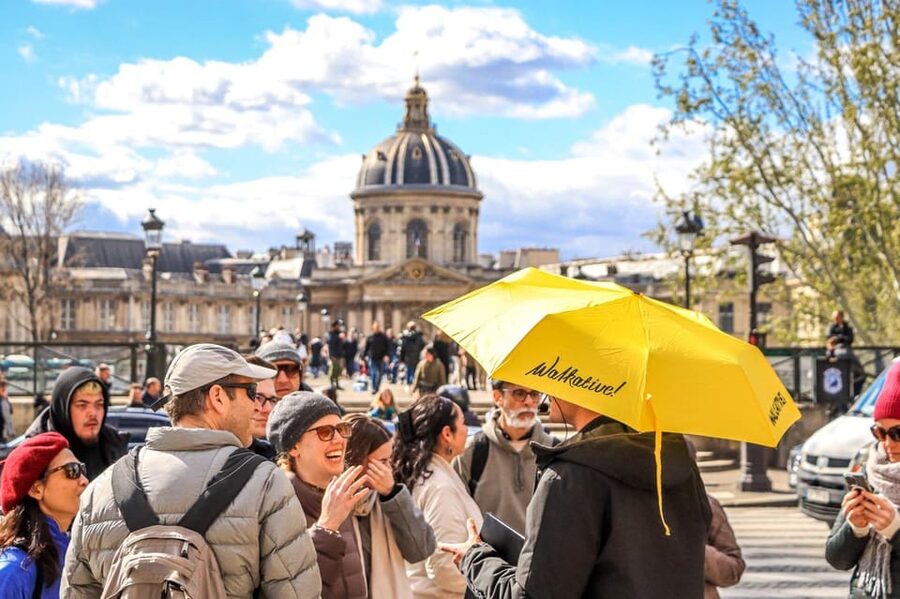
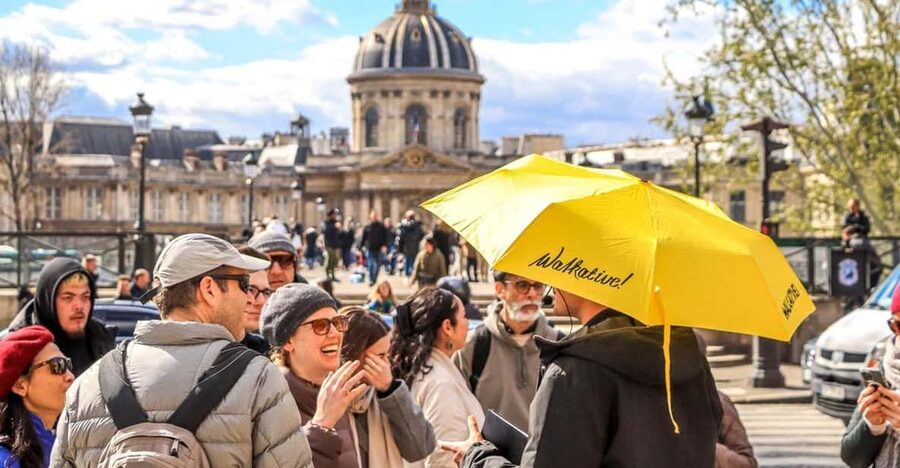
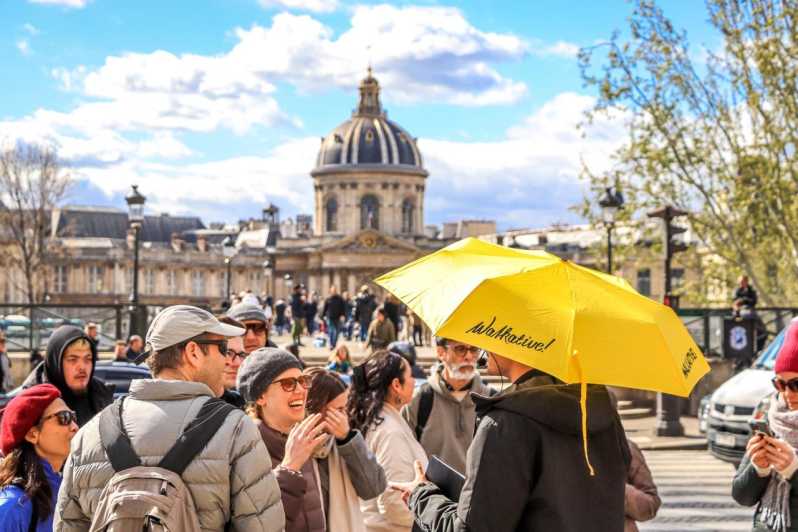
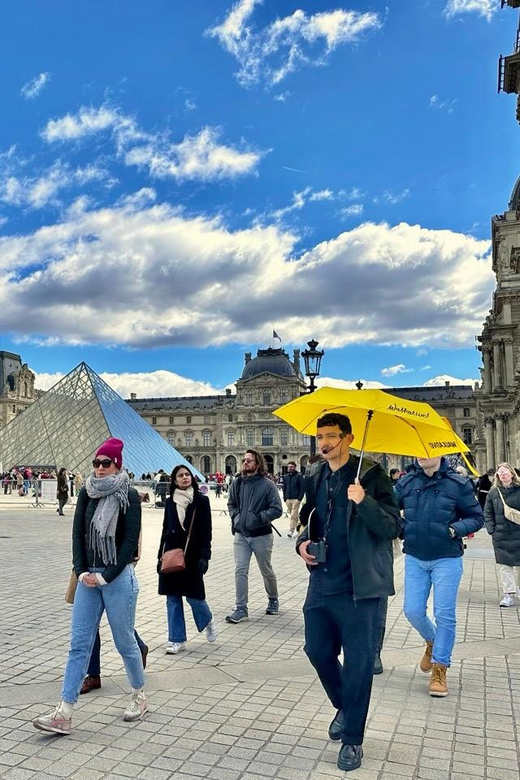
- Simple meeting point: Meet outside Hôtel de Ville Metro at exit 5, looking for a yellow umbrella, and arrive 10 minutes early.
Why this walking tour works as a first look at Paris
Paris can overwhelm you with famous names. Louvre. Notre-Dame. Tuileries. Sainte-Chapelle. Pont des Arts. Each deserves time, but it is easy to see them as separate photo stops unless someone explains how they fit together.
This walk gives you that connecting thread. Paris began on marshy ground around the Seine, grew under Roman rule, became a Frankish capital, and later developed into the political and cultural center of France. The tour then carries that story through medieval religion, royal power, the Enlightenment, revolution, Napoleon, and the city rebuilding of the 19th century.
I find that approach useful because you are not simply collecting monuments. You are learning why the river mattered, why royal power gathered around the Louvre, why wide boulevards cut through the old city, and why Paris has such a strong reputation for both elegance and rebellion.
The tour also keeps the tone light. The subject matter includes wars, religious violence, poverty, executions, and political upheaval, but the guides are expected to make it accessible rather than turning it into a lecture. Danielle from Ireland described Thomas as a guide who could handle both serious history and humor, which is exactly the balance a long city walk needs.
More History Walking Tours in France
- Paris: Dark History and Ghostly Guided Walking Tour
★ 4.7 · 1,000 reviews - Paris City of Fashion History Private Guided Walking Tour
★ 5.0 · 221 reviews - Paris City Center w/ Notre Dame interior | Exclusive Walking Tour
★ 5.0 · 190 reviews
Meeting at Hôtel de Ville and finding your bearings
The meeting point is outside the Hôtel de Ville Metro station at exit 5. Look for the yellow umbrella, and arrive about 10 minutes before the scheduled start.
This is a practical place to begin. Hôtel de Ville sits beside the Seine and close to the historic heart of Paris. Starting here puts you near the Île de la Cité, Notre-Dame, medieval streets, and the river crossings that shaped the city.
The meeting point is specific, but Paris Metro exits can still be confusing. Give yourself extra time if you are unfamiliar with the system. The yellow umbrella matters, especially when several groups gather near a popular square.
The tour does not include hotel pickup or drop-off. You make your own way to the meeting point and leave from the tour’s final stop, so plan your next activity with that in mind. The exact starting time depends on availability when you book.
Notre-Dame, Sainte-Chapelle, and the medieval city
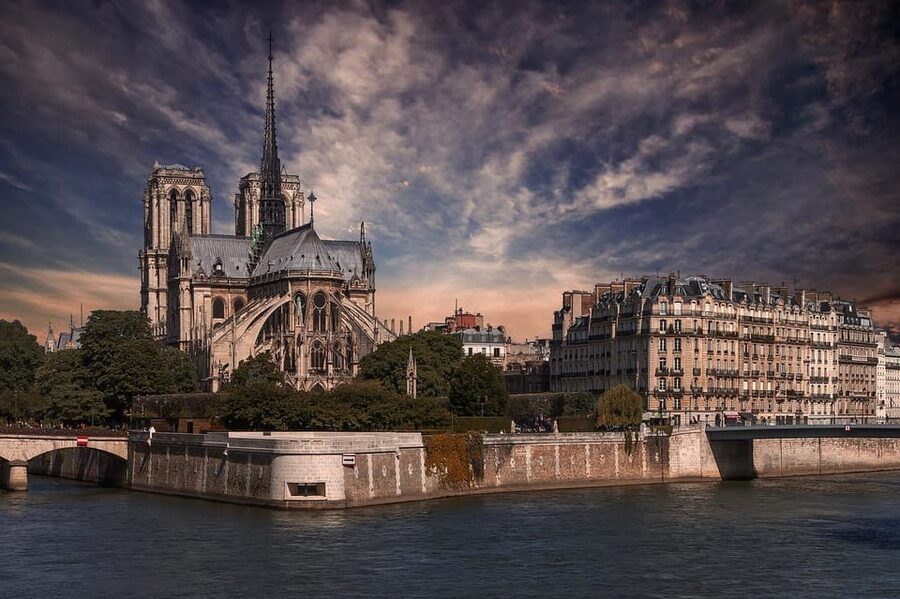
Notre-Dame is one of the tour’s main anchors. You learn about the cathedral and its place in Paris, rather than simply stopping for a quick photograph. Its position on the Île de la Cité helps explain why this island became such an important center of religious and political life.
The tour description also includes Sainte-Chapelle. This Gothic chapel is famous for its stained glass and royal connections, although the available information does not promise an interior visit. Treat it as a sight you may see and discuss from the outside unless your guide tells you otherwise.
This part of the walk is especially useful if you have little background in French history. The story reaches back to medieval Paris, when the city was already one of Europe’s largest centers and had a population of around 200,000. You also hear about the Sorbonne and Paris as a place of learning, religion, government, and trade.
Expect stories rather than a detailed architectural survey. The guide may explain how churches, bridges, and public buildings reflect different periods, but the purpose is to give you a clear framework for the city. If you want to study Gothic design in depth, you will need more time inside the monuments afterward.
The Louvre as palace, museum, and political symbol
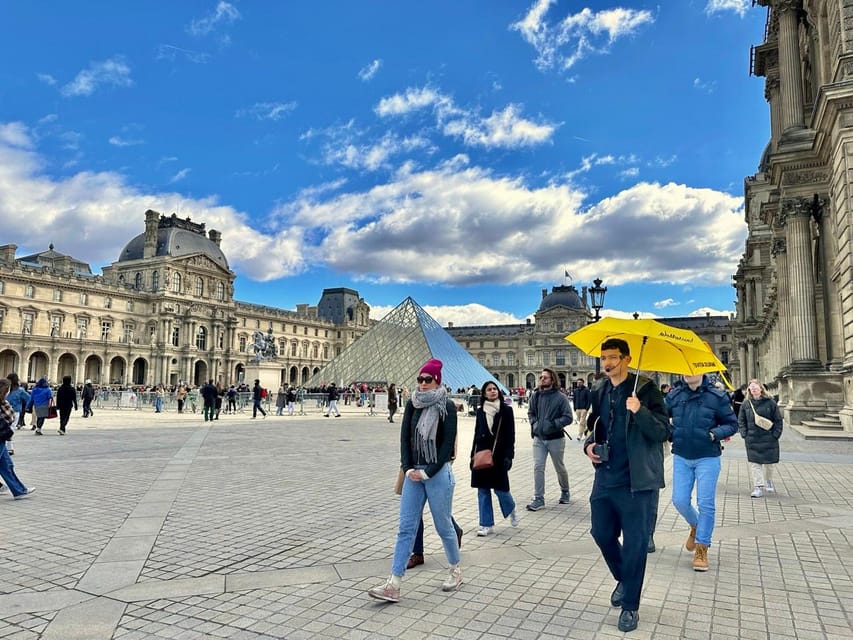
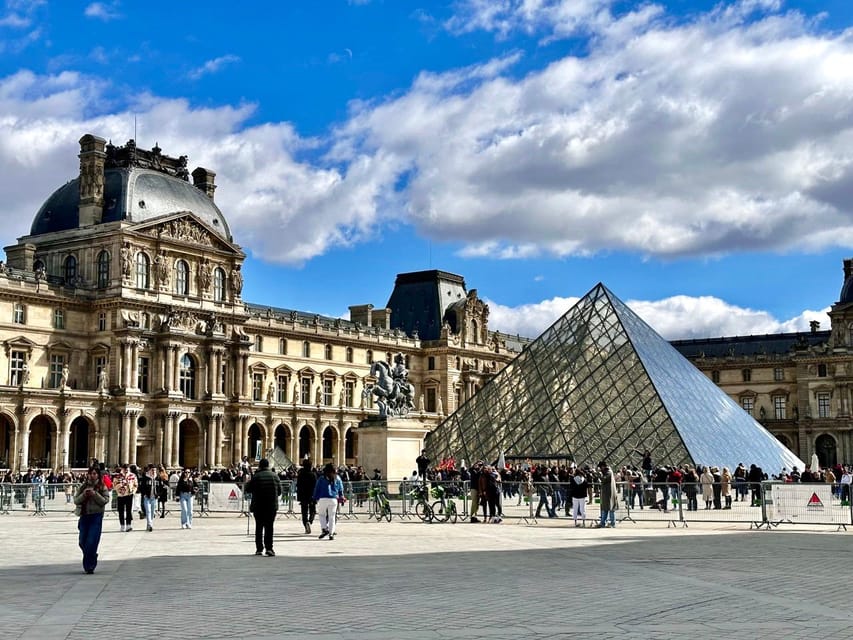
The Louvre is more than a museum stop here. The tour explains its earlier life as a palace and places the building within the story of French kings, royal authority, and the changing center of Paris.
That context matters. Many people arrive at the Louvre focused only on the Mona Lisa and the museum’s vast collection. A walking tour helps you see why the building became so large and influential before it became one of the world’s best art museums.
The Mona Lisa receives its own story through the account of one of history’s most daring art thefts. This is a smart choice for a general walking tour because it links art history with crime, public fascination, and the modern celebrity of the painting.
Do not expect to explore the Louvre’s galleries during this activity. The experience is outdoors and lasts 150 minutes, so the museum is best treated as a separate visit. I would book this walk before your Louvre day, then return with a better sense of the building’s scale and purpose.
The Louvre can consume an entire day on its own. By learning its story first, you can make a more informed choice about what to see inside instead of wandering through rooms without a plan.
More History Walking Tours in Paris
- Hidden Paris: Explore Medieval Marais on a Walking Tour
★ 5.0 · 185 reviews - Paris: Le Marais & Montmartre Jewish History Walking Tour
★ 4.8 · 170 reviews - Paris: French Fashion History Walking Tour
★ 4.9 · 37 reviews - Paris Jewish History 2-Hour Private Guided Walking Tour
★ 4.6 · 32 reviews
Pont des Arts and the Seine’s role in Paris
Pont des Arts gives the route a chance to slow down and look at Paris from the river. Bridges are not just scenic viewpoints here. They explain how the city’s neighborhoods connect and why the Seine has always been central to Parisian life.
The bridge is also a natural place for your guide to link monuments together. From the river, you can better understand the relationship between the Louvre, the historic islands, the grand banks, and the gardens. The walk becomes less about individual buildings and more about how the city is arranged.
This is one of the tour’s strongest features for first-time visitors. Paris often makes more sense from its bridges and riverbanks than from a museum map. You get orientation, open views, and a short break from tight streets.
Crowds and weather can affect this section. Pont des Arts is a popular crossing, so it may not feel quiet or private. Still, the view and location make it a worthwhile part of the route, especially if you have just arrived and need to understand central Paris.
The Tuileries Gardens and the city’s grand redesign
The Tuileries Gardens provide one of the tour’s more relaxed stretches. The gardens connect the Louvre with the Place de la Concorde area and offer a clear example of Paris as a planned, ceremonial city.
Here, the subject shifts from medieval streets to royal design, public space, and the grand scale that defines central Paris. The setting also gives your legs a break from the denser parts of the route, although you are still walking.
The wider story reaches into the 19th century, when Paris was reshaped with broad boulevards, parks, aqueducts, and sewers. The guide explains that this redesign was not only about beauty and sanitation. Wide streets also made it harder to build barricades during future uprisings.
That is a memorable piece of urban history because it shows how architecture can serve political goals. Paris’s boulevards look polished and grand today, but they also reflect a government trying to control a city with a strong habit of revolt.
The Eiffel Tower may also enter the story as the symbol of modernization created for the 1889 Universal Exposition. The tour description includes it among the sights discussed, though the route details do not establish that you will walk to the tower. Keep that distinction in mind when planning your day.
The stories behind the monuments
The best reason to book this walk is the range of stories. You are not getting only royal dates and architectural labels.
The guide may discuss:
- The Parisii, the Gallic tribe connected with the city’s earliest name
- Roman rule and the growth of Paris as a major center
- The rise of Paris under the Franks
- Religious conflict and internal massacres
- The Enlightenment and the spread of new political ideas
- The French Revolution and the execution of the monarchy
- Napoleon’s rise and expansion
- Parisian revolts and the rebuilding of the city
- Quasimodo and the cultural story of Notre-Dame
- The Mona Lisa theft
- Paris during the period associated with Hitler
That is a wide range for 150 minutes. The benefit is variety. You can move from art to politics to architecture without getting stuck in one century.
The tradeoff is depth. No guide can give equal attention to every era in two and a half hours. If you are a serious specialist in the French Revolution, Napoleon, or Gothic art, you will likely want separate museum or neighborhood tours. For most first-time visitors, the broad sweep is more useful than a narrow lecture.
The guides and the quality of the storytelling
The guide makes or breaks a walking tour, and this one has earned a 4.9 rating from 78 reviews. Names praised in the supplied feedback include Tom, Yazid, Harry, Francesca, Thomas, Gurvan, Dawie, Tank, Toto, and Victoria.
Tom was described as a strong choice for a first activity in Paris, including for a solo visitor. Harry was praised for storytelling that made the past feel close, while Yazid brought an art history background and a warm manner to the walk. Thomas was singled out for combining detailed history with humor and an easy style suitable for both history fans and casual visitors.
A guide also brought illustrations to help explain Parisian history. That can be valuable during an outdoor tour, where you are often looking at a building that has changed over centuries and need a visual reference to understand what came before.
The feedback points to a shared strength: guides keep the group engaged. That matters more than a memorized list of dates. You want someone who can answer questions, adjust the tone, and make complicated events understandable.
Guide assignment is not fixed, so you cannot book a specific person based on these names. The individual style may vary, but the tour is presented as an English-language experience with a prepared narrative and a local guide.
Group feel, walking effort, and timing
The walk lasts 150 minutes. One detailed account estimated fewer than 20 people and said the group never felt like a large, slow-moving crowd, but group size can vary. Do not assume you will have a private or tiny tour.
The physical effort is described as good exercise without being strenuous. You should still wear comfortable shoes. Paris sidewalks, bridges, gardens, and historic streets can make a long walk feel more tiring than the distance suggests.
The tour works well early in your stay because it gives you practical orientation. One guide also offered tips about the city during the walk. Take notes if a restaurant, museum, neighborhood, or route catches your interest, but remember that no detailed list of guide recommendations is guaranteed.
Weather is worth considering. A crisp February morning was described as ideal for seeing the city, and cooler months may make a 150-minute outdoor walk easier. Summer heat, rain, or heavy crowds can change the experience. Check the forecast, carry water, and dress for a long period outside.
Is $31 a fair price?
At $31 per person, the cost is reasonable if you want a structured introduction to central Paris. You are paying for 150 minutes with an English-speaking guide, a prepared narrative, and access to historical context that would take substantial reading to assemble on your own.
The pricing needs a little explanation. This is connected to a pay-as-you-wish tour model, but the amount shown covers the reservation fee and the guide’s payment. You should not treat the $31 as a small booking charge followed by an expected full tip. The supplied information says your payment covers the guide’s payment in this case.
The value is strongest on your first or second day. You see several major areas, learn the basic story of Paris, and can then return independently to the Louvre, Notre-Dame, Sainte-Chapelle, or the gardens.
The value is weaker if you want long interior visits, a private guide, or a specialist tour devoted to one subject. Those are not the goals here. This is a broad, lively introduction to the historic center.
Free cancellation up to 24 hours before the activity adds useful flexibility, and you can reserve now while paying later. Check the available starting times before you commit, since the schedule is not fixed in the supplied details.
Who should book this Paris walk?
I would recommend it to first-time visitors who want the city to make sense quickly. Solo visitors may especially like the built-in structure and the chance to spend an evening or morning with a group. The experience also suits couples, families with older children, and adults with mixed levels of interest in history.
It is a good match for you if you enjoy:
- Big historical stories told in plain language
- Walking between major monuments
- Art, architecture, politics, and local character in one tour
- Seeing famous places from the outside before deciding where to spend more time
- A guide who can add humor and answer questions
You may want something else if you dislike walking, need guaranteed indoor access, or prefer a tightly focused subject. This is not a Louvre museum tour, a Notre-Dame interior visit, or a dedicated Eiffel Tower experience.
Should you book the Historic Paris Walking Tour?
Book it if you want a solid first orientation to Paris and enjoy learning through stories. The route covers the city’s essential historic center, and the guide’s role gives meaning to places you might otherwise photograph and forget.
I would schedule it near the start of your visit, ideally before a Louvre visit. You will understand the palace better, recognize the importance of the Seine, and have a clearer plan for returning to Notre-Dame, Sainte-Chapelle, or the Tuileries Gardens.
Skip it if you want to spend the same two and a half hours inside museums or if outdoor walking is a poor fit for your trip. For most first-time visitors, though, $31 buys a useful foundation, a bit of exercise, and a lively introduction to the city’s art, power, revolutions, and famously confident spirit.
FAQ
How long does the Historic Paris Walking Tour last?
The tour lasts 150 minutes, or two and a half hours.
What language is the tour conducted in?
The tour is conducted in English with a live English-speaking guide.
Where is the meeting point?
Meet outside Hôtel de Ville Metro station at exit 5. Look for a yellow umbrella.
How early should I arrive?
Arrive at the meeting point 10 minutes before the activity begins.
Is hotel pickup included?
No. Hotel pickup and drop-off are not included, so you must reach Hôtel de Ville on your own.
What sights are included in the tour?
The tour covers or discusses places including the Louvre, Notre-Dame Cathedral, Pont des Arts, and the Tuileries Gardens. The wider description also includes Sainte-Chapelle, the Eiffel Tower, elegant boulevards, and bridges.
Can I cancel for a full refund?
Yes. You can cancel up to 24 hours before the activity for a full refund.
Just added around Paris
- The historic district of Montmartre★ 4.9 · 66 reviews
- Invalides Museum – WWI & WWII – Guided Tour up to 8 guests★ 5.0 · 32 reviews
- Small-Group Canadian Normandy D-Day Juno Beach from Paris★ 4.9 · 132 reviews
- Paris: Khéops VR Experience – Explore Ancient Egypt★ 4.9 · 39 reviews
- Paris Jewish History 2-Hour Private Guided Walking Tour★ 4.6 · 32 reviews
- Paris: French Fashion History Walking Tour★ 4.9 · 37 reviews
- Paris: Le Marais & Montmartre Jewish History Walking Tour★ 4.8 · 170 reviews
- From Paris: Private Mont Saint-Michel & Normandy D-Day Tour★ 4.6 · 32 reviews
Paris History Tours, compared.

Normandy D-Day Sites & Cemetery Day Trip from Paris with Lunch
Read our review →
Normandy D-Day Small-Group Day Trip with Omaha Beach, Cemetery & Cider Tasting
Read our review →
Normandy D-Day Beaches and American Cemetery Day Trip from Paris
Read our review →
Paris: Normandy D-Day Sites Guided Day Trip with Lunch
Read our review →
Paris: Dark History and Ghostly Guided Walking Tour
Read our review →
From Paris: Normandy D-Day Landing Beaches Full-Day Tour
Read our review →
Notre Dame Cathedral: Exterior Guided Tour & Unscheduled Access
Read our review →
Paris City of Fashion History Private Guided Walking Tour
Read our review →Browse the lists this tour appears in