Review · PARIS
Paris Jewish History 2-Hour Private Guided Walking Tour
Parisian Jewish history begins in places many visitors pass without a second thought. This two-hour private walk links Notre Dame, the old Jewish quarter, and the Marais to explain how Jewish life in Paris changed through royal persecution, anti-Semitism, war, and survival.
I like the route for two reasons: it connects major sights with lesser-known stories, and a private guide can adjust the conversation to your questions. The Art Nouveau synagogue on Rue Pavée and the old Jewish streets give the walk a clear sense of place. The drawback is the short running time. The subject is large, and one recent booking found the guide could have offered more stories about everyday Jewish life.
I also like the starting point at Shakespeare and Company. It is easy to find, close to Notre Dame, and gives you a clear meeting landmark. Guides such as Hannah and Boris have been praised for their clear explanations and warm approach, though the depth of the experience can depend on who leads your walk.
Key points to know before you book
- Notre Dame opens the story: The walk uses the cathedral area to discuss Jewish life and Jewish connections to medieval Paris.
- The Pletzl is the heart of the route: You explore the traditional Jewish quarter, including Rue des Écouffes and the Goldenberg Deli.
- Rue Pavée brings architecture into the lesson: Its roughly century-old synagogue is known for its Art Nouveau design.
- The route faces difficult subjects: Royal raids, anti-Semitic beliefs, the Dreyfus affair, Vichy, and the Nazi occupation all form part of the discussion.
- Private means flexible conversation: You can ask questions and spend more time on topics that matter to your group.
- The walk ends near Place de la Bastille: Plan your next stop from there rather than returning to the starting point.
Why this two-hour walk matters
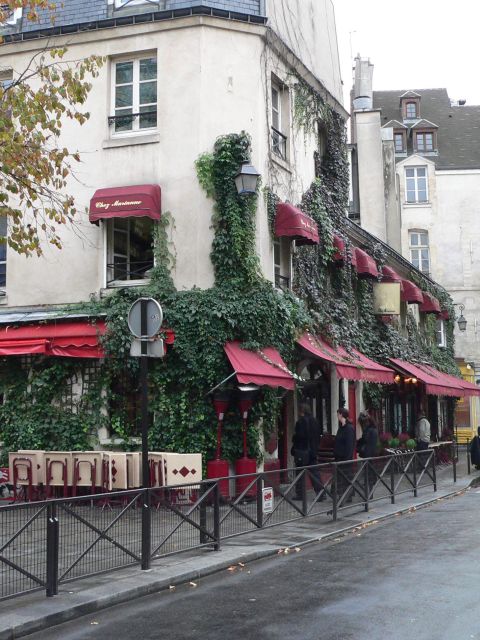
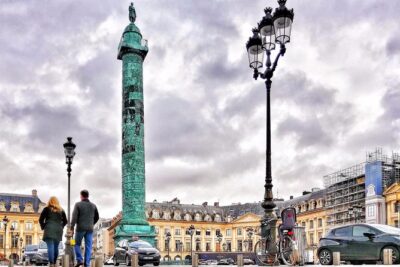
Paris has Jewish stories in many districts, but the area around the Île de la Cité and the Marais gives you a useful starting point. The route moves from the city’s medieval core toward the Pletzl, the traditional Jewish quarter. That change in streets helps you see Jewish history as part of Paris itself, not as a separate subject added onto a standard sightseeing tour.
The story is not simple. Jewish communities existed in the Paris area before modern France took shape, then faced periods of expulsion, restriction, and renewed settlement. The walk covers the actions of French kings, the growth of prejudice and superstition, the Dreyfus affair, the Vichy government, and the Nazi occupation during World War II.
That range is both the tour’s strength and its limit. You get a broad historical framework in a short time, but you should not expect a full study of religious practice, family life, or modern Parisian Jewish communities. If daily life is your main interest, ask for those stories early in the walk.
More History Walking Tours in France
- Paris: Dark History and Ghostly Guided Walking Tour
★ 4.7 · 1,000 reviews - Paris City of Fashion History Private Guided Walking Tour
★ 5.0 · 221 reviews - Paris City Center w/ Notre Dame interior | Exclusive Walking Tour
★ 5.0 · 190 reviews
Meeting at Shakespeare and Company
Your guide meets you in front of Shakespeare and Company, beside the green water fountain. Look for a red canvas tote bag, the identifying marker provided for the meeting.
This is a smart starting point. The bookstore is a famous literary landmark, and the location is close to Notre Dame. You avoid the confusion of meeting inside a large train station or at a busy transport hub. Arrive ready to walk, since the route continues through several central neighborhoods and finishes near Place de la Bastille.
The tour operates in rain or shine. Paris weather can change quickly, so bring a light rain layer and shoes you can wear comfortably on city streets. Food and drinks are not included, although the route passes the Goldenberg Deli and other places where you may want to stop later.
Notre Dame and the first layer of the story
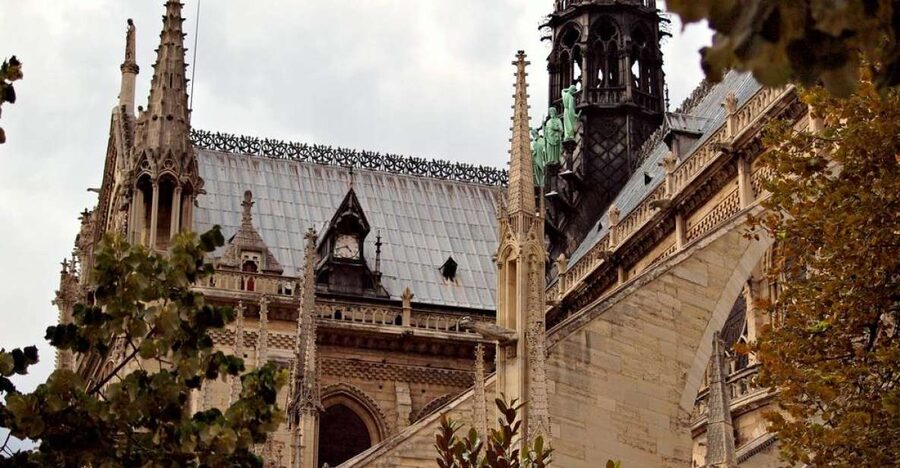
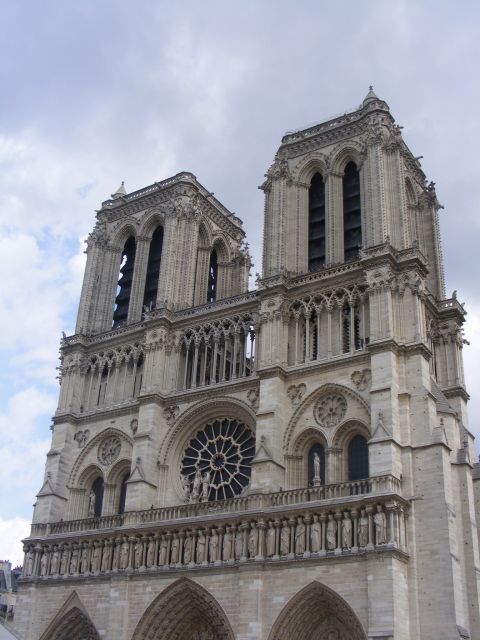
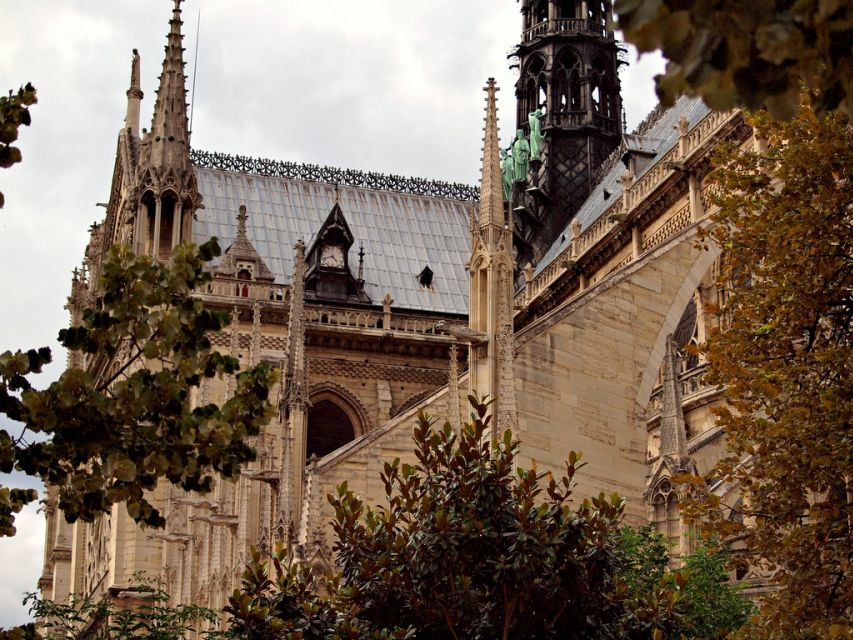
The Notre Dame section lasts about 30 minutes. Here, the cathedral is more than a photo stop. Your guide explains Jewish aspects connected with the site and places the surrounding area in the context of medieval Paris.
This is where the tour begins to explain how myths and prejudices formed. The guide discusses medieval superstitions and false ideas about the Jewish community, showing how religious and political attitudes affected real people. That context helps you read the city with more care. A grand church, a royal center, and nearby streets all belonged to the same social world.
The itinerary calls this a guided tour of Notre Dame, but the supplied details do not promise entry into the cathedral or a reserved interior visit. Think of this portion as an explanation around the cathedral area rather than a separate cathedral admission. If going inside Notre Dame is essential to you, confirm that point before booking.
The 30-minute time slot is enough to establish the historical setting without letting the cathedral take over the whole experience. You will then move toward the memorial connected with victims of the Vichy regime. This transition brings the story into the 20th century and makes clear that persecution was not only a medieval problem.
Remembering the Vichy regime
A later stop covers the memorial to victims of the Vichy regime. This is one of the most serious moments of the walk. The discussion connects French collaboration, anti-Semitic policy, and the Nazi occupation with the broader history of Paris.
The value here is the link between national events and the streets around you. Instead of treating World War II as a distant chapter, the guide places it within the city you are walking through. You also hear about the difference between the French state under Vichy and the German occupation, subjects that deserve careful explanation.
Because the tour lasts only two hours, this part cannot cover every name, date, or individual story. Still, it gives you a framework for understanding why memorials and plaques matter in Paris. I would pay close attention here and save casual sightseeing for later. The tone is historical and reflective, not light entertainment.
More History Walking Tours in Paris
- Hidden Paris: Explore Medieval Marais on a Walking Tour
★ 5.0 · 185 reviews - Paris: Le Marais & Montmartre Jewish History Walking Tour
★ 4.8 · 170 reviews - Historic Paris Walking Tour in English
★ 4.9 · 78 reviews - Paris: French Fashion History Walking Tour
★ 4.9 · 37 reviews
Entering the Pletzl in the Marais
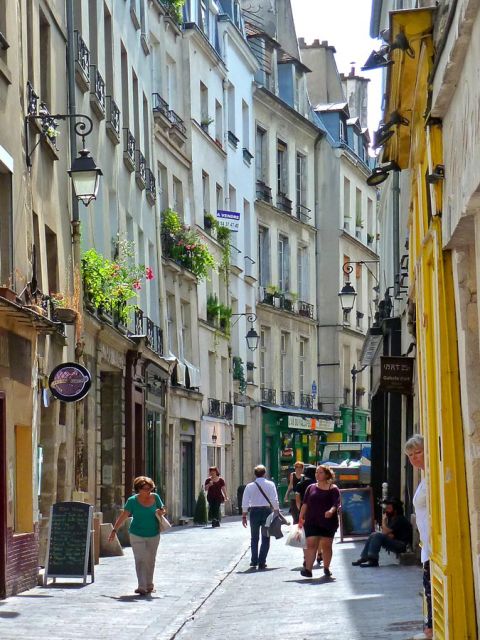
The route then spends about an hour in Le Marais, with the Pletzl as its main focus. The Yiddish word means little place, and the name points to the traditional Jewish quarter. Here, the subject becomes more physical. You are no longer only hearing about policy and persecution. You are seeing the streets where Jewish life took shape.
The Pletzl is the strongest part of the route for visitors who want a connection between history and the present city. Your guide points out the neighborhood’s Jewish character and explains how the area changed over time. The walk includes Rue des Écouffes, one of the streets named in the route, as well as the Goldenberg Deli.
The deli is an especially useful stop because food and neighborhood identity often survive political upheaval. The tour does not include food or beverages, so you should not assume a tasting. Still, the location gives the guide a chance to discuss the way Jewish traditions, businesses, and public life became visible in this part of Paris.
This section is also where I would ask about ordinary life. How did families work, worship, and shop? What changed between the medieval community and the modern neighborhood? One person who took the tour wanted more stories about Jewish life, and that is fair criticism for a subject this broad. A private walk gives you the chance to steer the conversation toward those questions.
Rue Pavée and its Art Nouveau synagogue
Rue Pavée offers one of the route’s most distinctive sights: a synagogue about 100 years old, designed in the Art Nouveau style. Its value is not only religious. It also shows how Jewish institutions became part of the architecture of modern Paris.
The building is described as an Art Nouveau jewel, but the more useful point is what the design tells you. Parisian Jewish history is not limited to persecution and memorials. It also includes renewal, community building, and a place in the city’s modern cultural life. The synagogue gives the walk a change of mood after the darker material about war and state violence.
The available information does not state that the tour enters the synagogue. Plan to admire it from the route unless your guide confirms access. Religious buildings may have their own visiting rules, and a short private walk should not be treated as a guaranteed interior tour.
Architecture also helps make this stop memorable. The guide can explain how such a complex building fits into a dense urban street, which connects to one of the tour’s advertised themes: the design and construction choices that made the structure possible. If you enjoy buildings as much as dates, this will likely be one of your favorite pauses.
Place des Vosges and the wider Marais
Place des Vosges is included among the highlights and is often regarded as one of the most beautiful squares in Paris. Its regular shape, elegant façades, and quiet sense of order offer a visual counterpoint to the narrower streets around the Pletzl.
The square also broadens the tour beyond a single community. You see how Jewish history sits within the larger story of the Marais, a district shaped by royal planning, religious communities, migration, commerce, and changing city life. Your guide can connect the square to the surrounding neighborhood rather than treating it as a quick photo stop.
Time is the issue. The walk gives about an hour to the Marais, and that hour must cover the Pletzl, Rue des Écouffes, the deli, Rue Pavée, the synagogue, Place des Vosges, and other historical points. You will see a strong selection of sites, but you may not linger at each one. If you want extra time for photographs or architecture, ask your guide how the route can be adjusted.
Finishing near Place de la Bastille
The walk ends at Place de la Bastille. This gives the tour a clear eastward path through central Paris, but it means you finish some distance from Shakespeare and Company. Plan your next stop from Bastille rather than building in time to return to the meeting point.
The ending also fits the tour’s wider story. You have moved from Notre Dame and the medieval city toward the Marais and the eastern side of central Paris. The route is not a simple loop. It is a historical walk through changing neighborhoods.
Since the details do not promise transport between stops, assume you will walk the full route. The activity is listed as wheelchair accessible, but central Paris streets, building entrances, and crowd conditions can vary. If you use a wheelchair, confirm the exact route and any access limits with the provider before the day.
Guides, languages, and the private format
The tour is available in English, French, and Serbo-Croatian. It is a private group experience, so you are not sharing the guide with a large mixed crowd. That matters on a subject where you may want to pause, ask about family history, or request more explanation of a difficult event.
Specific guides associated with the experience include Hannah and Boris. Hannah has been praised for being friendly, professional, and willing to answer questions. Boris has been praised for linking Jewish history with the story of Paris and wider Europe in a thoughtful way. Those comments suggest that guide style can vary, which is normal with a small operator.
The private format gives you some protection against a rushed, one-size-fits-all lecture. Tell your guide if you want more focus on architecture, the Dreyfus affair, World War II, religious life, or the present-day neighborhood. You cannot cover everything in 120 minutes, so clear priorities will improve the walk.
The operator, Paris in Person Private Tours, was selected among the top 10 small tour operators in Europe in a 2025 industry awards program. That is useful context, but it does not replace checking the exact guide and route for your date. The experience is still shaped by the person leading it.
Is $176 per person a fair price?
At $176 per person, this is not a budget walking tour. The price makes the most sense for a private group that values direct conversation and a focused subject. If you are traveling alone or as a couple, the cost is harder to justify unless Jewish Paris is a major reason for your visit.
You are paying for the guide’s time, a private format, and a specialized route rather than for admission tickets or food. No beverages, meals, or stated synagogue entry are included. That keeps the comparison clear: the value lies in interpretation and access to a tailored conversation.
I would see the price as reasonable for a family or small group that wants to ask many questions. It is less compelling if you simply want to see the Marais, since you can walk the district independently. The tour earns its price when the historical explanation is the main purpose, not when sightseeing alone is enough.
Free cancellation up to 24 hours before the start and reserve-now, pay-later booking reduce some planning risk. Those policies are practical, but they do not change the core value question. Book it for the guide and subject, not for included attractions.
Who will get the most from this walk?
This experience suits you if you want Jewish history placed within the wider story of Paris. It is a good fit for first-time visitors who want a historical introduction, as well as repeat visitors who have already seen the main monuments and want a more focused neighborhood walk.
It also suits families with older children, history students, and anyone interested in the Dreyfus affair, the Vichy government, or the Nazi occupation. The private format lets you ask direct questions without waiting for a large group to move on.
You may want something else if you need a long architectural tour, a food walk, or a detailed study of present-day Jewish life. The two-hour schedule gives you a strong route and a serious introduction, but it cannot offer a full account of every period or community.
Should you book the Paris Jewish History walk?
Book this tour if you want a focused historical walk linking Notre Dame, the Vichy memorial, and the Pletzl with a private guide. Its best qualities are the carefully chosen route, the Art Nouveau synagogue on Rue Pavée, and the chance to shape the discussion around your own questions.
Before booking, accept two limits: the subject is heavy, and two hours goes quickly. Ask for more everyday stories about Jewish life if that matters to you, and confirm whether Notre Dame or the synagogue includes interior access. For a small group that values context over a checklist of attractions, the price can be worthwhile.
FAQ
Where does the Paris Jewish History walking tour begin?
The meeting point is in front of Shakespeare and Company bookstore, beside the green water fountain. Your guide will carry a red canvas tote bag.
Where does the tour finish?
The walk finishes at Place de la Bastille.
How long is the tour?
The tour lasts two hours. The itinerary includes about 30 minutes around Notre Dame, 15 minutes at another guided stop, and about one hour in Le Marais.
Which languages are available?
The live tour guide can lead the experience in English, French, or Serbo-Croatian.
Is the walking tour private and wheelchair accessible?
Yes. The tour is for a private group and is listed as wheelchair accessible.
What happens if it rains, and can I cancel?
The tour operates rain or shine. You can cancel up to 24 hours in advance for a full refund.
More Jewish Heritage Tours in Paris
- Budapest Jewish Heritage Memorial Walking Tour & Synagogue Entry
★ 5.0 · 568 reviews - Budapest: Jewish Heritage Guided Tour with Synagogue Ticket
★ 4.8 · 533 reviews - 3-Hour Porto Jewish Heritage Walking Tour with Local Guide
★ 4.5 · 396 reviews - Private Jewish Heritage Journey by Barcelona Dreaming
★ 4.8 · 383 reviews
More Private History Tours in France
- History of Paris City Center w/ Notre Dame Semi-Private 12ppl Max
★ 5.0 · 194 reviews - Paris WW2 The German Occupation Small group or Private tour
★ 4.5 · 128 reviews - Normandy D-Day Private Tour with Omaha Beach from Paris
★ 5.0 · 87 reviews - From Paris: Private Mont Saint-Michel & Normandy D-Day Tour
★ 4.6 · 32 reviews
Just added around Paris
- The historic district of Montmartre★ 4.9 · 66 reviews
- Invalides Museum – WWI & WWII – Guided Tour up to 8 guests★ 5.0 · 32 reviews
- Small-Group Canadian Normandy D-Day Juno Beach from Paris★ 4.9 · 132 reviews
- Paris: Khéops VR Experience – Explore Ancient Egypt★ 4.9 · 39 reviews
- Paris: French Fashion History Walking Tour★ 4.9 · 37 reviews
- Paris: Le Marais & Montmartre Jewish History Walking Tour★ 4.8 · 170 reviews
- Historic Paris Walking Tour in English★ 4.9 · 78 reviews
- From Paris: Private Mont Saint-Michel & Normandy D-Day Tour★ 4.6 · 32 reviews
Paris History Tours, compared.

Normandy D-Day Sites & Cemetery Day Trip from Paris with Lunch
Read our review →
Normandy D-Day Small-Group Day Trip with Omaha Beach, Cemetery & Cider Tasting
Read our review →
Normandy D-Day Beaches and American Cemetery Day Trip from Paris
Read our review →
Paris: Normandy D-Day Sites Guided Day Trip with Lunch
Read our review →
Paris: Dark History and Ghostly Guided Walking Tour
Read our review →
From Paris: Normandy D-Day Landing Beaches Full-Day Tour
Read our review →
Notre Dame Cathedral: Exterior Guided Tour & Unscheduled Access
Read our review →