
Review · PARIS
Paris: Le Marais & Montmartre Jewish History Walking Tour
Jewish Paris comes into focus on this walk, not as a single historic quarter frozen in time, but as a story spread across old streets, memorials, shops, artists’ studios, and places that have vanished. You begin in Le Marais, then cross the city to Montmartre, where Jewish artists and writers helped shape Paris’s creative life. I like the two-neighborhood design and the visit to the Shoah Memorial, which gives the history real weight. The tradeoff is a long walk with some difficult subject matter and limited indoor access.
I also like the small-group format. With no more than nine people, guides such as Benjamin, Benoit, Pierre-Louis, Achilles, and Pi-Lou have been able to answer questions and adjust the pace. Plan carefully, though: the meeting point can be hard to spot, and one person reported confusion at the large BHV department store. Arrive 15 minutes early, and do not count on joining after the walk begins.
Key points to know before booking
- Two very different Paris neighborhoods: Le Marais shows Jewish community life and memory, while Montmartre explores Jewish artists, writers, and creative circles.
- The Shoah Memorial is a serious and moving stop: The exterior, wall of names, and memorial spaces give the World War II section a solemn focus.
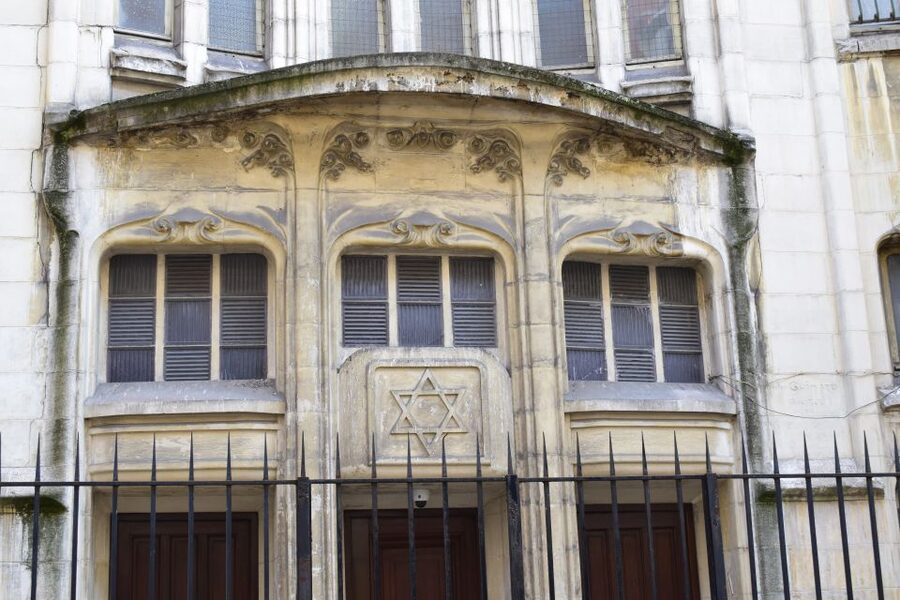
- Agoudas Hakehilos Synagogue is viewed from outside: You see Hector Guimard’s Art Nouveau design, but synagogue interiors are not included.
- Public transport connects the two halves: About 30 minutes of the 210-minute tour is spent getting from central Paris to Montmartre.
- Expect hills, stairs, traffic, and steady walking: The experience is not suitable for wheelchair users or people with mobility impairments.
- The final reward is Sacré-Cœur and the city view: The tour ends at Square Louise-Michel, below the basilica, with broad views across Paris.
Why this walk gives Jewish Paris a wider frame
Many Paris history walks stay in Le Marais, where Jewish life is easiest to see today. This experience adds Montmartre, which changes the story from one of community and persecution to one of art, ambition, and cultural exchange.
That broader frame is the tour’s best idea. In Le Marais, you learn how Jewish communities lived, worked, worshipped, and adapted over many centuries. In Montmartre, you follow the part Jewish artists and thinkers played in the city’s creative world in the late 19th and early 20th centuries.
The tour also handles painful subjects directly. Guides have discussed the mistreatment of Jews in France, the Nazi occupation, deportation, resistance, and the people who helped others escape. The Shoah Memorial gives those subjects a place of remembrance rather than leaving them as abstract dates.
This is not a museum tour with long indoor stops. It is a walking lesson built around streets and exteriors. That means the guide matters a great deal. The strongest guide experiences have come from people such as Benjamin, Benoit, Pierre-Louis, Achilles, and Pi-Lou, who have been praised for clear English, careful treatment of sensitive topics, and lively storytelling.
More History Walking Tours in France
- Paris: Dark History and Ghostly Guided Walking Tour
★ 4.7 · 1,000 reviews - Paris City of Fashion History Private Guided Walking Tour
★ 5.0 · 221 reviews - Paris City Center w/ Notre Dame interior | Exclusive Walking Tour
★ 5.0 · 190 reviews
Starting in Le Marais, where the story is still visible
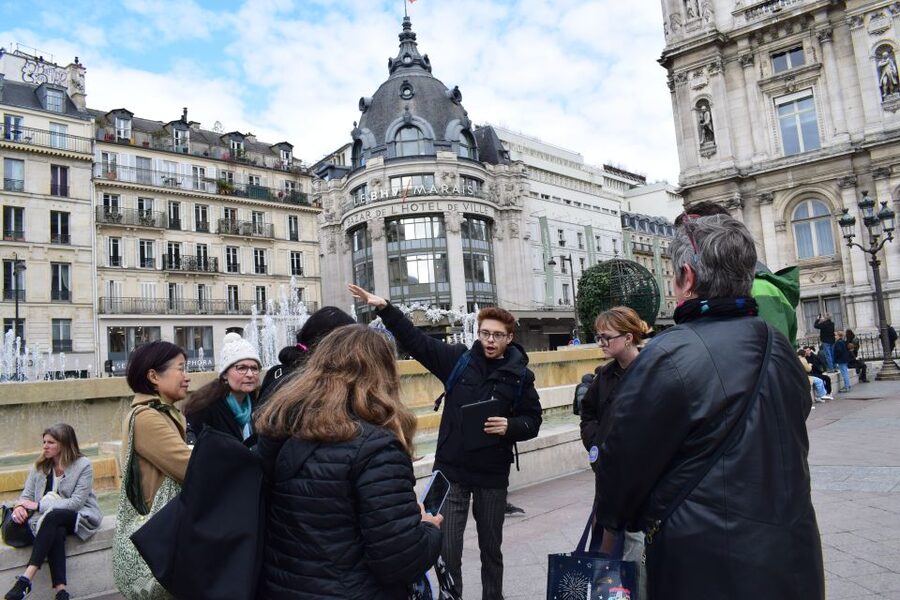
The walk begins at one of two possible meeting points, BHV Marais or L’Elephant Du Nil, depending on the option you book. Check the exact location closely. If you meet near BHV, remember that the department store has four entrances, which can make the first few minutes confusing.
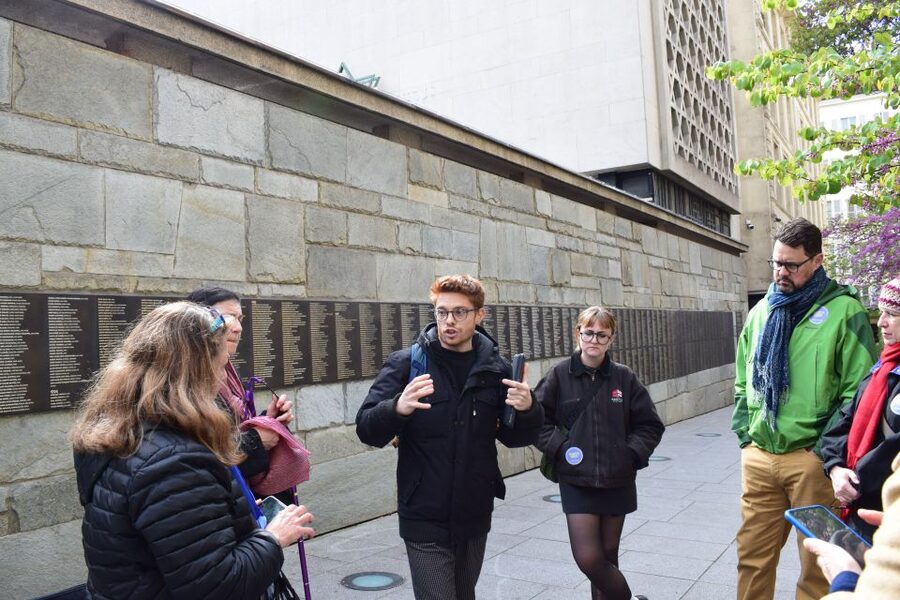
Once the group is together, the guide leads you through Le Marais for about an hour and a half. This is the part of Paris most closely linked with the city’s Jewish quarter today, though it is also a fashionable area filled with independent shops, restaurants, galleries, and old buildings.
Your guide sets the neighborhood in a longer French story. Jewish life in Paris has changed repeatedly, shaped by periods of acceptance, restriction, expulsion, return, immigration, and political upheaval. The useful point is not just memorizing dates. You begin to see how laws and events affected ordinary streets, businesses, families, and places of worship.
The walk passes through Le Village Saint-Paul, an area where the old street pattern helps you picture earlier community life. Much of what you hear concerns places that have changed or disappeared, so you need to listen rather than expect every stop to look like a preserved historic site.
That can be a strength. The guide helps you read the modern neighborhood through what remains and what no longer does. It also prevents a common mistake: assuming today’s Jewish quarter represents an unbroken community unchanged since the Middle Ages.
Agoudas Hakehilos and Hector Guimard’s synagogue
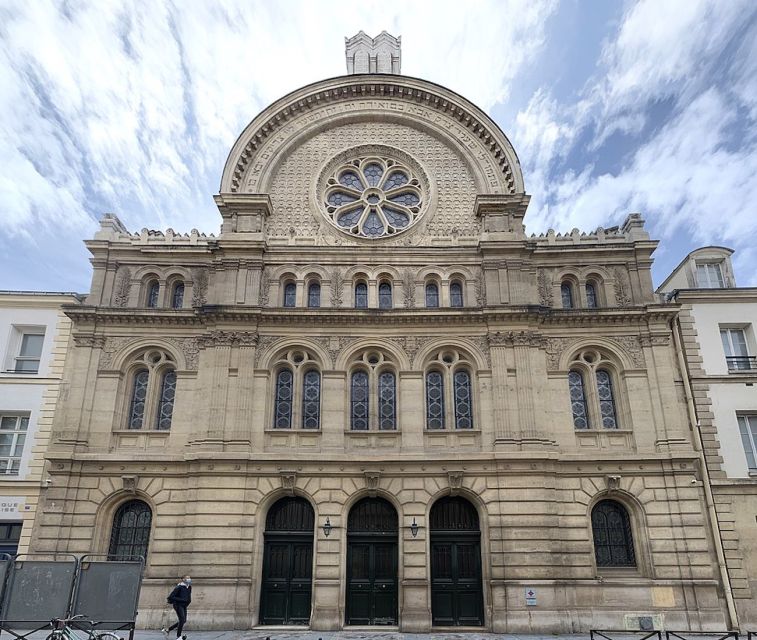
One of the most distinctive stops is the exterior of Agoudas Hakehilos Synagogue, designed by Hector Guimard. Guimard is best known for the Art Nouveau entrances of the Paris Métro, and the synagogue gives you another way to recognize his flowing, decorative style.
You will not go inside. Indoor synagogue visits are not included, and the tour does not include admission to monuments or historical sites. Still, the exterior is worth attention, especially if you like architecture and want to connect a familiar Paris design language with Jewish religious life.
The guide explains the building’s place in the neighborhood and the community it served. This is a good example of why a local guide adds value: on your own, you might admire the façade, take a photograph, and walk on. With context, the building becomes part of a larger account of migration, worship, and the changing shape of Jewish Paris.
Do not expect a long architectural lecture. The walk’s focus is history and human stories, with buildings serving as evidence. That balance works well for most people, though anyone seeking an in-depth Art Nouveau tour may want a separate architecture visit.
The Shoah Memorial and the weight of memory
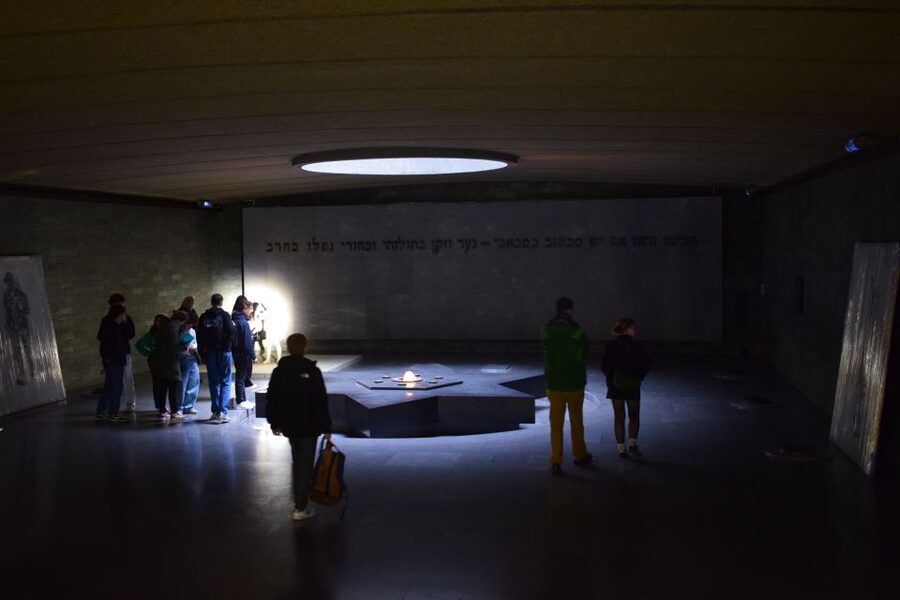
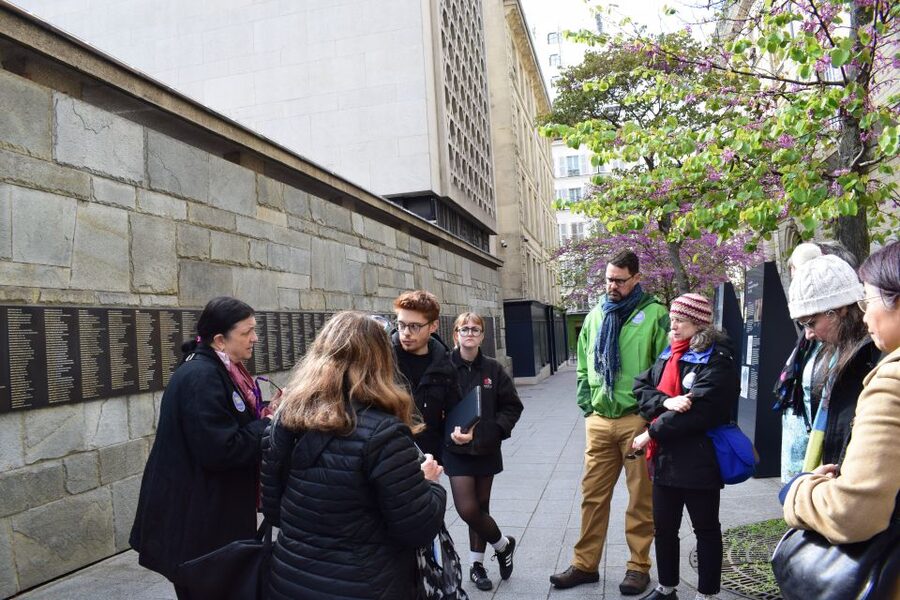
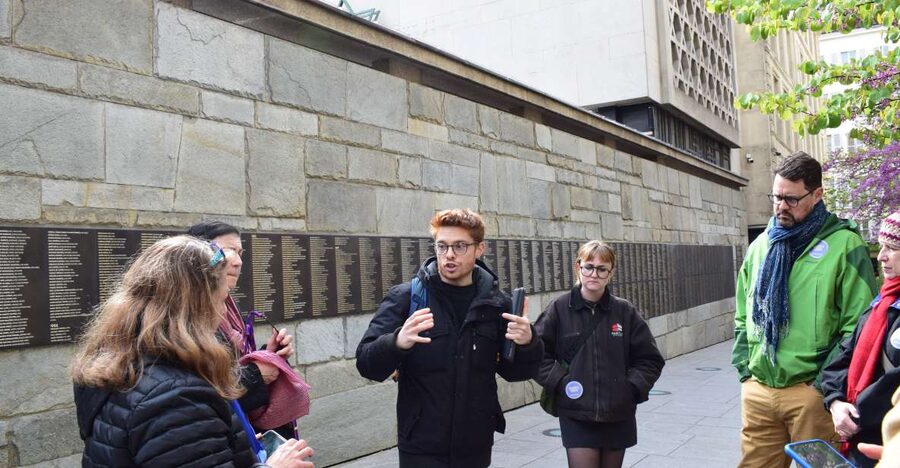
The Shoah Memorial is the emotional center of the Le Marais section. The group explores the historical significance from the exterior, including the wall of names and memorial areas mentioned by several participants. One guide may take you near the crypt or explain its meaning, but you should not assume a full museum admission is part of the walk.
This portion is deliberately more solemn. The guide connects the memorial to the lives of Jews in France during World War II and to the French people who helped others escape. That combination matters. The story includes both state-sponsored persecution and acts of courage by individuals.
You should allow yourself time to take in the memorial quietly. This is not a stop for casual photographs or quick sightseeing. The guide’s tone is important, and the strongest accounts of this walk point to careful handling of painful subjects, including the Holocaust and present-day tensions.
The memorial also keeps the tour from becoming a purely picturesque stroll through old streets. Le Marais has excellent food and attractive architecture, but the Jewish story includes loss as well as survival. The walk makes room for both.
More History Walking Tours in Paris
- Hidden Paris: Explore Medieval Marais on a Walking Tour
★ 5.0 · 185 reviews - Historic Paris Walking Tour in English
★ 4.9 · 78 reviews - Paris: French Fashion History Walking Tour
★ 4.9 · 37 reviews - Paris Jewish History 2-Hour Private Guided Walking Tour
★ 4.6 · 32 reviews
From Hôtel de Ville to Montmartre by public transport
The Le Marais section finishes near Hôtel de Ville, Paris’s City Hall. From there, the group uses public transport to reach Montmartre, with tickets included in the price.
Allow about 30 minutes for this change of scene. It is not wasted time, but it does break the rhythm of the walk. You are moving from a central historic district to a hilltop neighborhood with a very different feel, and the transport ride helps mark that shift.
This is also a practical reason to wear comfortable shoes and keep your belongings easy to manage. You will be moving as a group through public space, then walking uphill in Montmartre. Stay close to the guide, especially around crossings and busy streets.
One person noted that not every participant may be equally familiar with Paris traffic and bike patterns. Keep your eyes up when crossing roads, and do not rush to take photographs while the group is moving.
Montmartre beyond the postcard
The Montmartre section lasts about an hour and a half. Most people know the area for Sacré-Cœur, steep lanes, artists, and panoramic views. This tour uses those familiar sights to tell a less familiar story about Jewish artists, writers, and thinkers who were part of the neighborhood’s creative life.
At 7 Rue Ravignan, the guide discusses the artistic world associated with Montmartre. The address is linked with the Bateau-Lavoir, the former artists’ residence nearby. You pass the Bateau-Lavoir and hear about the studios, cafés, and creative circles that helped make the area a center for new ideas in the late 19th and early 20th centuries.
You do not enter an artists’ studio or museum as part of the tour. The Musée de Montmartre is passed by rather than visited. That limitation is worth knowing if you expect indoor exhibits or original artworks.
The reward is a sense of connection. Instead of treating Montmartre as a collection of charming lanes, the guide places it in the social world of artists and writers. Jewish identity appears here through people, relationships, and creative work rather than only through religious buildings or memorials.
At 16 Rue du Mont-Cenis, the group continues this account of Jewish participation in Montmartre’s cultural life. The exact emphasis can vary with the guide and the group’s questions. Guides have been praised for answering questions and linking the local streets to broader French and Jewish history.
Sacré-Cœur and the last look across Paris
The route finishes around Sacré-Cœur Basilica and Square Louise-Michel. The basilica itself is a sightseeing stop, not an included interior visit. You can admire the white church and, from the surrounding area, look out over the roofs of Paris.
These wide views make a fitting ending. You have spent the first half of the walk thinking about community, memory, and persecution. You then move through Montmartre’s creative history before ending above the city, with a chance to connect those stories to the Paris of today.
The tour does not simply stop at the basilica and send you away. The planned ending includes a final reflection on Jewish Paris and artistic expression. Afterward, you are well placed to continue exploring Montmartre, though the activity itself ends at Square Louise-Michel.
The hill is also the practical downside of this finale. Montmartre involves slopes, steps, and uneven walking. If you tire easily, the 210-minute duration may feel longer than the advertised three and a half hours because it includes substantial movement rather than long seated breaks.
What the guide adds to the experience
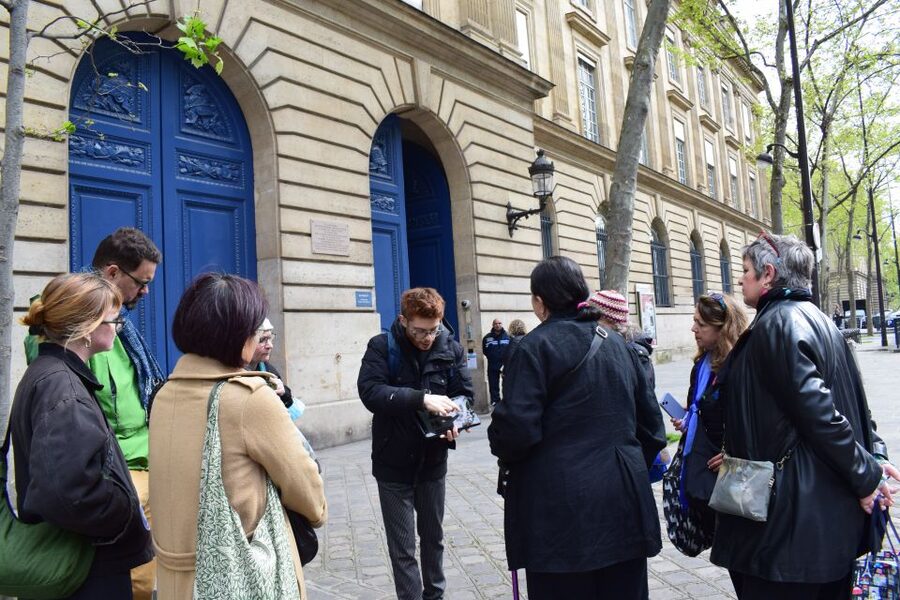
The guide is the main reason to book this walk instead of following a printed route. Several guides have led it, including Benjamin, Benoit, Pierre-Louis, Achilles, Pi-Lou, and others. The exact person depends on the date and assignment, but the strongest qualities to look for are clear English, comfort with difficult history, and willingness to take questions.
Benjamin has been singled out for connecting Le Marais’s past with its current character. Benoit has combined history with practical Paris suggestions, including food recommendations. Pierre-Louis has been praised for making French and Jewish history feel connected rather than separate, while Achilles has led groups through a broad account of Jewish life in France across many centuries.
The walk can also include food suggestions at the end, especially around the Jewish quarter. Falafel has come up as a popular recommendation, but food is not included, so budget separately if you plan to eat afterward.
A good guide can also adjust the pace and focus. One participant appreciated having time for a camera battery change and a slower pace. That sort of flexibility cannot be promised every time, but a group of up to nine makes questions and small adjustments more realistic than a large coach tour.
Is $80 a fair price?
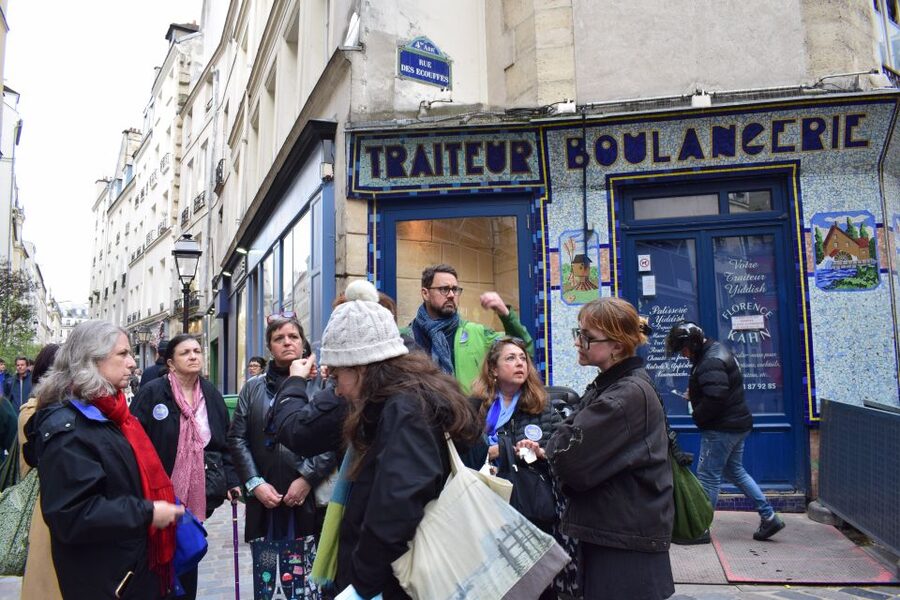
At $80 per person, the tour costs more than a self-guided walk, but the comparison is not quite equal. You are paying for 210 minutes, an English-speaking local guide, a group capped at nine, and public transport tickets between Le Marais and Montmartre.
The strongest value comes from the interpretation. Many of the Jewish sites are exterior locations, and some places are remembered through what used to be there. Without context, you could walk past them without understanding their importance. The guide supplies the connections between buildings, neighborhoods, French history, Jewish life, and the Holocaust.
The price is less compelling if you want museum admission, synagogue interiors, or a slow architectural tour. Those are not included. You are also covering a lot of ground, so the experience works best when you value stories and place-based history more than formal sightseeing entries.
Small-group or private options are available. A private version may make sense for families or people with specific research interests, but the standard small group already offers a more personal setting than a large city tour.
Who should book this Jewish Paris walk?
I would recommend it to anyone interested in Jewish history, French history, World War II memory, or the cultural life of Montmartre. It is also a strong choice if you have already seen the main Paris sights and want a more focused way to understand the city.
The subject matter is not light. You will hear about discrimination, persecution, deportation, and loss. The guides handle these topics with care, but this is not a casual sightseeing outing.
You should also be comfortable walking for three and a half hours, changing neighborhoods by public transport, and managing hills in Montmartre. The activity is not suitable for wheelchair users or people with mobility impairments.
Book it if you want a connected story and a guide who can explain why ordinary streets matter. Skip it if you mainly want interiors, art collections, or a short, easy stroll.
Practical details that matter
Arrive at least 15 minutes before the start. Joining after the walk has begun is not possible, and finding the correct BHV entrance can take time.
Wear shoes suited to pavement, slopes, and a long day on foot. Rain is possible, and the walk operates in wet weather unless the provider cancels it. Bring water and keep a light rain layer handy.
Public transport tickets are included, but food, monument entry, synagogue interiors, and museum admission are not. The tour is offered in English, with private and small-group options available.
Free cancellation is offered up to 24 hours before the start, and you can reserve now and pay later. Check the exact meeting point and starting time when booking, since the location varies by option.
Should you book it?
Book this tour if you want Jewish Paris explained through real streets, not just a list of famous landmarks. The combination of Le Marais’s community history, the Shoah Memorial, Montmartre’s artists, and the Sacré-Cœur view gives you a thoughtful three-and-a-half-hour arc.
The main cautions are clear: it is a long walk, the history can be painful, and most stops are outdoors. For the right audience, the small group and strong guide focus make $80 reasonable. If you want a serious, human account of how Jewish life has shaped Paris, this is a worthwhile choice.
FAQ
How long is the Jewish Paris walking tour?
The tour lasts 210 minutes, or three and a half hours. About 1.5 hours is spent walking through Le Marais, about 30 minutes using public transport, and about 1.5 hours exploring Montmartre.
Where does the tour begin?
There are two possible starting points: BHV Marais or L’Elephant Du Nil. The exact meeting point depends on the option booked.
Is the tour conducted in English?
Yes. The live tour guide language is English.
Does the tour visit synagogue interiors?
No. The tour visits the exterior of Agoudas Hakehilos Synagogue. Indoor synagogue visits are not included.
Is entry to the Shoah Memorial included?
The tour explores the Shoah Memorial from the exterior. Entry to monuments and historical sites is not included.
Does the tour include public transport?
Yes. Public transport tickets for the trip between Le Marais and Montmartre are included.
How large is the group?
Small groups are available for up to nine people. Private options are also offered.
Is the tour suitable for wheelchair users?
No. The activity is not suitable for wheelchair users or people with mobility impairments.
Can I cancel the booking?
Yes. You can cancel up to 24 hours in advance for a full refund. You can also reserve now and pay later.
More Jewish Heritage Tours in Paris
- Budapest Jewish Heritage Memorial Walking Tour & Synagogue Entry
★ 5.0 · 568 reviews - Budapest: Jewish Heritage Guided Tour with Synagogue Ticket
★ 4.8 · 533 reviews - 3-Hour Porto Jewish Heritage Walking Tour with Local Guide
★ 4.5 · 396 reviews - Private Jewish Heritage Journey by Barcelona Dreaming
★ 4.8 · 383 reviews
Just added around Paris
- The historic district of Montmartre★ 4.9 · 66 reviews
- Invalides Museum – WWI & WWII – Guided Tour up to 8 guests★ 5.0 · 32 reviews
- Small-Group Canadian Normandy D-Day Juno Beach from Paris★ 4.9 · 132 reviews
- Paris: Khéops VR Experience – Explore Ancient Egypt★ 4.9 · 39 reviews
- Paris Jewish History 2-Hour Private Guided Walking Tour★ 4.6 · 32 reviews
- Paris: French Fashion History Walking Tour★ 4.9 · 37 reviews
- Historic Paris Walking Tour in English★ 4.9 · 78 reviews
- From Paris: Private Mont Saint-Michel & Normandy D-Day Tour★ 4.6 · 32 reviews
Paris History Tours, compared.

Normandy D-Day Sites & Cemetery Day Trip from Paris with Lunch
Read our review →
Normandy D-Day Small-Group Day Trip with Omaha Beach, Cemetery & Cider Tasting
Read our review →
Normandy D-Day Beaches and American Cemetery Day Trip from Paris
Read our review →
Paris: Normandy D-Day Sites Guided Day Trip with Lunch
Read our review →
Paris: Dark History and Ghostly Guided Walking Tour
Read our review →
From Paris: Normandy D-Day Landing Beaches Full-Day Tour
Read our review →
Notre Dame Cathedral: Exterior Guided Tour & Unscheduled Access
Read our review →
Paris City of Fashion History Private Guided Walking Tour
Read our review →Browse the lists this tour appears in