

Review · PARIS
Invalides Museum – WWI & WWII – Guided Tour up to 8 guests
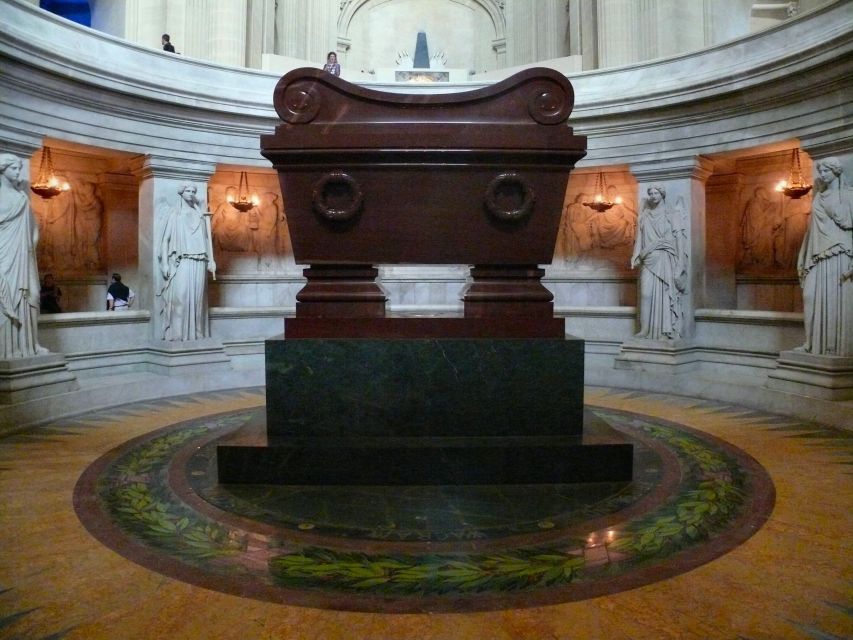
Les Invalides is at its most powerful beneath the gold dome, where Napoleon’s red porphyry tomb sits in a grand ring of marble monuments. I like that this tour gives you the story behind the building before bringing you to the emperor, so the tomb feels tied to French military life rather than treated as a stand-alone photo stop. I also like the small maximum of eight people, which gives guides such as Florent, Emilie, Mathieu, and Anatole room to answer questions.
The main drawback is the tight two-hour limit. Les Invalides is huge, and the military galleries contain far more material than any short tour can cover. If your main interest is specifically World War I and World War II, confirm the exact route before booking, since the advertised experience gives especially strong attention to Louis XIV and Napoleon.
Key points to know before booking
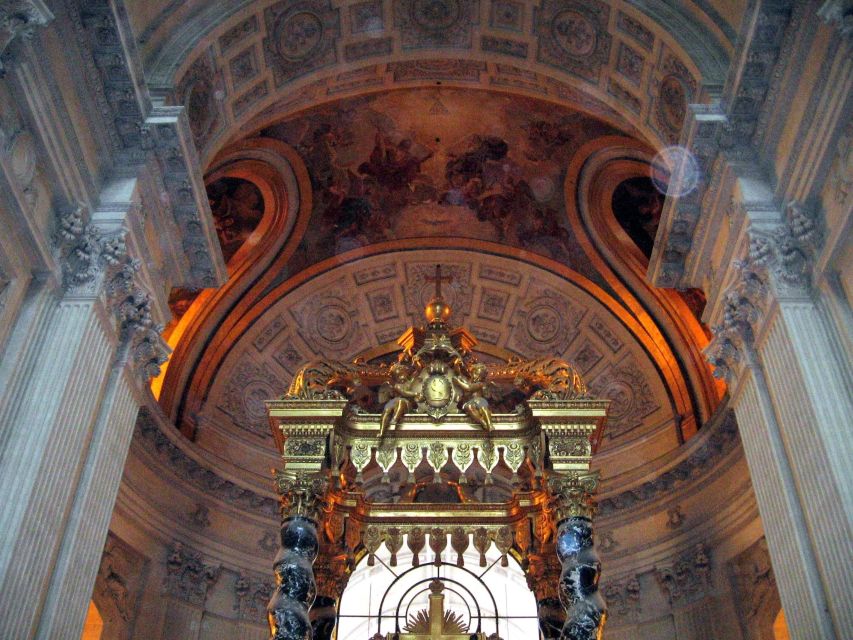
- Napoleon’s tomb is the visual centerpiece: You see the emperor’s resting place beneath the ornate Dome des Invalides, along with nearby tombs connected to his family and military world.
- The story begins with Louis XIV: The guide explains how the 17th-century complex served veterans returning from battle.
- Eight people is the maximum: A small group makes it easier to hear the guide and ask about details that catch your eye.
- The museum needs more than two hours: This visit helps you choose the most important rooms and objects instead of wandering without context.
- Walking is moderate but real: The semi-private option is not suitable for wheelchair users or people with walking disabilities.
- The price buys interpretation, not just entry: At $156 per person, the main value is the guide’s historical explanation and time-saving route.
Starting in the courtyard of Louis XIV’s Invalides
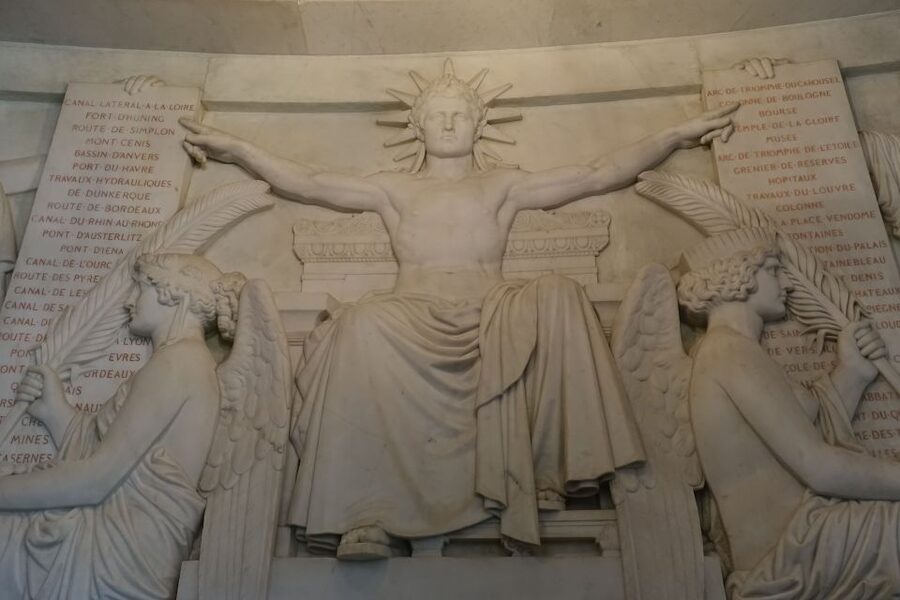
Your guide begins in the broad courtyard, where the scale of Les Invalides makes its original purpose clear. King Louis XIV created the complex in the 17th century as a hospital and home for veterans who had returned from war. It was not simply a church or palace project. It was a statement about how France treated, or at least publicly honored, its soldiers.
This opening matters because it gives you a human frame for the military displays that follow. Before you look at weapons, uniforms, maps, or famous commanders, you learn that the site was built for men dealing with the effects of battle. The courtyard also gives your guide room to explain the building’s origins without competing with the crowded displays inside.
I like this part of the tour because it connects architecture to government. Louis XIV, often called the Sun King, used military power to shape France, and Les Invalides reflects that ambition. At the same time, the complex points to the cost of those wars. You get both sides of the royal image: glory for the crown and shelter for the veterans.
The courtyard is also a good place to get oriented. Les Invalides contains several linked areas, and a first-time visitor can easily lose track of what belongs to the church, the museum, or the military collections. Your guide helps turn a large site into a clear sequence.
More WWII and D-Day Tours in France
- Normandy D-Day Sites & Cemetery Day Trip from Paris with Lunch
★ 5.0 · 6,877 reviews - Normandy D-Day Small-Group Day Trip with Omaha Beach, Cemetery & Cider Tasting
★ 5.0 · 2,786 reviews - Normandy D-Day Beaches and American Cemetery Day Trip from Paris
★ 4.5 · 2,673 reviews
Inside the cathedral built for former soldiers
The tour continues into the cathedral Louis XIV built for his former troops. This is one of the places where the experience shifts from practical military history to ceremony and remembrance. The building was meant to serve soldiers who had spent their lives fighting for France, and its scale reflects the importance Louis gave to the army.
You will notice the contrast between the plain idea of a veterans’ refuge and the elaborate religious setting. That contrast is useful. Les Invalides was designed to care for soldiers, but it also helped project the power of the French monarchy. Your guide can explain how the church fits into the larger political story rather than leaving you to admire the decoration without context.
The route includes artistic tombstones and graves, so this is not only a quick stop at Napoleon’s monument. The tombs help you see how France chose to remember military leaders and political figures. Some visitors will appreciate the solemn atmosphere. Others may find that the ceremonial style puts more emphasis on rulers than on ordinary soldiers.
A guide makes a real difference here. The names, symbols, and relationships can blur together when you walk through on your own. The strongest guides on this tour are praised for linking military events to the changing shape of France, rather than reciting isolated dates. That approach is especially helpful if you are visiting Paris with a teenager who enjoys history but does not want a dry lecture.
Napoleon beneath the gold dome
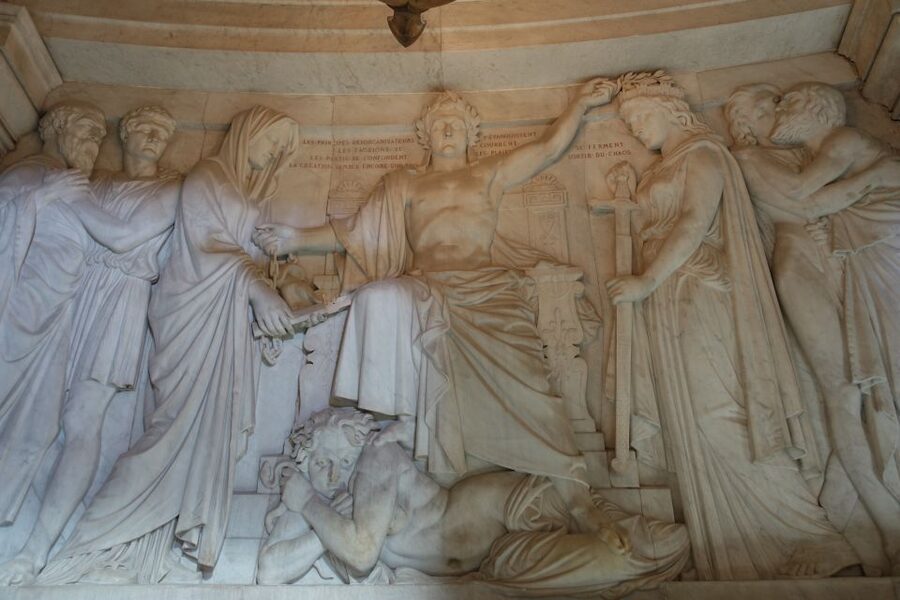
The most memorable stop is Napoleon Bonaparte’s tomb beneath the magnificent gold dome. Napoleon was a brilliant general and an audacious emperor, but his career also shows the danger of pushing military success too far. He died in exile, yet his remains were later placed here in a setting designed to honor his stature.
The tomb is intentionally theatrical. You look down toward the sarcophagus, surrounded by an ornate memorial space, and the arrangement encourages you to think about Napoleon as both a man and a national symbol. His military record made him famous across Europe. His political ambition also brought France years of conflict and eventual defeat.
Your guide should help you hold those ideas together. The useful question is not simply why Napoleon was admired. It is why France continued to give him such a grand place of honor after his downfall. The visit lets you consider how nations build heroic memory, and how monuments can celebrate victory while quietly admitting failure.
You also see tombs connected to Napoleon and the people closest to him. These nearby memorials add family and political context to the central monument. You may find that the side tombs are less visually dramatic, but they help explain the network around the emperor.
This is where the tour’s historical storytelling earns its keep. A guide such as Mathieu can make the Napoleon era easier to follow by answering questions as they arise. Guides including Florent, Emilie, Michelle, and Anatole have been singled out for lively explanations and strong command of the subject. The exact guide depends on your date, but the small format gives you a better chance to ask about the details you care about.
Military maps, artifacts, and the wider museum
After the tomb and cathedral, you spend time in the museum galleries. The collections are extensive, with military objects, reconstructions, and maps that show Napoleon’s victories and defeats. You should not expect to see every room in two hours. The smarter goal is to use the guide to understand the museum’s most important sections, then return on your own if you have the time and energy.
Maps are especially useful here. Napoleon’s campaigns can seem like a long list of battles when you read about them in a book. A map shows movement, distance, and the scale of the decisions. It also makes clear that military success depended on more than battlefield courage. Planning, supply, geography, and timing all mattered.
The artifacts provide a more physical link to the period. Objects and recreations can show how military life was organized, but they do not explain themselves. The guide’s job is to tell you why a piece matters and how it fits into the wider story. That is the difference between walking past display cases and building a usable picture of the era.
Les Invalides contains enough military material to fill several days. A two-hour visit is therefore best viewed as an introduction with a strong focus on Napoleon and the central monuments. One guide, Tobias, was praised for making the site interesting while pointing out that you could spend much longer there. That is a fair warning, not a weakness in the tour itself.
The experience may also touch on broader French military history, including the periods associated with the two world wars, depending on the route and guide. Collections can change during the year, and some rooms may be closed or subject to quiet rules. If twentieth-century warfare is your main reason for coming, ask ahead about the precise focus.
More WWII and D-Day Tours in Paris
- Paris: Normandy D-Day Sites Guided Day Trip with Lunch
★ 4.7 · 1,082 reviews - From Paris: Normandy D-Day Landing Beaches Full-Day Tour
★ 4.8 · 698 reviews - Small-Group Canadian Normandy D-Day Juno Beach from Paris
★ 4.9 · 132 reviews - Paris WW2 The German Occupation Small group or Private tour
★ 4.5 · 128 reviews
Why a small group changes the visit
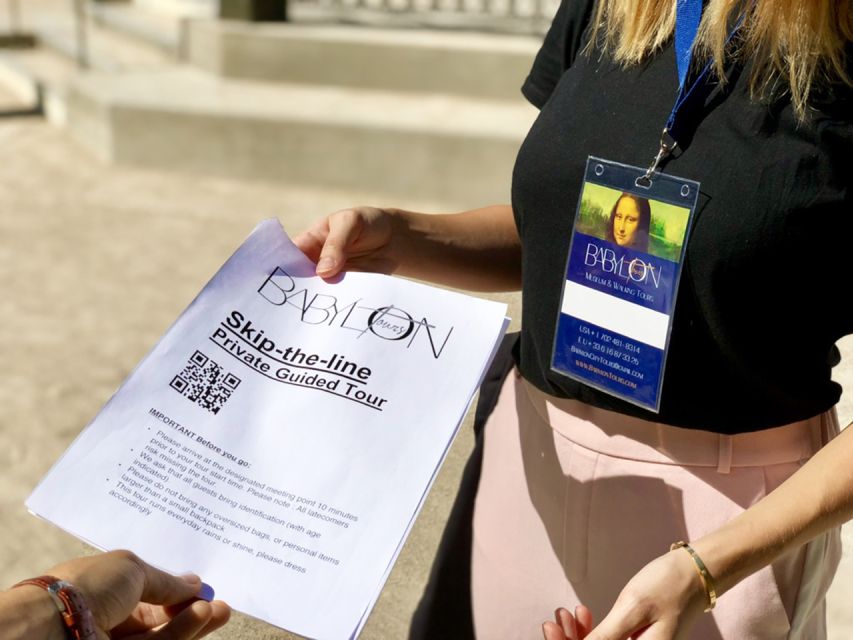
The maximum of eight people is one of the strongest practical features. Les Invalides has large rooms and many objects, so a guide speaking to a packed crowd would make it harder to hear and ask questions. In a small group, you can usually stay close enough to follow the explanation and raise a specific point without interrupting a large lecture.
This format also supports different interests. A family with a history-loving 13-year-old can ask about battles and commanders. Another group may care more about architecture, royal power, or the symbolism of Napoleon’s tomb. The guide can adjust the emphasis instead of delivering exactly the same script to everyone.
There are private and small-group options. A private tour costs more in many cases, but the listed price here is $156 per person, so you should compare the exact option and group size before paying. At that rate, I would book only if you value expert interpretation, skip-the-line entry, and a focused route. If you mainly want to see the dome and tomb, independent entry may be better value, assuming you are comfortable making your own way through the museum.
The tour lasts two hours, which is long enough for a thoughtful introduction but too short for a complete visit. That time limit can actually help you in Paris. You get a clear starting point, learn what deserves a closer look, and can decide later if the museum merits a second visit.
Walking, access, and the small details

This is a walking tour inside a large museum complex. The amount of walking is described as moderate, but you should still expect to move between the courtyard, cathedral, tombs, and galleries. The semi-private tour is not available for people with walking disabilities or wheelchair users.
Wheelchair tours are available only on request, so accessibility must be arranged before booking rather than assumed. If you need that service, provide the details in advance and confirm that the chosen format is suitable.
Bring a passport or identity card. Large bags, luggage, and suitcases are not allowed, so do not plan to arrive with airport baggage. Food and drinks are not included, and temporary exhibitions are outside the included access.
Meeting points can vary by booking option. Read the confirmation carefully and make sure the operator has your full name, mobile number, and an email address you can reach during your trip. Museum closures can sometimes occur without much warning. If opening is delayed by more than an hour, an alternative is offered, but you should not count on a refund or discount in that situation.
Some rooms require quiet or limit the right to speak. That means your guide may need to pause commentary in certain areas and explain details elsewhere. It is a small but important point if you expect constant narration from entrance to exit.
Who will get the most from this visit?
I would recommend this tour to a first-time visitor who wants a clear introduction to Les Invalides without spending half a day trying to work out the layout. It also suits families with older children and teens who like military history, since the guide can turn maps and objects into a story rather than a row of labels.
It is a good choice if Napoleon is high on your Paris list. The tomb is impressive, but the surrounding explanation gives it meaning. You also get a useful introduction to Louis XIV, the veterans’ hospital, the cathedral, and the way France presents its military past.
I would be more cautious if you dislike guided visits or prefer to inspect every gallery at your own pace. Two hours will feel rushed if your goal is a full museum study. I would also check the itinerary if your main interest is World War I or World War II, because the strongest stated focus is the building’s origins and the Napoleonic period.
The tour is offered in English, French, Italian, German, Russian, and Spanish. That range is helpful, but confirm your preferred language and the meeting point when selecting an option.
Should you pay $156 for the experience?
At $156 per person, this is not a casual add-on. The value depends on how much you want a guide to shape the visit. You are paying for museum entry, skip-the-line access, and two hours with an art historian who can connect Louis XIV, Napoleon, the French army, and the museum displays.
I think the cost makes sense for a first visit when you have limited time and want answers instead of a quick look at the dome. It is also worthwhile for families and small groups who will ask questions and use the guide’s knowledge fully. The repeated praise for guides such as Florent, Anatole, Daniel, and Mathieu points to the central strength of the format: good narration turns a large collection into a coherent story.
I would skip it if your budget is tight, you already know Napoleonic history well, or you want to spend several hours studying the galleries alone. In that case, the guided route may feel too brief for the price.
Final verdict
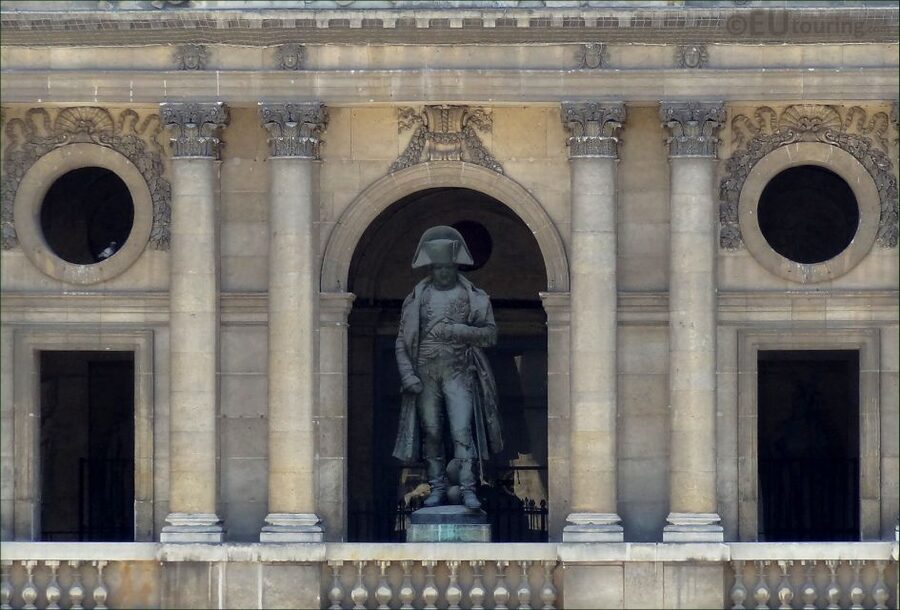
Book this tour if you want Napoleon’s tomb placed in the larger story of French kings, veterans, empire, and military memory. The small group, skip-the-line entry, and guide-led route make a complicated site easier to understand.
Before you reserve, check the exact meeting point, walking requirements, language, and focus of the route. If the two-hour format and Napoleon-centered story suit your plans, this is a polished introduction to one of Paris’s most important military sites. If your priority is a detailed study of both world wars, choose only after confirming those galleries are included.
FAQ
How long does the Invalides guided tour last?
The tour lasts two hours. That is enough for the courtyard, cathedral, Napoleon’s tomb, and selected museum galleries, but not every collection in Les Invalides.
How many people can join the small-group tour?
The maximum is eight people per guide. Private tour options are also available.
Is Napoleon’s tomb included?
Yes. The tour includes a visit to Napoleon’s tomb beneath the gold dome, along with nearby tombs connected to him and his family.
What languages are available?
The tour is offered in English, French, Italian, German, Russian, and Spanish.
Can I bring a suitcase or large bag?
No. Luggage, suitcases, and large bags are not allowed. You should bring a passport or other identity card.
Is the tour suitable for wheelchair users?
The semi-private tour is not suitable for wheelchair users or people with walking disabilities. Wheelchair tours are available only on request, so you must arrange this in advance.
Just added around Paris
- The historic district of Montmartre★ 4.9 · 66 reviews
- Small-Group Canadian Normandy D-Day Juno Beach from Paris★ 4.9 · 132 reviews
- Paris: Khéops VR Experience – Explore Ancient Egypt★ 4.9 · 39 reviews
- Paris Jewish History 2-Hour Private Guided Walking Tour★ 4.6 · 32 reviews
- Paris: French Fashion History Walking Tour★ 4.9 · 37 reviews
- Paris: Le Marais & Montmartre Jewish History Walking Tour★ 4.8 · 170 reviews
- Historic Paris Walking Tour in English★ 4.9 · 78 reviews
- From Paris: Private Mont Saint-Michel & Normandy D-Day Tour★ 4.6 · 32 reviews
Paris History Tours, compared.

Normandy D-Day Sites & Cemetery Day Trip from Paris with Lunch
Read our review →
Normandy D-Day Small-Group Day Trip with Omaha Beach, Cemetery & Cider Tasting
Read our review →
Normandy D-Day Beaches and American Cemetery Day Trip from Paris
Read our review →
Paris: Normandy D-Day Sites Guided Day Trip with Lunch
Read our review →
Paris: Dark History and Ghostly Guided Walking Tour
Read our review →
From Paris: Normandy D-Day Landing Beaches Full-Day Tour
Read our review →
Notre Dame Cathedral: Exterior Guided Tour & Unscheduled Access
Read our review →
Paris City of Fashion History Private Guided Walking Tour
Read our review →Browse the lists this tour appears in