
Review · ROME
Historical and Spiritual Jorney in Papal Basilicas
Rome’s four papal basilicas tell four very different stories, and this tour links them in one busy but rewarding morning. You’ll move from the quiet, troubled past of St. Paul Outside the Walls to San Giovanni in Laterano, Santa Maria Maggiore, and finally St. Peter’s Basilica and the Vatican Grottoes.
I like the small group size, limited to six people, and the chance to shape the discussion around history, art, culture, or theology. I also like that Scala Santa and the Lateran Baptistery are included, since many quick Rome visits skip these nearby sites. The main caution is time: four basilicas in four to five hours is a brisk plan, and the wait for St. Peter’s can make the tour longer.
Key points at a glance
- Four major basilicas in one day: See St. Paul Outside the Walls, San Giovanni in Laterano, Santa Maria Maggiore, and St. Peter’s Basilica.
- A genuinely small group: With two to six participants, you can ask questions without shouting over a crowd.
- A guide who handles more than art facts: Mykhailo Hevko leads in English, Italian, or Ukrainian, with attention to Roman history, culture, and theology.
- Scala Santa is included: This nearby sanctuary adds a strong devotional element to the day.
- Transport is built into the plan: Bus tickets between churches are included, with walking and metro rides connecting the rest.
- No line-skipping: St. Peter’s Basilica is included, but you must wait in the regular security and entry line.
Why these four basilicas make a strong Rome day
This is not a standard ancient-Rome walk. You will not visit the Colosseum, Roman Forum, Vatican Museums, or Sistine Chapel. Instead, the focus is the Catholic Church’s four papal basilicas, places that connect Roman power, Christian belief, art, pilgrimage, and centuries of rebuilding.
I like the way the route moves across Rome rather than keeping you in one monument district. You begin outside the old center at St. Paul’s, cross toward the Lateran, walk through Via Merulana to Santa Maria Maggiore, then finish at the Vatican. The changing neighborhoods give the day a sense of place, even though the schedule leaves little room for wandering.
The tour works especially well if you want a guide to explain why these churches matter, not just point out a famous painting. Mykhailo Hevko is praised for his clear answers, enthusiasm, and strong command of Roman history. That matters here, since the basilicas can seem alike at first glance if you do not know what makes each one distinct.
More History Tours in Rome:
- Colosseum: Underground and Ancient Rome Tour
★ 4.7 · 12,691 reviews - Rome: Colosseum with Arena, Roman Forum and Palatine Guided Tour
★ 4.0 · 5,598 reviews - Colosseum with Arena, Roman Forum and Palatine Hill Guided Tour
★ 4.5 · 3,526 reviews
St. Paul Outside the Walls starts the day quietly
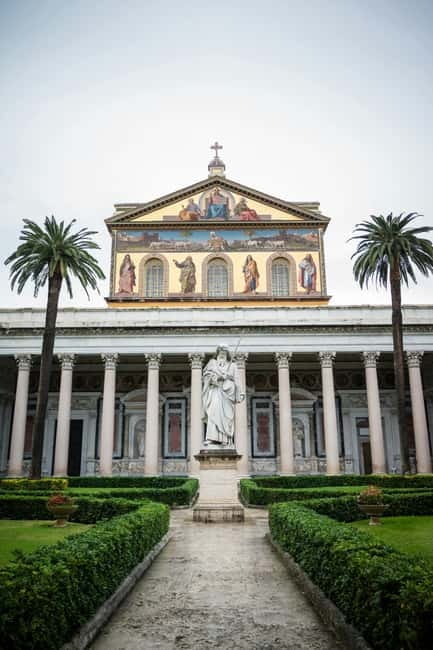
Meet near the exit of Basilica San Paolo station on Metro B, at Via Ostiense 333. After turning left from the station exit, walk to the corner of the street. The early meeting point is practical, since the basilica is the first stop and the metro station puts you close to it.
St. Paul Outside the Walls has a calmer feel than St. Peter’s. Its name points to its position beyond the ancient city walls, and its setting gives the visit a more reflective beginning. The church also has a difficult, changeable past, which gives your guide plenty to explain beyond the usual art checklist.
This is a good place to settle into the tour’s style. You can ask about the basilica’s history, religious role, or artistic details, and a group of two to six makes that conversation easier. The guide can also adjust the emphasis to your interests, something that is harder in a group of 30 or 40.
The main tradeoff is that you will not have unlimited time for every side area. The nearby Cloister of the Benedictine abbey is not included, and visiting it requires a separate payment and a longer tour. If that cloister matters to you, ask about it before the day begins.
A bus ride brings you to San Giovanni in Laterano
The transfer from St. Paul’s to San Giovanni in Laterano takes about 30 minutes by bus. Bus tickets between the churches are included, which keeps the cross-town route simple, though traffic can affect the timing.
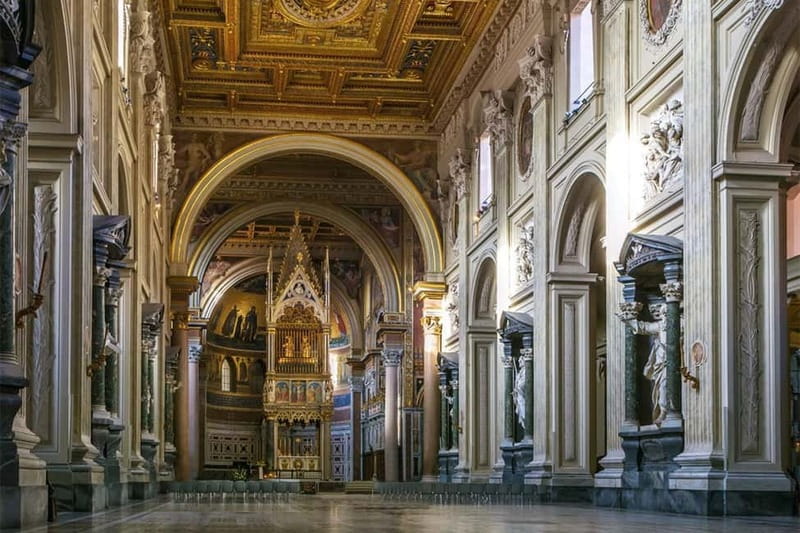
San Giovanni in Laterano is the de jure cathedral of Rome and the main cathedral of the Roman Catholic Church. That gives it a different importance from St. Peter’s, which many people assume is Rome’s cathedral. Your guide can help sort out that distinction and explain why the Lateran holds such a central place in Catholic history.
The guided visit here is listed at about 30 minutes. That is enough for the key story and major sights, but not for a slow, room-by-room study. I would treat this stop as a focused introduction rather than a long independent visit.
The Lateran Baptistery is included as an optional part of the visit. That is a useful addition for anyone interested in early Christian worship and the development of baptismal spaces. You can also visit Scala Santa nearby, another included stop that adds a more personal pilgrimage element to the morning.
Scala Santa adds a serious pilgrimage note
Scala Santa, or the Holy Stairs, is close to San Giovanni in Laterano. The tour includes the sanctuary, so you do not need to arrange a separate visit for this part of the experience.
This stop changes the tone of the day. The basilicas bring grand architecture and famous artists, while Scala Santa centers on devotion and ritual. If you are taking the tour for the Jubilee or as a pilgrimage, this may be one of the most meaningful parts.
If you are visiting mainly as a cultural sightseer, the guide’s explanation can still make the stop worthwhile. You will see how belief, memory, and place overlap in Rome. The important practical point is to dress properly and bring comfortable clothes that cover your shoulders and knees.
Same city, a different century:
- Colosseum & Ancient Rome with Arena Floor Option I Max 6 People
★ 5.0 · 3,306 reviews - Rome: Colosseum, Ancient Rome Tour or AudioGuided Tour
★ 4.4 · 2,879 reviews - Colosseum Underground & Ancient Rome Guided Tour
★ 4.5 · 2,590 reviews - Rome: Colosseum Arena, Roman Forum & Palatine Hill Tour
★ 4.5 · 1,874 reviews
Walk Via Merulana to Santa Maria Maggiore
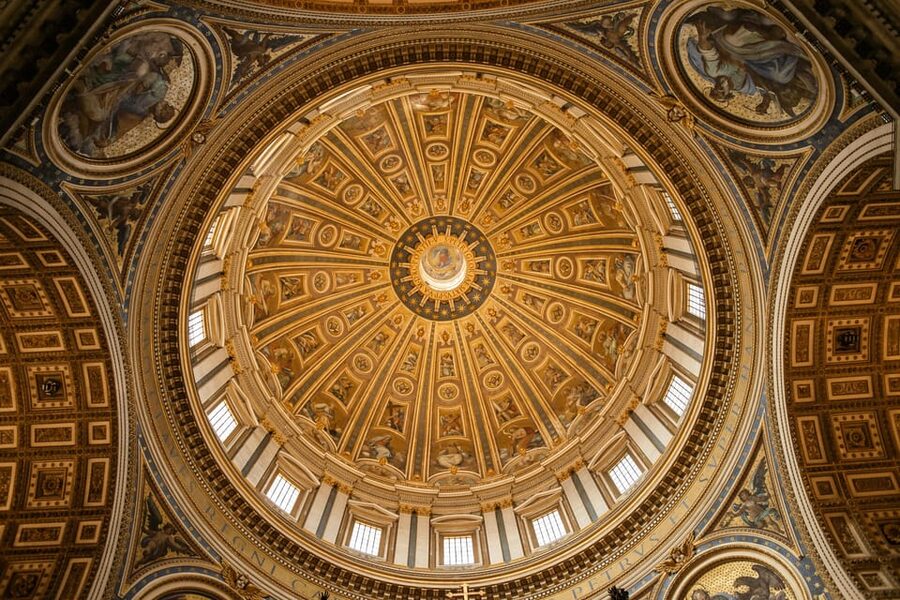
From San Giovanni in Laterano, you walk for about 20 minutes along Via Merulana to Santa Maria Maggiore. This is one of the best transitions in the route because you move between basilicas on foot rather than spending the whole day in vehicles.
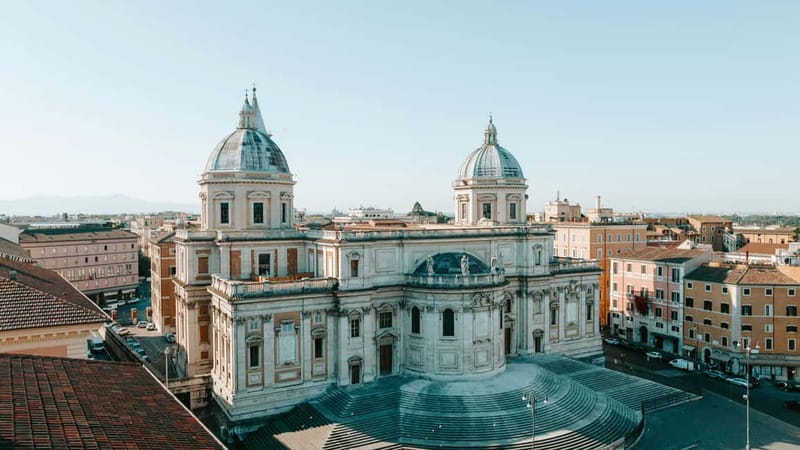
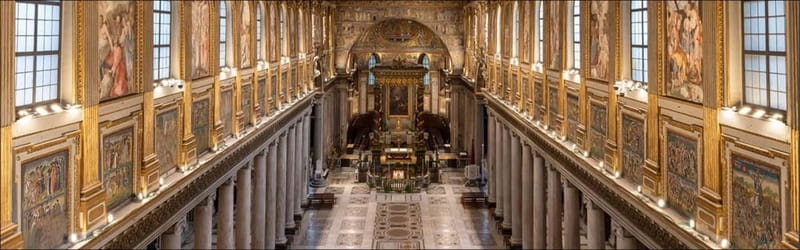
Santa Maria Maggiore is one of Rome’s oldest and largest Marian churches. Its importance is both religious and cultural, and the guide can connect the building to the wider story of devotion to Mary in Rome.
The pace here depends on the group and the guide’s approach, but expect a guided look rather than a long private pause. I would keep your eyes open for the details that are easy to miss when you are simply passing through a huge church. With an individual approach, you can ask the questions that matter to you, from architecture and art to the meaning of particular religious images.
Some nearby areas require a separate ticket, including the Loggia of Blessings. Those extras are not part of the basic price. If you add one, expect the tour to run longer and pay separately.
Lunch is optional, so plan your energy
After Santa Maria Maggiore, you may stop for lunch or snacks. Food and drinks are not included, and the pause is optional. The tour also suggests bringing snacks, which is sensible for a route that combines walking, transit, queues, and several large churches.
I would not count on a long restaurant meal unless you agree on it with the guide. The advertised duration is four hours, while the detailed schedule allows four to five hours, and a food stop can extend the day further. A small snack may be the better choice if you want to keep the final Vatican visit moving.
This is also the point to think about your energy. You will have walked, waited, and changed transport several times before reaching St. Peter’s. Comfortable shoes are not just a suggestion here.
St. Peter’s Square is the grand finale
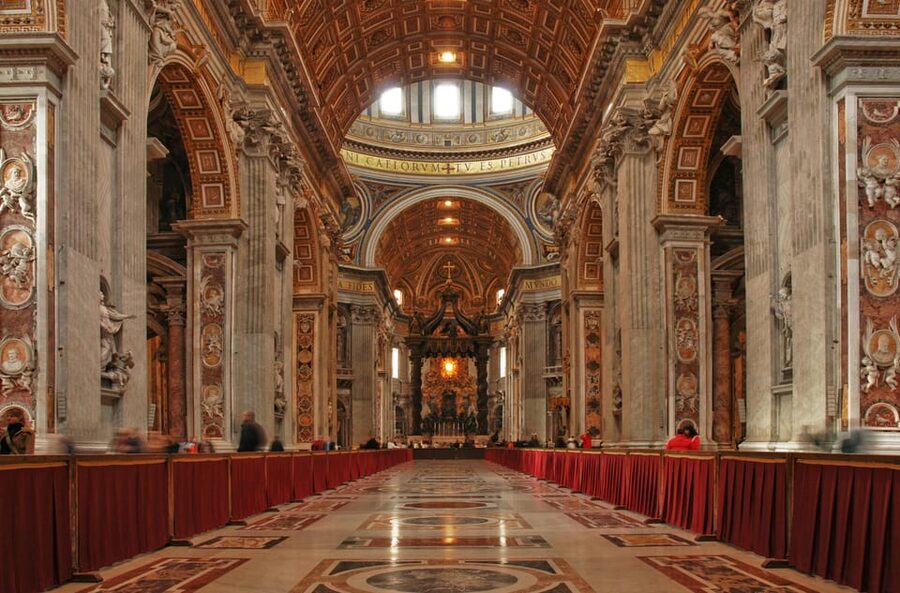
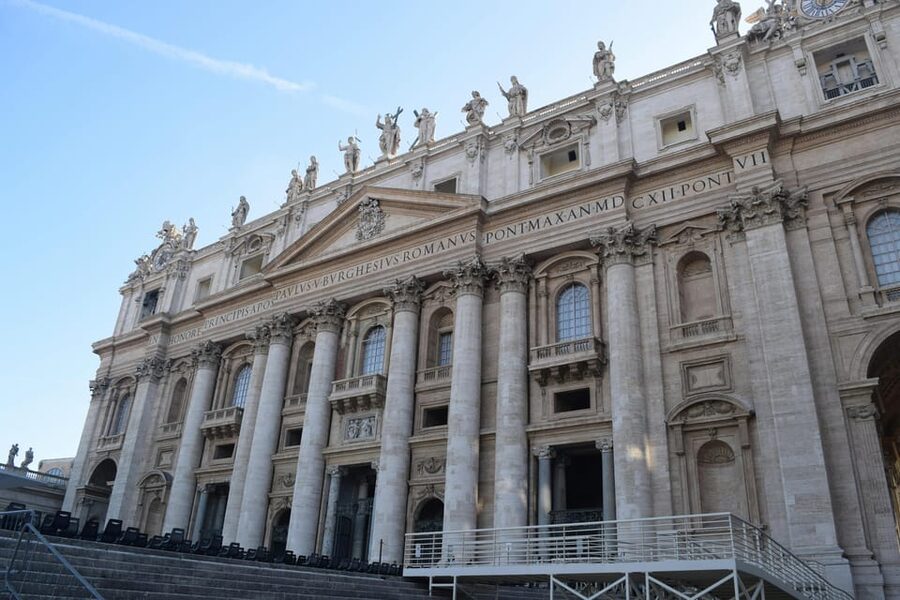
The final section begins with a metro ride of about 20 minutes to St. Peter’s Square. The square gives you the broadest and most immediately recognizable setting of the day, but the tour is still about more than a photo stop.
The guide includes a visit to St. Peter’s Square, followed by the Vatican Grottoes and St. Peter’s Basilica. The square is listed with about 30 minutes of guided time. This lets you understand the space before entering the church, rather than rushing directly to the interior.
The main practical warning is the line. This experience does not provide skip-the-line access to St. Peter’s or any other site. Waiting for security and entry is included in the stated timing, but a long queue can stretch the tour beyond four or five hours.
That lack of priority entry affects the value. You are paying for a small group and personal guidance, not for faster admission. If you have a tight afternoon appointment, build in extra time.
The Vatican Grottoes bring the tour underground
The Vatican Grottoes are scheduled for about 20 minutes and include papal tombs. This is a more subdued stop than the square or the basilica interior, and it gives you a closer look at the Vatican’s role as a place of burial and memory.
Your guide can explain the religious and historical meaning of the tombs while keeping the visit focused. The grottoes are especially useful if you want context for the church above, rather than seeing St. Peter’s as only a large art monument.
The route then continues into St. Peter’s Basilica for about 40 minutes of guided touring. That is the longest single church visit on the schedule, but the basilica is so large that 40 minutes still calls for concentration. Follow the guide’s main points, then use any remaining time to look around on your own if the group schedule allows.
Michelangelo, Bernini, and Giotto are part of the bigger story
The tour highlights works connected with Michelangelo, Bernini, and Giotto. You are not just moving between four religious buildings. You are also tracing how artists shaped the visual language of Roman Christianity across different periods.
The guide’s broad subject range is one of the strongest reasons to choose this experience. You can ask about artistic technique, church history, cultural meaning, or theology instead of receiving the same fixed speech regardless of your interests.
This approach suits curious first-time visitors who want a framework for Rome’s churches. It also suits returning visitors who have seen St. Peter’s before but want to connect it with the other papal basilicas. If your priority is a long, quiet look at every artwork, the compact schedule may feel too fast.
What the $90.63 price buys you
At $90.63 per person, the price is reasonable if you value a guide who stays with a group of two to six and handles the connections between distant churches. Bus tickets between the churches are included, and you receive guided visits at four major basilicas, Scala Santa, and the Vatican Grottoes.
The value is less clear if you want entrance packages, museum access, or a long meal. Vatican Museums and the Sistine Chapel are not included. Archaeological areas and museums near the basilicas also require separate payment, and there is no priority entry.
The small group is the key difference. With only a few people, you can ask Mykhailo Hevko to explain a detail or change the emphasis without losing half the group. His languages are English, Italian, and Ukrainian, and his strong points are historical explanation, enthusiasm, and direct answers.
The experience also offers free cancellation up to 24 hours before the start, plus reserve-now, pay-later booking. The activity is wheelchair accessible, though the route includes walking, public transport, and a regular entry line, so discuss practical needs when booking.
Who should book this basilica route
I would choose this tour if you want a guided religious and cultural day rather than a museum-heavy Vatican visit. It is a good match for people interested in Catholic history, pilgrimage, church art, and the way Rome’s sacred sites developed.
It also suits couples, families, or friends who prefer conversation over a large scripted group. A group of two to six gives you a real chance to ask questions and request more historical, cultural, or theological detail.
I would hesitate if you have only a few hours before a train, flight, or dinner reservation. The regular line at St. Peter’s is the biggest unknown. I would also choose a different plan if the Vatican Museums and Sistine Chapel are your main goals, since neither is part of this route.
One logistical detail needs clarification before you book: the schedule says the experience begins near Basilica San Paolo, while another description says it ends back at the meeting point, and the stop list names Santa Maria Maggiore as the finish. Confirm the final drop-off point with the provider.
Should you book this four-basilica experience?
Book it if you want the four papal basilicas explained as connected parts of Rome’s spiritual, artistic, and political story. The small group, flexible discussion, included transport, Scala Santa, and Vatican Grottoes make the $90.63 price fair for a focused half-day.
Skip it if you need skip-the-line entry, the Vatican Museums, or a slow visit with plenty of free time. Go prepared for walking, snacks, covered shoulders and knees, and a possible wait at St. Peter’s. With those limits understood, this is a thoughtful way to see Rome’s major churches through the eyes of a guide who can answer more than the usual surface questions.
FAQ
How long does the tour last?
The planned duration is about four hours, with the detailed timing described as four to five hours. It can run longer if the line at St. Peter’s is long, if you add extra sites, or if you stop for food.
Where does the tour begin?
It begins at Via Ostiense 333, after exiting the Basilica San Paolo station on Metro B. Turn left after leaving the station and go to the corner of the street.
Which languages does the guide speak?
The tour is available in English, Italian, and Ukrainian. The experience provider is Mykhailo Hevko.
Is skip-the-line entry included?
No. The tour does not provide skip-the-line entry for St. Peter’s Basilica or any other site. Waiting in the regular line for St. Peter’s is included in the planned schedule.
Are the Vatican Museums and Sistine Chapel included?
No. The Vatican Museums and Sistine Chapel are not included in this experience.
What should I wear and bring?
Wear comfortable shoes and clothing that covers your shoulders and knees. Bringing snacks is recommended, while food and drinks purchased during the tour are not included.
Just added around Rome
- Rome: Colosseum and Ancient Rome Guided Walking Tour★ 4.5 · 95 reviews
- Secrets of Rome: Historical True Crime Small Group Tour★ 4.9 · 85 reviews
- Rome: Rome at Night Evening Historical Walking Tour★ 4.9 · 24 reviews
- Rome Secrets: Dark History & Tasty Bites Tour★ 5.0 · 37 reviews
- Rome: Introduction to the Colosseum and Ancient City Tour★ 4.8 · 75 reviews
- Rome Pantheon Semi-Private Guided Tour with an Archaeologist★ 5.0 · 60 reviews
- Rome: Ostia Antica Archaeological Park Ticket & Audio App★ 4.6 · 146 reviews
- Rome: Food Tour of the Historic Center with Rooftop Spritz★ 4.7 · 43 reviews
Rome History Tours, compared.
Colosseum: Underground and Ancient Rome Tour
Read our review →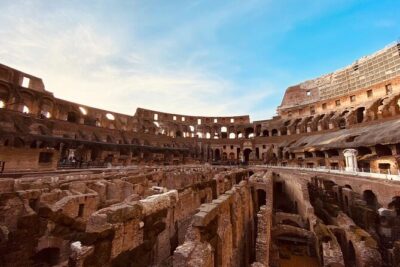
Rome: Colosseum with Arena, Roman Forum and Palatine Guided Tour
Read our review →
Colosseum with Arena, Roman Forum and Palatine Hill Guided Tour
Read our review →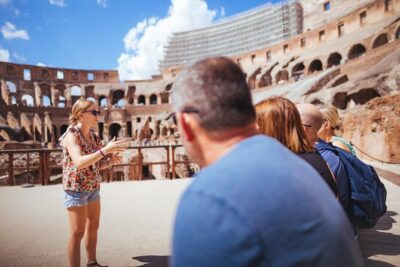
Colosseum & Ancient Rome with Arena Floor Option I Max 6 People
Read our review →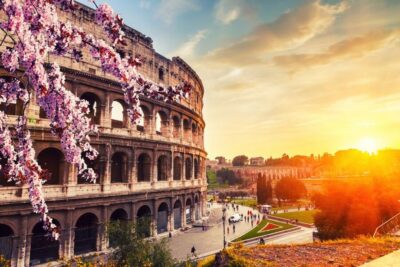
Rome: Colosseum, Ancient Rome Tour or AudioGuided Tour
Read our review →
Colosseum Underground & Ancient Rome Guided Tour
Read our review →
Rome: Colosseum Arena, Roman Forum & Palatine Hill Tour
Read our review →
Colosseum, Roman Forum & Palatine Hill Guided Tour
Read our review →Browse the lists this tour appears in