
Review · VIENNA
Historical Hitler Walking Tour of Vienna
Hitler’s Vienna is best understood not as a sightseeing tour about one man, but as a walk through the city that shaped his early ideas and later suffered under the Nazi regime. You’ll connect the State Opera, Heldenplatz, Jewish memorials, and former Gestapo headquarters while learning how Vienna’s politics, art, antisemitism, and wartime experience fit together. I like the clear historical focus and the way the route uses familiar landmarks to explain difficult events.
I also like the human scale of the walk. Guides such as Dieter, Wolfgang, Stephan, and Charles have been praised for careful storytelling, tablet images, and a steady pace. The main drawback is simple: two and a half hours outdoors can feel long in cold, wind, or rain, and one past group had trouble keeping up at the meeting point.
Key points to know before booking
- Hitler’s Vienna is a context tour: Expect early-life history and Austria’s Nazi past, not a hunt for surviving Hitler buildings.
- Six major stops anchor the walk: The State Opera, Memorial Against War and Fascism, art academy, Heldenplatz, Judenplatz, Morzinplatz, and Jewish Vienna.
- The route ends near Schwedenplatz: You finish close to U1 and U4 stations, with restaurants nearby.
- Guiding is the main attraction: Dieter, Wolfgang, Stephan, Charles, and other guides are praised for strong English, historical detail, and thoughtful delivery.
- Weather matters: Wear walking shoes and bring water, sun protection, and rain gear.
- The $32.65 price is reasonable for a 2.5-hour small-group walk: The maximum group size is 25, and no separate entrance fees are required.
Why this Vienna history walk works
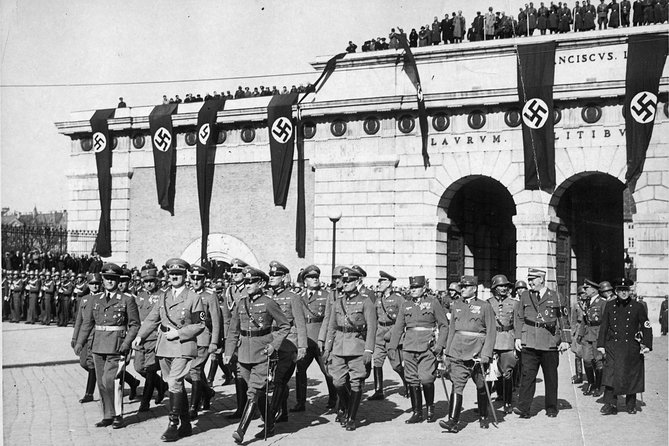
At first glance, the title may suggest a tour devoted entirely to Hitler. That is not quite the right expectation. The walk follows Hitler’s relationship with Vienna, especially his early years and the political and social setting around him, but much of the tour also examines Austria’s role in National Socialism, the Holocaust, wartime destruction, and postwar remembrance.
That wider frame is useful. Hitler spent formative years in Vienna, and the city’s art world, political arguments, class tensions, and antisemitism help explain the environment in which his views developed. You are not simply shown a building and told that Hitler once visited it. You are asked to consider how a city can produce beauty, culture, prejudice, resistance, and public support for a dictatorship at the same time.
The tour costs $32.65 per person and lasts about two hours and 30 minutes. For central Vienna, that is fair value if you want a guided history lesson rather than a standard orientation walk. The guide does the research and connects places that you might otherwise pass without noticing.
The group can include up to 25 people. That is not an intimate private tour, but it is still manageable for a walking route through the old center. You should stay close to the guide, particularly at busy crossings and around the crowded Albertina meeting area. One unhappy experience involved a participant being left behind at the start, so arrive early and make sure you have clearly identified your guide before the group moves off.
More WWII and D-Day Tours in the world:
- Amsterdam: Life of Anne Frank and World War II Walking Tour
★ 4.8 · 10,467 reviews - Berlin: Third Reich & Cold War Guided Walking Tour
★ 4.9 · 8,378 reviews - Normandy D-Day Sites & Cemetery Day Trip from Paris with Lunch
★ 5.0 · 6,877 reviews
Starting at the State Opera
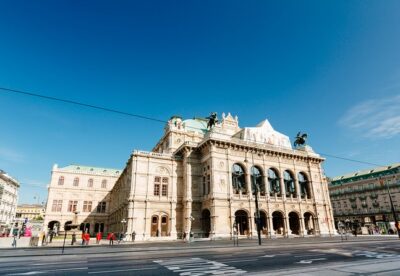
Meet outside the Albertina Museum at Albertinaplatz for the 2:30 p.m. start. The first major stop is the Vienna State Opera, one of the city’s grandest cultural buildings and an excellent place to begin a discussion of Vienna before and after 1938.
The opera opened in 1869 with Mozart’s Don Juan, attended by Emperor Franz Joseph and Empress Elisabeth. That imperial connection gives the guide a natural way to explain Vienna’s old political order and its pride in music and theater.
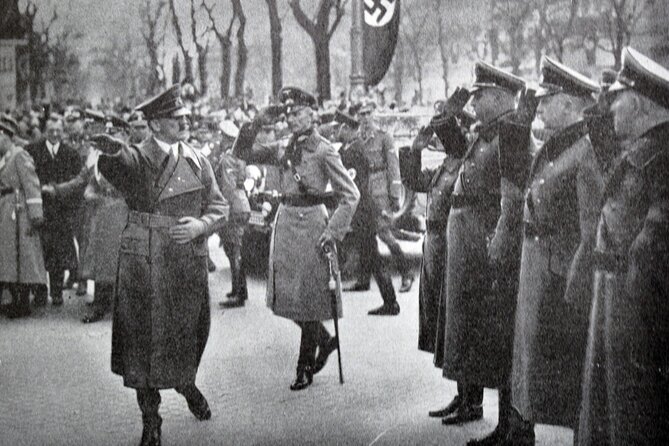
Then the mood changes. After the Anschluss, Hitler visited the opera in June and October 1938. Under National Socialist rule, Jewish artists and employees were forced out, persecuted, or murdered. Some works could no longer be performed. The point is not simply that Hitler visited a famous building. It is that the city’s cultural life was altered through censorship, exclusion, and terror.
The stop lasts about 10 minutes, so do not expect an interior tour or a performance-history lecture. It is a short introduction to the destruction of Vienna’s artistic community. You’ll want to look up at the architecture, but listen closely to the guide’s explanation of who disappeared from the stage.
The Albertinaplatz memorial
The Memorial Against War and Fascism sits in Albertinaplatz, close to where you begin. Created by Austrian sculptor Alfred Hrdlicka, it has been in place since 1988 and is dedicated to victims of war and fascism.
This is a useful stop because it shifts attention away from Hitler alone. The memorial asks you to think about victims, guilt, violence, and public memory. It also shows how Austria dealt with the legacy of the Nazi period decades after the war.
You’ll spend about 10 minutes here. The memorial is outdoors and requires no admission, but the subject is heavy. I appreciate that the tour does not rush straight from famous architecture to another famous building. These smaller memorial sites give the walk moral weight.
Hitler and the Academy of Fine Arts
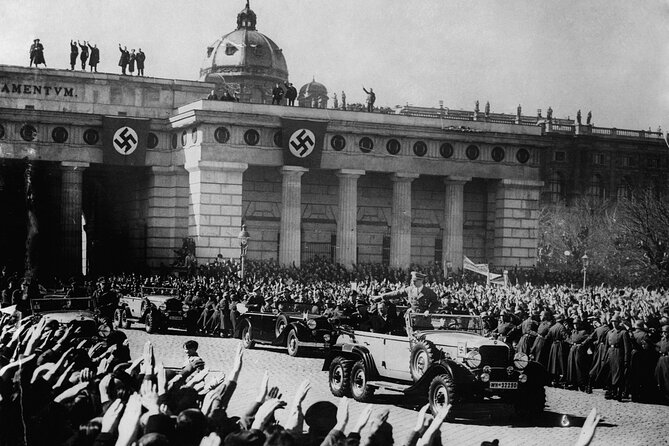
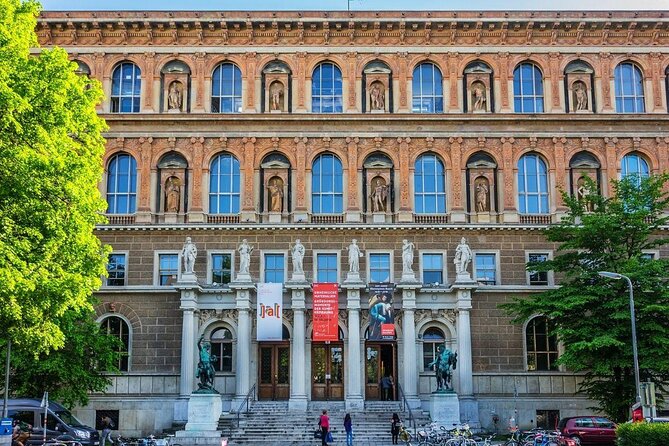
The Akademie der bildenden Künste is linked to one of the best-known episodes in Hitler’s early life: the art school rejected his application. The guide uses this moment to discuss Hitler before political power, when he was an unsuccessful young man trying to establish himself in Vienna.
This stop is brief, around 10 minutes. Do not expect a visit inside the academy. Its value comes from the discussion around the rejection, Hitler’s ambitions, and the difference between the real person and the later myths built around him.
The guide may use photographs or maps on a tablet. Stephan, in particular, has been praised for bringing extra visual material to make the story easier to follow. That sort of aid matters here, since the site itself does not explain the episode to passersby.
More History Walking Tours in the world:
- History and Hauntings of Salem Guided Walking Tour
★ 5.0 · 14,564 reviews - Lisbon: History, Stories and Lifestyle Walking Tour
★ 4.8 · 10,902 reviews - Boston: Freedom Trail History Small Group Walking Tour
★ 5.0 · 6,450 reviews - Historic Charleston Guided Sightseeing Walking Tour
★ 5.0 · 6,216 reviews
Heldenplatz and the March 1938 speech
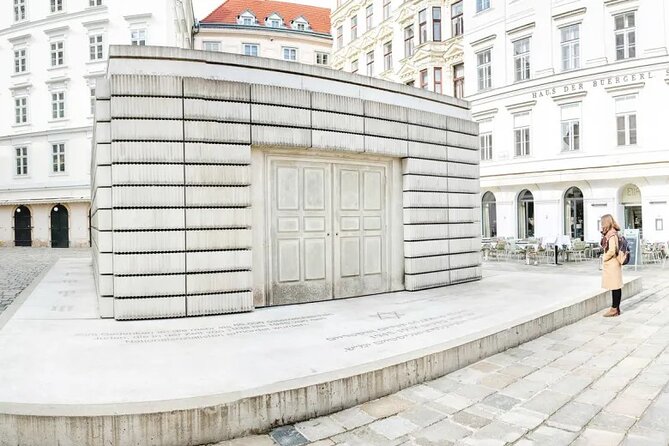
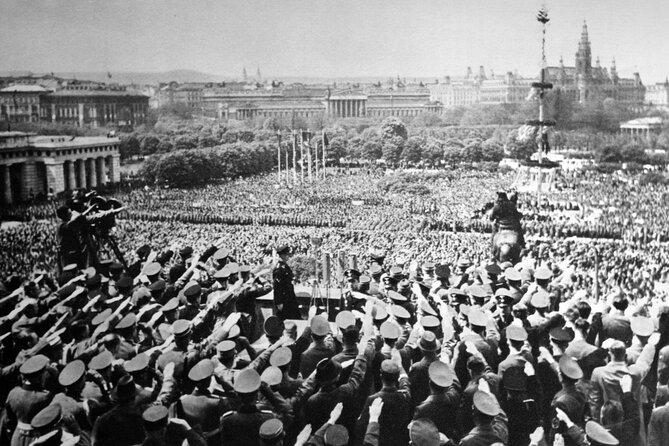
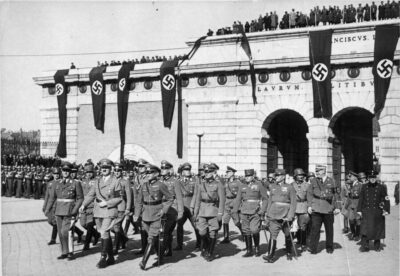
Heldenplatz is one of the most powerful places on the route. From the balcony of the Neue Hofburg, Hitler addressed a huge crowd on March 15, 1938, after Germany annexed Austria. The speech became a symbol of the Nazi seizure of power and of the public support it received in Austria.
You are standing in a ceremonial square surrounded by imperial buildings, yet the space also carries the memory of political submission and mass enthusiasm. That contrast is what makes the stop effective. The guide can show how the setting’s grandeur helped turn a political event into theater.
This is another 10-minute stop, but it can generate some of the most important discussion on the walk. The tour examines Austria’s acceptance of Nazi ideas rather than treating the country only as an unwilling victim of Germany. That distinction is essential if you want an honest understanding of Austria during the period.
Judenplatz and the victims of the Shoah
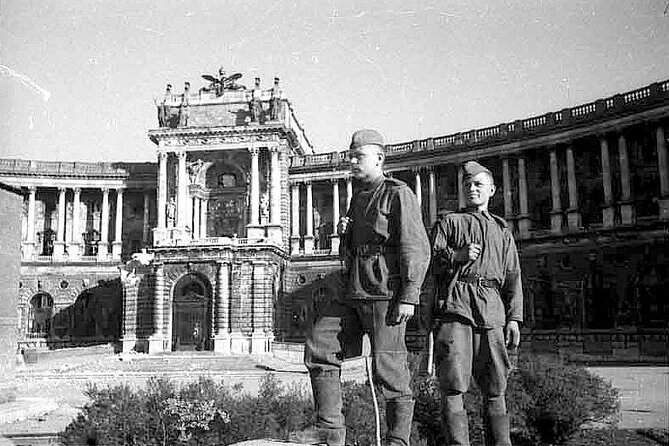
The walk then crosses the historic center toward Judenplatz. Here you’ll see the memorial to the Austrian Jewish victims of the Shoah, dedicated to the more than 65,000 Austrian Jews murdered by the National Socialists between 1938 and 1945.
This is likely to be one of the most affecting moments of the tour. The memorial is not just another stop on a route. It gives a number to the human cost and places that loss in the middle of Vienna’s old center, among ordinary streets and daily city life.
The guide also discusses Vienna’s Jewish population and the ways antisemitism grew before and during the Nazi period. The tour’s strength is its refusal to isolate the Holocaust from the earlier political culture that made persecution possible.
You’ll have about 10 minutes here. You may want additional quiet time afterward, but the group continues through the center, so take the opportunity to look closely before moving on.
Morzinplatz and the former Gestapo headquarters
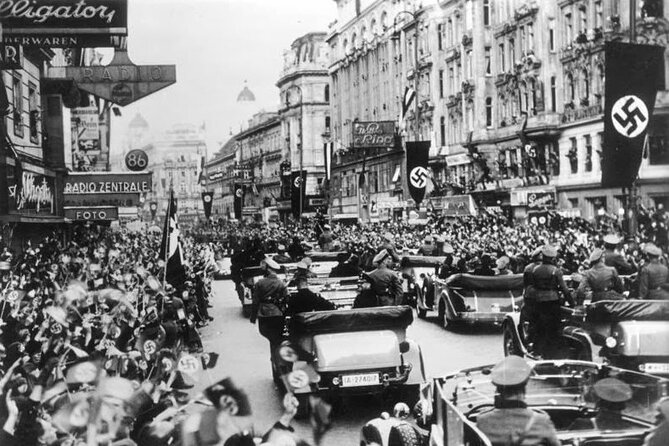
At Morzinplatz, the guide points out the memorial on the site of the former Hotel Metropole. The luxury hotel was taken over and used as one of the Gestapo’s most brutal headquarters during the Third Reich.
This stop brings the story down from speeches and public squares to interrogation, imprisonment, and fear. A hotel can sound harmless in a modern city, which makes the site’s former use especially jarring. There is no grand surviving Nazi complex to tour here. Instead, the memorial and the guide’s explanation carry the story.
Allow roughly 10 minutes. If you are interested in how repression operated in Vienna, this may be more useful than a large monument because it connects state power with a specific address in the city center.
The synagogue hidden behind an apartment building
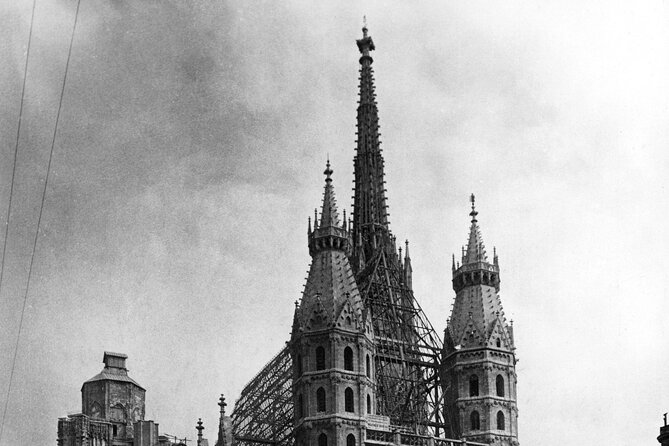
The final main section focuses on Jewish Vienna and the Stadttempel, also called the Seitenstettentempel. The synagogue is hidden behind a five-story apartment building on Seitenstettengasse.
This unusual design dates to regulations requiring non-Catholic places of worship to remain concealed from the street. The synagogue could not present itself openly, so the street-facing building hid it from view. The entrance carries the inscription, Come to his gates with thanksgiving, to his courts with praise.
The guide explains why the building is arranged this way and how the location reflects the restrictions placed on Jewish religious life. It is a small architectural detail with a large political meaning. You will not simply see a synagogue. You will see how discrimination shaped the city’s buildings.
The tour ends a few minutes’ walk from Schwedenplatz. That is a practical finish, since U1 and U4 trains serve the area and restaurants are close by. The end point also makes it easy to continue your evening without crossing the city again.
What the guides add
The guide is the heart of this experience. The strongest feedback centers on clear English, careful pacing, and the ability to explain complex history without turning the walk into a classroom lecture.
Dieter is especially noted for his historical preparation, thoughtful answers, safety awareness, and willingness to add indoor pauses in cold weather. Wolfgang is praised for warmth, philosophical discussion, and a strong grasp of Vienna before and after World War II. Stephan has used an iPad with maps and photographs, which can help when the present-day street gives little visual evidence of the past.
Charles and Siggy have also been praised for personable delivery and strong command of the subject. The actual guide can vary, so you should not book solely on the expectation of meeting one particular person. Still, the repeated strength of the guiding is a real reason to choose this walk.
One practical warning: the acoustics can be difficult in the city center, and one person found it hard to hear through the listening device. Stay near the guide and speak up early if you are missing details.
Price, pace, and practical comfort
At $32.65, the price covers the licensed guide and the full walking program. There are no attraction admissions listed, and the main value comes from interpretation rather than entry into buildings.
You should have a moderate level of fitness. The route is not described as strenuous, but it lasts 2.5 hours and includes steady walking through central Vienna. Comfortable shoes are essential.
The 2:30 p.m. start can work well for a history-focused afternoon. Vienna weather can change quickly, so carry water, sunblock, and a raincoat or umbrella. Winter can be especially demanding. Several guides have adjusted the route with indoor pauses, but you should still dress for time outside.
The tour is offered in English and uses a mobile ticket. Service animals are allowed, and the route is near public transportation. Free cancellation is available up to 24 hours before the start. If poor weather or too few bookings force cancellation, you are offered another date or a full refund.
Who should book this walk?
You should book it if you enjoy political history, memorials, difficult questions, and guided storytelling. It is particularly useful if you want to understand Austria’s role in the Nazi period rather than receiving a simplified story centered only on Germany.
You may not enjoy it if you want a general introduction to Vienna, an indoor museum tour, or a short list of famous buildings. The landmarks are important, but the main attraction is the explanation between them.
Should you book the Historical Hitler Walking Tour of Vienna?
Yes, if the subject interests you and you are prepared for a serious outdoor walk. The route is well chosen, the price is reasonable, and the best guides add context that is hard to get from plaques or guidebooks.
Book it early if possible, since it is often reserved about 25 days ahead. Come prepared for weather, arrive before 2:30 p.m., stay close to the guide, and expect a tour about Hitler’s Vienna and Austria’s Nazi past, not a narrow checklist of Hitler-related addresses.
FAQ
How long is the Historical Hitler Walking Tour of Vienna?
The tour lasts approximately two hours and 30 minutes.
What time does the tour start?
The tour starts at 2:30 p.m.
Where does the tour begin?
It begins at Albertinaplatz, outside the Albertina Museum in central Vienna.
Where does the tour end?
It ends a few minutes’ walk from Schwedenplatz, near the U1 and U4 underground lines and several restaurants.
Is the tour offered in English?
Yes. The tour is offered in English.
What places are included?
The route includes the Vienna State Opera, Memorial Against War and Fascism, Akademie der bildenden Künste, Heldenplatz, Judenplatz Holocaust Memorial, Morzinplatz, and the Stadttempel area.
Is this only a World War II walking tour?
No. It focuses on Hitler’s connection to Vienna and the wider historical and social setting, including his early life, the Nazi takeover, Jewish Vienna, the Holocaust, and wartime effects.
What should I bring?
Wear comfortable shoes and clothes. Bring water, sunblock, and a raincoat or umbrella because Vienna’s weather can be unpredictable.
Can I cancel for a refund?
Yes, you can cancel up to 24 hours before the start time for a full refund. Changes or cancellations made less than 24 hours in advance are not accepted for a refund.
Just added around the world
- Scenic Train ride to historical cities of Morretes and Antonina★ 4.0 · 188 reviews
- 6-Day Cultural Tour to Machu Picchu★ 5.0 · 76 reviews
- Jewish Heritage of Curacao★ 4.5 · 68 reviews
- The Curacao’s Colorful History Walking Tour★ 5.0 · 55 reviews
- Discover Scuba Diving Amathounta’s Ancient Port★ 5.0 · 30 reviews
- Olous – Guided Snorkelling Excursion to Discover Olous Sunken Ancient City★ 4.5 · 31 reviews
- Night Walking Tour of Medieval Cuenca★ 5.0 · 64 reviews
- WWII – The Battle of Crete Day Tour★ 5.0 · 103 reviews
Vienna History Tours, compared.

Skip-the-Line Schonbrunn Palace Guided Tour and Vienna Historical City Tour
Read our review →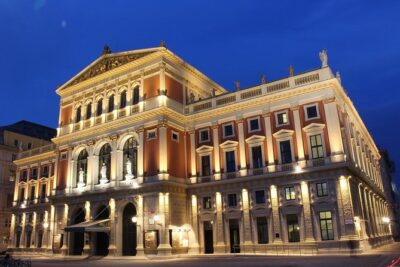
Vienna Mozart Concert in Historical Costumes at the Musikverein
Read our review →
Vienna: historical tours with locals in the unknown City,
Read our review →Browse the lists this tour appears in