
Review · VIENNA
Vienna: World War II Historical Walking Tour
Vienna’s WWII story is not tucked away in a distant museum. It unfolds along the grand streets around the Opera House, at a synagogue that survived the Nazi regime, and beside a Holocaust memorial that forces the city to face what happened. This tour connects those places with the political fear, ethnic hatred, and public choices that shaped Vienna before, during, and after the war.
I like the clear Austrian perspective and the way the tour ties Hitler’s early years to real places in Vienna. I also like the practical design: guides such as Dieter, Stefan, Siggi, Michael, and Wolfgang use stories, photographs, questions, and headsets so you can keep listening while walking. The main drawback is that this is a serious subject, and 2.5 hours on city streets can feel demanding in cold, rain, or crowded conditions.
- Hitler’s Vienna: Learn how the young art student encountered the city and how its social and political climate fed his later ideology.
- A surviving synagogue: Visit the only synagogue in Vienna said to have survived the Nazi regime.
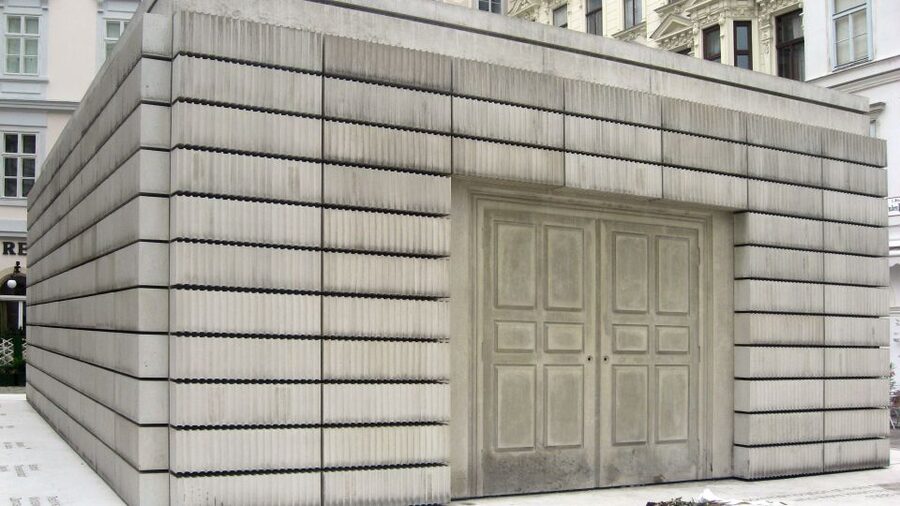
- The Holocaust memorial: Pause at one of Vienna’s most somber reminders of the city’s Jewish community and its destruction.
- WWII’s physical scars: Hear how more than 100,000 bombs affected Vienna and see remains linked to the war and its aftermath.
- Postwar Vienna: Understand how the city was divided among the Allied powers, with all four zones administered together in one city.
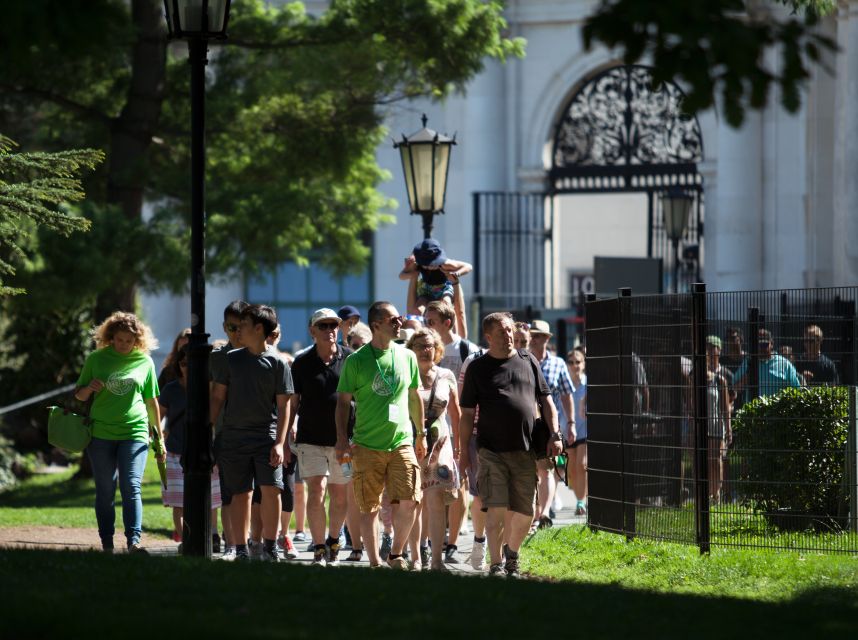
- Well-managed walking: Expect about four kilometers, regular pauses, and an audio earpiece for larger groups.
Starting beside the Albertina and the Opera House
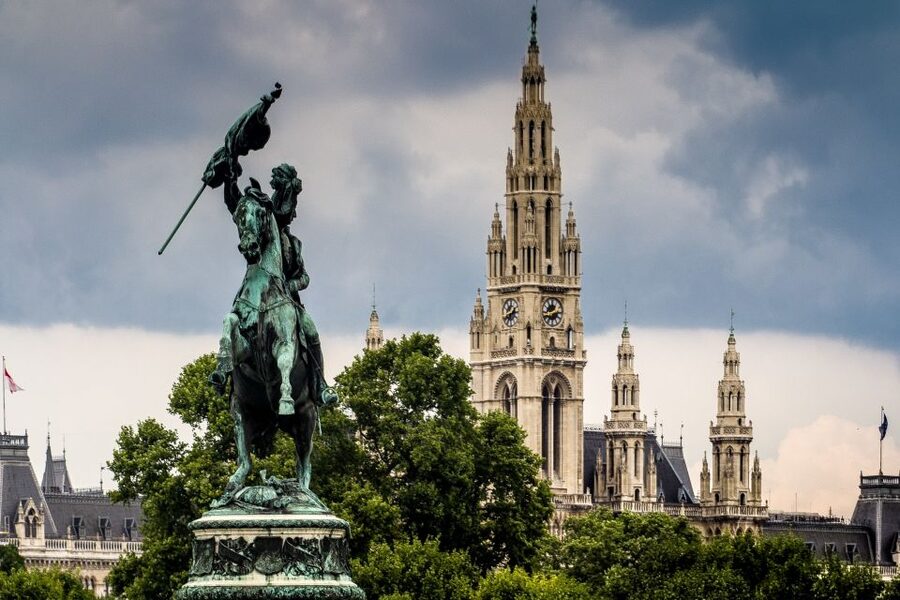
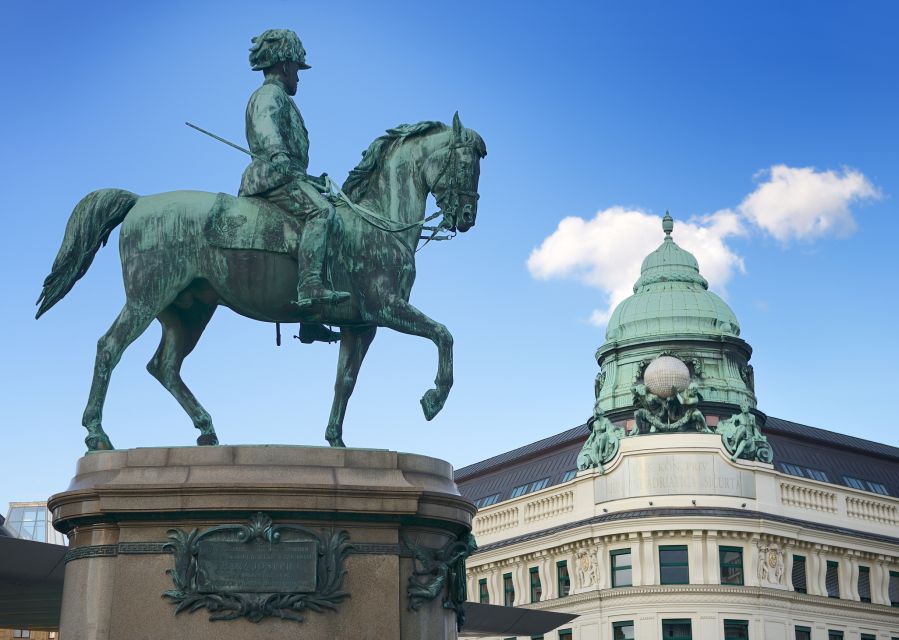
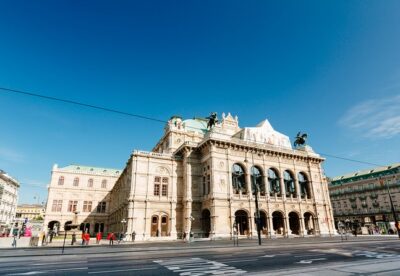
The tour begins in front of the Albertina Museum, beside the Albrechtsbrunnen fountain and Vienna’s famous Opera House. Look for the green umbrella downstairs at the fountain. Karlsplatz/Oper is the nearby subway stop, making the meeting point easy to reach from other parts of the city.
This is a fitting place to start. The Opera House and Albertina put you in the polished center of imperial Vienna, yet the subject quickly turns to the city’s political tensions and the young Adolf Hitler. Your guide sets out the basic timeline and explains how an art student in Vienna became a dictator responsible for mass murder and war.
That opening matters. Without it, a WWII walk can become a string of dates and grim locations. The guide instead frames the city as a place where ideas, prejudice, fear, and political movements were already active before the war began. Dieter has been especially praised for linking the parts together, while Stefan and Wolfgang are noted for presenting the material with strong storytelling and context.
You should expect interpretation rather than a simple sightseeing route. Guides ask questions, explain cause and effect, and invite discussion. That makes the tour a good fit if you already know the broad outline of WWII but want to understand Vienna’s role more clearly.
Following Hitler’s early years through Vienna
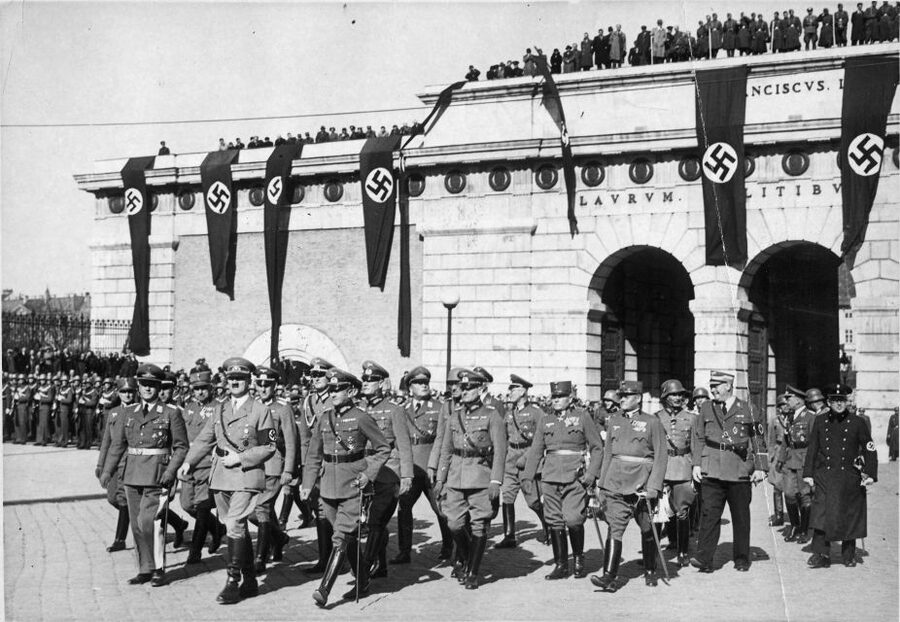
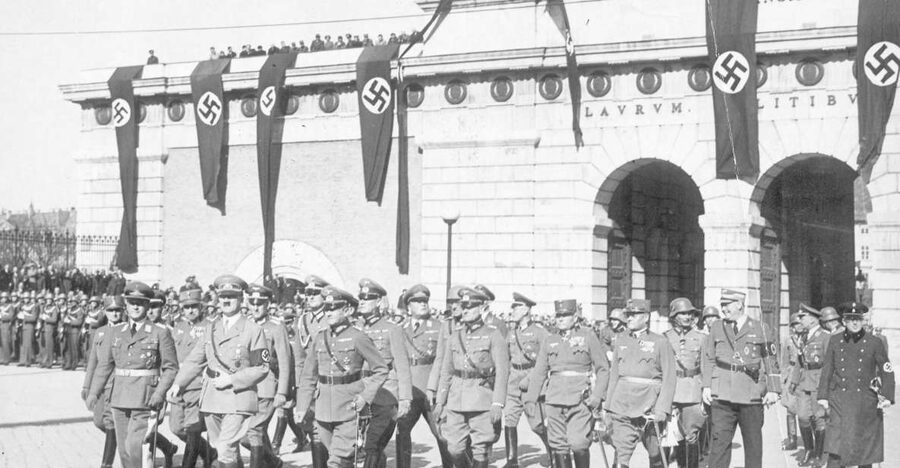
The section on Hitler’s youth is one of the tour’s most distinctive features. You learn about his time in Vienna and the social setting that influenced his outlook, rather than treating his later crimes as though they appeared without warning.
That does not mean the tour excuses or softens his actions. The emphasis is on understanding how political ideas develop, how ethnic rivalry can be turned into hatred, and how fear can become a tool of power. Several guides bring a moral question into the walk: what can a society tolerate, and how does ordinary prejudice become organized persecution?
This is also where the guide makes the most difference. Siggi has used printed photographs to clarify events, and some guides adapt the discussion to the group’s questions. Charles has been praised for handling difficult history with care, while Michael has been noted for explaining how separate events connect, from Hitler’s youth through annexation, liberation, and the end of the war.
You will not get a visit to a museum gallery as part of the $31 price. Instead, the city itself acts as the setting. If you want original documents, extensive exhibits, or a long stop inside a formal memorial center, you will need to add those elsewhere in your Vienna plans.
More WWII and D-Day Tours in the world:
- Amsterdam: Life of Anne Frank and World War II Walking Tour
★ 4.8 · 10,467 reviews - Berlin: Third Reich & Cold War Guided Walking Tour
★ 4.9 · 8,378 reviews - Normandy D-Day Sites & Cemetery Day Trip from Paris with Lunch
★ 5.0 · 6,877 reviews
Vienna’s Jewish community and the synagogue that survived
A major stop is Vienna’s surviving synagogue, described as the only synagogue in the city to make it through the Nazi regime. The visit gives the tour a more personal focus. Rather than discussing persecution only through laws and military events, you confront what happened to Vienna’s large Jewish community.
The guide explains how ethnic rivalry and fear seized the city, and how the Jewish population was targeted during the Nazi period. This part is not just a pause for architecture. It shows the human cost of political language and public hostility.
Do not expect an included interior visit or admission to a synagogue. Entrances are not part of the tour, so the guide’s explanation and the exterior setting carry the main weight. That is worth knowing if you are comparing this walk with a ticketed museum tour.
The subject calls for a measured guide, and this is one place where delivery matters. Charles has been praised for sensitivity, while Siggi’s photographs and clear explanations can help you follow events that may otherwise feel abstract. The English-language guiding is central to the experience, since no written tour materials are listed as included.
The Holocaust memorial and a necessary pause
The Holocaust memorial is the tour’s most solemn stop. Here, the broad story of Vienna’s wartime politics narrows to the murder of Jewish people and the destruction of a community that had been part of the city for generations.
A good walking tour should not rush past a memorial like this, and the format allows time for the guide to explain its meaning. The tone is serious rather than theatrical. Guides have been praised for being sympathetic and thoughtful when discussing this material, which is important because the tour covers atrocities without turning them into entertainment.
You may find this is the emotional center of the afternoon. The earlier discussion of Hitler’s Vienna gives the memorial political context, but the memorial itself keeps the focus on the people who were persecuted and killed.
This is also a point where you should give yourself space. The tour continues after the memorial, but you may want quiet time later in the day. It is not a light introduction to Vienna, and it should not be treated as one.
Bomb damage, liberation, and the altered city
The walk then moves into the wartime experience of Vienna itself. You hear how more than 100,000 bombs affected the city and see evidence of WWII damage and the changes that followed.
The value here is visual. Vienna is famous for grand palaces, elegant streets, and carefully restored buildings. A historical walk helps you notice what is missing, what was rebuilt, and how the city’s present appearance can hide the scale of wartime destruction.
The tour also covers liberation and the end of Nazi rule. That gives you a fuller picture than a route focused only on Hitler or the Holocaust. Vienna was not simply the setting for events elsewhere. It was bombed, occupied, divided, and forced to deal with its own role in the Nazi period.
Your guide may use photographs to show how locations looked during the war. That is particularly useful when little physical damage remains. Siggi has been praised for bringing printed images, and several guides are described as strong storytellers who connect specific sites with the events that took place there.
More History Walking Tours in the world:
- History and Hauntings of Salem Guided Walking Tour
★ 5.0 · 14,564 reviews - Lisbon: History, Stories and Lifestyle Walking Tour
★ 4.8 · 10,902 reviews - Boston: Freedom Trail History Small Group Walking Tour
★ 5.0 · 6,450 reviews - Historic Charleston Guided Sightseeing Walking Tour
★ 5.0 · 6,216 reviews
Vienna’s unusual four-power occupation
The postwar section explains why Vienna was divided after WWII and why its political situation was unusual. The city was split into zones controlled by the United States, Britain, France, and the Soviet Union. It was also the only city where the four Allied powers managed a zone together.
That detail gives the final part of the tour a different feel. You move from Nazi control and wartime destruction to the complicated business of occupation and reconstruction. The division of the city was not a footnote. It shaped daily life and Vienna’s place in postwar Europe.
This section is useful if you plan to visit other historical sites during your stay. It gives you a framework for understanding the years between liberation and the later return to an independent Austria. The tour does not appear to enter every site connected with the occupation, but it uses central Vienna to explain the political arrangement.
The route does not return to the Albertina starting point. A subway stop is close to the end, so you can continue to another part of Vienna, but plan your afternoon with that in mind. Ask the guide where the walk finishes if you have a timed reservation afterward.
How much walking and standing should you expect?
The tour lasts 150 minutes and covers roughly four kilometers, according to one detailed account. That is a manageable distance for many people, but you are on city streets for two and a half hours, with periods of standing at historical sites.
The pacing appears to be one of the strongest practical features. Guides build in pauses, places to sit, indoor breaks, and time for questions. One guide adjusted the route during heavy rain, and another made an effort to stop in warm places during cold weather.
Still, bring comfortable shoes and dress for the forecast. Vienna’s weather can change, and the tour is outdoors for much of its duration. If you have mobility concerns, the distance may be workable, but you should consider the standing, street surfaces, and pace before booking.
The audio system is a real advantage. Larger groups receive earpieces, allowing you to hear the guide without pressing close to the person speaking. That helps at busy intersections and makes it easier to look at a building while still following the explanation. Some participants felt the system would help even small groups, though equipment can never replace staying near the guide.
What the $31 price gets you
At $31 per person, this is a reasonable price for a 2.5-hour guided history walk in central Vienna. You are paying for a live English-speaking guide, a structured route, and interpretation that links sites most visitors would pass without understanding.
The value is strongest if you want context. You could walk past the synagogue, Holocaust memorial, wartime scars, and postwar sites on your own, but you would miss the connections between Hitler’s early years, Vienna’s political climate, the persecution of Jews, the bombing, and the four-power occupation.
The price does not include admission to attractions, transport, food, or any other trip expenses. That keeps the initial cost low, but it also means you should not expect an indoor museum visit or a bundled entry ticket.
I would place this tour at the beginning of a Vienna stay if WWII history is one of your interests. It can help you read the city with sharper eyes during later sightseeing. If you already have several paid museum visits planned, the walk adds a different kind of value because it uses streets and memorials rather than exhibition rooms.
Free cancellation up to 24 hours before the start and the option to reserve now and pay later make it easier to fit into a changing itinerary. Check the available start times when booking, since the duration is fixed but the schedule can vary.
Who will get the most from this walk?
You should book this if you want:
- A serious look at Vienna’s role in WWII
- A clear explanation of Hitler’s early years in the city
- The Austrian viewpoint on annexation, Nazi rule, liberation, and occupation
- A walking route that combines major sights with less obvious historical meaning
- A guide who welcomes questions and explains events in plain English
- A balanced mix of walking, standing, sitting, and short pauses
This tour is especially useful for history teachers, students, readers of WWII history, and anyone who wants more than a list of dates. It also suits first-time visitors who want to understand how Vienna’s modern identity was shaped by the war.
You might choose something else if you prefer light sightseeing, dislike outdoor tours, or want extensive time inside museums. The subject is painful, and the Holocaust memorial and discussion of persecution are not optional side notes. You should arrive ready for a thoughtful, sometimes uncomfortable afternoon.
My verdict on Good Vienna Tours
I would book this tour for its strong historical connections, careful treatment of difficult material, and practical pacing. Guides vary, but Dieter, Stefan, Siggi, Michael, Wolfgang, Charles, and Florian have all been praised for clear explanations, storytelling, flexibility, and sensitivity.
The tour earns its price by showing how Vienna’s streets connect to the city’s darkest decades. Bring comfortable shoes, a coat or rain layer, and enough time afterward to process what you have heard. If you want to understand WWII from Vienna’s own point of view, this is a worthwhile choice.
FAQ
Where does the Vienna WWII walking tour start?
It starts in front of the Albertina Museum, beside the Albrechtsbrunnen fountain near the Opera House. Look for the green umbrella. The closest listed subway stop is Karlsplatz/Oper.
How long does the tour last?
The walking tour lasts 150 minutes, or 2.5 hours.
What language is the tour offered in?
The live guided tour is offered in English.
Does the tour include attraction entrance fees?
No. Entrance fees are not included. The booking includes the live guide and walking tour only.
Does the tour return to the Albertina Museum?
No. The route does not return to the starting point. A subway stop is close to the end of the walk.
Can I cancel the booking for a refund?
Yes. You can cancel up to 24 hours in advance for a full refund. You can also reserve now and pay later.
Just added around the world
- Scenic Train ride to historical cities of Morretes and Antonina★ 4.0 · 188 reviews
- 6-Day Cultural Tour to Machu Picchu★ 5.0 · 76 reviews
- Jewish Heritage of Curacao★ 4.5 · 68 reviews
- The Curacao’s Colorful History Walking Tour★ 5.0 · 55 reviews
- Discover Scuba Diving Amathounta’s Ancient Port★ 5.0 · 30 reviews
- Olous – Guided Snorkelling Excursion to Discover Olous Sunken Ancient City★ 4.5 · 31 reviews
- Night Walking Tour of Medieval Cuenca★ 5.0 · 64 reviews
- WWII – The Battle of Crete Day Tour★ 5.0 · 103 reviews
Vienna History Tours, compared.

Skip-the-Line Schonbrunn Palace Guided Tour and Vienna Historical City Tour
Read our review →
Vienna Mozart Concert in Historical Costumes at the Musikverein
Read our review →
Vienna: historical tours with locals in the unknown City,
Read our review →Browse the lists this tour appears in