
Review · GERMANY
Leipzig: 1.5-Hour Historical Walking Tour in German
Leipzig’s city center packs a surprising number of stories into a short walk. On this 1.5-hour German tour, you move from grand music halls and university buildings to old arcades, churches, and the political events that helped bring down East Germany. The guide keeps the facts moving with odd details, legends, and local humor.
I like the focus on specific Leipzig characters and curiosities, not just dates and façades. I also like the price: at $17, you get a useful first look at the center without giving up half a day. The main limitation is clear: the tour is conducted in German, and it is primarily an outdoor orientation walk rather than a ticketed tour inside every major building.
Key points
- Unexpected stories: Learn why Leipzig Central Station was built in two halves and how Greenlanders ended up in the city.
- Classic central sights: See the Opera House, Gewandhaus concert hall, university, Mädler Passage, Old Town Hall, and St. Thomas Church.
- Modern history included: The stop near St. Nicholas Church can connect Leipzig to the period before the fall of the Berlin Wall.
- Strong guide style: Guides such as Uwe Lange and Thorsten have been praised for clear speech, humor, and well-told anecdotes.
- Good short introduction: The route gives you a compact overview before you explore museums, churches, or concert venues on your own.
- Simple meeting point: Start at the Tourist Information Center at Katharinenstraße 8, arriving 15 minutes early.
Why Leipzig’s stories work so well on foot
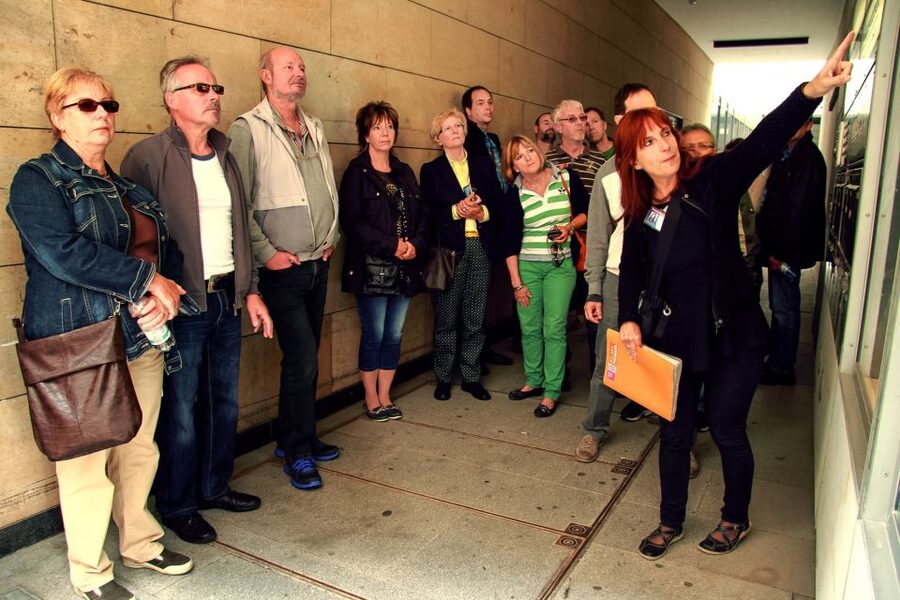
Leipzig is easy to underestimate. The center is compact, yet its streets bring together trade, music, religion, university life, and the peaceful protests that changed Germany. A walking tour helps you connect those subjects instead of seeing each building as a separate postcard.
The guide’s approach is built around questions. Why does the Central Train Station have two halves? What is the story behind the fountains? Why are Greenlanders connected with Leipzig? What could possibly be interesting about Shakespeare’s stockings? These details may sound odd, but they give the city a human scale.
I like this format because the unusual facts help you remember the serious ones. You may forget a date, but you are less likely to forget a city whose guide explains Greenlanders and Shakespeare while leading you through a medieval passageway.
The tone also matters. Recent guide feedback repeatedly highlights humor, clear speech, and a good command of Leipzig’s past and present. Uwe Lange is singled out for an engaging account near St. Nicholas Church, especially his explanation of the period before the Berlin Wall fell. Thorsten is also praised for being well informed. Your guide may be someone else, but the experience is clearly designed around lively storytelling rather than a dry lecture.
More History Walking Tours in Germany
- Berlin: Third Reich & Cold War Guided Walking Tour
★ 4.9 · 8,378 reviews - Munich: Third Reich & WWII Walking Tour
★ 4.6 · 6,181 reviews - Berlin’s Best: 2 Hour Walking Tour Third Reich and the Cold War
★ 5.0 · 5,486 reviews
Starting at Katharinenstraße 8
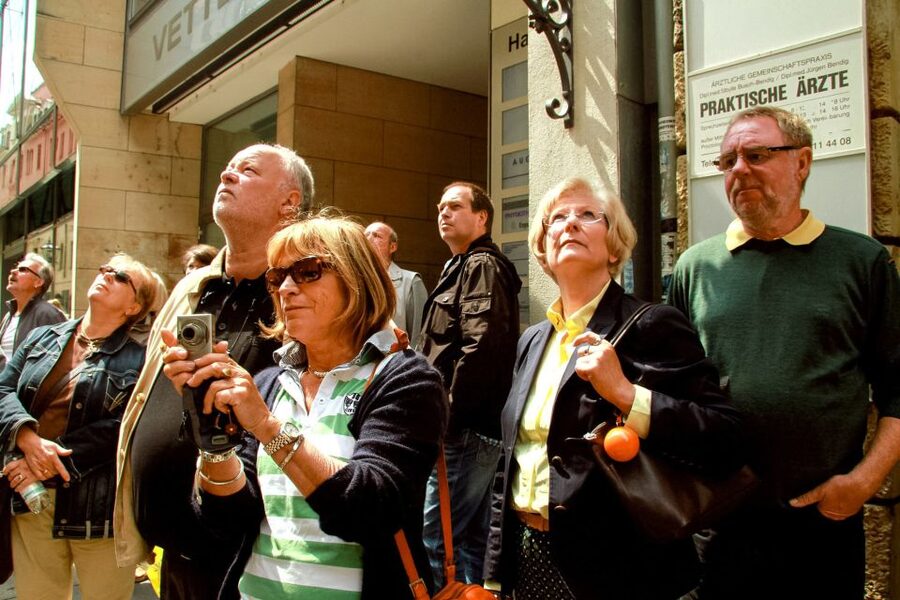
The tour begins at the Tourist Information Center at Katharinenstraße 8. You should arrive 15 minutes before departure, which gives you time to find the guide and gather before the group sets off.
This is a practical meeting point in the center. You are not being asked to arrange a separate transfer, and the tour itself includes the guide and the walk. Transfers are not included, but that matters little for a central city route unless you are staying far outside Leipzig.
Wear comfortable shoes. The walk lasts only 90 minutes, but the value comes from being able to pay attention to the guide instead of worrying about sore feet or falling behind. Since the experience is outdoors, keep an eye on the weather and bring the usual city-walking basics.
The booking terms are friendly for a short city break. You can reserve now and pay later, and cancellation is free up to 24 hours before the start time. Available start times vary, so check the schedule before building the rest of your day around the walk.
Opera House and Gewandhaus: Leipzig’s musical face
One of the first themes you encounter is Leipzig’s place in German music. The route includes the Opera House and the Gewandhaus concert hall, two landmarks that show how central music is to the city’s identity.
The point is not simply to admire large façades. A good guide can explain how these institutions fit into Leipzig’s cultural life and why music is such a strong part of the city’s public image. Even if you do not attend a concert, seeing the buildings gives you a better sense of the city you are walking through.
The Gewandhaus is especially useful as an orientation stop. It helps you understand that Leipzig is more than an old trading center. The city has long linked commerce, education, performance, and civic life in a relatively tight central area.
Do not expect a concert hall visit as part of this tour. The information provided describes exterior stops and live commentary, not admission to performances or guided access inside the buildings. If you want to attend a concert, treat this walk as a way to learn where the venue is and how it fits into the center.
The university and the city’s younger energy
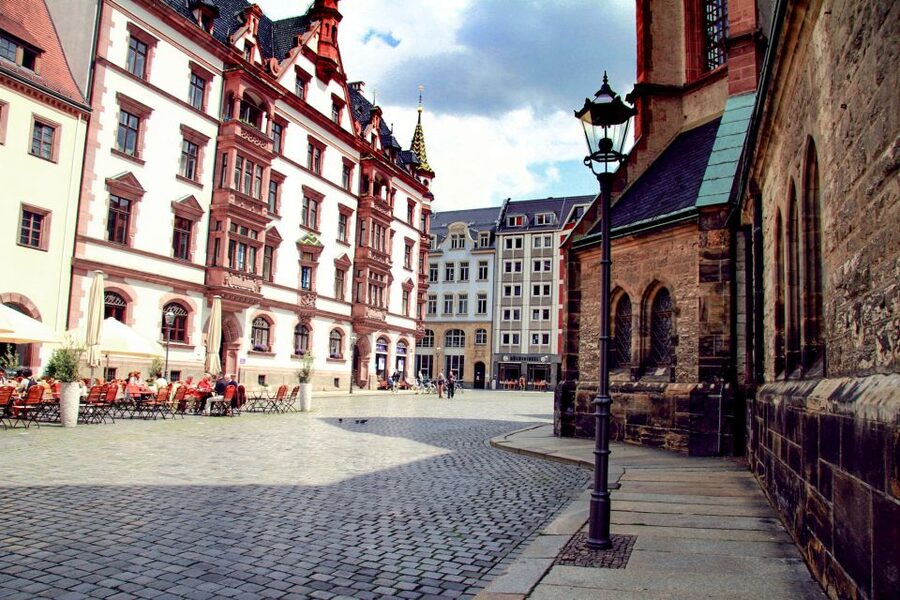
The university is another important stop. Its presence adds a different layer to Leipzig, showing the city as a place of learning and public debate as well as music and old commerce.
I find this part useful because it prevents the tour from becoming a parade of old buildings. Leipzig’s story is not frozen in the past. University life helps explain the city’s continuing energy and its mix of historic architecture with newer civic spaces.
The guide may also use the university area to explain local customs, important people, or changes in the city center. The supplied details do not promise a particular interior visit, so plan to see the university from the route rather than enter it with the group.
For you, the main benefit is orientation. After the walk, you can return to this part of town on your own, spend more time looking at the buildings, or combine it with nearby sights.
Same city, a different century:
- Leipzig: City History Canal Sightseeing Tour on a Motorboat
★ 4.7 · 7,671 reviews - Third Reich Berlin: Hitler and WWII Walking Tour
★ 5.0 · 3,301 reviews - Nuremberg: Medieval Dungeons Guided Tour
★ 4.8 · 2,214 reviews - Berlin: Third Reich, Hitler, and WWII Walking Tour
★ 4.9 · 1,757 reviews
Mädler Passage and the drama of old commerce
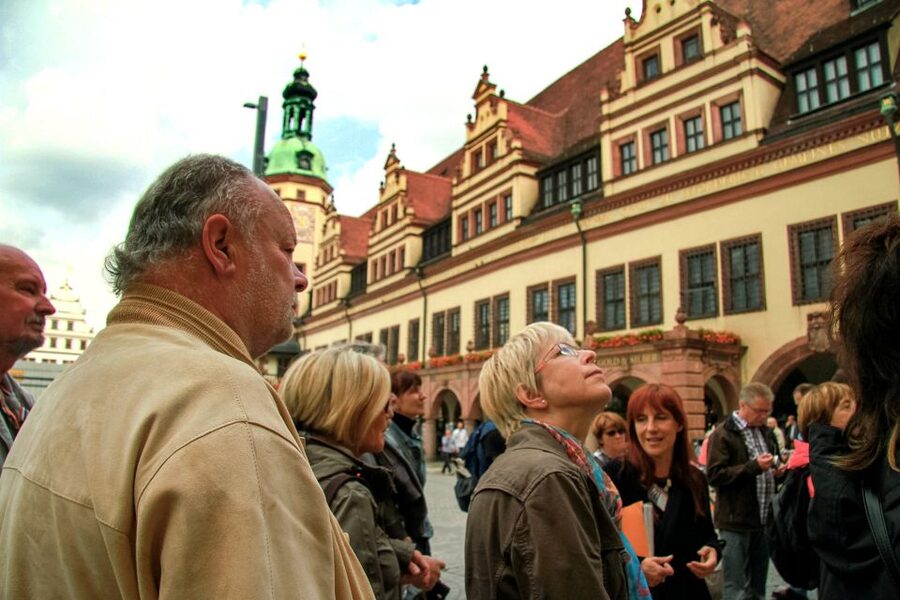
Mädler Passage is one of the tour’s most appealing stops. This elegant passageway shows how Leipzig’s commercial life once worked through covered arcades and carefully designed trading spaces.
Passages are easy to rush through when you are sightseeing alone. A guide gives you a reason to pause and look up, notice the architecture, and understand why this kind of space mattered to merchants and shoppers.
The stop also suits the tour’s storytelling style. Mädler Passage is not treated as a silent architectural shell. It becomes part of a bigger story about trade, urban life, and the characters connected with Leipzig’s center.
You should remember that the tour is short. The guide needs to keep the group moving, so this is a place to note for a later return if you want photographs or a slower look. The walk gives you the context; your own second visit gives you time.
Old Town Hall and the feel of Leipzig’s center
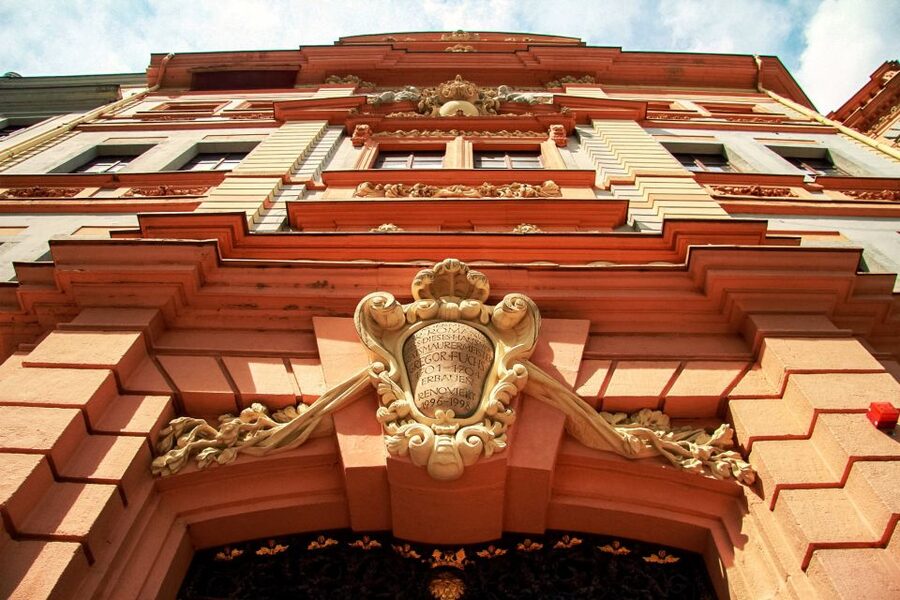
The Old Town Hall provides one of the clearest visual links to Leipzig’s civic past. It is a key landmark in the center and a natural place for a guide to explain how the city governed itself and presented its importance.
Here, the value of a walking tour is simple. You are looking at a building, but the guide supplies the human questions behind it: who used it, what happened nearby, and how the center changed over time.
The fountain stories also add a lighter touch. The details supplied for the tour specifically promise an explanation of the fountains, which is exactly the kind of small local subject that can turn a routine square into a memorable stop.
This is not a museum tour with a long examination of every room. The focus is on the outside setting and the story attached to it. If you want extensive architectural detail, you may need a longer specialist tour. For a first visit, the shorter treatment keeps the pace brisk.
St. Thomas Church and Leipzig’s serious side
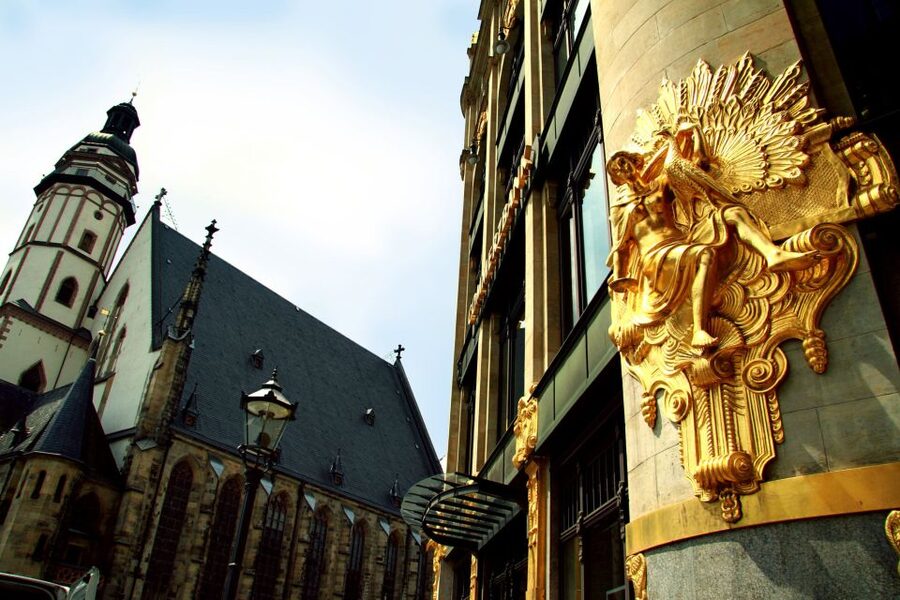
St. Thomas Church is one of the most important stops on the route. It gives the tour a place for religion, music, and the deeper layers of Leipzig’s past.
The church is also where the music theme gains extra weight. The route connects it with Leipzig’s musical identity, while the guide’s broader commentary places it among the city’s major landmarks. You will want to pay close attention here, especially if music is one of your reasons for visiting Leipzig.
The tour information mentions the chance to hear about an additional tower tour at St. Thomas Church, but that separate experience may sell out. Do not assume the walking tour includes a climb or interior access. If the tower interests you, ask about availability when you arrive or arrange it separately.
That distinction is important. You see St. Thomas Church on the walking route, but the standard experience is not advertised as a full church or tower visit. The reward is the guide’s explanation and the chance to mark the church for a longer stop later.
St. Nicholas Church and the road to the Berlin Wall’s fall
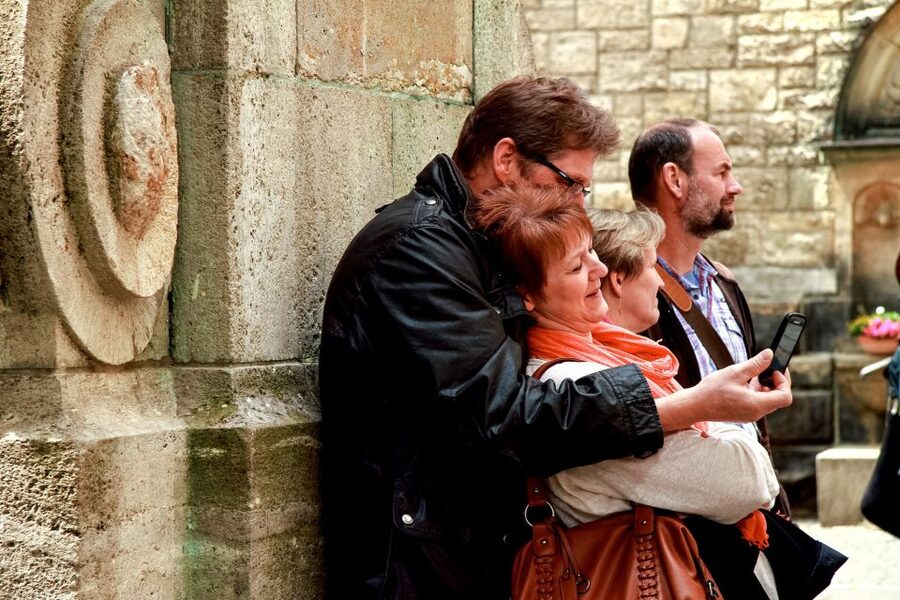
The route’s modern history can be especially moving near St. Nicholas Church. One guide, Uwe Lange, is praised for a compelling talk about the time before the fall of the Berlin Wall.
This subject gives the tour more weight than a standard old-town walk. Leipzig was not only a city of merchants, students, and musicians. It also played a role in the events that helped bring change to East Germany.
The exact route order can vary, and the supplied schedule does not list every stop in sequence. Still, the reference to the church and the period before the Wall fell tells you to expect some discussion of recent German history, not only medieval legends.
I would pay attention here even if you have already read about German reunification. A local guide can connect national events with one street, one church, and one city square. That connection often makes political history easier to grasp.
The curious questions that keep the walk lively
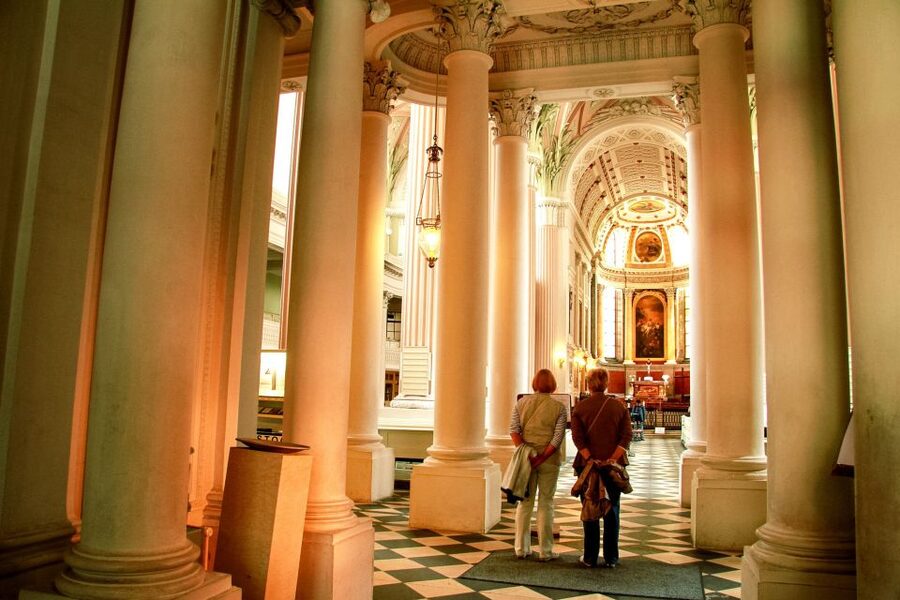
The tour’s unusual prompts are more than clever advertising. They tell you how the guide works. You are not simply hearing a list of dates and names. You are being given small mysteries that invite you to listen for the answer.
The Central Train Station question is a good example. Learning why the station was made up of two halves gives you a reason to notice its design later. The fountain story turns an ordinary public feature into a clue about city life. The Greenlanders question adds a surprising link between Leipzig and a distant part of the world.
Then there is Shakespeare’s stockings. The subject sounds playful, and that is the point. A city tour needs a few odd facts to break up the heavier material. Humor helps you stay focused, especially when the walk moves quickly between architecture, politics, and culture.
The best guides balance these amusing details with solid explanation. The available guide comments repeatedly point to that mix: clear speech, humor, strong subject knowledge, and stories that keep the 90 minutes moving. If you prefer a silent photo walk, this may feel too talkative. If you want a guide who gives the city a personality, it should suit you well.
Guide quality and group comfort
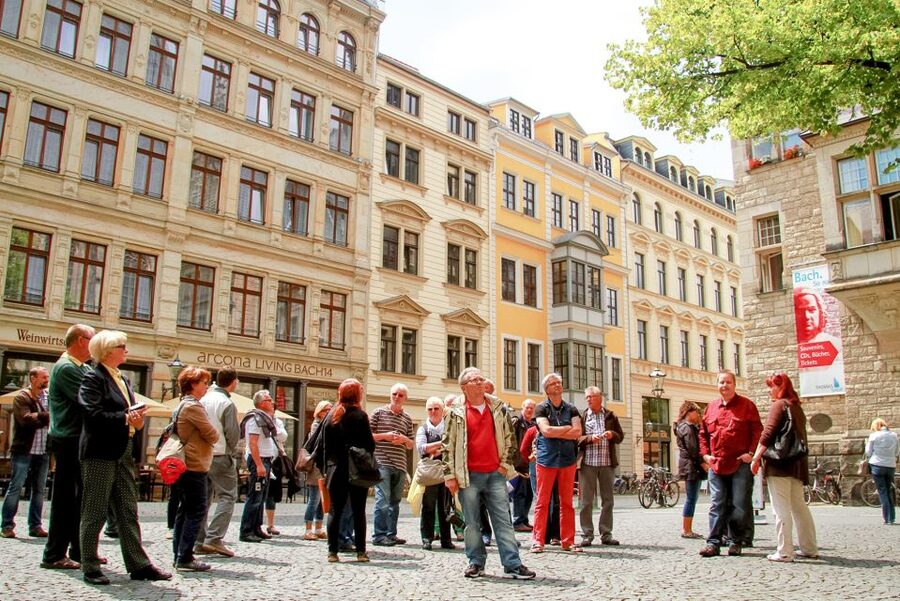
The guide is the heart of this experience. The walk covers familiar landmarks, but the delivery determines whether you remember them.
Several guide names appear in the recent feedback, including Uwe Lange and Thorsten. Uwe is praised for humorous storytelling and for a particularly strong presentation about Leipzig before the Berlin Wall fell. Thorsten is praised for being very well informed. Other comments emphasize clear pronunciation and a voice loud enough for people standing in the second or third row.
That last point matters. City walks can become frustrating when a guide speaks softly or the group spreads out. Clear German and a strong voice make it easier to follow without pushing toward the front.
One comment also notes a small group, which can improve the experience. Group size may vary by departure, so do not treat that as a guarantee. Still, the overall score of 4.7 from 2,217 ratings suggests a consistent level of satisfaction, particularly with the guides’ humor and useful information.
The tour is in German only. You should be comfortable following spoken German for 90 minutes, including historical references and jokes. If you understand German well but struggle with fast speech, standing near the guide may help.
Is $17 good value for 90 minutes?
At $17 per person, this is a fair price for a central orientation walk with a live certified guide. You are paying for local explanation, not transport, admission tickets, food, or a private group.
The value is strongest if Leipzig is new to you. In 90 minutes, you see many of the city center’s major reference points and learn which ones deserve a longer visit. That can save time later, especially if you have only a day or two in town.
The price is less attractive if you want interiors, museum access, or a specialist focus on music, architecture, or modern politics. Those interests may call for a separate paid visit. This tour works best as a broad first look, not as the only cultural activity of your stay.
I also like the reserve-now, pay-later option for a changing city break. You can hold a place without paying immediately, then cancel for a full refund until 24 hours before the start. Just check the departure time and arrive at Katharinenstraße 8 15 minutes early.
Who should book this Leipzig walk?
I would choose this tour for a first visit, a short stay, or a day when you want to get oriented before exploring alone. It is also a good fit if you enjoy local anecdotes, want Leipzig’s recent political past included, and can follow German comfortably.
Families with older children may appreciate the odd questions about fountains, Greenlanders, and Shakespeare. The format is more engaging than a long formal lecture, though younger children may find 90 minutes of spoken history demanding.
Music lovers will value the Opera House, Gewandhaus, and St. Thomas Church stops. People interested in German reunification should listen closely near St. Nicholas Church and ask the guide for more context if time allows.
You should think twice if you need English commentary, step-free certainty, or extensive access inside the buildings. Those features are not included in the supplied details. The experience is a guided outdoor walk in German, with landmarks and stories as its main reward.
Should you book it?
Book it if you want a reasonably priced introduction to Leipzig led by a guide who uses humor, clear speech, and memorable side stories. The combination of old-town sights, music landmarks, and the city’s role before the fall of the Berlin Wall gives the walk more range than a basic architecture tour.
Skip it if you want a slow, specialist visit inside churches and concert halls, or if German commentary will make the experience tiring. For most German-speaking visitors with limited time, though, this is a smart first step. You will leave with a better map of the center and several good reasons to stop again.
FAQ
Where does the Leipzig walking tour begin?
The tour begins at the Tourist Information Center at Katharinenstraße 8 in Leipzig.
How early should I arrive?
You should arrive at the meeting point 15 minutes before the tour starts.
How long does the tour last?
The walking tour lasts 1.5 hours.
What language is the tour conducted in?
The tour is conducted in German with a live German-speaking guide.
What sights are included on the route?
The route includes the Opera House, Gewandhaus concert hall, university, Mädler Passage, Old Town Hall, and St. Thomas Church. Commentary may also cover St. Nicholas Church and Leipzig’s modern history.
Does the tour include transportation?
No. Transfers are not included. This is a walking tour that begins at the Tourist Information Center.
Is a guide included?
Yes. The activity includes a certified guide who provides live German commentary.
Can I cancel the booking?
Yes. You can cancel up to 24 hours before the tour for a full refund.
Can I reserve now and pay later?
Yes. You can reserve a place and pay later, which lets you keep your plans flexible.
Just added around Germany
- Berlin Food & Cultural Tour: Must-Try German & Berliner Classics★ 5.0 · 51 reviews
- Berlin Half-Day World War II Walking Tour★ 4.5 · 48 reviews
- Small-Group Historical Bike Tour in Berlin★ 4.5 · 103 reviews
- Historic center of Berlin – Tour in Italian★ 5.0 · 143 reviews
- Berlin Cold War & World War II Third Reich Walking Tour★ 4.5 · 30 reviews
- Private Taxi Tour City East & West History and Architecture 3-4h★ 5.0 · 42 reviews
- Berlin Wall and Cold War Bike Tour in Small Groups★ 5.0 · 114 reviews
- Private Tour: Jewish Heritage Walking Tour of Berlin★ 5.0 · 29 reviews
Germany History Tours, compared.

Berlin: Third Reich & Cold War Guided Walking Tour
Read our review →
Leipzig: City History Canal Sightseeing Tour on a Motorboat
Read our review →
Berlin’s Best: 2 Hour Walking Tour Third Reich and the Cold War
Read our review →
Third Reich Berlin: Hitler and WWII Walking Tour
Read our review →
Berlin: Third Reich, Hitler, and WWII Walking Tour
Read our review →
Berlin: 3-Hour World Heritage Cruise to Potsdam
Read our review →Browse the lists this tour appears in