
Review · MUNICH
Munich: Third Reich & WWII Walking Tour
Munich was not just a backdrop to the Nazi era. It was one of the movement’s main birthplaces, and this 165-minute walking tour follows that story through the city streets. You’ll connect political unrest after World War I with Hitler’s rise, early Nazi meetings, failed coups, mass rallies, and acts of resistance.
I like two things here. First, the route puts history on the ground: the Hofbräuhaus, Feldherrnhalle, Königsplatz, and Hofgarten are real places you can see and understand. Second, guides such as Steve, Michael, Josh, Alex, and Florian are praised for clear storytelling, strong voices, and thoughtful answers. The drawback is simple: this is a long outdoor tour, and Munich’s cold or wet weather can make the final hour tough.
Key points to know before booking
- Munich was the setting for Hitler’s early political career, not merely a city connected to the later war.
- The Hofbräuhaus stop explains the movement’s public beginnings, including an important early mass meeting.
- Feldherrnhalle marks the failed attempt to seize power, a turning point in Hitler’s path to national attention.
- Königsplatz shows how architecture and public space served Nazi propaganda, with the former rally grounds forming a major part of the route.
- The Hofgarten section shifts from Nazi power to resistance, including the White Rose movement.
- Bring warm, comfortable clothing and shoes, especially in winter. The walk may last closer to 2 hours 45 minutes than a quick 2.5-hour outing.
Why Munich is the right place for this difficult history
Many World War II tours begin with the war itself. This one goes further back, to the uneasy years after 1918. Germany had lost the First World War, political violence spread across Bavaria, and inflation and economic fear made daily life unstable.
That context matters. Hitler did not appear in a vacuum. Munich was full of revolutionary politics, assassinations, angry veterans, and competing visions for Germany’s future. The tour explains how that disorder helped create an audience for the Nazi message.
I find this approach more useful than a simple list of wartime dates. You see how a political movement grows through meetings, speeches, symbols, organized crowds, and the careful use of familiar public places. The story is about choices made by people, not just about events that seem inevitable in hindsight.
The subject is grim, but the route is not designed as shock entertainment. The best guides treat the material with care while still making it easy to follow. Josh, for example, is praised for setting expectations at the start and keeping a large group focused for nearly three hours. Steve is noted for explaining difficult ideas in a clear, respectful way. Your guide will vary, but the strongest part of the experience is the human delivery of a complicated subject.
More History Walking Tours in Germany
- Berlin: Third Reich & Cold War Guided Walking Tour
★ 4.9 · 8,378 reviews - Berlin’s Best: 2 Hour Walking Tour Third Reich and the Cold War
★ 5.0 · 5,486 reviews - Third Reich Berlin: Hitler and WWII Walking Tour
★ 5.0 · 3,301 reviews
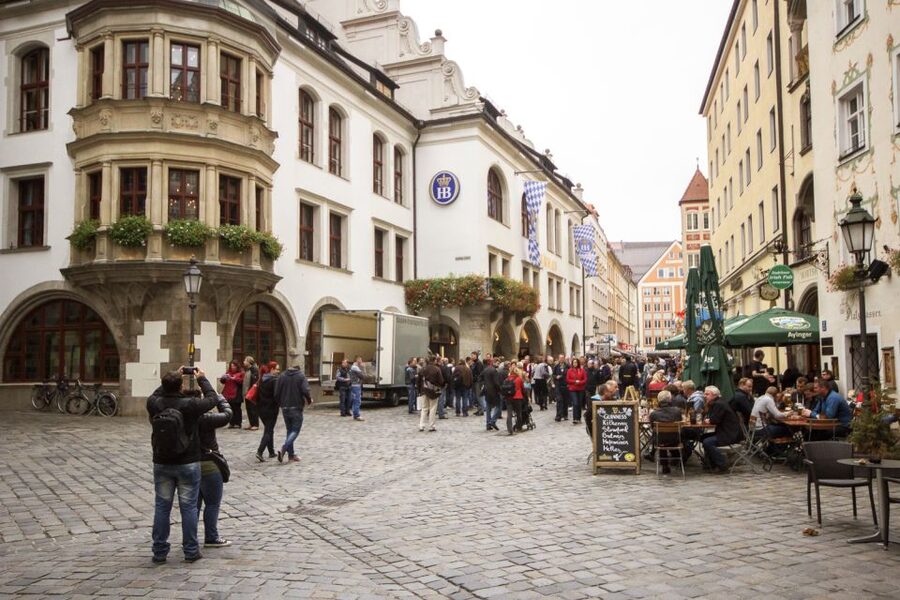
Hofbräuhaus and the public birth of the Nazi movement
The tour begins with the role of Munich beer halls in political life. The Hofbräuhaus is still one of the city’s most famous addresses, but this stop asks you to picture it as a place where speeches, arguments, and political organizing could reach a large audience.
Here, you learn about the early Nazi movement and one of its first major mass meetings. The important point is not simply that Hitler spoke in a beer hall. It is that political groups could use popular gathering places to build loyalty, test slogans, attract followers, and turn frustration into organized action.
The setting also makes the story easier to grasp. You are not standing in a distant museum room looking at a timeline. You are near a working Munich landmark with a long public life, and the guide explains how the same city could be both an ordinary social center and a stage for a dangerous political movement.
Do not expect the Hofbräuhaus to function as a dedicated memorial site. It is a busy historic venue, and the tour’s value comes mainly from the explanation given outside or around the location. If you want a quiet, reflective visit, this may feel less intimate than a museum. If you want to understand how propaganda reached ordinary people, the stop is useful.
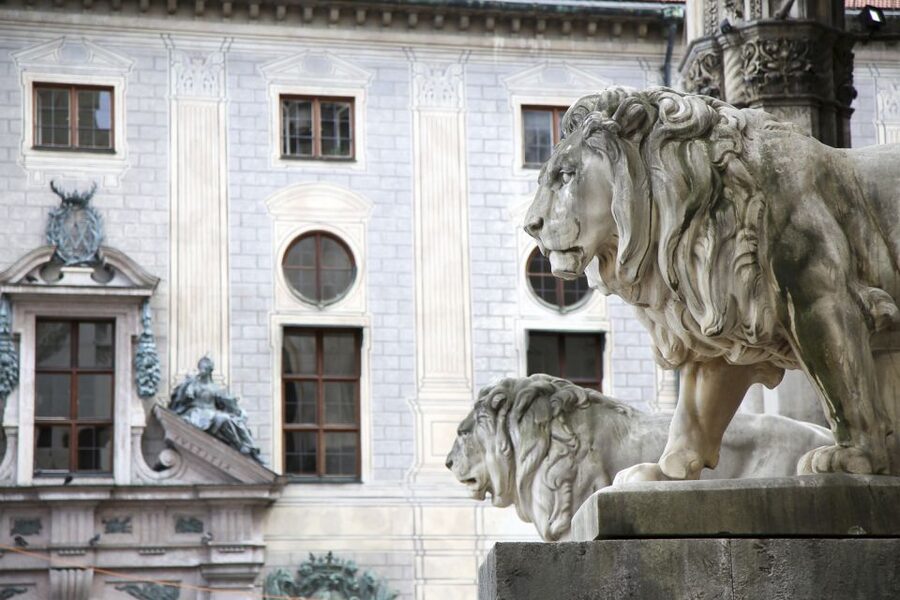
Feldherrnhalle and the failed seizure of power
The walk then follows Hitler’s attempt to take power in Bavaria. Feldherrnhalle is linked to the 1923 Beer Hall Putsch, when Hitler and his supporters tried to challenge the Bavarian government and force a national political change.
The attempt failed. That failure could have ended Hitler’s political career, but the event gave him publicity, a martyr story, and a lesson in how power might be won through legal politics rather than a direct armed takeover. A good guide will help you see why a failed coup still mattered.
This is one of the route’s strongest stops because the physical setting helps clarify the confrontation. You can understand where the movement wanted to go and why the location carried symbolic weight. The guide also connects the event to the later use of Nazi symbols and ceremonies.
The site itself is not a complete explanation. You need the narrative to make sense of it, so stay close enough to hear. One practical criticism from the wider experience is that a large group or nearby city noise can make voices harder to catch. Several guides are praised for projecting well, but a busy street can still interfere. Arriving early and positioning yourself near the guide helps.
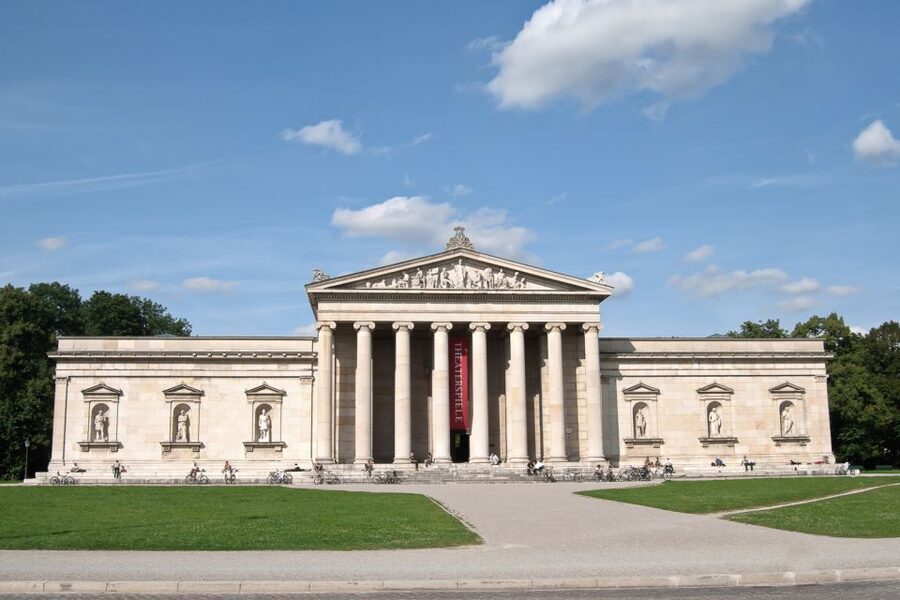
Königsplatz and the machinery of public spectacle
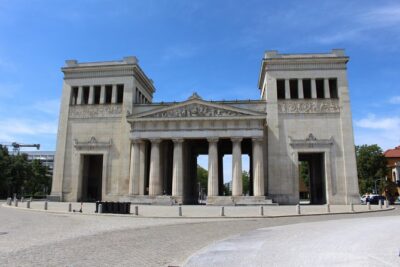
Königsplatz gives the tour its clearest lesson in how political power uses space. The square became associated with Nazi rallies, ceremonies, and monumental presentation. Here, the tour moves beyond Hitler’s personal rise and shows how the movement shaped public life through crowds and symbols.
The square is especially valuable for visitors who know the broad outline of the Third Reich but want to understand its local presence. A rally ground is not only a place where speeches happen. Its size, arrangement, buildings, and repeated ceremonies can make a political movement appear permanent and overwhelming.
The stop also helps explain how Munich was changed by the Nazi period. The city was later badly damaged by World War II, and the war left wounds across Germany. The route links the early political gatherings with the destruction that followed, without pretending that one walking route can cover every aspect of the conflict.
One practical point: the route information identifies Königsplatz as a major stop and expected end point, but the exact meeting and ending arrangements can vary by booking option. One participant reported not finishing there, so confirm the details when you book if you are planning a museum visit or another appointment afterward.
A useful nearby follow-up is the Munich Documentation Centre for the History of National Socialism. One person used the tour’s ending area to continue there. The tour itself is outdoor and guide-led, while a documentation center can give you more displays and time to examine evidence at your own pace.
More WWII and D-Day Tours in Germany
- Berlin: Third Reich, Hitler, and WWII Walking Tour
★ 4.9 · 1,757 reviews - Nuremberg: Historischer Kunstbunker WWII Art Bunker Tour
★ 4.8 · 921 reviews - Berlin: History of the Third Reich Guided Walking Tour
★ 4.7 · 791 reviews - Munich World War II Sites Including Dachau Concentration Camp
★ 4.5 · 570 reviews
Hofgarten and the White Rose resistance
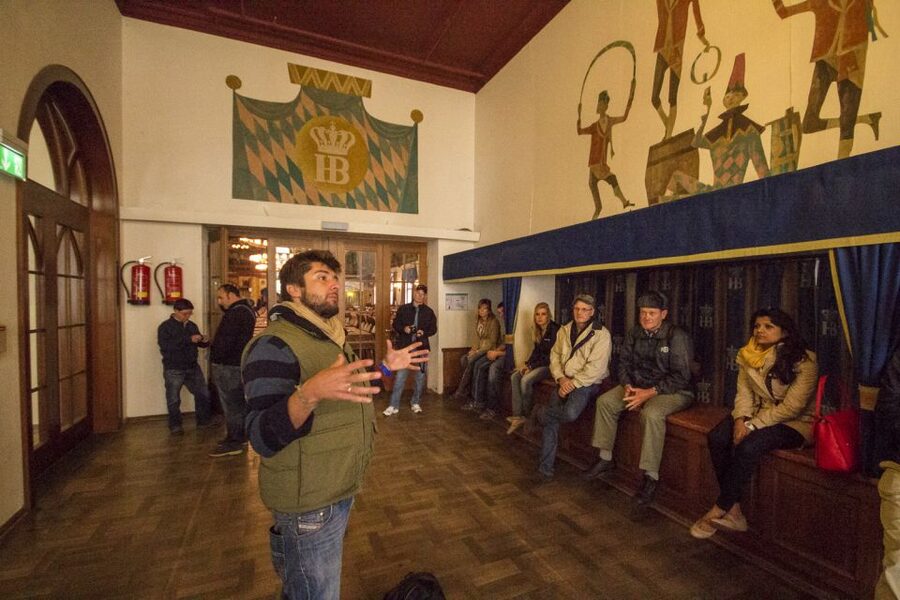
The Hofgarten section changes the emotional direction of the walk. Until this point, the story focuses mainly on the creation and growth of Nazi power. Here, you learn about the White Rose resistance movement and the people who opposed the regime from within Germany.
That shift is important. A tour centered on Hitler can accidentally make him seem like the only actor in the story. The White Rose reminds you that Germans made different choices, sometimes at great personal risk. It also gives the route a moral dimension without turning the visit into a simple lesson with easy answers.
The Hofgarten is a more open setting than the city’s grand political landmarks. It offers a natural point for reflection, but you are still outdoors, so weather matters. In winter, the cold can make it harder to concentrate during a long explanation. One guide, Steve, has been known to bring hot tea and mats or cushions for sitting, but you should not assume every guide will provide these extras.
This is where respectful guiding matters most. The strongest approach is direct and serious, with room for questions. Guides including Michael, Josh, Danielle, and Aileen have been praised for keeping the subject accessible without treating it casually. Humor may appear in the delivery, but the topic remains the Nazi dictatorship, genocide, and war.
What the guide can add to the experience
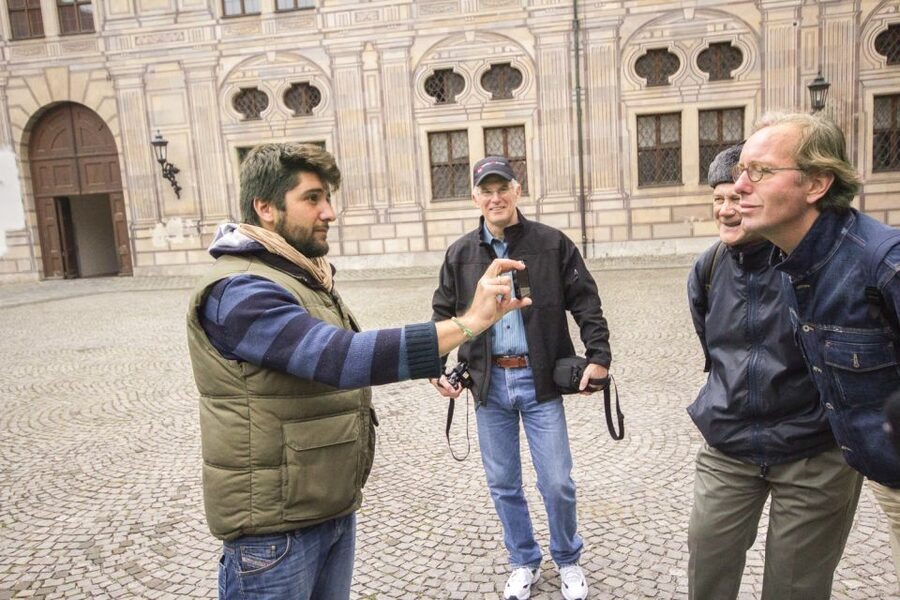
The route is fixed in broad outline, but your experience will depend heavily on the person leading it. The tour is available in English and German, and guide assignments vary.
Names associated with recent departures include Steve, Michael, Alex, Josh, Danielle, Florian, Ulrich, Aileen, and Brigit Muller. This does not mean you can select one of them unless your booking option specifically allows it. It does show the type of guide experience you may encounter: detailed historical explanation, local context, and plenty of time for questions.
The most praised qualities are consistent:
- Clear narration, especially in large groups or noisy streets
- Strong voices, which matter during outdoor stops
- A serious but approachable manner
- The ability to answer questions without losing the route
- Stories and lesser-known details that go beyond basic textbook facts
Josh is noted for keeping people engaged for more than two hours and connecting the history to the world today. Steve is praised for calm, careful explanations and for looking after the group in cold weather. Michael is described as enthusiastic and easy to follow. Alex is repeatedly described as charismatic and open to questions.
There are limits. A walking tour cannot pause every few minutes for a long discussion, and a very large group may feel less personal. One person also found the guide’s reminders about staying attentive a little strict. That is a fair tradeoff on a serious route, but you should know that this is not a casual stroll where you can drift in and out of the conversation.
How hard is the 165-minute walk?
The listed duration is 2.5 hours, while the detailed timing is 165 minutes. Plan for up to 2 hours 45 minutes, not a brisk two-hour circuit. The route includes frequent stops, so you are not walking continuously, but you will be outside for most of the experience.
Comfortable shoes are essential. The city center can have hard surfaces, crowds, and changing weather. Winter comments repeatedly stress warm clothing, and one person specifically advised bringing extra layers for a cold outdoor tour. Rain and snow do not necessarily cancel the experience, so check the forecast before you leave your hotel.
The route is listed as wheelchair accessible, which is useful for visitors who need step-free access. Still, because the tour takes place on city streets and public spaces, you may want to confirm the specific meeting point and route conditions for your date. The meeting location can vary by the option booked.
If you need frequent indoor breaks, this may not be the best choice. One guide has taken the group indoors at times, but that should be seen as a considerate adjustment rather than a guaranteed part of the route.
Is $31 a fair price?
At $31 per person, the tour is reasonably priced for a live, 2.5 to 2.75-hour city walk. You are paying for a guide who connects several places that would otherwise look like ordinary squares, streets, and buildings.
The value is highest if you want the story explained as you walk. You could visit the Hofbräuhaus, Feldherrnhalle, Königsplatz, and Hofgarten independently, but you would need to research the political events, dates, and connections yourself. The guide supplies the order and meaning.
The value is lower if you already know Munich’s Nazi-era history in detail and prefer to read at your own pace. Even then, the physical sites can add something, especially at Feldherrnhalle and Königsplatz. The tour gives you a framework that can make a later museum visit more useful.
Private groups are available, according to the booking details. That option may suit families or small groups who want to ask more questions, move at their own pace, or avoid the limits of a large public departure. The standard format is the better bargain for most visitors.
Free cancellation up to 24 hours before the start and reserve-now, pay-later booking make it easier to fit the walk into an uncertain schedule. These policies are practical, but the central value remains the guide and the route.
Who should book this Munich history walk?
I would recommend it to you if you want:
- A clear account of Hitler’s rise in Munich
- Political and social context, not only battlefield facts
- A route through major city landmarks
- A serious discussion of the White Rose resistance
- A guide who can answer questions in English or German
- A strong introduction before visiting a documentation center or memorial site
It suits families with older children, history students, and adults who already know the basic story but want to see where key events unfolded. One family described it as a good fit for a trip centered on local history, and that makes sense. The route is educational without requiring specialist knowledge before you arrive.
I would hesitate if you dislike long outdoor walks, are visiting during very cold weather without proper clothing, or want a quiet self-guided experience. The subject also demands attention. This is not a light sightseeing tour with a few wartime anecdotes added on.
Should you book the Third Reich and WWII Walking Tour?
For most visitors interested in Munich’s modern history, I think this is a worthwhile $31 purchase. The route covers the city’s Nazi beginnings, the failed 1923 putsch, the use of public space for propaganda, and the White Rose resistance in one connected story.
Book it early in your Munich stay if you can. The walk can change how you see the Hofbräuhaus, Feldherrnhalle, Königsplatz, and Hofgarten afterward. Bring warm layers, comfortable shoes, and enough focus for nearly three hours.
Choose it for context and place, not for entertainment. If the weather is poor, the experience will require some patience. But with a strong guide such as Steve, Michael, Josh, Alex, or Florian, you can leave with a clearer sense of how Munich became a center of Nazi power and how people resisted it.
FAQ
How long does the Munich Third Reich and WWII Walking Tour last?
The tour is listed as 2.5 hours, with a detailed duration of 165 minutes. Plan for up to 2 hours and 45 minutes.
What places does the tour visit?
The route includes the Hofbräuhaus, Feldherrnhalle, Königsplatz, and the Hofgarten. It covers places tied to Hitler’s rise, Nazi party rallies, and the White Rose resistance movement.
Is the tour offered in English?
Yes. The tour is available in English and German.
Is the walking tour wheelchair accessible?
Yes, the activity is listed as wheelchair accessible. Since the exact meeting point can vary by booking option, confirm the details for your selected departure.
What should I bring?
Bring comfortable shoes. Warm clothing is especially important in cold weather because the tour takes place outdoors.
Is a private group option available?
Yes, a private group option is available.
How much does the tour cost?
The listed price is $31 per person.
Can I cancel the tour for a refund?
You can cancel up to 24 hours in advance for a full refund. Reserve-now, pay-later booking is also available.
Just added around Germany
- Berlin Food & Cultural Tour: Must-Try German & Berliner Classics★ 5.0 · 51 reviews
- Berlin Half-Day World War II Walking Tour★ 4.5 · 48 reviews
- Small-Group Historical Bike Tour in Berlin★ 4.5 · 103 reviews
- Historic center of Berlin – Tour in Italian★ 5.0 · 143 reviews
- Berlin Cold War & World War II Third Reich Walking Tour★ 4.5 · 30 reviews
- Private Taxi Tour City East & West History and Architecture 3-4h★ 5.0 · 42 reviews
- Berlin Wall and Cold War Bike Tour in Small Groups★ 5.0 · 114 reviews
- Private Tour: Jewish Heritage Walking Tour of Berlin★ 5.0 · 29 reviews
Munich History Tours, compared.
Munich World War II Sites Including Dachau Concentration Camp
Read our review →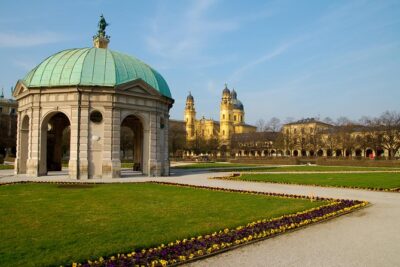
Munich: Guided Tour of the historic Town Hall on Marienplatz
Read our review →
Munich: Third Reich and World War II Segway Tour of the City
Read our review →
Munich and Nazi History Combination Day Tour Small Group
Read our review →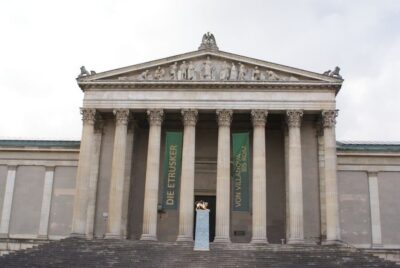
Munich: Nazi History 2-Hour Small Group Walking Tour
Read our review →Browse the lists this tour appears in