Review · BERLIN
Berlin: Third Reich, Hitler, and WWII Walking Tour
Berlin’s Nazi past is easiest to understand when you walk the streets where decisions were made. This three-hour tour links the Reichstag, Hitler’s bunker site, the former Nazi ministries, the Holocaust Memorial, and the Topography of Terror into one sober, carefully explained route.
I like the strong sense of place and the way the tour connects Nazi government, wartime destruction, and the Soviet assault on Berlin. I also like the guides’ reported ability to make difficult material clear for adults and younger visitors alike. The main drawback is simple: you spend three hours outdoors, often standing in wind, rain, or cold, with a fair amount of walking.
Key points to know before booking
- Hitler’s bunker site: Learn what happened during Hitler’s final days and why the bunker is now marked only by an ordinary-looking surface location.
- Former Nazi power centers: See where the Luftwaffe, Propaganda Ministry, SS, and Gestapo once operated.
- A serious but engaging tone: Guides such as Maggie, Emma, Campbell, Jimmy, and Nikolai are praised for clear explanations, questions, humor, and respectful storytelling.
- A strong final stretch: The Reichstag, Brandenburg Gate, and Soviet War Memorial show how Nazi power ended and how Berlin was divided afterward.
- A useful $19 lesson: At three hours, the tour gives you a broad working map of wartime Berlin for a low price.
- Weather matters: Comfortable shoes and proper clothing are not optional. The tour runs rain or shine.
What this Berlin Third Reich tour really does well
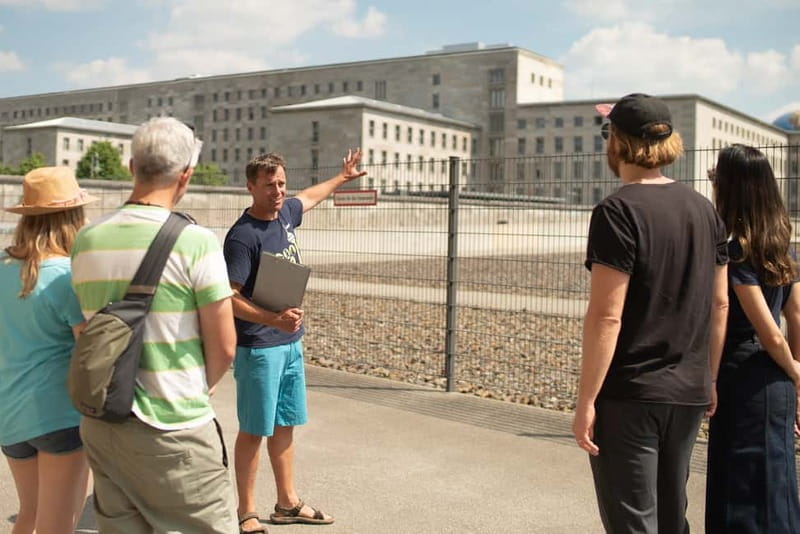
This is not a museum tour with a few outdoor stops added on. It is a walking lesson in how Berlin functioned under Nazi rule, how the war reshaped the city, and how the regime collapsed in 1945.
The most useful feature is the route itself. You move between government buildings, memorials, surviving structures, and sites that have been deliberately left unmarked or understated. That contrast helps you understand how modern Berlin handles a criminal past without turning it into a shrine.
The subject is grim, and the tour does not soften Nazi crimes. At the same time, the strongest guides avoid turning the walk into a flat list of dates and names. Maggie, Campbell, Emma, Jimmy, Nikolai, Hannah, Rebecca, and others are praised for answering questions, involving the group, and explaining complex events in plain language.
That matters because Berlin’s Nazi history is not hard to find, but it is easy to misunderstand. You need someone to explain who controlled which ministry, how propaganda supported military power, and why the final battle centered on certain buildings. This experience aims to put those pieces together.
More History Walking Tours in Berlin
- Berlin: Third Reich & Cold War Guided Walking Tour
★ 4.9 · 8,378 reviews - Berlin’s Best: 2 Hour Walking Tour Third Reich and the Cold War
★ 5.0 · 5,486 reviews - Third Reich Berlin: Hitler and WWII Walking Tour
★ 5.0 · 3,301 reviews
Starting at Friedrichstraße and the Palace of Tears
The meeting point is outside Friedrichstraße train station, on the square between the station and the Tränenpalast, also called the Palace of Tears. Look for a guide wearing a blue lanyard and yellow name tag, usually with yellow umbrellas.
This is a fitting place to begin. The Palace of Tears is connected to Berlin’s later division, so the tour starts near a site that helps frame the city’s full twentieth-century story, not just the Nazi period. You should arrive with enough time to find the square, especially if you are coming through the station.
The first stop is Friedrichstraße itself, where you receive the basic orientation for the walk. The guide sets out the political and geographic background before leading you toward the main government district.
Because the group is outdoors from the start, wear shoes that can handle several hours of pavement. The route is not presented as a strenuous hike, but the length and weather can make it tiring.
The Reichstag and the final battle for Berlin
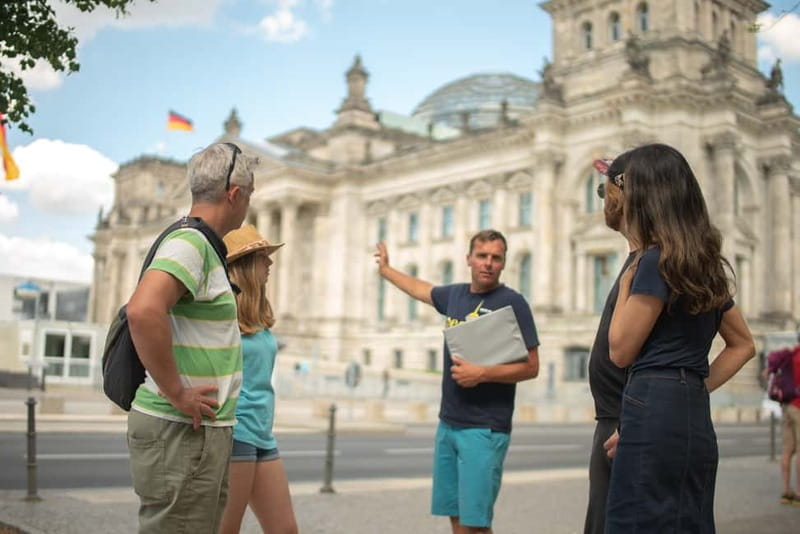
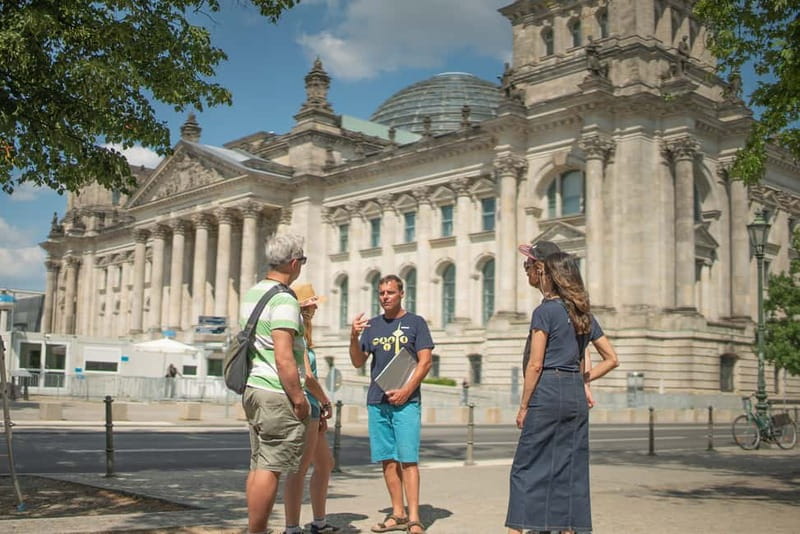
The Reichstag is one of the most important stops because it represents both the German state and the final phase of the war. You stop for an explanation and photographs, rather than entering the building as part of this activity.
Your guide places the building within the Soviet assault on Berlin and explains why it became such a powerful symbol at the end of Nazi rule. The building’s later political life is also part of what makes the stop useful: you are not looking at a frozen wartime relic, but at a working national symbol with several layers of meaning.
The Reichstag stop lasts about 15 minutes. That is enough time for a focused explanation, but not enough for every detail about the building. If you want to see the interior or dome, you would need to arrange that separately.
The Soviet War Memorial in Tiergarten
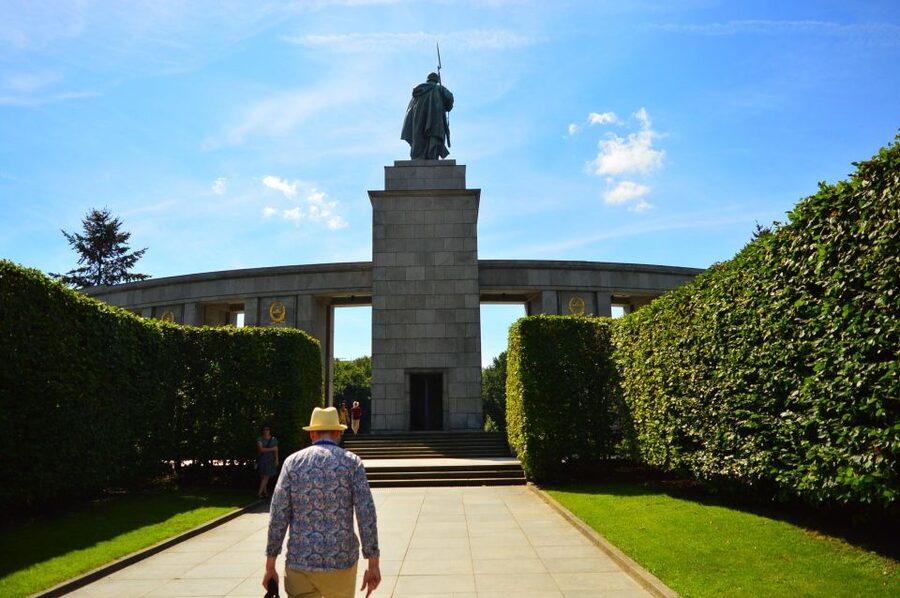
The Soviet War Memorial in Tiergarten gives the tour a physical reminder of the Red Army’s role in the defeat of Nazi Germany. The memorial is flanked by T-34 tanks and Red Army howitzers, making it one of the clearest military sites on the route.
This stop adds balance to the story. The tour is centered on Nazi Berlin, but the end of the regime cannot be explained without discussing the Soviet advance and the enormous cost of the fighting around the city.
You will likely spend around 15 minutes here with the guide. The open setting can be particularly cold or windy, so this is one of the points where a hat, gloves, and weatherproof clothing make a real difference.
The memorial also helps you see how postwar memory was shaped. It is not simply a display of weapons. It reflects the Soviet presentation of victory and sacrifice, which your guide can place beside the wider political history of Berlin.
More History Walking Tours in Germany
- Berlin: History of the Third Reich Guided Walking Tour
★ 4.7 · 791 reviews - Berlin Historical Highlights Walking Tour
★ 4.9 · 657 reviews - Berlin Private Complete History All Day Walking Tour
★ 5.0 · 474 reviews - Berlin: Cold War Walking Tour on Berlin Wall Route
★ 4.8 · 437 reviews
The Holocaust Memorial and the human cost
The Holocaust Memorial is a quieter stop, and the tone of the tour changes here. The field of concrete slabs is near several major government and historic sites, yet it asks you to pause rather than simply move from one building to the next.
Your guide explains the memorial and connects it to the murder of Europe’s Jews. This is an important distinction: the tour is not only about Hitler, military operations, or government offices. It also deals with the people targeted and killed by the Nazi system.
The stop is listed as a photo and guided visit of about 15 minutes. You should approach it respectfully and expect the guide to keep the focus on memory and victims rather than spectacle.
This is also one point where the quality of the guide matters greatly. The best delivery is direct, restrained, and clear. Several guides, including Emma, Maggie, and Jasper, are praised for handling painful material with appropriate emotion while still keeping the explanation accessible.
Hitler’s bunker site and the final days
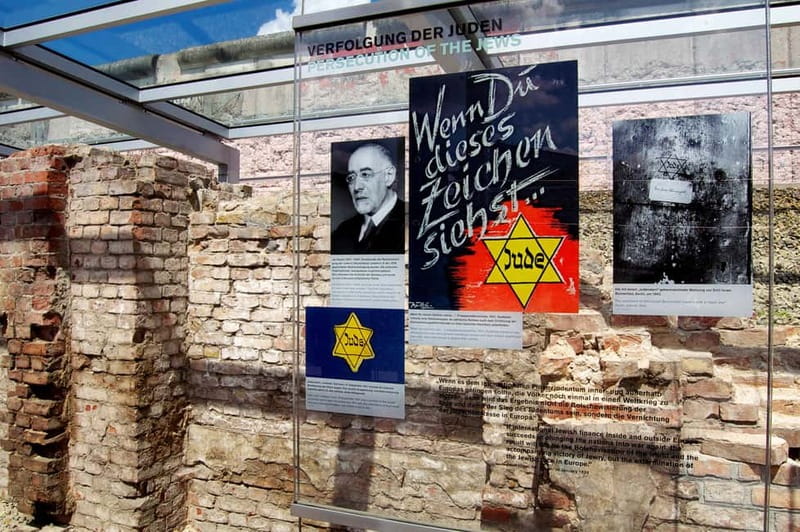
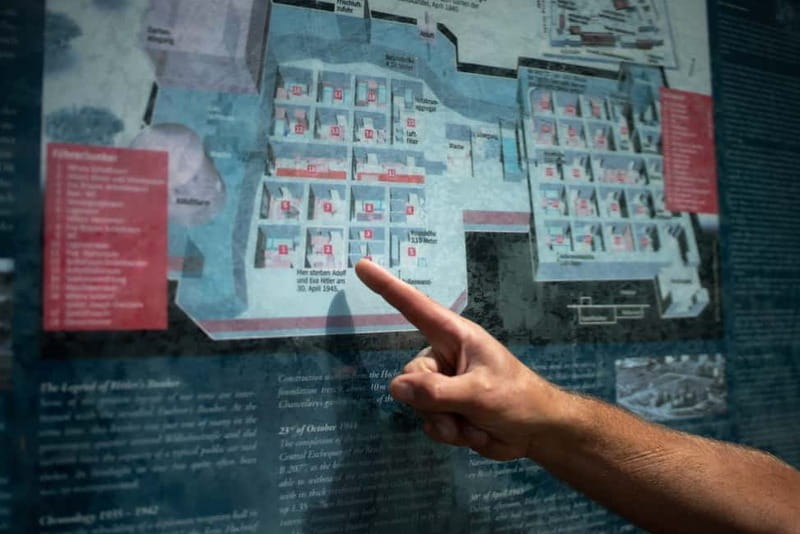
The bunker site is perhaps the stop most people expect, but it is not a dramatic underground attraction. You stand above the former Führer’s Bunker, where Hitler spent his final days and died by suicide as Soviet forces closed in.
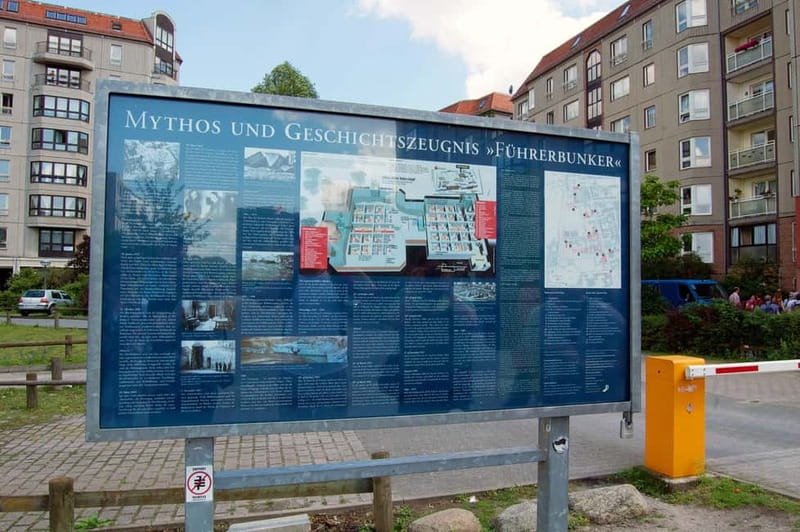
The location is deliberately ordinary. There is no grand entrance and no preserved bunker interior for you to explore as part of this walk. That plain setting is useful because it keeps attention on the historical facts rather than turning the site into a shrine.
Your guide gives a step-by-step account of Hitler’s final days and explains what happened to his remains. This section is especially valuable for anyone who has read about the end of the war but wants the chronology tied to a real place.
The bunker stop lasts about 15 minutes. You may find the information intense, particularly when the guide explains the final collapse of the regime and the human cost surrounding it. A sensitive guide will make the facts plain without making the site theatrical.
The former Nazi ministries and the machinery of terror
One of the tour’s strongest elements is the attention given to former government buildings. You see the former location of the New Reich Chancellery, Hitler’s seat of power, and learn about the offices that helped run Nazi Europe.
The route also includes Goering’s Air Defence Ministry, where the Luftwaffe planned the Blitz, along with former locations of Goebbels’ Propaganda Ministry and Himmler’s SS and Gestapo headquarters. In many cases, the original buildings have been altered, destroyed, or repurposed, so the guide’s explanation is essential.
This section helps you separate the Nazi system into its working parts. Military planning, propaganda, policing, surveillance, and political control were linked, but they were not the same thing. Seeing their former locations gives you a clearer picture of how a dictatorship operated through many offices and agencies.
The Detlev-Rohwedder-Haus is especially useful in this context. The building is associated with the former Air Ministry and later became tied to different periods of German government. A good guide can show how a structure may survive while its political meaning changes.
The Germania plan and Albert Speer’s grand vision
The walk follows parts of Hitler’s planned Germania axis, designed by architect Albert Speer. This was not just a building project. It was an attempt to reshape Berlin into a monumental capital suited to Nazi power.
The scale of the plan helps explain the regime’s taste for vast avenues, imposing buildings, and carefully staged public space. You can then compare that ambition with the destruction left by the war and the modest appearance of many present-day sites.
This part is valuable even if you are not especially interested in architecture. It shows how buildings and streets can serve political aims. The tour connects physical planning with propaganda, authority, and the regime’s desire to present itself as permanent.
Do not expect a complete architectural tour of Berlin. The focus remains on the Third Reich and the war, so the guide uses the Germania plan as a way to explain ideology and power.
The Topography of Terror as the final stop
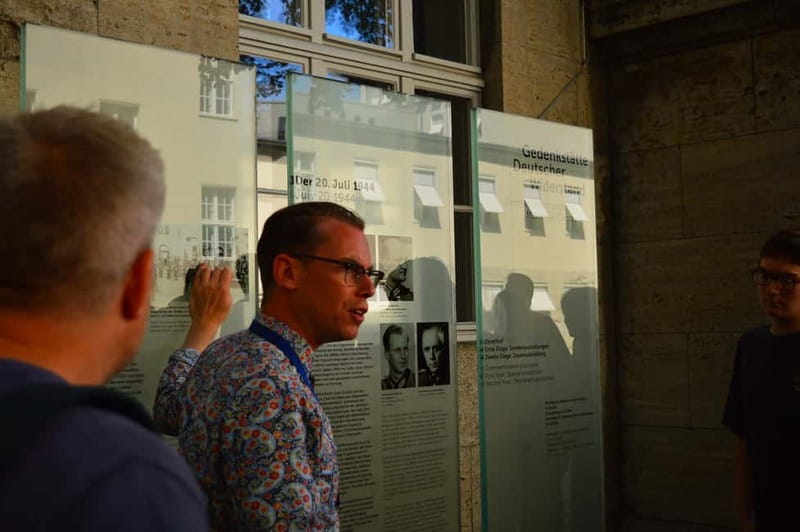
The tour ends at the Topography of Terror, located at the former headquarters of the Gestapo and SS. The site now holds an exhibition about Nazi persecution and the institutions that carried it out.
The walking tour includes an explanation of the site, but the tour does not promise a full museum visit. If you want to read the displays carefully, plan extra time after the walk. The final drop-off is at the Documentation Center Topography of Terror, making it convenient to continue there on your own.
This is a sensible ending because the exhibition moves the story from grand plans and military operations back to organized persecution. It gives you a place to continue learning after the guide has finished.
The tour’s second possible drop-off is in Berlin, depending on the selected option. Private tours may offer pickup, but the standard meeting arrangement is outside Friedrichstraße station.
How the guides handle a difficult subject
Guide quality is the biggest factor in an experience like this. The tour covers many names, institutions, dates, and locations in three hours, so a clear guide can make the difference between a connected story and a blur of information.
The strongest guide style here appears to be conversational and structured. Maggie is praised for asking questions and getting the group involved. Campbell is described as informative and funny, while Emma is praised for pacing the walk well and answering questions fully.
Nikolai, Jimmy, Klaus, Ru, Rebecca, Ariel, and Jamie G are also highlighted for clear explanations, personal warmth, and strong command of Berlin’s history. Several guides kept groups engaged in freezing temperatures, which tells you something practical about the tour’s outdoor nature.
You should still remember that guides vary. Even with a highly rated operator, your experience will depend on the individual guide, group size, weather, and the questions people bring. A private or small-group option gives you a better chance to ask detailed questions and set the pace.
Timing, walking, and weather
The advertised duration is three hours, though one participant reported a walk lasting just under three and a half hours. Plan your day with a little flexibility rather than booking a tight connection or timed attraction immediately afterward.
The tour operates rain or shine. Winter reports describe snow, freezing wind, and temperatures below zero, yet the walk continued with stops and explanations. That is a credit to the guides, but it is also a warning to you: do not treat this as a casual stroll.
There may be a refreshment break after about two hours. One guide used the pause to point out nearby cafés, bathrooms, and public buildings, which is useful during cold weather. Still, bring what you need for several hours outside.
Wear comfortable shoes, comfortable clothes, and weather-appropriate layers. The itinerary includes repeated stops of about 15 minutes, so you will not be walking every second, but you will spend plenty of time standing.
Is $19 a fair price?
At $19 per person, this is a strong value if you want a guided introduction to Nazi Berlin. You get three hours, a live guide, and a route linking major sites that would be harder to understand if visited separately.
The value comes from interpretation, not admission tickets. Most of the stops are outdoor locations, and the price does not include a full museum entry or a meal. If you want extensive time inside the Topography of Terror, you should treat that as an additional visit.
For students, families, and first-time visitors, the price is especially reasonable. The walk provides a useful framework for later museum visits. History enthusiasts may want more time at each location, but the tour still gives you a strong geographic base.
Free cancellation up to 24 hours before the start and reserve now, pay later terms also reduce the risk when your Berlin plans are still changing.
Who should book this walk?
I would recommend it to anyone who wants a serious introduction to Berlin’s Nazi period without spending the day inside a museum. It suits first-time visitors, school-age teenagers studying Nazi Germany, and adults who know the broad story but want to connect it to actual streets and buildings.
It also works well for families if your children can handle difficult subject matter and several hours of walking. A guide such as Jamie G has been praised for making the subject accessible to a 13-year-old, while Doireann, age eight, enjoyed Maggie’s approach. That does not mean every young child will find the material comfortable, so use your judgment.
You may want a different option if you dislike outdoor tours, need a slow pace, or want detailed time inside every museum. The route covers a lot, and three hours requires the guide to keep moving.
Should you book the Third Reich, Hitler, and WWII Walking Tour?
Book it if you want the key Nazi and wartime sites tied together by a guide who can explain what happened, where it happened, and why each place matters. The bunker site, former ministries, Reichstag, Holocaust Memorial, Soviet War Memorial, and Topography of Terror form a useful route for understanding Berlin’s wartime story.
The main tradeoff is weather and pace. Bring good shoes, dress for the forecast, and allow extra time at the Topography of Terror afterward. At $19, the tour offers a lot of context for little money, especially if you choose a small group or private option and come ready with questions.
FAQ
How long is the Berlin Third Reich, Hitler, and WWII Walking Tour?
The tour lasts three hours, although the total time can vary slightly. One reported experience lasted just under three and a half hours.
Where does the tour meet?
The standard meeting point is outside Friedrichstraße train station, on the square between the station and the Tränenpalast, also called the Palace of Tears. Look for a guide with a blue lanyard, yellow name tag, and yellow umbrella.
What languages are available?
The tour is available in English, German, and Spanish.
Does the tour visit inside Hitler’s bunker?
No. The tour takes you to the location above the former Führer’s Bunker and explains Hitler’s final days and the fate of his remains.
Does the tour include entry to the Topography of Terror?
The tour ends at the Topography of Terror and includes a guided explanation of the site. A full visit to the exhibition is not listed as part of the walking tour.
Does the tour operate in bad weather?
Yes. The tour operates rain or shine, so bring comfortable shoes and clothing suited to the weather.
Can I cancel or pay later?
You can cancel up to 24 hours in advance for a full refund. Reserve now and pay later terms are available, allowing you to hold a place without paying immediately.
More WWII and D-Day Tours in Germany
- Clash of Titans: Battle for Seelow Heights WW2 tour
★ 5.0 · 71 reviews - Berlin Half-Day World War II Walking Tour
★ 4.5 · 48 reviews - Path of Resistance: Berlin’s Hidden Holocaust Stories
★ 4.9 · 43 reviews - Berlin: Nazi History Walking Tour
★ 4.8 · 33 reviews
More WWII and D-Day Tours in Berlin
- Hitler’s Germany: Berlin During the Third Reich & WWII
★ 4.8 · 476 reviews - Private Walking Tour Berlin Third Reich Hitler and World War II
★ 5.0 · 360 reviews - The History of Berlin: WWII PRIVATE Walking Tour With Locals
★ 5.0 · 209 reviews - Berlin: Guided Bike tour of the Berlin Wall and Third Reich
★ 5.0 · 160 reviews
Just added around Berlin
- Berlin Food & Cultural Tour: Must-Try German & Berliner Classics★ 5.0 · 51 reviews
- Berlin Half-Day World War II Walking Tour★ 4.5 · 48 reviews
- Small-Group Historical Bike Tour in Berlin★ 4.5 · 103 reviews
- Historic center of Berlin – Tour in Italian★ 5.0 · 143 reviews
- Berlin Cold War & World War II Third Reich Walking Tour★ 4.5 · 30 reviews
- Private Taxi Tour City East & West History and Architecture 3-4h★ 5.0 · 42 reviews
- Berlin Wall and Cold War Bike Tour in Small Groups★ 5.0 · 114 reviews
- Private Tour: Jewish Heritage Walking Tour of Berlin★ 5.0 · 29 reviews
Berlin History Tours, compared.

Berlin: Third Reich & Cold War Guided Walking Tour
Read our review →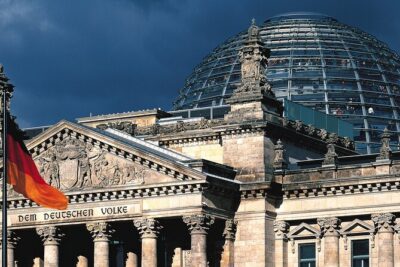
Berlin’s Best: 2 Hour Walking Tour Third Reich and the Cold War
Read our review →
Third Reich Berlin: Hitler and WWII Walking Tour
Read our review →
Berlin: 3-Hour World Heritage Cruise to Potsdam
Read our review →
Cold War, Berlin Wall, Spies and the East Side Gallery
Read our review →
Berlin: History of the Third Reich Guided Walking Tour
Read our review →