
Review · HISTORY TOURS
Luang Prabang: UNESCO World Heritage City Highlights Tour
At dawn, Luang Prabang changes character. The streets grow quiet, monks move through town in saffron robes, and local families place rice into their bowls. This tour gives you a respectful introduction to that ritual before leading you through the city’s finest temples, the former Royal Palace, and Phousi Hill.
I like the way the morning option combines the alms giving with the fresh produce market, then gives you time for breakfast before the sightseeing begins. I also like the guides’ strong local connection. Boun and Bounlouam, both former monks, have helped visitors understand Buddhist customs, temple art, and daily life in Laos.
The main drawback is pace. A full day can cover a great deal, but you may have limited time at each stop, and some travelers have found guides too hurried when they wanted photographs. Temple, palace, and Phousi Hill admission fees are also extra, so the $35 price is not the final cost.
Key points to know before booking
- The 6 AM start adds the alms giving and morning market, but you may be collected as early as 5:20 AM depending on your hotel and arrangements.
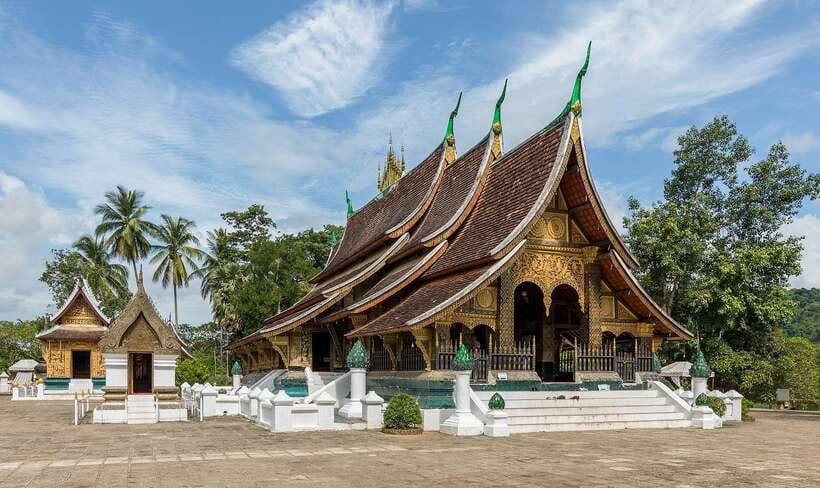
- Wat Xieng Thong and the former Royal Palace are the cultural core of the city tour, with Buddhist art, royal objects, and distinctive Lao architecture.
- Former monks sometimes lead the tour, including Boun and Bounlouam, giving you useful context on Buddhism and temple customs.
- Phousi Hill requires a stair climb, rewarded with broad views over Luang Prabang and the meeting point of the Mekong and Nam Khan rivers.
- Full-day choices differ, with one route visiting Ban Xang Khong, the UXO center, Wat Wisunarat, and Wat Mai, and another heading to Kuang Si Falls and a Hmong village.
- The tour is good value for a first visit, but add about US$6 for the main city admissions, plus food and drinks.
Why the early start is worth considering
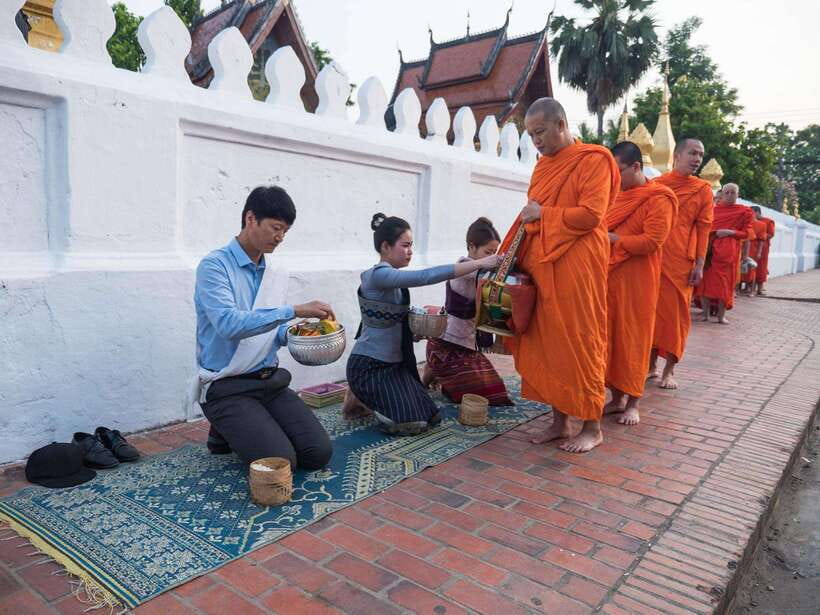
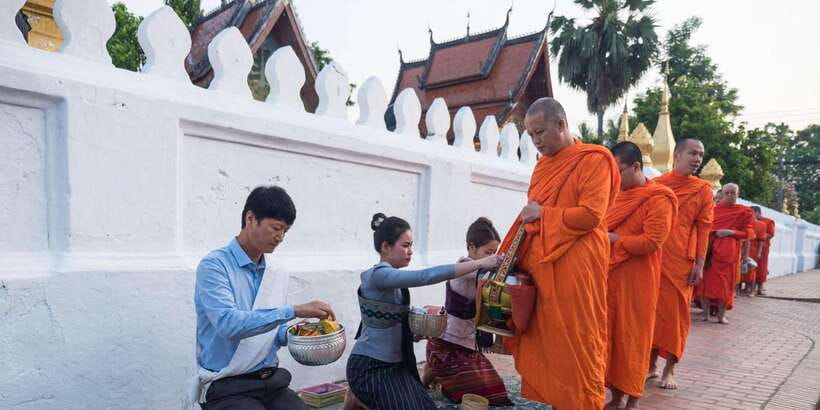
The optional early morning program is the most distinctive part of this experience. Pickup times vary, but the day can begin around 5:20 or 6 AM. You go to a prepared place along the alms-giving route, where monks pass in silence while local people offer rice.
This is a religious practice, not a staged performance. Your guide should explain where to sit or stand, how to offer food, and when to keep a respectful distance. Dress modestly, keep quiet, and avoid using flash photography. The ritual is brief, around 30 minutes, but it gives you a better understanding of why Luang Prabang’s temples remain part of daily life.
The morning market follows, usually for about 20 minutes. This is a useful contrast to the formal beauty of the temples. You see fresh produce and ordinary shopping, and your guide can explain some of the foods and customs you might otherwise pass without noticing.
Afterward, you have about 1.5 hours for breakfast and rest. This pause matters. If you start before sunrise and continue through the temples, the break keeps the morning from becoming a tiring march. Some arrangements use a café or return you to your hotel before the second pickup.
If you prefer slow mornings, skip this add-on. If you want the most memorable cultural moment, I would choose it. Several guides have been praised for arranging a good viewing position and explaining the ritual without treating it like a photo opportunity.
More UNESCO World Heritage Tours in the world:
- World Heritage Shirakawa-go and Experience Tours from Kanazawa
★ 5.0 · 4,049 reviews - From Tirana: Berat UNESCO Heritage & Belshi Lake Tour
★ 4.9 · 3,863 reviews - Bali: Tanah Lot UNESCO World Heritage Sites Full-Day Tour
★ 4.7 · 1,947 reviews
Wat Xieng Thong and the quiet end of the peninsula
The main city program begins near the tip of the peninsula, where the Mekong and Nam Khan rivers meet. It is a smart place to get your bearings because the setting explains Luang Prabang’s shape. The old town occupies a narrow piece of land between the rivers, with temples, former royal buildings, and low-rise streets close together.
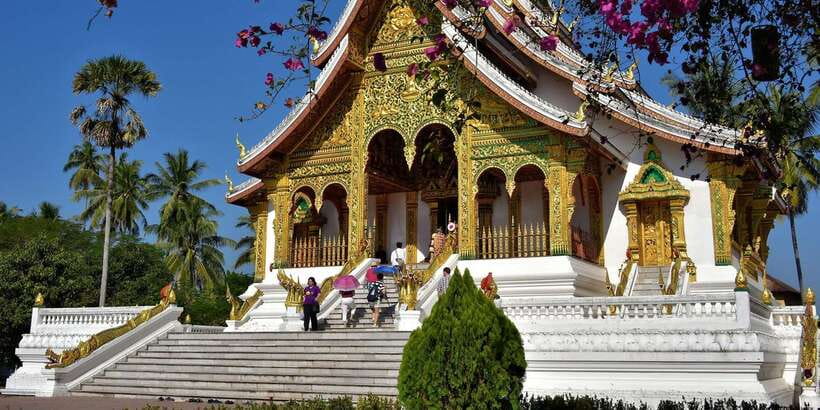
From there, you walk to Wat Xieng Thong, generally regarded as Luang Prabang’s most important temple. Allow about an hour here. The temple is known for the low, sweeping roofs typical of local architecture, along with detailed decoration and religious images.
A good guide adds meaning to the details. Instead of simply pointing out gold surfaces and painted walls, guides such as Boun, who spent 18 years as a monk, can explain how Buddhist ideas shape the building and its use. You may also see local worshippers, which helps place the temple in the present rather than treating it only as an old monument.
The walking is manageable, but you should wear comfortable shoes. Temple visits involve repeated standing, entering and leaving buildings, and crossing uneven ground. Bring water, especially during the warmer months.
Wat Sensoukharam and the former Royal Palace
Wat Sensoukharam is a short temple visit, listed at about 10 minutes. It is not meant to replace the longer stop at Wat Xieng Thong, but it adds another example of Luang Prabang’s temple tradition. The brief visit works well as part of a walking sequence through the old town.
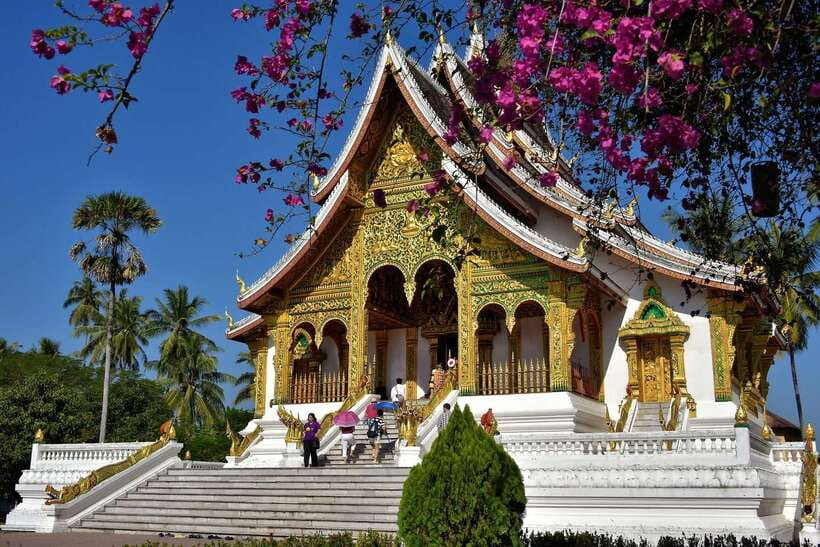
The former Royal Palace, now the National Museum of Luang Prabang, is the tour’s main stop for royal and political history. Plan on about an hour. Inside, you see historical objects connected with Lao royalty, while the building itself combines traditional Lao details with French Beaux-Arts design.
The museum helps explain how Luang Prabang moved from royal center to modern city. Your guide can connect the objects to Laos’s past, rather than leaving you to read every label alone. The setting is also a useful counterpoint to the temples. At Wat Xieng Thong, you are looking at living Buddhist practice. At the palace, you are looking at government, monarchy, and changing national identity.
Dress carefully. The Royal Palace has a strict conservative dress code, with no exceptions. Shorts and short skirts must be covered, and it is best to arrive with shoulders and knees covered rather than rely on a wrap supplied at the entrance.
One practical issue is luggage. The group may change vehicles, so you may be asked to carry personal belongings into each site. That is less convenient than leaving a day bag in one secure vehicle, especially on a full-day outing.
Climbing Phousi Hill for the city view
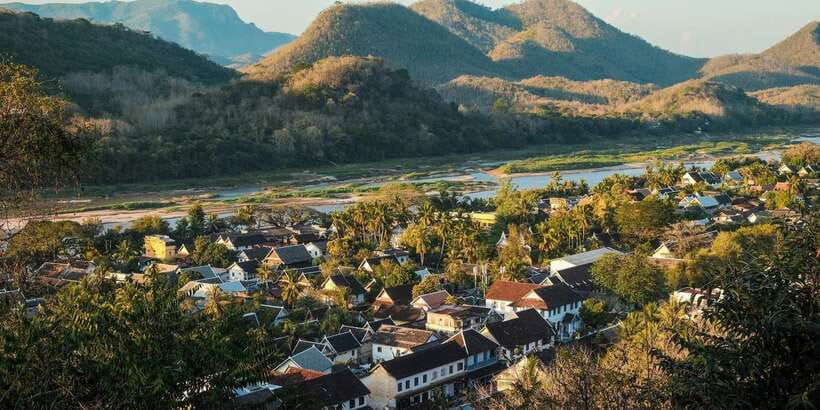
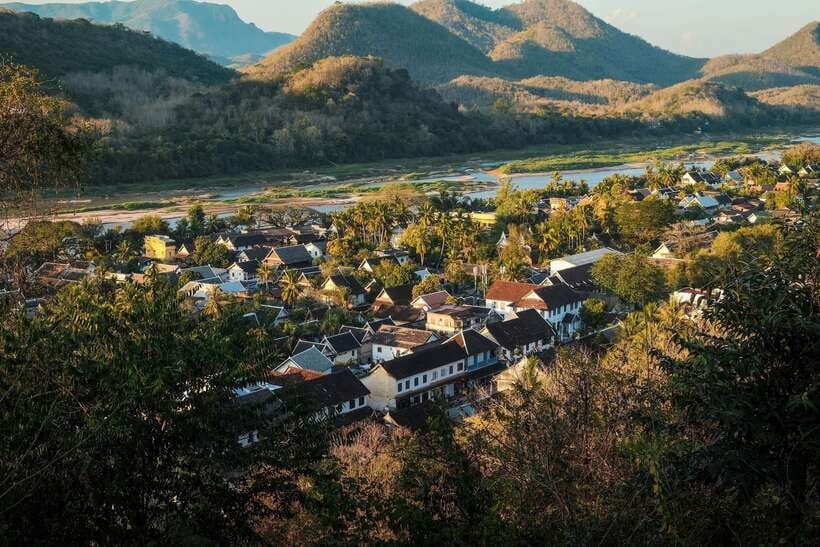
The climb up Mount Phousi is short in time but not effortless in practice. The scheduled visit is around 30 minutes, though reaching the top means tackling hundreds of steps. The reward is a wide view over Luang Prabang, the rivers, and the surrounding hills.
I like this stop because it turns the city map into something you can understand. From street level, Luang Prabang can feel like a series of temples and lanes. From Phousi Hill, you see how compact the old town is and how closely it sits between the Mekong and Nam Khan.
The timing affects the experience. An early climb can be cooler and less crowded, and one group reached the top while the sky was still overcast. Other tours arrive later, when heat and crowds may make the stairs harder. Carry water, and take your time. Guides have been praised for providing cool towels and helping people after the climb, but you should still judge the pace for yourself.
The hill is not ideal for anyone who has difficulty with stairs. It is also not a long scenic walk where you can wander freely. It is a focused climb, a view, and then a return to town.
More History Tours in the world:
- Prague: Medieval Dinner with Unlimited Drinks
★ 4.4 · 19,847 reviews - Pompeii: Entry Ticket and Guided Tour with an Archaeologist
★ 4.8 · 19,459 reviews - History and Hauntings of Salem Guided Walking Tour
★ 5.0 · 14,564 reviews - Athens: Acropolis & up to 5 Archaeological Sites Combo Pass
★ 4.2 · 13,904 reviews
Choosing the full-day city and culture route
After the morning city section, you usually have free time for lunch. The exact lunch arrangement is not included in the price, and food and drinks are your responsibility. This pause lets you decide how much energy you have left before the afternoon program.
One full-day route visits Ban Xang Khong, a paper-making village on the Mekong. The stop lasts about an hour and adds a look at local craft traditions beyond the central temples. It is a good choice if you want a slower cultural afternoon rather than a swim or a long drive to a natural attraction.
The route also includes the UXO Lao Visitor Center. Allow about an hour. This is the place to learn about the effects of unexploded ordnance left by past conflicts. It gives necessary context about Laos’s modern history and the dangers that continue to affect communities.
Wat Wisunarat is identified as the oldest temple in Luang Prabang, while Wat Mai is described as the city’s largest temple. Each stop is scheduled for about an hour. Together, they round out the temple program after Wat Xieng Thong and give you a broader sense of the city’s religious architecture.
This route is the better choice if you care most about history, temples, craft, and modern Laos. It is also less dependent on swimming conditions and weather than the Kuang Si option.
Choosing Kuang Si Falls and the Hmong village
The other full-day choice combines the morning city tour with Kuang Si Falls. The waterfall portion allows about three hours, including time to explore and, if conditions suit you, swim. Admission to Kuang Si is included when you choose this option.
Kuang Si is a strong reason to extend the tour beyond the city. After a morning of museums and temples, the pools and falls offer a change of pace. Still, three hours is a large part of the day. One visitor felt that the waterfall time was longer than needed and would have preferred more time at the Hmong village.
The Hmong village stop is listed at about 20 minutes on the return to Luang Prabang. You visit an exhibition, an antique house, and cultural displays. That is enough for an introduction, but not enough for a long village visit. If Hmong culture is your main interest, ask in advance how much time the guide plans to allow.
The afternoon route can be adjusted in some cases. One guide changed the order to reach Kuang Si ahead of heavier crowds, and that kind of flexibility can make a real difference. Ask about the timing before you leave, especially in hot weather or during busy periods.
How the guides shape the experience
The strongest feature is the guide service. English-speaking guides explain the sites, answer questions, and connect architecture with Buddhist practice and Lao history. Names that appear among the guides include Boun, Bounlouam, Sitthai, Som, Ken, Vone, Henry, and Lathte.
You should not assume a particular guide is guaranteed, but the former monks are especially valuable if you want more than dates and building names. Bounlouam, for example, has explained temple paintings, sculptures, monks’ daily routines, and Buddhism in practical terms. A guide with that background can make the alms giving more respectful and the temple visits more understandable.
Communication is generally strong, but it may vary. One person found a guide difficult to understand at times, and another felt rushed through the stops. If you want time for photographs or careful museum visits, say so early. A private tour gives you more room to shape the pace, although it may feel expensive if you finish early.
Transportation includes hotel pickup and drop-off. Small groups and private departures are available. The vehicle service has generally worked well, but pickup delays and waiting in the sun have happened. Keep a small bottle of water with you and wait in the hotel lobby 10 minutes before pickup.
What the $35 price really covers
At $35 per person, this is a strong starting price for a guided introduction to Luang Prabang. Hotel transportation, an English-speaking guide, and the main sightseeing structure are included. For a first visit, the value comes from saving time and getting context at places that are easy to see but harder to understand alone.
The listed city admissions are not included:
- Wat Xieng Thong: 30,000 LAK
- Royal Palace: 60,000 LAK
- Mount Phousi: 30,000 LAK
That totals about US$6, payable in cash. Kuang Si Falls costs 60,000 LAK and is included when that option is selected. Pak Ou Caves and the Hmong museum are listed as included admissions, although they are not part of the main routes described here.
You also pay for lunch, breakfast, and drinks. The early start makes breakfast planning important, since the tour provides a break but does not include food. Bring cash for the admissions and small purchases.
The full-day version gives the best value if you want a broad introduction in limited time. The half-day version makes more sense if you prefer a relaxed schedule or already plan to visit Kuang Si separately.
Who should book this tour
I would choose this tour if you have only one day in Luang Prabang and want a guide to organize the major sights. It suits first-time visitors, families, and anyone who wants historical and Buddhist context rather than simply a ride between attractions.
It also works well for travelers who value hotel transfers and a small-group or private format. The early option is particularly worthwhile if you are willing to wake before sunrise for a meaningful local ritual.
I would think twice if you dislike fixed schedules, long sightseeing days, or stairs. The full-day version covers a lot, and a rushed guide can reduce your time for photographs. If you want to linger at Kuang Si or spend longer meeting people in a Hmong village, arrange that expectation before booking.
With free cancellation up to 24 hours ahead and the option to reserve now and pay later, the booking terms are flexible. The real decision is the route: choose temples, craft, and modern history for the city-focused afternoon, or choose Kuang Si for scenery and swimming.
FAQ
How long does the Luang Prabang city tour last?
The options range from a 4.5-hour half-day visit to a full-day program. The early alms-giving option begins around 6 AM, with some hotel pickups scheduled earlier, and includes a breakfast break before the main city sightseeing.
Is the alms-giving ceremony included?
It is available as an add-on when you choose the early start. The morning begins with the alms-giving ceremony, followed by the morning market, then a break for breakfast.
Are temple and palace entry fees included?
No. Wat Xieng Thong, the Royal Palace, and Mount Phousi require cash payment on site, totaling about US$6. Kuang Si Falls is included when you select the waterfall option.
What should I wear for the Royal Palace?
Wear conservative clothing that covers your shoulders and knees. Short skirts and shorts must be covered before entering, and the dress code is strictly enforced.
Can I choose between Kuang Si Falls and more city sights?
Yes. One full-day route goes to Ban Xang Khong, the UXO Lao Visitor Center, Wat Wisunarat, and Wat Mai. Another goes to Kuang Si Falls and a Hmong cultural stop.
Is hotel pickup provided?
Yes. Hotel pickup and drop-off are included. Wait in your hotel lobby 10 minutes before the scheduled pickup time, and keep personal belongings with you because the vehicle may change during the day.
Just added around the world
- Scenic Train ride to historical cities of Morretes and Antonina★ 4.0 · 188 reviews
- 6-Day Cultural Tour to Machu Picchu★ 5.0 · 76 reviews
- Jewish Heritage of Curacao★ 4.5 · 68 reviews
- The Curacao’s Colorful History Walking Tour★ 5.0 · 55 reviews
- Discover Scuba Diving Amathounta’s Ancient Port★ 5.0 · 30 reviews
- Olous – Guided Snorkelling Excursion to Discover Olous Sunken Ancient City★ 4.5 · 31 reviews
- Night Walking Tour of Medieval Cuenca★ 5.0 · 64 reviews
- WWII – The Battle of Crete Day Tour★ 5.0 · 103 reviews