
Review · JAPAN
World Heritage Shirakawa-go and Experience Tours from Kanazawa
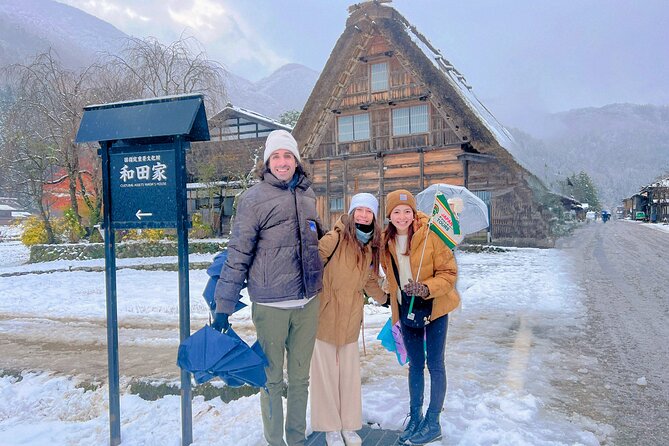
Shirakawa-go’s steep-roofed farmhouses are the main event here, but the clever part is what comes after: you return to Kanazawa for gardens, crafts, and old geisha streets. In one long day, you see a mountain village and a refined regional city without arranging several trains and buses yourself.
I like the early start, which can get you to Shirakawa-go before the largest crowds arrive. I also like the mix of looking and doing: Kenrokuen gives you time to wander, while wagashi making and gold leaf work give you something to take home.
The trade-off is the pace. You have about two hours in Shirakawa-go and short visits at several Kanazawa stops, so this suits you if you want a broad first look rather than slow, independent exploration. Lunch is not included, and late arrivals cannot join the group midway.
Key points at a glance
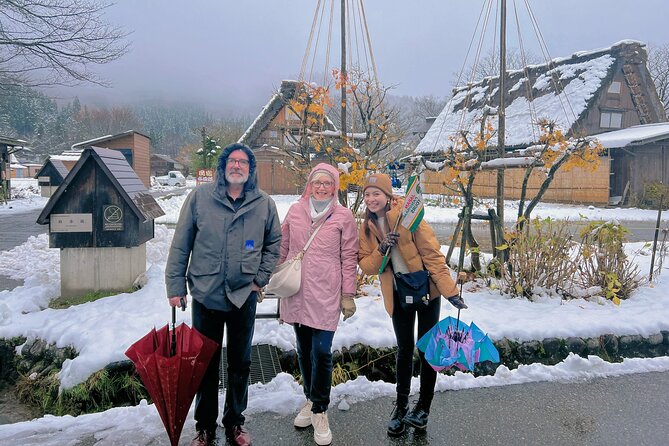
- Two famous places in one day: Visit Shirakawa-go in the morning, then return to Kanazawa for gardens, crafts, and historic streets.
- Arrive before the heaviest crowds: The 7:50 am meeting time is useful for seeing Shirakawa-go at a calmer hour.
- Guides who add real context: Aiko and Yasushi are praised for clear English, humor, history, and keeping the day organized.
- Hands-on Japanese culture: Make wagashi or paint a Daruma doll, then try a gold leaf activity.
- Comfortable long-distance ride: Travel in an air-conditioned vehicle with Wi-Fi and multilingual audio guidance.
- A full but demanding schedule: The group can include up to 38 people, and the day lasts about 9 hours and 30 minutes.
Why this day works for first-time visitors
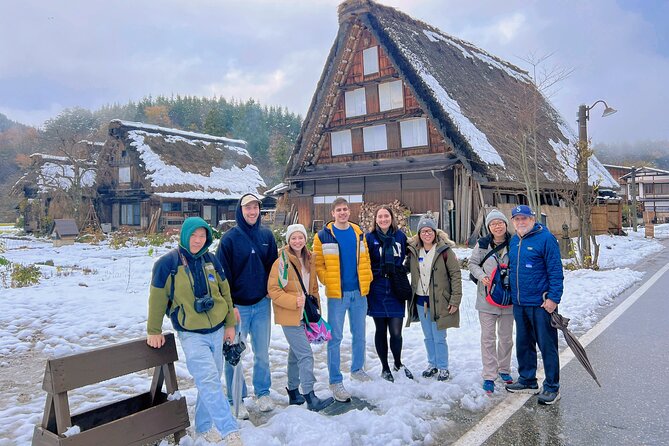
Kanazawa is easy to enjoy at a relaxed pace, but Shirakawa-go takes more planning. The mountain village is not simply a quick city-center stop. A tour removes the need to coordinate transport and lets you pair it with the best-known sights in Kanazawa.
I see this as a strong orientation day. You get a taste of rural Japan, a major Japanese garden, local handicrafts, and one of Kanazawa’s historic entertainment districts. It does not give you enough time to study every stop in detail, but it gives you a useful sense of how varied Ishikawa Prefecture can be.
The English-speaking guide matters most during the bus journeys. Yasushi is described as a former school teacher who uses history, mythology, visual material, and humor to make the ride more interesting. Aiko is also praised for her energy and ability to explain local culture. Guide quality can vary by departure, but the names most often associated with this tour are Aiko and Yasushi.
The vehicle is air-conditioned, has Wi-Fi, and may have a restroom, according to the tour information and experience details. That is useful because a good part of the day is spent moving between Kanazawa and the mountain village. The multilingual audio guide adds support in English, Spanish, French, Italian, German, Portuguese, and Ukrainian.
More UNESCO World Heritage Tours in Japan:
- World Heritage Kyoto & Nara Uji Authentic Matcha Experience
★ 5.0 · 1,573 reviews - Kanazawa: World Heritage Shirakawa-go Morning Guided Tour
★ 4.9 · 988 reviews - Hiroshima Peace (Heiwa) Walking Tour at World Heritage Sites
★ 5.0 · 872 reviews
The 7:50 am start at Kanazawa Station
You meet at the West Plaza short-term car park near Kanazawa Station at 7:50 am. There is no hotel pickup, so you need to reach the meeting point on your own and allow time to find the correct area.
This early departure is not glamorous, but it serves a purpose. Shirakawa-go can become crowded later in the morning, and an early arrival gives you a better chance to walk the village before the main rush. Several strong experiences from this tour specifically praise the quieter morning visit.
Be on time. Late arrivals are not accepted, and joining after the bus has left is not practical. The tour ends back at the meeting point, which makes it easy to continue your evening near Kanazawa Station.
Shirakawa-go and its steep gassho-style roofs
Shirakawa-go is a mountain settlement famous for its gassho-zukuri farmhouses. The name refers to the sharply pitched roofs, shaped like hands pressed together in prayer. These roofs are more than a pretty feature. Their steep angle helps deal with the heavy snow associated with the mountain region.
You have about two hours to explore the village. That is enough to walk through the central area, take photographs, look at the farmhouses, and find lunch, but it is not enough to see every building or museum at an unhurried pace.
I would use the free time carefully. Start with the main village streets, then take time to look at the wooden construction and roof shapes rather than treating the stop as a quick photo break. A small museum for local artists has a shop attached, and it can be a useful place to find locally made goods at reasonable prices.
Lunch is on your own. The timing can feel early depending on the day’s road conditions and schedule, so you may want to think ahead about whether you prefer a full meal, a snack, or something quick. Food is not included in the tour price.
The village is especially photogenic from a distance, but the experience is better when you notice the details close up. Look at how the farmhouses sit together, how the roofs dominate the buildings, and how the settlement fits into the surrounding mountains. The setting is a major reason to come, but the architecture gives the place its identity.
The Ogimachi Castle Site Scenic Lookout
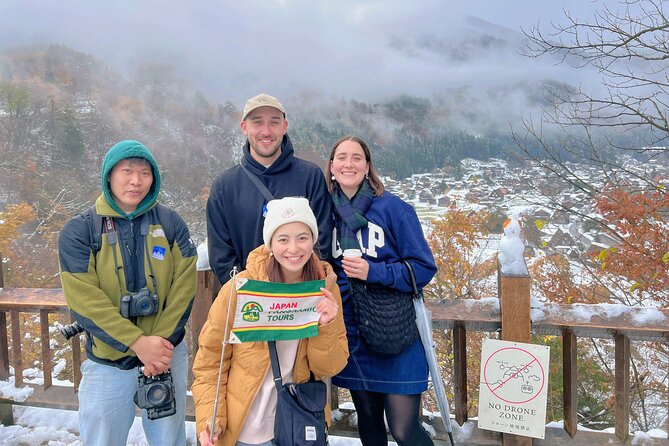
A short stop at the Ogimachi Castle Old Site Observatory gives you a broad view over Ogimachi, the central settlement of Shirakawa-go. You have about 20 minutes here.
This is one of the most useful stops for understanding the village’s layout. From above, the traditional houses become part of a larger pattern, with their steep roofs spread across the valley. It is also the place for the classic wide photograph of Shirakawa-go.
The visit is brief, so do not expect a long walk or a detailed castle visit. The attraction is the view, not surviving castle buildings. If weather limits visibility, this stop may be less rewarding, and the operator can change the order or substitute another place when conditions or operations require it.
More History Tours in Japan:
- Tokyo: Imperial Palace and Shogun Historical Walking Tour
★ 5.0 · 2,251 reviews - Kyoto Gion: 2-Hour Geisha Culture & History Walking Tour
★ 5.0 · 1,186 reviews - Tokyo: Imperial Palace Japanese History Walking Tour
★ 4.9 · 987 reviews - Hiroshima Historical Walking Tour – Why A-Bomb was Dropped
★ 4.8 · 893 reviews
Kenrokuen Garden after the mountains
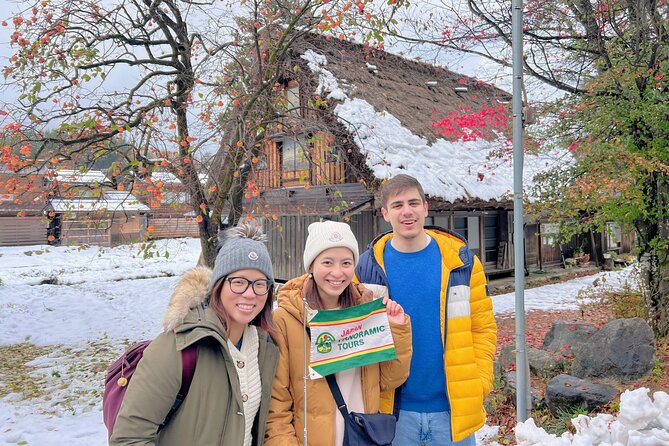
The afternoon changes the mood completely. Kenrokuen is one of Japan’s three most famous gardens, and the visit lasts about one hour. Its appeal comes from carefully arranged views, water, plants, paths, and seasonal changes rather than from a single monument.
One hour is enough to get a good impression, but I would not expect to see every corner slowly. Keep moving at an easy pace, pause at the views that catch your eye, and listen for the guide’s explanation of what makes the garden special.
Kenrokuen works well after Shirakawa-go because the two places show different sides of Japanese design. Shirakawa-go is shaped by practical mountain living, while Kenrokuen reflects deliberate garden planning and the culture of a regional city. You get rural architecture in the morning and formal beauty in the afternoon.
Rain can change the plan. One experience described heavy rain causing the sweet-making activity to be skipped, with the group continuing to the gold leaf postcard activity and geisha district. The operator may rearrange stops or provide a gift if weather or other conditions prevent an activity, but there is no refund for individual changes.
Making wagashi or painting a Daruma doll
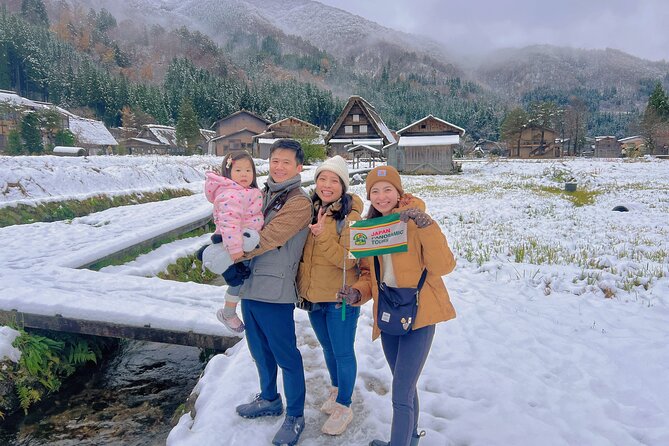
At the Ishikawa Local Products Center, you take part in a hands-on cultural activity for about 50 minutes. Depending on the craftsperson’s schedule, this may be making Japanese wagashi sweets with a professional wagashi maker or painting a Daruma doll.
Wagashi are traditional Japanese sweets often shaped with care and linked to the season. Making one gives you a better sense of the patience and precision behind a small edible object. You also get to taste what you make, which is a pleasant change from simply watching a demonstration.
The alternative Daruma activity offers a different kind of souvenir. The tour information does not guarantee which activity will be available, so book this for the cultural lesson rather than for one exact craft. Schedules depend on the craftsperson, and weather or operations can also affect the plan.
This is one of the tour’s best choices for families and for anyone who likes a little participation. It also gives you a break from walking. Still, the group setting means you should not expect a private workshop or an extended art class.
Gold leaf in Kanazawa
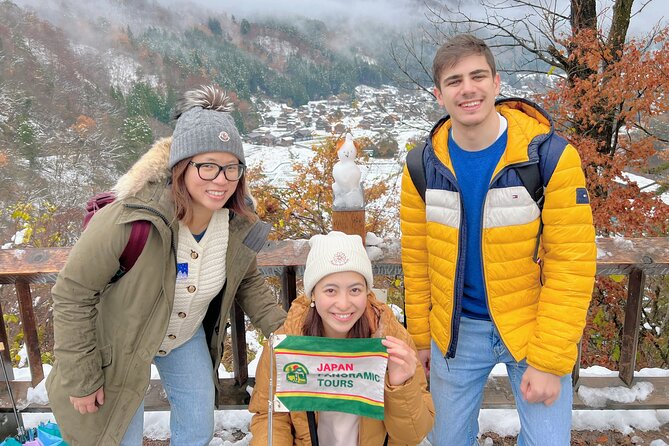
Kanazawa is closely associated with gold leaf craft, and the visit to Kanazawa Bikazari Asano gives you about 40 minutes to learn about the technique and make a gold leaf item. One example described by a participant was a gold leaf postcard.
The activity helps explain why gold leaf is more than a decorative gimmick in Kanazawa. You handle the material and see how a small amount can change the look of an ordinary object. The finished piece is a light souvenir that is easier to carry than a larger craft.
This stop is included, along with admission to Kenrokuen and the Japanese sweets or Daruma activity. That helps the $122.45 price feel reasonable, especially if you value a guide, transport, and several admissions in one day.
There is a practical limit: 40 minutes goes quickly. You will get an introduction and a chance to make something, not a full course in traditional craft. The activity is best treated as a focused sample of Kanazawa’s craft culture.
Higashi Chaya District and the final walk
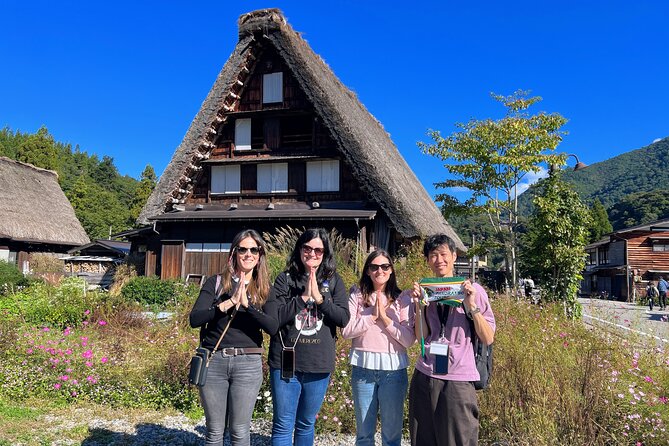
Higashi Chaya District is one of Kanazawa’s largest geisha areas, with traditional wooden streets and old teahouse buildings. The scheduled visit is about 30 minutes, so you get a short walk and a chance to see the district’s character.
This is a good final stop because it brings you back into the city after the garden and craft activities. You can look at the architecture, take photographs, and try the famous gold leaf ice cream if you choose to buy one. The ice cream is not included.
Half an hour is enough for a first look but not enough for a relaxed visit to every shop or teahouse. If this district interests you most, return independently on another day. The tour gives you an introduction, not a complete exploration.
The published order can change because of traffic, weather, and opening conditions. Higashi Chaya District may appear before or after other afternoon activities, so keep your expectations flexible.
What the $122.45 price includes
At $122.45 per person, this is not the cheapest way to see Shirakawa-go, but it covers several costs that can add up when arranged separately. You receive transport in an air-conditioned vehicle, an English and Japanese-speaking professional guide, Wi-Fi, multilingual audio support, Kenrokuen admission, the sweets or Daruma activity, and gold leaf participation.
You still pay for lunch and anything you buy at the village or in Higashi Chaya District. That is normal for a full-day sightseeing tour, but remember to budget for food and optional treats.
The value is strongest if you want convenience and context. You do not have to work out the route to Shirakawa-go, find the mountain lookout, arrange Kanazawa craft activities, or fit everything into one day. If you prefer setting your own pace, stopping for a long lunch, or spending hours in Kenrokuen, independent travel may suit you better.
The maximum group size is 38 people. That is a fairly large group for hands-on activities, so expect a shared experience rather than personal instruction throughout the day.
Who should book this full-day tour
I would choose this tour if you have limited time in Kanazawa and want to see Shirakawa-go without giving up the city’s main cultural sights. It is also a good fit if you appreciate a guide who explains history during the drive and helps keep a busy day on track.
Families may like the mix of scenery, crafts, and sweets. First-time visitors can use the day as a survey of the region, then decide which places deserve a longer return visit.
You should think twice if you dislike early starts, fixed schedules, group transport, or short visits. The tour requires a moderate level of fitness, and you will spend much of the day moving between stops. It is also less suitable if your main goal is a slow, quiet day in one garden or village.
Free cancellation is available up to 24 hours before the start time for a full refund. Changes made less than 24 hours before departure are not accepted, and poor weather can lead to a new date or full refund if the activity is canceled.
Should you book it?
Book this if you want an efficient introduction to both Shirakawa-go and Kanazawa, especially if Shirakawa-go would be difficult to reach on your own. The early arrival, strong guide reports for Aiko and Yasushi, and useful mix of crafts and sightseeing make the packed schedule worthwhile.
Skip it if you want long meals, independent wandering, or a detailed visit to every Kanazawa district. For most first-time visitors with one free day, though, the combination is hard to beat: mountain farmhouses in the morning, Kenrokuen and local crafts in the afternoon, and a return to Kanazawa before evening.
FAQ
Where does the tour start and finish?
The tour starts and finishes at the Kanazawa Station West Plaza short-term car park, at 1-chōme-6-802 Hirooka, Kanazawa, Ishikawa 920-0031, Japan.
What time should I arrive?
The scheduled start time is 7:50 am. Late arrivals are not accepted, and joining the tour after departure is not feasible.
Is hotel pickup included?
No. Hotel pickup and drop-off are not included, and the operator does not provide an extra pickup or drop-off service.
How long does the tour last?
The experience lasts approximately 9 hours and 30 minutes.
Is lunch included?
No. Lunch is not included. You have free time to eat at Shirakawa-go.
What activities are included?
The tour includes a Japanese sweets making activity or Daruma doll painting, plus a gold leaf activity. The exact first craft depends on the craftsperson’s schedule.
Is an English-speaking guide provided?
Yes. A professional English and Japanese-speaking guide is included. Multilingual audio guidance is also available in English, Spanish, French, Italian, German, Portuguese, and Ukrainian.
Can I cancel for a refund?
You can cancel at least 24 hours before the local start time for a full refund. Cancellations or changes made less than 24 hours before departure are not refunded or accepted.
Just added around Japan
- Private sake pairing@ancient underground★ 5.0 · 27 reviews
- Tokyo: Asakusa & Sensoji ー Oldest Temple Walking Tour (2hrs)★ 5.0 · 213 reviews
- [30 minutes] Rickshaw tour around Asakusa [History, sightseeing, Tokyo Skytree]★ 5.0 · 38 reviews
- Tokyo: Edo Castle & East Garden of the Imperial Palace Tour★ 4.7 · 112 reviews
- Tokyo: Imperial Palace, the history of Japan (ENGLISH GUIDE)★ 5.0 · 77 reviews
- Tokyo: Customized Private Historical Guided Photoshoot Tour★ 5.0 · 25 reviews
- Osaka: Dark Side of Osaka Night Walking Tour★ 4.9 · 89 reviews
- Osaka: Osaka Castle & Historical Museum Guided Tour★ 4.8 · 28 reviews
Japan History Tours, compared.
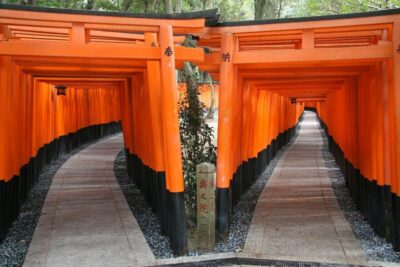
Kyoto: Fushimi Inari, Kinkakuji, Bamboo Grove 1 Day Bus Tour
Read our review →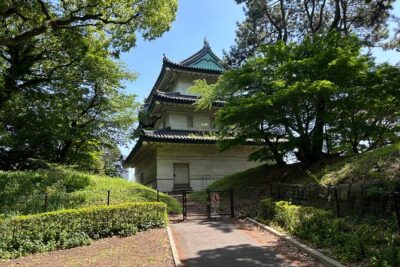
Tokyo: Imperial Palace and Shogun Historical Walking Tour
Read our review →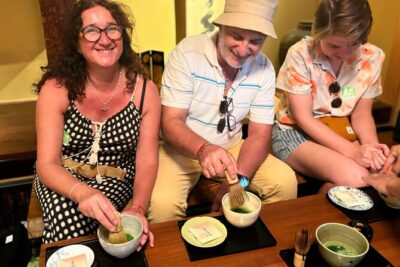
World Heritage Kyoto & Nara Uji Authentic Matcha Experience
Read our review →
Kyoto Gion: 2-Hour Geisha Culture & History Walking Tour
Read our review →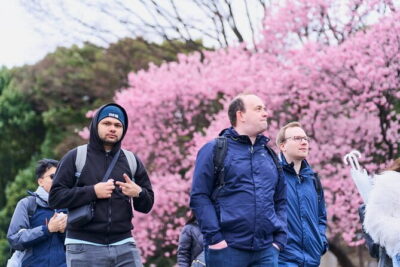
Tokyo Castle & Imperial PalaceーShogun Walking Tour
Read our review →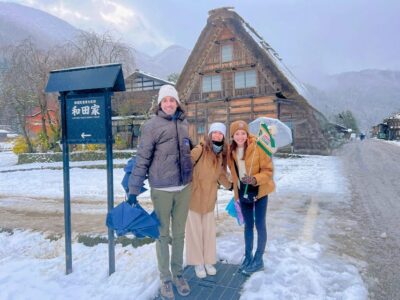
Kanazawa: World Heritage Shirakawa-go Morning Guided Tour
Read our review →
Tokyo: Imperial Palace Japanese History Walking Tour
Read our review →
Hiroshima Historical Walking Tour – Why A-Bomb was Dropped
Read our review →Browse the lists this tour appears in