
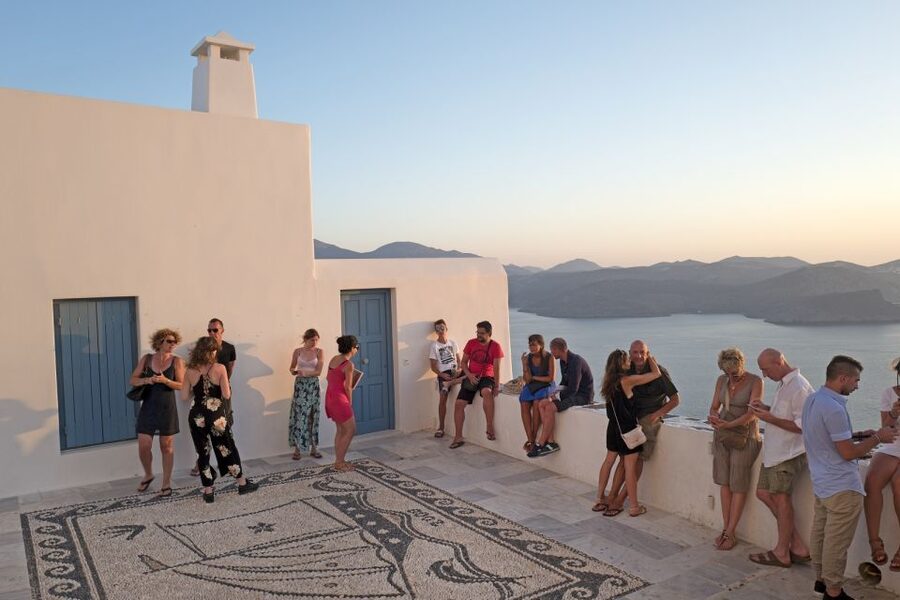
Review · GREECE
Milos Island: Archaeology & Culture Tour
Milos makes its best impression when you connect the bright white volcanic rock, old mining traditions, ancient settlements, and fishing villages into one story. This tour does that well, moving from Papafragas and Phylakopi to Sarakiniko, Plaka, and the Roman Amphitheatre in one neatly arranged outing.
I like the mix of archaeology and scenery, and I like that local guides such as Marios, Giannis, Laura, and Marinos bring in modern island life, mythology, food, and mining along with the ancient sites. The main consideration is time: at four hours, each stop is an introduction rather than a long visit, and some people may want more time at the archaeological sites than the beaches.
Key points at a glance
- Papafragas starts the story with turquoise water, sea caves, and volcanic rock.
- Phylakopi connects Milos to the prehistoric Cyclades and a settlement active until about 1000 BC.
- Sarakiniko is the visual star, with white rock, a narrow inlet, and the famous lunar appearance.
- Plaka adds cobbled lanes, traditional houses, and a wide sea view from Panagia Korfiatissa.
- The Roman Amphitheatre gives the tour a strong closing stop, with marble and ancient drama.
- Transport, an English-speaking guide, water, and a map are included for $103 per person.
Why this Milos tour is worth considering
Milos is easy to underestimate. On a map, it may look like a compact Greek island that you can cover with a rental car and a few beach stops. In practice, its past is tied to volcanic rock, obsidian, marble, minerals, trade, shipping, and settlements that reach far back into Cycladic prehistory.
This tour gives you a useful first look without asking you to organize roads, parking, and directions. You ride between major sights while your guide explains why the island looks the way it does and why people have lived and worked here for so long.
I especially like the balance between places that photograph beautifully and sites that reward explanation. Sarakiniko is instantly striking, but Phylakopi and the Roman Amphitheatre mean more when someone explains their place in the island’s story.
The price is $103 per person. That is not the cheapest way to see Milos, but it can be good value if you are staying only briefly, do not want to rent a car, or prefer a local guide to connect the stops. Transport, water, a map, and pickup are included. Food, snacks, and entrance fees are not.
More Local Culture and Traditions Tours in Greece
- Naxos Half Day History and Culture Guided Tour
★ 5.0 · 491 reviews - Naxos: Half-Day Guided History and Culture Sightseeing Tour
★ 4.7 · 435 reviews - Small-Group Food and Cultural Tour in Corfu
★ 5.0 · 299 reviews
Papafragas opens with water and volcanic rock

The tour begins at Papafragas, sometimes described as a volcanic swimming pool. From above, you look down into clear turquoise water enclosed by pale rock. The setting is compact but dramatic, with deep inlets and sea caves cut into the northern coast.
This first stop works well because it shows you the physical character of Milos before the history begins. The island’s geology is not a background detail here. It shaped the coves, supplied useful minerals, and helped make Milos important in the ancient Cyclades.
You will have time to look over the water and take photos, but this is not presented as a long beach session. Wear shoes with a firm sole, especially if you plan to walk close to the inlet. Comfortable clothing matters too, since several stops involve walking on uneven ground.
Papafragas can also set expectations for the day. The tour is not a slow, sit-down excursion. You move from one location to another, often walking around each place before returning to the vehicle.
Phylakopi puts Milos in prehistoric context
A short drive brings you to Phylakopi, one of the most important archaeological stops on the route. This prehistoric settlement played a major part in the early history of the Cyclades and remained active until about 1000 BC.
You will not get the same scale of ruins found at major mainland Greek sites. The value here is in understanding the age and importance of the settlement, not in seeing a large collection of standing monuments. A guide makes a real difference because the remains can be difficult to interpret on your own.
This is where the tour earns its archaeology title. Your guide can explain how Milos fit into early island networks and how its natural resources helped shape its role. One former guide, Leo, was praised for linking the island’s geology to its importance in antiquity, which is exactly the kind of connection that makes this stop worthwhile.
If your main interest is ancient history, pay close attention here and ask questions. The overall outing gives plenty of scenic stops, so Phylakopi is the place to focus on the older story of Milos.
Sarakiniko delivers the island’s signature view
From Phylakopi, the route continues to Sarakiniko. This is the stop most likely to dominate your photographs. Smooth white volcanic rock curves around a narrow inlet, making the area look almost lunar under strong sunlight.
The name lunar landscape is not hard to understand once you see the bright, bare rock. There is little visual clutter, and the contrast between the white stone and clear water is unusually strong. You walk down along the inlet to experience the formation from different angles rather than simply stopping for a quick roadside photograph.
Sarakiniko is also the point where the tour shifts most clearly from archaeology to scenery. That is good for a mixed-interest group, but it explains why some history-focused visitors may wish for more time at Phylakopi or the Roman site.
You might be able to swim depending on conditions and the time available, but swimming is not guaranteed as a formal part of the four-hour plan. Some outings have included a swim stop, while others have focused on walking and photographs. Bring comfortable clothes and shoes, and do not count on food being supplied. Water is included, but snacks are not.
The area can feel exposed in the sun. A hat, sunscreen, and water are sensible additions even though bottled water is provided.
More Archaeological Site Tours in Greece:
- Athens: Acropolis & up to 5 Archaeological Sites Combo Pass
★ 4.2 · 13,904 reviews - Athens: National Archaeological Museum Ticket & Audio Guide
★ 4.3 · 1,330 reviews - Mykonos Town: Archaeological Site of Delos Guided Day Trip
★ 4.6 · 1,296 reviews - Delphi: Archaeological Site & Museum Ticket with Audio Tours
★ 4.3 · 721 reviews
Plaka brings in village life and wide views
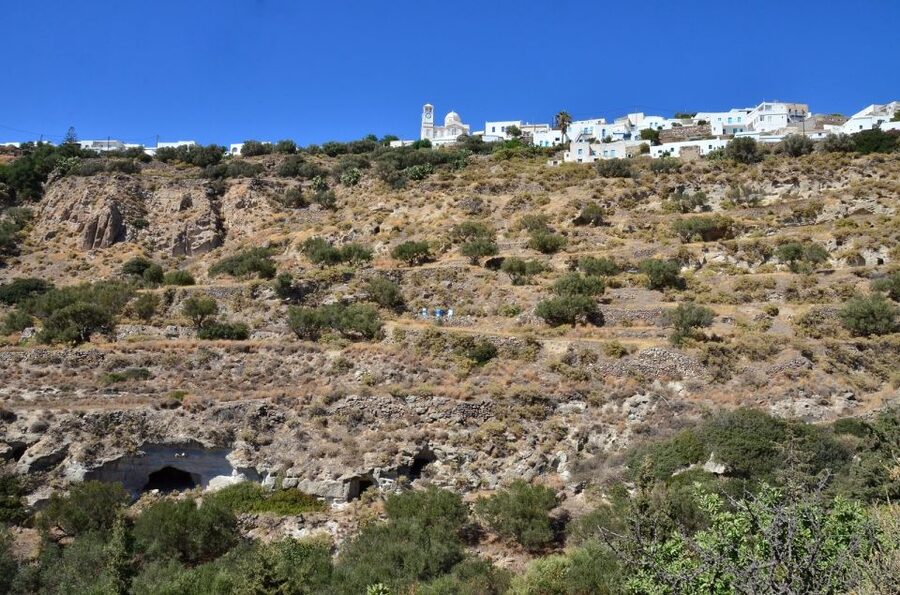
The road then follows Milos’s northern coast toward Plaka, the island capital. Here the mood changes again. Instead of open rock and sea caves, you get cobbled streets, narrow alleys, traditional architecture, and a more settled village atmosphere.
You have time to walk around rather than simply viewing Plaka from the vehicle. That matters because the town is best understood at walking speed. The lanes are part of the attraction, and you will want shoes that handle uneven paving.
A highlight is the view from the veranda of Panagia Korfiatissa. From here, you can look out over the sea and take in the island’s broad coastal setting. It is a good pause after the more exposed walking at Sarakiniko.
The exact time in Plaka may vary. Some groups have already visited the town independently, and guides have adjusted the route to include another spot instead. That flexibility can be useful, but it also means the tour is not always identical for every group.
If you are hoping for a long meal in Plaka, keep your expectations modest. The outing is designed to cover several locations, and food is not included. Some groups have stopped at a bakery for a short break, which can be a pleasant way to try something local without losing much sightseeing time.
The Roman Amphitheatre closes the historical loop

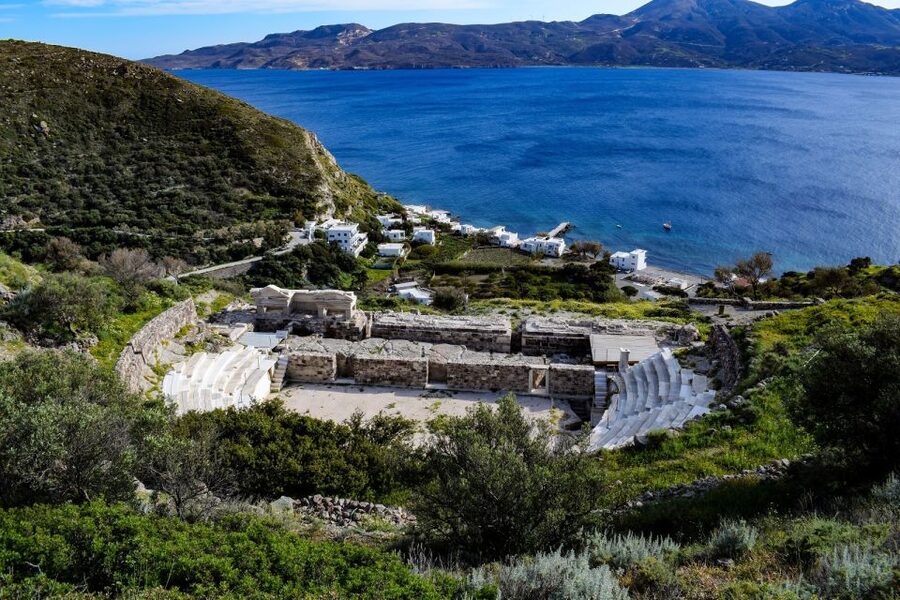
The Roman Amphitheatre is the final major stop described for the tour. Built of marble, it gives you a more visible ancient monument after the earlier prehistoric settlement.
The site is not just an isolated ruin. It helps show that Milos remained important long after the prehistoric period. In a short tour, the contrast between Phylakopi and the Roman Amphitheatre is useful: you see two different periods and get a sense of how long the island supported organized communities.
The amphitheatre visit can be brief, so use your guide’s explanation to fill in the gaps. The same is true of the other ancient sites. This is a guided introduction rather than a full archaeological study, and anyone wanting extensive time at ruins may find the schedule brisk.
Some outings have also included nearby historic or cultural stops beyond the core route, such as the catacombs, a mine site, Mandrakia, or an authentic fishing village. These additions are not guaranteed, so book this tour for its stated highlights rather than for any one extra stop.
The guides are a major part of the experience
The guide can shape this tour more than the vehicle or the schedule. Several guides have led it over time, including Marios, Giannis, Laura, Marinos, Yannis, Leo, and Janice. Their styles differ, but the strongest pattern is a mix of island history, current life, mythology, and personal familiarity with Milos.
Marios has been praised for making the island feel alive and for going beyond basic facts. Giannis has led groups through archaeology, geography, and local culture, and has adjusted routes when visitors had already seen Plaka. Laura has been noted for combining historical information with modern island life and mythological stories.
This kind of local commentary is especially helpful on Milos because the island’s story is not limited to ancient stones. Mining and mineral shipping still matter to how people understand the island, and the contrast between natural beauty and industrial activity can prompt useful questions about its future.
You should also feel free to ask about food and daily life. One guide introduced a group to watermelon pie, while other outings included a bakery stop. Those small details can make the tour feel less like a checklist and more like an introduction to a place where people still live and work.
Transport and group size make the route easier
Pickup is included, and you are asked to be at the pickup point five minutes early. You receive the exact location and time by email. The start time can change to 1:30 p.m., so check the final message rather than relying only on the first booking details.
The transport has received especially strong marks, with 93 percent of ratings giving it a perfect score. Several outings used a comfortable bus or van, and drivers such as George were praised for safe driving.
Small groups are common, particularly outside the busiest summer weeks. A group of six, or even fewer, gives the guide room to answer questions and make small route changes. It can also make the outing feel informal rather than like a large coach tour.
There is one practical warning: confirm your pickup details carefully. A past booking problem led to a missed van, although the operator arranged another pickup and salvaged the day. That does not appear to define the experience, but checking your email and being ready early is wise.
What the four hours feel like
The advertised duration is four hours. That is enough to sample the island’s major sights, but it is not enough for a leisurely visit at every stop.
Expect short drives broken up by walking, viewpoints, archaeological explanation, and photo time. The route covers several distinct settings, so the day feels full even though the clock time is limited.
Some people have described the experience as feeling like an all-day activity because there is so much information and so many places to absorb. That usually means the outing is packed with content, not that it lasts longer than advertised.
You should wear comfortable shoes and clothes. Bring sun protection, and consider a small snack since food is not included. Water is provided, and a map is included as well.
Children under two can join free. The tour is conducted in English, and the live guide format suits you best if you enjoy asking questions rather than listening to a fixed audio presentation.
Who will get the most from this tour
I would choose this tour if you are staying on Milos for a short time and want a strong first orientation. It helps you see where the major sights are and can make the rest of your stay easier to plan.
It also suits you if you do not want to rent a car. Milos has scattered sights, and a guided vehicle saves you from arranging transport between Papafragas, Phylakopi, Sarakiniko, Plaka, and the Roman Amphitheatre.
History-minded visitors will appreciate the links between geology, prehistoric settlement, Roman life, mining, and modern island culture. At the same time, you do not need to be an archaeology specialist. Sarakiniko, Plaka, Papafragas, and the sea views keep the outing visually varied.
I would be more cautious if your main goal is a long beach day, a relaxed meal, or extended time at one ruin. You may find the schedule too quick, and the advertised route gives more attention to seeing several places than to lingering at any one of them.
Is the $103 price good value?
At $103 per person, the price is fair when you consider the driving, pickup, English-speaking guide, water, and the amount of ground covered. It is particularly useful if a rental car would be inconvenient or if you have only a day or two on Milos.
The value depends on how much you want interpretation. If you only want to photograph Sarakiniko and Plaka, you could plan those stops independently. If you want to understand Phylakopi, the island’s mining story, and the connection between geology and settlement, the guide adds much more.
Remember to budget separately for food, snacks, and any entrance fees. Those costs are not included. The tour does offer free cancellation up to 24 hours before departure and reserve-now, pay-later booking, which helps if your ferry or island plans are still changing.
Should you book the Milos Archaeology and Culture Tour?
Book it if you want a broad, efficient introduction to Milos with strong local commentary. The combination of Papafragas, Phylakopi, Sarakiniko, Plaka, and the Roman Amphitheatre gives you scenery, village life, and several layers of history in one outing.
I would especially recommend it early in your stay. The guide can give you useful context for later independent visits, including which beaches, villages, or archaeological sites deserve more of your time.
Skip it if you want a slow beach excursion or a deep archaeological visit with long periods at each site. For everyone else, the small-group feel, reliable transport, and flexible guiding make this a sensible way to get oriented on Milos without spending the day behind the wheel.
FAQ
How long is the Milos Archaeology and Culture Tour?
The advertised duration is four hours. The pace includes transport between several sites and walking time at each stop.
What places are included on the tour?
The route includes Papafragas, prehistoric Phylakopi, Sarakiniko, Plaka, and the marble Roman Amphitheatre. Some groups may also see additional places if the guide adjusts the route, but those stops are not guaranteed.
Is pickup included?
Yes. Pickup is included, and you should arrive at the pickup point five minutes early. The exact location and time are sent by email, and the start time may change to 1:30 p.m.
What language is the tour conducted in?
The live tour guide speaks English.
Are food and entrance fees included?
No. Food, snacks, and entrance fees are not included. Water, transport, and a map are included.
Can children join the tour?
Yes. Children under two years old can join free.
Just added around Greece
- Olous – Guided Snorkelling Excursion to Discover Olous Sunken Ancient City★ 4.5 · 31 reviews
- WWII – The Battle of Crete Day Tour★ 5.0 · 103 reviews
- Heraklion Highlights: Knossos, Museum & Historic City Drive★ 5.0 · 64 reviews
- Knossos & Archaeological Museum Shared Guided Tour from Chania★ 5.0 · 41 reviews
- Chania’s Clash of Empires: A Self-Guided Audio Tour★ 4.5 · 28 reviews
- Ancient Corinth Private Tour from Corinth★ 5.0 · 56 reviews
- Epidavros sea kayak at the Ancient sunken city tour, small ancient theater★ 5.0 · 96 reviews
- Small-group Corfu Town Historical Walking Tour★ 5.0 · 39 reviews
Greece History Tours, compared.
Athens: Acropolis & up to 5 Archaeological Sites Combo Pass
Read our review →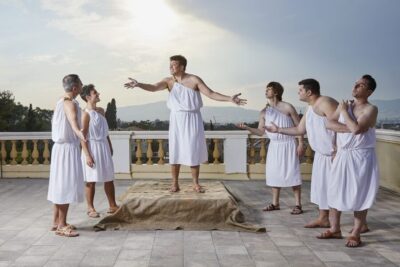
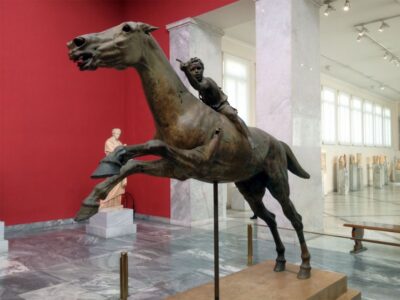
Athens: National Archaeological Museum Ticket & Audio Guide
Read our review →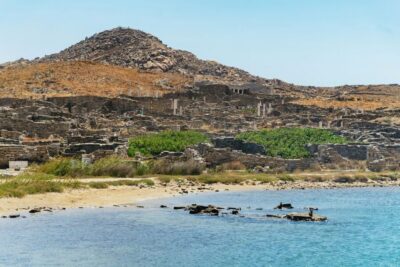
Mykonos Town: Archaeological Site of Delos Guided Day Trip
Read our review →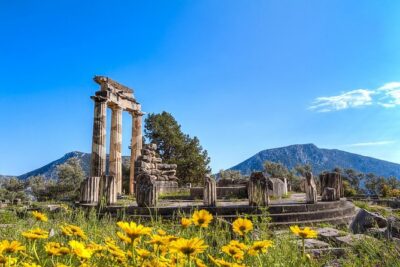
Historical Delphi One Day Tour with Arachova Stop & Expert Guide
Read our review →
From Athens: Ancient Corinth Day Trip with Canal & VR Guide
Read our review →
Historic Athens: Small Group Electric Bike Tour
Read our review →
Acropolis, Parthenon & Athens Old City Heritage Walking Tour
Read our review →Browse the lists this tour appears in