
Review · USA
National Medal of Honor Heritage Museum Admission Ticket in Chattanooga
The National Medal of Honor Heritage Center does more than display medals behind glass. It puts you close to the choices made by men and women who acted with extraordinary courage under terrible pressure. Personal stories give the award its human meaning, while the theater and staged scenes help you understand what happened beyond a name and date.
I like the way the center connects military history to everyday character. I also like the chance to learn from staff members such as Clint, Stephen, and Bob, and, on some visits, to hear directly from a Medal of Honor recipient such as Ryan Tipps. The main drawback is practical: downtown Chattanooga parking can be costly and frustrating, and the museum has occasionally closed for private events.
Key points to know
- Plan on one to three hours: You can make a short visit, but the stories reward a slower pace.
- Begin with the theater: The presentation gives useful context before you move through the exhibits.
- Look for the human stories: The center focuses on decisions, sacrifice, fear, and service, not just military dates.
- Expect more than Medal of Honor displays: The collection includes over 6,000 objects connected to recipients and veterans.
- Ask questions at the entrance: Staff members such as Clint, Stephen, and Bob have added greatly to the experience for many visitors.
- Check the day before you go: The center normally opens Monday through Saturday from 9 a.m. to 5 p.m., but a private event once caused an unexpected closure.
Why this Chattanooga museum matters
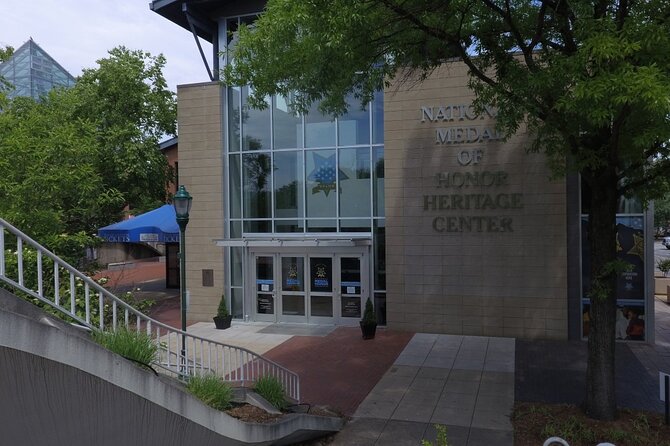
The Medal of Honor is often treated as a symbol. At this center, you learn what the symbol represents in real terms: a person facing danger, choosing to act, and putting service before self.
That focus gives the museum a clear purpose. You are not simply moving past a series of military objects. You are asked to think about courage as a decision made in a difficult moment. The stories also reach beyond a battlefield. The center connects valor, integrity, sacrifice, and responsibility to life in the classroom, workplace, and community.
That wider message makes the museum suitable for more than military families. You do not need a strong background in American military history to follow the exhibits. The presentation explains the origins of the Medal of Honor and introduces recipients from the Civil War period onward.
The tone is respectful and, at times, sad. Some stories involve loss and painful choices. That honesty is part of the experience. The center does not reduce heroism to a simple action scene. It shows the cost behind the honor.
More Tickets in the USA:
- The National WWII Museum Admission Ticket New Orleans
★ 5.0 · 2,202 reviews - Medieval Torture Museum Ticket with Audio Guide and Ghost Hunting
★ 5.0 · 962 reviews - New Orleans: The National WWII Museum Ticket
★ 4.8 · 704 reviews
Start with the theater and orientation

Your visit includes access to the center’s theater and its main presentation. Start here if you can. The theater provides a foundation for the galleries, helping you understand why the Medal of Honor carries such weight.
After the presentation, you can move through the exhibits at your own pace. The displays explain the award’s development and introduce recipients from different periods of American conflict. The material also places individual acts of courage within the wider story of American warfare.
This order matters. Without an introduction, a medal or uniform can feel distant. With the background in place, the objects become evidence of a particular life and a specific moment.
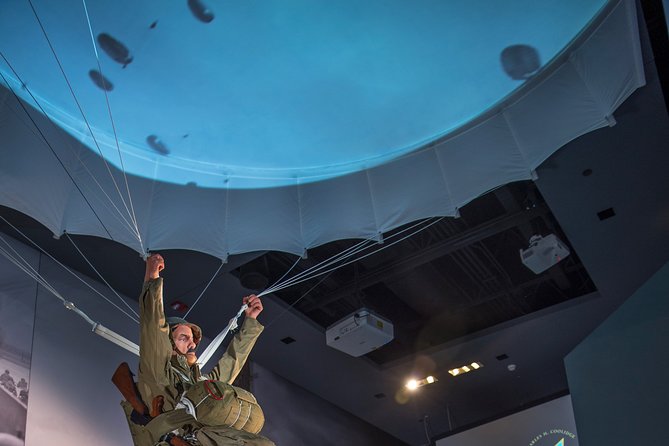
The center also uses staged scenes and wax figures to help explain some stories. These displays give you a visual sense of people and circumstances that can be difficult to picture from text alone. They are not a replacement for the personal accounts, but they make the galleries easier to follow.
Follow the recipients’ stories
The strongest part of the visit is the attention given to individual recipients. Each story asks what happened, what danger was present, and what the person chose to do.
The collection covers a long stretch of American history, beginning with the Civil War and continuing through later conflicts. That range allows you to see how warfare, uniforms, equipment, and public memory changed over time. The central idea, however, remains consistent: the award recognizes extraordinary action under extreme conditions.
More than 6,000 objects are cared for by the center. These include material connected to Medal of Honor recipients and other veterans. You may find uniforms, personal items, photographs, military objects, and interpretive displays that help fill in the human details.
The objects matter because they make the stories physical. A medal tells you that an award was given. A personal item can help you think about the individual who carried it, wore it, or left it behind.
The center also gives attention to Tennessee heroes. If you have already visited Chattanooga’s Veterans Bridge, Chickamauga Battlefield, or Trail of Tears sites, the museum can help connect those places to the city’s wider story. You do not need to combine all of these stops, but the museum works well as part of a history-focused day.
Meet the people who bring it to life
The staff can shape the visit. Clint has welcomed people at the entrance and helped them get oriented before they entered the galleries. Stephen has also spent time discussing the exhibits with visitors, including questions about the Desmond Doss display.
Bob has been praised for his ability to explain Chattanooga’s military story in an engaging way. His value is not simply in knowing dates. A good guide helps you see how local events, national conflicts, and individual lives fit together.
The center has also hosted Medal of Honor recipient Ryan Tipps for question-and-answer sessions with school groups. His appearances are not guaranteed, so you should not book solely for that possibility. Still, the chance to hear a recipient speak directly about service gives the institution a special connection to living history.
One retired Air Force officer described meeting Tipps, exchanging a salute, and watching him speak with students. Tipps even gave the children his personal Medal of Honor coins. Moments like that cannot be promised on a regular admission visit, but they show the role the center plays beyond its displays.
You should ask questions during your visit. Staff members may be able to add context that is not obvious from the labels. If you have a particular interest in a conflict, recipient, or exhibit, mention it at the entrance.
More History Tours in the USA:
- History and Hauntings of Salem Guided Walking Tour
★ 5.0 · 14,564 reviews - Charleston’s Old South Carriage Historic Horse & Carriage Tour
★ 5.0 · 10,023 reviews - Beneath The Streets Underground History Tour
★ 4.5 · 8,006 reviews - Big Island in a Day: Volcanoes Waterfalls Sightseeing and History
★ 5.0 · 6,569 reviews
Take your time with the Desmond Doss exhibit
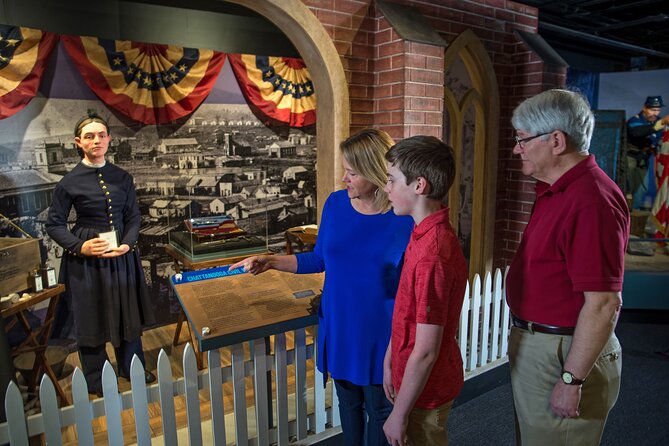
The Desmond Doss exhibit receives special attention from the center’s staff. Doss is remembered for serving as a medic and for his refusal to carry a weapon because of his religious convictions. The supplied information does not give every detail of the display, so I would not promise a particular object or format, but the exhibit is clearly intended to encourage close discussion.
If you know Doss from the film Hacksaw Ridge, the display may give you a useful chance to separate popular culture from the historical person. If you do not know his story, the exhibit can serve as an introduction to a different kind of military courage.
Allow extra time upstairs if the Doss exhibit interests you. A staff member has been eager to discuss it in depth, and that kind of conversation can add meaning to a short museum visit.
How long should you spend here?

The official visit time is about one to three hours. I would allow at least an hour if you want to see the theater and read the main displays. Two hours is a better target for a thoughtful visit, especially if you stop to ask questions.
A quick visit can work if you are fitting the center between other downtown plans. You can see the main presentation, walk through the displays, and leave with a clear understanding of the Medal of Honor.
A longer visit suits you if you enjoy military history, biographies, or carefully presented artifacts. The individual stories are not designed for a hurried glance. You may want time to read the background, compare different periods, and return to displays that caught your attention.
Families should plan for different attention spans. Younger children may respond best to the figures, scenes, and visual parts of the center. Older children and teenagers can engage with questions about courage, duty, and difficult choices. Adults with military experience may find the material especially personal.
Value, access, and the parking problem
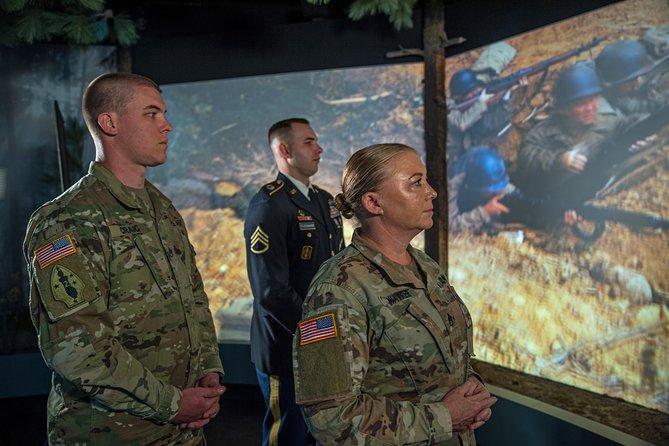
The admission price is not provided here, so I cannot judge the exact cost in dollars. The value depends on how you use the visit. If you spend only a brief time inside, the ticket is mainly an introduction. If you stay for the theater, read the stories, examine the objects, and speak with staff, you get a fuller museum experience.
The center is in downtown Chattanooga and near public transportation. That makes it easier to combine with other city stops without driving from one isolated attraction to another. If you are staying downtown, check your route before leaving and consider public transport if it suits your plans.
Parking is the weak point. Downtown parking can be expensive, and one family described the city parking situation as a major source of frustration. I would not assume that finding a convenient, low-cost space will be easy. Check the parking plan before you arrive, or use public transportation when practical.
The center is open Monday through Saturday from 9 a.m. to 5 p.m. The posted operating dates extend through February 16, 2027. Because a private event once left ticket holders unable to enter, it is sensible to confirm that the museum is open on your chosen day, especially if your schedule is tight.
The experience is offered in English. Mobile tickets make entry simple, and confirmation is provided when you book. Service animals are allowed, and most people can take part.
Who should book this experience?

I would recommend the museum to anyone interested in American military history, Tennessee history, veteran stories, or the Medal of Honor itself. It is also a strong choice for families who want an educational stop that encourages discussion rather than passive looking.
Retired and active military personnel may find the subject especially meaningful. The center recognizes the wider community of service members, not just the recipients whose names appear in the exhibits.
It also suits you if you prefer museums with a clear moral and personal focus. You will read about battlefields, but the larger subject is character. The displays ask you to consider what service, courage, and sacrifice mean in ordinary life.
You may want to skip it if you have only a few minutes in Chattanooga and dislike reading-heavy museums. The center uses visual scenes and a theater, but the stories still require attention. This is not a quick photo stop.
My practical advice for your visit
Arrive early enough to use the theater and still have time for the galleries. A late arrival could leave you rushing through the stories before closing.
Ask at the entrance about staff talks, special programs, or recipient appearances. Ryan Tipps has spoken with school groups at the center, but such events are not part of every admission.
If you have already visited Chickamauga Battlefield or other regional history sites, keep those experiences in mind as you walk through the museum. The connections can make the displays more meaningful.
Bring patience for the emotional parts. The stories include sacrifice and heartbreak, not only triumphant moments. That balance is one reason the museum feels more serious than a standard military exhibit.
Should you book the National Medal of Honor Heritage Center?
Yes, if you want a focused, respectful museum experience that puts real people at the center of American military history. The theater, personal stories, staged scenes, and large collection give you enough material for a solid one to three-hour visit.
I would book it as part of a downtown Chattanooga history day, not as your only activity in the city. Use public transportation if parking looks difficult, confirm the opening status before you go, and allow extra time if you like to talk with staff.
For military families, history-minded visitors, and anyone looking for a thoughtful indoor stop, this is a worthwhile ticket. The only serious cautions are the downtown parking situation and the possibility of a private-event closure. Cancel at least 24 hours before the start time if your plans change, and you can receive a full refund.
FAQ
Where is the National Medal of Honor Heritage Center?
It is located in downtown Chattanooga, USA.
How long does a visit take?
The approximate visit time is one to three hours.
What are the opening hours?
The center is listed as open Monday through Saturday from 9 a.m. to 5 p.m.
Is admission offered in English?
Yes. The experience is offered in English.
Does admission include the theater?
Yes. Admission includes access to the center’s theater and immersive experience.
What will I learn inside the center?
You will learn about the Medal of Honor, its recipients, and the award’s history from the Civil War forward. The center also presents stories about courage, service, sacrifice, and character.
How many objects does the center care for?
The center cares for more than 6,000 objects connected to Medal of Honor recipients and fellow veterans.
Is the museum near public transportation?
Yes. The center is near public transportation.
Are service animals allowed?
Yes. Service animals are allowed.
Can I cancel for a full refund?
Yes. You can cancel at least 24 hours before the experience start time for a full refund. Cancellations or changes made less than 24 hours before the start time are not refunded.
Just added around the USA
- Red Rocks Amphitheatre Historical Walking Tour★ 5.0 · 74 reviews
- 1-Hour Segway Tour of Cheyenne Cañon Art, History and Nature★ 5.0 · 36 reviews
- Colorado Springs – Guided Walking Ghost / History Tour★ 5.0 · 168 reviews
- Ancient Landscapes Private Geology Hike at Garden of the Gods★ 5.0 · 31 reviews
- Village Food Tours Lunch & History Tour★ 5.0 · 80 reviews
- 2.5 Hour Kayaking with Manatee and History Tour in Tarpon Springs★ 5.0 · 24 reviews
- Safety Harbor Ghost Tour★ 5.0 · 60 reviews
- Historical Bicycle Tour of Dunedin★ 5.0 · 44 reviews
USA History Tours, compared.

History and Hauntings of Salem Guided Walking Tour
Read our review →
Charleston’s Old South Carriage Historic Horse & Carriage Tour
Read our review →
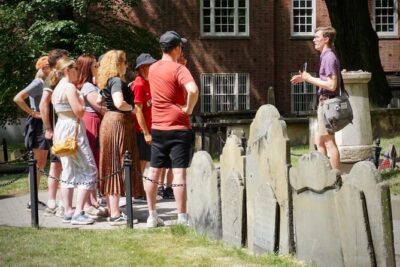
Boston: Freedom Trail History Small Group Walking Tour
Read our review →
Historic Charleston Guided Sightseeing Walking Tour
Read our review →
Savannah History and Haunts Candlelit Ghost Walking Tour
Read our review →
Tour of Historic Fenway Park, America’s Most Beloved Ballpark
Read our review →