

Review · NEW ORLEANS
New Orleans: The National WWII Museum Ticket
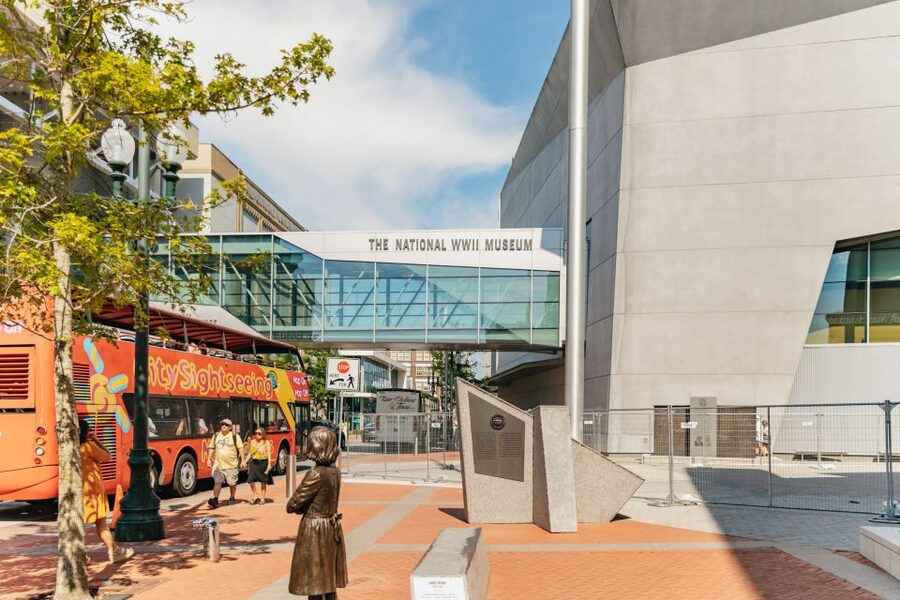
The most striking thing about the National WWII Museum is its scale. This is not a quick stop with a few glass cases. Five soaring pavilions carry you from the causes of World War II through the fighting in Europe and the Pacific, the American home front, the war’s final months, and its lasting effect on modern life. The D-Day story has a special New Orleans connection: the landing craft used in Normandy were designed and built here.
I especially like the close look at the restored wartime aircraft, including the B-17E Flying Fortress, and the way personal stories keep the military history human. I also like that you can shape the visit around your interests, adding the Beyond All Boundaries 4D film, the Campaigns of Courage guided tour, or the Arsenal of Democracy tour.
The main thing to consider is time. A $37 admission ticket is fair value if you can give the museum at least half a day, but you can easily spend a full day and still leave sections unseen. A late afternoon entry, especially after 3 p.m., means a shortened visit.
Key points to know before you go
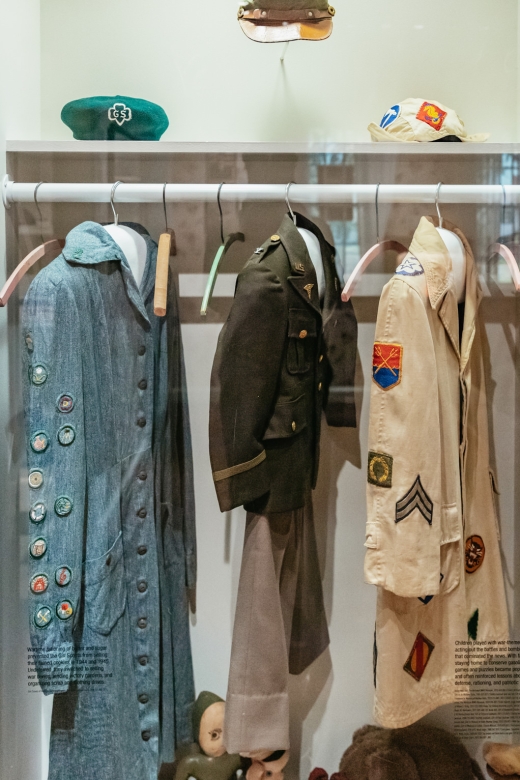
- D-Day has a local New Orleans connection: Learn how the landing craft for the Normandy invasion were designed and built in the city.
- The aircraft are displayed above you: Sky-high catwalks bring you closer to famous planes and wartime details than a normal floor display.
- The museum is much larger than it first appears: Five pavilions hold exhibitions, films, vehicles, restoration work, dining, and special displays.
- Beyond All Boundaries is an add-on: The 4D film uses moving effects and physical elements along with large-format screens, and it requires a separate ticket option.
- Personal stories give the exhibits emotional weight: You can take a paper dog tag and follow one soldier’s wartime path through the museum.
- Plan breaks into your day: The American Sector Restaurant & Bar, restrooms, gift shops, and seating areas make a long visit easier.
Start with the Louisiana Memorial Pavilion
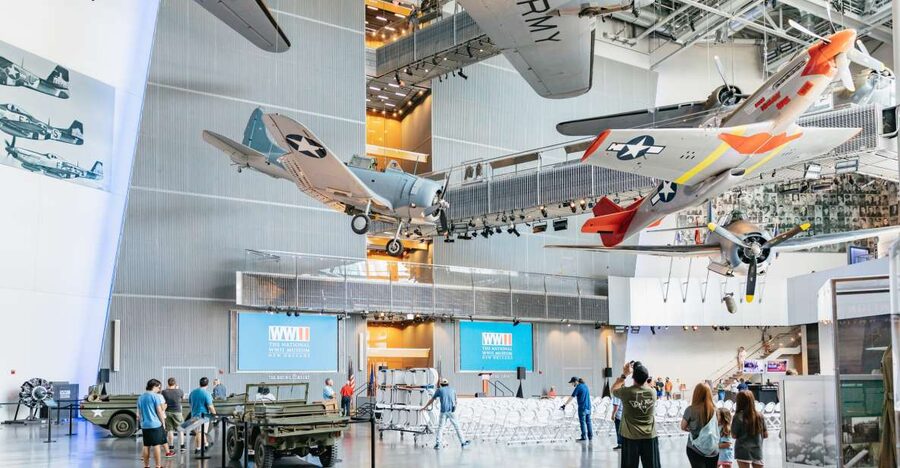
Enter at the main museum entrance on the north side of Andrew Higgins Boulevard. Staff scan your barcoded ticket and direct you to the correct starting point. If your ticket includes a film or guided tour, the listed time applies to that activity. Your museum admission itself is good for entry at any time during the day, so you do not have to rush through the galleries before a later screening.
The Louisiana Memorial Pavilion is the natural place to begin. Its D-Day exhibition explains the invasion of Normandy, including the landing craft that carried troops and equipment toward the beaches. Knowing that these boats were designed and built in New Orleans gives the display a local anchor. The war can feel distant when presented as a series of famous battles. This connection brings part of it right back to the city around you.
The pavilion also covers the American home front. That matters because the war was not fought only by soldiers overseas. Factories, families, workers, and communities supported the effort in ways that changed daily life in the United States. The exhibition helps connect military decisions with the industrial and social changes taking place at home.
Expect plenty of reading, short films, artifacts, and staged scenes. The displays are polished and easy to follow, but the amount of information can be tiring. I recommend deciding early whether you want to read every panel or focus on the sections that matter most to you. Trying to absorb every word in one visit can turn a moving museum into an endurance test.
More WWII and D-Day Tours in New Orleans:
- The National WWII Museum Admission Ticket New Orleans
★ 5.0 · 2,202 reviews - The National WWII Museum Campus Pass plus 4-D Film
★ 5.0 · 672 reviews - Amsterdam: Life of Anne Frank and World War II Walking Tour
★ 4.8 · 10,467 reviews
Follow the campaigns from Pearl Harbor to Berlin
The Campaigns of Courage section takes you into the fighting itself. Road to Tokyo follows the Pacific war from Pearl Harbor toward Japan. Road to Berlin traces the European campaign through battle settings and recreated villages.
These galleries are useful because they do not reduce the war to a clean sequence of victories. The Pacific route was long and punishing. The European route required a hard push across occupied territory before the defeat of Germany. The recreated settings help you picture the conditions faced by troops, while maps, film, objects, and testimony explain how each campaign developed.
You can explore these galleries on your own with the standard ticket. You can also add a two-hour Campaigns of Courage guided tour, led by an expert docent. This is worth considering if you prefer a clear narrative and want help placing the many battles in order. The tradeoff is time: a guided tour gives structure, but it also fixes part of your schedule and leaves less room for an unhurried look at other pavilions.
The route can feel confusing at points because the museum occupies several buildings and levels. Staff members are stationed at checkpoints to point you in the right direction. Follow the museum’s suggested sequence, but do not worry if you pause for a break or need to retrace your steps.
Look up at the B-17E and wartime vehicles
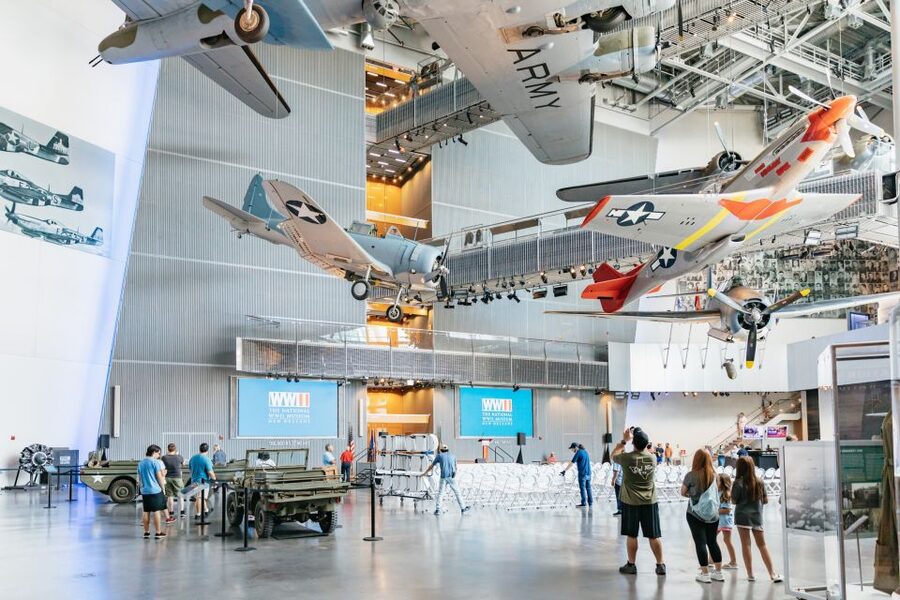
The U.S. Freedom Pavilion is one of the museum’s most memorable spaces. Restored World War II aircraft hang overhead, including a B-17E Flying Fortress. Catwalks rise through the pavilion so you can inspect the planes from a closer angle instead of viewing them only from the floor.
That height changes the experience. You can see the aircraft’s shape, crew positions, and details that are easy to miss from below. Figures placed in wartime positions help show how cramped and demanding these machines were. The catwalks are also a strong choice for visitors who like engineering, aviation, or military technology more than long blocks of text.
The pavilion includes wartime tanks and trucks as well. These ground vehicles balance the aircraft displays and make the machinery of war easier to understand. You see the size and practical limits of the equipment, not just its name on a label.
Photography is allowed, but flash photography and video are not. Give yourself time on the catwalks, since this is one of the places where slowing down pays off. If you have limited mobility, ask staff for help. The museum is wheelchair accessible, but the small number of wheelchairs available for visitor use is first come, first served.
Save time for Liberation Pavilion
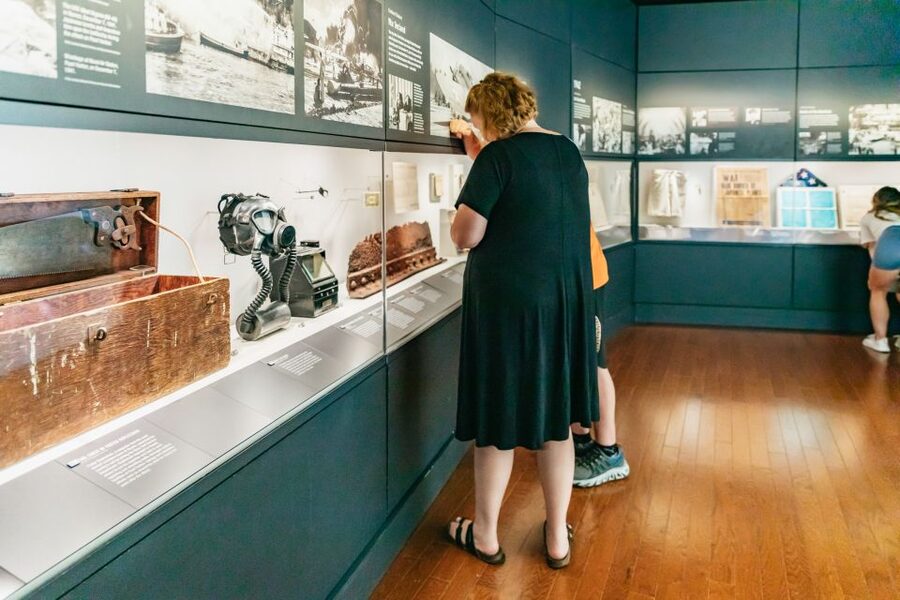
Liberation Pavilion focuses on the final months of the war and the years just after it. It also asks what World War II means for life today.
This section is important because many war museums end when the fighting stops. Here, the story continues into the aftermath. Victory did not erase the destruction, displacement, political changes, or moral questions left behind. A visit feels more complete when you allow time for this closing part rather than treating it as an optional final room.
The museum’s large scale makes this easy to miss. If you enter late or spend several hours on the first two pavilions, you may reach Liberation Pavilion near closing. Start early if you want the full sequence from the home front through the postwar years.
More Tickets in New Orleans:
- Pompeii: Entry Ticket and Guided Tour with an Archaeologist
★ 4.8 · 19,459 reviews - Edinburgh: Edinburgh Castle Guided History Tour with Tickets
★ 4.8 · 9,933 reviews - Taormina: Ancient Theater Skip-the-Line Ticket & Audio Guide
★ 4.5 · 2,412 reviews - Pompeii: Archaeological Park Tour with Ticket on request
★ 4.5 · 2,283 reviews
Add Beyond All Boundaries for a powerful sensory experience
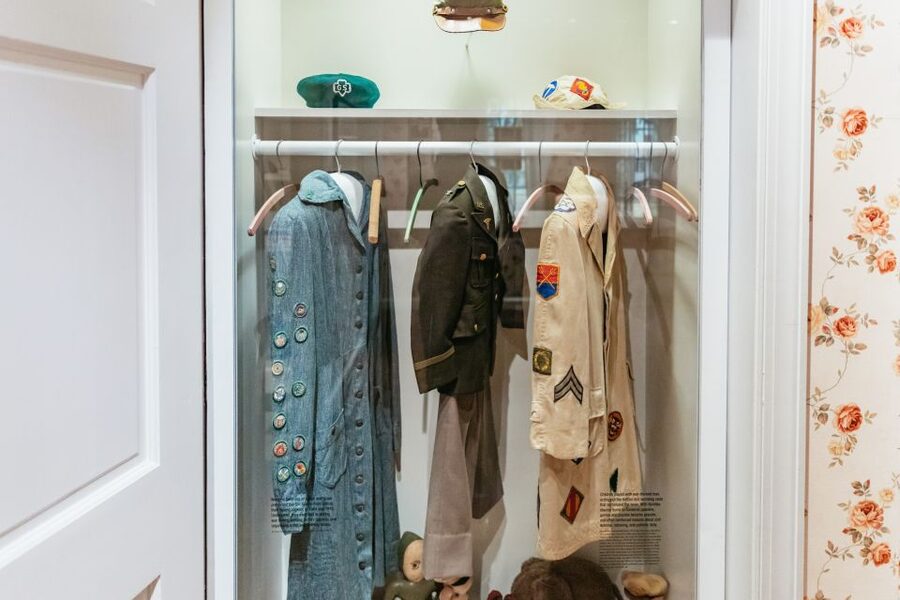
The Solomon Victory Theatre presents Beyond All Boundaries, a 4D film narrated by Tom Hanks. You must select the ticket option that includes the film. The movie has its own timed entry, while the museum admission attached to that option is not timed.
The format adds physical effects to large 3D screens. You do not simply watch a documentary from a fixed seat. Movement, sound, and other sensory effects are used to make the wartime story feel immediate. For many visitors, this becomes the emotional center of the day.
I would add it if you want a strong presentation of the overall war, especially if your group includes teenagers or family members who may tire during long reading sections. The film gives the visit momentum and context. It is not a substitute for the exhibitions, since the galleries provide more detail and personal material, but it gives you a concentrated account of the conflict.
The film can also be intense. World War II involved invasion, loss, destruction, and fear, and the 4D format makes those subjects feel more physical. It is best approached as a serious historical presentation, not a light amusement ride.
Consider the Arsenal of Democracy guided tour
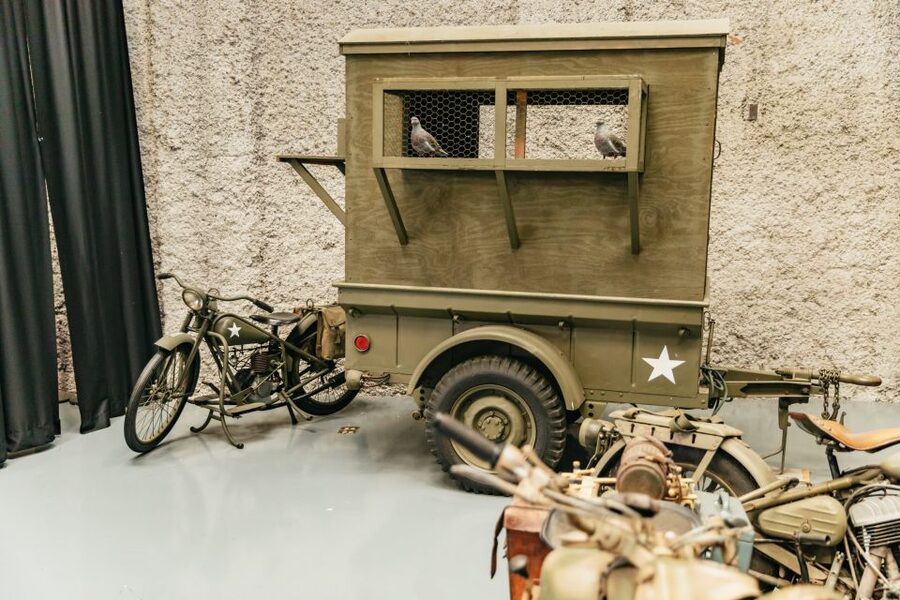
The Arsenal of Democracy option adds a guided tour focused on American industry and wartime production. The supplied ticket information identifies this as an available guided option, but it does not provide a set length or route details.
For you, the value is in having a docent connect objects and displays rather than leaving you to piece together the story alone. This option should suit visitors who want more explanation of how the United States supplied a global war. Check the scheduled time carefully, since the time shown for a guided option is the reserved tour time.
If you choose a guided tour, still allow time for the wider museum. The guided experience adds depth, but it does not replace the aircraft pavilion, the home front galleries, the film, or the other campaign exhibits.
Plan a full day, not a quick museum stop
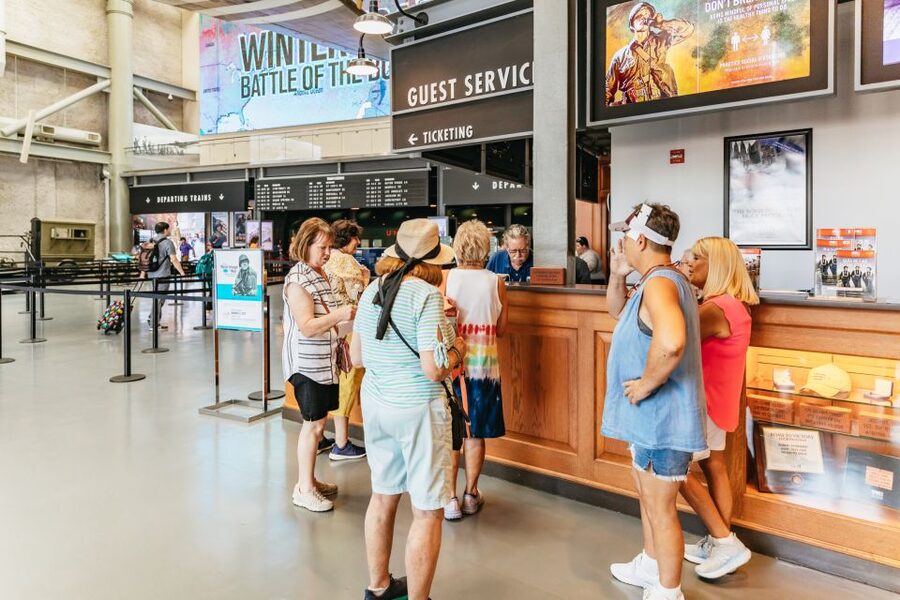
The advertised duration is one day, and that is a useful way to think about the ticket. You can make a worthwhile visit in several hours, but I would set aside the bulk of the day if you want to read the displays and watch the films along the route.
A practical plan looks like this:
- Arrive in the morning, especially if you want to see all five pavilions.
- Begin with the Louisiana Memorial Pavilion and the D-Day displays.
- Continue to Road to Tokyo and Road to Berlin.
- Take a break before the U.S. Freedom Pavilion and its aircraft catwalks.
- Attend Beyond All Boundaries at the reserved time if you added it.
- Finish with Liberation Pavilion and the postwar story.
- Leave room for a meal or snack rather than trying to power through.
The American Sector Restaurant & Bar is open Sunday through Friday from 11 a.m. to 2 p.m., and Saturday from 11 a.m. to 3 p.m. That schedule is useful for a daytime visit, but do not assume you can arrive near closing and still fit in lunch. The museum also has gift shops, and Jeri’s is available for a sweet finish, including the chocolate shake praised by one visitor.
The paid parking garage is at 1024 Magazine Street. The museum is in downtown New Orleans, and the main entrance is on the north side of Andrew Higgins Boulevard. The ticket lets you skip the ticket line, which is especially helpful when you have a timed film or tour to catch.
What the $37 ticket is really buying
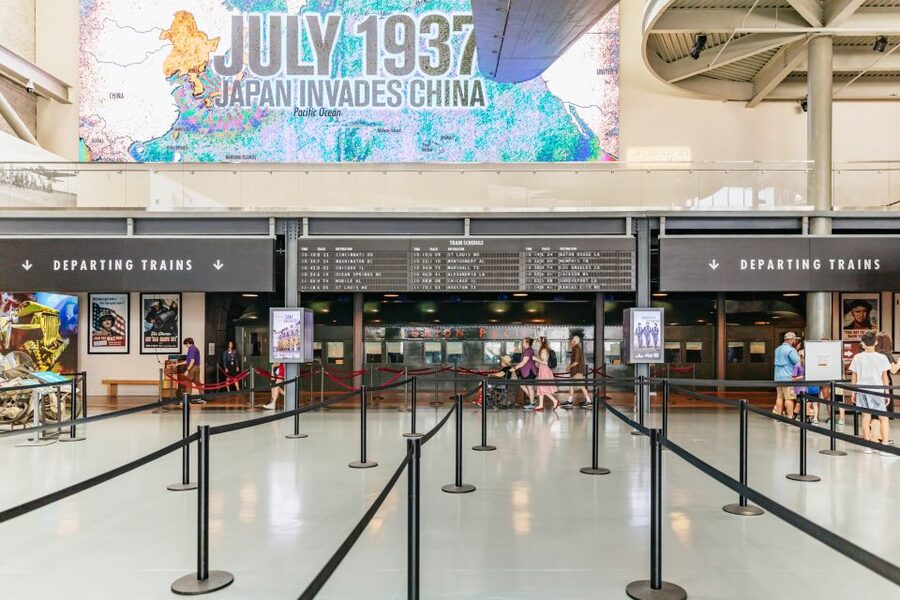
At $37 per person, basic admission is not cheap by museum standards. The value depends on how much time you give it. A rushed two-hour visit will make the ticket feel expensive. Four to seven hours, with the aircraft, campaign galleries, home front, and selected films, makes the price easier to justify.
The museum’s size is the main reason. You are paying for a large collection spread across five pavilions, not a single compact exhibition. Restoration work, vehicles, aircraft, staged environments, film presentations, and written interpretation give you several ways to engage with the subject.
The add-ons change the calculation. Beyond All Boundaries requires the ticket option that includes the 4D film. Guided tours of Campaigns of Courage and Arsenal of Democracy are also separate options. If you have only half a day, basic admission may be enough. If this is the main cultural stop on your New Orleans visit, the film or a guided tour can add useful structure.
Free cancellation up to 24 hours before the visit and reserve now, pay later booking make it easier to fit the museum into a changing schedule. Still, reserve early if you need a particular film or tour time.
Family visits, older adults, and accessibility
This museum works well for families with school-age children and teenagers, especially those interested in aircraft, vehicles, or personal stories. A 13-year-old and a 16-year-old can find plenty of visual material, though younger children may not have the patience for every text panel.
For families, the paper dog tag is a smart way to give the visit a clear thread. Follow one soldier’s story through the exhibits instead of treating the museum as a series of unrelated rooms. It helps turn a huge collection into one human journey.
Older adults should expect a lot of walking and standing. The museum is wheelchair accessible, and wheelchairs are available in limited numbers on a first-come basis. If you need one, ask at the start. Informational booklets are available in Chinese, English, French, Japanese, and Spanish.
The emotional weight is also real. The museum presents war as a human experience involving fear, sacrifice, families, and difficult choices. Give yourself permission to take a break. The clean facilities, dining options, and helpful staff make that possible.
Who should book this museum experience?
I would book it if you want more than a quick look at military objects. The museum suits history fans, veterans and military families, aviation enthusiasts, students, and anyone willing to spend several hours with a serious subject. It is also a strong choice for a rainy or very hot New Orleans day, since the visit takes place indoors across connected museum buildings.
I would be cautious if your schedule allows only a short stop, you dislike reading-heavy museums, or you want a light attraction between meals and music. The exhibits are polished and visually engaging, but the story demands attention. The 4D film can make the visit more accessible for people who prefer a guided presentation, while the sheer size may still feel tiring.
Is the National WWII Museum worth booking?
Yes, if you plan for at least half a day and ideally a full day. The strongest reasons are the New Orleans connection to D-Day landing craft, the close aircraft views from the catwalks, and the careful balance between military operations and individual lives.
Book early for a desired film or guided tour time, arrive before midafternoon, and do not try to race through all five pavilions. Add Beyond All Boundaries if you want a memorable sensory presentation, or choose a guided tour if you want help making sense of the campaigns. For a serious, detailed look at World War II in New Orleans, this is one of the city’s most worthwhile museum visits.
FAQ
How much does admission to the National WWII Museum cost?
The listed price is $37 per person for the museum ticket. Options that include Beyond All Boundaries or a guided tour may have different prices.
How long should I plan for the museum?
Plan at least half a day, though a full day is better if you want to see the five pavilions, read the exhibits, watch films, and take breaks. Reservations after 3 p.m. should expect a shorter visit.
Is the Beyond All Boundaries film included with basic admission?
No. You must choose the ticket option that includes the timed 4D film. The presentation is shown in the Solomon Victory Theatre and is narrated by Tom Hanks.
Is museum admission timed?
Basic museum admission may be timed or non-timed, depending on the option selected. If your ticket includes a film or guided tour, the listed time is reserved for that activity, while the museum admission included with it is valid for entry at any time during the day.
Can I take a guided tour?
Yes. You can add a two-hour Campaigns of Courage guided tour led by an expert docent. An Arsenal of Democracy guided tour is also available as a separate option.
Is the museum wheelchair accessible?
Yes, the museum is wheelchair accessible. A limited number of wheelchairs are available for visitors on a first-come, first-served basis.
Where is the entrance and parking area?
Enter through the main museum entrance on the north side of Andrew Higgins Boulevard. The paid parking garage is at 1024 Magazine Street.
Just added around New Orleans
- New Orleans: 1.5-Hour Voodoo History Evening Tour★ 4.5 · 34 reviews
- New Orleans: Swamp Boat Ride and Historic Plantation Tour★ 4.7 · 303 reviews
- New Orleans: Wicked History Walking Tour with a Local Witch★ 4.3 · 29 reviews
- New Orleans: French Quarter Saints & Sinners History Tour★ 4.6 · 56 reviews
- New Orleans: Garden District Food, Drinks & History Tour★ 4.9 · 97 reviews
- New Orleans: Tremé African American & Creole History Tour★ 4.9 · 208 reviews
- New Orleans, French Quarter: Pirate History Walking Tour★ 5.0 · 45 reviews
- New Orleans: Drunk History Walking Tour★ 4.2 · 165 reviews
New Orleans History Tours, compared.

New Orleans Garden District History Walking Tour
Read our review →
French Quarter Historical Sights and Stories Walking Tour
Read our review →
New Orleans Small-Group Haunted History Carriage Tour
Read our review →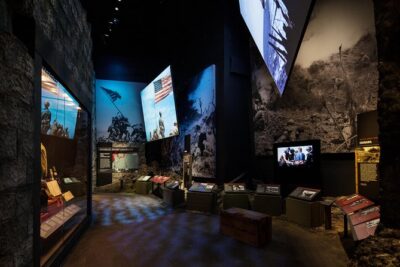
The National WWII Museum Admission Ticket New Orleans
Read our review →
Paddlewheeler Creole Queen Historic Mississippi River Cruise
Read our review →
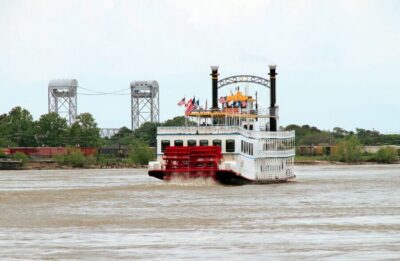
New Orleans: Creole Queen History Cruise with Optional Lunch
Read our review →Browse the lists this tour appears in