
Review · PALERMO
Palermo: UNESCO World Heritage Sites Guided Walking Tour
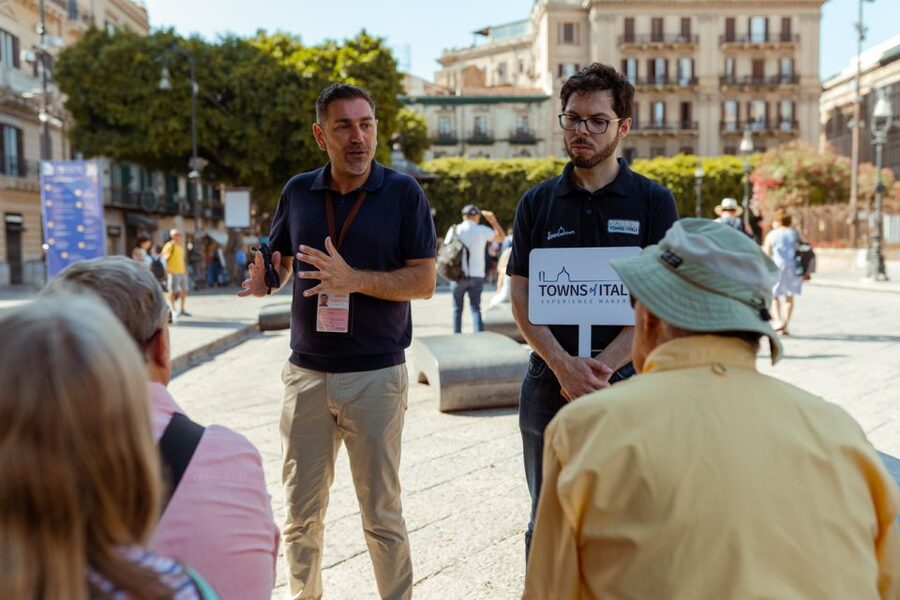
Palermo’s best introduction may be on foot, where a single street can shift from grand Baroque stonework to market chatter, Arabic-influenced architecture, and a church glowing with gold mosaics. This walk links the city’s key sights in about three hours, with local guides such as Renata, Simone, Stefania, and Laura bringing history down to street level.
I like the excellent city orientation and the fact that Cathedral entry is included, rather than leaving you to admire every major building from the pavement. I also like the human touches: guides have shared local customs, childhood memories, music, cinema, and practical tips for places to return to later. The main consideration is that most monuments are seen from outside, and the base tour does not include entry to the Norman Palace or Palatine Chapel.
Key points to know before booking
- A compact route through Palermo’s historic center: Teatro Massimo, Vucciria Market, Martorana Church, Piazza Pretoria, Quattro Canti, and the Cathedral all fit into one walking circuit.
- The Cathedral is the main included interior visit: Other major buildings are generally viewed from outside unless you book the expanded option.
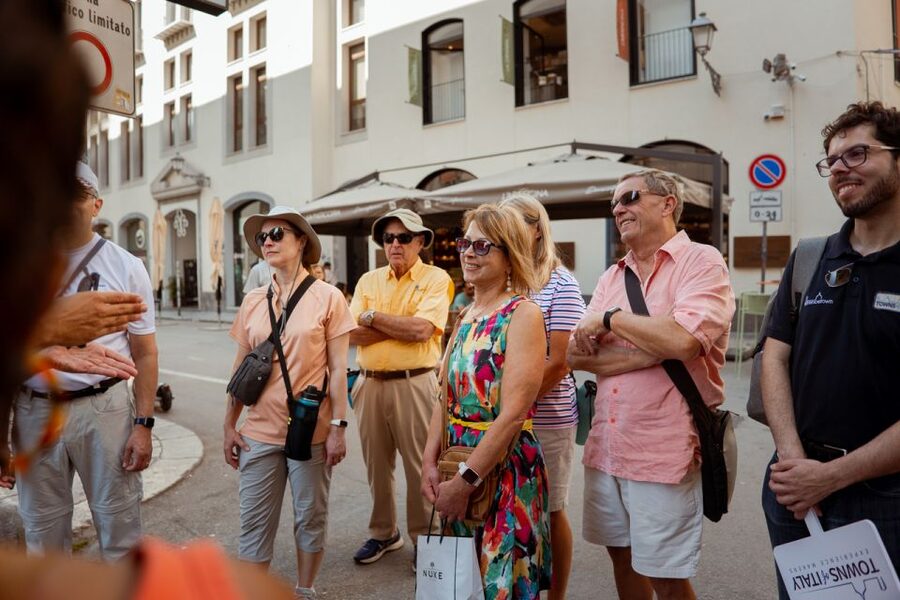
- Local guides shape the experience: Renata, Simone, Stefania, Laura, Fabio, and others have been praised for clear explanations, humor, and personal stories about Palermo.
- A Sicilian sweet is part of the day: Depending on the guide and timing, that may be a cannolo, granita, or another local pastry.
- Choose your version carefully: The standard walk lasts about three hours, while the option with the Norman Palace and Palatine Chapel can take up to 5.5 hours.
- Good value at $41: You get a licensed guide, a focused walking route, and Cathedral entry, but you should budget separately for other monument admissions.
Why this Palermo walk works so well
Palermo can feel confusing at first. Its center is full of grand churches, busy lanes, open markets, and buildings shaped by centuries of Arab, Norman, Spanish, and Italian rule. A map can show you where to go, but it cannot easily explain why the city looks so different from one block to the next.
That is where this tour earns its price. Your guide gives the sights an order and a story. You move from Teatro Massimo toward the old market streets, then through the Baroque heart of the city and into the Cathedral. The route helps you get your bearings quickly, which is why I would take it near the beginning of a Palermo stay.
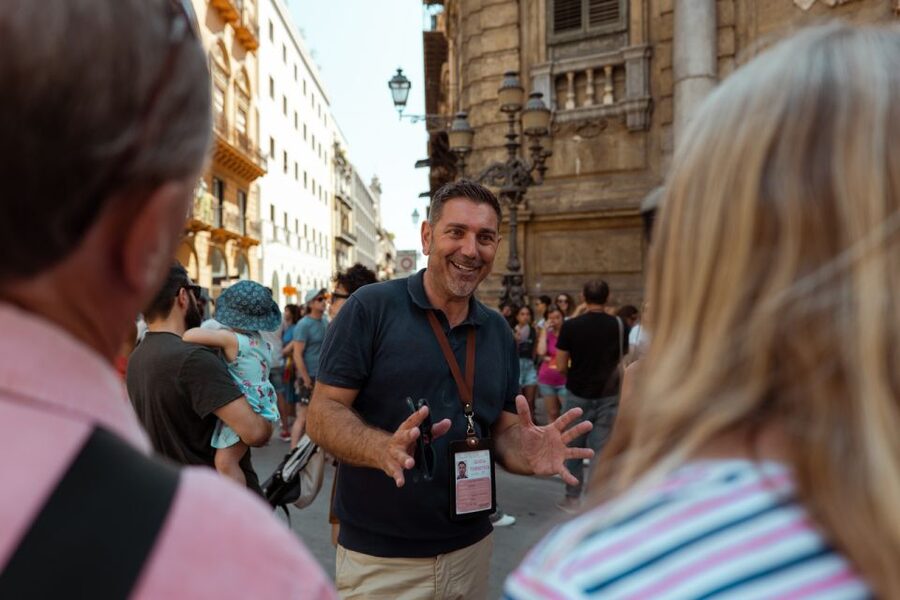
The walk is described as intimate and small group, though the exact group size is not specified. It runs in English or Spanish, with an optional English audio guide listed. Guides have been especially effective when using a laser pointer to explain elaborate ceilings and distant architectural details. That small tool matters in Palermo, where a guide may be pointing to a figure high above your head while a street full of people moves around you.
The pace is generally manageable. Guides have paused for photographs, drinks, shade, and tired participants. Still, this is a three-hour city walk on foot, so comfortable shoes and water are sensible. Palermo can be hot, and one guide made a point of seeking shade whenever possible. The tour operates in rain or shine.
More History Walking Tours in Italy
- Venice: City Center Historical Guided Walking Tour
★ 4.2 · 1,873 reviews - Palermo: Street Food and History Walking Tour
★ 4.9 · 1,486 reviews - Verona: History and Hidden Gems Guided Walking Tour
★ 5.0 · 1,379 reviews
Teatro Massimo sets the tone
The usual meeting point is the Towns of Italy Tourist Hub and Cooking School on Via Volturno, 40, though the exact starting point depends on the option you book. From there, the walk reaches Teatro Massimo, Palermo’s grand opera house.
You stop here for an exterior explanation and photographs rather than a full theater visit. The building gives you an immediate sense of Palermo’s scale and ambition, and it is a useful opening point for a tour that keeps shifting between public monuments and ordinary city life.
A strong guide will use the theater to introduce more than architecture. Simone, for example, has blended history with music and cinema, even adding a little singing and humor to his explanations. That style suits this route. Palermo is easier to remember when the past is connected to the sounds, habits, and personalities of the present.
Church of Saint Dominic and Palermo’s market life
The route continues past the Church of Saint Dominic. It is another exterior stop, but it helps show how much monumental architecture is packed into the central streets.
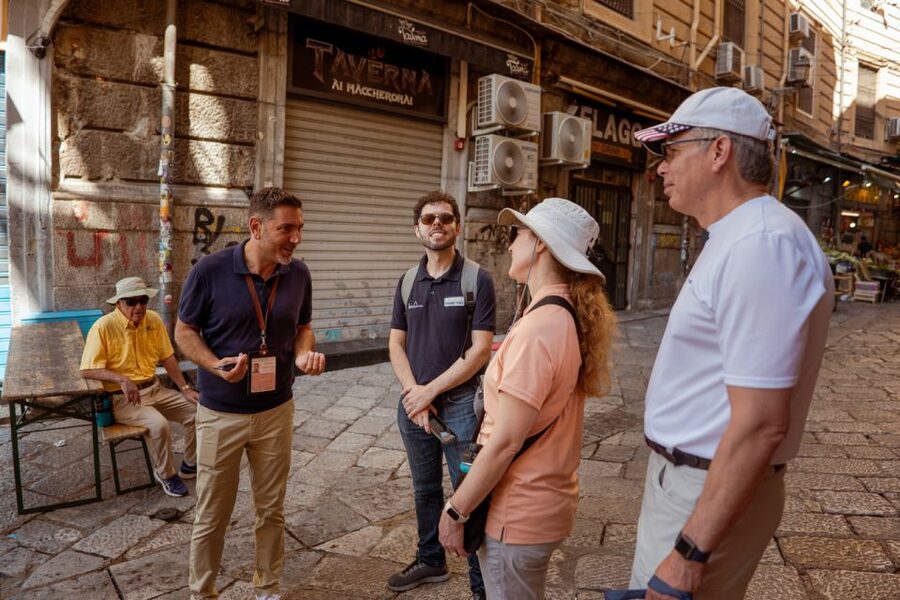
Then comes Vucciria Market, where the mood changes. You hear vendors, smell food and pastries, and see a more everyday side of Palermo. The stop is not just a pause for photographs. It gives your guide a chance to talk about local habits and the city beyond its official monuments.
This contrast is one of the tour’s strongest features. You are not simply moving from one polished church to another. You are seeing how grand civic spaces sit beside markets, cafés, and working streets. The market may be quieter or more active depending on the time of day, but the route still gives you a useful sense of Palermo’s street culture.
Your guide may also add comments about modern Sicily, local customs, or the effect of organized crime on daily life. One guide included personal memories of growing up in Palermo, while another explained the city’s No Mafia movement. These details are not the main subject of the walk, but they can make the city feel less like an open-air museum.
Martorana Church and Palermo’s golden interior
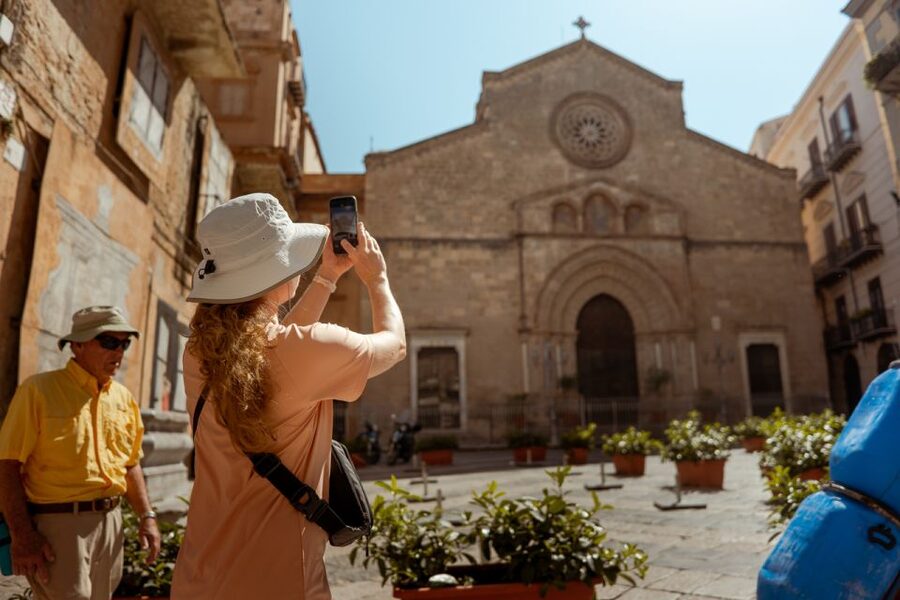
The Church of Santa Maria dell’Ammiraglio, commonly called Martorana, is one of the route’s visual highlights. The exterior is important, but the real reward is the golden mosaic interior.
The mosaics reflect the cultural mixture that defines Palermo. Norman rulers, Byzantine artistic traditions, and Arabic influences all appear in the city’s religious buildings, and Martorana makes that mixture easy to see. A guide can point out how the decoration, figures, and architectural forms connect Palermo with the wider Mediterranean.
The standard experience includes a guided visit to the Cathedral, but the itinerary describes Martorana as a guided sightseeing stop rather than a guaranteed interior visit. That distinction matters. If seeing the church’s mosaics inside is a priority, check the exact option and current entry arrangements before booking.
Even when the group does enter, time is limited. This is a city overview, not a slow architectural study. I like that approach for a first visit, because your guide can explain what you are seeing and then suggest where to return when you have more time.
More UNESCO World Heritage Tours in Italy:
- SU NURAXI BARUMINI Unesco World Heritage Site
★ 5.0 · 129 reviews - World Heritage Shirakawa-go and Experience Tours from Kanazawa
★ 5.0 · 4,049 reviews - From Tirana: Berat UNESCO Heritage & Belshi Lake Tour
★ 4.9 · 3,863 reviews - Bali: Tanah Lot UNESCO World Heritage Sites Full-Day Tour
★ 4.7 · 1,947 reviews
Piazza Pretoria, where Baroque Palermo takes over
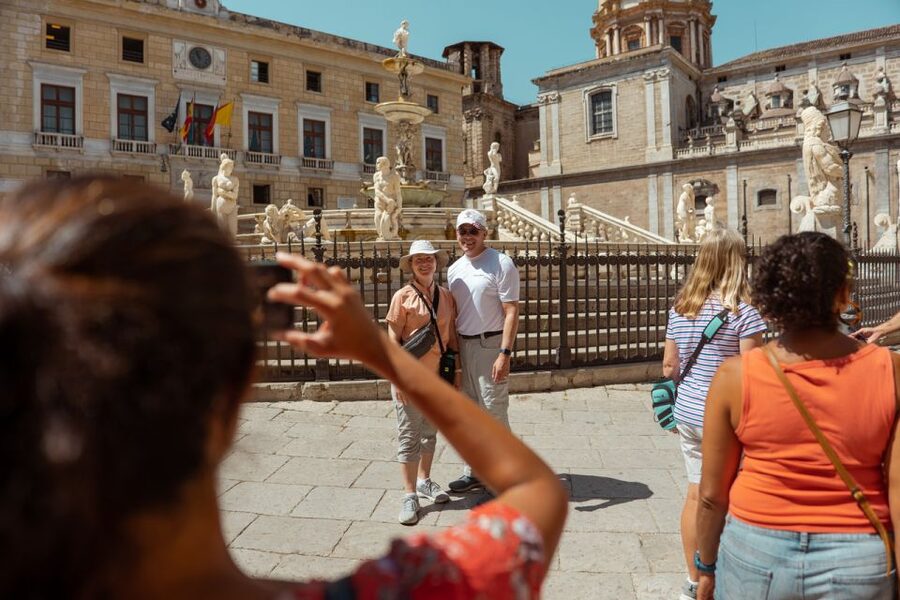
Piazza Pretoria is one of the walk’s most memorable public spaces. At its center is a large marble fountain surrounded by statues. The setting is theatrical, with Baroque curves and pale stone catching the light.
The fountain can seem almost overwhelming at first. There are figures everywhere, and a guide helps you sort out what you are looking at instead of reducing the stop to a quick photograph. This is also a good place to understand Palermo’s taste for grand public display.
The nearby Praetorian Palace, now Palermo’s Town Hall, adds a civic layer to the square. The palace has housed the city government since the 14th century. You view it from outside on the standard route, and there is no promise of meeting the mayor or entering municipal rooms. The value here is the setting and the explanation, not an interior tour.
Your guide can also connect the square to the city’s political and social changes. That broader context keeps the fountain from feeling like an isolated monument. It becomes part of Palermo’s long story of power, religion, public ceremony, and competing cultural influences.
Quattro Canti and the city’s central crossroads
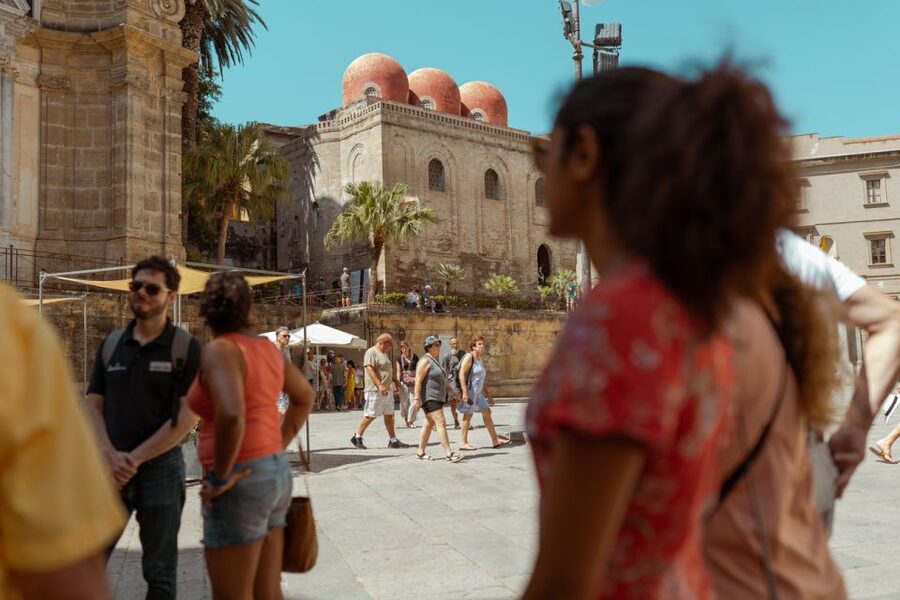
From Piazza Pretoria, the walk reaches Quattro Canti, the famous four-sided Baroque junction. Four curved façades frame the intersection, each with statues, columns, and seasonal figures.
This is a practical stop as well as a beautiful one. Quattro Canti helps you understand Palermo’s street plan and provides a clear reference point for exploring on your own later. I would pay close attention here, because you may pass through the intersection several times during your stay without noticing all its details.
The road can be busy, and the group may need to pause at the edge rather than stand in the middle of the junction. That is part of the city experience. Palermo’s major monuments are woven into traffic, shops, and daily movement, not sealed off in quiet museum grounds.
Palermo Cathedral brings the cultures together
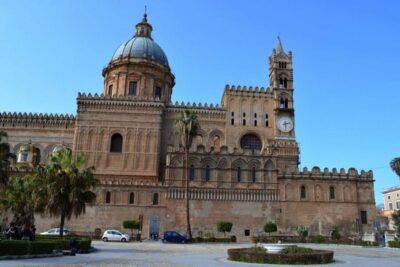
The Cathedral is the one major interior visit included in the standard tour. Its exterior already shows a remarkable mix of styles, with towers, arches, and additions shaped by different periods of Palermo’s past.
Inside, your guide explains how Muslim, Norman, and Christian influences meet in the building. The Cathedral is less about a single neat design than about layers added over time. That makes it an ideal final monument for this route, because it brings together the cultural mixture you have been seeing all morning.
Allow your eyes time to adjust. There are many details above you, and one guide’s use of a laser pointer helped the group follow complicated ceilings and high architectural features. You may not inspect every chapel or decoration in depth, but you will leave with a clearer sense of what to look for if you return independently.
The Cathedral visit also explains why the tour lasts about three hours even though the route looks compact on a map. The walking distances are not extreme, but each major stop needs time for orientation, explanation, and photographs.
The Norman Palace option adds the big interior prize
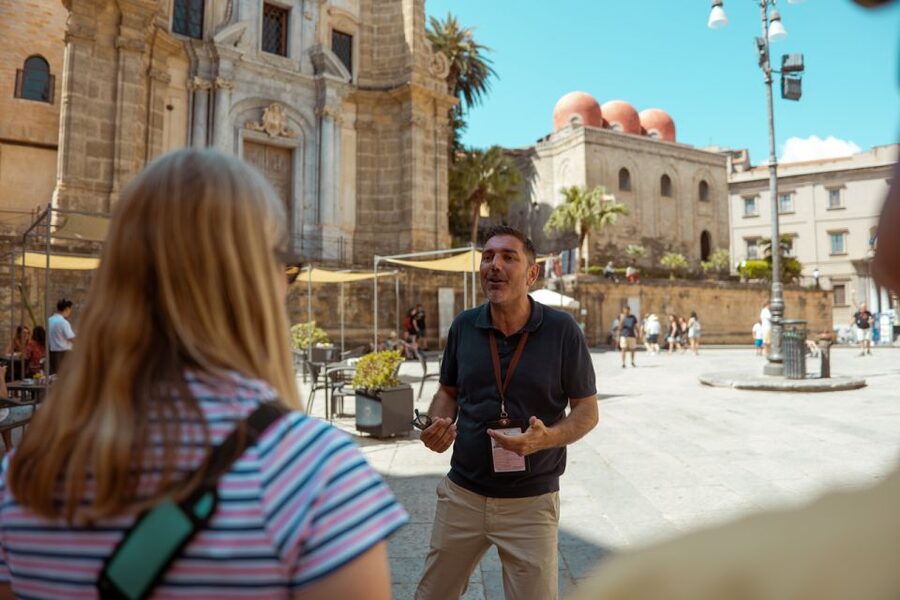
The base tour passes by the Palace of the Normans and ends near the Norman Palace or returns to the Towns of Italy hub, depending on the option selected. It does not include entry to the palace or the Palatine Chapel.
If you want to see the famous golden mosaics of the Palatine Chapel, choose the expanded version called Walking Tour plus Norman Palace and Palatine Chapel. This adds a separate guided visit and brings the total experience to as much as 5.5 hours. The two parts have different meeting points, so read the booking details carefully and allow enough time between them.
This upgrade makes sense if Palermo is a major stop on your trip and you want the city’s most famous interior art in one day. It is less suitable if you prefer a short orientation walk and independent sightseeing afterward. The standard tour gives you a foundation, while the expanded option turns the day into a fuller historic program.
What the guides add to the route
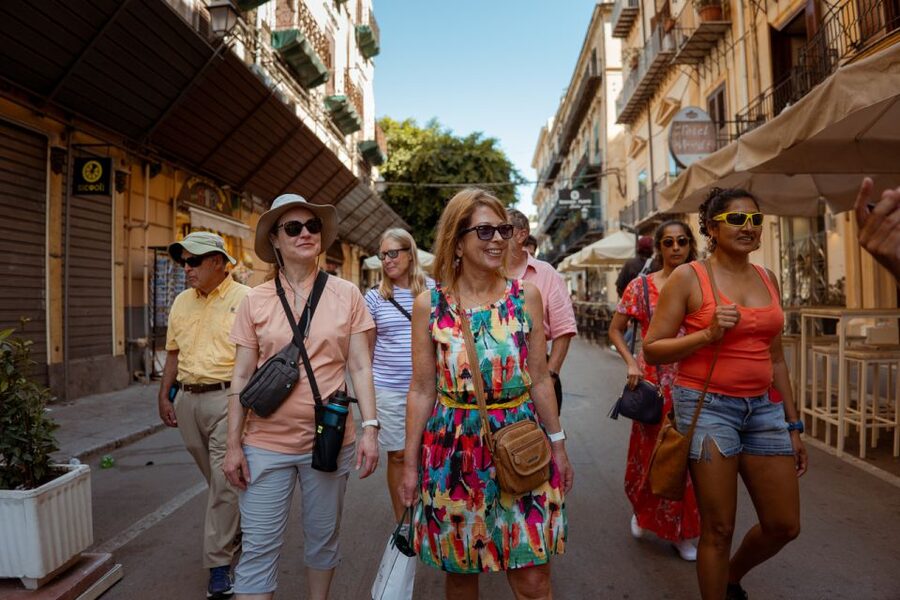
The quality of this experience depends heavily on the individual guide, and the guide roster varies. Simone has been described as lively and especially strong at linking history to music and film. Renata has been praised for local stories, clear organization, and practical advice. Stefania has kept a good pace, answered questions, and looked for shade on hot days.
Other guides, including Laura, Fabio, Enrico, Valeria, Angela, and Debbie, have brought their own style. Enrico has sometimes included a cannolo or granita at the end, while other guides have offered a different Sicilian sweet. The exact treat is not fixed, but it is a welcome finish after several hours on foot.
I would not book this expecting a scripted lecture. The strongest part of the experience is the connection between the buildings and Palermo life. Guides have explained local customs, shared childhood memories, answered questions, and suggested places to visit again. That makes the tour useful beyond the scheduled route.
At times, the amount of information may feel dense. One practical improvement would be to pause regularly for questions, especially when the guide has covered several centuries in a short time. If you are curious, ask as you go rather than waiting until the end.
Price, timing, and practical value
At $41 per person, the tour is fairly priced for a guided three-hour walk with Cathedral entry. You are paying for a licensed English or Spanish-speaking guide, a planned route, interpretation at the major stops, and a small local food touch.
The value is strongest if you are new to Palermo. You can spend the rest of your stay returning to the buildings that caught your attention, now with a better sense of where they fit. If you already know the center well, the walk may feel less necessary unless you choose the Norman Palace and Palatine Chapel option.
The duration shown at booking can range from three to 5.5 hours because of the different versions. Check the starting time, meeting point, and finish point before you reserve. There is no hotel pickup or drop-off, so you must reach the meeting point yourself.
The tour runs in all weather. Let the operator know ahead of time about mobility needs, since the staff will try to help. Pets are not permitted because of allergy and comfort concerns. Cancellation is free up to 24 hours before the tour, and you can reserve now and pay later, which is useful when your Sicily schedule is still shifting.
Who should book this Palermo walking tour?
I recommend it most strongly to first-time visitors, history fans, and anyone who wants local context before exploring alone. It also suits people who like a clear route but do not want to spend an entire day inside museums.
Families and older participants can manage the pace if they are comfortable walking for about three hours, especially since guides have allowed breaks and adjusted for tired walkers. On hot days, book an early or cooler time if available, carry water, and use the shade breaks wisely.
I would choose the expanded version if the Norman Palace and Palatine Chapel are high on your list. I would choose the standard walk if you want a lively introduction, Cathedral access, and time afterward for a market lunch or independent sightseeing.
Should you book it?
Yes, if you want Palermo explained rather than simply photographed. The route covers the city’s essential center, the guides bring useful local character, and the included Cathedral visit makes the $41 cost reasonable.
Book with realistic expectations. You will see most monuments from outside, and Martorana Church and the Norman Palace are not guaranteed interior visits on the basic option. For a first morning in Palermo, though, this is a smart way to get oriented, learn which buildings deserve a return visit, and finish with a Sicilian sweet.
FAQ
How long does the Palermo UNESCO walking tour last?
The standard walking tour lasts about three hours. The version that adds the Norman Palace and Palatine Chapel can last up to 5.5 hours.
What languages are available?
The live guide is available in English or Spanish. An optional English audio guide is also listed.
Is entry to Palermo Cathedral included?
Yes. The tour includes entrance to the Cathedral and a guided visit inside.
Does the standard tour include the Norman Palace and Palatine Chapel?
No. The standard tour passes by the Palace of the Normans. Entry to the Norman Palace and Palatine Chapel requires the optional expanded tour.
What other sights are included on the route?
The route includes Teatro Massimo, the Church of Saint Dominic, Vucciria Market, Martorana Church, Piazza Pretoria, Quattro Canti, Palermo Cathedral, and an exterior view of the Palace of the Normans.
Is food included?
A Sicilian sweet is included during the walking adventure. Depending on the guide and timing, this may be a cannolo, granita, or another local delicacy.
Does the tour include hotel pickup?
No. Hotel pickup and drop-off are not included. The meeting point depends on the option you book.
What happens if it rains or I have mobility needs?
The tour runs rain or shine. You should inform the operator in advance about any special need or impaired mobility, and the staff will try to accommodate you.
Just added around Italy
- Guided Cultural Tour of the Godfather Film in Messina★ 5.0 · 31 reviews
- Guided tour of the Riace Bronzes and the Archaeological Museum of Reggio Calabria★ 5.0 · 44 reviews
- SU NURAXI BARUMINI Unesco World Heritage Site★ 5.0 · 129 reviews
- Brescia the Unexpected: History, Local Stories & a drink★ 5.0 · 31 reviews
- Bolognese Cooking Class with Margherita in the Historic Center★ 5.0 · 26 reviews
- Tower and Power, Virtual tour in Medieval Bologna★ 4.5 · 54 reviews
- Bologna historical art walking tour with hidden gems and tastings★ 5.0 · 108 reviews
- Best of Bologna in one day : Food, architecture, art and history★ 5.0 · 27 reviews
Palermo History Tours, compared.
Palermo: Street Food and History Walking Tour
Read our review →
Palermo: Walking Tour of Historic Markets and Monuments
Read our review →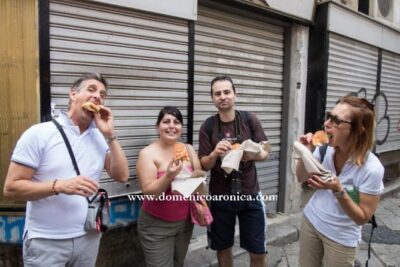
Walking Tour and street food Tour Palermo / History and Food
Read our review →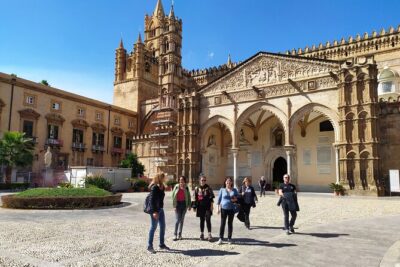
Discover Palermo in 3 hours. Art, history, markets and street food
Read our review →
Palermo : Historic Markets & monuments Walking Tour
Read our review →
Palermo: Historic Center Guided Bike Tour with Food Tasting
Read our review →
From Palermo: Segesta Archaeological Park Transfer
Read our review →Browse the lists this tour appears in