
Review · FRANCE
Private Tour of the WW1 Somme Battlefields from ARRAS
The most affecting part of this day is the mix of preserved battlefield ground and carefully designed memorials. You move from original trenches at Beaumont-Hamel to the vast Thiepval Memorial, then into a tunnel museum and an immersive Australian centre. The result is not just a string of monuments, but a clearer sense of how the Somme is remembered.
I like the private format, especially because guide Sylvestre can adjust the pace and answer questions as they arise. I also like the efficient route: eight important sites in one day, with transport and museum fees included. The drawback is the packed schedule. Eight hours gives you a strong overview, but some stops are brief, and anyone wanting long cemetery visits or detailed family research may need a more focused tour.
Key points to know before booking
- Original trenches at Beaumont-Hamel: See preserved sections of the 1916 battlefield rather than only reading about it in a museum.
- Eight varied stops: The route combines memorials, a crater, a German cemetery, an underground museum, and Australian sites.
- Private touring with Sylvestre: Your group travels alone, with room to shape the day around your interests.
- Admission is covered: The Somme 1916 Museum fee, private transport, and guide are included in the $337.34 per-person price.
- A full day from Arras: The tour begins at 9:00 a.m. in Place du Maréchal Foch and returns there after about eight hours.
- Good for general understanding: It suits you best if you want the main story of the Somme in one well-organized day.
Why the Somme needs a full day
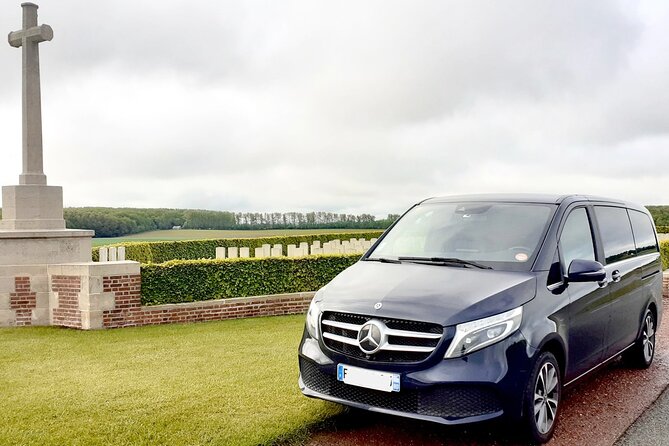
The Somme battlefields are spread across a broad area, so this is not a walking tour from one central monument to the next. The private minibus matters. It lets you cover sites around Beaumont-Hamel, Thiepval, Albert, Proyart, and Villers-Bretonneux without spending your best hours working out local transport.
The schedule also gives the day a useful rhythm. You spend time outdoors at preserved battlefield sites, pause at large memorials, then go inside museums where displays can explain what the ground alone cannot. That change of setting helps keep a difficult subject understandable.
You begin at 9:00 a.m. from Place du Maréchal Foch in Arras. The activity ends back at the same meeting point, and the total duration is about eight hours. Lunch and snacks are not included, so plan ahead for food during the day. The supplied details do not specify a lunch stop, so you should ask the operator about the day’s meal arrangements before setting out.
More Private History Tours in France
- Private D-Day Experience from Bayeux
★ 5.0 · 573 reviews - Private guided American D-Day Tour from Bayeux
★ 5.0 · 255 reviews - Normandy Battlefields D-Day Private Trip with VIP Services from Paris
★ 5.0 · 240 reviews
Beaumont-Hamel: trenches that still shape the ground
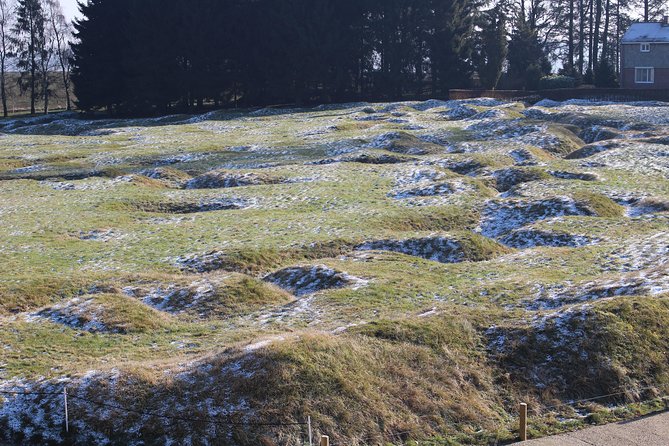
The Memorial Terre-neuvien de Beaumont-Hamel is one of the most important stops because the battlefield itself remains visible. You have about an hour here, with preserved trenches from the 1916 Somme battle.
This is the kind of place where a guide adds real value. A map or photograph can show an attack line, but original trench lines make the distances and positions easier to grasp. You can look across the same ground while Sylvestre explains what happened there, rather than trying to piece the site together alone.
The one-hour visit is a sensible length. It gives you time to walk, listen, and look closely without turning the first stop into a rushed photo stop. Wear practical shoes, since this is an outdoor battlefield visit rather than a paved memorial plaza.
Thiepval Memorial and the scale of loss
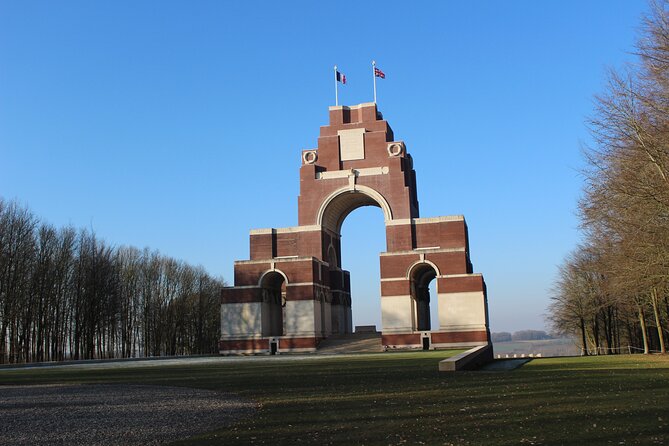
The Thiepval Memorial to the Missing of the Somme receives about 30 minutes. It is a shorter stop, but the memorial’s scale gives it weight. This is where the tour shifts from the physical remains of the battlefield to remembrance on a much larger scale.
Half an hour should work well if you want an introduction and time to view the monument. It may feel brief if you are searching for a particular name or prefer to study every inscription. If you have a family connection to someone commemorated here, tell Sylvestre at the start. The private format makes that kind of request more realistic than it would be on a large shared coach.
Lochnagar Crater: a dramatic mark from July 1, 1916
At Lochnagar Crater, you see the huge crater made when an underground mine was detonated on July 1, 1916. The visit lasts around 30 minutes.
This is a powerful stop because the feature is hard to mistake for an ordinary memorial. The crater gives you a direct sense of the force used in the opening of the Somme battle. It also breaks up the day with a site that is visually different from a cemetery or monument.
The timing is again brief but useful. You will get the main explanation and time to look around, but the tour is not designed for a long, unhurried walk around the wider area. If your main interest is military engineering or the details of mine warfare, mention that to your guide.
More Battlefield and Military History Tours in France:
- Normandy Battlefields Tour – American Sites (A3)
★ 5.0 · 876 reviews - Full-Day Canadian Battlefields & sites Normandy Tour from Bayeux
★ 5.0 · 191 reviews - Private Day Tour including Normandy Landing Beaches & Battlefields from Bayeux
★ 5.0 · 172 reviews - Normandy Battlefields Half Day Tour – Canadian World War II Sites
★ 4.5 · 134 reviews
The Australian Division Memorial and Gibraltar bunker
The First Australian Division Memorial takes about 20 minutes and includes the site of the Gibraltar bunker. This is the shortest scheduled stop, so expect a focused explanation rather than a long visit.
That short pause works because the tour later gives Australian history more attention at Villers-Bretonneux. Here, the bunker adds a physical detail to the memorial story. You are not only viewing a monument, but also connecting it with a wartime position.
A private tour helps at a stop like this. If you need more context, you can ask immediately. On a fixed group excursion, a 20-minute stop might feel too rigid. Here, the schedule has at least some room to respond to your interests, although adding time in one place could reduce time elsewhere.
Albert’s underground Somme 1916 Museum
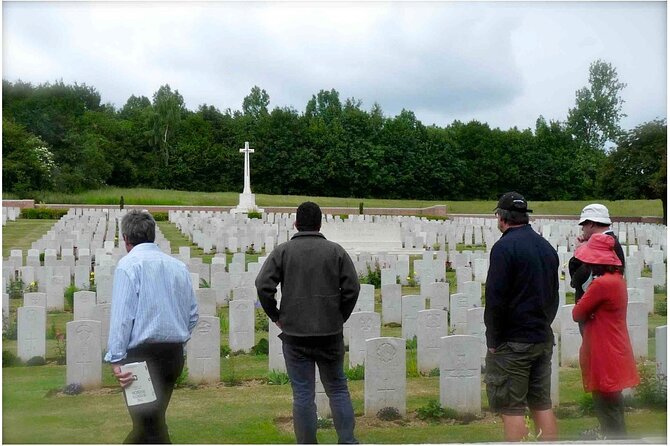
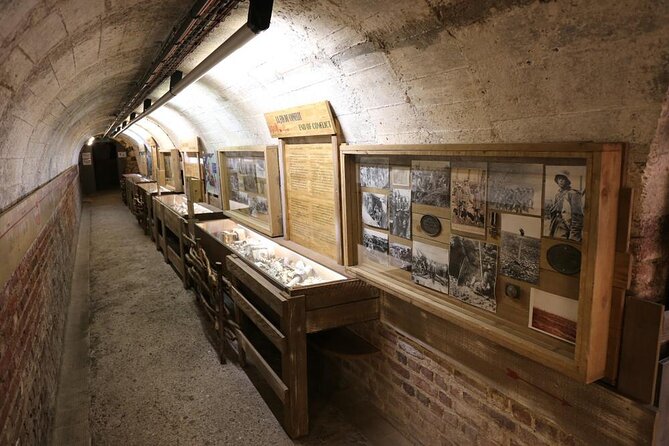
The Somme 1916 Museum in Albert is the longest indoor stop, at about 90 minutes. It sits in an original tunnel beneath the town and uses displays of battle scenes to explain the Somme.
I like this placement in the route. After several outdoor memorials and battlefield sites, the museum gives you a chance to gather the story in one place. The tunnel setting also makes the visit feel tied to the wartime environment, rather than like a detached modern exhibition.
Admission is included, which improves the value of the tour. You do not have to manage a separate ticket while moving between stops, and the 90-minute visit gives enough time to take in the displays without racing through them.
The museum may be the most helpful stop if you are new to the Somme. It can provide the basic framework that makes the later Australian memorials and German cemetery easier to understand. If you already know the subject well, Sylvestre’s explanations and the private format may be more valuable than the displays themselves.
Proyart German cemetery and a broader view of the war
The tour then visits the German cemetery at Proyart, where about 4,600 German soldiers are buried. The stop lasts around 30 minutes.
This is an important inclusion. Somme tours can easily focus only on British, Commonwealth, or Australian remembrance. A German cemetery gives you a wider view of the conflict and reminds you that the battle affected soldiers on both sides.
Thirty minutes is enough for a quiet visit and a short explanation, but not for extended research into individual graves. If you are looking for a particular person, provide the name in advance if possible. The tour information makes clear that Sylvestre can help with grave searches, but the overall day is still built around a general tour of the battlefield.
Sir John Monash Centre: a modern Australian perspective
The Sir John Monash Centre offers a 45-minute visit and includes an immersive room. This is one of the more modern parts of the day, following the older battlefield sites and memorial structures.
The centre gives the Australian part of the Somme story a dedicated space. That matters because the day does not treat the Australian sites as quick add-ons. You visit the First Australian Division Memorial, then later spend time at the centre before reaching the Australian National Memorial.
The 45-minute slot should be enough to see the main presentation, though it will not allow unlimited time for every display. If you prefer traditional monuments to modern presentation methods, this may feel different from the earlier stops. For many people, though, the change in format helps bring dates and names into a clearer sequence.
Villers-Bretonneux and the Australian National Memorial
The final listed stop is the Australian National Memorial at Villers-Bretonneux. You have about 30 minutes here. The memorial commemorates 11,000 Australians missing in France during the First World War.
This is a fitting late stop because it gathers several themes from the day: national remembrance, missing soldiers, and the Australian role in the Somme. By this point, you have already seen trenches, a crater, a bunker site, a museum, and a German cemetery. The memorial has more meaning because you have encountered the places and events behind the names.
Again, half an hour is enough for a clear visit but may not satisfy you if you want a slow, detailed study. The route favors breadth. You see the key places in one day, rather than spending most of the day at one memorial complex.
Sylvestre’s role and the value of a private guide
The guide is central to the quality of this experience. Sylvestre is described as an English-speaking WWI specialist who explains the sites, answers questions, and adjusts the day to the group. The feedback also points to his ability to tailor the route, including help for people searching for a specific grave.
That flexibility is the main reason to choose a private tour instead of simply hiring a car and following a map. You can ask why one site matters, compare the different memorial traditions, or spend a little longer at a place that catches your attention. You are not limited to a guidebook paragraph and a fixed audio track.
The tour is offered in English. It is a private activity, so only your group takes part. That makes the day more personal, but it also means the cost is higher than a large group outing. You are paying for the vehicle, the guide’s time, the route planning, and the ability to shape the experience.
Is $337.34 per person fair value?
At $337.34 per person, this is not a low-cost battlefield outing. The price makes the most sense for a small group that wants a private vehicle and a specialist guide rather than an independent day using public transport or a rental car.
Admission to all the listed sites and the museum is included, along with private transportation and the guide. That removes several small costs and, more importantly, saves you from planning a route across scattered sites. A private minibus also makes the day more practical for people who do not want to drive between memorials.
The value is strongest if you have limited time in northern France. The tour packs eight sites into about eight hours and returns you to Arras. It is also a good choice if you want interpretation rather than just directions.
The value is weaker if you want to linger at one cemetery, eat a leisurely lunch, or conduct detailed family research. The schedule is broad and efficient. It is not a slow, single-site study day.
Who should book this Somme tour?
I would choose this experience if you are staying in Arras and want a clear first look at the Somme battlefield area. It suits couples, families, and small groups with different levels of knowledge because the private guide can explain the basics while still answering more specific questions.
It is especially useful for anyone who has had the Somme on a personal list for years but has not known how to organize the visit. The route includes the major memorial experience, outdoor battlefield remains, museum interpretation, and both Commonwealth and German remembrance.
You should think twice if your priority is a long visit to one grave, a specialist military topic, or a relaxed day with plenty of unscheduled time. The operator may adapt the day, but eight stops naturally require firm time control.
Booking is available with free cancellation up to 24 hours before the 9:00 a.m. start for a full refund. Changes or cancellations made within 24 hours are not accepted for a refund, and poor weather can lead to a new date or full refund. Service animals are allowed, the tour is near public transport, and most people can participate, but the outdoor battlefield portions make sensible footwear and weather planning worthwhile.
Should you book it?
Book this tour if you want the widest useful overview in one day and value a private English-speaking guide. Sylvestre’s ability to tailor explanations, the included admissions, and the mix of preserved ground and memorials make the high price easier to justify for a small group.
Skip it if you want to set your own slow pace or spend most of the day at one family grave. For a first visit to the Somme from Arras, though, this is a strong, well-focused choice that gives you both the facts and the places that make them real.
FAQ
Where does the Somme battlefields tour start?
The tour starts at Place du Maréchal Foch, 62000 Arras, France.
What time does the tour begin?
The start time is 9:00 a.m.
How long does the tour last?
The experience lasts approximately eight hours.
Where does the tour finish?
The activity ends back at the meeting point in Arras.
Is this a private tour?
Yes. Only your group participates in the activity.
Is the tour offered in English?
Yes. The tour is offered in English and includes a private WWI guide.
Are museum and site admissions included?
Yes. Access to the listed sites and museum fees are included in the price.
Is lunch included?
No. Lunch and snacks are not included.
Can I cancel for a full refund?
Yes, if you cancel at least 24 hours before the experience starts. Cancellations made less than 24 hours in advance are not refunded. If poor weather causes the operator to cancel, you will be offered another date or a full refund.
Just added around France
- Medieval Carcassonne: Interactive Ghost Story & City Game★ 3.5 · 33 reviews
- Carcassonne During World War 2★ 5.0 · 127 reviews
- Carcassonne ‘s Medieval Walls: A Self-Guided Tour★ 4.5 · 43 reviews
- Small Group Guided D-Day Tour and Mémorial de Caen Museum★ 5.0 · 237 reviews
- Normandy: Private tour D-Day landing beaches American sector★ 5.0 · 62 reviews
- Mémorial de Caen Museum Admission and Guided Tour of D-Day Sites★ 4.5 · 275 reviews
- Private Day Tour including Normandy Landing Beaches & Battlefields from Caen★ 5.0 · 53 reviews
- Private Bordeaux History Tour with a glass of Bordeaux wine.★ 5.0 · 28 reviews
France History Tours, compared.

Normandy D-Day Sites & Cemetery Day Trip from Paris with Lunch
Read our review →
Paris: Louvre Museum Entry with History of Mona Lisa
Read our review →
Normandy D-Day Small-Group Day Trip with Omaha Beach, Cemetery & Cider Tasting
Read our review →
Normandy D-Day Beaches and American Cemetery Day Trip from Paris
Read our review →
Normandy American D-Day Beaches Full Day Tour from Bayeux
Read our review →
Normandy American D-Day Experience – Group tour from Bayeux
Read our review →
Normandy Beaches Half-Day Afternoon Trip from Bayeux (A2)
Read our review →
Omaha Beach D-Day Experience – Afternoon group tour from Bayeux
Read our review →Browse the lists this tour appears in