
Review · HISTORY TOURS
Riga: Jewish History and Heritage Tour
Riga’s Jewish story comes into focus through places that still exist: Peitav Shul, old wooden homes in Maskavas Forstadt, the former Great Choral Synagogue site, and memorials in forests outside the city. The tour also connects Jewish life with Riga’s famous architecture, from Mikhail Eisenstein’s Art Nouveau buildings to the home of philosopher Isaiah Berlin.
I like the small maximum of four people and the flexibility of a guide with a car. I also like the personal thread running through the route, from saved Torah scrolls to the lives of Isaiah Berlin, Mikhail Tal, and Philippe Halsman. The main consideration is that this is a serious history tour, and some stops recall mass murder and persecution. Synagogue and museum access also depends on Jewish holidays and Shabbat.
Key points to know before booking
- Peitav Shul is Riga’s only synagogue to survive the Nazi period and remain in use.
- Maskavas Forstadt reveals Riga’s former Jewish quarter through wooden houses, a Jewish school, and Bikur Holim hospital.
- The Great Choral Synagogue site and Rumbula Memorial bring the Holocaust story into clear focus.
- Mikhail Eisenstein’s Art Nouveau buildings add an architectural layer beyond the Jewish heritage sites.
- A maximum of four participants makes it easier to ask questions and adjust the route.
- Armands leads the tour in English or Russian, with pickup anywhere in Riga.
Why this Riga Jewish heritage tour matters
I would choose this tour for the way it joins everyday life to major historical events. Riga is often praised for its medieval center and Art Nouveau streets, but Jewish history is woven through both the city center and the older eastern district of Maskavas Forstadt.
The route is not only about buildings. It is also about people who shaped European culture. You hear about philosopher Isaiah Berlin, born in Riga in 1909, philosopher Yeshayahu Leibovich, film director Sergej Eizenstein, chess champion Mikhail Tal, and photographer Philippe Halsman.
That range gives the tour useful scale. You are not looking only at a vanished community, and you are not only hearing about persecution. You learn about religious life, schools, hospitals, architecture, scholarship, art, and the destruction caused by the Nazi occupation.
The subject matter is demanding. Memorials to mass murder require quiet attention, and the itinerary includes places where many people were killed. If you want a light architectural walk, this is not the right choice. If you want a clear introduction to Riga’s Jewish past with transport between widely separated sites, it has strong value.
More Jewish Heritage Tours in the world:
- Budapest Jewish Heritage Memorial Walking Tour & Synagogue Entry
★ 5.0 · 568 reviews - Budapest: Jewish Heritage Guided Tour with Synagogue Ticket
★ 4.8 · 533 reviews - 3-Hour Porto Jewish Heritage Walking Tour with Local Guide
★ 4.5 · 396 reviews
Starting in Riga’s Old Town at Peitav Shul
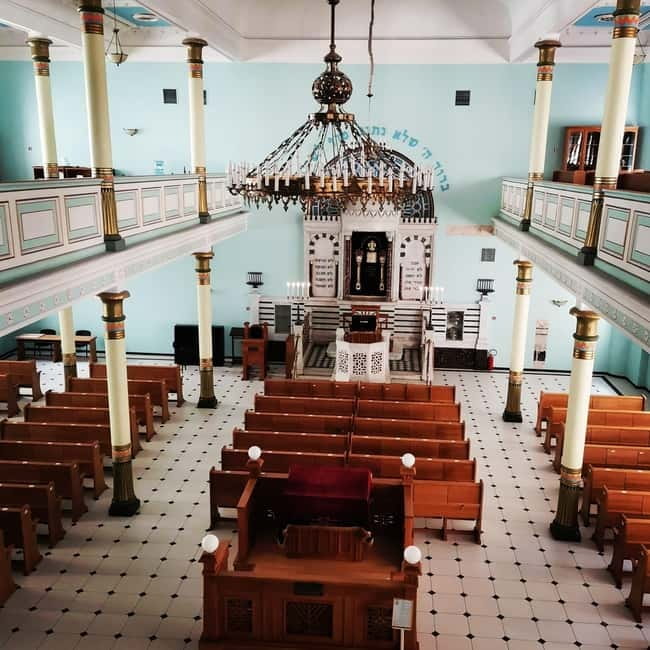
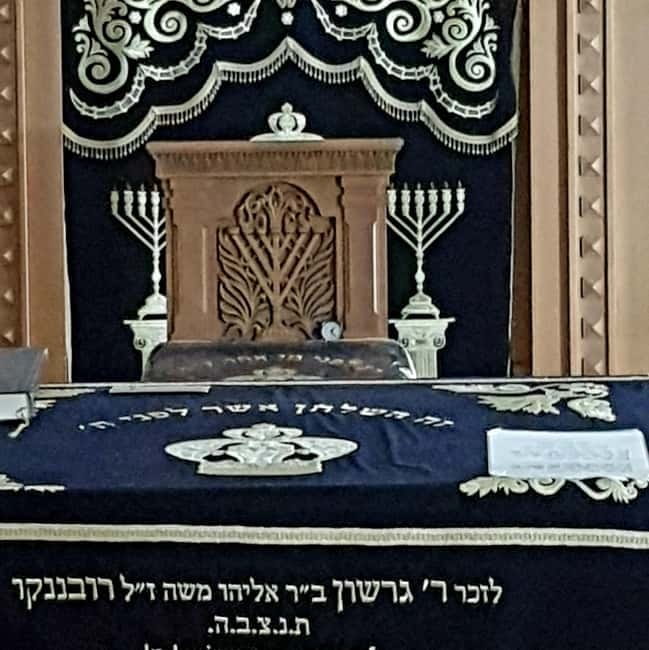
The tour can include a visit to Riga Synagogue, also known as Peitav Shul, during an Old Town walk. This is the only synagogue in Riga that survived the Nazi period and remains in use. That fact alone gives the building unusual importance.
Inside, the guide can explain how Torah scrolls were saved. This small detail helps turn a broad historical subject into a human story. It also shows that preservation was not automatic. People had to make difficult choices, protect religious objects, and try to carry Jewish tradition through a period of terrible danger.
The synagogue is an active place of worship, not simply a historic display. You should plan around its schedule. It is closed on Shabbat and other Jewish religious holidays, so access cannot be assumed on every date.
The Old Town setting also gives you a useful starting point. Riga’s center includes medieval houses, Gothic gabled roofs, Renaissance guild buildings, and Baroque homes. The synagogue visit adds a Jewish religious site to the familiar sightseeing picture.
Maskavas Forstadt and the wooden Jewish quarter
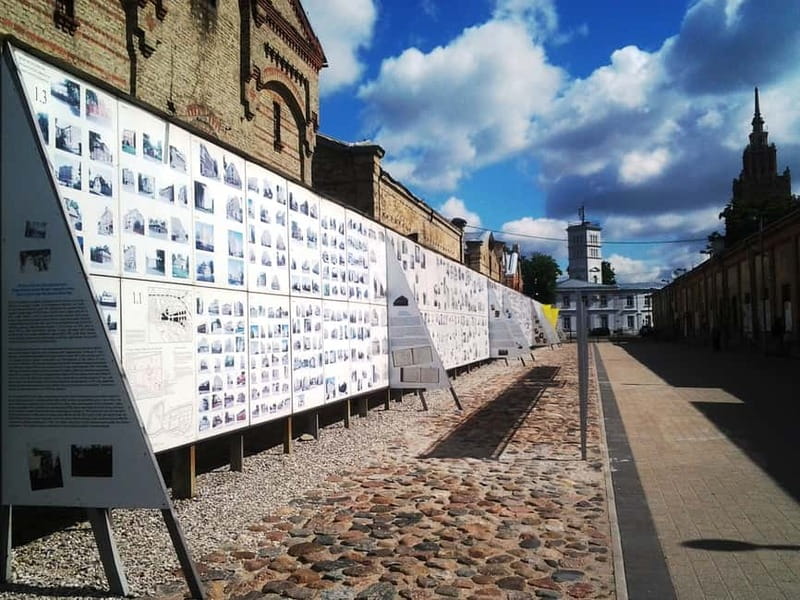
From the polished center, the route moves toward Maskavas Forstadt, the district historically linked with Riga’s Jewish community. In the 19th century, it became the main area of Jewish settlement. Before the Nazi years, it was not a ghetto.
That distinction matters. It helps you see the district as a living neighborhood, not as a place defined only by the later violence. Its wooden housing gives the area a very different feel from Riga’s stone medieval center and ornate Art Nouveau streets.
I like this part because it brings social history down to street level. You can look at the type of housing and imagine a working district where people lived, studied, worshipped, and sought medical care. The tour also points out the first Jewish secular school, now operating as a private Jewish school, and the historic Bikur Holim Jewish hospital, which is still in use.
These details are especially useful if you want more than a list of memorials. They show the institutions that helped a community function. A school and a hospital tell you more about daily life than a monument alone.
The wooden buildings may not look dramatic in the same way as Riga’s Art Nouveau facades. Their value comes from what they preserve: the shape of an older neighborhood and a sense of how the city changed over time. Some people may find this stop less visually polished than the Old Town, but that is part of its importance.
Mikhail Eisenstein and Riga’s Jewish Art Nouveau connection
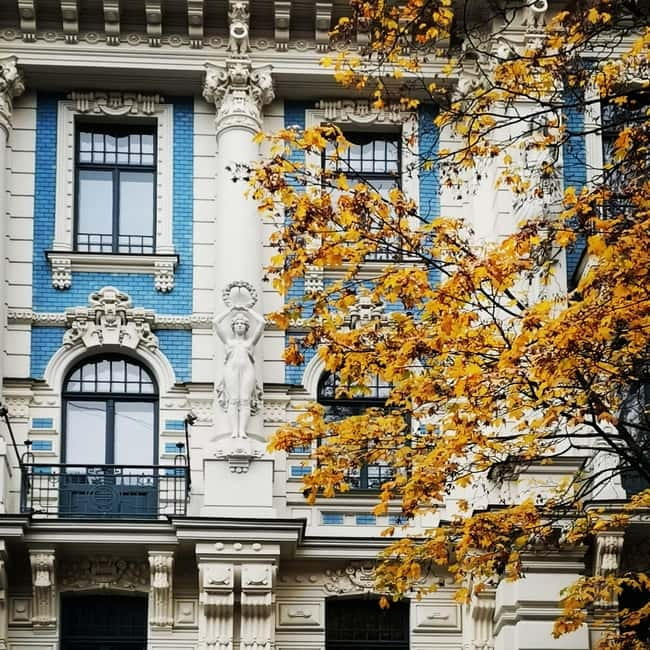
Riga is famous for Art Nouveau, and this tour links that architectural story to Mikhail Eisenstein, a Jewish architect whose work helped shape the city. His buildings can compete with the Art Nouveau architecture found in Prague, Vienna, and Barcelona.
This is a welcome change of pace within a difficult historical subject. You move from wooden homes and memorial sites to elaborate urban facades. The contrast shows that Jewish life in Riga was not confined to one district or one style of building.
Look closely at the decorative architecture as the guide explains its place in Riga’s development. Eisenstein’s work gives you another way to understand the city, especially if architecture is one of your main reasons for visiting Riga.
The tour also mentions Sergej Eizenstein, the film director, whose name is connected to the same broad cultural world. You will not get a full biography of every notable person in one afternoon, but these references show how many fields Riga’s Jewish residents influenced.
More History Tours in the world:
- Prague: Medieval Dinner with Unlimited Drinks
★ 4.4 · 19,847 reviews - Pompeii: Entry Ticket and Guided Tour with an Archaeologist
★ 4.8 · 19,459 reviews - History and Hauntings of Salem Guided Walking Tour
★ 5.0 · 14,564 reviews - Athens: Acropolis & up to 5 Archaeological Sites Combo Pass
★ 4.2 · 13,904 reviews
Isaiah Berlin’s Riga connection
One particularly personal stop is the house where philosopher Sir Isaiah Berlin lived. Berlin was born in Riga in 1909 and later became one of the most important political philosophers of the 20th century.
A former home can be easy to miss if you pass it alone. It may not have the visual impact of a synagogue or memorial, but it gives the city a direct human connection to a major intellectual figure. The guide can place Berlin’s early life within Riga’s Jewish setting rather than treating him as a name detached from the city.
This is one of the tour’s better details for people interested in ideas, literature, or European history. It also helps balance the itinerary. You see evidence of Jewish achievement and public life alongside places connected with loss.
The Great Choral Synagogue memorial
The former Great Choral Synagogue, also called Die Greise Hor Shul or Gogol Shul, is now a memorial site. The building itself is gone, and the location now carries the memory of what happened there.
This stop is not about admiring a surviving interior. It is about understanding absence. A memorial at the former site can make the destruction of Jewish institutions more concrete than a general account in a museum.
The site also recalls people who helped save Jewish lives. That matters because the history is not only a record of cruelty. It includes courage and individual acts of protection, even though those efforts took place in an overwhelmingly violent period.
Expect the mood to change here. The tour moves away from cultural landmarks and toward the Nazi destruction of Riga’s Jewish population. A good guide is important at this point, and Armands is the named guide associated with this experience. The small group size should make it easier to pause and ask about details without turning the stop into a crowded lecture.
Rumbula and the forest memorials
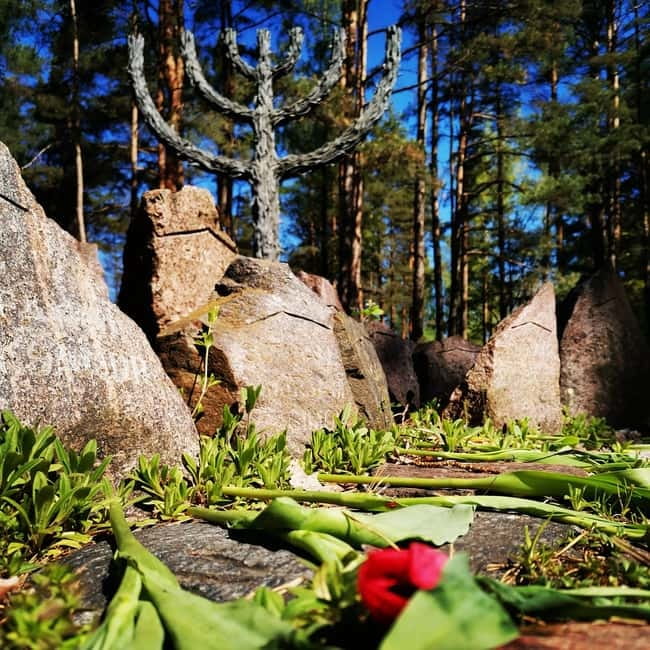
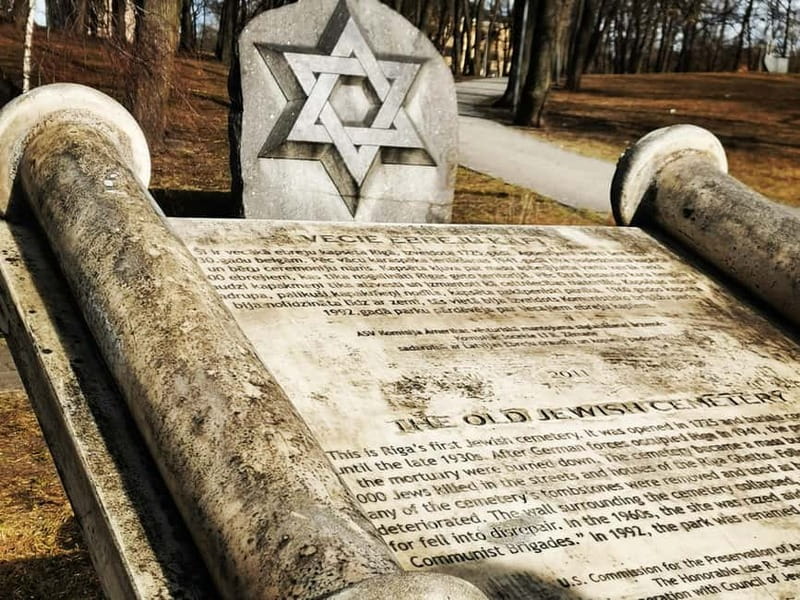
Rumbula is one of the tour’s most serious stops. The forest was used for mass killings during the Holocaust, and the site is now a memorial and place for contemplation. The route also refers to Biķernieki Forest, another place connected with mass murder and remembrance.
These locations are outside the compact Old Town sightseeing zone, which is why having a car is useful. You are not trying to fit distant memorials into a walking route. The guide can connect the city’s Jewish quarter and synagogue history with the places where the community was destroyed.
You should allow emotional space for these stops. They are not quick photo opportunities, and the value comes from understanding what the memorials represent. If you have limited time in Riga, this part of the tour may be the reason to book it, since reaching these sites independently can take more planning.
The forest setting can feel quiet and removed from the city. That quiet is part of the experience, but it can also make the visit feel stark. Dress for Riga’s weather, since the tour includes outdoor stops and no special equipment is provided.
Riga Ghetto Museum and the surviving neighborhood
The Riga Ghetto Museum sits on the edge of the former ghetto area. It is described as one of the rare places in Europe where the surrounding area has seen little architectural change. Small wooden houses where people lived still remain there.
That physical continuity gives the museum a strong setting. You are not looking at a display in an entirely new building with no connection to its surroundings. The nearby houses help you understand the scale of the former neighborhood.
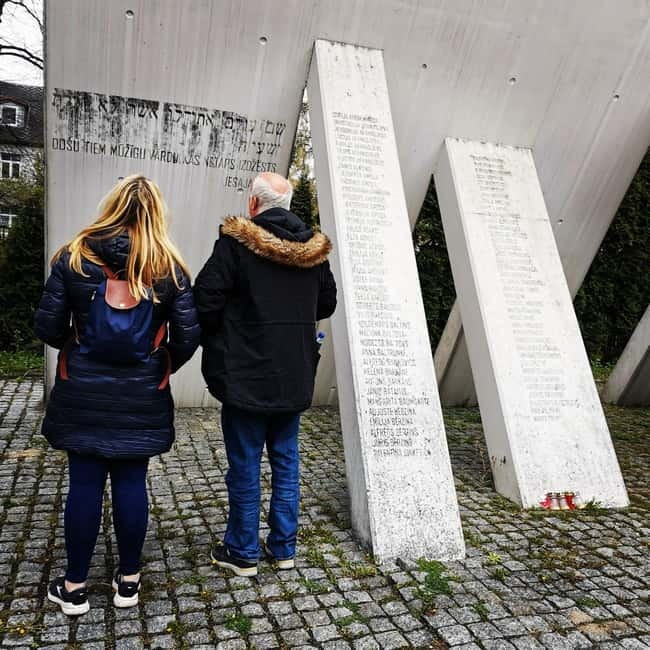
The museum’s walls carry the names of more than 70,000 Holocaust victims. Names make the subject personal and specific. Instead of treating the Holocaust as an abstract number, the memorial gives you a long record of individual lives.
The museum is closed on Shabbat and other Jewish religious holidays, just like the synagogue. If either site is central to your plans, check the day carefully before booking. The tour can be adjusted according to your wishes, but closures still limit what can be visited.
A private-feeling route with a car
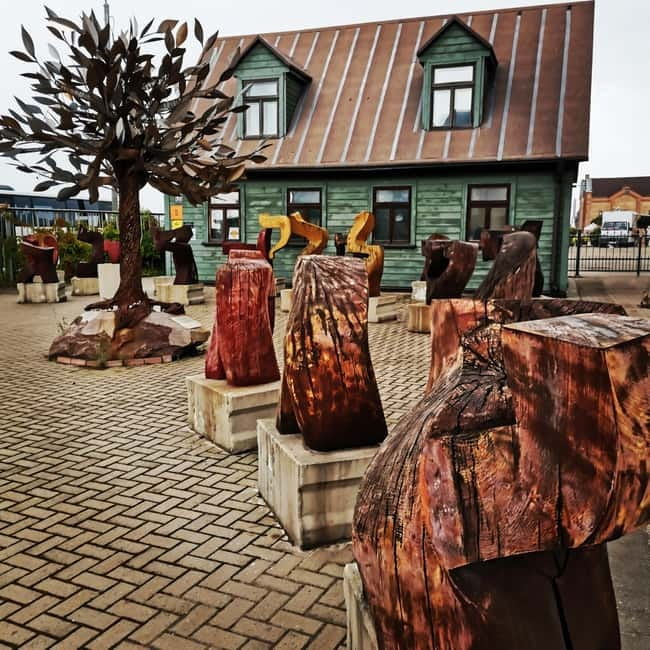
The tour lasts about three and a half hours and includes a guide with a car. Pickup is available from any place in Riga, which is useful if your hotel or accommodation is outside the Old Town.
The group is limited to four participants. That is a meaningful advantage on a subject that often raises detailed questions. You are less likely to feel lost in a large group, and the route can be shaped around your interests to some extent.
Traffic can affect the duration. Riga’s streets are not always quick to cross, and the itinerary covers several districts and memorial sites. Treat the three and a half hours as an estimate rather than a minute-by-minute promise.
Armands leads in English or Russian. Two recent bookings specifically praised his clear, engaging approach, and one person who had already visited Riga returned for another tour with him. I would place real weight on the guide here because the value depends on context, not just transport.
What the $82 price gets you
At $82 per person, the price is easier to justify when the group is full or close to full. You are paying for a three and a half hour guided route, car transport, pickup anywhere in Riga, and access to a subject that is difficult to organize efficiently on your own.
The value is strongest if you want to reach Rumbula, Biķernieki Forest, Maskavas Forstadt, the synagogue, the ghetto area, and the central architectural sites in one outing. A standard Old Town walk would not cover this range.
Meals are not included, though the short duration makes that simple to manage before or after the tour. There is no special clothing requirement beyond dressing for local weather.
Free cancellation up to 24 hours before the start and the option to reserve now and pay later reduce the risk of booking early. Still, check synagogue and museum opening days before committing, since a closure could change the balance of the itinerary.
Who should book this experience
I would recommend it to you if you want Jewish history placed within Riga’s wider story. It suits people interested in architecture, family history, religious heritage, Holocaust remembrance, and the lives of major cultural figures.
It is also a good choice if you have only a short stay in Riga and want a broad route without arranging several separate visits. The car matters most for the forest memorials and distant districts.
I would be more cautious if you prefer a casual sightseeing outing or find Holocaust memorial sites too upsetting. The itinerary includes difficult material, and the emotional weight is not something to brush aside.
The route is also a good match for repeat visitors. The second-time visitor who returned for Armands’ tour points to an important benefit: this experience can show you a side of Riga that a first pass through the medieval center will miss.
Should you book the Riga Jewish History and Heritage Tour?
Book it if you want a focused, human account of Riga’s Jewish past, especially if Peitav Shul, Maskavas Forstadt, the Great Choral Synagogue memorial, and Rumbula all interest you. The four-person limit, car pickup, and flexibility add real value at $82.
Before booking, check the calendar for Shabbat and Jewish holidays, then decide how much time you want to give the memorial sites. If the dates work and you are ready for a serious afternoon, this tour offers a thoughtful connection between Riga’s surviving Jewish institutions, its cultural achievements, and the places marked by loss.
FAQ
How long does the Riga Jewish History and Heritage Tour last?
The tour lasts about three and a half hours. Traffic on Riga’s streets can affect the exact duration.
What language is the tour offered in?
The live guide speaks English or Russian.
How many people can join the tour?
The group is limited to four participants.
Is pickup included?
Yes. Pickup is included from any place in Riga.
Can I visit the Riga Synagogue on every tour date?
No. Peitav Shul is closed on Shabbat and other Jewish religious holidays, so synagogue access depends on the date.
Is the Riga Ghetto Museum always open?
No. The Riga Ghetto Museum is also closed on Shabbat and other Jewish religious holidays.
Are meals included in the price?
No. Meals are not included.
What is the cancellation policy?
You can cancel up to 24 hours in advance for a full refund. You can also reserve now and pay later.
Just added around the world
- 6-Day Cultural Tour to Machu Picchu★ 5.0 · 76 reviews
- Scenic Train ride to historical cities of Morretes and Antonina★ 4.0 · 188 reviews
- Jewish Heritage of Curacao★ 4.5 · 68 reviews
- The Curacao’s Colorful History Walking Tour★ 5.0 · 55 reviews
- Discover Scuba Diving Amathounta’s Ancient Port★ 5.0 · 30 reviews
- Olous – Guided Snorkelling Excursion to Discover Olous Sunken Ancient City★ 4.5 · 31 reviews
- Night Walking Tour of Medieval Cuenca★ 5.0 · 64 reviews
- WWII – The Battle of Crete Day Tour★ 5.0 · 103 reviews