
Review · RIO DE JANEIRO
Rio de Janeiro: Little Africa Heritage Walking Tour
Rio’s Little Africa Heritage Walking Tour puts the African story of Rio right in front of you. In two and a half hours, you move from the Rio Art Museum to Morro da Conceição, Largo da Prainha, Pedra do Sal, and Valongo, with the birth of samba and Brazil’s slave-trade past at the center of the walk. This is a history tour with real weight, not a quick sightseeing stroll.
I especially like the rooftop view over Mauá Square and Guanabara Bay, and the way the tour connects food, dance, music, race, and daily life. Guides such as Luana, Nathalia, Eddie, Larissa, Marina, and Ryane have been singled out for warmth, humor, and strong storytelling. The main drawback is simple: you are outside for 150 minutes in Rio’s heat, and the tour continues in rain.
Key points
- Little Africa’s major landmarks: Visit Pedra do Sal, the Hanging Garden of Valongo, and Cais do Valongo.
- A clear historical introduction: Begin at the Rio Art Museum with context about colonial Brazil and slavery.
- Samba and Afro-Brazilian culture: Learn why Pedra do Sal matters to Rio’s music story.
- A useful rooftop pause: Take in Mauá Square and Guanabara Bay before walking on.
- Strong guide-led storytelling: Guides including Nathalia, Luana, Eddie, Larissa, and Marina bring personal energy and thoughtful answers.
- A manageable two-and-a-half-hour route: Long enough to cover the key sites, but short enough to fit into a busy Rio visit.
Why Little Africa belongs on your Rio itinerary
Rio is often sold through beaches, viewpoints, carnival, and football. Those are real parts of the city, but they tell only a small piece of its story. The port district adds a necessary chapter: the story of Africans brought to Brazil through slavery, the communities formed by freed people, and the culture that shaped modern Rio.
At the turn of the 20th century, the port neighborhoods became known as Little Africa. After Brazil ended the slave trade, freed people continued to live and work in the area. The result was a center of Afro-Brazilian life, music, religion, food, dance, and community.
That context matters because the landmarks here can look modest at first. A square, a stone outcrop, a garden, or a waterfront site may not explain itself. Your guide gives these places a voice and shows you how they connect.
I would take this tour early in your stay. It helps you understand Rio beyond the postcard version, and several parts of the city make more sense afterward. You may also leave wanting to learn more about Bahia and other parts of Brazil with strong African cultural roots.
More History Walking Tours in Brazil:
- Paraty: Historic Centre Walking Tour & Cachaça Tasting
★ 4.8 · 96 reviews - Salvador Historic Walking Tour – Pelourinho
★ 4.8 · 62 reviews - Rio: Historical Walking Tour
★ 4.7 · 32 reviews
Starting at the Rio Art Museum
Meet your guide in front of the Museu de Arte do Rio, commonly called MAR. Arrive five minutes before the start. The guide can wait only 15 minutes, so this is not the time to cut your arrival close.
The opening talk covers Brazil’s colonial period. It is not filler. The tour deals with slavery, race, freedom, and the lasting effects of those systems, so a basic timeline helps you follow the rest of the walk.
You also get a short break at the museum, with about 10 minutes to pause and take in the setting. From the rooftop, you can look across Mauá Square toward Guanabara Bay. This gives you a useful sense of place before you begin walking through the port area.
The view is a pleasant bonus, but the real value is orientation. You see the modern waterfront beside an area shaped by forced migration and Afro-Brazilian community life. Rio’s layers sit close together here.
Morro da Conceição and the port district
The route then reaches Morro da Conceição, with about 20 minutes of guided walking. The hill is part of the old port area and helps you see how Little Africa developed around Rio’s working waterfront.
Your guide explains how freed people stayed in the district after the slave trade became illegal in Brazil. That point is important. Ending the slave trade did not end exploitation or suddenly create equal opportunities. People remained tied to the port through work, housing, and community.
This section works best if you listen for connections rather than expecting a long list of dates. The guides often bring the subject into the present, discussing racial dynamics and the way Afro-Brazilian stories have been treated in public memory.
The route is urban and involves walking on city streets. Wear shoes that you can comfortably use for two and a half hours. The tour is not described as strenuous, but Rio’s sun and uneven walking conditions can make a normal stroll feel harder.
Largo de São Francisco da Prainha and African food traditions
At Largo de São Francisco da Prainha, you spend about 20 minutes with your guide. This stop looks at African influence on Brazilian food, an aspect that gives the history a direct, everyday connection.
Food can make a large subject easier to understand. You are not only learning about political events or historic sites. You are also seeing how African traditions remain part of what people cook and eat in Brazil.
The square has bars and restaurants, and several guides have offered suggestions for eating after the tour. Some people have continued to lunch in the area, trying dishes such as bobó de camarão, a shrimp stew. Lunch is not included, so treat this as an optional extension rather than part of the scheduled experience.
That is one of the tour’s useful side effects: your guide can point you toward places to eat and spend time after the walk. Guides such as Nathalia and Larissa have also shared recommendations for other parts of Rio. Ask questions if you want to keep exploring the city through Afro-Brazilian food and culture.
More History Tours in Brazil:
- Maria Fumaça – Wines and History
★ 4.0 · 242 reviews - Rio de Janeiro: Historic Rio and Santa Teresa Half-Day Tour
★ 4.4 · 228 reviews - São Paulo: Downtown Historical Bike Tour
★ 4.9 · 191 reviews - Scenic Train ride to historical cities of Morretes and Antonina
★ 4.0 · 188 reviews
Meeting Mercedes Baptista
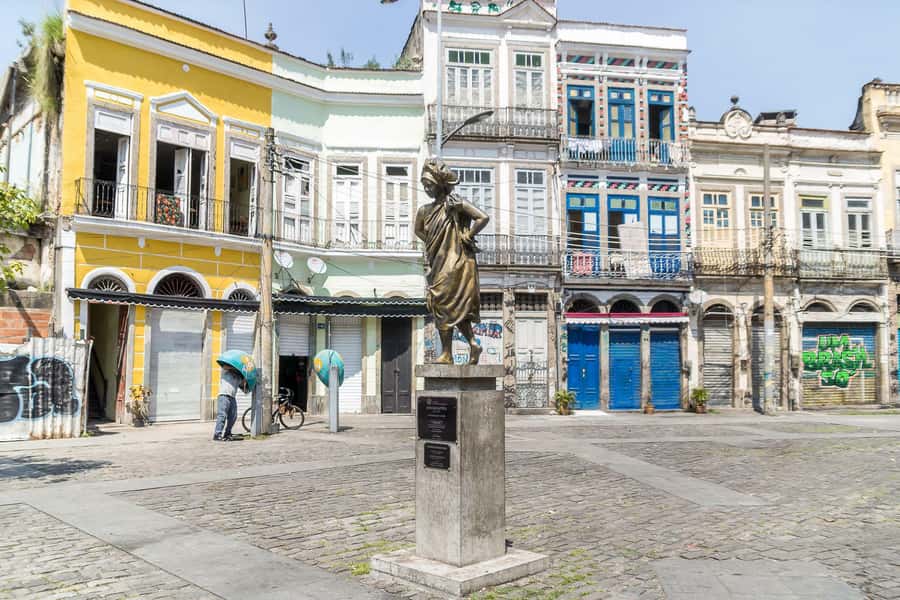
The walk includes a statue honoring Mercedes Baptista, a major figure in Brazilian dance. She was the first Black dancer at Rio’s Municipal Theater and a forerunner of Afro dance in Brazil.
This stop adds an important modern figure to the route. The tour is not only about the colonial period or the horrors of slavery. It also shows people who challenged barriers and helped bring Black artistic expression into major Brazilian institutions.
Your guide explains why Baptista’s work matters. The subject fits the wider theme of the walk: culture did not simply survive hardship in Rio. It developed, changed, and pushed into spaces that had often excluded Black Brazilians.
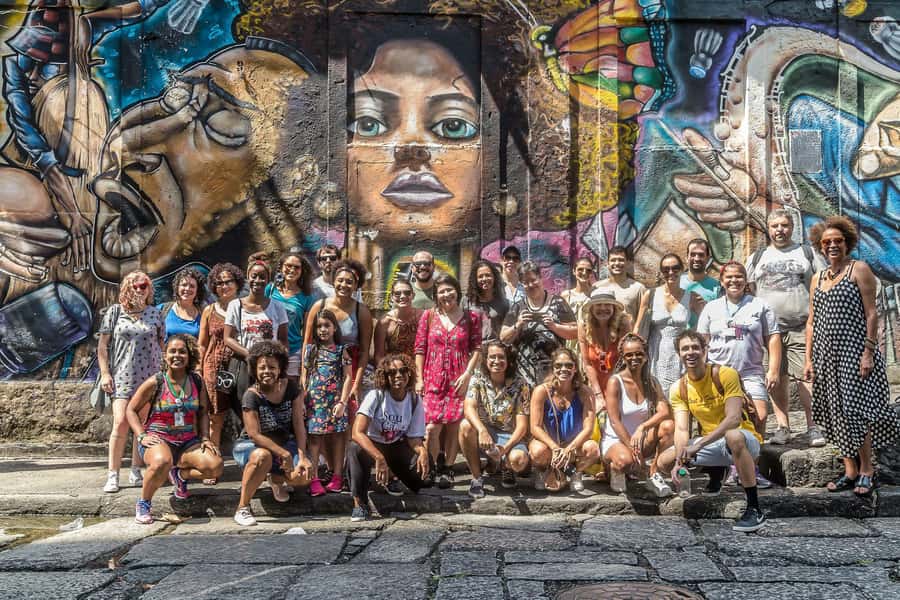
The presentation style depends on your guide. Guides named in the tour’s schedule of departures include Luana, Nathalia, Eddie, Larissa, Marina, Raquel, Ryane, and others. Their approaches vary, but the strongest part of the experience is the human delivery. Several guides use humor, acting, questions, and personal examples to keep a serious subject from becoming a dry lecture.
Pedra do Sal and the birth of samba
Pedra do Sal is the emotional center of the walk for many people. You stop in front of the stone and learn about its place in the development of samba.
The site is also described as the oldest continuously inhabited Black neighborhood in Brazil. That makes it more than a music landmark. It represents long-term community life in an area often discussed only through Rio’s tourist image.
Your guide explains the relationship between the port, Black communities, music, and samba. This is where the earlier stops begin to connect. Forced migration, port labor, local neighborhoods, food, dance, and music are not separate subjects. They are parts of the same story.
Do not expect a concert or a long music performance. This is a guided historical visit, not a samba show. The value comes from understanding why this place matters and then noticing how much of Rio’s cultural identity grew from communities that were often pushed aside.
The area can also be a good place to ask questions. Guides such as Eddie and Nathalia have been especially praised for answering difficult subjects in a thoughtful way. The conversation may cover slavery, structural racism, sexism, cultural ownership, and present-day racial issues. That makes the tour more serious than a standard city walk, but also more useful.
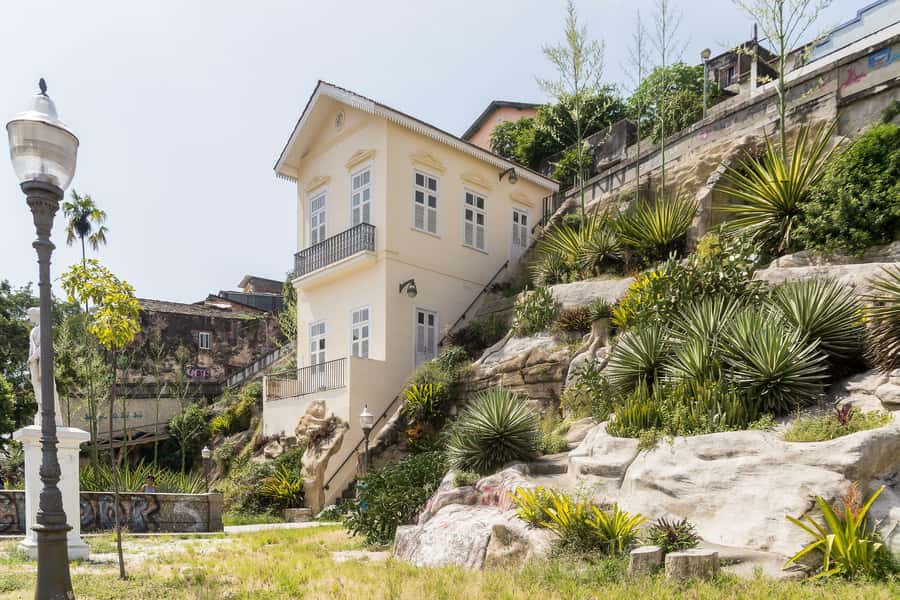
The Hanging Garden of Valongo
The Jardim Suspenso do Valongo, or Hanging Garden of Valongo, is the next major stop. You spend roughly 20 minutes here.
The garden is linked to the Valongo area and offers another chance to consider how historic sites are presented. It is a quieter stop than Pedra do Sal, but it helps create a bridge between the port’s physical spaces and the people who passed through them.
I like this part of the route because it slows the pace. After the discussion of samba, dance, and food, you have room to think about the human cost behind the port’s prosperity. Your guide supplies the meaning that the site itself may not make immediately clear.
The tour is taught through stories, explanation, and questions rather than through a museum display. If you prefer to read signs at your own pace, this format may feel less satisfying. If you want someone to explain what you are seeing and connect it with Brazil today, it works well.
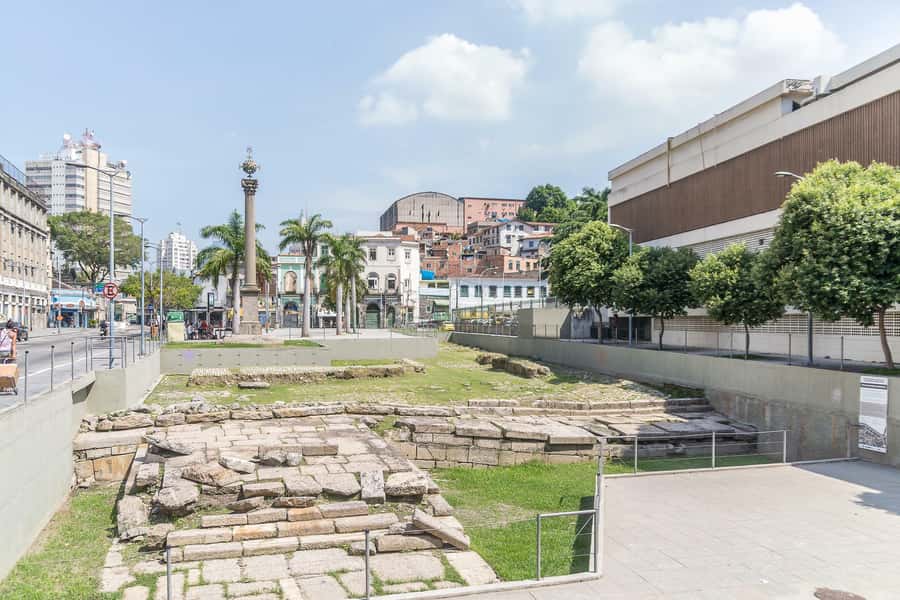
Cais do Valongo, the tour’s final historic stop
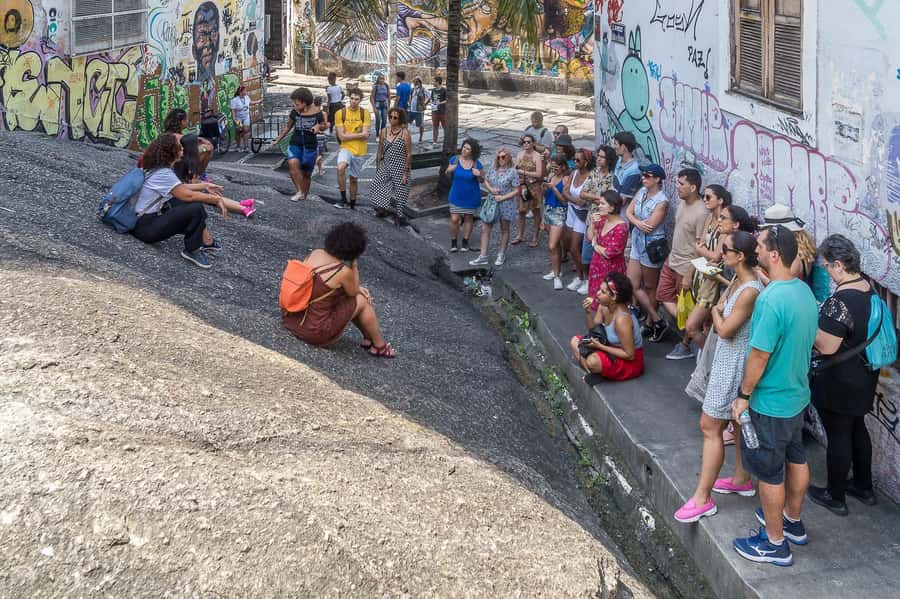
The walk ends at Cais do Valongo, with another guided visit of about 20 minutes before returning to the Rio Art Museum.
Valongo is one of the most difficult places on the route because of its connection to the arrival and trafficking of enslaved Africans. The tour does not treat this as a decorative old port site. It places the site within Brazil’s wider history of slavery and the continued effects of that history.
This is also where the opening explanation about colonial Brazil pays off. Without that background, the site could seem like a small historic stop. With it, you can better understand why the port district became Little Africa and why the story remains relevant.
Allow yourself a little quiet time here. The subject is painful, and the tour can be emotionally powerful. One person described the experience as bringing tears, while others said it changed the way they understood their entire visit to Rio. That reaction will vary, but you should expect serious material rather than a light sightseeing outing.
After Cais do Valongo, you return to the Rio Art Museum. The scheduled route lasts 150 minutes, so the pace is steady. You stop often enough to listen, but you do not spend long periods at each location.
What the guides add to the experience
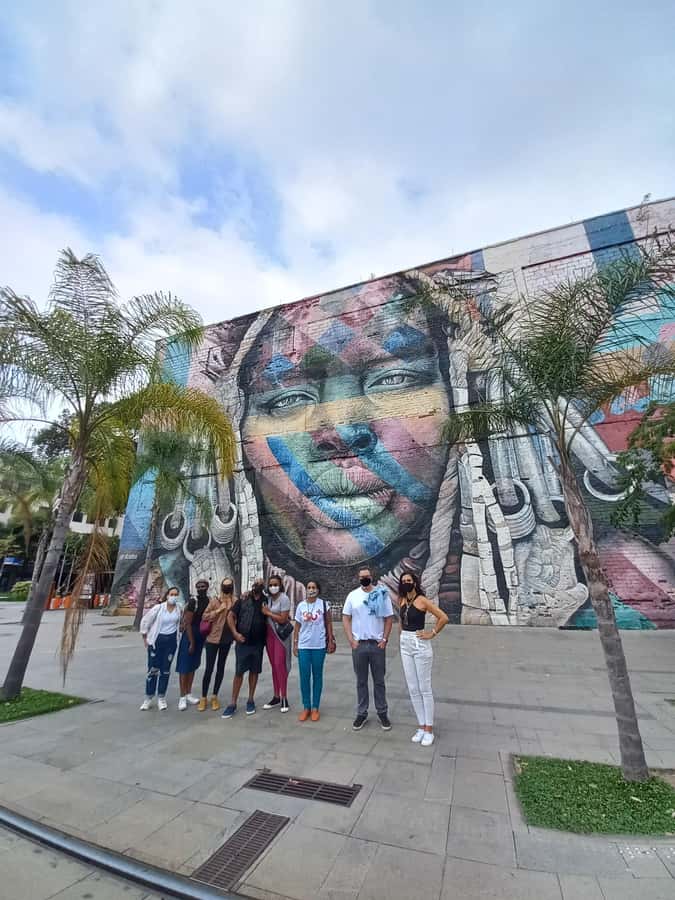
The guide can make or break any history walk. Here, the guide is the central feature.
Luana has been described as warm, caring, and highly engaged. Nathalia is noted for detailed explanations, humor, and sensible answers to difficult questions. Eddie brings a strong connection to his community and family, while Larissa is praised for making the experience feel more like a conversation with a friend than a formal lecture.
Marina’s background in history and tourism adds academic preparation, while Ryane has been praised for her energy and passion for Afro-Brazilian heritage. Raquel, Natalia, Mariana, Razel, and others have also led well-received departures.
You may not get to choose your guide, so expect some variation in style. The shared pattern is clear: the guides are expected to lead in English and discuss sensitive topics with care. The tour is offered only in English, despite some general activity information mentioning Portuguese, so English speakers should be comfortable following a live historical talk.
Heat, rain, and practical comfort
This is an outdoor walking tour, and it runs rain or shine. Bring water, sunscreen, comfortable clothing, and supportive shoes. Rio can be hot, and you will be outside for the full two and a half hours with only a short pause.
Rain does not automatically cancel the walk. If the forecast looks poor, bring suitable protection and accept that some stops may be less comfortable. The tour still operates in wet weather.
The meeting point is easy to identify: in front of the Rio Art Museum. Hotel pickup and drop-off are not included, so you need to arrange your own way to MAR and away from the museum after the tour. Some guides have helped people wait for an Uber after the walk, but that is personal kindness, not a guaranteed service.
Children under five are not accepted. Older children may find the subject matter heavy, so consider your child’s interest and attention span before booking.
Is $40 a fair price?
At $40 per person, the tour is reasonably priced for a 150-minute guided experience in central Rio. You are paying for a specialist route, live English commentary, and access to a side of the city that a general sightseeing tour may skip.
The value is strongest if you want context. If you only want quick photographs of the port, you can walk through some of these areas independently. But you may miss the links between slavery, freed communities, samba, dance, food, and present-day race relations.
The price does not include food, drinks, transport, or hotel pickup. Factor those costs into your plan. The flexible booking terms also help: you can reserve now and pay later, and cancellation up to 24 hours before the activity allows a full refund.
Who should book this Little Africa walk?
I would recommend it to first-time visitors who want a better foundation for understanding Rio. It suits people interested in African diaspora history, music, food, dance, architecture, social issues, and local culture.
It is also a good choice if you have already seen Rio’s famous viewpoints and beaches and want a more serious cultural experience. The route is short enough to fit into a city break, and the museum meeting point makes it easy to pair with other activities in the port area.
I would think twice if you dislike walking in heat, want a relaxed sightseeing tour, or prefer to avoid difficult subjects. This tour discusses slavery, racism, sexism, and inequality. It can be lively and funny at times, but it does not soften the painful parts.
Should you book it?
Book this tour if you want Rio’s African story placed at the center rather than treated as a footnote. The best reasons are the strong guides, the link between Pedra do Sal and samba, the Valongo sites, and the chance to understand how African culture shaped everyday Brazil.
Skip it only if a two-and-a-half-hour outdoor walk feels uncomfortable or if you are looking for entertainment without historical discussion. For most curious visitors, the $40 price buys something more valuable than a checklist of sights: a clearer understanding of the city you are already exploring.
FAQ
How long is the Little Africa Heritage Walking Tour?
The tour lasts 150 minutes, or two and a half hours.
Where does the tour start?
It starts in front of the Museu de Arte do Rio, also known as the Rio Art Museum.
Where does the tour finish?
The walking route returns to the Rio Art Museum after the visit to Cais do Valongo.
Which language is the tour offered in?
The tour is offered in English with a live English-speaking guide.
What sites are included?
The route includes the Rio Art Museum area, Morro da Conceição, Largo de São Francisco da Prainha, Pedra do Sal, the Hanging Garden of Valongo, and Cais do Valongo.
Does the tour include hotel pickup?
No. Hotel pickup and drop-off are not included.
What should I bring?
Bring comfortable shoes, sunscreen, water, and comfortable clothes.
Does the tour operate in bad weather?
Yes. The tour takes place rain or shine.
Are young children allowed?
Children under five are not suitable for this activity.
Can I cancel for a full refund?
Yes. You can cancel up to 24 hours in advance for a full refund.
Just added around Brazil
- Scenic Train ride to historical cities of Morretes and Antonina★ 4.0 · 188 reviews
- Germanic Route – Cultural and historical in Ilhota, Blumenau and Pomerode★ 4.5 · 67 reviews
- Rio: Historical Walking Tour★ 4.7 · 32 reviews
- Rio: Olympic Boulevard, Museum of Tomorrow & History Tour★ 4.1 · 47 reviews
- Rio de Janeiro: Historical Downtown and Lapa Walking Tour★ 4.4 · 32 reviews
- Salvador Historic Walking Tour – Pelourinho★ 4.8 · 62 reviews
- From Foz do Iguazu: Triple Frontier Landmark Ticket★ 4.4 · 136 reviews
- Florianópolis: Historical Center, Beach & Nature Tour★ 3.3 · 25 reviews
Rio de Janeiro History Tours, compared.
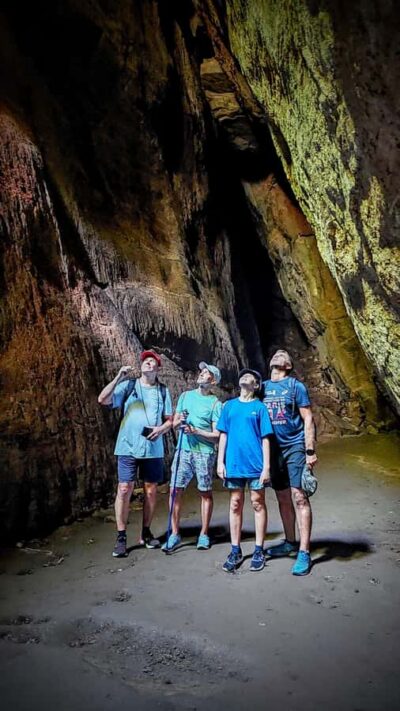
Rio: Tijuca Forest Small Group Hike to Caves and Waterfalls
Read our review →
Rio de Janeiro: Historic Rio and Santa Teresa Half-Day Tour
Read our review →
Ancient Rio and Santa Teresa Tour with Hotel pick-up and drop-off
Read our review →
Rio: Olympic Boulevard, Museum of Tomorrow & History Tour
Read our review →
Rio de Janeiro: Historical Downtown and Lapa Walking Tour
Read our review →
Browse the lists this tour appears in