
Review · RIO DE JANEIRO
Rio: Historical Walking Tour
Rio’s historic center is best understood on foot, where grand public buildings, churches, fountains, and narrow lanes sit close together. This tour uses the subway to connect Copacabana with downtown, then covers a remarkable stretch of the old capital in four hours. Confeitaria Colombo and the colonial churches are the visual stars, while the guide adds the political and cultural story behind them.
I like the efficient route and the fact that the tour begins with ordinary local transport, not a private vehicle sealed away from the city. I also like the small-group format, which gives you a better chance to ask about politics, architecture, and daily life. The main drawback is simple: this is a walking-heavy outing with no wheelchair access, so it is a poor match if stairs, uneven pavement, or several hours on your feet are a concern.
Key points to know before you book
- Subway connection: Travel from the Copacabana area to Cinelândia, making the journey part of the Rio experience rather than just a transfer.
- Four-hour downtown route: Walk from Cinelândia through Carioca Square, Praça XV, Travessa do Comercio, and Candelaria.
- Architecture at close range: See the Naval Club, Santo Antônio complex, Tiradentes Palace, Imperial Palace, churches, cultural centers, and the Teles Arch.
- Historic coffee stop: Confeitaria Colombo dates to 1894 and is one of the tour’s most memorable interiors.
- Strong guide element: Guides such as Lucien, Monique, Ernani, and Mathilda have been praised for detailed explanations and flexible discussions.
- Plan for pavement: The tour is not recommended for people with mobility difficulties or wheelchair users.
Why Rio’s center deserves a half-day

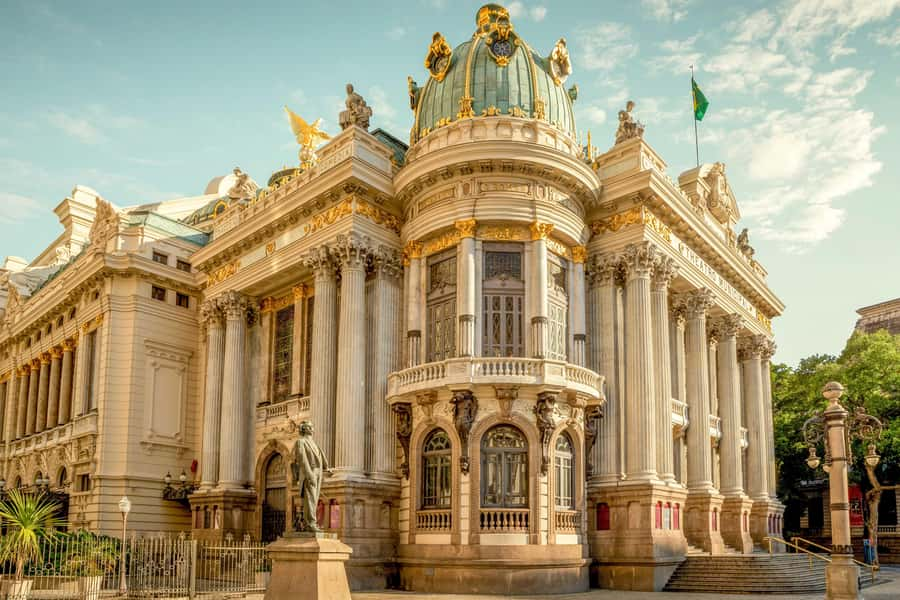
Many visitors stay near Copacabana, Ipanema, and the beach. That makes sense, but it leaves out the part of Rio where government, religion, commerce, and public life shaped the country for centuries. Downtown can look like a jumble of office blocks and traffic at first glance. The value of this walk is learning to read what remains.
The old center mixes French-influenced public architecture with Portuguese colonial churches, imperial-era buildings, broad squares, and small commercial lanes. You will not see everything Rio has to offer, but you will cover a concentrated set of landmarks without spending your day figuring out the route.
The subway ride is useful in two ways. It gets you downtown without adding a long road transfer, and it gives you a brief look at how the city moves. Your stated starting point is the Copacabana Palace, at Avenida Atlântica 1702, although the exact meeting point can vary with the option you book. The tour ends back at the Copacabana Palace area after returning by subway.
More History Walking Tours in Brazil:
- Rio de Janeiro: Little Africa Heritage Walking Tour
★ 4.9 · 177 reviews - Paraty: Historic Centre Walking Tour & Cachaça Tasting
★ 4.8 · 96 reviews - Salvador Historic Walking Tour – Pelourinho
★ 4.8 · 62 reviews
From Copacabana to Cinelândia by subway
The outing begins with public transport to Cinelândia Station. That detail matters because the tour is not only a sightseeing circuit. You are moving from the polished beachfront zone into Rio’s civic center, where the feel, scale, and architecture change quickly.
Cinelândia is the right place to begin. The area is known for buildings shaped by French architectural influence, and it offers a strong first lesson in how Rio presented itself as a modern capital. Your guide can help you spot the difference between a building designed to project national power and one built for religious or commercial use.
This opening section also sets the pace. The ride itself is included, as is a professional guide, but food and drinks are not. Bring water and wear shoes that can handle several hours of city walking. The route includes cobblestones and historic areas where surfaces may not be perfectly even.
Cinelândia, Carioca Square, and the church complex
From Cinelândia, the walk heads toward Carioca Square. Along the way, you pass the Naval Club, the Monastery Church of Santo Antônio, and the Ordem Terceira de São Francisco da Penitência.
The church complex is one of the tour’s most useful stops because it shows how much history can be packed into a small area. The churches are not simply decorative pauses between squares. They help explain the religious institutions that shaped public life in old Rio, and their interiors and facades offer a sharp contrast to the grand civic buildings nearby.
This is also where a guide makes a real difference. Architectural details can be easy to miss when you are walking past on your own. A good explanation turns a carved facade, a church entrance, or a square into part of a larger story. The strongest guide feedback connected the experience with detailed cultural and historical commentary, including discussion of Brazil’s politics and economy.
The route does not promise long, quiet visits at every stop. Some locations are viewed from the outside or visited when open. If you want to linger over every interior, four hours will feel tight. If you prefer a well-paced introduction to the center, the schedule makes sense.
Confeitaria Colombo and the pleasure of a historic interior
Confeitaria Colombo, built in 1894, is one of the most appealing stops on the route. Its importance is not only its age. It represents the old center’s role as a place where commerce, politics, social life, and public display met under one roof.
The building’s architectural appeal is easy to understand even if you are not an architecture enthusiast. It gives you a change of mood after the open squares and religious buildings, and it helps connect Rio’s grand past with the city’s café culture. The tour includes entrance fees, but drinks and meals are not included, so do not assume a food stop is part of the price.
That distinction is useful. You may have time to look around, but this is not presented as a dedicated tasting tour. If you want to sit down for a full meal or order something at length, ask the guide how much time is available before making a purchase.
More History Tours in Brazil:
- Maria Fumaça – Wines and History
★ 4.0 · 242 reviews - Rio de Janeiro: Historic Rio and Santa Teresa Half-Day Tour
★ 4.4 · 228 reviews - São Paulo: Downtown Historical Bike Tour
★ 4.9 · 191 reviews - Scenic Train ride to historical cities of Morretes and Antonina
★ 4.0 · 188 reviews
Tiradentes Palace and Praça XV
The route continues to Tiradentes Palace, identified as the State Hall, then reaches Praça XV. This is one of the strongest parts of the walk for understanding Rio as a seat of power.
Praça XV brings together several layers of the city’s past. You see the Imperial Palace, the statue of General Osório, and Mestre Valentim’s Fountain. These are not isolated sights checked off a list. Together, they show how public squares were used to express authority, commemorate military figures, provide civic infrastructure, and connect the city to its imperial period.
The Imperial Palace is especially important for anyone interested in Brazil’s monarchy and former capital. The guide’s job here is to give the buildings a timeline and explain why this square mattered. The activity description promises history rather than a specialized academic lecture, so expect a clear walking narrative instead of a long formal presentation at each monument.
I would pay attention to the spacing between the sights. The route lets you compare broad ceremonial areas with the smaller streets that follow. That shift is part of the charm, and it keeps the walk from feeling like one long procession of official buildings.
Travessa do Comercio and Carmen Miranda’s former residence
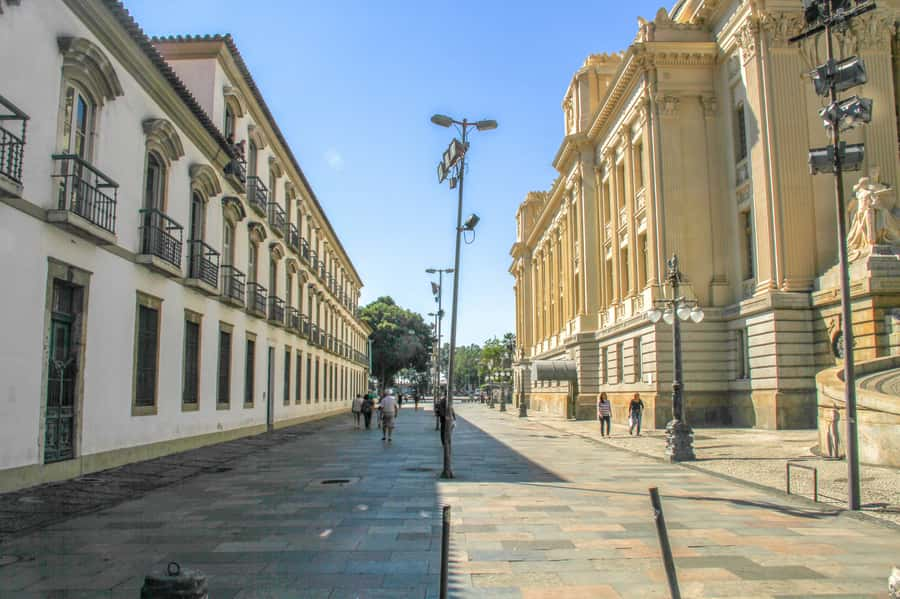
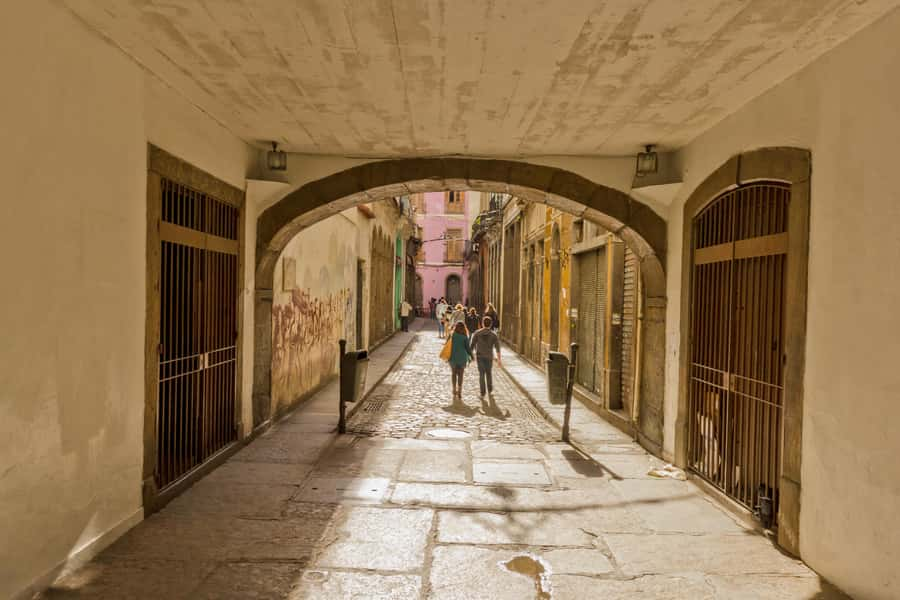
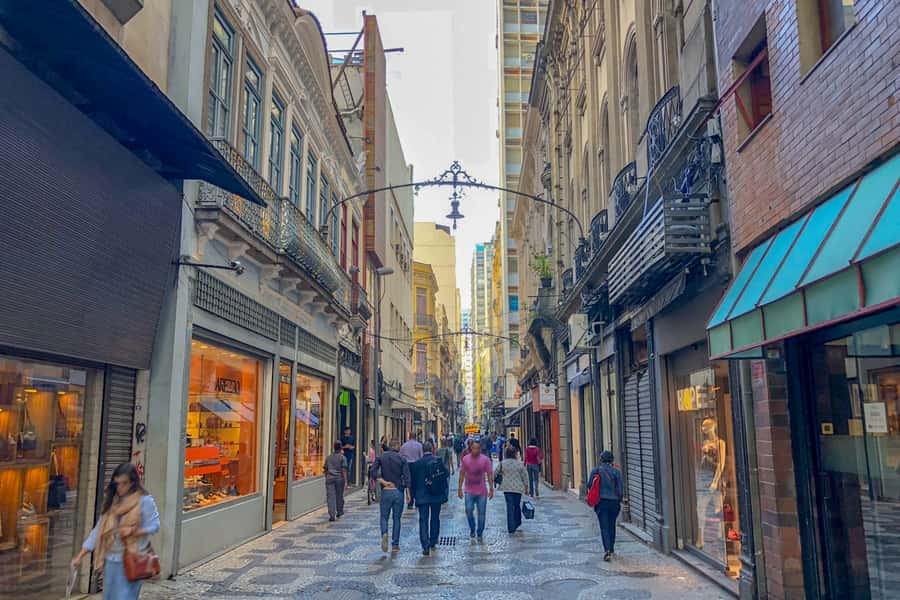
From Praça XV, you reach the cobblestoned Travessa do Comercio. This narrower lane offers a welcome change from the grand scale of the squares and palaces.
Cobblestones are part of the appeal, but they also explain why the tour is not suitable for everyone. They can make walking slower and more tiring, particularly if you have balance problems or use mobility equipment. The route is designed for people who can comfortably walk through an old urban center.
The former residence of Carmen Miranda adds a personal and cultural note to the tour. After several stops tied to government, religion, and formal public life, this connection brings the story closer to a famous Brazilian performer and the popular culture that helped shape the country’s image abroad.
The Church of Our Lady of the Merchants follows in this section. Its name points to the commercial life of the old center, and the stop helps show that the district was not only a place for rulers and officials. It was also a place of trade, worship, and everyday work.
Cultural centers and the road to Candelaria
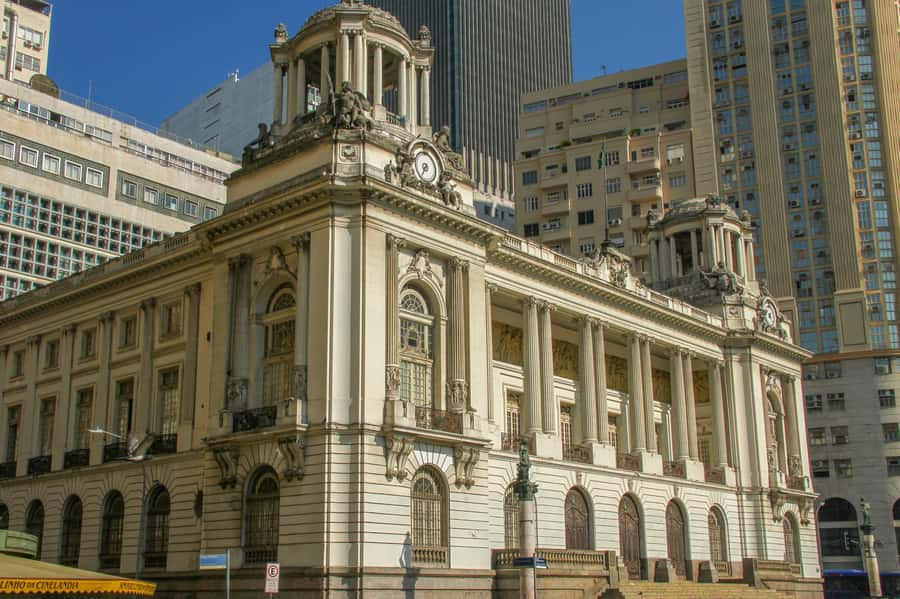
The final stretch includes the Post Office Cultural Center, France-Brazil House, the Bank of Brasil Cultural Center, and Candelaria Church. Some interiors are visited only when open, including France-Brazil House, the Bank of Brasil Cultural Center, and Candelaria Church. That qualification matters, since opening conditions can affect how much time you spend inside.
The cultural centers add a modern layer to the tour. They show how historic buildings can continue to serve public purposes rather than becoming static monuments. You get a chance to see the relationship between architecture and present-day cultural life, while still following the older route through the center.
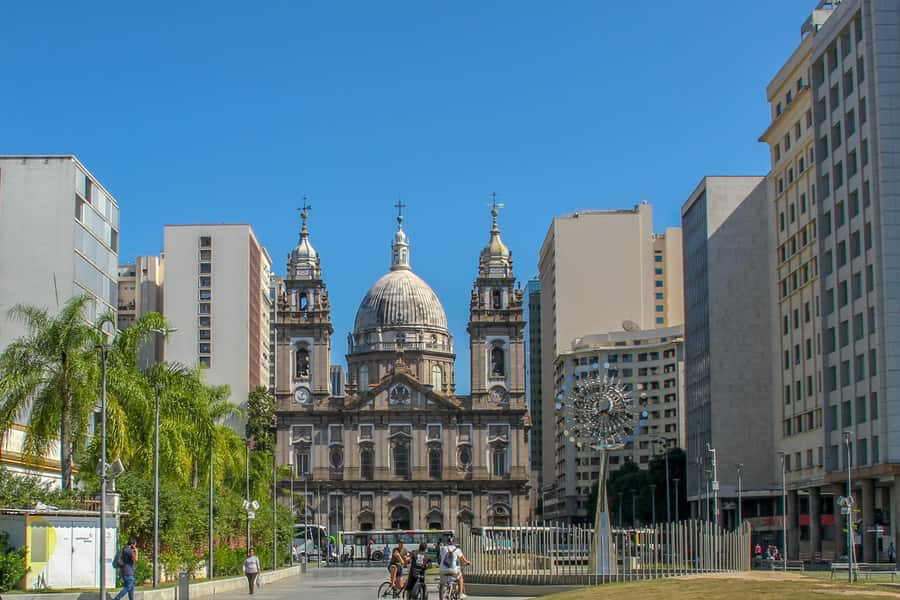
Candelaria Church is a fitting endpoint for the walking portion. Its scale and setting give the closing section a strong visual finish, and the surrounding Largo da Candelaria helps pull together the tour’s main themes: faith, government, public memory, and urban design.
At this point, you will probably have had enough pavement. Returning by subway is practical and keeps the outing within its four-hour frame. It also means you do not lose extra time to a long private transfer back to the beach district.
What the guides add to the route
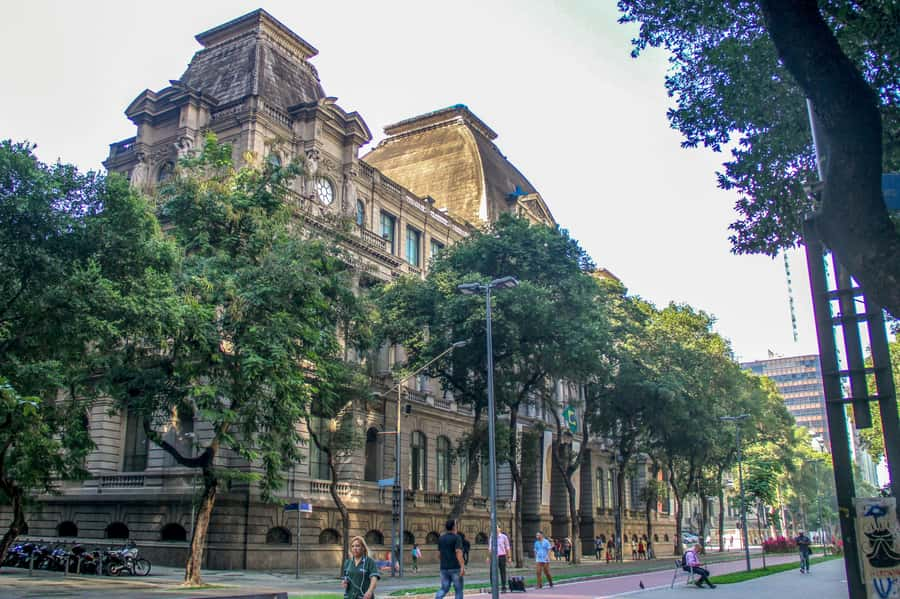
The guide is the most important variable in this experience. The tour is built around places that can be visited independently, but the explanations give them purpose. Recent departures have included guides named Lucien, Monique, Ernani, and Mathilda.
The strongest feedback points to detailed cultural and historical explanations. One guide was praised for discussing history, politics, and the country’s economy, while another was noted for answering plenty of questions. That tells you what to expect from the best version of the tour: not just dates and building names, but a broader explanation of how Brazil developed.
Mathilda was also praised for adapting the route to the interests of a very small group and for showing special places that the couple would not have found alone. That is a useful clue about the small-group format. You may have room to ask questions and adjust the emphasis, though flexibility will depend on the guide, opening hours, and the group on your departure.
The languages offered are English, Spanish, and Portuguese. If you have a particular interest in architecture, Brazilian politics, or cultural history, mention it early. A focused question can make a standard stop much more rewarding.
Is $79 a fair price?
At $79 per person, this is not the cheapest way to walk around downtown Rio. You could visit many of these areas independently for less, especially if you already know the subway system and are comfortable researching the buildings as you go.
The price becomes easier to justify when you value the guide, included subway transport, entrance fees, and the small-group setting. You are paying for a four-hour route that connects a large number of sights without making you plan the order or explain the context to yourself.
The value is strongest for a first visit to Rio, a short stay, or anyone who wants an organized introduction to the historic center. It is less compelling if you prefer to move slowly, spend a long time inside each church, or stop freely for meals and coffee.
The 4.7 rating from 32 recorded ratings supports the idea that the guide quality is usually a major strength. Still, the price does not include drinks or meals, and the exact balance between interior visits and exterior viewing can change when buildings are closed.
Who should book this walking tour?
I would choose this tour if you want to see a side of Rio beyond the beaches and prefer a guide to connect the sights. It suits history fans, architecture enthusiasts, first-time visitors, and anyone who enjoys asking questions while walking.
It also works well if you want a small-group experience rather than a large coach outing. The subway component gives you a more ordinary view of the city, and the return to Copacabana keeps the half-day practical.
I would skip it if you have difficulty walking, cannot manage cobblestones, or need wheelchair access. The route is specifically not recommended for people with mobility impairments, and there is no suggestion that a modified version is available.
Wear comfortable shoes, carry water, and keep your schedule flexible enough for a four-hour outing. Free cancellation is available up to 24 hours before departure, and you can reserve now and pay later, which is useful if your Rio plans are still shifting.
FAQ
How long does the Rio Historical Walking Tour last?
The tour lasts four hours, including the subway journey to and from downtown Rio.
Where does the tour start?
One listed starting option is the Copacabana Palace at Avenida Atlântica 1702. The meeting point may vary depending on the option booked.
Where does the tour finish?
The tour finishes at the Copacabana Palace, after returning from downtown by subway.
Which languages are available?
The live guide service is available in English, Spanish, and Portuguese.
Are meals and drinks included?
No. Entrance fees, a professional guide, small-group arrangements, and subway transport are included, but drinks and meals are not.
Is the tour suitable for wheelchair users?
No. The tour is not suitable for wheelchair users or people with mobility impairments, and it is not recommended for people with walking difficulties.
Should you book it?
Book this tour if you want a guided introduction to Rio’s old center, with major churches, public squares, cultural buildings, and Confeitaria Colombo arranged into one manageable route. The best reason to go is the guide, especially if you want more than names and dates and hope to discuss Brazil’s politics, culture, and past.
Skip it if you want a relaxed café morning or cannot comfortably walk on cobbled streets. For an active visitor with four hours to spare, $79 is a reasonable price for the transport, admissions, small group, and historical context.
Just added around Brazil
- Scenic Train ride to historical cities of Morretes and Antonina★ 4.0 · 188 reviews
- Germanic Route – Cultural and historical in Ilhota, Blumenau and Pomerode★ 4.5 · 67 reviews
- Rio: Olympic Boulevard, Museum of Tomorrow & History Tour★ 4.1 · 47 reviews
- Rio de Janeiro: Historical Downtown and Lapa Walking Tour★ 4.4 · 32 reviews
- Salvador Historic Walking Tour – Pelourinho★ 4.8 · 62 reviews
- From Foz do Iguazu: Triple Frontier Landmark Ticket★ 4.4 · 136 reviews
- Florianópolis: Historical Center, Beach & Nature Tour★ 3.3 · 25 reviews
- Paraty: Historic Centre Walking Tour & Cachaça Tasting★ 4.8 · 96 reviews
Rio de Janeiro History Tours, compared.
Rio: Tijuca Forest Small Group Hike to Caves and Waterfalls
Read our review →
Rio de Janeiro: Historic Rio and Santa Teresa Half-Day Tour
Read our review →
Rio de Janeiro: Little Africa Heritage Walking Tour
Read our review →
Ancient Rio and Santa Teresa Tour with Hotel pick-up and drop-off
Read our review →
Rio: Olympic Boulevard, Museum of Tomorrow & History Tour
Read our review →
Rio de Janeiro: Historical Downtown and Lapa Walking Tour
Read our review →Browse the lists this tour appears in