
Review · GUIDED
Sofia: History And Heritage – Small Group Guided Tour
Sofia’s story is packed into a walkable center, and this tour does a good job of joining the pieces. In roughly two hours, you move from grand Orthodox churches to Roman ruins, royal buildings, communist-era landmarks, and the modern capital around them. Guides Vasil and Vessy are praised for clear storytelling, humor, patience, and practical local advice.
I like the small groups of no more than 10, which make it easier to hear and ask questions. I also like the mix of famous sights and less obvious corners, plus the short café stop that gives your feet a break. The main drawback is the pace: you cover a lot of ground, so this is not ideal if walking is difficult or you prefer long, quiet visits inside each church.
Key points at a glance
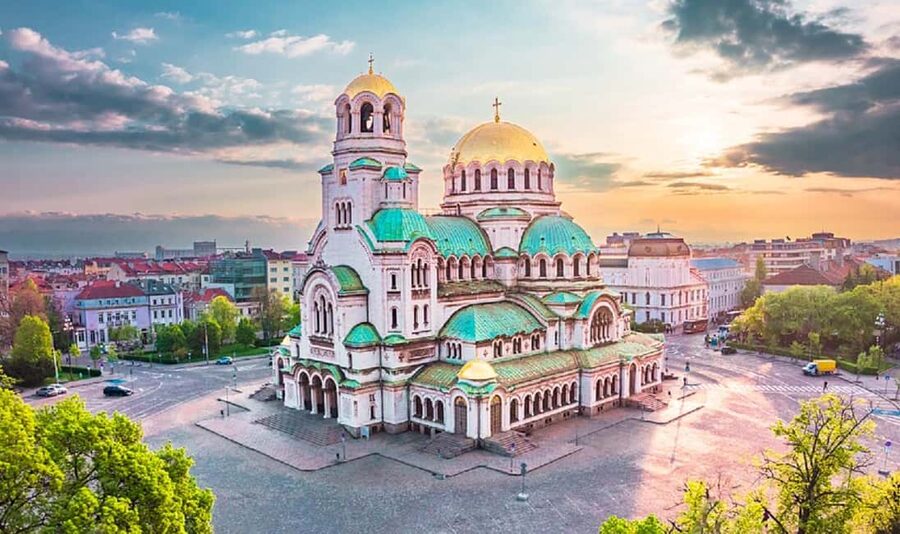
- Three major churches: Visit Alexander Nevsky Cathedral, Saint Sofia Basilica, and Saint George Rotunda.
- A fast history lesson: Hear why Sofia mattered to Constantine the Great, how Cyrillic was developed, and what happened to Bulgaria’s royal family.
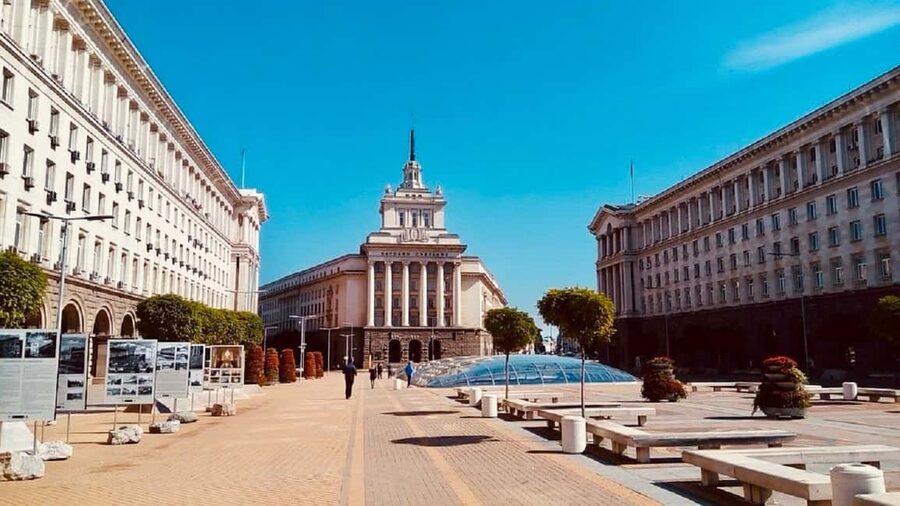
- Central Sofia on foot: See the old Parliament, the Sinod, the Library, the National Theater, the Largo, the Presidency, the old Baths, and more.
- Small group format: The group is limited to 10 people, and the tour operates even with one participant.
- Useful local guidance: Get suggestions for Bulgarian restaurants, museums, food, and photo stops.
- Good value: At $18 per person, the tour gives you a broad introduction before you explore Sofia on your own.
Why this Sofia walk is a smart first look
Sofia can seem easy to understand at first. The center is compact, many sights are close together, and the main streets are simple to follow. But the city’s layers are not always obvious. A Roman street may sit beneath a modern government building, an Orthodox church may share the same small area with remains from earlier centuries, and royal and communist-era stories can be easy to miss without explanation.
That is where this tour earns its price. You are not only looking at buildings. You are given the reasons they matter, the people tied to them, and the changes that shaped modern Bulgaria.
The tour is conducted in English. Guides including Vasil and Vessy bring a local point of view, with Vasil receiving repeated praise for his humor, patience, and ability to answer detailed questions about history, politics, art, and architecture. Vessy is also noted for taking photos for solo participants and offering ideas for local food.
At $18, I see this as a useful orientation walk rather than a full-day historical study. You will not have time to linger at every stop, but you will finish with a map in your head and a better sense of what deserves a second visit.
More Small-Group History Tours in the world:
- Pompeii: Small Group Tour with an Archaeologist
★ 4.8 · 12,264 reviews - London Small Group Tour of Historical Pubs
★ 5.0 · 10,422 reviews - Pompeii Small Group Tour with an Archaeologist
★ 5.0 · 6,593 reviews
Meeting beneath Alexander Nevsky’s domes
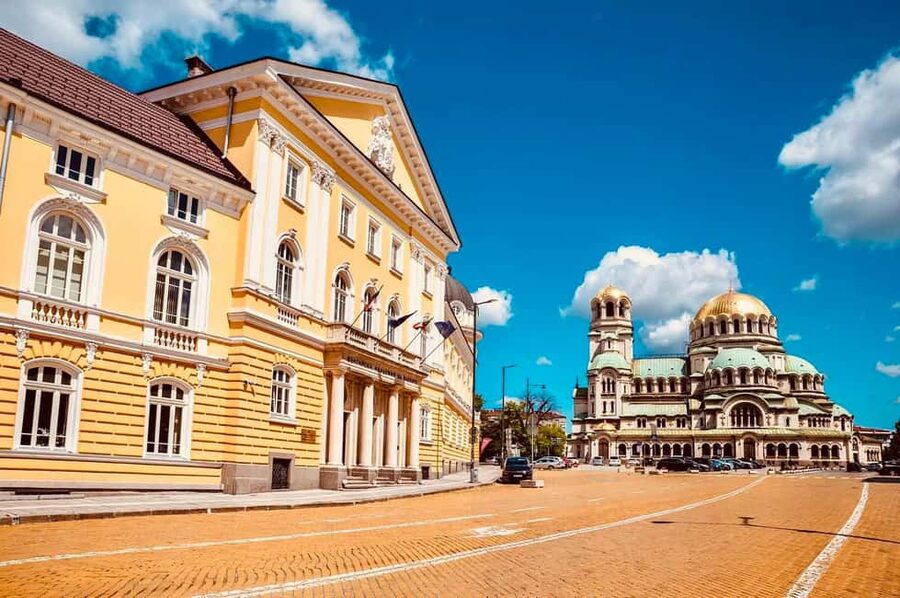
The tour begins at the stairs in front of Saint Alexander Nevsky Cathedral. Look for the guide holding a Sofia Tour sign. This is a practical meeting point because the cathedral is one of Sofia’s easiest landmarks to recognize.
Alexander Nevsky is the grand opening statement of the walk. Its domes and broad facade make it one of the city’s most memorable buildings, but the important part is the story behind its construction. The guide explains why Bulgaria built the cathedral and how it connects to the country’s past and religious identity.
Inside, you can expect an introduction to the church rather than a long guided worship visit. The cathedral is best appreciated by looking up at its scale, decorative work, and sense of ceremony. Keep your shoes comfortable, since the tour continues on foot soon after the cathedral.
One practical point matters here: start times depend on availability, and Sofia uses its local time zone. Check your clock before setting out, especially if you have just arrived in Bulgaria.
Saint Sofia Basilica and the city’s older layers
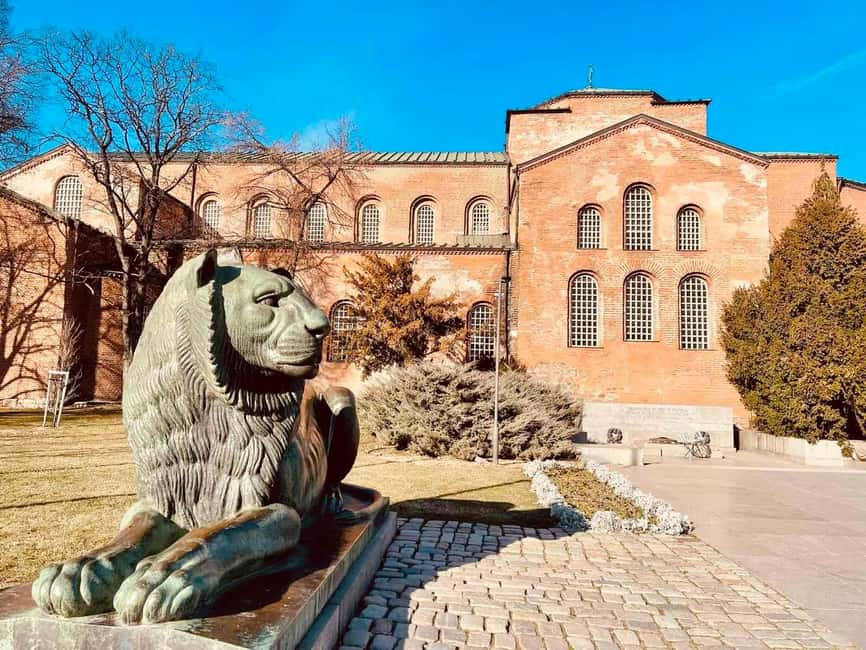
Saint Sofia Basilica gives the tour a different mood. It is older and more restrained than Alexander Nevsky, and its importance comes from the long religious and urban history tied to the site.
The guide uses the basilica to explain how Sofia developed and why the city has carried such importance across different periods. The name Sofia is closely linked with the church, and the stop helps explain how the capital’s identity grew around its religious buildings.
You should expect the tour to keep moving rather than provide a lengthy, quiet visit at each church. That is useful if you have only a short time in the city, but less suitable if your main interest is detailed church art or architecture.
The pace also depends on weather. The walk operates in all conditions. In rain, a guide may adjust the order or pauses to limit how wet you get, but you should still bring suitable clothing and shoes.
Saint George Rotunda and Roman Sofia

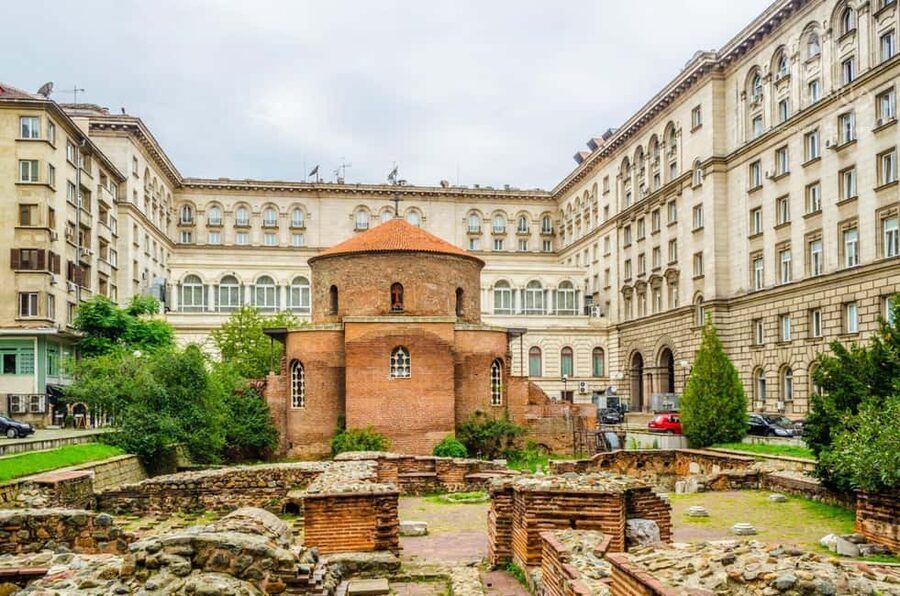
Saint George Rotunda is one of the most striking contrasts on the route. It sits among later buildings, making Sofia’s past feel less like a separate museum display and more like part of everyday city life.
Here, the focus turns toward ancient Serdica and the Roman period. The tour explains the Roman remains and the connection between Sofia and Constantine the Great. That story helps you understand why the city mattered long before it became Bulgaria’s modern capital.
The Roman section is especially useful because it gives context to the scattered ruins around the center. You may otherwise pass pieces of old walls, streets, or foundations without knowing what you are seeing. The guide links those remains to the wider growth of the city.
This is also where the walk shows its strength as a city introduction. You are not taken from one isolated monument to another. The stops relate to each other, so Sofia begins to make more sense as a city built in layers.
More Guided Tours in the world:
- Pompeii: Entry Ticket and Guided Tour with an Archaeologist
★ 4.8 · 19,459 reviews - History and Hauntings of Salem Guided Walking Tour
★ 5.0 · 14,564 reviews - Edinburgh: Edinburgh Castle Guided History Tour with Tickets
★ 4.8 · 9,933 reviews - Berlin: Third Reich & Cold War Guided Walking Tour
★ 4.9 · 8,378 reviews
The royal, parliamentary, and government quarter
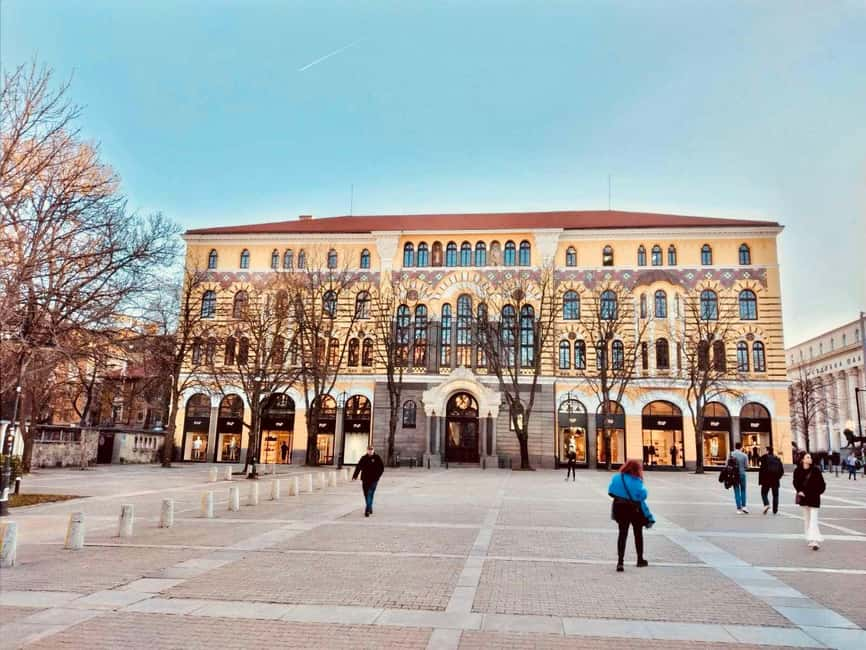
After the churches and Roman remains, the walk moves through Sofia’s public and political center. You see the old Parliament, the Sinod, the Library, the monument to the King Liberator, and the old Royal residence.
Each building gives you a different piece of Bulgaria’s modern story. The guide discusses the country’s royal family, including what happened to the last Bulgarian royals. That is a useful subject for anyone who wants more than a list of dates and rulers.
The monument to the King Liberator adds another public symbol to the route. The nearby buildings help show how Sofia’s center was planned and how national identity was expressed through grand institutions, statues, and formal public spaces.
Vasil is particularly well suited to this part of the tour if you like asking questions. Several comments describe him as patient and thorough, with the ability to explain complicated or contradictory parts of Bulgarian history in plain terms.
The National Theater, Largo, and communist-era stories
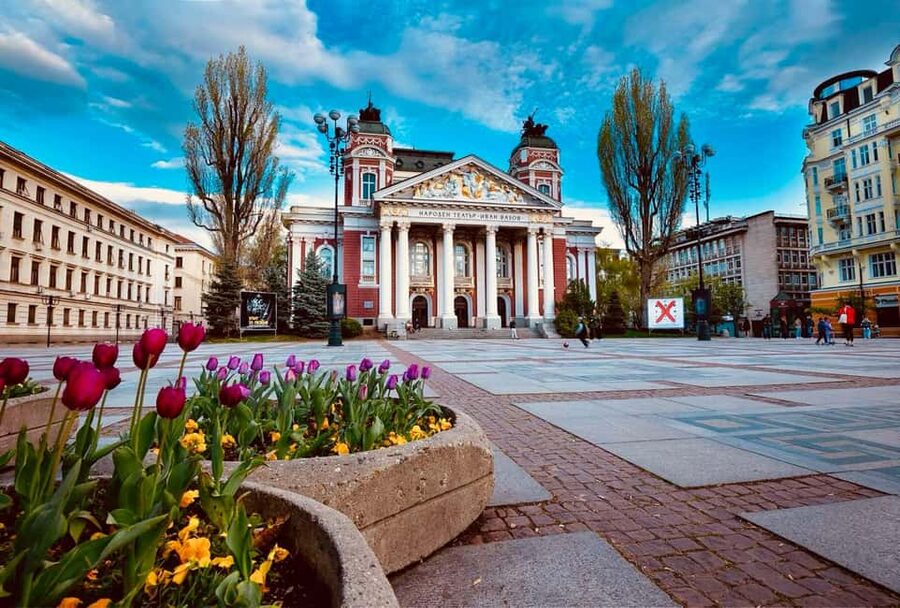
The National Theater brings an architectural and cultural stop into the walk. It is one of the city center’s key landmarks, and its setting helps show how Sofia’s public life is arranged around open squares, formal buildings, and busy streets.
The route then reaches the Largo complex, the Presidency, and the Roman remains in this central government area. This is one of the best places to understand the relationship between old and new Sofia. Modern state buildings sit close to ancient traces, while the political center remains part of daily city life.
The tour also tackles Bulgaria’s communist period. One of the unusual subjects covered is the former mausoleum of the country’s first communist dictator. The mausoleum is no longer there, but knowing where it stood adds a layer to the open space and to the story of how Sofia dealt with its recent past.
The guide also discusses the final Bulgarian royal family and the country’s changing political eras. These subjects can become tangled quickly, so the value depends on the guide’s ability to keep the timeline clear. Based on the repeated praise for Vasil’s explanations, question-friendly style, and humor, this is one of the stronger parts of the experience.
The tour does not allow discussion of current geopolitical topics. That rule is worth knowing in advance. The focus is historical and cultural, not a forum for present-day political debate.
Old Baths, Roman remains, and the Judicial Palace
The old Baths and nearby Roman remains add another important stop to the city center route. Sofia’s mineral-water tradition is part of its identity, and the old Baths help show how public life and urban services developed over time.
The Judicial Palace provides a different view of the city’s institutions and architecture. By this point, you have seen religious, royal, cultural, Roman, and government landmarks. The route is broad rather than narrowly focused, which makes it useful for getting your bearings during a short stay.
Several people who took the walk found that they saw more of central Sofia in two hours than they would have managed alone. That is the practical advantage here. A guide keeps the route moving and points out buildings you might otherwise overlook.
The tradeoff is that two hours can feel full. If you stop often for photos, ask many questions, or walk slowly, the advertised two-hour timing may feel tight. The activity description also gives a duration range of two hours to 150 minutes, so check the exact timing when you book.
The short café break and local advice
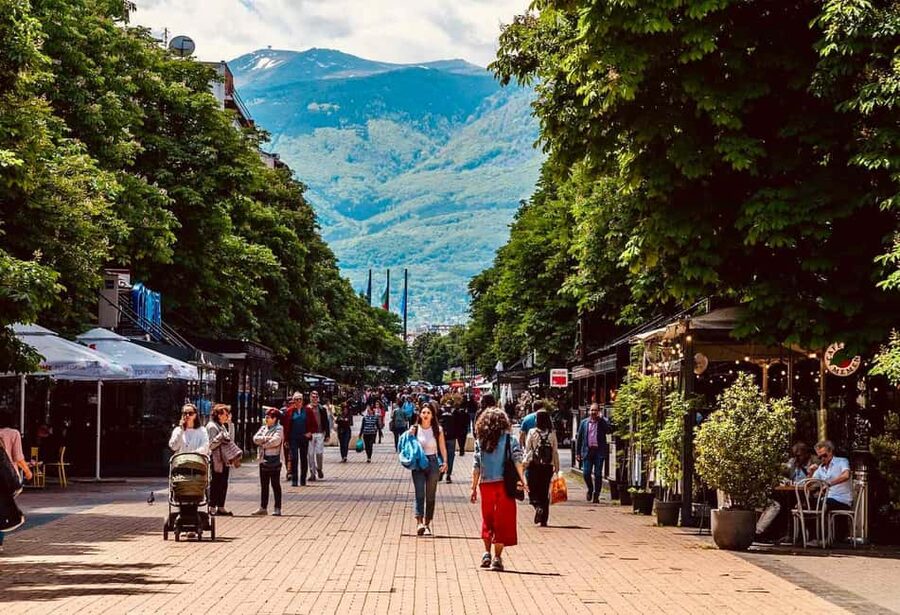
A short café break comes in the middle of the tour. It is not presented as a full meal or a major food experience. Think of it as a chance to refresh, warm up, and keep listening without standing the entire time.
This pause matters more in cold weather. One participant described an unusually cold day, while another recommended being prepared for a long walk in comfortable shoes. The tour runs in all weather, so your comfort will depend partly on clothing and footwear.
At the end, the guide offers suggestions for traditional restaurants and museums. That can be more useful than a generic list because you can ask about the sort of meal or museum you want next. Vessy is specifically praised for local food suggestions, and other feedback points to recommendations for Bulgarian cuisine and local favorites.
For a first day in Sofia, I would use this advice to shape the rest of your visit. The walk gives you the broad picture, then you can return to the church, museum, or historic area that caught your interest.
Group size, walking pace, and weather
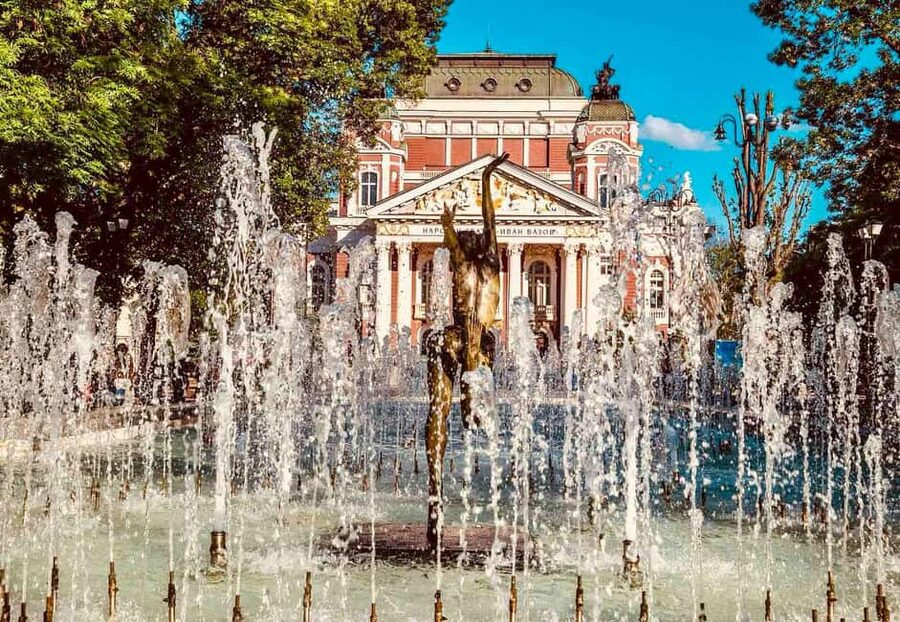
The group is limited to 10 participants, with private or small-group options available. A small group makes a real difference on a walking tour. You can hear the guide more clearly, ask questions without holding up a large crowd, and stay close to the buildings being discussed.
The service also operates with only one participant. That unusual guarantee removes the worry that a small booking will cause the tour to be canceled. It may mean a more personal experience, though the exact feel depends on who leads the walk.
Comfortable shoes are essential. The route covers much of central Sofia and includes enough walking that poor footwear will distract you from the buildings and stories. The experience is not suitable for people with mobility impairments, so consider the distance, surfaces, and standing time before booking.
The walk runs in all weather. In rain or severe cold, the tour can still go ahead, so bring weather-appropriate clothing rather than assuming a cancellation. The route has been adjusted during rain to avoid unnecessary exposure, but this remains an outdoor city walk.
What the $18 price really buys you
The $18 fee is strong value if you want a clear first look at Sofia. You receive a live English-speaking guide, access to a small group, visits to two major churches, and a route covering ancient, religious, royal, cultural, and communist-era sites.
The value is not simply the number of landmarks. It is the connection between them. Without a guide, you could see Alexander Nevsky Cathedral, the Largo, the Baths, and the Roman remains, yet miss why they belong in the same story.
I would not book this expecting admission to every museum or a private architectural lecture. It is a compact orientation walk, and some locations are viewed from the outside or visited briefly. Still, for the cost of a modest meal or a couple of drinks, it can save you time and give your later sightseeing more purpose.
Free cancellation up to 24 hours in advance and the option to reserve now and pay later also make it easier to fit into a changing city break. Those policies are useful, but the main buying decision is simple: do you want a broad, guided introduction or a slow visit focused on just one or two sites?
Who should book this Sofia tour?
I would recommend it most strongly to first-time visitors, solo participants, couples, and anyone with only a day or two in Sofia. Solo visitors may especially appreciate the small group and the possibility of getting photos from the guide.
It also suits people who like history explained through stories rather than long academic talks. Vasil’s ability to answer questions about art, architecture, culture, and political history is a plus if you want to go beyond the basic script.
Families can also find it workable, provided everyone is comfortable walking. One family found the children enjoyed the tour, but the full route and historical discussion may be demanding for very young children.
I would think twice if you have limited mobility, dislike walking in uncertain weather, or want extensive interior visits. You may prefer a shorter, more focused visit to one church or museum instead.
Should you book it?
Book this tour if you want to understand Sofia quickly and see how Roman, religious, royal, cultural, and communist chapters fit together. The small group, English commentary, local recommendations, and $18 price make it a sensible first activity.
Choose it early in your stay if possible. You will leave with a better sense of the center, a list of places worth revisiting, and restaurant and museum ideas for the days ahead. Just wear comfortable shoes, allow for weather, and expect a brisk overview rather than a slow monument-by-monument visit.
FAQ
Where does the tour meet?
The meeting point is at the stairs in front of Saint Alexander Nevsky Cathedral. The guide will hold a sign reading Sofia Tour.
How long does the tour last?
The tour is described as lasting two hours, with the activity information also giving a duration of up to 150 minutes. Check the available starting time and exact duration when booking.
What language is the tour conducted in?
The tour is conducted in English.
How many people can join the group?
The small group is limited to 10 participants. Private or small-group options are also available.
Does the tour operate with only one participant?
Yes. The service operates even when only one participant has booked.
Which churches are visited?
The tour visits Saint Alexander Nevsky Cathedral and Saint Sofia Basilica, and it also includes Saint George Rotunda among the main churches covered.
What should I bring?
Bring comfortable shoes. The tour is a walking experience and operates in all weather conditions, so weather-appropriate clothing is also sensible.
Is cancellation available?
You can cancel up to 24 hours in advance for a full refund. You can also reserve now and pay later.
Just added around the world
- Scenic Train ride to historical cities of Morretes and Antonina★ 4.0 · 188 reviews
- 6-Day Cultural Tour to Machu Picchu★ 5.0 · 76 reviews
- Jewish Heritage of Curacao★ 4.5 · 68 reviews
- The Curacao’s Colorful History Walking Tour★ 5.0 · 55 reviews
- Discover Scuba Diving Amathounta’s Ancient Port★ 5.0 · 30 reviews
- Olous – Guided Snorkelling Excursion to Discover Olous Sunken Ancient City★ 4.5 · 31 reviews
- Night Walking Tour of Medieval Cuenca★ 5.0 · 64 reviews
- Heraklion Highlights: Knossos, Museum & Historic City Drive★ 5.0 · 64 reviews
Guided, compared.
Pompeii: Entry Ticket and Guided Tour with an Archaeologist
Read our review →
History and Hauntings of Salem Guided Walking Tour
Read our review →
Edinburgh: Edinburgh Castle Guided History Tour with Tickets
Read our review →
Berlin: Third Reich & Cold War Guided Walking Tour
Read our review →
Historic Charleston Guided Sightseeing Walking Tour
Read our review →
Ghent: 50-Minute Medieval Center Guided Boat Trip
Read our review →
Rome: Colosseum with Arena, Roman Forum and Palatine Guided Tour
Read our review →
Venice: St. Mark’s Basilica Guided Tour & VR History Intro
Read our review →Browse the lists this tour appears in