
Review · AUSTRALIA
WWII Bombing of Darwin & Royal Flying Doctor Service
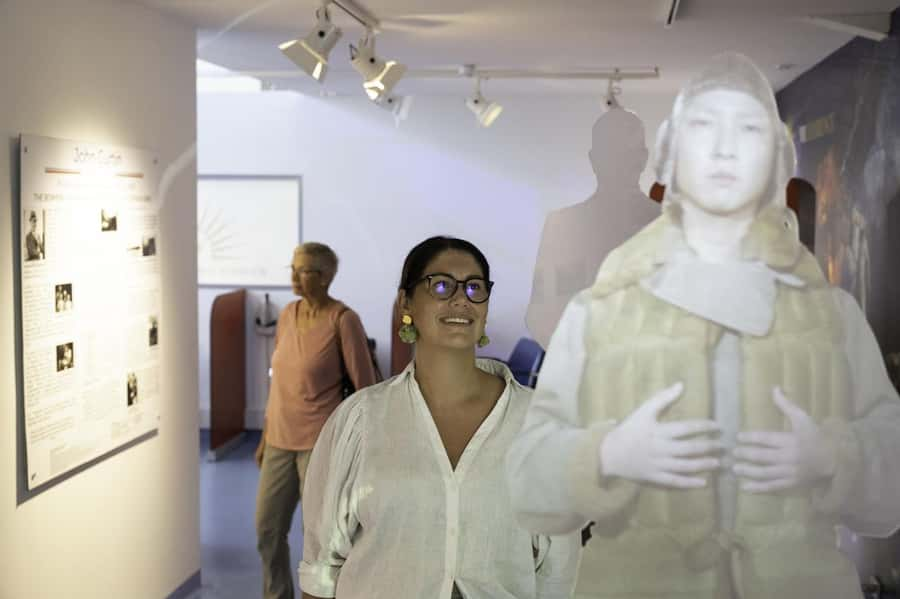
Darwin’s WWII story is not told here with dusty panels alone. At Stokes Hill Wharf, the Bombing of Darwin comes through holographic cinema, virtual reality, and a viewing platform linked to the events of 1942. You also meet the Royal Flying Doctor Service through aircraft displays and interactive exhibits.
I like the clear two-part focus: one story explains how the RFDS began aeromedical work in the Northern Territory in 1939, while the other brings the 1942 raids into view. I also like the choice of formats, especially the VR and holographic sessions, which give younger visitors and technology-minded adults a strong reason to pay attention.
The main consideration is timing. This is self-guided, but the holographic cinema and Window of the 1942 bombing platform have set session times, and you need about 1.5 hours to see everything. Arrive late and you may miss part of the program.
Key points to know before you go
- Two major Australian stories share one visit: Learn how the RFDS developed alongside the story of Darwin’s wartime bombing.
- A real Pilatus PC-12 is on display: You can see a decommissioned RFDS aeromedical aircraft and understand the practical setting in which medical flights operate.
- Modern technology carries the history: VR, holograms, and interactive exhibits add movement and drama to the presentation.
- Allow 1.5 hours: That gives you time for the displays, aircraft, VR experiences, and scheduled cinema sessions.
- Last entry is early: Normal trading days allow entry until 3:00 PM, while public holidays have a 2:00 PM cutoff.
- The $21 price is reasonable: You receive admission, two VR experiences, holographic cinema sessions, a self-guided tour, and audio translators.
Starting at Stokes Hill Wharf in Darwin
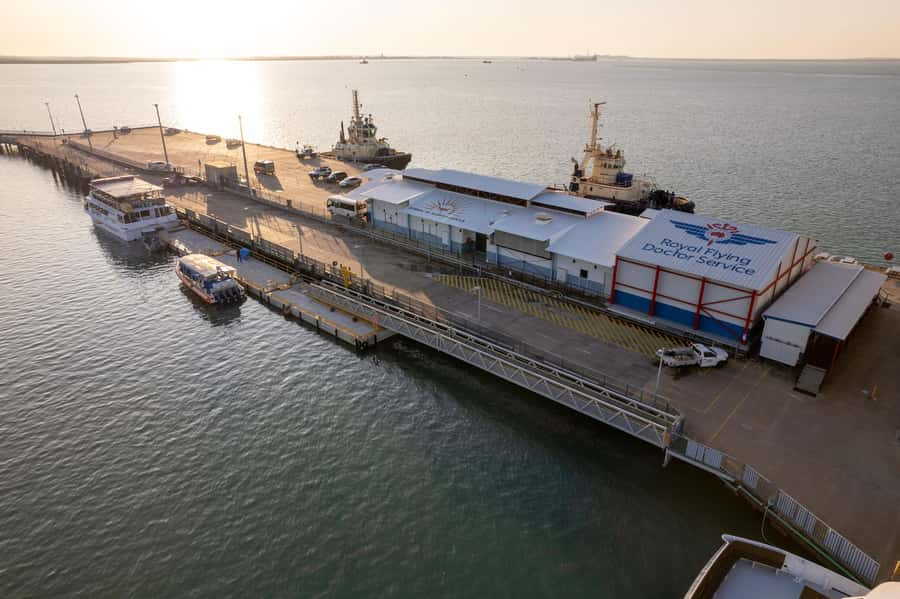
The RFDS Darwin Tourist Facility sits at 45 Stokes Hill Road, Darwin City, at Stokes Hill Wharf. You meet a staff member on arrival, receive an outline of the facility, and get information about the times for the holographic cinema and Window of the 1942 bombing platform.
That short introduction matters. This is not a guided walk where someone leads you from room to room at a fixed pace. You set your own rhythm, but some of the most important presentations run at particular times. I would begin by checking those times before spending too long with the first displays.
The host or greeter speaks English. Headset audio translators are included, and the facility is wheelchair accessible. The overall setup is designed for independent visits, with staff available if you need help understanding how an exhibit works or where to go next.
You should plan around 1.5 hours. That is long enough to take in the main material without rushing, though the technology may encourage you to linger. One useful feature of a self-guided visit is that you can spend extra time with the story that interests you most.
More WWII and D-Day Tours in Australia:
- Darwin: Bombing of Darwin WW2 Tour with Harbor Cruise
★ 4.8 · 170 reviews - Amsterdam: Life of Anne Frank and World War II Walking Tour
★ 4.8 · 10,467 reviews - Berlin: Third Reich & Cold War Guided Walking Tour
★ 4.9 · 8,378 reviews
How the RFDS story takes shape
The Royal Flying Doctor Service began its aeromedical operations in the Northern Territory in 1939. The exhibition follows its birth and growth, showing why aircraft became such an important tool for providing medical help across remote Australia.
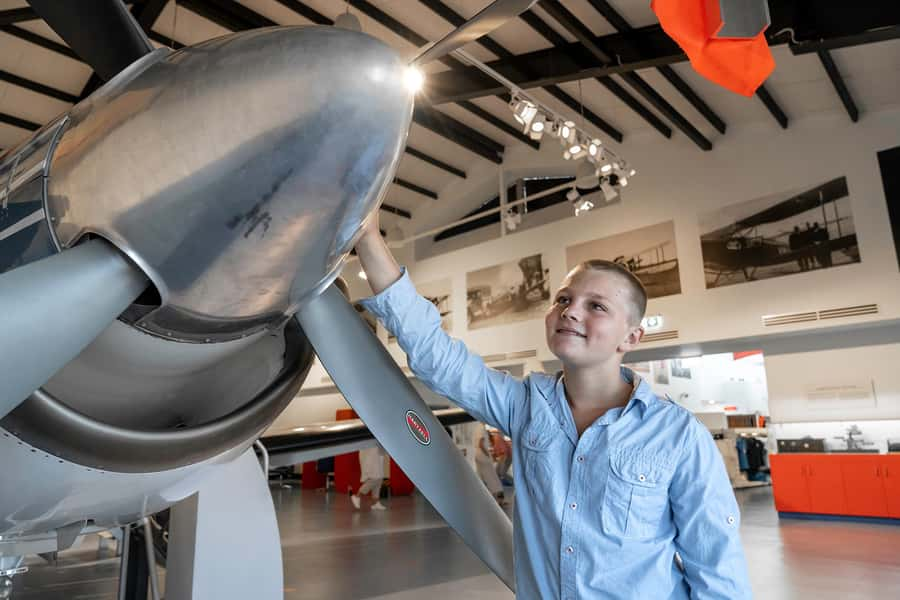
You do not just read that the service used planes. The display includes a decommissioned RFDS Pilatus PC-12, a fully equipped aeromedical aircraft. Seeing the aircraft in person helps turn a broad idea into something practical: a medical team, equipment, and patients all had to fit into a working plane.
The aircraft is one of the strongest parts of the visit for anyone interested in engineering, aviation, emergency care, or Australian life outside the major cities. I would take time to look at the interior rather than treating the plane as a quick photo stop. The point is to understand the working environment of aeromedical care.
The RFDS section also gives families a useful way into the subject. Younger children may not stay focused on long historical text, but an aircraft and interactive displays provide a clear starting point. Adults can then add the wider story of how the service developed in the Northern Territory.
Because the tour is self-guided, the amount you get from this section depends on how carefully you use the displays. You can move quickly if you have limited time, but that would miss the value of seeing the RFDS as more than a familiar Australian symbol. The facility shows the practical side of the work.
Facing the Bombing of Darwin in 1942
The second story covers the Bombing of Darwin Harbour in 1942. The raids brought the war directly to Australian soil, and the exhibition focuses on the drama of those attacks, along with the people who survived them.
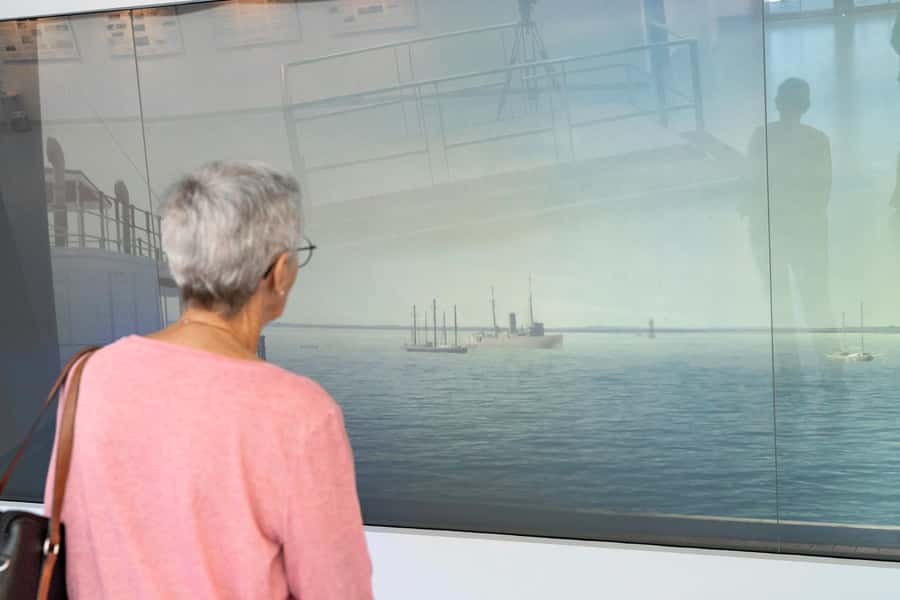
The presentation uses state-of-the-art technology rather than relying only on photographs and written panels. At the Window of the 1942 bombing platform, you get a dedicated view into the events of the raids. The holographic cinema adds another layer, using filmed or projected storytelling to present the people and moments connected with the bombing.
I find this approach useful because wartime history can feel distant when it is reduced to dates. The technology gives the story a stronger sense of sequence and human reaction. You hear heroic stories of survival and discover details about the raids through a presentation built to hold your attention.
The experience is still an exhibition, not a full historical documentary or battlefield tour. You should expect a focused account rather than a long academic treatment of every military decision and consequence. That is a fair trade for a visit that stays accessible and can be completed in about 90 minutes.
The bombing section may be especially useful for visitors who know little about Darwin’s wartime role. It also works for people who already have some background, since the VR and holographic elements present the subject in a different way from a standard museum display.
What the VR and holograms add
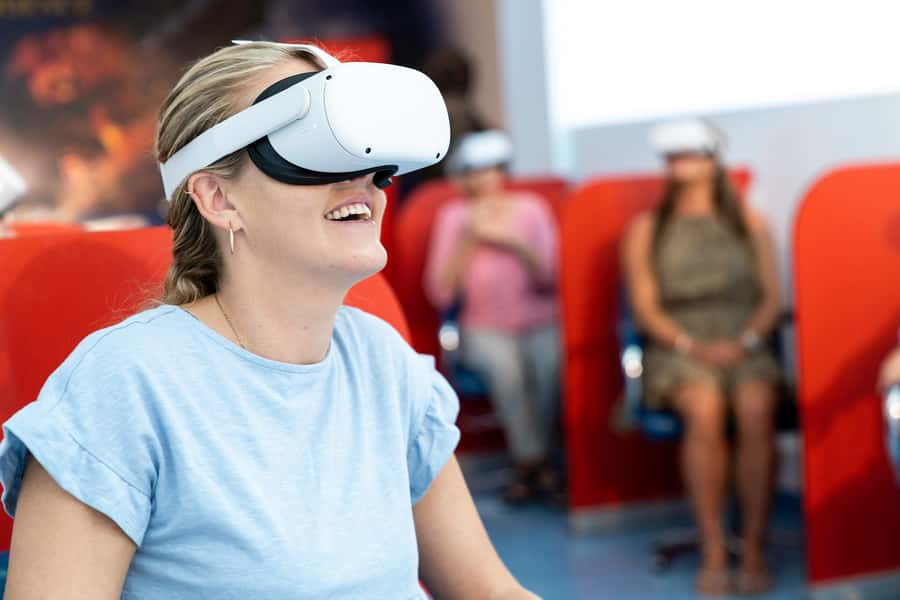
The two virtual reality experiences are included with admission. Their main value is not simply novelty. They give you another way to picture events that are difficult to understand from a flat display.
The facility also uses interactive storytelling holograms and scheduled holographic cinema sessions. These newer formats were a strong part of the experience for visitors who appreciated having several different ways to learn. I would check the session times as soon as you arrive, then build the rest of the visit around them.
The technology is likely to appeal most to families, teenagers, and adults who prefer visual storytelling. It also helps break up the reading. You can move from a text display to a virtual experience, then return to the historical material with a better sense of what the exhibition is explaining.
There is a small tradeoff. Technology works best when you have enough time and when the equipment is operating as intended. Since the visit includes several formats, it can feel more like a series of short presentations than one continuous tour. That is not a serious problem, but you should expect variety rather than a single flowing narration.
The strongest plan is to treat the VR and holograms as part of the history, not as separate attractions. Read enough of the surrounding information to understand what you are seeing. The equipment gives the story shape, while the written material gives it context.
More History Tours in Australia:
- Ultimate Melbourne Walking Tour: History, Laneways & Culture
★ 5.0 · 1,451 reviews - Puffing Billy Railway: Heritage Steam Train Journey
★ 4.6 · 1,195 reviews - Morning World Heritage Cruise on the Gordon River from Strahan
★ 5.0 · 1,193 reviews - Strahan: World Heritage Cruise on Gordon River with Lunch
★ 4.8 · 1,143 reviews
A self-guided visit with staff nearby
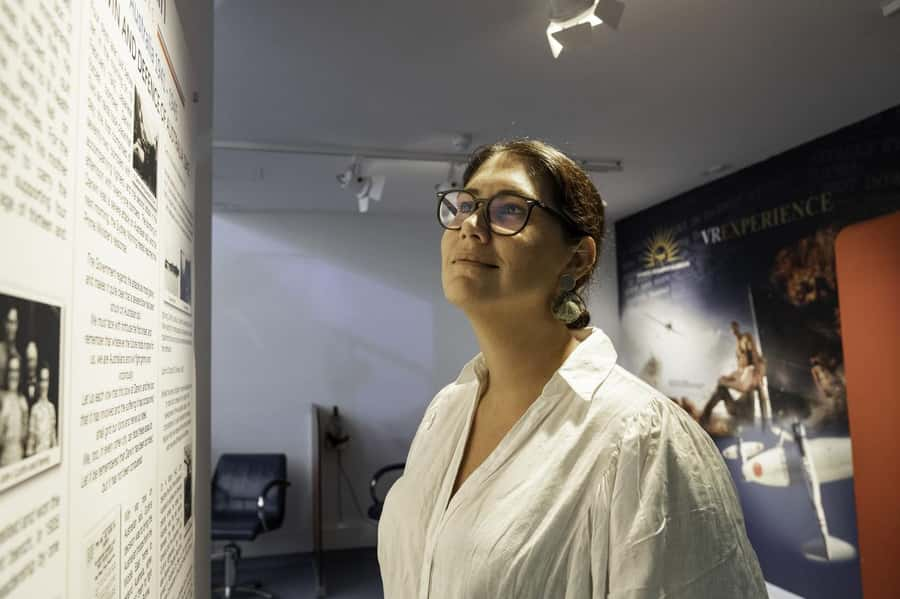
You are not assigned a personal guide for the full visit. Instead, staff provide an introduction and remain available to assist. This arrangement keeps the price down and lets you choose how long to spend at each display.
I like this format for a facility with two different subjects. You may want to spend more time with the RFDS aircraft, while someone in your group may be more interested in the bombing exhibits. A fixed group tour would make that harder.
The downside is that you need to manage your own time. No guide will gather everyone and announce that it is time to move on. That makes the first arrival briefing important, especially if you want to catch the cinema session and bombing platform presentation.
The experience is in English, with headset audio translators included. If you need assistance, ask staff early rather than waiting until a scheduled session is about to begin. That gives you a better chance to understand the layout and use the equipment without pressure.
Is $21 good value?
At $21 per person, I consider this a solid-value attraction in Darwin, particularly if you use all the included features. Your admission covers the self-guided tour, two VR experiences, holographic cinema sessions, headset audio translators, and access to the RFDS aircraft display.
The price makes more sense when you view this as a 1.5-hour indoor activity rather than a quick museum stop. You are not paying only to look at one aircraft or a wall of photographs. The ticket combines aviation, medical history, wartime history, and several forms of digital presentation.
Value also depends on your interests. If you enjoy Australian history, aircraft, emergency services, or interactive exhibits, you are likely to use most of what is included. If you prefer a traditional museum with long written explanations and original objects, the technology may feel like the main attraction rather than an extra.
The admission is also practical for a hot or wet period in Darwin, though the supplied information does not describe the full climate setup or every indoor area. The facility’s wheelchair accessibility is helpful for visitors who need step-free access, and the self-guided pace lets you take breaks as needed.
The ticket is valid for six months, but that refers to the booking validity, not the length of the visit. Check available starting times before you go, and remember that last entry is 3:00 PM on normal trading days and 2:00 PM on public holidays.
Who should make time for this visit?
I would recommend it to anyone who wants a clear introduction to two important Darwin stories without committing to a long guided tour. Families should find the aircraft, VR, and holograms easier to approach than a display made only of text.
It also suits adults with a particular interest in aviation or the RFDS. The Pilatus PC-12 gives the visit a physical focus, and the wider exhibits explain how aeromedical work fits into the Northern Territory story.
History-minded visitors will appreciate the Bombing of Darwin section, especially if they want to understand why the 1942 raids matter to Australian history. The visual technology adds drama, though you should not expect a complete military history of the Pacific War.
I would be less likely to recommend it if you have only a few minutes before another booking. The last-entry rules and scheduled presentations make this a poor choice for a rushed stop. Give yourself the full 1.5 hours, and arrive early enough to learn the session times.
It is also a good rainy-day or very hot-weather option, though the facility should not be treated as a substitute for every other Darwin history site. Its strength is focus: two stories, presented through a mix of real equipment and digital exhibits.
Practical timing for a better visit
Try to arrive well before the final entry time. On ordinary trading days, entry ends at 3:00 PM. On public holidays, the cutoff is earlier at 2:00 PM.
At the entrance, ask about the holographic cinema sessions and the Window of the 1942 bombing platform. Then decide how to divide your time between the RFDS displays, aircraft, VR experiences, and bombing exhibits.
A sensible order is:
- Get the staff briefing and note the scheduled presentation times.
- Explore the RFDS story and the Pilatus PC-12.
- Complete the VR experiences when convenient.
- Attend the holographic cinema session and visit the bombing platform.
- Return to any display that needs more time before leaving.
That order is only a suggestion. Since the visit is self-guided, you can switch it around. The important thing is not to leave the scheduled elements until the end.
Free cancellation is available up to 24 hours before the visit, and you can reserve now while paying later. Those options help if your Darwin schedule is still changing. The booking remains valid for six months, subject to available starting times.
Should you book the RFDS and Bombing of Darwin experience?
I would book this for a focused, technology-led look at Darwin’s wartime story and the development of the RFDS. The $21 admission gives you several different formats, not just a basic entry ticket, and the real Pilatus PC-12 adds a useful physical connection to the aeromedical story.
Book it if you enjoy visual exhibits, have about 1.5 hours, and want an accessible introduction to two important subjects. Skip it only if you need a fully guided tour, a much longer military history presentation, or a very quick attraction between other plans.
Arrive early enough to check the session times. That one small step will help you get the full value from the VR, holograms, bombing platform, and RFDS displays.
FAQ
How long does the visit take?
Allow 1.5 hours to view the facility in its entirety.
What does admission include?
Admission includes a self-guided tour, headset audio translators, two virtual reality experiences, and holographic cinema sessions.
Where is the facility located?
The RFDS Darwin Tourist Facility is at 45 Stokes Hill Road, Darwin City, Northern Territory 0800, Australia.
What time is the last entry?
Last entry is at 3:00 PM on normal trading days and 2:00 PM on public holidays.
Is the facility wheelchair accessible?
Yes, the facility is wheelchair accessible.
Can I cancel my booking?
Yes. You can cancel up to 24 hours in advance for a full refund. You can also reserve now and pay later.
Just added around Australia
- Authentic Indigenous Cultural Tour Including Scenic River Cruise★ 5.0 · 88 reviews
- Cairns History Walking Tour★ 5.0 · 52 reviews
- Entry Ticket at Historic Village Herberton★ 5.0 · 114 reviews
- Self-Guided Ngilgi Cave Ancient Lands Experience★ 4.5 · 154 reviews
- Hinterland Heritage Wine Tour★ 4.0 · 28 reviews
- Albany’s Historic Whaling Station Admission Ticket★ 4.5 · 86 reviews
- 7 Day Adelaide to Uluru Adventure and Cultural Tour★ 5.0 · 52 reviews
- Sydney Convicts, History & The Rocks 2.5-Hour Walking Tour★ 4.9 · 181 reviews
Australia History Tours, compared.

Ultimate Melbourne Walking Tour: History, Laneways & Culture
Read our review →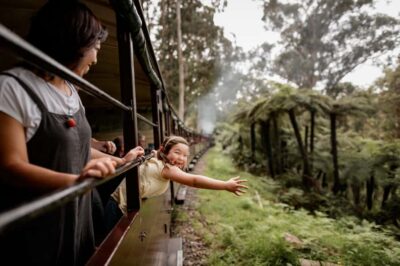
Puffing Billy Railway: Heritage Steam Train Journey
Read our review →
Morning World Heritage Cruise on the Gordon River from Strahan
Read our review →
Strahan: World Heritage Cruise on Gordon River with Lunch
Read our review →
Sydney: The Rocks 90-Minute History Walking Tour
Read our review →
Experience History onboard The Mary Valley Rattler
Read our review →
Snorkel & Dive the Reef: Sustainable, Scientific & Cultural Tour
Read our review →
Derwent River Historic Harbour Cruise From Hobart
Read our review →Browse the lists this tour appears in