
Review · HISTORY TOURS
Yerevan: Garni, Geghard, Symphony of Stones & Lavash Baking
The best thing about this six-hour Armenia day trip is its variety. In one outing, you see a pagan temple, a medieval monastery carved into rock, a striking basalt canyon, a Mount Ararat viewpoint, and a traditional bread demonstration. Guides such as Yegor, Igor, Hasmik, and Mery are often praised for clear storytelling and a warm manner.
I like the way the tour connects major sights near Yerevan without demanding a full day on the road. I also like the price: at $23 per person, transport, guiding, and lavash baking make this one of the more useful low-cost introductions to Armenia. The main caution is organization. Some departures combine languages, and the lunch stop, vehicle temperature, or group control may not suit everyone.
Key things to know before booking
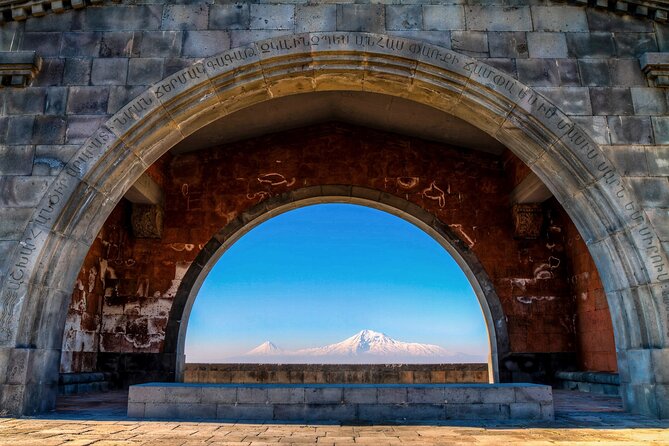
- Mount Ararat comes first: Charents Arch gives you the tour’s classic opening view, though clouds can hide the mountain.
- Geghard is the spiritual highlight: This UNESCO-listed monastery combines cliff scenery, stone chambers, and centuries of Armenian religious history.
- Garni is Armenia’s rare pagan survivor: The first-century temple is unlike the other stops and offers a window into pre-Christian Armenia.
- The Symphony of Stones requires a ticket: Admission costs 300 AMD and weather can affect access or enjoyment.
- Lavash baking is brief but worthwhile: You watch the bread being made and taste it, though this is not always a hands-on class.
- Budget for separate admission: Garni costs 1,500 AMD, and the Symphony of Stones costs 300 AMD.
Why this six-hour route works so well
Armenia rewards a trip that mixes culture with scenery. This route does that neatly, beginning with a famous mountain view and then moving through religious, historical, and natural sites around the Azat Canyon area.
You start at 9:00 a.m. near the Komitas Yerevan State Conservatory on Sayat-Nova Avenue. The group can include up to 20 people, and transport is provided in a minibus or similar vehicle. That makes the tour easy for anyone who wants to see several important places without arranging a private car.
I especially like the balance of famous sights and smaller details. Garni and Geghard are the main reasons to book, but the Charents Arch viewpoint and lavash demonstration give the day more character. You get a sense of Armenia as a country of old faiths, dramatic rock formations, strong food traditions, and mountain views that carry national meaning.
The low price is a real advantage. Your fee includes the guide, transport, and bread demonstration. You still pay 1,500 AMD to enter Garni and 300 AMD for the Symphony of Stones, but those extra charges are modest. The bigger cost to watch is time at lunch, since some departures have included a long restaurant stop that was not always clear in advance.
Other history tours people book around the world:
- Prague: Medieval Dinner with Unlimited Drinks
★ 4.4 · 19,847 reviews - Pompeii: Entry Ticket and Guided Tour with an Archaeologist
★ 4.8 · 19,459 reviews - History and Hauntings of Salem Guided Walking Tour
★ 5.0 · 14,564 reviews
Charents Arch and the search for Mount Ararat
The first stop is Charents Arch, a viewpoint near the village of Voghjaberd. The structure was designed by architect Rafael Israelyan in 1957, and a line from poet Yeghishe Charents is carved on the front. The words express Armenia’s attachment to Mount Ararat, known in Armenian tradition as Masis.
This is more than a quick photo stop. Your guide can explain why Ararat matters so much to Armenian identity, even though the mountain is now across the border. On a clear day, the view is the visual introduction the rest of the tour needs.
You should keep your expectations flexible. Several departures have been affected by cloudy or unclear skies, and snow or bad weather can change the route. If Ararat disappears behind cloud, the stop still has cultural value, but the view is the main attraction. Allow about an hour here, including travel and explanation.
Geghard Monastery, carved into the cliffs
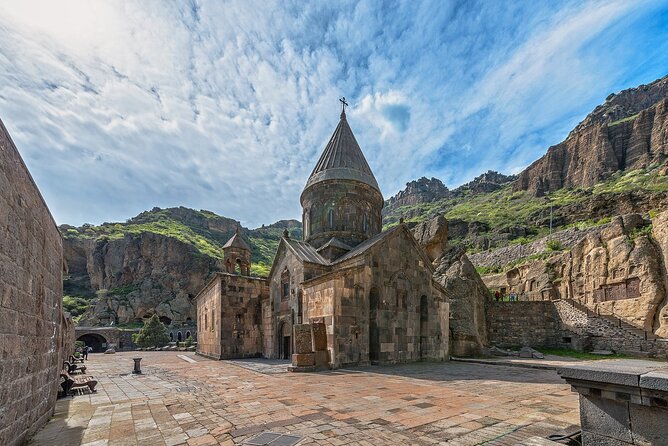
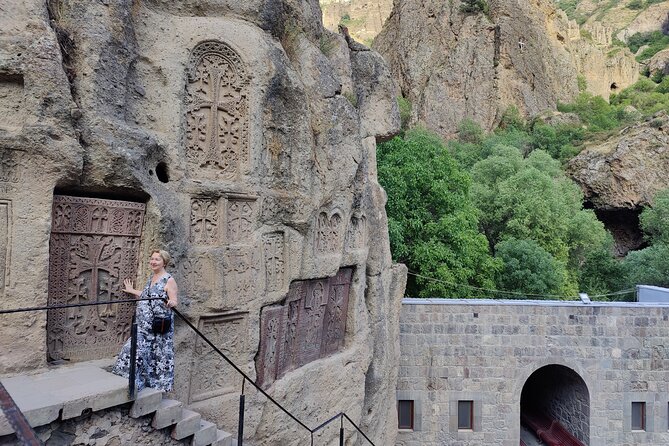
Geghard is the most atmospheric stop. The medieval monastery sits among steep cliffs, with parts of the complex cut directly into the surrounding rock. The name Geghardavank means Monastery of the Spear, referring to the spear said to have wounded Jesus at the Crucifixion. The relic is now kept in the treasury at Echmiadzin.
The monastery has UNESCO World Heritage status with enhanced protection. That designation makes sense once you see how the buildings, rock chambers, and canyon walls work together. This is not simply a church dropped into a scenic setting. The mountain is part of the architecture.
Give yourself time to notice the details. Stone crosses, shadowed interiors, carved walls, and the quiet of the surrounding cliffs make Geghard feel different from Garni. Some guides have also included spiritual singing inside the monastery, which can add a powerful sense of place, though you should not assume it will happen on every departure.
The guide’s explanation matters here. The religious references can be unfamiliar, and the site has layers of Armenian history that are difficult to absorb from a quick walk-around. Guides including Igor, Yegor, Hasmik, and Mery have been praised for explaining symbols, customs, and historical events in accessible English.
Admission is listed as free, but the site can be uneven and the walk may involve steps or rough ground. Wear shoes that are comfortable for walking, especially if conditions are wet or icy.
The Symphony of Stones in Azat Canyon
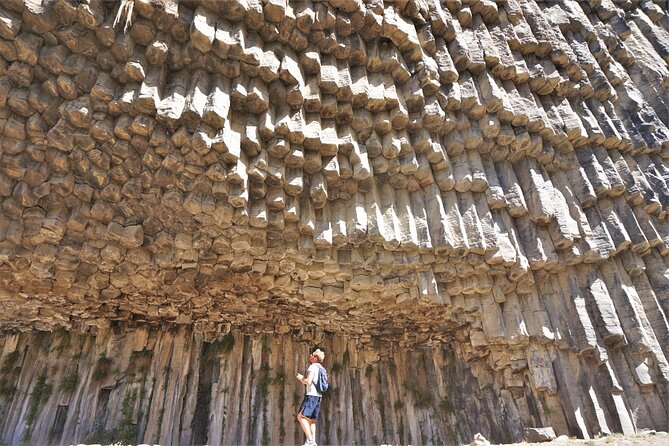
The Symphony of Stones is the tour’s natural oddity. Along the canyon, tall basalt columns form regular hexagonal shapes. Their arrangement looks like the pipes of a giant organ, which explains the name.
This is the place where the tour shifts from built heritage to geology. The stone columns were shaped by natural forces, but their straight lines and repeated angles look almost designed. You can view them as a quick scenic stop or spend more time taking in the canyon walls and the contrast between the dark basalt and open sky.
Admission costs 300 AMD and is not included. That is a small extra charge, but you should carry local currency or be ready to pay as directed by the operator. The stop is also sensitive to weather. Snow, ice, or poor conditions may make the area harder to reach, and some departures have had to skip it.
One point worth watching is the level of explanation. Some guides give useful context, while others move through the site quickly. If the geological story interests you, ask your guide to explain how the columns formed and how this natural feature relates to the surrounding canyon.
Same city, a different century:
- Athens: Acropolis & up to 5 Archaeological Sites Combo Pass
★ 4.2 · 13,904 reviews - Colosseum: Underground and Ancient Rome Tour
★ 4.7 · 12,691 reviews - Pompeii: Small Group Tour with an Archaeologist
★ 4.8 · 12,264 reviews - Lisbon: History, Stories and Lifestyle Walking Tour
★ 4.8 · 10,902 reviews
Garni Temple and pre-Christian Armenia
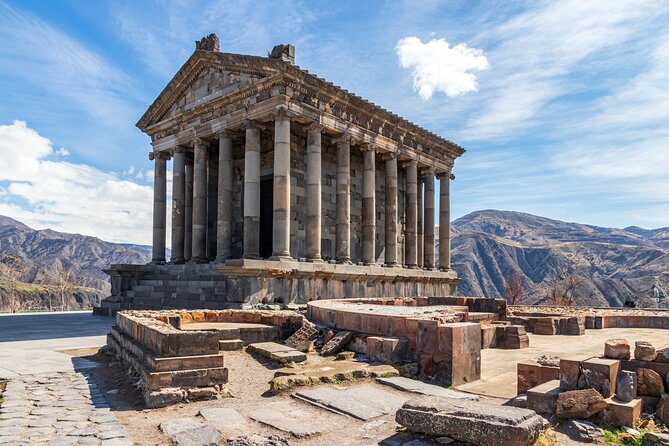
Garni is the historical centerpiece. Built in the first century, the temple was dedicated to Mithra, the sun god. It is the only preserved pagan temple in Armenia and one of the most unusual surviving structures in the former Soviet region.
The temple’s columns and elevated position make it visually impressive, but its real value is what it tells you about Armenia before Christianity. Armenia adopted Christianity early, and many visitors know the country mainly through its monasteries. Garni gives you a different starting point. It shows that Armenian culture did not begin with medieval churches.
The temple was destroyed by an earthquake in 1679 and restored between 1968 and 1975. Your guide can help separate the ancient remains from the modern reconstruction, which is important if you want to understand what you are seeing rather than simply take photographs.
Garni admission costs 1,500 AMD and is not included in the tour fee. This is the largest extra ticket of the day, but it is reasonable for a site of this importance. Plan on about an hour at the temple and its grounds.
The site can feel busier than Geghard, and the visit may seem short if you want a slow archaeological look. Still, the combination of temple, canyon views, and historical context makes Garni essential for a first excursion from Yerevan.
Lavash baking in a family-style setting
The final scheduled experience is a lavash baking demonstration in the Garni area. Lavash is Armenia’s famous flatbread, and watching it prepared gives the day a practical, human finish after so many monuments.
The demonstration is included in the price and usually lasts about 40 minutes. You can expect to see the bread prepared and baked, then taste it. Some outings have taken place at a family-run restaurant with a courtyard, where food, fruit trees, and the informal setting added to the appeal.
Be clear about what master class means here. This is generally a demonstration rather than a full hands-on workshop. Some people find the short presentation fascinating, while others expect to shape and bake the bread themselves and feel let down. If you want detailed instruction, ask at the start whether participation is planned.
Lunch can also affect your impression of this part of the day. The tour information includes lavash baking but does not list a meal as an included feature. In practice, some groups have stopped at a restaurant in Garni, and reports about the food, price, and waiting time vary. I would treat lunch as optional spending, not as a reason to book the tour.
Guides, transport, and group size
The strongest part of this experience is usually the guide. Names connected with highly praised departures include Yegor, Igor, Hasmik, Mery, Taku, Gania, Anna, Ani, and Zhenya. The best guides explain Armenian history with energy, answer questions, and keep the day moving without making every stop feel rushed.
Yegor has been singled out for his humor, historical explanations, Armenian music played during the drives, and patience with questions. Hasmik has been described as warm, organized, and gifted at storytelling. Igor is praised for passion and clear explanations. These details matter because the sites are much more rewarding when someone explains the religious symbols, national history, and cultural meaning behind them.
Transport is usually a comfortable, clean minibus, but conditions can vary. Some departures have been comfortable and air-conditioned. Others have had complaints about poor air conditioning or a driver who did not adjust the temperature. One report also raised concerns about fast driving, while other comments praised careful drivers in difficult snowy conditions.
The maximum group size is 20. That is still manageable, but a full minibus can make group control important. A few departures have combined English and Armenian speakers, which can lengthen explanations and create confusion if the guide does not clearly gather everyone at each stop. If a bilingual departure matters to you, confirm the format before booking.
Timing, lunch, and the real value of $23
At $23, this tour offers a lot. You receive transport from central Yerevan, an English-speaking guide, several major sites, and the lavash experience. Booking independently would require arranging transport to multiple locations and paying the same site fees on top of that.
The tour is advertised at about six hours, but the actual rhythm can change. A smooth departure gives you enough time at each stop and returns you to the meeting point after Garni. A long meal, delayed vehicle, weather change, or multilingual commentary can stretch the day.
The lunch issue deserves special attention. Some outings have included a restaurant stop of an hour or more, with complaints about long waits and prices that did not match the quality. Other departures have featured tasty food in a pleasant courtyard. You can enjoy the meal if the setting appeals to you, but do not assume it is included or that it will be the highlight.
For the best value, focus on the included structure: transport, guiding, and access to a carefully chosen group of sites. Think of lunch as an extra decision, not part of the core bargain.
Who should book this Yerevan day trip?
I would recommend this outing to a first-time visitor who wants a broad introduction to Armenia beyond the capital. It suits solo travelers particularly well because the group format offers an easy way to meet people, and the price avoids the cost of hiring a private vehicle.
It is also a good fit if you enjoy history, religious buildings, dramatic rock formations, and traditional food. You do not need specialist background knowledge. A good guide will give you enough context to understand why Garni, Geghard, and Ararat matter.
You may want a private tour instead if you dislike group timing, need guaranteed English-only commentary, or want to linger at one site. You may also prefer another option if a hands-on lavash class is essential. This experience gives you a short demonstration, not a full cooking course.
Wear practical shoes and bring water. Keep your schedule flexible for mountain weather, and remember that Ararat is not guaranteed to appear through cloud. Also leave room in your budget for the Garni and Symphony of Stones entrance fees.
Should you book it?
Yes, if you want an affordable and varied introduction to Armenia from Yerevan. The route covers the country’s most useful nearby contrasts: a mountain viewpoint, a cliff monastery, unusual basalt formations, a pagan temple, and lavash.
Book it with realistic expectations. The sights are the real reason to go, and the strongest guides can make the day memorable. The weak points are possible bilingual commentary, uneven group organization, vehicle comfort, and a lunch stop that may take longer or cost more than expected.
For $23, the core package is hard to fault. If your priority is seeing major sites efficiently and hearing Armenian history from a local guide, this is a smart choice. If you want total control, long visits, or an interactive baking lesson, pay more for a private or more specialized experience.
FAQ
How long does the tour last?
The experience lasts approximately six hours and begins at 9:00 a.m. It ends back at the meeting point in Yerevan.
Where does the tour begin?
The meeting point is Komitas Yerevan State Conservatory, 1a Sayat-Nova Avenue, Yerevan 0001, Armenia.
Is transportation included?
Yes. Transport service is included in the tour price, generally using a minibus or similar vehicle.
Are entrance fees included?
No. Garni costs 1,500 AMD, and the Symphony of Stones costs 300 AMD. These fees are paid separately.
Is the lavash baking class included?
Yes. Lavash baking is included, and the scheduled experience lasts about 40 minutes. It is primarily a demonstration, although the exact level of participation can vary.
Is the tour offered in English?
Yes. The experience is offered in English. Some departures may also combine English and Armenian groups, so confirm the language format if this is important to you.
What happens if bad weather cancels the tour?
If poor weather causes cancellation, you will be offered a different date or a full refund. The experience also requires a minimum number of participants, and a cancellation for that reason brings the same options.
Just added around the world
- Scenic Train ride to historical cities of Morretes and Antonina★ 4.0 · 188 reviews
- 6-Day Cultural Tour to Machu Picchu★ 5.0 · 76 reviews
- Jewish Heritage of Curacao★ 4.5 · 68 reviews
- The Curacao’s Colorful History Walking Tour★ 5.0 · 55 reviews
- Discover Scuba Diving Amathounta’s Ancient Port★ 5.0 · 30 reviews
- Olous – Guided Snorkelling Excursion to Discover Olous Sunken Ancient City★ 4.5 · 31 reviews
- Night Walking Tour of Medieval Cuenca★ 5.0 · 64 reviews
- WWII – The Battle of Crete Day Tour★ 5.0 · 103 reviews