
Review · SOUTH KOREA
Gyeongju: UNESCO Heritage Tour Including Bulguksa Temple
Gyeongju is Korea’s ancient capital, and this full-day tour gives you a practical way to see its far-flung treasures without wrestling with buses or taxis. You’ll move from royal tombs and an old astronomical tower to Bulguksa Temple and the granite Buddha at Seokguram.
I especially like the comfortable air-conditioned van and the English-speaking guides, including Sue and Steve, who are praised for clear stories, humor, and steady help with photos and crowds. Lunch, admission fees, water, and hotel pickup also make the day easy to manage. The trade-off is pace: seven major stops in eight hours can feel brisk, especially on busy holidays or if you start late.
Key points at a glance
- Bulguksa and Seokguram together: See two of Korea’s most important Buddhist sites in one mountain visit.
- Royal tombs you can walk among: Daereungwon makes Silla history feel close and tangible rather than locked behind museum glass.
- Useful from Busan: Hotel pickup and return save time on a long day trip to Gyeongju.
- A guide adds the missing context: Sue, Steve, Jina, Chris, and Jade have led different departures, with strong praise for their explanations and care.
- Lunch and entrance fees are included: You pay more than for a basic sightseeing bus, but fewer costs appear during the day.
- Small-group or private options: This suits couples, families, and short-stay visitors who want a focused introduction to Gyeongju.
Why Gyeongju makes such a good day trip
Gyeongju served as the capital of the Silla Dynasty for about a thousand years. Its historic sites are spread across a broad area, so a self-guided visit can involve a fair amount of planning and waiting for transport.
This tour solves that problem with hotel pickup in Busan or Gyeongju and a driver who knows the route. The day connects royal burial grounds, Buddhist art, palace remains, traditional homes, and early science. You get a useful first look at how Silla rulers shaped Korean culture, religion, and design.
The schedule is full, but it is not museum-heavy. You walk through open grounds, temple courtyards, village lanes, and a mountain site. That mix keeps the day from becoming a string of indoor explanations.
The biggest benefit is not simply the number of sights. It is the order and connection between them. At Daereungwon, you see the power of the Silla court in its burial mounds. At Cheomseongdae, you see its interest in the heavens. At Bulguksa and Seokguram, you see the Buddhist beliefs that helped define the era. At Wolji Pond, you finish with a royal garden designed for beauty and ceremony.
More UNESCO World Heritage Tours in the world:
- World Heritage Shirakawa-go and Experience Tours from Kanazawa
★ 5.0 · 4,049 reviews - From Tirana: Berat UNESCO Heritage & Belshi Lake Tour
★ 4.9 · 3,863 reviews - Bali: Tanah Lot UNESCO World Heritage Sites Full-Day Tour
★ 4.7 · 1,947 reviews
Bulguksa Temple gives the day its center
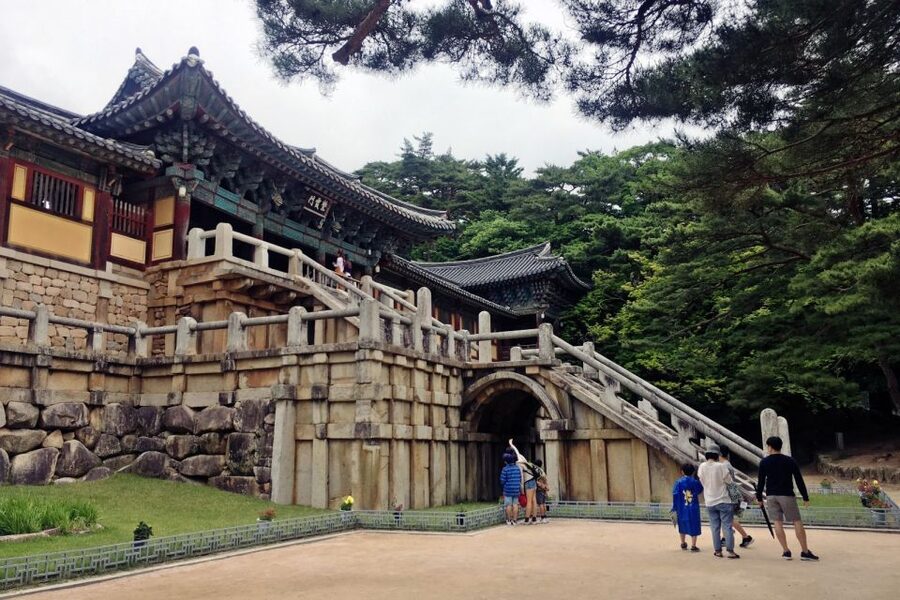
Bulguksa is the emotional center of the outing. The temple is a UNESCO World Heritage Site, and its stone bridges, pagodas, courtyards, and mountain setting give you much more than a quick photo stop.
Allow roughly an hour here with the guide. You’ll see the famous Dabotap and Seokgatap pagodas and learn how the temple’s layout reflects Buddhist ideas. The stonework is the star. Stairs, platforms, and bridges were built with a careful sense of balance, and the complex remains one of Korea’s best places to see Silla-era Buddhist architecture.
You should expect some walking and steps. The experience is more rewarding if you take a little time to look closely at the stone details rather than rushing from one building to the next.
Bulguksa can become crowded, especially during Korean holidays. A good guide matters here because the meaning of the structures is not always obvious from the outside. Guides such as Sue and Steve have been singled out for making Silla stories easy to follow while adjusting the pace to the group.
Seokguram Grotto and the mountain road
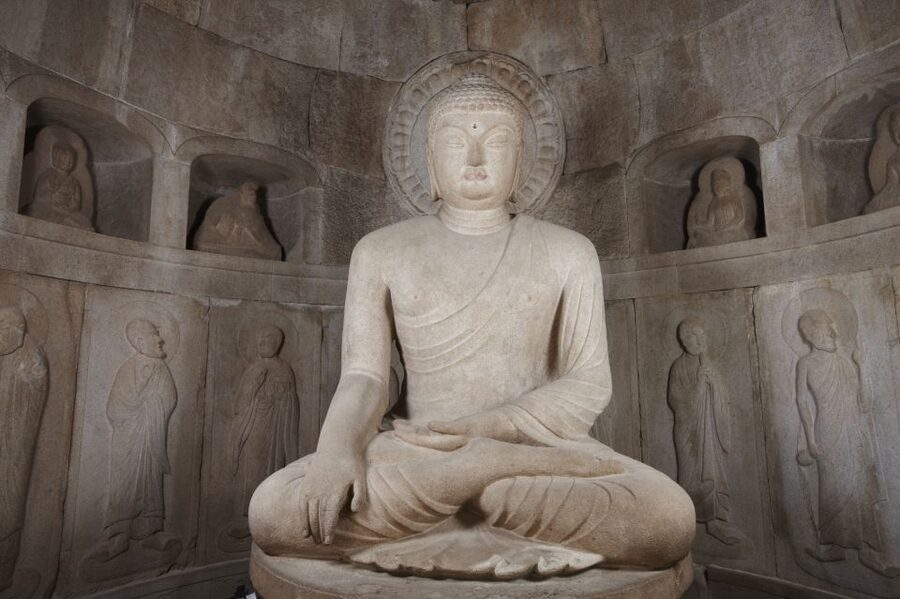
From Bulguksa, the van heads up Tohamsan Mountain to Seokguram Grotto. The trip adds a change of scenery and takes you away from the temple grounds to one of Korea’s most treasured Buddhist works.
Inside the grotto is a granite Buddha surrounded by carved guardian figures. The statue’s calm expression and careful proportions are the focus, while the surrounding stonework shows the skill of Silla artists and builders.
The visit is guided for about an hour. This is not a large open cave where you wander freely. You follow the arranged viewing experience, so your guide’s explanation helps you understand what you are seeing.
One practical detail: the mountain setting can feel cooler than lower Gyeongju, while summer departures can still be hot during the walking portions. The tour includes bottled water, and one guide prepared iced water during a particularly hot day. You might also find small local snacks sold outside the grotto. They are not listed as a formal part of the tour, but a guide may help you try them when time allows.
Bulguksa and Seokguram are particularly valuable together. One shows architecture on a grand scale. The other focuses attention on a single work of Buddhist art. If you have limited time in Korea, this pairing gives you a strong introduction to Silla culture.
Daereungwon turns royal history into a walk
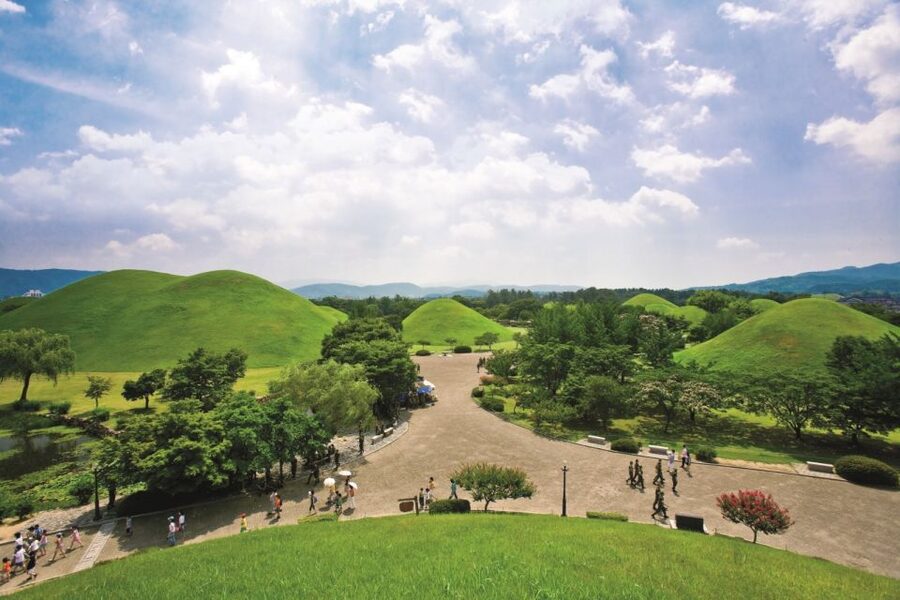
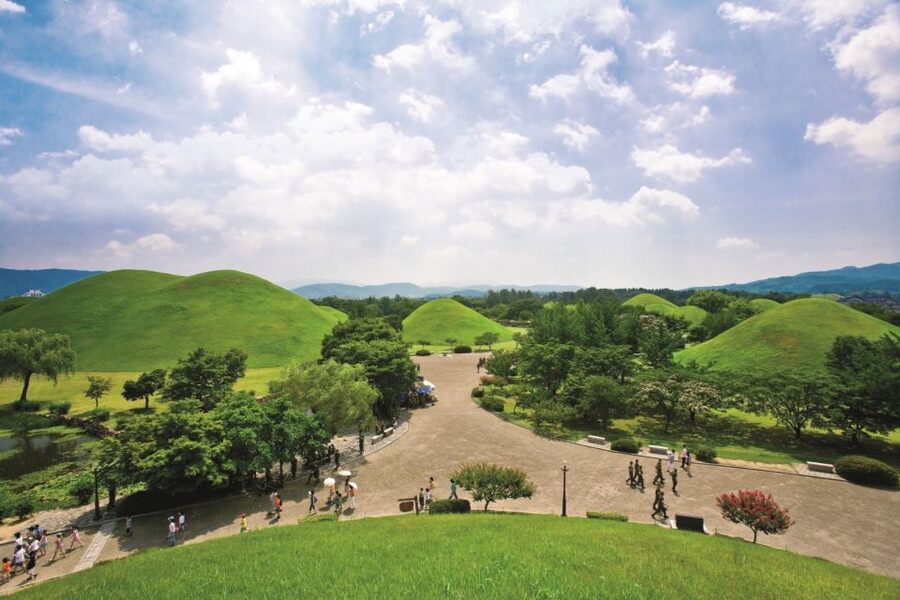
The Daereungwon Tomb Complex is one of the most memorable stops because the history is built into the ground around you. Large grassy mounds rise across the park, marking the burial places of Silla kings and aristocrats.
The tour gives you about an hour here. The open setting makes it easy to appreciate the size and status of the people buried beneath the mounds. Unlike a palace where only foundations may remain, these tombs are immediately visible and easy to understand.
Cheonmachong is the best-known tomb in the complex. It is connected with the famous ancient horse painting, and the burial discoveries help explain the wealth and ceremony of the Silla court. Hwangnamdaechong, one of the largest tombs, adds a sense of scale.
I like this stop because it gives your feet a break from temple stairs while still offering plenty to see. The grass, trees, and low mounds create a quiet setting, but the guide’s stories remind you that these are royal monuments, not simply pleasant park scenery.
More History Tours in the world:
- Prague: Medieval Dinner with Unlimited Drinks
★ 4.4 · 19,847 reviews - Pompeii: Entry Ticket and Guided Tour with an Archaeologist
★ 4.8 · 19,459 reviews - History and Hauntings of Salem Guided Walking Tour
★ 5.0 · 14,564 reviews - Athens: Acropolis & up to 5 Archaeological Sites Combo Pass
★ 4.2 · 13,904 reviews
Cheomseongdae and Silla science
Cheomseongdae takes about 30 minutes, so it is a shorter stop, but it fills an important gap in the day. The stone tower is associated with astronomy and dates to the reign of Queen Seondeok.
It is often described as the oldest existing astronomical observatory in Asia. Its compact form can look simple at first, yet the structure reflects the Silla court’s interest in observing the sky and organizing time.
This is a good example of why a guide adds value. Without context, you may spend a few minutes looking at a stone tower and move on. With an explanation of its age, purpose, and connection to Queen Seondeok, the stop becomes part of a larger picture of Silla science and government.
Do not expect a long visit or an extensive interior experience. Cheomseongdae is primarily an outdoor viewing stop. Its strength is the story, not the amount of time spent there.
Gyochon Village and the Choi Clan home
Gyochon Traditional Village brings you into a different side of Gyeongju. Instead of royal burial mounds or Buddhist monuments, you walk through quiet lanes lined with traditional hanok architecture.
The House of the Gyeongju Choi Clan is a key stop. The home is linked with a prominent local family and gives you a look at how an upper-class Korean household was arranged and maintained.
The village is also a useful pause from the grand national sites. You can focus on rooflines, courtyards, timber details, and the shape of the lanes. When available, you might try Gyeongju Gyodong Beopju, a traditional liquor associated with the area.
The experience is guided for about an hour, although the exact flow can change with traffic, opening conditions, and the group’s interests. Some people may find the village less dramatic than Bulguksa or Seokguram. I see it as a worthwhile contrast, especially if you want more than a checklist of UNESCO sites.
One traveler specifically appreciated being able to visit a village that would have been difficult to reach during a self-guided day. That is a useful point for anyone with only a short stay in Gyeongju.
Wolji Pond is best saved for the end
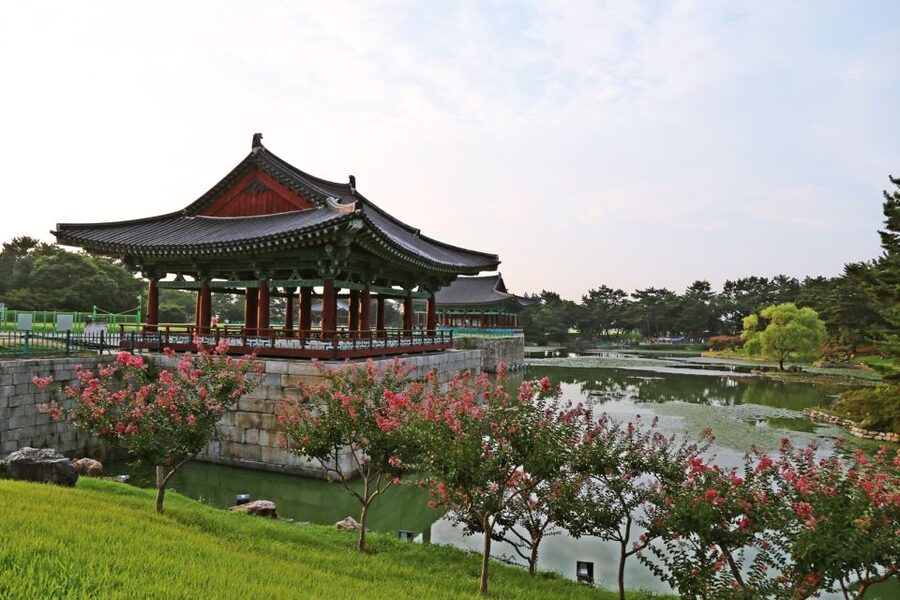
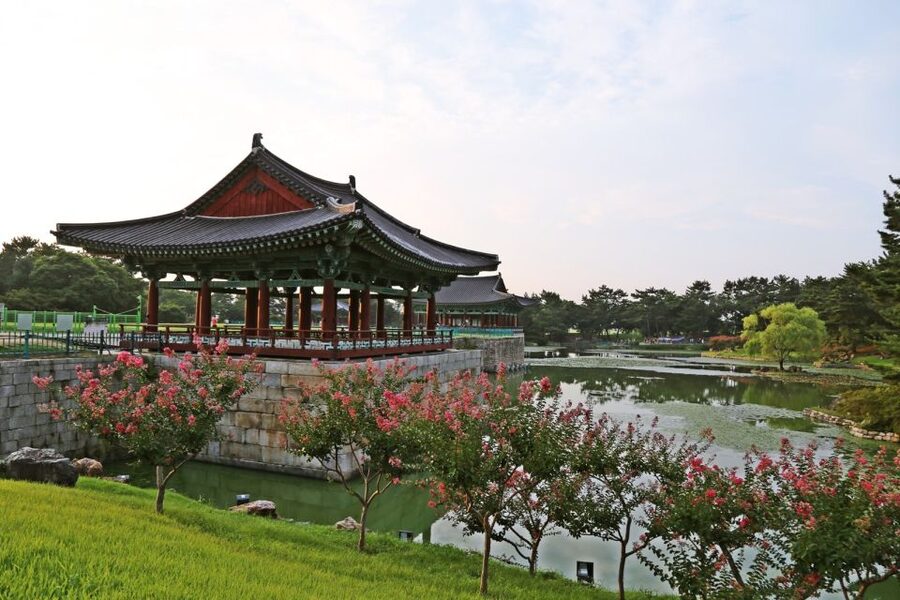
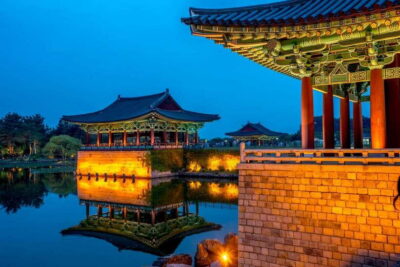
Donggung Palace and Wolji Pond, formerly known as Anapji Pond, is the closing sightseeing stop. King Munmu’s palace garden was designed around calm water, pavilions, and carefully framed views.
The pond is especially attractive later in the day, when the water reflects the buildings and trees. The tour schedule aims to place it toward the end, though the exact light and arrival time depend on traffic and the day’s pace.
Wolji Pond gives the itinerary a graceful finish. After tombs, temples, and stone monuments, you get a place shaped for royal pleasure and evening views.
You should keep expectations realistic. The palace buildings are reconstructed, and the site is not a complete palace complex. Its appeal comes from the arrangement of water, pavilions, and open space, along with the guide’s explanation of how the garden functioned.
The supplied route does not guarantee every possible Gyeongju sight. For example, Woljeonggyo Bridge appears in one account of a day’s sightseeing, but it is not part of the stated seven-stop itinerary. If that bridge is important to you, ask before booking rather than assuming it is included.
What the guide and van add
The guide is a major part of the value. Names vary by departure, but Sue and Steve receive especially strong praise for clear explanations, humor, and the ability to keep a full day moving. Jina has also led private-feeling outings, while Chris and Jade have guided other departures.
That does not mean you are guaranteed a particular person. It does show that the operator uses several English-speaking guides with different styles. Sue is known for helping with practical details, explaining history in an entertaining way, and making visitors feel looked after. Drivers such as Joe and Mr. Jion have also helped with photos, directions, and group timing.
The air-conditioned van matters because Gyeongju’s sites are spread out. You can rest between stops instead of losing time on transfers. Pickup and return are available from hotels or chosen locations in Busan or Gyeongju, which makes this a simple option for a day trip from Busan.
The group may be private or small. A small group gives you some chance to ask questions and adjust the pace, though a packed schedule still limits how much time you can spend at each stop.
Lunch, price, and overall value
At $189 per person, this is not the cheapest way to see Gyeongju. The price is easier to justify if you are starting in Busan, have just one day available, and value a private or small-group vehicle, an English-speaking guide, lunch, water, and all entrance fees.
A cheaper independent visit may be possible if you are comfortable arranging transport, checking opening times, navigating unfamiliar routes, and choosing where to eat. The tour’s cost pays for convenience and interpretation as much as admission.
Lunch is included and has been a consistent highlight. The meal has included Korean food such as bibimbap, and the guide may eat with the group. That shared meal can make the day feel more personal than a quick restaurant stop where the guide disappears.
One caution is the price difference between departures. A past booking note considered the Gyeongju departure much more expensive than a similar Busan departure. Since prices can vary, compare the available starting point and inclusions before paying.
Free cancellation up to 24 hours in advance and reserve-now, pay-later terms make the booking less rigid. The activity lasts eight hours, but check the available start time because the exact schedule affects traffic, crowds, and the light at Wolji Pond.
Who should book this Gyeongju day tour
I would choose this tour if you are based in Busan, have limited time, and want the major Silla sites explained in English. It is also a good fit for families, couples, and first-time visitors who prefer a driver and a planned route.
It works particularly well for anyone who does not want to spend the day comparing bus routes between Bulguksa, Seokguram, Daereungwon, and the central historic sites. The van removes much of that work.
You should think twice if you prefer slow travel. Seven stops leave little room to linger, sketch, browse, or sit quietly at each place. Starting late can shorten the day further. One group missed the final scheduled item after a late start, although the change allowed time for a village visit they wanted.
The tour also suits visitors who learn best through stories. Gyeongju can look like a series of attractive ruins without explanation. A strong guide connects the tombs, observatory, temples, and palace garden into one story about Silla Korea.
Should you book it?
Book this tour if your priority is seeing a lot of Gyeongju in one well-organized day from Busan or Gyeongju. The combination of Bulguksa, Seokguram, Daereungwon, Cheomseongdae, Gyochon Village, and Wolji Pond covers the city’s essential themes, while lunch, admissions, pickup, and transport reduce the small costs and hassles that add up on your own.
Skip it if $189 feels high for a guided day or if you want to explore each site at your own speed. For everyone else, this is a strong practical introduction, especially when you have only one day and want the history to make sense rather than simply pass by the van window.
FAQ
How long does the Gyeongju heritage tour last?
The tour lasts eight hours. The stated guided visits include about one hour each at Bulguksa Temple, Seokguram Grotto, Daereungwon Tomb Complex, Donggung Palace and Wolji Pond, and Gyochon Village, plus about 30 minutes at Cheomseongdae.
Can I join the tour from Busan?
Yes. Hotel pickup and drop-off are available in Busan, and the activity is designed to work as a day trip from the city.
Can I join the tour from Gyeongju?
Yes. Pickup and drop-off are also available in Gyeongju-si.
Is lunch included?
Yes. Lunch is included in the tour price. Bibimbap and other Korean food have been served on different departures.
Are entrance fees included?
Yes. All entrance fees are included, along with bottled water and transport in an air-conditioned van.
Is the tour private or shared?
Private and small-group options are available. The exact group arrangement depends on the booking.
What language does the guide speak?
The live tour guide speaks English. Guide names vary by departure, with Sue, Steve, Jina, Chris, and Jade among the guides associated with different tours.
Just added around the world
- Scenic Train ride to historical cities of Morretes and Antonina★ 4.0 · 188 reviews
- 6-Day Cultural Tour to Machu Picchu★ 5.0 · 76 reviews
- Jewish Heritage of Curacao★ 4.5 · 68 reviews
- The Curacao’s Colorful History Walking Tour★ 5.0 · 55 reviews
- Discover Scuba Diving Amathounta’s Ancient Port★ 5.0 · 30 reviews
- Olous – Guided Snorkelling Excursion to Discover Olous Sunken Ancient City★ 4.5 · 31 reviews
- Night Walking Tour of Medieval Cuenca★ 5.0 · 64 reviews
- Heraklion Highlights: Knossos, Museum & Historic City Drive★ 5.0 · 64 reviews
South Korea History Tours, compared.
From Busan: Gyeongju UNESCO World Heritage Guided Day Tour
Read our review →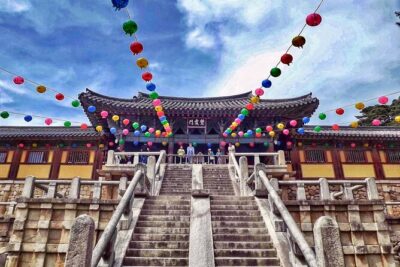
Gyeongju UNESCO World Heritage Guided Day Tour from Busan
Read our review →
Seoul: Evening Dark History, Folklore & Ghost Story Walking Tour
Read our review →
Old Korea Thousand History Tour of Gyeongju from Busan
Read our review →
Hanbok Photoshoot and History Tour at Gyeongbokgung Palace
Read our review →
From Seoul: Dae Jang Geum Park Historic K-Drama Set Tour
Read our review →
Seoul: City Highlights and Historical Experience No Shopping
Read our review →
Busan history and market food tour with local chef
Read our review →Browse the lists this tour appears in