
Review · SOUTH KOREA
Old Korea Thousand History Tour of Gyeongju from Busan
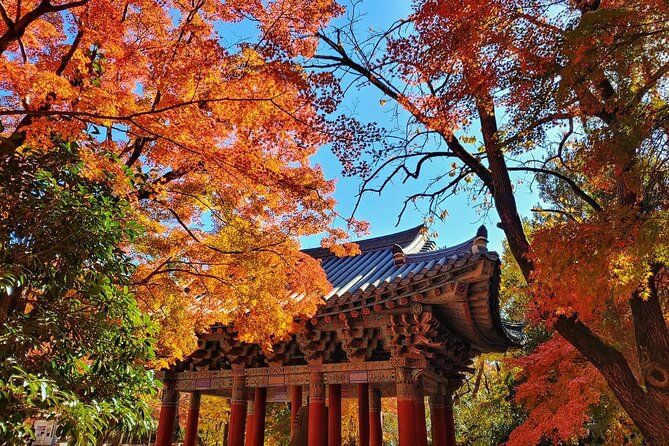
Gyeongju is where Korea’s ancient Silla kingdom comes into focus, and this 12-hour day trip from Busan packs its major sights into one well-organized route. You’ll see Bulguksa Temple, royal burial mounds, traditional homes, palace ruins, and Woljeonggyo Bridge lit after dark.
I like the simple logistics: round-trip transport and attraction admissions are included, so you can focus on the sights instead of piecing together buses and tickets. I also like the guides’ lively approach. Bada, Erica, Kayla, Hyony, Katrina, and Eva are praised for clear explanations, humor, patience, and taking photos for solo visitors.
The tradeoff is time. This is a full day, often running from about 10 a.m. until 10 p.m., with plenty of walking and several short visits. Gyeongju can also feel much hotter than Busan, so bring water, sunscreen, a hat, and good walking shoes.
Key points to know before booking
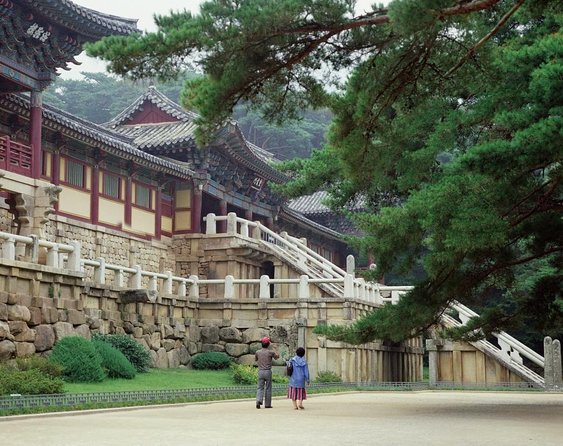
- Bulguksa Temple opens the day with Silla-era stonework, mountain scenery, and one hour to explore.
- Gyeongju’s royal tombs are large grassy mounds, not underground chambers open for viewing.
- Hwangridan-gil gives you two hours for shops, food, and a modern old-town atmosphere.
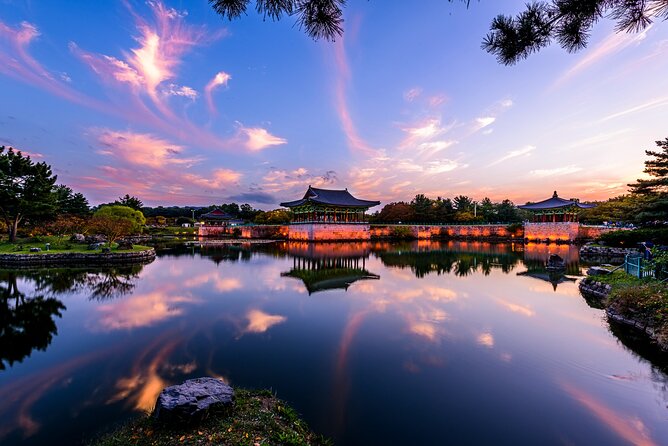
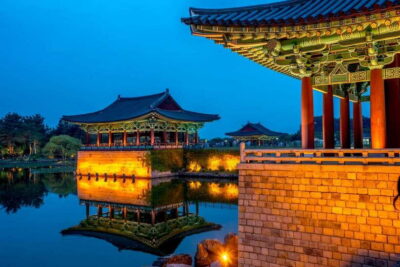
- Donggung Palace and Wolji Pond are especially memorable after daylight fades and the water reflects the lights.
- The tour uses pickup points at Busan Station, Seomyeon Station, and Haeundae Station, not hotel pickup.
- The $64 price includes transport, admissions, and a professional guide, but not meals or personal spending.
Why Gyeongju makes a worthwhile day from Busan
Busan is a modern port city, but Gyeongju tells a much older Korean story. It was the center of the Silla kingdom and later the Unified Silla period, so its important sites are spread across a wide area. That makes a guided day trip useful.
You could visit Gyeongju independently, but you would need to connect several sites by local transport and keep an eye on opening times. This tour removes much of that work. You board in Busan, ride between the main sights, and get commentary that ties temples, tombs, villages, and palace remains into one story.
I especially like the way the route changes character during the day. Bulguksa gives you sacred architecture and mountain surroundings. Daereungwon shows the scale of royal burial grounds. Hwangridan-gil adds food and shopping. The final stops bring in reflected evening light and traditional bridge design.
The day is not relaxed in the resort sense. It is a sightseeing marathon. Still, the air-conditioned bus gives you useful breaks between stops, and the route covers far more than you could comfortably fit into a short independent visit.
More History Tours in the world:
- Prague: Medieval Dinner with Unlimited Drinks
★ 4.4 · 19,847 reviews - Pompeii: Entry Ticket and Guided Tour with an Archaeologist
★ 4.8 · 19,459 reviews - History and Hauntings of Salem Guided Walking Tour
★ 5.0 · 14,564 reviews
Meeting the bus in Busan
The tour begins with pickup at Busan Station, followed by Seomyeon Station and Haeundae Station. The summer schedule lists departures around 10 a.m. from Busan Station, 10:20 a.m. from Seomyeon, and later from Haeundae, though you should check your confirmed meeting details carefully because departure information can vary.
There is no hotel pickup or hotel drop-off. You need to reach one of the designated stations yourself. That is easy enough if you are already near a subway line, but it adds one planning step if you are staying far from the pickup points.
The return to Busan is late. One full-day schedule runs until around 10 p.m., and that matters if you have an evening reservation, a train to catch, or young children who tire quickly. I would keep the night after this tour free.
Group size can reach 400 people overall, although the English-speaking section may be much smaller on some departures. The exact feel depends on the day. Expect an organized group experience rather than a private tour, with fixed meeting times at every stop.
Bulguksa Temple and the first look at Silla artistry
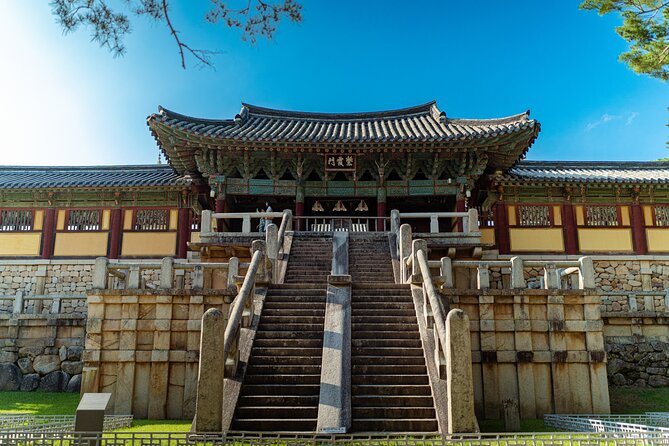
Bulguksa Temple is the strongest opening stop. This UNESCO World Heritage Site is closely tied to the Silla period and sits among attractive natural surroundings. You get about one hour, with admission included.
The temple is important not only as a place of worship, but also as a display of Silla design and stone craftsmanship. Your guide can help you notice how the buildings and stone features relate to the period. Without context, it is easy to snap a few photos and move on. With a good guide, the visit becomes a lesson in how religion, royal power, and art worked together.
One hour is enough for a first visit, but not enough for a slow study of every corner. You may feel hurried if the grounds are crowded or if you want detailed photographs. That is a recurring feature of this day: the tour gives you access to many major places, but rarely unlimited time at one.
Wear shoes with solid support. The day includes more walking than the stop durations suggest, and heat can make even a gentle temple visit tiring. On hot days, guides such as Bada have reminded people to drink water and find shade when possible.
Gyochon Village and Woljeonggyo Bridge by daylight
Gyeongju Gyochon Traditional Village offers a different view of the city. Here, you see hanok-style homes, stone walls, Gyeongju Hyanggyo, local restaurants, and the nearby Woljeonggyo area. The setting feels more residential and human in scale than the monumental temple and tomb sites.
You get about one hour. The village is best approached as a walk through an old-style neighborhood, not as a single grand monument. Look at the rooflines, courtyards, walls, and quieter lanes. The stop can feel brief if you expect a long visit inside several homes. The organized route may take you into only one house or a limited section.
Woljeonggyo Bridge is also part of the Gyeongju story, but its best moment comes later. During daylight, you can appreciate its traditional form and setting over the water. At night, lighting reflects across the surface and gives the bridge a more dramatic appearance. The evening stop is short, so use the earlier visit to get your bearings and save some photo ideas for later.
Same city, a different century:
- Athens: Acropolis & up to 5 Archaeological Sites Combo Pass
★ 4.2 · 13,904 reviews - Colosseum: Underground and Ancient Rome Tour
★ 4.7 · 12,691 reviews - Pompeii: Small Group Tour with an Archaeologist
★ 4.8 · 12,264 reviews - Lisbon: History, Stories and Lifestyle Walking Tour
★ 4.8 · 10,902 reviews
Daereungwon’s royal tombs are about scale
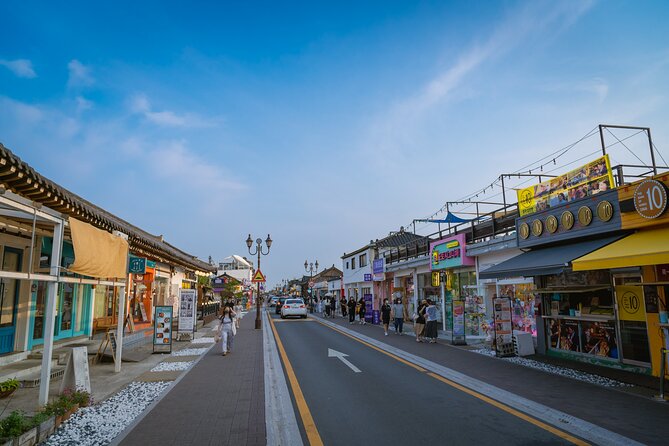
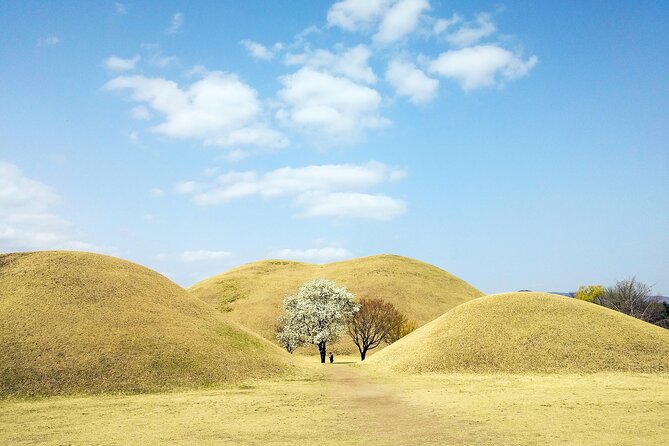
Daereungwon Tomb Complex contains large burial mounds associated with kings, queens, and aristocrats of ancient Silla. You get about one hour, with admission included.
The first thing to understand is what you will not see. These are grassy earth mounds, not open tomb rooms filled with displays. If you expect carved monuments or underground chambers, the stop may disappoint. The value is in the scale, setting, and the way these mounds occupy the center of modern Gyeongju.
The tombs show how much power and labor were devoted to royal burial. Their rounded forms look simple, but their size changes your sense of the ancient city. Your guide can explain the role of the tombs and the Silla society behind them.
I would keep expectations realistic here. This is a place for context and atmosphere, not a long list of objects to inspect. Some people will find an hour plenty. Others may prefer more time in Gyochon Village or at Bulguksa.
Two hours on Hwangridan-gil
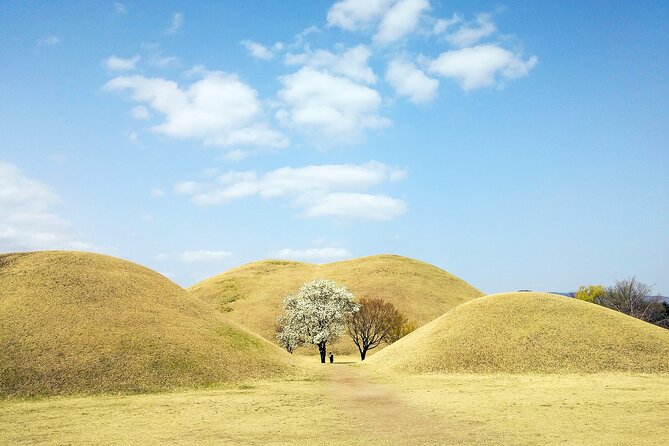
Hwangridan-gil provides the day’s clearest break from formal heritage sites. The street preserves older buildings, including structures associated with the 1960s, while adding shops, cafés, and restaurants. You have about two hours, and this is the main chance to choose your own food and browse at your own pace.
Meals are not included. That gives you freedom, but you should budget separately for lunch or snacks. One account of the day notes that lunch was available at an extra cost and was enjoyable, but the tour price does not cover it.
I like having this longer pause in the middle of a packed schedule. It lets you sit down, buy something small, or simply walk without following a guide’s explanation every minute. It also makes the tour feel less like a string of museum stops.
The street is not an untouched historic quarter. It blends older buildings with current shops and food spots. That mix is part of its appeal, but if you want only preserved architecture, this will feel more commercial than the temple and tomb areas.
Donggung Palace and Wolji Pond after dark
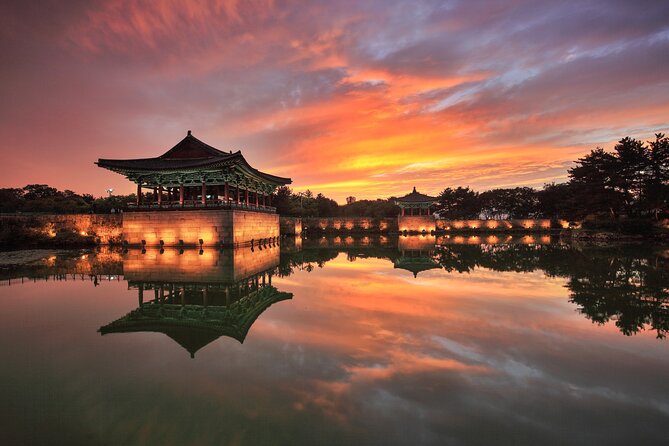
Donggung Palace and Wolji Pond is often the emotional high point of the day. This was a palace site from the Unified Silla period, and the pond reflects the surviving structures and night lighting.
The palace is not fully intact. You are visiting an archaeological site with reconstructed buildings and remaining traces, not a complete royal compound. That distinction matters, but it does not remove the pleasure of the setting. The water, structures, and evening illumination create a strong final chapter after a long day of temples and burial mounds.
You get about one hour. Bring your camera, but remember that crowd levels and the fixed schedule can limit how long you wait for a perfect angle. The pond is also a good place to slow down and look rather than simply collect another photograph.
Several guides are praised for balancing facts with humor. That helps here, especially late in the day when everyone is tired. Erica, Kayla, Hyony, Bada, Katrina, and Eva are all noted for keeping the group engaged, explaining the Silla period clearly, and helping with photographs when asked.
Woljeonggyo Bridge under evening lights
The final sightseeing stop lasts about 30 minutes. Woljeonggyo Bridge is known for its traditional design and its illuminated reflection in the water. The short visit works because the bridge is primarily a visual stop. You walk, take photographs, and enjoy the evening setting before returning to the bus.
Do not expect a long guided visit or time for a separate meal here. The appeal is the view. If you are tired, this stop still earns its place because it requires less mental effort than another detailed historic site.
The bridge and Donggung Palace make the late finish worthwhile for many people. They also explain why this is not a standard eight-hour excursion. The route is designed to show Gyeongju by day and after sunset.
How good are the guides?
Guide quality is a major part of this experience. The strongest pattern is a guide who can explain ancient Korea in plain language while keeping the group moving. Bada is praised for clear speech, humor, good photo skills, and care during hot weather. Erica is frequently described as upbeat, helpful, and strong at explaining the sites. Kayla is noted for energy and funny stories, while Hyony is praised for cultural explanations and helping solo visitors with photos.
Katrina, Eva, Jiny, Jino, and Noah also receive warm individual praise. That suggests a broad guide team rather than one single personality defining every departure. Your experience will depend partly on who leads your group.
There is one important caution. A guide who gives too much information or pushes the pace can make a long day feel longer. One poor account describes rushed photography time and a request for tips and a five-star rating. Tipping is optional in Korea, and you should not feel pressured to tip or award a particular rating.
Another practical issue is timing information. One booking confirmation was said to differ from the actual meeting time. Check your final instructions carefully and arrive early at the correct station. A missed bus is a serious problem on a fixed route.
Walking, weather, food, and comfort
This is a moderate-activity tour, but the step count can be high. One person recorded more than 18,000 steps, and that is a useful warning for anyone who thinks a bus tour means little walking.
Gyeongju may feel warmer and more humid than Busan, especially in summer. Carry plenty of water. A parasol, hat, sunscreen, and light clothing can make the temple and tomb visits much easier. Good walking shoes matter more than stylish ones.
The bus provides air-conditioning between stops, which is a real benefit. Those rides give your feet a break and let you cool down before the next site. Still, you should not plan demanding evening activities after returning to Busan.
Food is not included. You can spend money along Hwangridan-gil, and lunch may be offered at an additional cost. Personal shopping, drinks, and snacks are also your responsibility.
Is $64 a fair price?
At $64 per person, this is a good value if you want to see several major Gyeongju sights in one day. The price covers round-trip transportation from Busan, admissions, and a professional guide. Those inclusions remove the biggest costs and planning chores of an independent day.
The value is strongest for first-time visitors with limited time in Busan. You get a route that would be difficult to arrange smoothly in one day without a car. You also receive historical context, which helps the tombs, temple, and palace remains make sense.
The price is less compelling if you prefer slow travel. You are paying for coverage and convenience, not long, quiet hours at one site. Independent visitors can choose their own pace, stop longer for photos, and avoid attractions that do not interest them.
The free cancellation policy adds some flexibility. You can cancel at least 24 hours before the start for a full refund. Bad weather may lead to a new date or a full refund, but changes made within 24 hours are not accepted.
Who should book this Gyeongju day trip?
I would choose this tour if you have only a short stay in Busan and want a strong first look at Gyeongju. It suits people who like a clear schedule, live explanations, included entry fees, and a comfortable ride between scattered sites.
It also works well for solo visitors. Guides sometimes help with photographs, and the organized transport removes the awkwardness of navigating alone between distant attractions.
Families can enjoy it, but the length deserves attention. A day that begins around 10 a.m. and ends around 10 p.m. can be hard on young children. The heat, walking, and fixed departure times add to the strain.
I would think twice if you dislike groups, need a slow pace, or want deep time at each monument. The maximum group capacity is large, even if the English section may be smaller. Ask yourself whether seeing many places in one day matters more than lingering at two or three.
Should you book it?
Book this tour if you want efficient access to Gyeongju’s main historic sights without renting a car or working out several local connections. Bulguksa Temple, Daereungwon, Hwangridan-gil, Donggung Palace, Wolji Pond, and Woljeonggyo Bridge give you a broad picture of the city in one long outing.
Skip it if your ideal day means sleeping late, wandering without a clock, or studying one site in detail. For everyone else, $64 is a sensible price for the transport, admissions, and guide support, provided you prepare for heat, walking, a late return, and a brisk schedule.
FAQ
Where does the tour depart from in Busan?
Pickup points are Busan Station, Seomyeon Station, and Haeundae Station. Hotel pickup and drop-off are not included.
How long does the tour last?
The tour lasts approximately 12 hours. Some schedules run from about 10 a.m. until around 10 p.m., including the return to Busan.
Are admission fees included?
Yes. Admission to the visited attractions is included, including Bulguksa Temple, Gyochon Village, Daereungwon Tomb Complex, Donggung Palace and Wolji Pond.
Are meals included?
No. Meals, snacks, and other personal expenses are not included. Food may be available at an additional cost during the day.
How much walking is involved?
You need a moderate level of physical fitness. The day includes substantial walking, and one account recorded more than 18,000 steps. Comfortable walking shoes are recommended.
Does the tour run in bad weather?
The experience requires good weather. If it is canceled because of poor weather, you may be offered another date or a full refund.
Can I cancel for a full refund?
Yes, if you cancel at least 24 hours before the experience starts. Cancellations or changes made less than 24 hours before the start are not accepted for a refund.
Just added around the world
- Scenic Train ride to historical cities of Morretes and Antonina★ 4.0 · 188 reviews
- 6-Day Cultural Tour to Machu Picchu★ 5.0 · 76 reviews
- Discover Scuba Diving Amathounta’s Ancient Port★ 5.0 · 30 reviews
- Jewish Heritage of Curacao★ 4.5 · 68 reviews
- The Curacao’s Colorful History Walking Tour★ 5.0 · 55 reviews
- Olous – Guided Snorkelling Excursion to Discover Olous Sunken Ancient City★ 4.5 · 31 reviews
- Night Walking Tour of Medieval Cuenca★ 5.0 · 64 reviews
- WWII – The Battle of Crete Day Tour★ 5.0 · 103 reviews
South Korea History Tours, compared.
From Busan: Gyeongju UNESCO World Heritage Guided Day Tour
Read our review →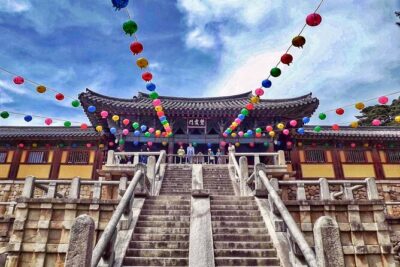
Gyeongju UNESCO World Heritage Guided Day Tour from Busan
Read our review →
Seoul: Evening Dark History, Folklore & Ghost Story Walking Tour
Read our review →
Hanbok Photoshoot and History Tour at Gyeongbokgung Palace
Read our review →
From Seoul: Dae Jang Geum Park Historic K-Drama Set Tour
Read our review →
Gyeongju: UNESCO Heritage Tour Including Bulguksa Temple
Read our review →
Seoul: City Highlights and Historical Experience No Shopping
Read our review →
Busan history and market food tour with local chef
Read our review →Browse the lists this tour appears in