
Review · LISBON
Lisbon: Jewish History Tour of Lisbon
Lisbon’s Jewish story is largely one you hear rather than see. The old quarters were changed, destroyed, or absorbed into later neighborhoods, so this tour uses streets, squares, churches, and surviving traces to explain a community whose influence reached far beyond Portugal. I like the way it places Jewish history inside the larger story of Lisbon, from the Exodus at Praça do Comércio to forced conversions and the 1506 Pessah massacre at Rossio.
I also like the personal scale. This is a private three-hour walk, not a large group lecture, and guides such as José Antunes, Filipa, Jorge, Rita, and Sofia have been praised for clear storytelling and patient answers. The main drawback is simple: few physical Jewish remains survive in Lisbon, so you need to enjoy historical interpretation more than original buildings or museum objects.
Key points to know before you book
- The route begins under the triumph arch at Praça do Comércio, an easy meeting place beside the broad riverfront square.
- Alfama provides the strongest sense of the old Jewish quarters, though the evidence is mainly in the street plan and the guide’s explanation.
- Rossio brings the most painful chapter into view, including the 1506 Pessah massacre.
- The walk connects Jewish history with Portugal’s wider past, including forced conversions, New Christian life, science, culture, food, and overseas migration.
- It is a private group tour in English or Portuguese, with the itinerary adaptable to different starting points and time limits.
- Wear proper walking shoes, since the route covers several central districts and includes Lisbon’s historic streets.
Why Lisbon’s Jewish story needs a walking guide
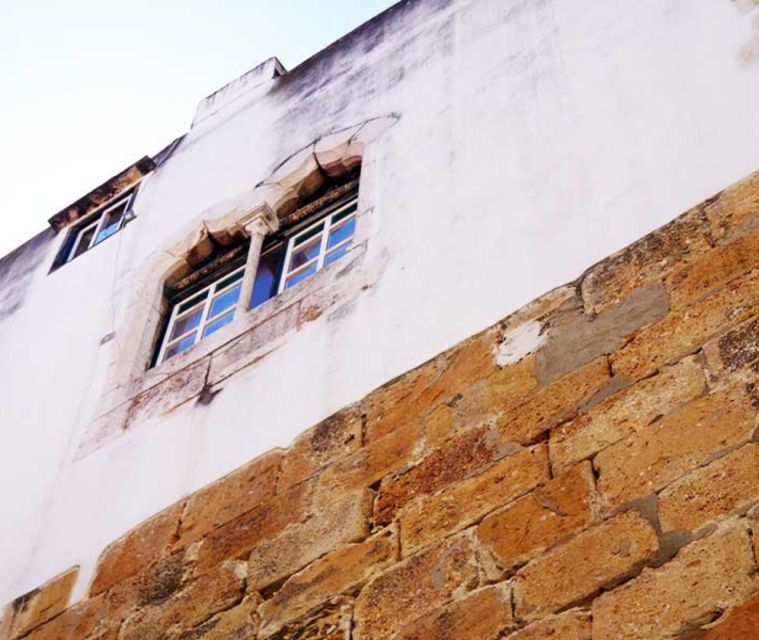
If you arrive expecting a preserved Jewish quarter with a synagogue, museum displays, and clearly marked medieval buildings, adjust your expectations. Lisbon does not offer many visible remains of its earlier Jewish community. The value here comes from placing scattered locations into a connected story.
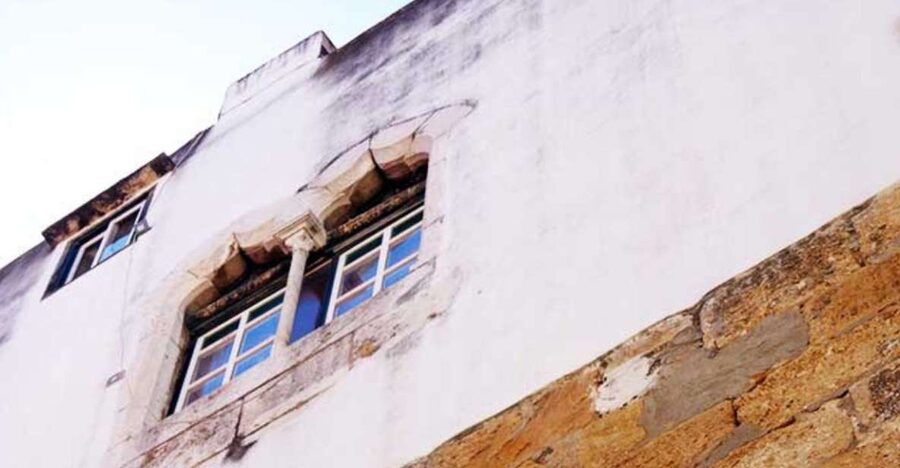
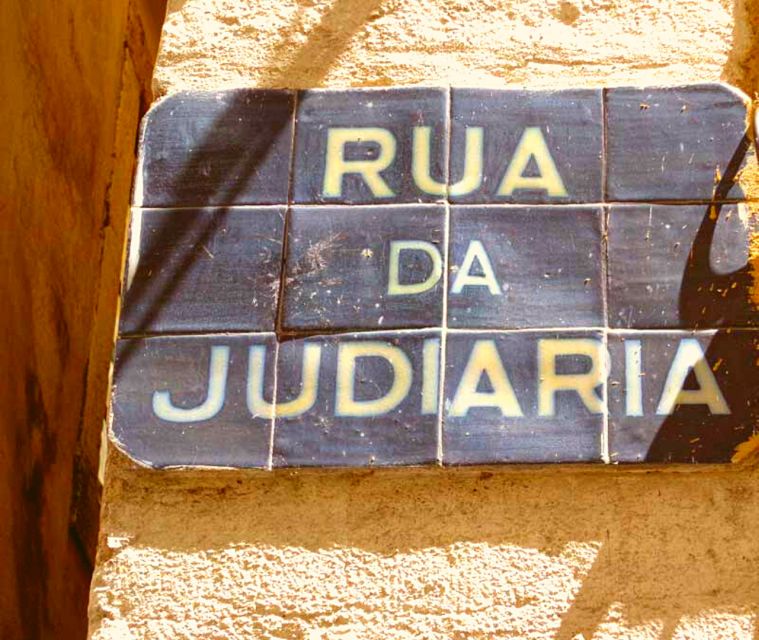
The guide helps you read the city as a historical document. A square may now be filled with cafés and traffic, while the important event connected to it happened centuries ago. A street may look ordinary until you learn that it belonged to a judiaria, the Portuguese term for a Jewish quarter. This approach works well for Lisbon because the city’s physical layers are easy to walk through but not always easy to understand on your own.
I especially like the tour’s broad time span. It does not stop with medieval Lisbon. You also hear about forced conversion, the New Christian community, the movement of Portuguese Jews across the Atlantic and toward the Mediterranean, Asia, and northern Europe, plus the passage of Jewish refugees through Portugal during the Second World War.
That range gives you a better sense of continuity and change. Jewish life in Portugal was not one single chapter ending at the Inquisition. It involved adaptation, pressure, migration, professional achievement, and cultural exchange over many centuries.
More Jewish Heritage Tours in Portugal
- Lisbon Jewish Heritage and History – Private Tour Van
★ 5.0 · 294 reviews - Lisbon: Jewish History Private Tour
★ 4.8 · 59 reviews - Lisbon: Jewish History in Portugal Guided Walking Tour
★ 4.6 · 52 reviews
Praça do Comércio and the Exodus connection
Meet your guide under the large triumph arch at Praça do Comércio. Look for an orange backpack or a tote bag marked with the Lisbon Walker logo. This is a useful meeting point because the square is large and easy to recognize, although you should allow time to locate the guide beneath the arch rather than wandering around the riverfront.
The tour begins with the origin connected to the Exodus. That opening gives the walk a clear frame: Jewish history is not treated as a minor footnote in Lisbon’s past, but as part of a long story of movement, identity, faith, and diaspora.
Praça do Comércio is also a good place to begin because it introduces the changing face of the city. From here, the route moves through places tied to commerce, government, persecution, and daily life. The surrounding Baixa district looks orderly and open today, but the historical story you hear is far less comfortable.
This first stop is more about orientation than surviving Jewish architecture. If you want a strong visual collection of artifacts, you may find the start underwhelming. If you want a guide to explain how Lisbon fits into a wider Jewish story, it sets the right tone.
From the riverfront to Ribeira and the Casa dos Bicos
The route continues past Praça do Município, along Rua do Comércio, and toward Casa dos Bicos and Ribeira. These stops help connect Jewish life to the working city, where trade, movement, and contact with people from different regions shaped Lisbon.
The route description also includes the Resistance Museum. The larger point here is the connection between Lisbon’s modern political history and the movement of refugees during the 1940s. Portugal became part of the wartime passage story, and the tour places Jewish refugees within that modern chapter rather than treating the community as something that disappeared after the medieval period.
You should not expect every stop to be a Jewish monument. Some locations work as setting and context. The guide may use a street, a civic building, or a district to explain how power, trade, migration, and public life affected Jewish residents and later Jewish arrivals.
This is one reason the private format matters. You can stop to ask how a specific place relates to the story, rather than waiting for a large group to move on. Past visitors particularly valued guides who answered questions and adjusted their pace. That can make a big difference when the subject covers several centuries in only three hours.
Alfama and the medieval Jewish quarters
Alfama is the heart of the medieval portion of the walk. The route explores the old Jewish quarter and the idea of medieval segregation. The word judiaria is central here, since Jewish residents were organized into designated areas of the city.
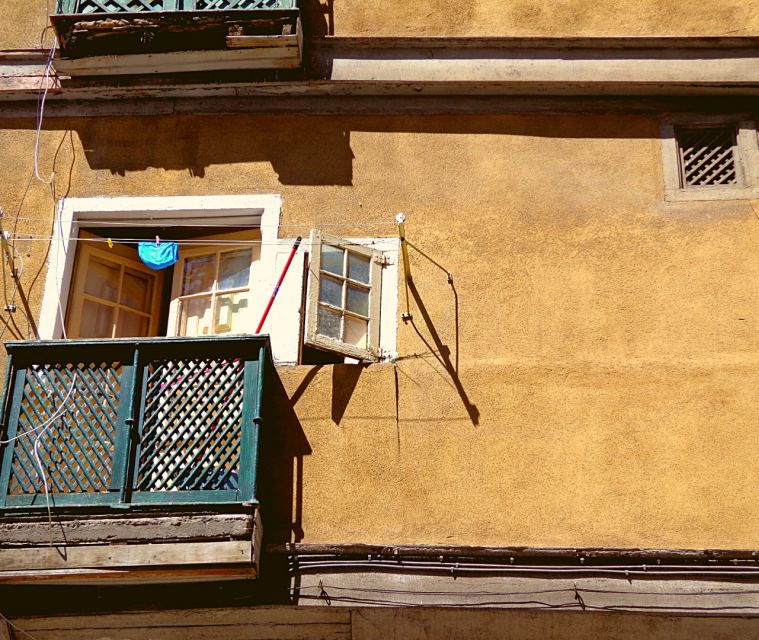
The streets of Alfama are the evidence, but they are not always obvious evidence. You may see tight lanes, steep passages, old walls, and a neighborhood shaped by layers of occupation, yet very little will announce that you are standing in a former Jewish area. The guide’s explanation turns those ordinary-looking streets into historical clues.
This is also where comfortable shoes matter. The tour covers a fair distance, and Lisbon’s historic districts are not flat or smooth throughout. At the same time, the walk is not presented as an extreme climb. One guide was praised for keeping the hill climbing modest, while another adapted the pace for older participants on a hot day. Conditions vary, but the private format gives you room to request pauses.
Alfama is likely to be the most rewarding section for anyone who wants a sense of place. It is also the section most likely to frustrate you if you need original buildings or visible inscriptions. The tour asks you to picture the quarter through explanation, not inspect a fully preserved site.
More Jewish Heritage Tours in Lisbon:
- Budapest Jewish Heritage Memorial Walking Tour & Synagogue Entry
★ 5.0 · 568 reviews - Budapest: Jewish Heritage Guided Tour with Synagogue Ticket
★ 4.8 · 533 reviews - 3-Hour Porto Jewish Heritage Walking Tour with Local Guide
★ 4.5 · 396 reviews - Private Jewish Heritage Journey by Barcelona Dreaming
★ 4.8 · 383 reviews
Baixa and the story of forced conversions
The walk then reaches Baixa, where the focus shifts to forced conversions. This part of the route helps explain the pressure placed on Jewish people and the complicated identity of those who became known as New Christians.
The value of this section is the connection between law, religion, and everyday life. Rather than presenting conversion as a simple change of belief, the guide can show how political and social pressure affected families and communities. You also hear how Portuguese Jewish legacy continued through culture, science, and gastronomy, even when open Jewish life was restricted.
Baixa is a particularly effective setting because it is now one of the most familiar parts of central Lisbon. You can walk through broad streets and busy public spaces while considering how different the rules of belonging once were. That contrast makes the story easier to remember.
The tour does not appear to include a meal or food tasting. Gastronomy is discussed as part of the Jewish legacy in Portuguese culture, but food and drinks are not included. If culinary experiences are your main interest, treat this as a historical conversation rather than a tasting tour.
Praça da Figueira, Rossio, and the 1506 massacre
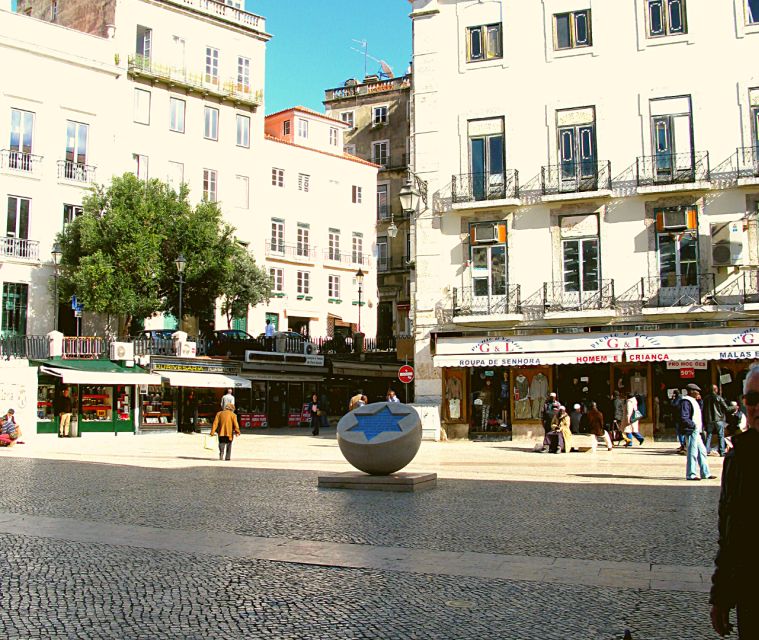
The route continues through Praça da Figueira to Rossio. These central squares provide some of the most important historical stops, especially the account of the 1506 Pessah massacre.
This is a difficult subject, and the setting can make it feel even more immediate. Rossio is a public city square, not a secluded memorial site, so the tour asks you to connect a familiar urban space with a violent event from Lisbon’s past. The guide provides the historical context and explains how Jewish and New Christian life was treated during this period.
For me, this is one of the strongest reasons to take the walk with a specialist guide rather than relying on a quick plaque or a short online summary. The event is not isolated from the rest of Portuguese history. It fits into the larger themes of forced conversion, public hostility, official policy, and the survival of identity under pressure.
Again, do not expect a large physical memorial marking every part of the story. The power of Rossio comes from the contrast between the open square you see now and the events you are asked to remember there.
The diaspora beyond Lisbon
The final sections broaden the view beyond Lisbon itself. The guide discusses the Jewish diaspora that spread from Portugal across the Atlantic, into the Mediterranean world, Asia, and northern Europe.
This is a useful addition because it prevents the tour from becoming a simple story of loss. Lisbon was connected to wider routes of trade and migration, and Portuguese Jewish families and descendants carried language, customs, professional skills, and memories to other places.
The tour also includes the modern Jewish presence and the movement of refugees during the 1940s. That gives you a longer timeline, moving from medieval segregation to modern displacement and international connections.
I would choose this tour if you want to understand how Lisbon fits into a larger network. I would choose a more object-focused museum visit if your priority is seeing original manuscripts, religious objects, or preserved interiors. This walk is strongest when it explains links between places and people.
Guide quality and the private format
The most consistently praised part of this experience is the guiding. José, José Antunes, Jorge, Filipa or Filippa, Rita, Sofia, and other guides have been described as warm, articulate, well-informed, and engaging. The names vary by booking, so you should not assume that one particular guide will lead your tour.
The best reports describe guides who turn a heavy subject into a clear story without rushing. They answer questions, adjust the pace, and relate Jewish history to Portuguese history as a whole. One guide even pointed out Roman remains and churches along the way, showing how the walk can include broader Lisbon context when it fits the conversation.
A private group also lets you shape the experience. The route can be adapted to different time frames and starting points. That does not mean every request is guaranteed, but it does mean the tour is more flexible than a fixed large-group walk.
The language options are English and Portuguese. No hotel pickup or drop-off is included, so you make your own way to Praça do Comércio. Food and drinks are also separate.
Is $106 a fair price?
At $106 per person, this is not a budget orientation walk. The price makes the most sense for a private group that values a dedicated guide and a subject-specific route.
You are paying for three hours of interpretation, not entrance tickets or a collection of physical sites. Since the tour does not list admission to museums or monuments, its value depends heavily on the guide’s ability to explain places that may look ordinary at first glance.
For two or more people with a serious interest in Jewish history, the private format can be worthwhile. You receive more opportunity to ask questions and adjust the pace than you would on a standard group tour. For a solo visitor, the cost is harder to justify unless this is a central reason for your Lisbon visit.
The booking terms add useful flexibility. You can reserve now and pay later, and cancellation is free up to 24 hours before the tour for a full refund. The activity is shown as valid for one day, with starting times based on availability, while the guided portion lasts three hours.
Who should book this Lisbon walk?
I would recommend it to:
- Anyone tracing Jewish family history or studying Portuguese Jewish communities
- History-minded visitors who want a city walk built around one subject
- People interested in forced conversion, New Christian identity, and diaspora
- Visitors who prefer discussion and storytelling to formal museum displays
- Private groups that want to ask questions and set a comfortable pace
I would be more cautious if you need clear physical remains at every stop. The limited number of artifacts is not a small detail. It is the main condition of the experience, and you should know it before paying the price.
Book in comfortable shoes, bring water for the walk, and arrive at the triumph arch with enough time to find the orange backpack or Lisbon Walker tote. If the weather is hot or someone in your group walks slowly, use the private format to ask for pauses.
Should you book it?
Book this tour if you want Lisbon’s Jewish past explained through the streets where events unfolded, and if you are comfortable using imagination where physical evidence is scarce. The strongest guides make the city’s larger story clearer, from Alfama’s medieval segregation to the 1506 massacre, wartime refugees, and the worldwide diaspora.
Skip it if you want a museum-heavy experience with many surviving artifacts. For everyone else, especially history-minded visitors and private groups, the combination of a focused subject, flexible route, and strong guide-led storytelling makes this a worthwhile use of three hours.
FAQ
How long does the guided tour last?
The guided tour lasts three hours. The activity is listed as valid for one day, with starting times depending on availability.
Where does the tour meet?
Meet your guide under the large triumph arch at Praça do Comércio in Lisbon.
How do I identify the guide?
Look for a guide carrying an orange backpack or a tote bag with the large Lisbon Walker logo.
Which languages are available?
The tour is offered in English and Portuguese.
Is this a private tour?
Yes. The group type is listed as private.
Which areas does the route cover?
The route includes the castle hill, Alfama, Baixa, Mouraria, Praça da Figueira, Rossio, Praça do Comércio, Praça do Município, Rua do Comércio, Casa dos Bicos, Ribeira, and the Resistance Museum.
What Jewish history does the tour cover?
It covers medieval Jewish quarters and segregation, forced conversions, the 1506 Pessah massacre, the modern Jewish presence, Jewish refugees passing through Portugal during the 1940s, and the diaspora that spread from Lisbon to other regions.
Are hotel transfers, food, or drinks included?
No. Hotel pickup and drop-off are not included, and food and drinks are separate.
Can I cancel or pay later?
You can reserve now and pay later. Cancellation is free up to 24 hours in advance for a full refund.
Just added around Lisbon
- Lisbon: Historical Walking Tour with Jeronimos Monastery★ 4.5 · 71 reviews
- Lisbon Sunset Sailing – Small Group (max 10) Wine & History★ 4.8 · 41 reviews
- Lisbon: Private Historic Tour by Eco Tuk Tuk★ 5.0 · 78 reviews
- Lisbon with Tukxi: Historical Secrets by Tuk-Tuk★ 4.8 · 96 reviews
- Lisbon: Private Guided Tour of Historical Center by Tuk Tuk★ 4.7 · 67 reviews
- Lisbon: Tuk-Tuk Tour Historical Alfama old town private tour★ 4.7 · 30 reviews
- Lisbon: Jewish History in Portugal Guided Walking Tour★ 4.6 · 52 reviews
- Lisbon: Sunset Sailing with Portuguese Wine and History★ 5.0 · 270 reviews
Lisbon History Tours, compared.
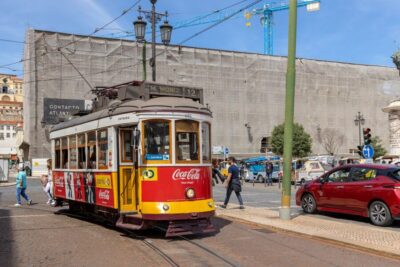
Lisbon: History, Stories and Lifestyle Walking Tour
Read our review →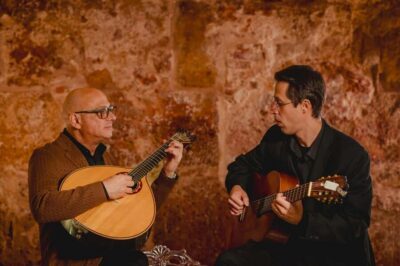
Lisbon: Fado Show and Wine inside Medieval Walls
Read our review →
Lisbon: Daytime or Sunset Boat Cruise with History and Wine
Read our review →
Explore Lisbon by Tuk Tuk: History and Viewpoints
Read our review →
Private Tuk Tuk Tour Through Lisbon’s Historical Streets
Read our review →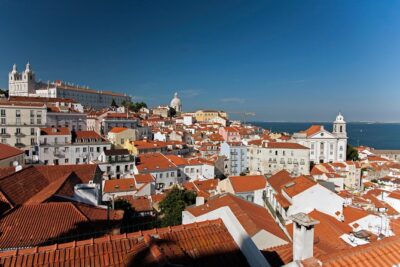
Lisbon Highlights – Private Tour with Van and Local Guide
Read our review →
Templar Tour Convent of Christ & Almourol Castle from Lisbon
Read our review →
Lisbon Sunset Sailing with Portuguese Wine and History
Read our review →Browse the lists this tour appears in