
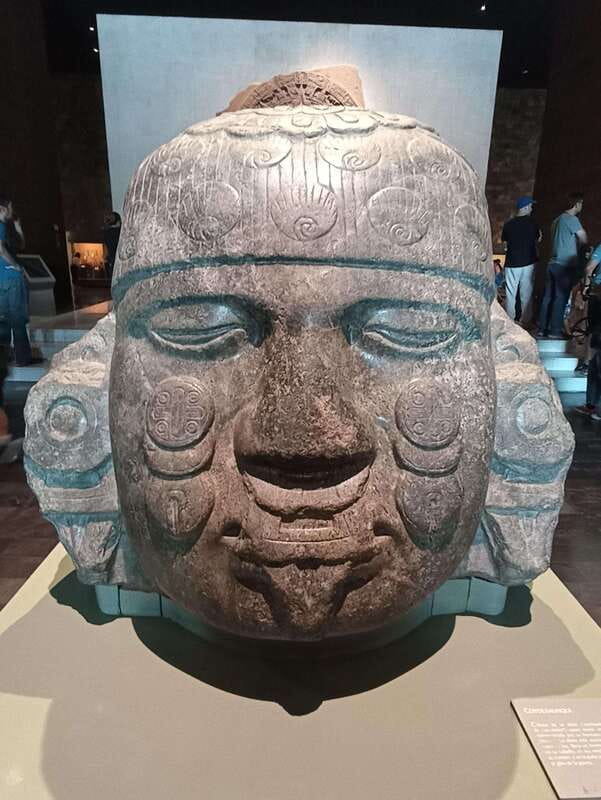
Review · MEXICO CITY
Mexico City: Historical walking tour of Tenochtitlan
Mexico City’s downtown is built in layers, and this walking tour helps you read them. With Professor Cristina Ríos, a PhD guide, you move from the Aztec capital of Tenochtitlan through Spanish conquest, colonial architecture, Mexican independence, and 20th-century art. Templo Mayor is the starting point, but the real reward is seeing how old and new Mexico occupy the same few blocks.
I like two things here. First, Ríos explains architecture and history as one connected story, so the Cathedral, old palaces, murals, and streets make more sense. Second, the small group size, from 3 to 10 people, leaves room for questions and route changes. The main consideration is that this is a fact-filled, adult-oriented walk, and you will not enter Templo Mayor Museum or several of the buildings listed.
The route covers a lot in three hours. You’ll walk between stops, spend time listening outdoors, and finish at Palacio de Bellas Artes rather than return to the starting point. Comfortable shoes, sun protection, and a willingness to concentrate will make the experience much better.
Key points to know before booking
- 700 years in three hours: The tour connects Tenochtitlan, Spanish rule, colonial Mexico, independence, and modern art.
- Professor Cristina Ríos leads the walk: She speaks English and Spanish, answers detailed questions, and brings strong knowledge of architecture, art, and Mexican history.
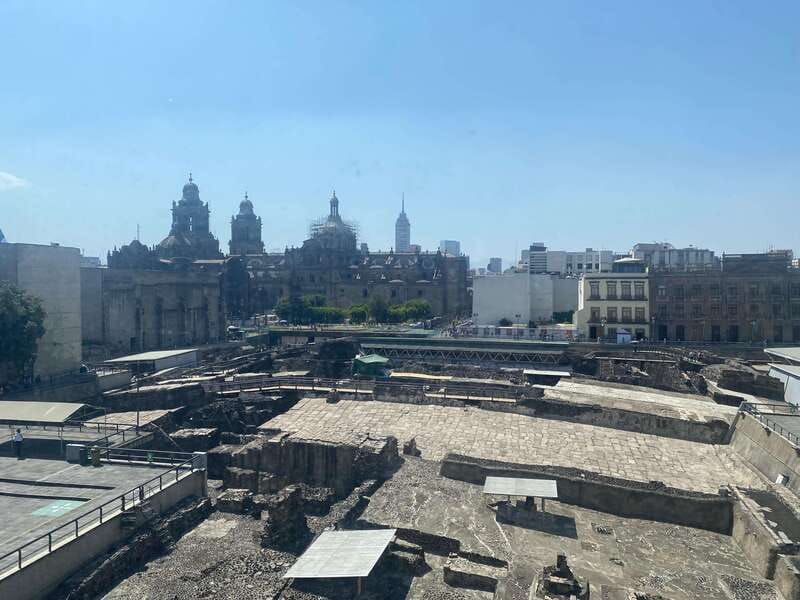
- Templo Mayor is viewed from outside: You see models and the archaeological zone, but museum admission is not included.
- A small group changes the feel: With only 3 to 10 people, the guide can adjust the pace and answer individual questions.
- Casa de los Azulejos gets special attention: You’ll see the José Clemente Orozco mural inside and receive a detailed explanation.
- The $43 price buys interpretation, not admission: Food, drinks, tickets, and hotel transfers are extra.
Why this walk helps you understand Mexico City
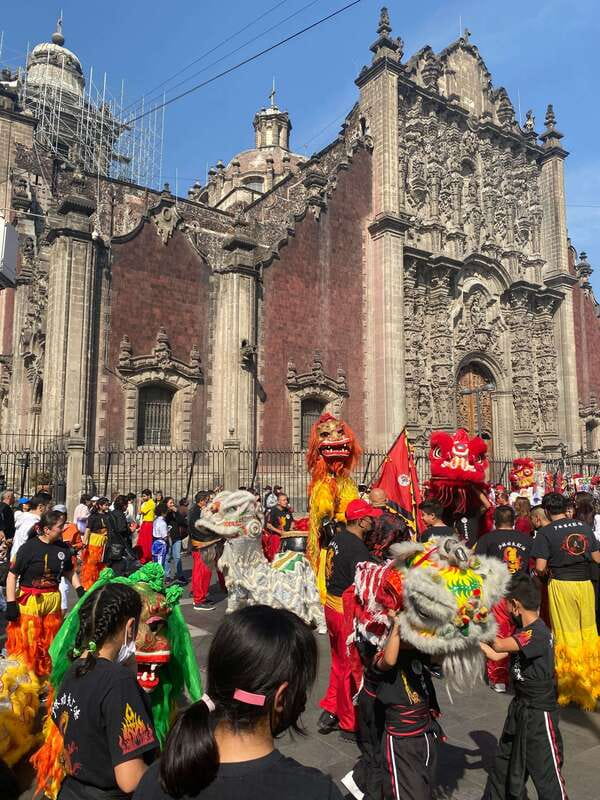
Mexico City’s Centro Histórico can feel confusing at first. A cathedral sits beside Aztec ruins. A colonial palace now houses a cultural center. A grand department-store building contains a famous mural. Without context, you may admire the facades but miss the arguments, power shifts, and cultural mixing behind them.
This tour gives you a timeline to carry through the streets. The focus is not only on famous sights. Ríos connects people, buildings, religious change, architecture, art, and national identity. That approach suits you if you want more than a quick photo stop.
The tour begins at Centro Cultural de España at Guatemala 18, near the Templo Mayor models and the archaeological area. The meeting details describe the starting point as the Spanish Cultural Center entrance, so check the exact location carefully before setting out. From there, you begin with the ancient city and finish several blocks away at Palacio de Bellas Artes.
The three-hour length is useful. It is long enough to build a story, but short enough to fit into a first day in Mexico City. Several people have used it as an opening activity because it gives them a framework for exploring the city on their own afterward.
More History Walking Tours in Mexico
- Historic Downtown Walking Tour
★ 5.0 · 1,289 reviews - Mexico City: Historic Downtown Walking Tour
★ 4.8 · 1,039 reviews - Walking Tour of the Historic Center of Mexico City
★ 5.0 · 870 reviews
Templo Mayor: seeing the Aztec capital from street level
The first major stop is Templo Mayor, where the tour spends about 40 minutes. You do not enter the museum or archaeological zone. Instead, you see the site from outside, study models, and listen to an explanation of the city’s founding and development.
That limitation matters. If Templo Mayor is your main reason for visiting downtown, you should leave extra time to return independently and buy a separate museum ticket. This walk gives you orientation and meaning, but not the full archaeological visit.
The advantage is that Ríos can place the ruins within the larger city. You learn how the present-day streets relate to Tenochtitlan and how later construction covered, reused, or surrounded earlier places. Several stops afterward make more sense because you have begun with the pre-Hispanic city rather than starting with the Spanish Cathedral.
You may also find this opening especially helpful if the names and dates of Mexican history tend to blur together. The guide’s explanations create a clear sequence before the group moves into the colonial center.
Behind the Cathedral: a quieter look at old layers
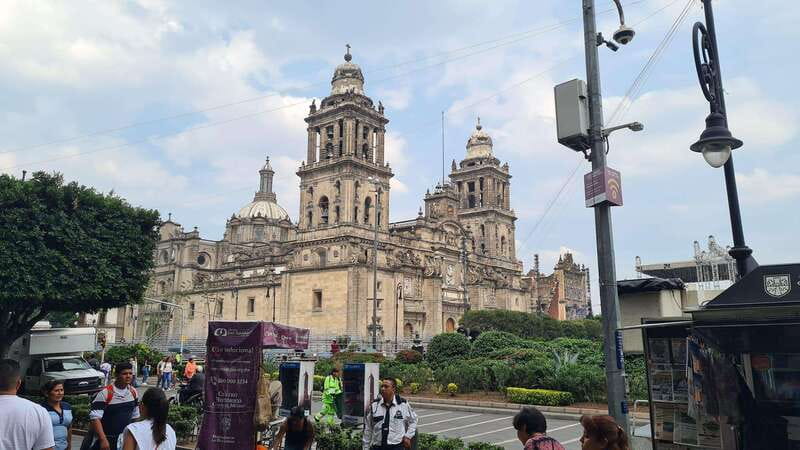
The next section takes you behind Catedral Metropolitana, including the Animas del Purgatorio area and the Calmecac site museum at Centro Cultural España. This is one of the more unusual parts of the route because it shifts attention away from the grand front facade.
The Calmecac site helps connect the Spanish Cultural Center with the earlier Mexica world. Rather than treating the city as a collection of unrelated monuments, the walk shows you how different periods occupy the same ground.
The Cathedral stop itself lasts about 20 minutes. You’ll hear about its place in colonial Mexico and examine the building through historical and architectural detail. The itinerary does not promise an interior visit, so expect explanation and exterior viewing rather than a full cathedral tour.
This is a good example of the tour’s style. You are not simply told that a building is old or important. You are encouraged to notice what it represents and how it fits into the changing story of the capital.
Cortés’s lodgings and the old palace of Axayacatl
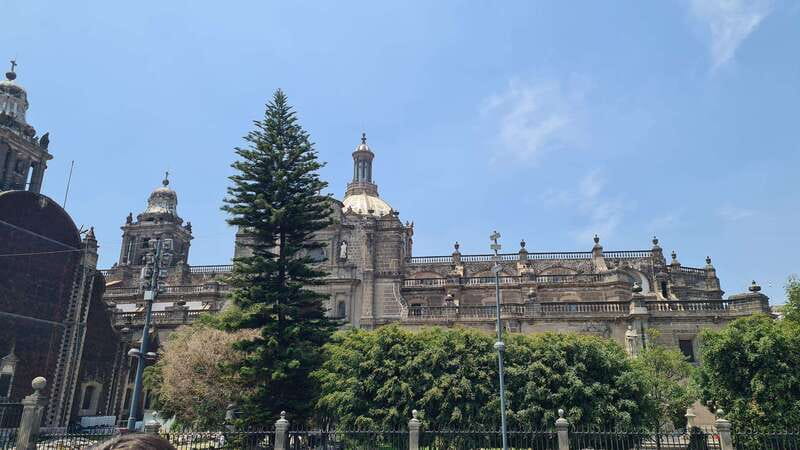
The route then reaches the former Axayacatl Palace, associated with Moctezuma’s old houses and Cortés’s lodgings. This stop adds a human layer to the political story. It places the Spanish conquest in a specific setting rather than leaving it as a list of battles and dates.
Ríos has also taken groups to the tomb of Cortés when circumstances and timing allow, although that is not listed as a guaranteed stop. Treat such an addition as a possible bonus, not part of the promised route.
This part of the walk suits anyone interested in how historical figures leave traces in the modern city. You are standing among ordinary downtown activity while hearing about people and events that changed the course of Mexico.
Same city, a different century:
- Historic Center Food Tour in Mexico City
★ 5.0 · 1,263 reviews - Tulum Archaeological Site & Sian Ka’an Muyil Tour from Tulum
★ 5.0 · 824 reviews - Mexico City Historical Centre Food Tour with 7 Authentic Tastings
★ 5.0 · 723 reviews - Historical and Cultural Walking Tour of San Miguel de Allende
★ 5.0 · 641 reviews
Iturbide Palace and the Banamex Culture Palace
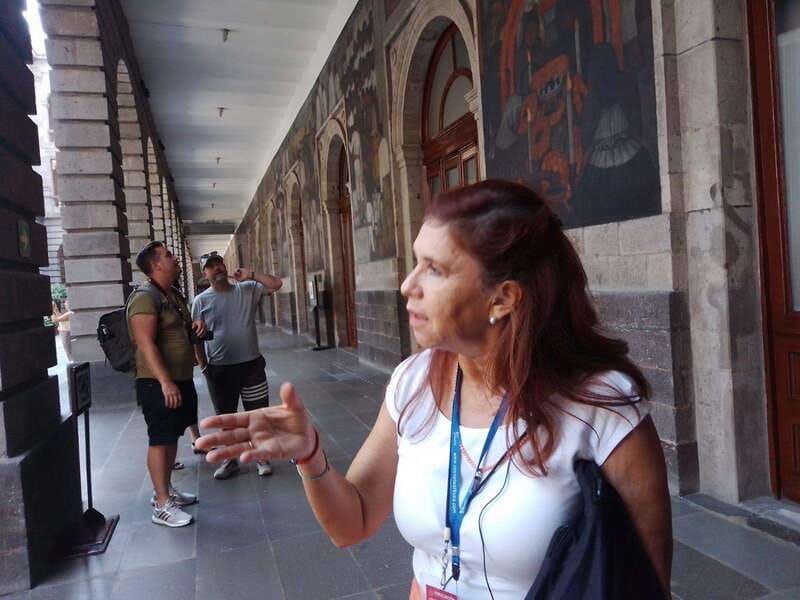
The Banamex Culture Palace, also called Iturbide Palace, receives about 20 minutes. The building’s name reflects its changing roles and its connection to Mexican political and cultural life.
This stop is useful for readers who care about architecture but do not already know the vocabulary. Ríos explains styles and details in plain terms, then links them to the period in which the building was made and used.
The present cultural function also matters. Mexico City’s old buildings are not frozen museum pieces. Many continue to house exhibitions, banks, cultural programs, or public activity. A guide can point out those changes in a way that a quick pass on your own may not.
The experience is best for adults who enjoy careful explanation. One rating described the walk as a traditional guided tour with many facts and a focus on architectural styles. That is a fair warning if you prefer a loose stroll with only occasional commentary.
San Francisco Church: a short stop with useful context
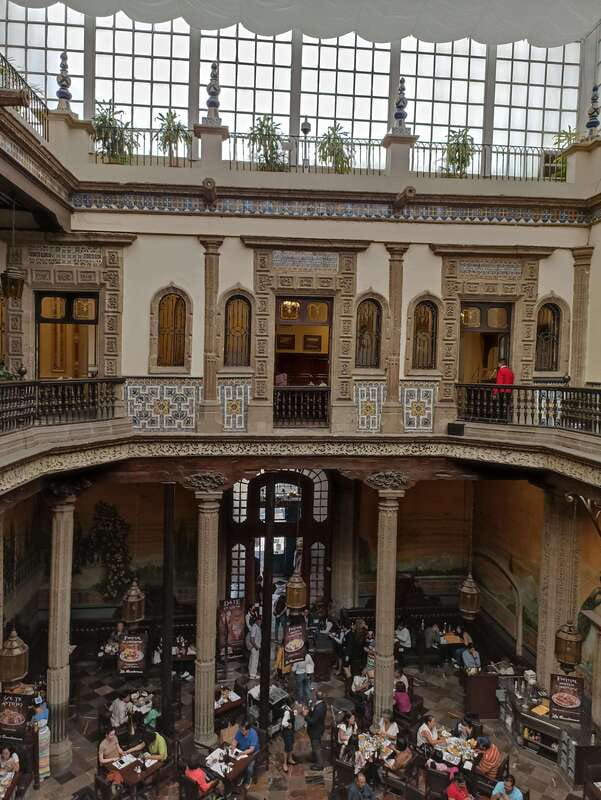
The Church of San Francisco is viewed mainly through its facade, with about 20 minutes of guided explanation. It is not the longest stop, but it helps fill out the colonial picture.
A facade can tell you plenty when someone points out what to examine. Religious buildings in the historic center reflect Spain’s influence, Catholic institutions, local materials, and the city’s changing urban plan. The tour uses this stop to add another example rather than spending the whole morning at one monument.
Do not expect a long interior visit here. The value comes from the explanation and from comparing this church with the Cathedral and the other buildings along the route.
Casa de los Azulejos and Orozco’s mural
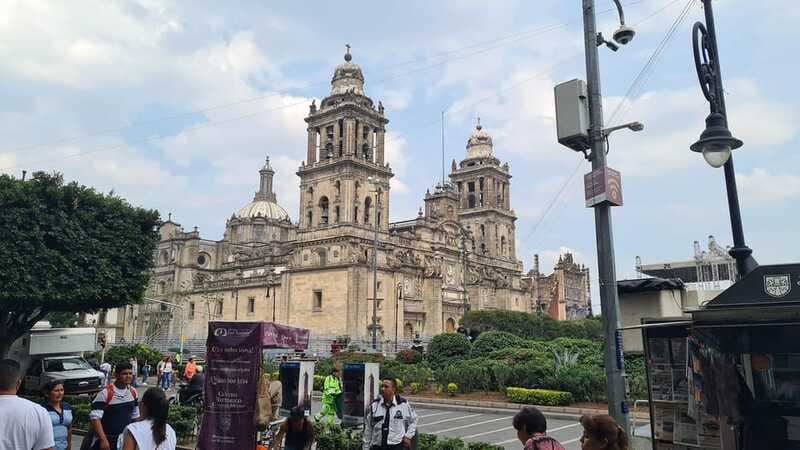
Casa de los Azulejos is one of the strongest stops for visual appeal. You see the blue-and-white tiled exterior and go inside to examine a José Clemente Orozco mural. The guided explanation lasts about 30 minutes.
This is where the tour moves clearly from colonial architecture into Mexican art. Orozco’s work gives Ríos a chance to explain how art can comment on history, power, and national identity. You are not just looking at a colorful wall. You are learning how to read it.
The stop also shows why a specialist guide can be worth paying for. On your own, you might admire the tiles, take a picture, and continue. With explanation, the building becomes part of the larger story of Mexico City’s architecture and culture.
Food is not included, but you may choose to try traditional Mexican sweets at Dulcería Celaya as an optional part of the experience. That shop is described as legendary, though the purchase itself is up to you. Bring cash or another payment method suitable for any food you decide to buy, but no specific payment system is promised.
Palacio de Bellas Artes: finishing with modern Mexico
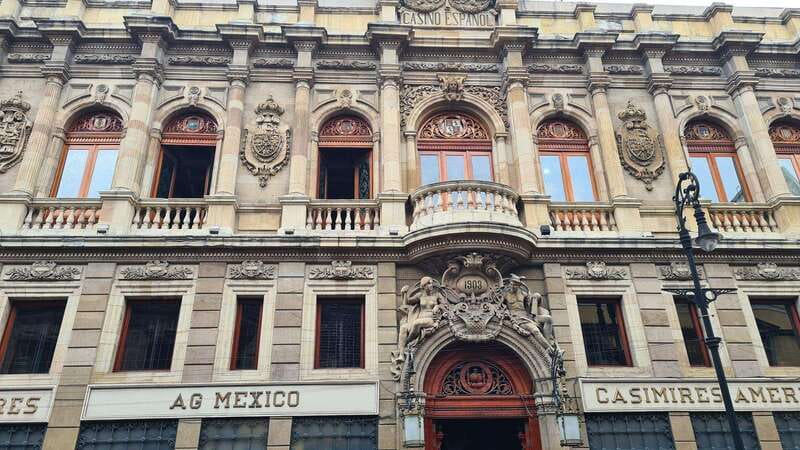
The walk ends at Palacio de Bellas Artes after a roughly 30-minute guided section or pass-by, depending on how the stop is handled. The route information indicates that the palace is seen from the outside rather than treated as a full interior visit.
That makes Bellas Artes a natural ending, not a complete visit. The building brings the story forward into Mexico’s modern artistic identity and gives you a clear place from which to continue exploring.
Plan extra time if you want to see the interior, murals, or exhibitions. Those visits are not included in the $43 tour price. Ending here is convenient if you want to continue through the center, but it also means you should not expect the guide to escort you back to Guatemala 18.
What Professor Cristina Ríos adds
The strongest feature of this experience is Ríos herself. She is presented as Professor Cristina Ríos, PhD, and she leads in English or Spanish. Her teaching combines pre-Hispanic history, Spanish colonization, Mexican independence, architecture, art, and customs.
That range matters because Mexico City’s story does not fit neatly into one subject. You may begin with the Aztec capital, ask about a church, shift to a mural, and then want to know how the building is used today. Ríos is set up to handle those connections and questions.
The personal feedback about her is unusually consistent: people praise her clarity, passion, patience, English, and ability to explain places they would have walked past. She has also offered book suggestions, restaurant ideas, and additional places to visit. One useful detail is that she can adjust the route when a group is very small, so the walk may feel more personal than a standard large-city tour.
Groups larger than seven receive headsets and audio equipment. That helps in noisy streets and makes it easier to follow without standing shoulder to shoulder with the guide. Smaller groups may not need the equipment, but the small size still gives you a better chance to ask questions.
Pace, walking, and practical comfort
This is a walking tour through the city center, with no hotel pickup or drop-off. You need to reach Guatemala 18 on your own and arrange your own way onward from Bellas Artes.
Wear comfortable shoes. The route includes several stops and outdoor listening, so a hat, sunglasses, and sunscreen are sensible. The tour is listed as wheelchair accessible, though the route includes historic streets and buildings with different layouts. If you use a wheelchair, confirm the day’s access details before booking.
The morning timing is a good choice for a history walk. You can concentrate before the day becomes too long, then use the afternoon for the Templo Mayor Museum, Palacio de Bellas Artes, food, or other downtown sites. The schedule also leaves room for the optional sweets stop if you want a small taste of local tradition.
Children under 10 are not accepted. That fits the tour’s academic style and the amount of sustained listening. Older children may enjoy it, but the subject matter and pace are aimed more at adults and history-minded families.
Is $43 a fair price?
At $43 per person, the value depends on what you want from a city tour. You are paying for a three-hour specialist-led walk, detailed commentary, a small group, and help connecting sites that you could otherwise visit separately.
Tickets, food, drinks, and transport are extra. You also do not receive entry to Templo Mayor Museum or a full indoor visit to every building. If you want admission-heavy sightseeing, this may not be the best use of your money.
For a first visit, though, the price is reasonable if you value explanation. The walk gives you a working map of the historic center and suggestions for what to see next. A large free walk may cover more ground at less cost, but it is unlikely to offer the same subject depth or the same chance to ask Professor Ríos detailed questions.
The current rating is 4.9 from 69 ratings, and the praise centers on the guide’s teaching, the pacing, the architecture, and the extra places she points out. The one clear caution is that the tour is fact-heavy. Think of it as a history class with the city as its classroom.
Who should book this walk?
I would choose this tour if you want to understand Mexico City before exploring it alone. It suits first-time visitors, architecture fans, art lovers, and anyone curious about the connection between Tenochtitlan and modern Mexico.
It is also a strong choice for solo visitors or couples who appreciate a small group. The guide can respond to your questions, and a group of 3 to 10 people is less awkward than a large crowd.
I would hesitate if you want to enter every major attraction, avoid long explanations, or spend most of the time taking photographs. You should also reserve separate time for Templo Mayor Museum and Palacio de Bellas Artes if those are priorities.
Should you book the Tenochtitlan walking tour?
Book it if you want a serious, well-organized introduction to downtown Mexico City and prefer a guide who teaches rather than simply points. Professor Cristina Ríos is the main reason to choose this experience, especially if you care about history, architecture, art, and thoughtful answers.
Skip it if your ideal morning is mostly unstructured wandering or if admission to museums is essential. For everyone else, this is a useful first-day walk: small, focused, and packed with context. Wear good shoes, bring sun protection, arrive at the Spanish Cultural Center, and leave your afternoon open for the museums and interiors the tour only shows from outside.
FAQ
Where does the tour begin?
The meeting point is the entrance of Centro Cultural de España at Guatemala 18 in Mexico City. The group starts near the Templo Mayor models and views the archaeological area from outside.
Does the tour enter Templo Mayor Museum?
No. The tour views the models and archaeological zone from outside. Museum admission is not included, so you need separate time and tickets if you want to go inside.
How long does the walking tour last?
The tour lasts three hours. It finishes at Palacio de Bellas Artes rather than returning to the starting point.
Which languages are available?
The live guide is available in English and Spanish. Professor Cristina Ríos leads the experience.
Are tickets, food, or drinks included?
No. Tickets, food, and drinks are not included. Traditional Mexican sweets at Dulcería Celaya may be offered as an optional stop.
Is the tour suitable for children?
The experience is not suitable for children under 10. It is designed as a detailed, adult-oriented history and architecture walk.
Just added around Mexico
- Private Half Day Cultural Tour to Mayan Ruins and Cenote★ 4.5 · 31 reviews
- Ancient Chacchoben Mayan Ruins & Mayan Experience from Costa Maya★ 5.0 · 96 reviews
- Colima Volcano Cultural Tour: Coffee Plantation, Hacienda and Comala Magic Town★ 5.0 · 30 reviews
- Private Tour in Chichen Itza Official History Guide★ 5.0 · 36 reviews
- Archaeological Tour in Tulum and Coba with Kuxtal Cenote★ 4.0 · 114 reviews
- 5 Days Mayan Heritage History Tour★ 4.5 · 31 reviews
- Calakmul Ancient Maya City Tour – From Campeche★ 4.5 · 24 reviews
- Calakmul Ancient Maya City Tour From Xpujil★ 4.5 · 38 reviews
Mexico City History Tours, compared.


Mexico City Historical Centre Food Tour with 7 Authentic Tastings
Read our review →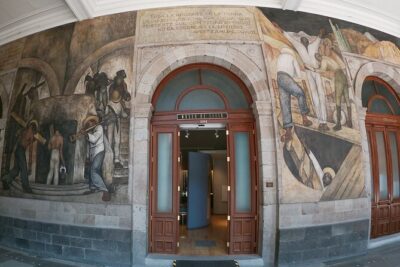
Walking Tour in Mexico City for Exploring their Cultural Heritage
Read our review →
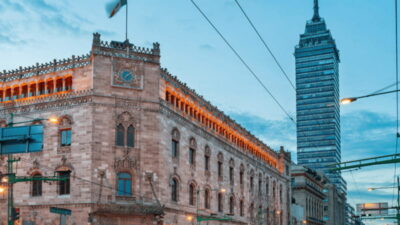
Mexico City: Guided walking tour through the most historic parts of the city.
Read our review →Browse the lists this tour appears in