
Review · NEW ORLEANS
New Orleans: Tremé African American & Creole History Tour
Tremé is where New Orleans history stops being background scenery and starts speaking through music, memory, and place. This 105-minute walk connects Congo Square, St. Augustine Church, the Tomb of the Unknown Slave, jazz landmarks, and locations from HBO’s Tremé.
I like the way guides such as Erin, Nika, Kweku, and Angela tie music to the lives of enslaved Africans, free people of color, and later African Americans. I also like the use of selected songs during the walk, which gives the stories a strong sense of place. The main consideration is the weather: tours run rain or shine, and summer heat or winter cold can make the walk feel longer.
- Congo Square and Armstrong Park: Learn how an old gathering place shaped New Orleans music.
- Black and Creole history: Hear about enslaved Africans, free people of color, civil rights, and local families.
- Music in the streets: Connect Jelly Roll Morton, Alphonse Picou, Trombone Shorty, and the modern brass band tradition.
- Meaningful landmarks: Visit St. Augustine Church and the Tomb of the Unknown Slave.
- Unexpected pop culture: See filming sites from HBO’s Tremé and the laundromat honored by the Rock and Roll Hall of Fame.
- Good practical value: At $22, this is an inexpensive way to add context to your New Orleans visit.
Why Tremé deserves a morning of your New Orleans trip
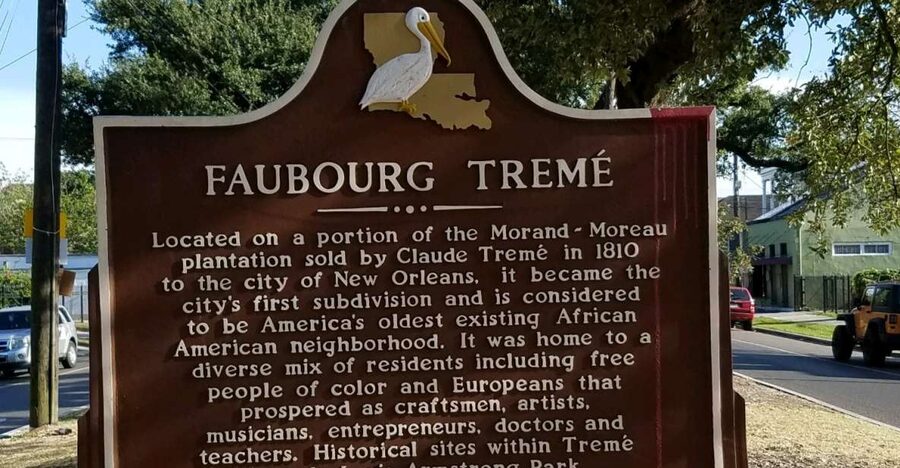
Many first-time visitors stay close to the French Quarter. That is easy and fun, but it leaves out the neighborhood that helped shape the city’s sound, public life, and Black cultural identity. Tremé gives you a different New Orleans, one built through community, faith, parades, labor, resistance, and music.
The tour begins at The Voodoo Lounge, 718 N. Rampart Street, on the corner of North Rampart and Orleans. That puts you at the upper edge of the French Quarter, close to the transition into Tremé. Check in inside the lounge at the box office, where you receive your wristband.
From there, you walk with a licensed guide who also works as a local historian. The guide is not simply pointing out old buildings. The aim is to explain what happened here, who made it happen, and which parts of the story have often been left out.
That approach is the tour’s greatest strength. Erin has been praised for explaining difficult subjects in a clear, respectful way. Nika is known for bringing energy, humor, music, and strong local context. Kweku, Angela, Claire, Eva, Malika, and other guides have also led this experience. Your guide depends on the date, so do not assume you will receive a particular person, but the repeated emphasis on strong storytelling is reassuring.
Walking from the French Quarter into Tremé
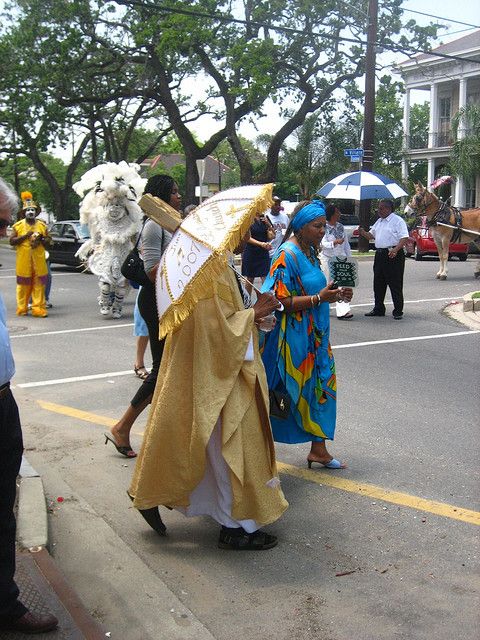
The route is a walking tour rather than a museum visit. You spend most of the time outdoors, moving between landmarks and stopping while your guide explains the location in front of you.
That format matters. Tremé’s story makes more sense when you see the streets, churches, park spaces, and old neighborhood corners together. A classroom can explain jazz. A walk through the area where musicians, churchgoers, organizers, and families lived gives the subject a physical setting.
The pace is generally manageable. Several people found the amount of walking comfortable, and one person who worried about spending two hours outside said the time passed quickly. Still, this is not a good choice for anyone hoping to avoid walking altogether. Wear comfortable shoes, bring sun protection, and carry water for warm weather.
The guides also adjust to conditions as best they can. In hot weather, guides have used shade for explanations. During rain, the group has stopped under cover and continued the discussion there. The tour still operates in poor weather, so check the forecast before booking and dress for the day.
More History Tours in New Orleans:
- New Orleans Garden District History Walking Tour
★ 5.0 · 2,879 reviews - French Quarter Historical Sights and Stories Walking Tour
★ 5.0 · 2,724 reviews - New Orleans Small-Group Haunted History Carriage Tour
★ 4.5 · 2,289 reviews
Congo Square and the sound of New Orleans
Congo Square is one of the most important places on the route. It helps explain why New Orleans music developed such a distinct character, and why the city’s musical story cannot be separated from African American life.
Your guide connects the square and nearby Armstrong Park with older traditions of gathering, rhythm, movement, and community. The point is not to claim that one location single-handedly created jazz. Instead, you learn how music grew from many strands, including African traditions, church life, marching, dance, social gatherings, and later brass band culture.
This is also where the tour’s music selections make sense. Guides have used a Bluetooth speaker or boombox to play examples as the group walks. The songs act as an introduction to the next explanation rather than random background noise. One moment you may hear a piece connected to the neighborhood, then stop to discuss the musician, the tradition, or the social setting behind it.
The route also addresses the painful changes to this area. One guide showed old images of streets and buildings that were removed to create the park. That kind of comparison can be powerful, because it lets you picture a neighborhood that is no longer visible in the current street plan.
Expect the tone to shift. You will hear about creativity and celebration, but also displacement, racism, and historical erasure. This is not a light music stroll with a few famous names added on. It asks you to look at how culture survived pressure and loss.
St. Augustine Church and the Tomb of the Unknown Slave
St. Augustine Church brings another side of Tremé into focus. Churches in New Orleans have long been tied to worship, education, social aid, music, and neighborhood identity. Your guide explains the church in the wider story of Black Catholics, Creole culture, and the people who built community in a city shaped by both French and American systems.
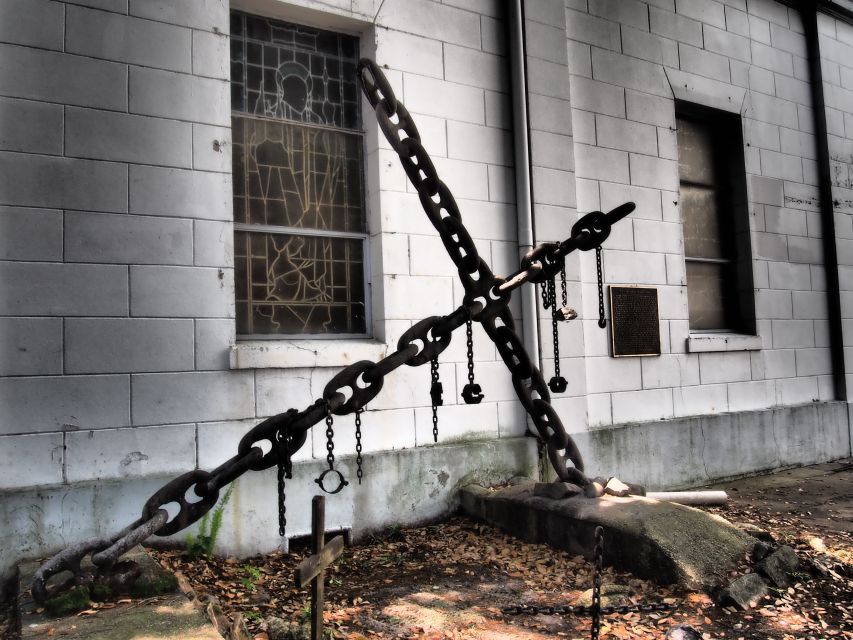
The Tomb of the Unknown Slave is a more solemn stop. It honors enslaved people whose names and individual stories were not preserved. The site gives the tour a direct human focus, moving the discussion away from broad labels and toward the people who endured forced labor and denied rights.
This is one reason the tour works best for visitors who want more than architectural sightseeing. A guide can point to a church or monument in a minute. A good explanation shows how that place fits into the lives of ordinary people, and why it still matters.
The subject matter can be heavy. That is not a flaw, but you should know the mood is not consistently cheerful. The tour presents the beauty of New Orleans culture alongside the systems that tried to suppress it.
Jazz pioneers and the modern brass band tradition
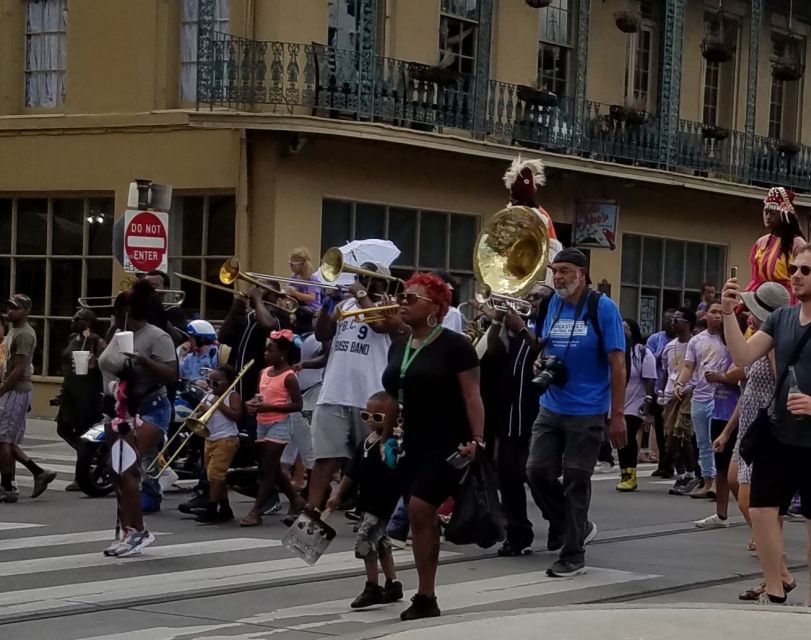
Tremé’s music story includes well-known figures such as Jelly Roll Morton, Alphonse Picou, and Trombone Shorty. These names help show the long arc from early jazz to the brass band sound heard in New Orleans today.
Your guide uses musicians as entry points into a larger story. You learn about the people behind the music, the neighborhoods that supported them, and the traditions that keep changing. The tour also explains how New Orleans music developed through contact among different communities and styles, rather than from one neat origin story.
The modern brass band tradition receives special attention. That matters because it connects the past to the city you can hear now. New Orleans music is not presented as something locked in a museum. Musicians, artists, and craftspeople still contribute to Tremé’s ongoing identity.
The musical examples help if you do not already know the history of jazz. You do not need to arrive with a list of musicians or a background in music theory. The guide explains the context in plain language, then lets you hear why the sound matters.
If you already know jazz well, the value comes more from the local setting and the links between music, race, neighborhood change, and public life. Ask questions. Guides have handled subjects ranging from music to civil rights and local misconceptions.
Same city, a different century:
- The National WWII Museum Admission Ticket New Orleans
★ 5.0 · 2,202 reviews - New Orleans Haunted History Ghost Tour
★ 4.5 · 2,084 reviews - Paddlewheeler Creole Queen Historic Mississippi River Cruise
★ 4.5 · 1,948 reviews - New Orleans Food and History Walking Tour
★ 5.0 · 1,544 reviews
Civil rights, Plessy, and the parts of the story often skipped
The tour also looks at the rise of the civil rights movement and the long struggle for equal treatment. Plessy v. Ferguson has been part of the discussion, along with the way legal decisions shaped daily life far beyond the courtroom.
This is an important feature because New Orleans history is often served as food, architecture, and music while the political story gets less attention. Here, the guide connects legal history to local streets and residents. You get a better sense of how national events affected people in Tremé.
The tour does not treat history as a tidy chain of victories. It addresses discrimination, the loss of neighborhoods, and the city’s attempts to bury or soften uncomfortable facts. That frankness is one of the strongest reasons to choose this walk.
At the same time, the guide’s style keeps the material approachable. Erin has been praised for answering difficult questions without sounding preachy. Other guides have used humor and personal storytelling to keep the group engaged. You should expect an honest conversation, not a scripted lecture.
The HBO locations and the famous laundromat
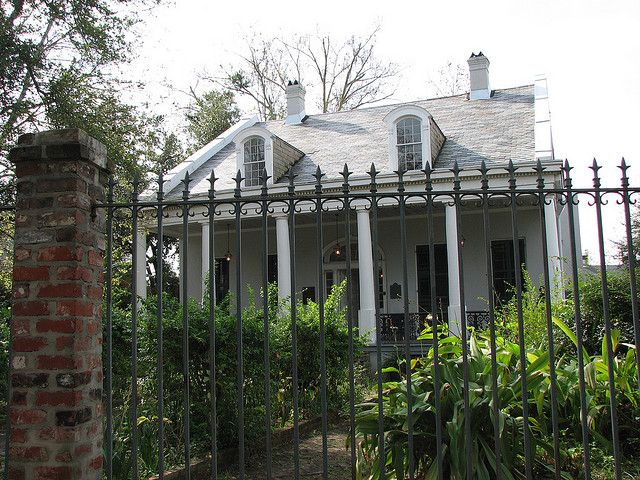
Fans of HBO’s Tremé will recognize locations connected with the series. The show used the neighborhood’s streets and culture as more than decoration, and the tour explains how the television version relates to the real place.
You do not need to have watched the show. The filming sites add a pop culture layer, but they are not the main reason to book. If you know the series, you will have extra reference points. If you do not, the guide still has plenty of historical material to cover.
The laundromat is another unexpected stop. It is described as the only laundromat to enter the Rock and Roll Hall of Fame, which makes it a memorable example of how ordinary places can become part of a city’s music story.
These stops provide a useful change of pace. After serious discussions of slavery, civil rights, and displacement, a television location or famous laundromat gives the group a lighter point of connection. The tour never needs to choose between cultural history and fun local details.
How the guide shapes the experience
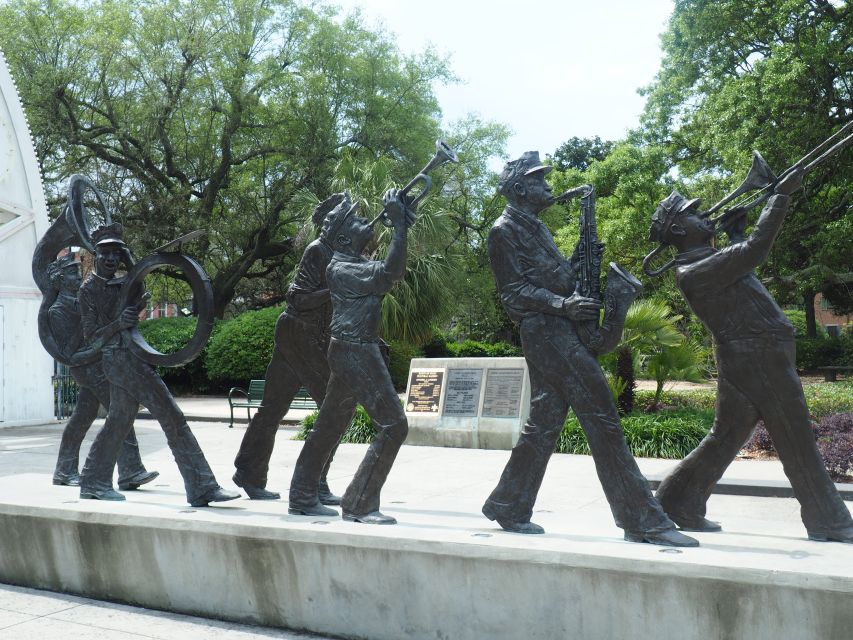
The guide makes a major difference here. The same streets can feel ordinary or meaningful depending on how clearly the story is told.
The strongest guides use several tools: music during the walk, old photographs, local examples, humor, and time for questions. Some have offered extra context about museums or landmarks seen along the way. One participant returned to visit two museums after the tour, which is a good way to use the walk as a starting point rather than a complete education.
If your guide is Erin, Nika, Kweku, or another experienced leader, expect a personal style rather than a uniform audio script. Some guides bring family or neighborhood connections. Others focus more on music, architecture, or legal history. That variation can be a plus, though it means the emphasis may change from one departure to another.
The group also seems to have room for questions. That is valuable in Tremé, where a short explanation often raises a larger issue. Ask about a musician, a building, a local term, or a point you do not understand. The guides are prepared to connect the answer to the wider story.
Is $22 good value for 105 minutes?
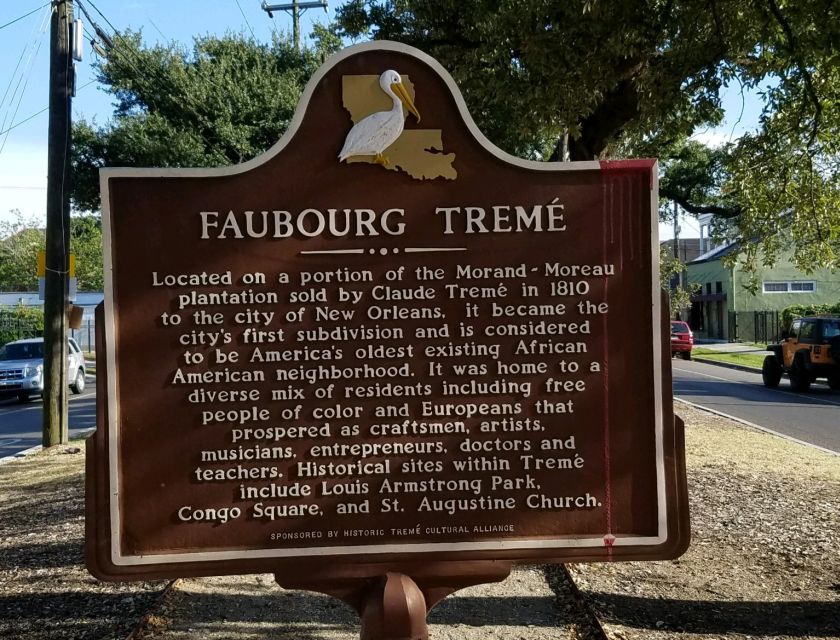
At $22 per person, this is a strong value if you want history and orientation early in your stay. You get nearly two hours with a live English-speaking guide, a route through Tremé, music examples, and context that would be difficult to assemble on your own.
The tour is especially useful on your first or second day in New Orleans. It gives you names, places, and themes to notice during the rest of your visit. You may hear a brass band later and understand more about the tradition. You may pass Armstrong Park and picture the streets that once stood there.
Food and drinks are not included. That keeps the price low, but plan your own water and snacks, especially in hot weather. One past route included a stop at Tremé Coffee Shop, but you should not treat that as a guaranteed part of every departure.
The experience is wheelchair accessible, though outdoor walking conditions can still vary. Large bags and luggage are not allowed, so leave those elsewhere. You can cancel up to 24 hours before the start for a full refund, and the reserve-now, pay-later option helps if your schedule is still moving around.
Who should book this Tremé walk?
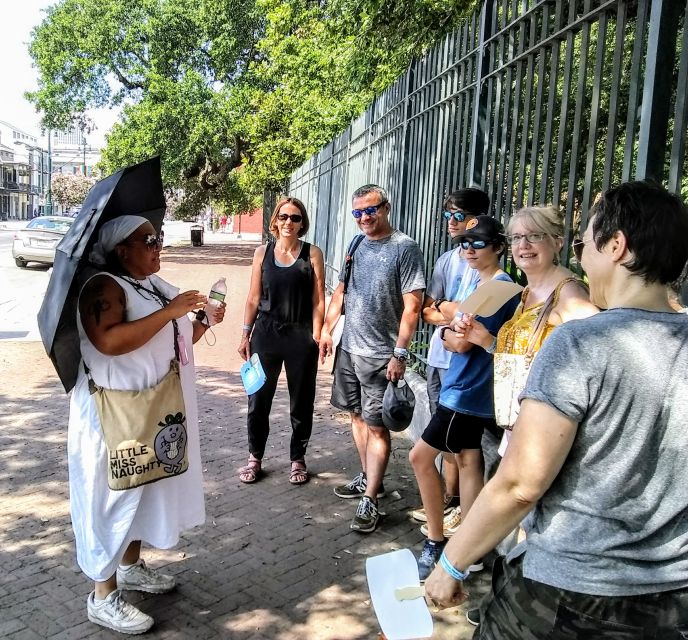
I would choose this tour if you want to understand New Orleans through Black history, Creole culture, and music rather than only through restaurants and nightlife. It suits curious adults, first-time visitors, jazz fans, and anyone who wants a more grounded view of the city.
It is also a good choice for visitors who have watched Tremé, though the television references are an extra rather than the main event. Families with older children may appreciate the music and visual stops, but the discussion of slavery, racism, and civil rights requires attention.
I would skip it if you want a short, purely entertaining stroll with little historical detail. I would also think twice if you dislike walking outdoors in heat, rain, or cold. The route is not difficult in concept, but weather can affect your comfort.
Should you book the Tremé African American and Creole History Tour?
Yes, if you want the New Orleans story told through the people and traditions that shaped it. At $22, the tour offers unusually good value, especially when the guide uses music, old images, and direct discussion of subjects that are often softened or omitted.
Book it early in your visit if possible. You will leave with a better sense of Congo Square, Armstrong Park, Tremé’s churches, jazz pioneers, brass bands, and the forces that changed the neighborhood. Bring good shoes, sun protection, and an open mind. The walk is short enough to fit into a busy itinerary, but serious enough to change how you see the rest of New Orleans.
FAQ
Where does the tour meet?
The tour meets at The Voodoo Lounge, 718 N. Rampart Street, at the corner of North Rampart Street and Orleans Street. This is at the top of the French Quarter.
How long does the Tremé tour last?
The tour lasts 105 minutes. Starting times vary, so check availability when choosing your date.
What language is the tour conducted in?
The live tour is conducted in English.
Is the tour wheelchair accessible?
Yes, the activity is listed as wheelchair accessible.
What should I bring?
Bring comfortable walking shoes and sun protection. You may also want water, particularly in warm weather.
Can I bring luggage or a large bag?
No. Luggage and large bags are not allowed on the tour.
Does the tour operate in bad weather?
Yes. Tours operate rain or shine, so dress for the forecast.
Can I cancel for a refund?
Yes. You can cancel up to 24 hours in advance for a full refund. You can also reserve now and pay later.
Just added around New Orleans
- New Orleans: 1.5-Hour Voodoo History Evening Tour★ 4.5 · 34 reviews
- New Orleans: Swamp Boat Ride and Historic Plantation Tour★ 4.7 · 303 reviews
- New Orleans: Wicked History Walking Tour with a Local Witch★ 4.3 · 29 reviews
- New Orleans: Garden District Food, Drinks & History Tour★ 4.9 · 97 reviews
- New Orleans: French Quarter Saints & Sinners History Tour★ 4.6 · 56 reviews
- New Orleans: Drunk History Walking Tour★ 4.2 · 165 reviews
- New Orleans: Haunted Drunken History Walking Tour★ 4.9 · 50 reviews
- New Orleans, French Quarter: Pirate History Walking Tour★ 5.0 · 45 reviews
New Orleans History Tours, compared.
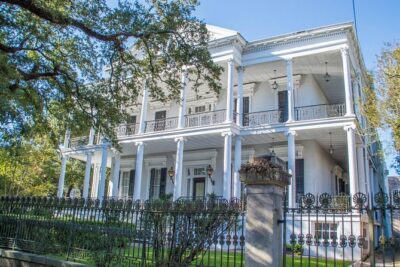
New Orleans Garden District History Walking Tour
Read our review →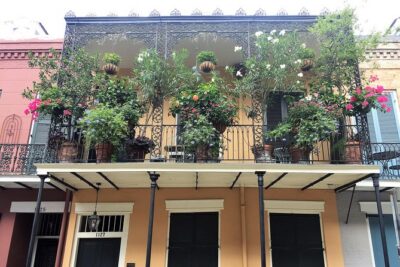
French Quarter Historical Sights and Stories Walking Tour
Read our review →
New Orleans Small-Group Haunted History Carriage Tour
Read our review →
The National WWII Museum Admission Ticket New Orleans
Read our review →
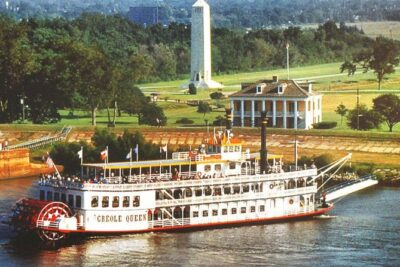
Paddlewheeler Creole Queen Historic Mississippi River Cruise
Read our review →
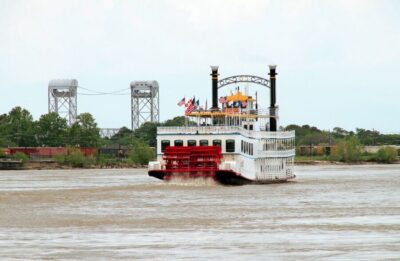
New Orleans: Creole Queen History Cruise with Optional Lunch
Read our review →Browse the lists this tour appears in