
Review · PALERMO
Palermo: Walking Tour of Historic Markets and Monuments
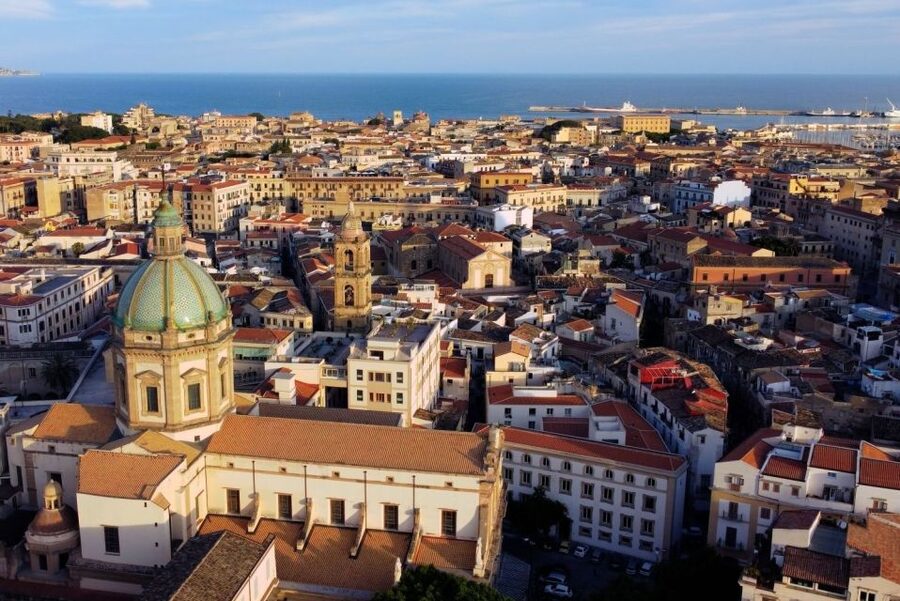
Palermo’s best introduction may be found between a cathedral built over centuries and a market where vendors still call out over trays of food. This three-hour walking tour links the city’s grand monuments with the noisy, colorful Capo market, giving you both Palermo’s official face and its everyday one.
I like the way the route combines the Cathedral and Teatro Massimo with local legends, including the secretive Beati Paoli and Palermo’s patron saint, Santa Rosalia. I also like the chance to taste market food instead of treating the market as a backdrop. The main catch is simple: the tour is in Italian only, so you need a solid understanding of the language to get full value from the guide’s stories.
Guides named Claudio and Fabrizio have led particularly well-regarded tours, with a style described as prepared, lively, humorous, and broad in subject. You should also plan for plenty of walking, wear comfortable shoes, and dress modestly for the cathedral.
Key details before you book
- Capo market brings Palermo to life: Expect narrow market streets, local wares, food stalls, calls from vendors, and the chance to try Sicilian specialties.
- The Cathedral shows Palermo’s changing identity: Its architecture reflects different periods and influences rather than one neat design.
- Teatro Massimo adds drama: Italy’s largest theater comes with stories of ghostly sightings and old Palermo legends.
- The route covers several major sights: You see the Cathedral, Teatro Massimo, Quattro Canti, Fontana Pretoria, and the Capo market in about three hours.
- The Italian guide matters: Claudio and Fabrizio are named in particularly strong feedback, but your assigned guide may differ.
- The $35 price is reasonable for a city orientation: The fee covers the guide, while entry tickets are not included.
Why this Palermo walk works so well
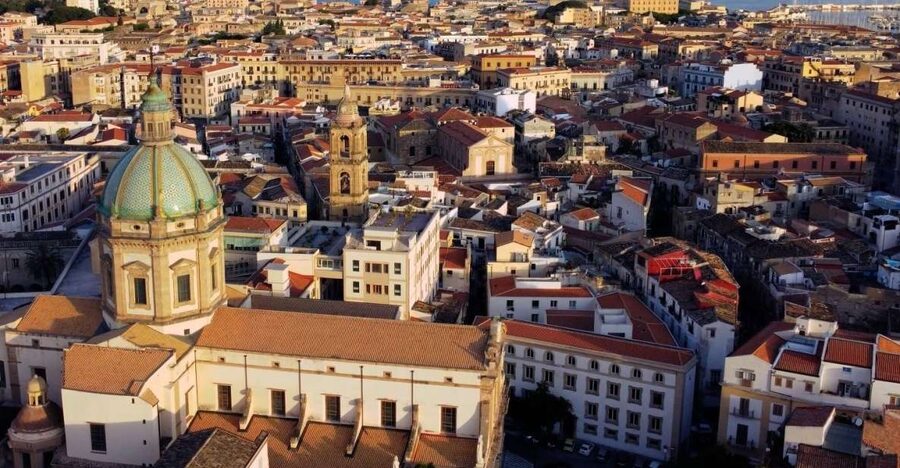
Palermo can feel scattered at first. Its monuments sit among busy streets, old market lanes, churches, cafés, and buildings marked by centuries of change. A walking tour helps you connect those pieces before you try to explore them alone.
This route is useful because it does not treat Palermo as a museum. You begin with major architecture, then move toward the market, where the city becomes more immediate and less polished. That change is the point. You see the places built for kings, bishops, theatergoers, and civic ceremonies, then finish among food sellers and ordinary street life.
The tour lasts three hours, long enough to give you a real sense of the historic center without taking an entire day. You should expect a steady walk and regular stops for explanations. It is not designed as a slow, private architectural study, and there is no promise of extended free time at each monument.
At $35 per person, the cost is fair if you want a guided introduction rather than simply a list of sights. The value comes from the connections between the places: architecture, local stories, Palermo’s patron saint, and food traditions. Since admission tickets are not included, check the current arrangements for any monument where entry may involve a separate fee.
More History Walking Tours in Italy
- Venice: City Center Historical Guided Walking Tour
★ 4.2 · 1,873 reviews - Palermo: Street Food and History Walking Tour
★ 4.9 · 1,486 reviews - Verona: History and Hidden Gems Guided Walking Tour
★ 5.0 · 1,379 reviews
Starting at Palermo Cathedral
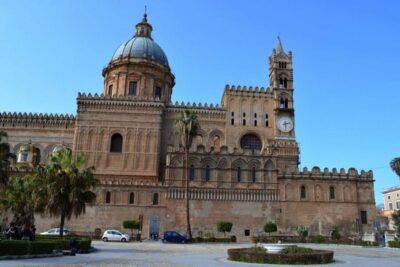
The Cathedral is the tour’s first major stop and gives you the clearest lesson in Palermo’s layered past. The building dates from the early 12th century, but its appearance changed over time. Your guide explains that architectural evolution while pointing out the famous bell towers and the details that make the building so distinctive.
I like beginning here because the Cathedral is not just another grand church on a sightseeing checklist. It helps explain why Palermo looks the way it does. Different periods left their mark, so you are looking at a building shaped by more than one design idea.
The plan is to enter the Cathedral, not merely admire the outside. That makes the clothing rule important. You must wear modest clothing to go inside, so avoid arriving in beachwear or anything that could cause a problem at the entrance.
Entry tickets are not included in the tour price. The tour information says the Cathedral visit is part of the route but also lists tickets as an extra, so confirm the exact entry arrangement when booking. This is a small point, but it prevents an awkward surprise on the day.
Your guide’s explanation is likely to be more useful than a quick solo visit because the building can be hard to read at a glance. Look for the way the outside combines strong medieval forms with later additions. Give yourself time to notice the bell towers and the building’s changing character rather than rushing toward the next stop.
Teatro Massimo and its ghost stories
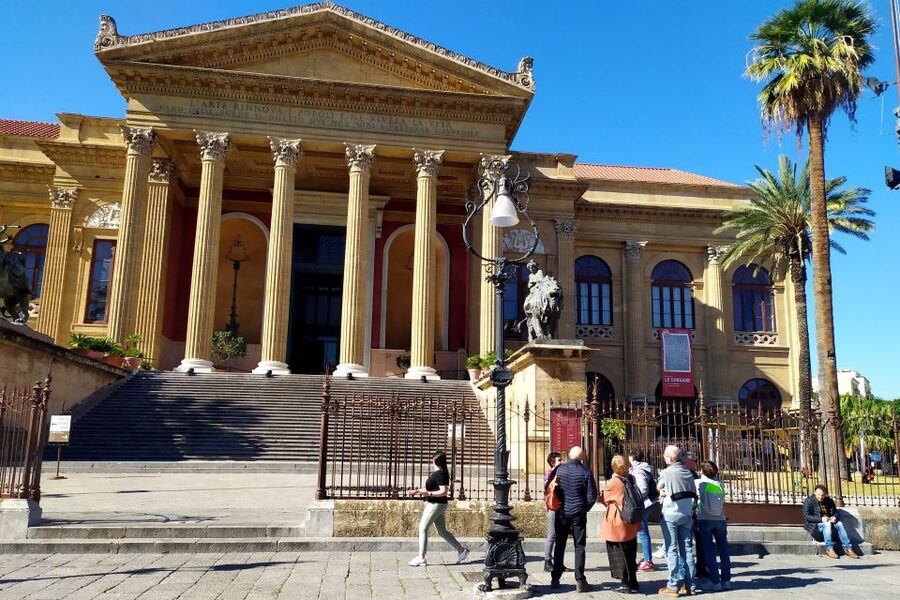
From the Cathedral, the walk continues to Teatro Massimo, one of Palermo’s most famous landmarks and Italy’s largest theater. Its size makes it easy to spot, but the stories surrounding it are what give this stop extra personality.
The guide talks about the theater’s ghostly legends, adding a bit of mystery to an otherwise formal monument. This is a good example of what a live guide adds. You can photograph the building on your own, but local stories help turn a grand façade into part of Palermo’s folklore.
The theater also gives the route a change of mood. The Cathedral brings religious architecture and long historical shifts. Teatro Massimo brings public performance, civic pride, and the dramatic side of the city. You do not need to be an opera expert to enjoy the stop.
Do not expect this tour to function as a full theater performance visit. The stated highlights focus on admiring the building and hearing its stories. If you want an interior tour or a performance, that would be a separate plan.
Quattro Canti and Fontana Pretoria
The route also takes in Quattro Canti, the famous Baroque plaza where four curved building fronts frame the intersection. It is one of Palermo’s most recognizable urban spaces, and your guide can help you understand why the layout matters instead of letting you pass through it as just another crossroads.
This is the kind of stop where a guide earns the fee. The square is compact, so you can see it quickly, but its design rewards a pause. Look up at the façades and notice how the space was shaped to create a formal urban scene.
Nearby, Fontana Pretoria fills the Piazza Pretoria with sculpture and theatrical detail. The fountain is imposing, and the surrounding square offers another clear example of Palermo’s taste for grand public statements.
The tour does not present these sights in isolation. Quattro Canti and Fontana Pretoria help you read the city center as a connected collection of streets and plazas. You move from religious power to civic design, then onward toward the market. That sequence gives the walk a natural rhythm.
Same city, a different century:
- Pompeii: Entry Ticket and Guided Tour with an Archaeologist
★ 4.8 · 19,459 reviews - Colosseum: Underground and Ancient Rome Tour
★ 4.7 · 12,691 reviews - Pompeii: Small Group Tour with an Archaeologist
★ 4.8 · 12,264 reviews - Pompeii Small Group Tour with an Archaeologist
★ 5.0 · 6,593 reviews
Stories of Santa Rosalia and the Beati Paoli
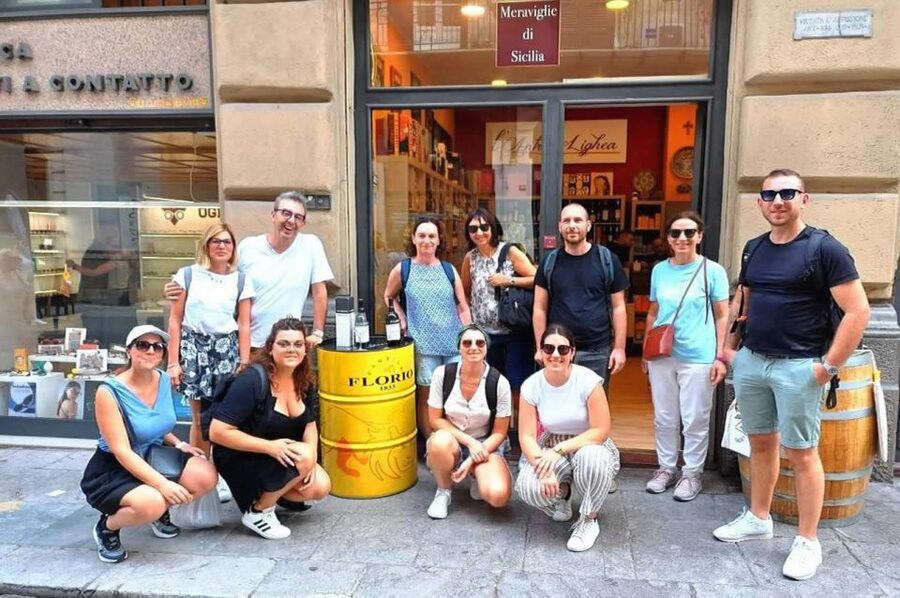
Palermo is a city of stories, and this tour makes room for legends as well as dates and buildings. Santa Rosalia, known locally as La Santuzza, is the city’s patron saint and an important part of Palermo’s identity.
The guide also tells the story of the mysterious Beati Paoli sect. The group belongs to Palermo’s darker folklore, and its secrecy has helped keep the tale alive. This is not the same as a formal history lecture, and that is part of its appeal. You hear how local memory mixes fact, belief, rumor, and civic identity.
I find these stories especially useful when you are new to Palermo. They give you small hooks to remember the city by. A plaza is no longer just a plaza, and a street is tied to a tale you heard while walking through it.
The exact depth of the discussion will depend on the guide and your Italian. Claudio has been described as enthusiastic, ironic, and entertaining, while Fabrizio has been praised for a wide cultural background and clear explanations of the city’s buildings, streets, and past. Those details suggest that the guide can shape the experience significantly.
Entering the Capo market
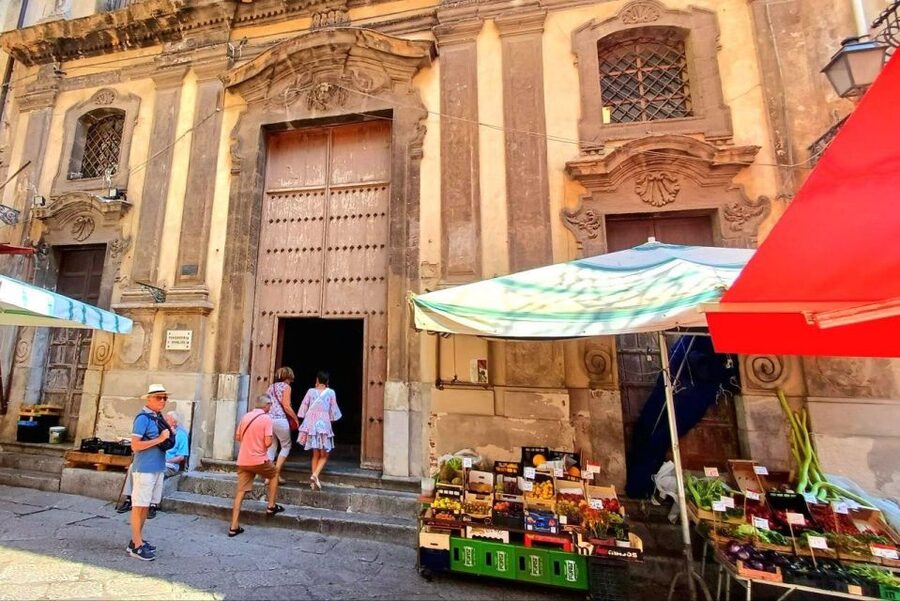
The Capo market is the tour’s most sensory section. After the formal monuments, you enter a street market filled with color, sound, local goods, and food. This is where Palermo feels less arranged for sightseeing and more like a city going about its day.
Expect market lanes rather than a quiet indoor hall. The appeal lies in the movement around you: vendors, displays, traditional products, and the smell of cooking. Your guide helps identify what you are seeing and places the market within Palermo’s older neighborhood life.
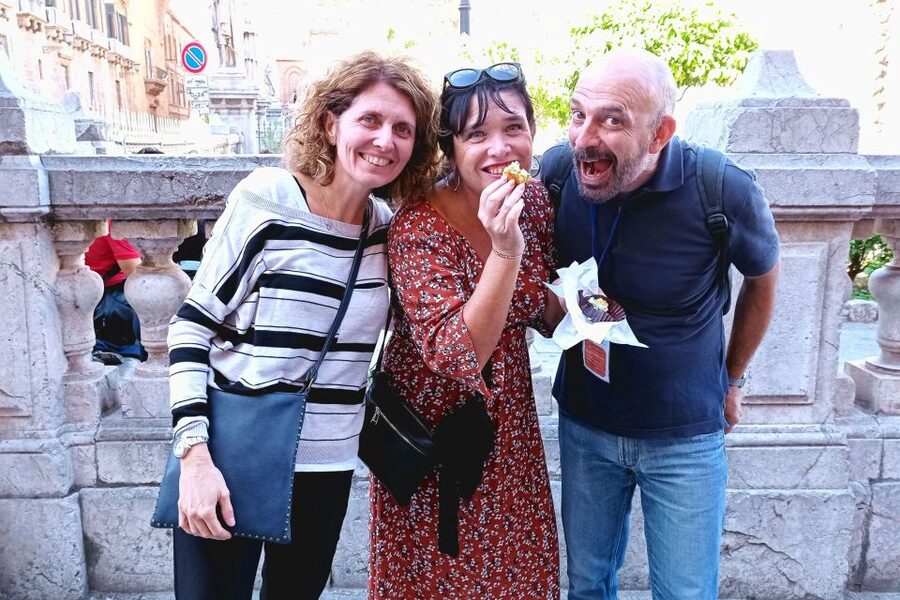
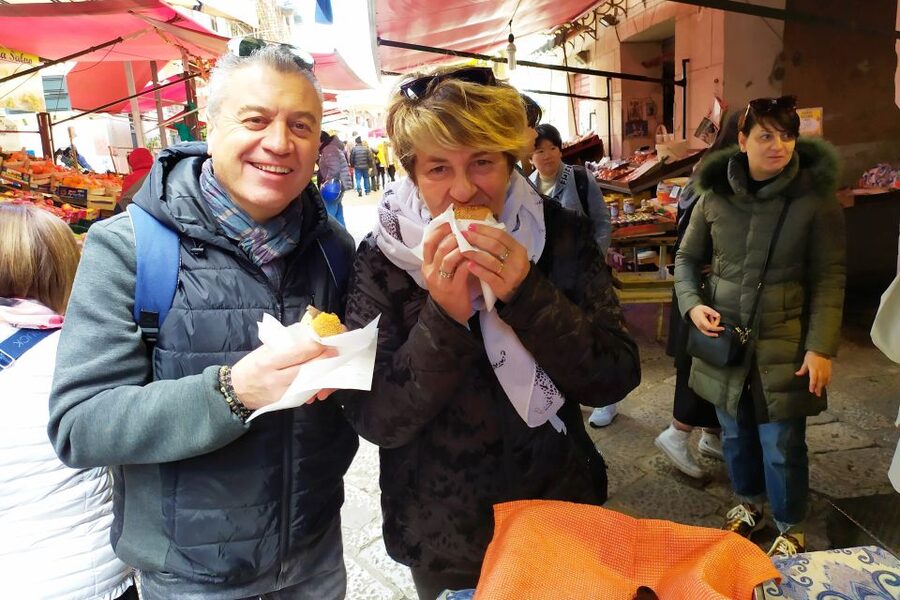
The market is also where you can try Sicilian street food and pastries. The information does not promise a fixed tasting menu or state that food is included in the $35 price, so treat sampling as an opportunity to purchase food separately rather than part of the ticket. Bring a little spending money if you want to taste something.
This stop is a strong reason to choose the tour over a monument-only walk. Palermo’s food culture is part of its identity, and the market gives you a chance to encounter it directly. You might find the market more crowded and less orderly than the plazas earlier in the route, but that is exactly what makes it feel real.
If you are sensitive to noise, crowds, or narrow streets, the market may be the most demanding part of the walk. Stay close enough to hear the guide, and keep your belongings secure in the busy sections. The tour details do not give a group size, so you should not assume an intimate small-group setting.
What the $35 price buys you
The $35 fee covers a guided walking tour and a professional guide. It does not cover entry tickets, and the food you choose to sample at the market should not be assumed to be included.
For a three-hour introduction to Palermo, that is a sensible price if you want context as you walk. You are paying for the route, the guide’s explanations, and the links between architecture, legends, and food. You are not paying for transportation, a full meal, or a private tour.
The value is strongest on a first visit. A guide can point out the importance of the Cathedral, explain the Baroque planning at Quattro Canti, add the theater legends, and help you approach the Capo market with some understanding. You then have better bearings for later independent exploring.
The guide is the key variable. Strong feedback has singled out Claudio and Fabrizio for preparation, humor, enthusiasm, and cultural range. Since the tour is offered in Italian, the language match matters more than the exact price. If you understand Italian comfortably, the fee looks good. If you only know a little Italian, you may see the sights but miss much of what makes the tour worthwhile.
Who should book this walk
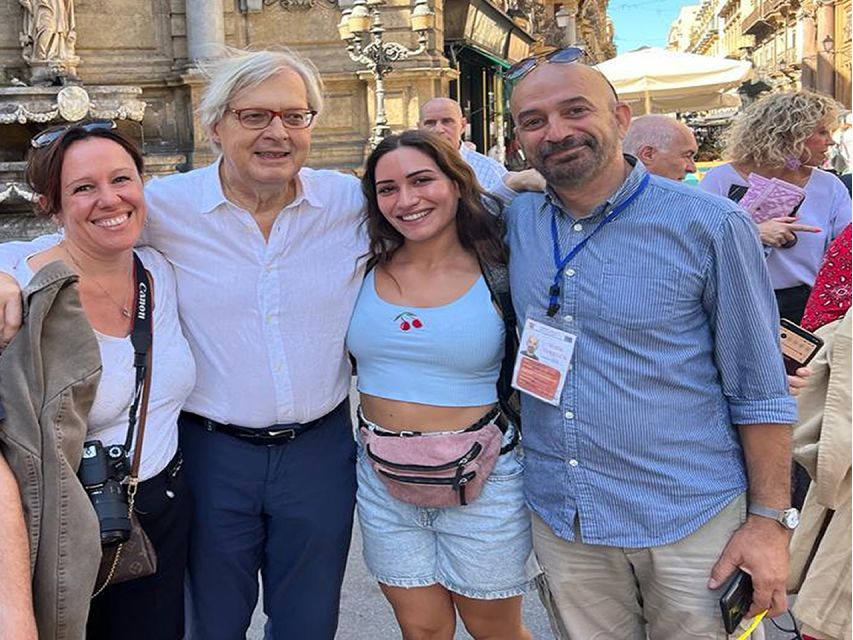
I would choose this tour for someone visiting Palermo for the first time, especially if you want major landmarks and local food in one morning or afternoon. It suits people who prefer walking and storytelling to a bus route or a long museum visit.
It is also a good fit if you want to understand Palermo beyond its postcard buildings. The Capo market, street food, Santa Rosalia, and the Beati Paoli add local character that a monument-only itinerary would miss.
You should be comfortable with three hours on foot. Comfortable shoes are specifically recommended, and that is practical advice rather than a formality. The tour moves through historic streets and market lanes, with stops at several different sites.
This is not the best choice if you need English or another language. The live guide speaks Italian only, and no translation service is listed. It may also disappoint you if you expect every admission fee, tasting, or interior visit to be included.
Practical tips for a smoother morning
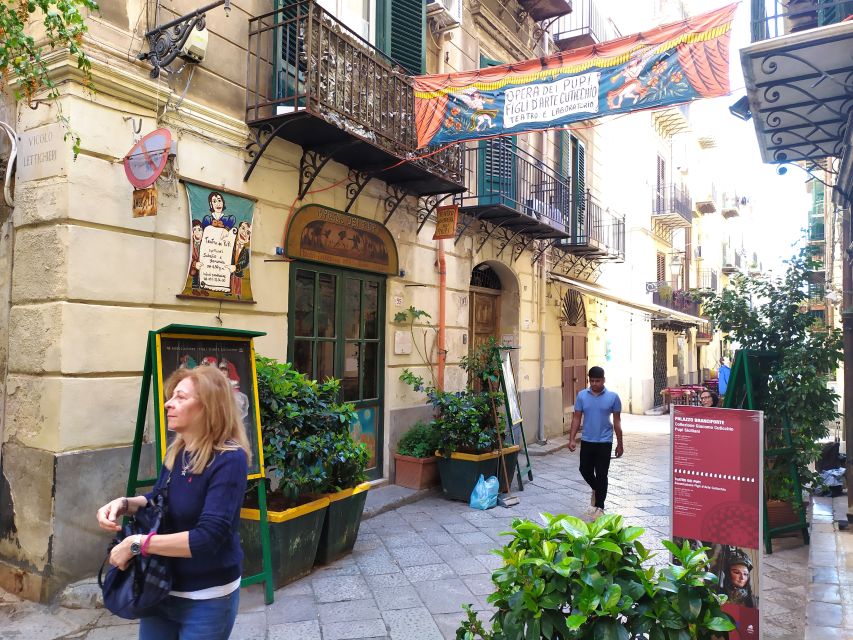
Meet in front of the Feltrinelli library. The guide will wear a red tag marked tour guide, which should make the meeting point easier to identify.
Wear modest clothing from the start, since the Cathedral is part of the route. Comfortable shoes are essential. You may also want water and a small amount of cash for optional market food, though the listed information does not specify payment methods or tasting prices.
Keep the three-hour schedule in mind when planning the rest of your day. The tour includes several major stops and the market, so it is better to leave breathing room afterward rather than booking a fixed activity immediately after the finish.
You can cancel up to 24 hours ahead for a full refund, and the reserve-now, pay-later option lets you hold a place without paying at once. Those terms are useful if your Palermo plans are still shifting.
My verdict on the Palermo market and monuments tour
You should book this walk if you want a clear first look at Palermo that mixes famous buildings with street-level life. The Cathedral, Teatro Massimo, Quattro Canti, Fontana Pretoria, and Capo market make a well-rounded route, while the stories of Santa Rosalia and the Beati Paoli keep it from feeling like a dry architecture lesson.
The strongest reasons to go are the Italian-speaking guides, the market finish, and the blend of fact with local legend. The main reason to hesitate is the language barrier. If you cannot follow Italian, much of the guide’s value will be lost.
For Italian-speaking visitors, or for anyone traveling with a strong Italian speaker, $35 is a fair price for three hours of orientation. Just budget separately for tickets and any food you decide to buy, dress properly for the Cathedral, and arrive ready to walk.
FAQ
How long does the Palermo walking tour last?
The tour lasts three hours.
What language is the tour conducted in?
The live guided tour is conducted in Italian only.
How much does the tour cost?
The listed price is $35 per person.
What sights are included in the route?
The route includes Palermo Cathedral, Teatro Massimo, Quattro Canti, Fontana Pretoria, and the Capo street market.
Is food included in the tour price?
Food is not listed as included. You have the opportunity to purchase and sample Sicilian street food and pastries at the market.
Are entry tickets included?
No. Entry tickets are listed as not included in the tour price.
Where is the meeting point?
Meet in front of the Feltrinelli library. The guide will wear a red tag marked tour guide.
What should I wear or bring?
Wear comfortable shoes and modest clothing suitable for entering the Cathedral.
Can I cancel the booking?
Yes. You can cancel up to 24 hours in advance for a full refund. You can also reserve now and pay later.
Just added around Italy
- Guided Cultural Tour of the Godfather Film in Messina★ 5.0 · 31 reviews
- Guided tour of the Riace Bronzes and the Archaeological Museum of Reggio Calabria★ 5.0 · 44 reviews
- SU NURAXI BARUMINI Unesco World Heritage Site★ 5.0 · 129 reviews
- Brescia the Unexpected: History, Local Stories & a drink★ 5.0 · 31 reviews
- Bolognese Cooking Class with Margherita in the Historic Center★ 5.0 · 26 reviews
- Tower and Power, Virtual tour in Medieval Bologna★ 4.5 · 54 reviews
- Bologna historical art walking tour with hidden gems and tastings★ 5.0 · 108 reviews
- Best of Bologna in one day : Food, architecture, art and history★ 5.0 · 27 reviews
Palermo History Tours, compared.
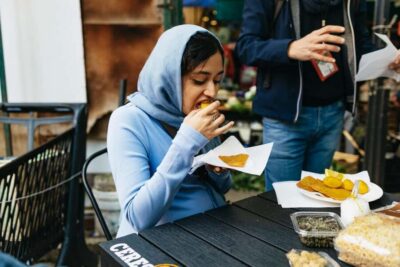
Palermo: Street Food and History Walking Tour
Read our review →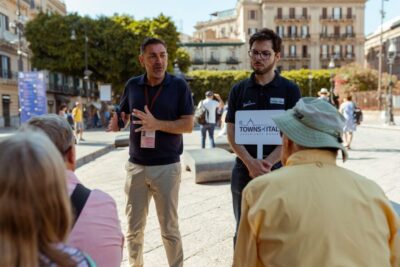
Palermo: UNESCO World Heritage Sites Guided Walking Tour
Read our review →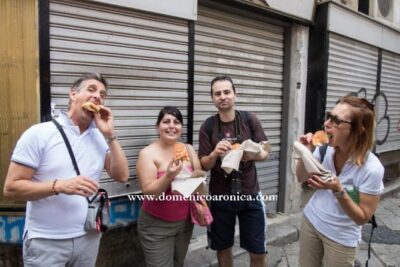
Walking Tour and street food Tour Palermo / History and Food
Read our review →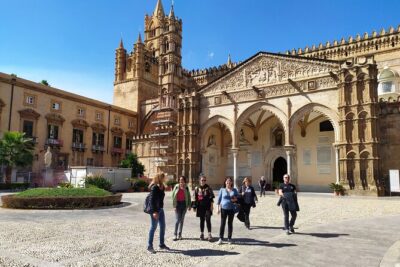
Discover Palermo in 3 hours. Art, history, markets and street food
Read our review →
Palermo : Historic Markets & monuments Walking Tour
Read our review →
Palermo: Historic Center Guided Bike Tour with Food Tasting
Read our review →
From Palermo: Segesta Archaeological Park Transfer
Read our review →Browse the lists this tour appears in