
Review · PARIS
Paris: Khéops VR Experience – Explore Ancient Egypt
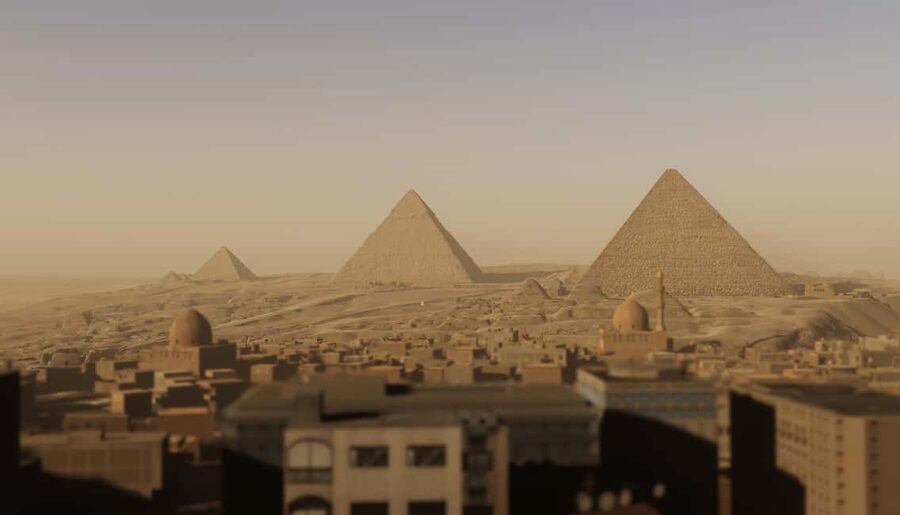
Paris has no shortage of grand museums, but the Khéops VR Experience offers something different: a chance to walk around the Great Pyramid of Khufu and enter its interior without leaving the city. The setting is virtual, but the visit is built around archaeological context and a careful recreation of the Giza Plateau.
I especially like two things here. First, you can move through spaces that are difficult or impossible to see in person. Second, the mix of cinematic sound, lighting, and 360-degree views gives the ancient monument a strong sense of place. The main consideration is that the headset experience lasts about 45 minutes, so visitors who want a full museum visit may find this short for the $37 price.
Key points
- Walk around a digital Giza Plateau: See Khufu’s Pyramid from the outside as it may have appeared 4,500 years ago.
- Enter normally inaccessible spaces: Explore corridors and chambers that are not open to ordinary public access.
- A short historical introduction comes first: The visit gives you archaeological background before the headset goes on.
- French and English are available: A host or greeter can assist in either language.
- Good rainy-day choice in Paris: The entire activity takes place indoors and is wheelchair accessible.
- Plan for a 45-minute headset session: With the introduction and setup, the total visit lasts about one hour.
Why Khufu’s Pyramid works so well in virtual reality
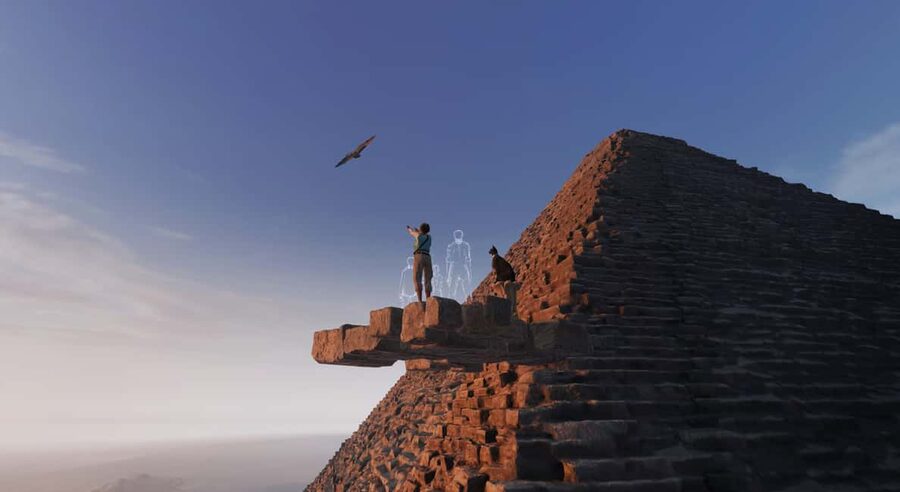
The Great Pyramid is famous, but much of what makes it fascinating is hard to grasp from photographs. You see a huge stone monument, yet you cannot easily picture how its internal passages connect or how its rooms relate to the massive structure above them.
This experience tackles that problem by letting you move through a digital recreation. You begin at the Giza Plateau, looking up at the pyramid from ground level. That opening matters because it gives the building scale before you enter it. The pyramid is not presented only as a set of corridors. You first see it as a monumental structure placed within its ancient surroundings.
The recreation looks back roughly 4,500 years, giving you a sense of the site in its ancient setting rather than as a modern archaeological attraction. I like that approach because it asks you to think about the pyramid as an active building project and a royal monument, not simply as an old stone shell.
The result is more than a virtual photograph. You can examine the structure from different angles and walk across the digital plateau. For anyone who has stood outside a large monument and wished for a better view of its design, that freedom is the main reason to book.
More Ancient History Tours in Paris:
- Pompeii: Entry Ticket and Guided Tour with an Archaeologist
★ 4.8 · 19,459 reviews - Athens: Acropolis & up to 5 Archaeological Sites Combo Pass
★ 4.2 · 13,904 reviews - Colosseum: Underground and Ancient Rome Tour
★ 4.7 · 12,691 reviews
The opening briefing sets the archaeological scene
Before you receive the headset, the experience begins with a short introduction to the archaeology and architecture of Ancient Egypt. This is an important part of the visit, especially if you know the pyramid mainly from school lessons or holiday photographs.
The briefing introduces the monument’s context and points toward some of the questions surrounding Egyptian construction. It gives the headset portion a purpose. Instead of being dropped into a spectacular computer-generated world with no explanation, you receive a basic framework for what you are about to see.
The historical material is intended for a broad audience. Families can follow it, and adults with a serious interest in Egyptian architecture should find enough context to make the virtual visit more meaningful. The experience was created with support from historical experts, which helps explain its educational tone.
You should not expect a long lecture or a full archaeology course. The introduction is short, and the main portion is visual and interactive. If you want a detailed discussion of dynasties, excavation methods, or every theory about the pyramid, you will need a museum or a longer guided program as well.
Walking across the ancient Giza Plateau
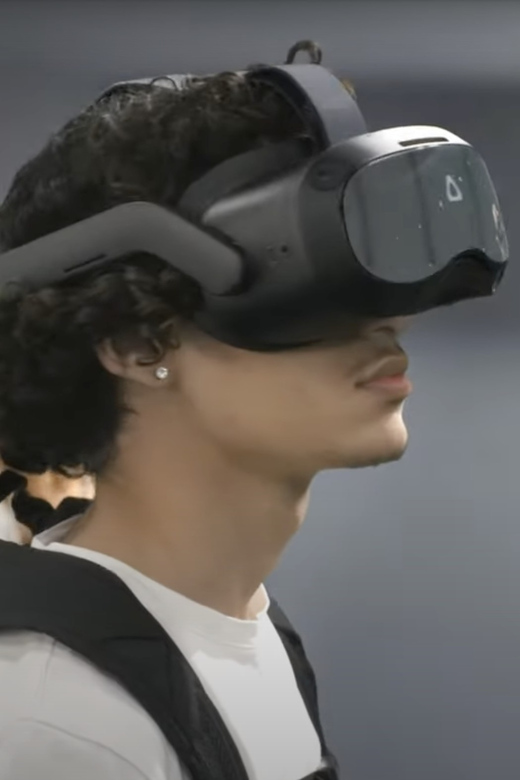
Once the headset is in place, you are transported to the foot of Khufu’s Pyramid. The 360-degree view surrounds you, so you are not simply watching a flat screen or a recorded film. You can look around and move through the recreated site.
This first outdoor section helps you understand the pyramid’s size. From the base, the structure fills your view in a way that a diagram cannot match. You can examine the monument up close, then take in the surrounding plateau before heading inside.
The digital setting is designed to show the site as it may have looked in ancient times. That makes this section especially useful for people who have already visited the modern Giza Plateau and want to imagine it before the crowds, roads, and present-day tourism infrastructure.
The freedom to walk is a major strength, but it also means you should pay attention to the guide’s instructions. You may want to look in every direction at once, yet the commentary may be explaining an architectural detail somewhere else. One person who attended the experience found the setting so attractive that it was difficult to give full attention to the detailed spoken explanations at the same time.
My practical advice is to listen first when the guide is explaining a key point, then take a moment to look around once the commentary pauses. If you are especially interested in the visual detail, you may feel that a second visit would let you enjoy the scenery without having to choose between looking and listening.
Inside the corridors and chambers
The central part of the visit takes you through the pyramid’s interior. You move along corridors and enter chambers that are normally inaccessible to the public. This is where the experience offers something that a standard visit to Egypt cannot always provide.
The digital recreation lets you see the interior as a connected system. You are not limited to a brief look at one open passage, and you do not have to study a plan to understand where the spaces lead. The ability to walk through the structure gives the architecture a physical logic.
The creators use changing light and sound to guide your attention. These effects are not just decoration. In a dark interior, lighting can help you notice the shape of a chamber or the direction of a corridor. Sound adds atmosphere and helps turn the visit into a story rather than a silent architectural model.
You should keep your expectations realistic. This is not a physical visit to the actual pyramid, and you will not feel the age or texture of ancient stone with your hands. What you gain is access, scale, and visual clarity. The computer-generated setting can show you spaces and connections that are difficult to experience in real life.
The headset portion is listed as 45 minutes, while the full activity lasts about an hour. That leaves enough time for an introduction, equipment, and the main journey, but it is still a compact experience. I would treat it as one focused cultural stop, not a half-day attraction.
More History Tours in Paris:
- Normandy D-Day Sites & Cemetery Day Trip from Paris with Lunch
★ 5.0 · 6,877 reviews - Normandy D-Day Small-Group Day Trip with Omaha Beach, Cemetery & Cider Tasting
★ 5.0 · 2,786 reviews - Normandy D-Day Beaches and American Cemetery Day Trip from Paris
★ 4.5 · 2,673 reviews - Paris: Normandy D-Day Sites Guided Day Trip with Lunch
★ 4.7 · 1,082 reviews
How the sound and lighting affect the visit
The visual quality is only part of the appeal. The experience combines 360-degree imagery with cinematic sound and dynamic lighting. Together, these elements create a more directed visit than simply looking around a virtual model.
Sound can help you stay oriented as the scene changes. Lighting can draw your eyes toward an architectural feature or make an enclosed chamber feel different from the open plateau. The presentation is designed to create emotion as well as information, which helps explain why families and younger participants may find it easy to follow.
Still, the effects may compete with the spoken commentary if you try to absorb everything at once. You will get more from the visit if you accept that you cannot study every corner and remember every detail in one pass. Pay attention to the guide during the explanatory moments, then use the quieter sections to look around.
This is also worth considering if you are sensitive to headsets or motion-based attractions. The activity specifically excludes people with epilepsy and people with heart problems. Children under eight cannot take part. Those restrictions are important, not minor footnotes.
A useful Paris activity for families and rainy days
The Khéops experience suits families with children old enough to use the equipment and follow the presentation. A young visitor may not be ready for a traditional museum display filled with labels, but the chance to walk through a pyramid can make ancient history easier to grasp.
The experience also works for adults who want a cultural activity with a modern format. You do not need to be an Egypt specialist to appreciate the basic story: arrive at the pyramid, see the ancient site, enter its interior, and learn why the architecture remains so remarkable.
Because it is indoors, this is a practical choice on a wet or cold day in Paris. It can also fill a gap between museums, meals, and other city activities. The one-hour length makes it easier to fit into a busy schedule than a large museum or a long guided excursion.
Wheelchair access is listed, which makes the activity more usable for visitors who need an accessible indoor option. The provided information does not explain every detail of the route or equipment setup, so you should confirm any specific access needs before booking.
What the $37 price means
At $37 per person, this is not a cheap way to spend an hour in Paris. You are paying for a specialist digital production, a headset session, a host or greeter, and a historical presentation rather than admission to a conventional museum.
The value depends on what you want. If you are looking for a quick, unusual cultural activity and have a strong interest in pyramids, the price can make sense. You receive access to interiors that are normally closed, plus a visual reconstruction of the ancient site that would be difficult to experience in any other way.
The value is weaker if you expect a long attraction with several rooms, exhibits, or a substantial collection to browse afterward. The main content is concentrated into the 45-minute VR portion. At the end, you will have had a focused experience rather than a full afternoon of activities.
I would compare it with the cost of another paid Paris attraction and ask whether the technology adds something you cannot get from a book, documentary, or museum display. For many people, the answer will be yes because the ability to walk through the pyramid is the point. For others, especially visitors watching every euro, the short duration may be a concern.
Language, timing, and practical planning
The experience is offered in French and English. That makes it suitable for international visitors, and the host or greeter can help you get started in your chosen language.
You should allow about one hour in total. The core VR session is 45 minutes, with the remaining time used for the introduction and the practical parts of getting ready. Check the available start times before you choose a booking, since the experience runs at scheduled times rather than as an open-ended visit.
The activity is fully indoors, so you do not need to plan around the weather. It may fit well before or after another central Paris stop, but leave enough time to reach the venue without rushing. The exact travel route and venue address are not included in the available details, so check those carefully when planning your day.
Free cancellation is available up to 24 hours before the start time for a full refund. You can also reserve now and pay later, which helps if your Paris schedule is still changing. Those terms are useful for a short activity that you might place between larger plans.
What the strong rating tells you, and what it does not
The experience has a 4.9 rating from 39 reviews, with praise focused on the visual design, the sense of being inside the pyramid, and the balance of education and fun. The French comments describe it as fully absorbing, strikingly staged, and suitable for children. One family found that the grandchildren were delighted.
That gives you a clear picture of the experience’s strongest qualities. It is not trying to replace a detailed Egyptology course. It succeeds by making a famous monument easier to see, understand, and feel present inside.
The main caution is also clear. The presentation includes a great deal of commentary, and it can be hard to listen closely while studying the virtual setting. If you want to take in every visual detail and every spoken explanation, you may need to slow down mentally or consider returning for a second session.
The high rating should not convince you that every visitor will love wearing a headset. Some people prefer real stone, open-air ruins, and self-guided museum rooms. Others find virtual reality tiring. Think of this as a special-format cultural attraction, not a substitute for seeing Egypt itself.
Who should book the Khéops VR Experience
I would recommend it most strongly to:
- Families looking for an educational activity that does not feel like a conventional lecture
- History and architecture fans who want to understand the pyramid’s interior
- Visitors seeking a one-hour indoor plan in Paris
- People who have seen images of Giza but struggle to picture the building in three dimensions
- Anyone curious about VR as a tool for cultural interpretation
I would be more cautious if you dislike headsets, have a medical condition listed among the restrictions, or want a longer attraction for the price. Children under eight cannot participate, and people with epilepsy or heart problems should not book.
The experience also suits repeat visitors to Paris. You do not need to spend another day seeing a familiar museum collection. Instead, you can try a modern presentation of an ancient monument and fit it into a packed itinerary.
Should you book it?
Book the Khéops VR Experience if you want to walk through Khufu’s Pyramid, see the Giza Plateau in an ancient setting, and learn through a vivid digital presentation. The strongest reason to go is access: you can explore chambers and corridors that ordinary visitors cannot freely enter.
Skip it if you want a long, traditional museum visit or if $37 feels high for a one-hour activity. For everyone else, especially families, rainy-day planners, and architecture fans, it offers a focused and memorable way to encounter Ancient Egypt in Paris.
FAQ
How long does the Khéops VR Experience last?
The full activity lasts about one hour. The VR portion itself lasts 45 minutes, with a short introduction and preparation included in the visit.
What does the experience show?
You explore the Giza Plateau and a virtual recreation of Khufu’s Pyramid as it may have appeared around 4,500 years ago. The visit includes corridors and chambers that are normally inaccessible to the public.
Is the experience available in English?
Yes. The host or greeter can provide the experience in French or English.
Is the activity indoors?
Yes. The Khéops VR Experience is an indoor activity, making it suitable for rainy or cold weather in Paris.
Is the experience wheelchair accessible?
Yes. The activity is listed as wheelchair accessible.
Who cannot take part?
Children under eight are not allowed to participate. The activity is also not suitable for people with heart problems or epilepsy.
Can I cancel my booking?
Yes. You can cancel up to 24 hours in advance for a full refund. You can also reserve now and pay later.
Just added around Paris
- The historic district of Montmartre★ 4.9 · 66 reviews
- Invalides Museum – WWI & WWII – Guided Tour up to 8 guests★ 5.0 · 32 reviews
- Small-Group Canadian Normandy D-Day Juno Beach from Paris★ 4.9 · 132 reviews
- Paris Jewish History 2-Hour Private Guided Walking Tour★ 4.6 · 32 reviews
- Paris: French Fashion History Walking Tour★ 4.9 · 37 reviews
- Paris: Le Marais & Montmartre Jewish History Walking Tour★ 4.8 · 170 reviews
- Historic Paris Walking Tour in English★ 4.9 · 78 reviews
- From Paris: Private Mont Saint-Michel & Normandy D-Day Tour★ 4.6 · 32 reviews
Paris History Tours, compared.

Normandy D-Day Sites & Cemetery Day Trip from Paris with Lunch
Read our review →
Normandy D-Day Small-Group Day Trip with Omaha Beach, Cemetery & Cider Tasting
Read our review →
Normandy D-Day Beaches and American Cemetery Day Trip from Paris
Read our review →
Paris: Normandy D-Day Sites Guided Day Trip with Lunch
Read our review →
Paris: Dark History and Ghostly Guided Walking Tour
Read our review →
From Paris: Normandy D-Day Landing Beaches Full-Day Tour
Read our review →
Notre Dame Cathedral: Exterior Guided Tour & Unscheduled Access
Read our review →
Paris City of Fashion History Private Guided Walking Tour
Read our review →Browse the lists this tour appears in