

Review · RIO DE JANEIRO
Rio: Olympic Boulevard, Museum of Tomorrow & History Tour
Rio’s downtown tells a different story from the beaches, and this four-hour tour gives you a useful introduction to it. You’ll see Valongo Wharf, the city’s newest UNESCO World Heritage site, then move from African-Brazilian history to Olympic art, futuristic science, Baroque decoration, and old café culture.
I like the strong mix of places and the included Museum of Tomorrow ticket. I also like that the route connects several sights that are awkward to combine on your own. The main caution is logistics: pickup starts early, walking is moderate, and two past bookings reported problems with guide communication and the return transfer.
Key points
- Valongo Wharf puts Brazil’s African history at the center of the morning, rather than treating downtown as only a collection of grand buildings.
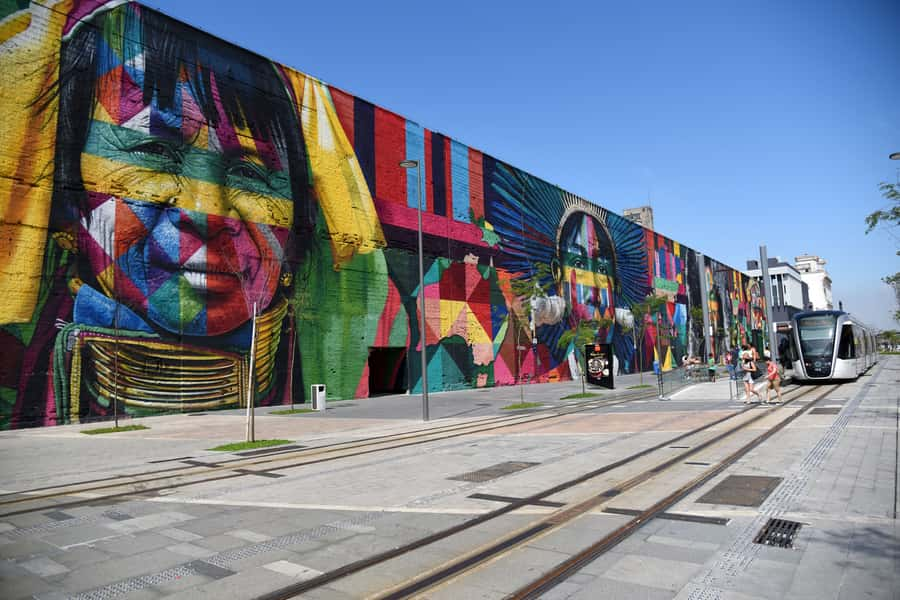
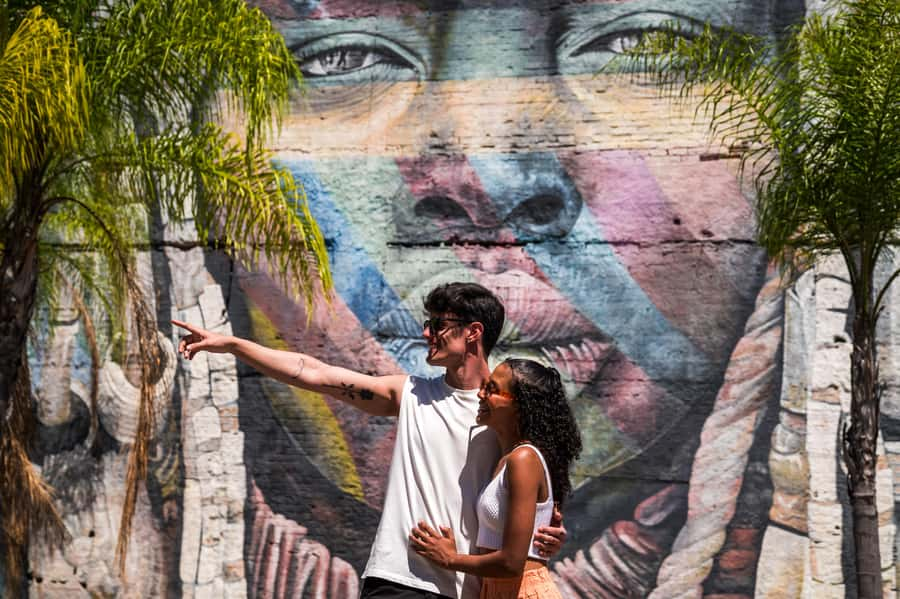
- Eduardo Kobra’s huge mural gives you one of Rio’s best quick photo stops, with five ethnic groups shown in bold geometric patterns.
- The Museum of Tomorrow ticket is included, and you explore its exhibits at your own pace.
- Saint Benedict Monastery delivers a striking change of mood, from a plain exterior to a highly decorated Baroque interior.
- Confeitaria Colombo adds a classic Rio finish, but it is closed on Sundays and food costs extra.
- The $67 price includes hotel transport from the South Zone, a guide, taxes, and museum admission, which makes the package useful for a first visit.
Why this downtown route works
Rio is easy to picture as beaches, mountains, and samba. Central Rio adds the harder questions: who built the city, how Brazil’s African past has been remembered, and how colonial power shaped its streets and churches.
This tour links those questions with visual stops that keep the morning moving. You are not spending four hours in one museum. Instead, you walk through several parts of downtown, use an air-conditioned van for hotel pickup and drop-off, and get a guide’s explanation along the way.
The group can reach 19 people. That is large enough to keep the price reasonable, though it can feel less personal than a private tour. The experience is offered in English, Spanish, and Portuguese, and guide quality matters here. Emma received especially warm praise for her friendly approach and for giving people freedom inside the Museum of Tomorrow. Emanuella and Pedro were also singled out for clear explanations of Brazilian history and architecture.
At the same time, you should keep your expectations practical. This is a quick overview, not a specialist history seminar. The schedule includes many stops, so some places receive a short visit rather than a long study.
More History Tours in Brazil:
- Maria Fumaça – Wines and History
★ 4.0 · 242 reviews - Rio de Janeiro: Historic Rio and Santa Teresa Half-Day Tour
★ 4.4 · 228 reviews - São Paulo: Downtown Historical Bike Tour
★ 4.9 · 191 reviews
Valongo Wharf and Brazil’s African past
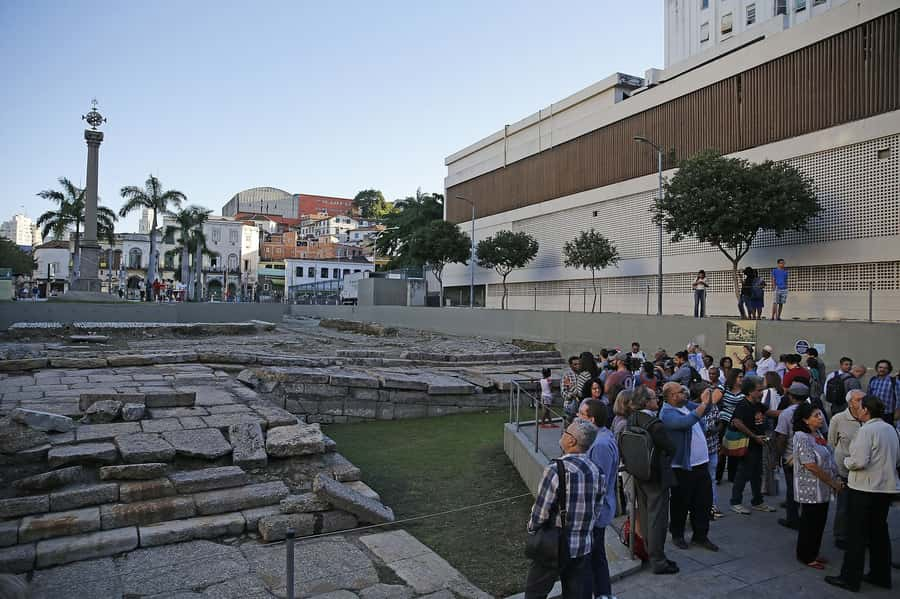
The tour begins at Valongo Wharf, a site with serious historical weight. It was connected to the arrival and sale of enslaved Africans in Rio, making it one of the most important places for understanding the city’s African influence.
A guide can help you read the site as more than an archaeological stop. The stones and open space do not explain themselves, and the value here comes from connecting the physical remains to Brazil’s past and to the people whose forced arrival shaped the country’s culture, religion, food, music, and society.
This is also a good early stop because it sets a thoughtful tone for the rest of the morning. You are not simply collecting photographs. You are being asked to consider how Rio’s identity was formed.
Expect some walking and outdoor exposure. Comfortable shoes are a smart choice, and the tour operates in rain or shine. The schedule does not promise a long, quiet visit, so you will want to listen closely while the guide is speaking.
Eduardo Kobra’s mural on Olympic Boulevard
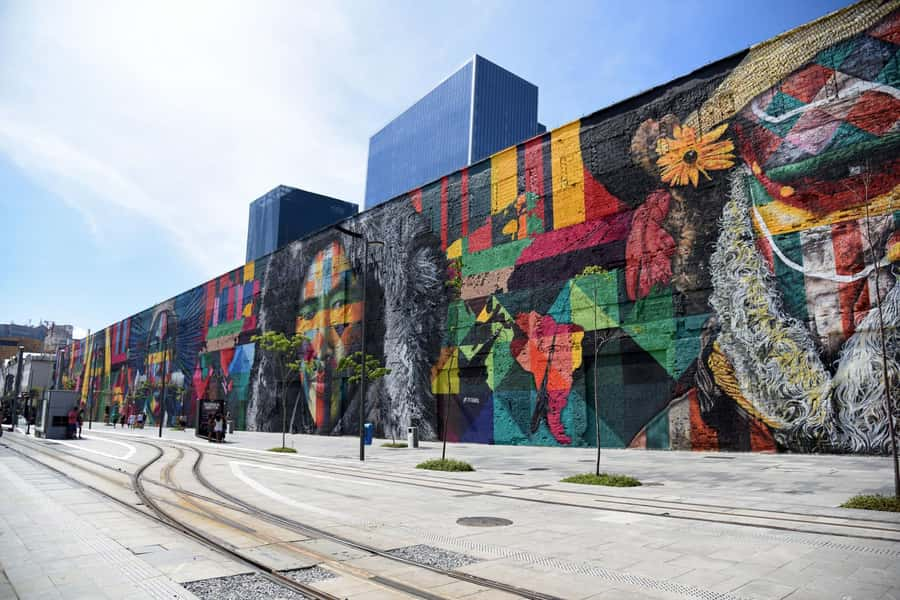
From Valongo Wharf, the route continues toward the Olympic Boulevard and Eduardo Kobra’s enormous mural. The artwork portrays five ethnic groups in a colorful geometric style, giving you an immediate visual contrast with the solemnity of the wharf.
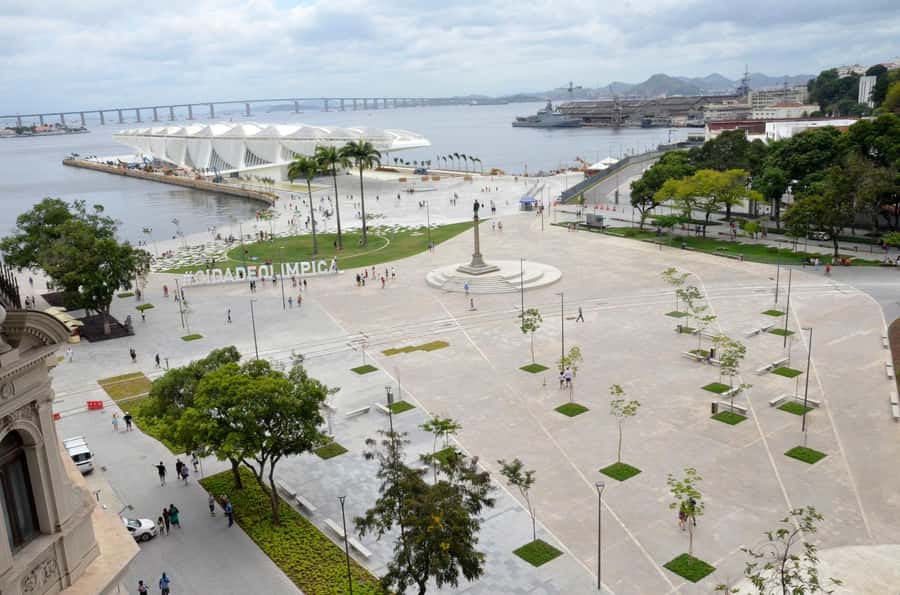
This is one of the easiest parts of the tour to enjoy. You have time for photographs, and the mural works well as a quick stop because its scale is apparent even if you know little about street art. The location also helps you understand how Rio reused and reshaped its waterfront for the 2016 Olympics.
The mural is not presented as an isolated art lesson. It forms part of a wider walk through the renovated waterfront area, linking public art with the city’s recent Olympic identity. You will also see the Rio 2016 Olympic Cauldron, created by American artist Anthony Howe. Its reflective, kinetic, spherical form recalls the Games in a much more modern way than the older buildings you will visit later.
I like this shift between old and new. Within a short stretch, the route moves from the forced migration of the colonial era to contemporary public art and an international sporting event.
The Museum of Tomorrow and its futuristic shell
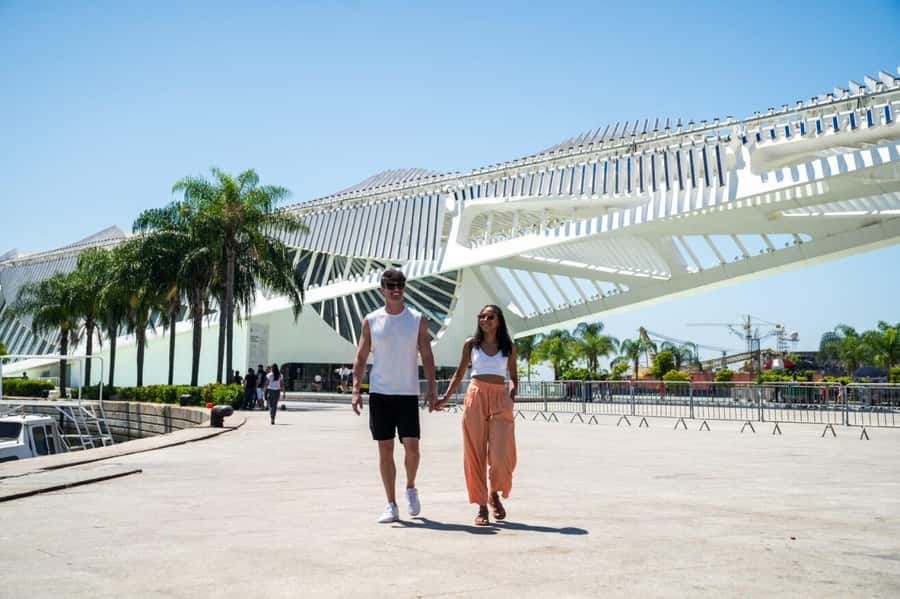
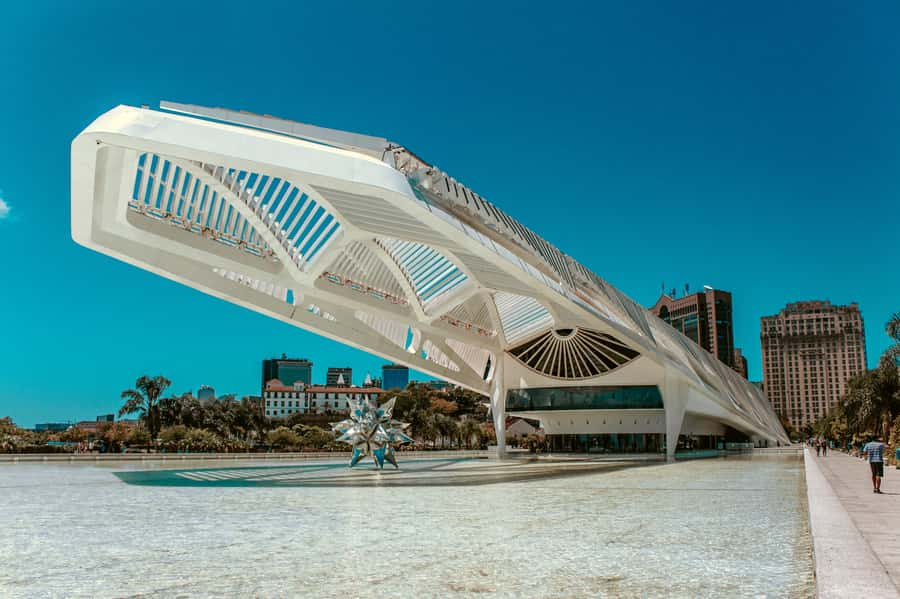
The Museum of Tomorrow is the centerpiece for many people. It is widely described as Brazil’s most visited museum, and its futuristic structure is hard to miss along the waterfront.
Inside, the museum focuses on questions about the future of the planet and humanity. The tour includes admission, which matters because the ticket removes one extra cost and lets you see the building from within rather than only photographing its exterior.
The guide takes you through the general setting, then you have the chance to explore at your own pace. That flexibility is useful. Museum experiences can become frustrating when a guide rushes everyone from room to room, especially in a science museum built around questions and displays rather than a simple chronological story.
You should allow yourself to look carefully and think about the exhibits, while remembering that the overall tour still has a schedule. The supplied timing is four hours for the whole experience, including pickup, walking, several historic stops, and the café. That means the Museum of Tomorrow cannot be treated as a full-day visit.
I see this as a good introduction for first-time visitors who want a taste of the museum before deciding if they should return independently. It is less suitable if the museum is your main reason for visiting Rio and you want to examine every exhibit in detail.
Same city, a different century:
- Rio: Tijuca Forest Small Group Hike to Caves and Waterfalls
★ 4.9 · 536 reviews - Scenic Train ride to historical cities of Morretes and Antonina
★ 4.0 · 188 reviews - Rio de Janeiro: Little Africa Heritage Walking Tour
★ 4.9 · 177 reviews - Ancient Rio and Santa Teresa Tour with Hotel pick-up and drop-off
★ 4.5 · 154 reviews
Saint Benedict Monastery: plain outside, ornate inside
The Monastery of Saint Benedict provides one of the tour’s sharpest contrasts. Its exterior is notably simple. Inside, the Baroque decoration changes the mood completely, with golden ornament covering the interior.
This is the kind of place that rewards a guide’s context. From outside, you might pass it without guessing what is inside. Once you enter, the decoration gives you a direct sense of the wealth and religious style associated with Brazil’s colonial period.
The stop also breaks up the modern waterfront section. After the steel, glass, and technology of the Museum of Tomorrow, the monastery brings you back to an older Rio shaped by Catholic institutions and colonial art.
Keep in mind that the tour is designed as a broad route, so the visit may feel brief if you are especially interested in Baroque architecture. Still, the contrast is memorable and gives the morning a better range than a route focused only on outdoor landmarks.
Praça XV and the former imperial center
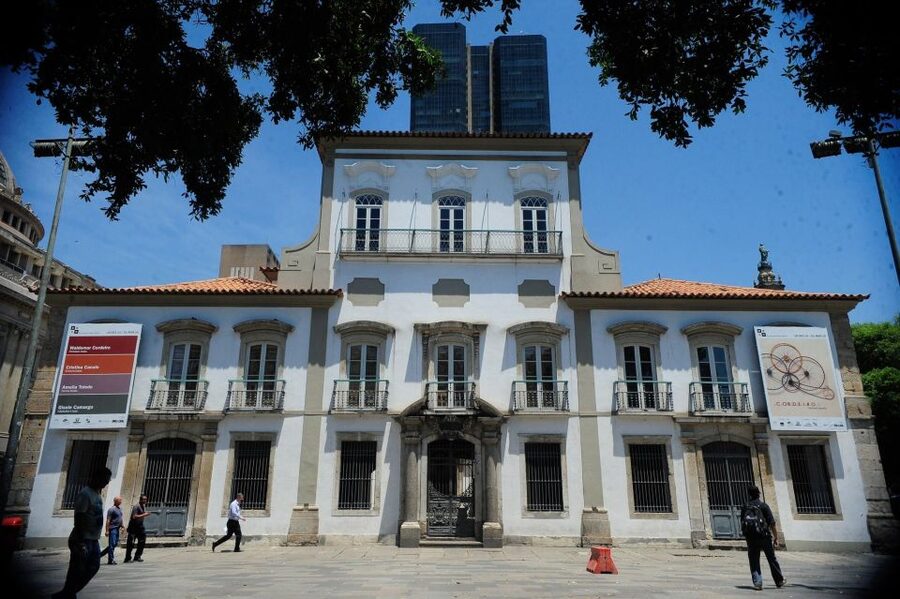
The walk continues through Rio’s historic streets to Praça XV. This square is tied to the former Brazilian imperial government, and the guide uses the area to explain important moments in the country’s history.
This is where the tour’s downtown focus becomes especially useful. Beach districts show you modern Rio at its most polished and relaxed. Praça XV points you toward the political center that helped shape the nation.
You will not receive a full course in Brazilian history in one short stop. What you do get is a framework for understanding the buildings and public spaces around you. If you like connecting architecture to political events, this part should be rewarding.
The tour’s pace can be a weakness here. A lot of information is packed into four hours, and the quality of the explanation depends on the guide assigned to your group. Pedro was praised for giving detailed historical explanations, while another booking described a guide who hurried the group and offered too little information. That difference is worth keeping in mind when you choose this experience.
Confeitaria Colombo and the final taste of old Rio
The final stop is Confeitaria Colombo, one of Rio’s famous historic cafés. Its interior features Art Nouveau decoration, large stained-glass panels, tiles, and mirrors imported from France, Portugal, and Belgium.
The café is more than a place to grab a snack. It reflects the social world of early twentieth-century Rio, when elegant cafés were important meeting places. The ornate setting makes it a fitting finish after the waterfront, monastery, and imperial square.
Food and drinks are not included, so plan to pay separately if you want to sit down and order something. Traditional choices include coxinha de frango, a savory chicken snack, and brigadeiro, a small chocolate sweet.
There is one important scheduling point: Confeitaria Colombo is closed on Sundays. If your tour runs on a Sunday, this final stop will not be available, so check the operating day before booking if the café is a priority.
I would not book this tour solely for a meal. The café is best understood as the final piece of the downtown story, with the atmosphere and decoration doing as much work as the food.
What the $67 price really includes
At $67 per person, the tour sits in the middle range for a guided half-day city experience. The value depends on how useful hotel transport and structure are to you.
Included in the price are:
- Pickup and drop-off from hotels in Copacabana, Ipanema, Leblon, and Leme
- An air-conditioned van with a maximum capacity of 19 people
- A professional guide in English, Spanish, or Portuguese
- Museum of Tomorrow admission
- Taxes, fees, and handling charges
Food and drinks at Confeitaria Colombo cost extra. The hotel pickup is particularly useful if you are staying in the South Zone and do not want to work out transport to central Rio on your own.
The tour does not offer a private vehicle or a tiny group. You are paying for an organized route that combines several areas efficiently. For a first visit, that can be good value. If you already know downtown and want long visits at two or three sites, an independent plan may suit you better.
The van is also practical at the start and end of the day, but it introduces a small logistics risk. Two negative accounts described confusion involving a shared vehicle and an incomplete return transfer. One group was left waiting for another ride after the driver departed. Those incidents do not define every departure, but they make it wise to confirm the pickup time and stay alert when the tour ends.
Pickup, walking, and the four-hour pace

Pickup takes place at South Zone hotels, generally between 8:10 and 8:55 in the morning. The exact time should be confirmed with the provider. If you stay in a hostel or bed-and-breakfast, you may be assigned a nearby hotel for pickup and drop-off.
The tour includes a moderate amount of walking. Wear comfortable shoes, especially because the route includes outdoor waterfront areas, historic streets, and movement between stops. Rio’s weather can change, but the tour operates in rain or shine.
Children must be accompanied by an adult. Children under five can go free if they do not occupy a seat, and unaccompanied minors are not allowed.
Cancellation is flexible up to 24 hours before departure for a full refund, and the reserve-now-pay-later option helps if your schedule is still moving. The tour requires a minimum number of participants. If it is canceled for that reason, you are offered another date or a full refund.
Who should book this Rio history tour?
I would recommend it to a first-time visitor staying in Copacabana, Ipanema, Leblon, or Leme who wants a structured introduction to central Rio. It suits you especially well if you want history, architecture, public art, and a major museum in one morning.
It is also a good choice for anyone who would rather not arrange downtown transport independently. The combination of a guide, van, and museum ticket saves planning time.
You may want another option if you prefer an unhurried museum visit, a private guide, or a highly specialized focus on Afro-Brazilian history. The group can reach 19 people, and the schedule covers a lot of ground. The experience is strongest when you treat it as an overview with several memorable stops, not as a detailed examination of every site.
Guide assignment matters. Emma, Emanuella, and Pedro received strong praise for friendliness and clear explanations. At the same time, reports of rushed commentary, getting lost, and a failed return transfer show why you should confirm the pickup details and make sure you are with the correct group before the van leaves.
Should you book it?
Book this tour if you want a convenient, varied introduction to Rio’s downtown and you value included transport and Museum of Tomorrow admission. The route gives you something difficult to get from a beach-only visit: Brazil’s African past, imperial history, Baroque art, Olympic redevelopment, contemporary public art, and classic café culture.
Skip it if Confeitaria Colombo is your main goal on a Sunday, if you need a private pace, or if you want to spend most of the day inside the Museum of Tomorrow. For the right visitor, $67 is a fair price for the range of stops and the convenience. Just confirm your pickup time, wear good walking shoes, and keep track of the return vehicle at the end.
FAQ
How long does the tour last?
The tour lasts four hours, including transportation, walking, sightseeing, and the visit to Confeitaria Colombo.
What languages are available?
Live tour commentary is available in English, Spanish, and Portuguese.
Is Museum of Tomorrow admission included?
Yes. The ticket to the Museum of Tomorrow is included in the tour price.
Where is hotel pickup available?
Pickup and drop-off are available from hotels in Copacabana, Ipanema, Leblon, and Leme.
What if I stay in a hostel or bed-and-breakfast?
You will be informed of the nearest hotel to use for pickup and drop-off.
Is food included at Confeitaria Colombo?
No. Food and drinks are available for purchase but are not included in the tour price.
Is Confeitaria Colombo open every day?
No. Confeitaria Colombo is closed on Sundays.
How large can the group be?
The maximum group size is 19 people.
What happens if the tour is canceled because too few people book?
You will be offered a different date or a full refund.
Just added around Brazil
- Scenic Train ride to historical cities of Morretes and Antonina★ 4.0 · 188 reviews
- Germanic Route – Cultural and historical in Ilhota, Blumenau and Pomerode★ 4.5 · 67 reviews
- Rio: Historical Walking Tour★ 4.7 · 32 reviews
- Rio de Janeiro: Historical Downtown and Lapa Walking Tour★ 4.4 · 32 reviews
- Salvador Historic Walking Tour – Pelourinho★ 4.8 · 62 reviews
- From Foz do Iguazu: Triple Frontier Landmark Ticket★ 4.4 · 136 reviews
- Florianópolis: Historical Center, Beach & Nature Tour★ 3.3 · 25 reviews
- Paraty: Historic Centre Walking Tour & Cachaça Tasting★ 4.8 · 96 reviews
Rio de Janeiro History Tours, compared.
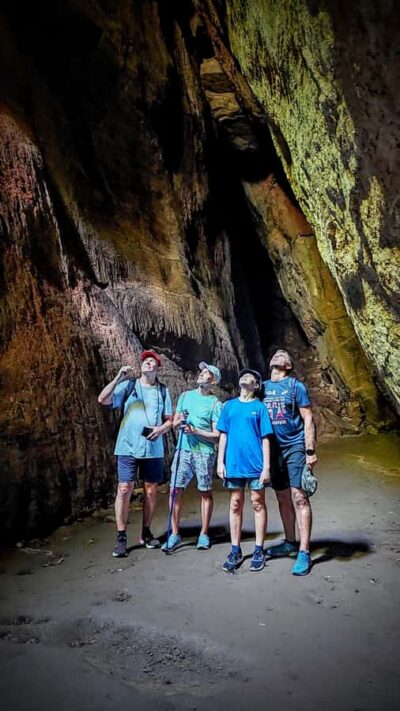
Rio: Tijuca Forest Small Group Hike to Caves and Waterfalls
Read our review →
Rio de Janeiro: Historic Rio and Santa Teresa Half-Day Tour
Read our review →
Rio de Janeiro: Little Africa Heritage Walking Tour
Read our review →
Ancient Rio and Santa Teresa Tour with Hotel pick-up and drop-off
Read our review →
Rio de Janeiro: Historical Downtown and Lapa Walking Tour
Read our review →
Browse the lists this tour appears in