
Review · MUMBAI
Mumbai: South Mumbai Heritage Walking Guided Tour
South Mumbai’s best stories are written into its buildings. This three-hour walk links grand railway architecture, old civic institutions, churches, art districts, and waterfront monuments, so you see how Mumbai grew rather than simply ticking off sights. I especially like the clear historical thread and the chance to explore on foot, at street level.
I also like the human scale of the tour. Guides such as Sanika, Krishna, Ketan, Abhi, and Alan are praised for answering questions and adapting the walk to the people in front of them. The main consideration is simple: three hours on city pavements can feel tiring, and the tour gives you a broad introduction rather than long visits inside every building.
Key points to know before booking
- Covers South Mumbai’s essential landmarks: CST, Town Hall, St. Thomas’ Cathedral, Flora Fountain, the University, High Court, Kala Ghoda, Watson’s Hotel, the Taj Mahal Palace, and the Gateway of India.
- Guides bring different strengths: Ketan is noted for his interest in Indian literature and archaeology, while Sanika is praised for her warm, relaxed way of explaining the city.
- A useful first-day orientation: The route introduces the historic core before you explore Mumbai on your own.
- Mostly an outdoor experience: You see important buildings and public spaces from the walking route, so comfortable footwear matters.
- Good value at $28 per person: The price pays for a focused local explanation of places that are easy to pass without context.
- Flexible booking: You can reserve now and pay later, with a full refund available when you cancel at least 24 hours ahead.
Why a South Mumbai walking tour works
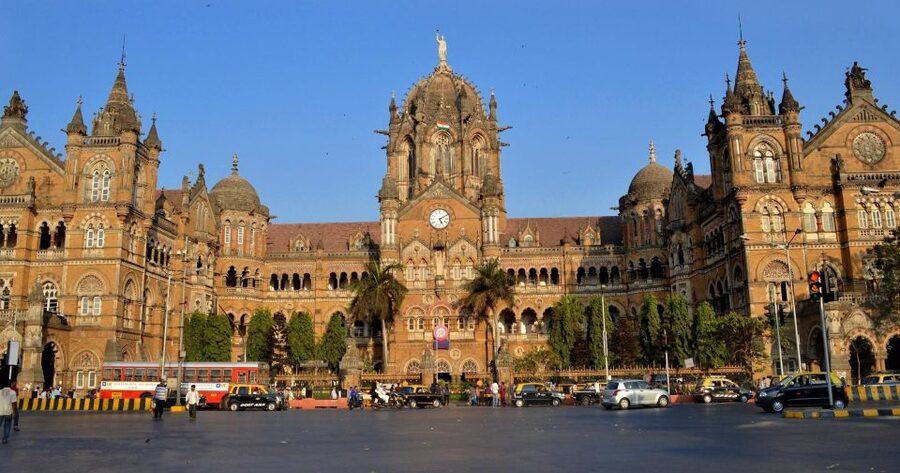
South Mumbai can look confusing at first. Road traffic, old stone buildings, office workers, taxis, tourists, and street activity all share the same few blocks. A guided walk gives the area a shape.
Instead of seeing an impressive building and moving on, you learn what role it played. A railway station becomes a symbol of imperial ambition and modern India. A fountain marks the former edge of a city district. An art quarter shows how old commercial buildings found new life.
That is the real value here. The route is not only about photographs. It helps you read Mumbai’s architecture and understand how colonial planning, local culture, religion, trade, transport, and government meet in one compact part of the city.
The walk is conducted in English. The available feedback gives a strong overall rating of 4.5 from 69 ratings, with repeated praise for guides who explain clearly, welcome questions, and share a personal view of Indian history and culture. That matters because the same route could feel dry with a guide who only recites dates.
More History Walking Tours in India
- Fontainhas Heritage Walk by Make It Happen
★ 5.0 · 2,834 reviews - The Great Indian Food Tour: Old Delhi Food and Heritage Walk
★ 5.0 · 1,698 reviews - Old Goa Heritage Walk by Make It Happen
★ 5.0 · 797 reviews
Chhatrapati Shivaji Terminus starts the story
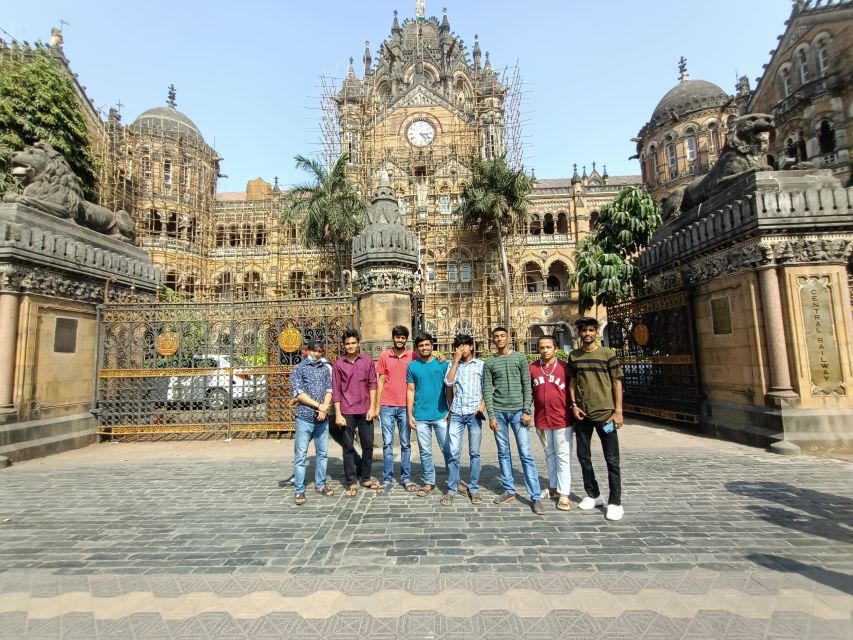
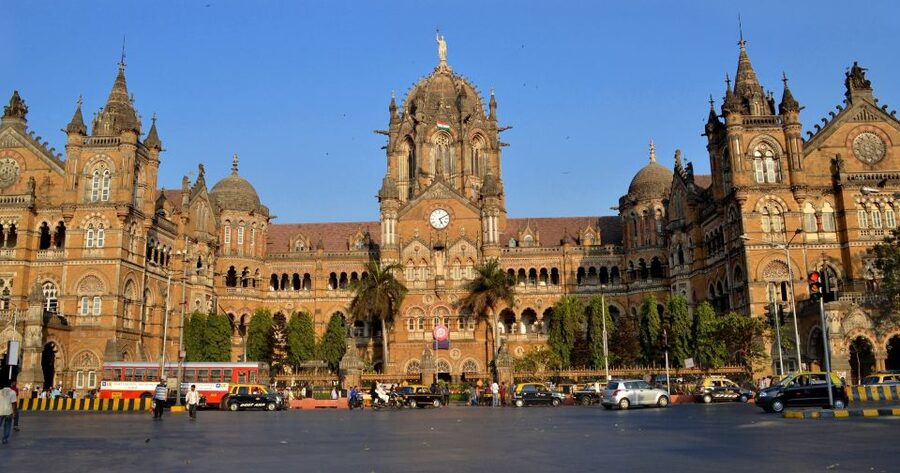
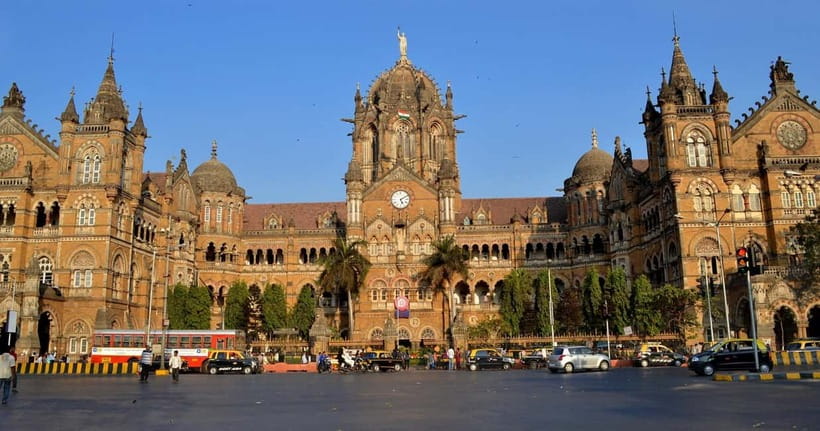
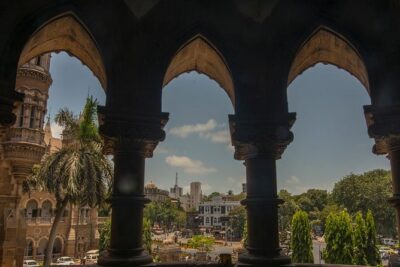
Chhatrapati Shivaji Terminus, often shortened to CST, is one of the most dramatic stops on the route. It is a working railway station as well as a UNESCO World Heritage Site, and it combines railway engineering with highly decorated architectural detail.
You can expect to examine the exterior and learn why the station matters beyond its good looks. Its scale reflects the importance of rail travel to Mumbai’s growth. It also gives your guide a natural opening to discuss the city as a place shaped by movement, trade, and migration.
This stop is particularly useful early in your visit because it changes how you see Mumbai’s transport system. A station is not just a place to catch a train here. It is part of the city’s identity.
The drawback is that CST is a busy public building, not a quiet museum. Your attention will be divided between the architecture and the active city around it. That is also part of the appeal, but do not expect a still, empty monument.
Town Hall and the Asiatic Society Library
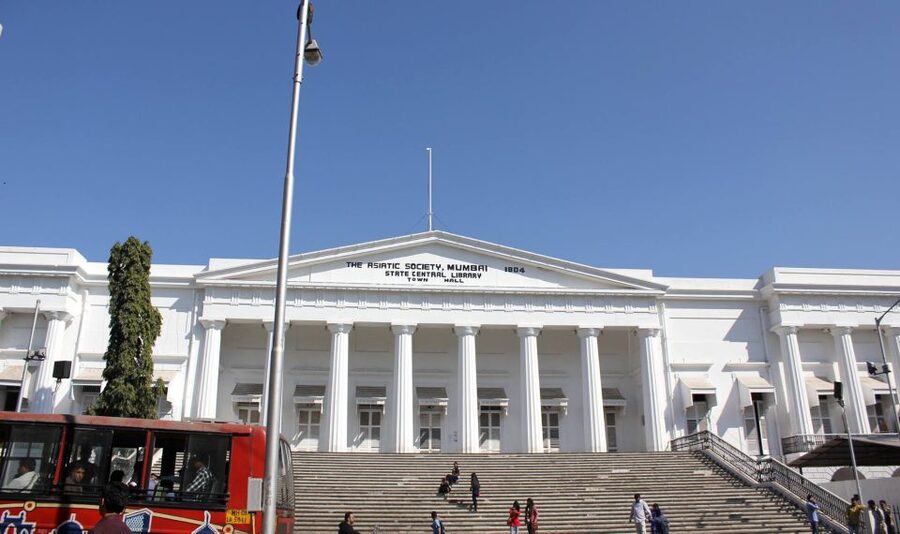
Town Hall, home to the Asiatic Society Library, brings a more formal colonial style to the walk. It is one of Mumbai’s oldest libraries and occupies an important place in the city’s civic and intellectual story.
This is a good point to listen closely to the guide’s explanation of institutions. Buildings such as libraries can look less immediately exciting than a railway station or waterfront arch, but they show how knowledge, administration, and public life were organized during the colonial period.
I like this stop because it adds balance. You are not only looking at grand facades built to impress. You are also seeing the institutions that helped shape the city’s public life.
The tour focuses on the heritage setting and architectural details. You should not assume that every interior is open for a full visit, so treat the stop as an architectural and historical explanation rather than a library tour.
St. Thomas’ Cathedral and Flora Fountain
St. Thomas’ Cathedral is about 300 years old and belongs to the Diocese of Mumbai of the Church of North India. Its age gives the walk a different mood from the large civic buildings and commercial sites nearby.
A guide can help you place the cathedral within Mumbai’s changing religious and social life. The building is also a reminder that the city’s history is not told through one community or one architectural style. Churches, libraries, courts, stations, and markets all form part of the same urban story.
Nearby, Flora Fountain adds a public-art detail to the route. Built in 1864, it depicts Flora, the Roman goddess of flowers. The fountain is easy to pass without stopping, particularly when traffic and pedestrians compete for your attention. A guide gives you a reason to pause and notice the sculpture.
I find this part of the route helpful for understanding scale. South Mumbai is full of major landmarks, but its character also comes from smaller decorative features placed in streets and public spaces. Look beyond the obvious building and pay attention to carvings, columns, statues, and street layouts.
Same city, a different century:
- Old Delhi Food, Heritage&Cultural Walk with Rickshaw ride to Masterji Kee Haveli
★ 5.0 · 742 reviews - Blue City Heritage Private Walking Tour With Pickup and Drop-Off
★ 5.0 · 441 reviews - Kolkata Heritage Tram Tour
★ 4.0 · 395 reviews - Private Heritage Walking Tour in Jaisalmer Fort and Old Bazaar
★ 5.0 · 306 reviews
The University of Mumbai and Bombay High Court
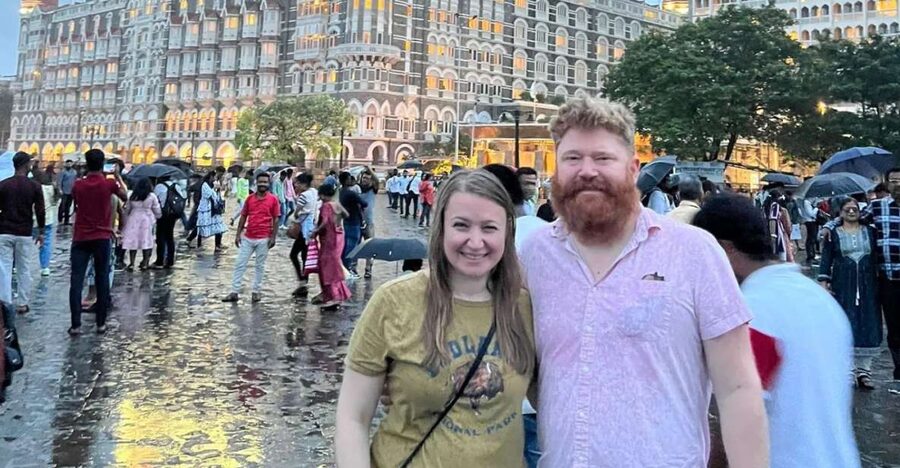
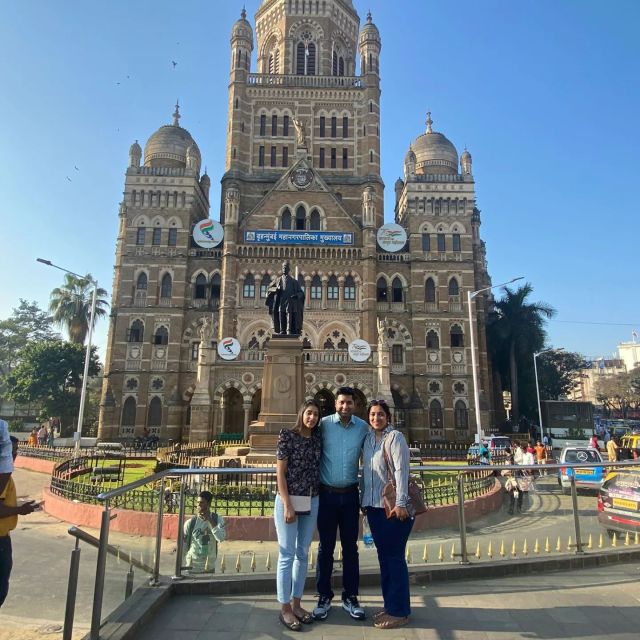
The University of Mumbai is one of India’s oldest and leading universities. Its inclusion shows that the walk is not limited to monuments built for transport or government. Education is another important part of the city’s development.
The university buildings provide a chance to discuss architectural ambition and the role of higher education in colonial-era Mumbai. You may find the stop especially useful if you enjoy buildings that reveal how a city educated its administrators, professionals, and future leaders.
The Bombay High Court follows naturally in the civic section of the walk. It is one of India’s oldest high courts and remains primarily seated in Mumbai. The building represents law and government, but the more useful lesson is how many major institutions were placed close together in this part of the city.
This is where a good guide makes a real difference. Dates and names alone can blur together. Guides including Ketan, who has been described as studying Indian literature and archaeology, can add context about why these places matter instead of simply pointing them out.
Kala Ghoda, Watson’s Hotel, and changing Mumbai
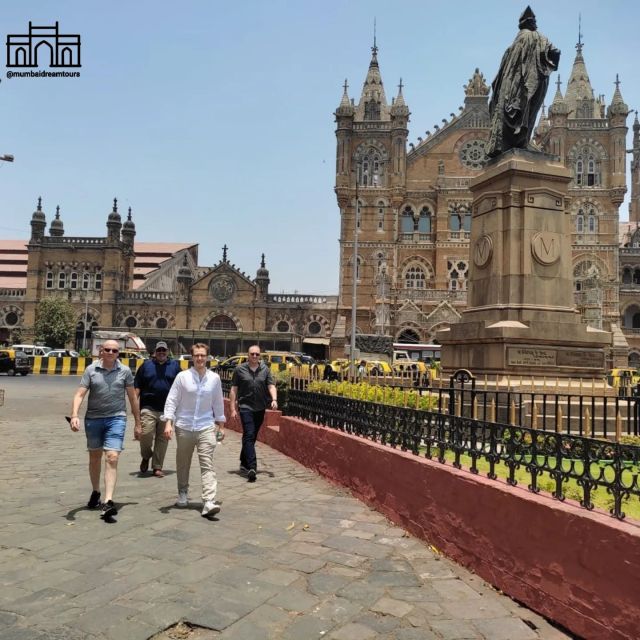
Kala Ghoda is a crescent-shaped art district known for its heritage buildings. It is one of the more atmospheric sections of the route because old architecture and contemporary cultural life sit side by side.
The name is often associated with the black horse statue that once occupied the area, but the key point for this tour is the district’s collection of historic structures. This is where you can see that heritage is not frozen in the past. Old buildings continue to form part of Mumbai’s arts and social life.
Watson’s Hotel gives the walk an unusual architectural detail. It is the earliest surviving example of cast-iron architecture in India. That fact alone makes it worth slowing down for. The building also shows how imported building methods could be adapted to a growing city.
Do not expect Watson’s Hotel to look like a polished luxury property. Its importance lies in construction and survival, not in perfect condition. This is a useful reminder that heritage buildings can be valuable even when they are weathered or less grand than their neighbors.
The Taj Mahal Palace and the Gateway of India
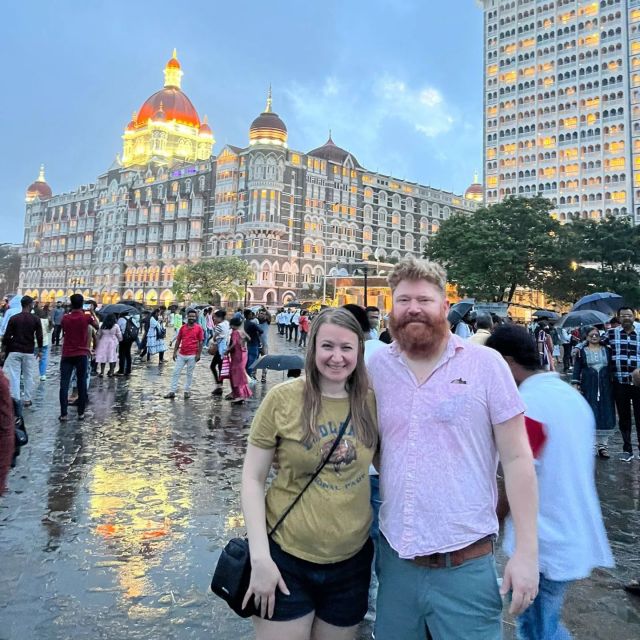
The route then reaches two of Mumbai’s most recognizable sights: the Taj Mahal Palace and the Gateway of India. The Taj Mahal Palace is a heritage five-star hotel in the Colaba area, while the Gateway is an early twentieth-century arch monument built in Mumbai.
The hotel gives the walk a commercial and social angle. It is not simply another ornate facade. It represents the city’s long connection with luxury travel, public status, and international visitors.
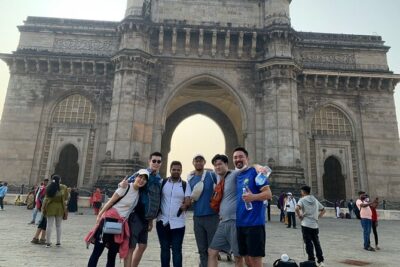
The Gateway of India provides the grand visual finish. Its position near the waterfront makes it one of the easiest places in Mumbai to recognize, but knowing why it was built gives the monument more weight. Your guide can place it within the story of colonial power and the city’s relationship with the sea.
This final section is likely to be the most camera-friendly part of the walk. It is also the busiest and most visitor-focused. If you want quiet photographs, you may need patience. If you want to understand how Mumbai presents itself to the world, the crowds are part of the picture.
What the guides add to the walk
The strongest feature of this experience is the guide. The route itself is excellent, but many South Mumbai buildings can be found on a map. What you are paying for is the explanation between the landmarks.
Sanika is described as warm, relaxed, and clear when explaining Mumbai’s past. One account describes feeling as if a friendly connection had formed during the three hours. That suggests a conversational style rather than a rigid lecture.
Krishna is praised for answering questions and personalizing the experience when the group consisted of one person. That is useful if you are traveling alone or prefer to ask many questions without worrying about slowing down a large group.
Ketan brings particular interest in Indian literature and archaeology, while Abhi is praised for offering a strong introduction for a first visit. Alan is described as both well informed and a good conversationalist. These details point to a tour where the individual guide shapes the tone.
You should still keep expectations realistic. Different guides will have different personalities and areas of interest. The consistent advantage is the chance to ask about what you are seeing instead of receiving only a fixed script.
Is $28 a fair price?
At $28 per person, this is a reasonable price for a three-hour guided introduction to South Mumbai. You are covering a large number of important sites, and the route gives you a useful framework for later independent exploring.
The value is highest if this is your first time in Mumbai. Without a guide, you can certainly reach CST, Flora Fountain, Kala Ghoda, the Taj Mahal Palace, and the Gateway of India. What is harder is understanding how the buildings connect and knowing which details deserve your attention.
The value is lower if you already know South Mumbai well or prefer to wander without a set route. You may also want more time inside individual buildings than a walking itinerary allows. This experience is designed for breadth and explanation, not a slow architectural photography session.
The option to reserve and pay later helps if your plans are still moving. You can also cancel for a full refund up to 24 hours in advance, which gives you some protection when arranging a busy Mumbai itinerary.
How to prepare for the three-hour walk
Wear comfortable shoes. The route includes several major areas and is best approached as a proper city walk rather than a short transfer between attractions.
I would also keep the day around it reasonably flexible. The tour covers many landmarks, and you may want time afterward to return to a favorite area, take more photographs, or explore Colaba and Kala Ghoda at your own pace.
Bring questions. The best use of a guide is not only listening but asking why a building matters, how Mumbai changed, and what details are easy to miss. Several guides are specifically praised for answering questions sincerely, so use that opportunity.
The walk is in English. If that suits you, the language choice keeps the historical explanations accessible and makes it easier to discuss architecture, religion, civic institutions, and culture as you go.
Who should book this South Mumbai heritage walk?
I would recommend it most strongly to first-time visitors, curious walkers, solo visitors, and anyone who wants a clear introduction before exploring alone. It is also a good choice if you enjoy architecture but want help connecting buildings to social and political change.
Families with older children may find the variety useful, since the route moves from a railway station to a cathedral, fountain, university, court, art district, hotel, and waterfront monument. Younger children who dislike long walks may find the three-hour length harder.
You should think twice if your priority is entering every building or spending a long time at one site. The experience is about seeing the historic core as a whole. It offers context, not a series of full indoor tours.
Should you book it?
Book this tour if you want South Mumbai to make sense quickly. The combination of CST, Town Hall, St. Thomas’ Cathedral, Flora Fountain, the university, High Court, Kala Ghoda, Watson’s Hotel, the Taj Mahal Palace, and the Gateway of India gives you a strong first look at the city’s historic center.
I would be especially happy to take this walk near the beginning of a Mumbai visit. It gives you landmarks to return to and a better eye for the details you might otherwise miss. At $28, it is a sensible spend for a three-hour introduction, provided you are comfortable walking outdoors and prefer broad context to lengthy interior visits.
FAQ
How long does the Mumbai South Mumbai Heritage Walking Tour last?
The walk takes about three hours, based on the stated tour experience and guest accounts.
What language is the tour conducted in?
The tour is conducted in English.
Which sights are included?
The route includes Chhatrapati Shivaji Terminus, Town Hall and the Asiatic Society Library, St. Thomas’ Cathedral, Flora Fountain, the University of Mumbai, Bombay High Court, Kala Ghoda, Watson’s Hotel, the Taj Mahal Palace, and the Gateway of India.
How much does the tour cost?
The listed price is $28 per person.
Can I reserve the tour and pay later?
Yes. You can reserve your place and pay nothing at the time of booking.
What is the cancellation policy?
You can cancel up to 24 hours in advance for a full refund.
Just added around India
- Exploring Mylapore: A Cultural & Historical Walking Tour★ 5.0 · 42 reviews
- Chennai Heritage & Cultural Walk (2 Hours Guided Walking Tour)★ 3.5 · 32 reviews
- Georgetown heritage walking tour in Chennai about the founding of Chennai★ 5.0 · 144 reviews
- The Hipster Chandigarh Architecture History Tour★ 5.0 · 54 reviews
- See Bangalore through my eyes (Cultural / Historical / Walking Tour)★ 5.0 · 60 reviews
- 2 days Private tour of Hampi world heritage site from Bangalore by car★ 5.0 · 75 reviews
- Discover Bangalore with Me (A Private Historical Walk Tour)★ 5.0 · 24 reviews
- Treasures of Mysuru – day tour★ 5.0 · 27 reviews
Mumbai History Tours, compared.
Heritage Walk: Recommended by Gigi Hadid as a must-do in Mumbai
Read our review →
Hill-station & Heritage: Lonavala & Karla Caves Tour from Mumbai
Read our review →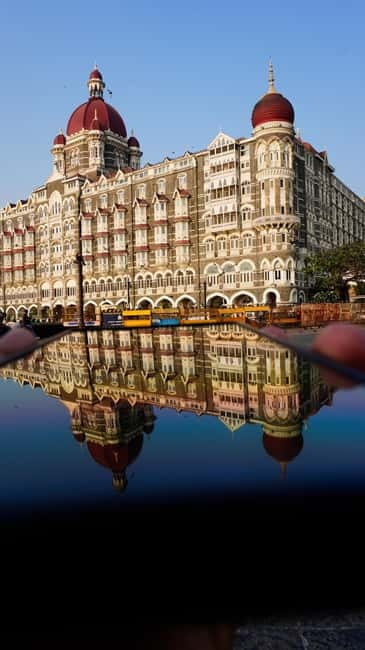
Browse the lists this tour appears in