
Review · ITALY
Best of Bologna in one day : Food, architecture, art and history
Bologna packs an astonishing amount into one day: Michelangelo sculptures, medieval towers, Renaissance chapels, university rooms, hidden canals, and a serious food lesson. Riccardo Bacchi leads this private tour with the energy of a professor who wants you to notice every carved detail.
I like the mix of high-level art and everyday food, especially the visit to the old Quadrilatero market and the tasting at Bruno e Franco. I also like that the route includes places many first-time visitors miss, such as the anatomical theatre and the Oratory of Santa Cecilia.
The tradeoff is pace. Seven hours, twelve stops, and a lot of explanation make this a full day on foot. Riccardo’s depth can also be a lot to absorb, so wear proper walking shoes and come ready to listen.
Key points to know before booking
- Private attention from Riccardo Bacchi: Only your group takes part, allowing the guide to adapt explanations to your interests.
- A rare blend of art and food: The day ends with regional tastings and a short pasta-making class.
- Major works by famous artists: Expect Nicolò dell’Arca, Michelangelo, Giotto, Raphael, Titian, Carracci, Guercino, and Parmigianino.
- Bologna beyond the main square: The route includes the Archiginnasio, San Giacomo Maggiore, the Moline canal, and several church interiors.
- A demanding seven-hour schedule: The route is fast enough to cover a lot, but not designed for a relaxed café-to-café stroll.
- Strong value for art-focused visitors: At $174.69 per person, the price makes more sense if you would otherwise pay for several admissions and a separate food experience.
Why this Bologna day feels different
Many Bologna tours give you the porticoes, the towers, and a quick look at Piazza Maggiore. This one treats the city as a connected story. Art explains religion, religion explains politics, the old university explains the anatomy theatre, and local food brings the whole day back to ordinary life.
That approach suits me because Bologna rewards context. A painted chapel can look like one more Italian church until someone explains who commissioned it, what local family wanted to display its power, or why a sculpture mattered to the people who saw it in its own time.
Riccardo Bacchi is the central reason to choose this experience. He brings a background in art, architecture, religion, science, and medieval history, and he is especially good for people who want more than dates and names. His style is energetic and detailed. You should expect plenty of information, not a light overview.
The private format helps. Your group is not being pulled along with strangers, and Riccardo can respond to your interests. If you care about medical history, painting, photography, architecture, or food, say so early. He has been praised for adjusting his explanations and pointing out small details that many people would miss.
More Food and Drink Trips in Italy:
- Palermo: Street Food and History Walking Tour
★ 4.9 · 1,486 reviews - Rome Food Tour in the Historic Centre with 8+ Food Tastings
★ 5.0 · 1,000 reviews - Walking Tour and street food Tour Palermo / History and Food
★ 5.0 · 386 reviews
Piazza Maggiore and Bologna’s civic heart
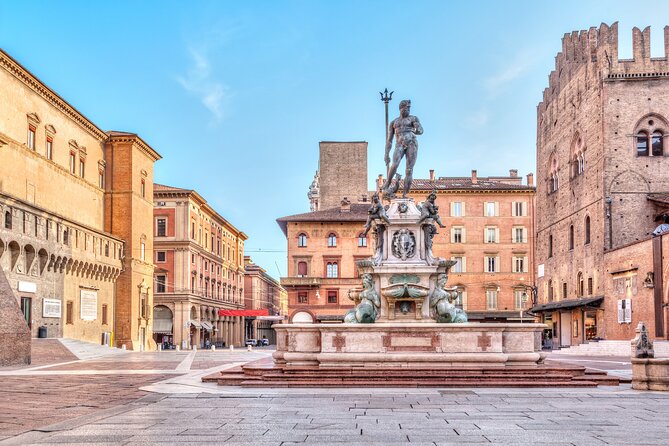
The tour begins at Bar Vittorio Emanuele on Piazza Maggiore. This is the right place to start because the square gathers Bologna’s political, religious, and artistic power in one open space.
You’ll see the Fountain of Neptune, Palazzo Comunale, and the Basilica of San Petronio. Riccardo also points out the terracotta work of Nicolò dell’Arca, an artist whose expressive figures give Bologna one of its most striking sculptural groups.
The forty-minute visit includes splendid frescoed rooms inside Palazzo Comunale. You’ll also see the grand staircase associated with Bramante’s horses, along with smaller decorative details that are easy to skip if you are walking alone.
I like this opening because it gives you a working map of the city. Bologna is not simply a pretty collection of old buildings. These spaces show how civic government, church authority, artistic ambition, and local wealth met in the same small center.
Santo Stefano and the city’s layered past
Piazza Santo Stefano offers a different mood. The square is known for its unusual group of early medieval and Romanesque buildings, along with Gothic palaces, frescoes, porticoes, and spiral staircases.
The twenty-minute stop is brief, so do not expect every corner to receive a long explanation. Still, the complex gives Riccardo a useful setting for explaining how Bologna changed over many centuries without losing its older forms.
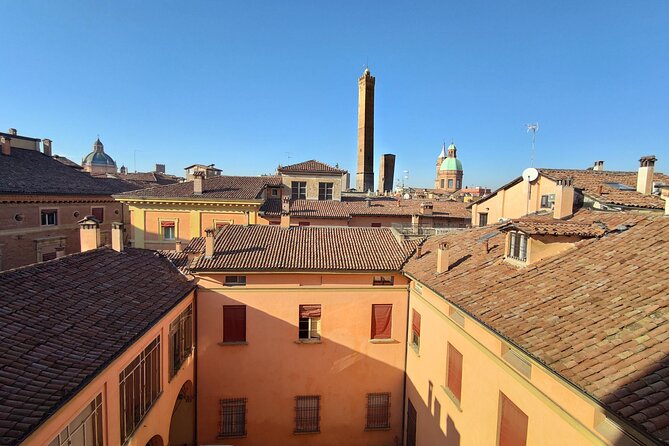
A terrace provides a view toward the city and its towers from above. That perspective matters in Bologna, where the porticoes and narrow streets can make the city feel enclosed at ground level. The view helps you understand its shape.
The tour also returns to the Basilica Santuario di Santo Stefano later for another forty-minute visit. That longer stop allows more time with the medieval and early medieval complex, built in the image of the Holy Sepulcher of Jerusalem.
Santa Maria della Vita and the force of terracotta
At Chiesa di Santa Maria della Vita, the focus is Nicolò dell’Arca’s Lamentation. The church is Baroque, but the major draw is this Renaissance terracotta work.
A twenty-minute visit may sound short for such an important piece, yet that can be an advantage. The stop is focused rather than scattered. Riccardo can explain the emotional force, material, and setting of the sculpture without turning the visit into a long museum lecture.
This is one of the strongest art moments of the day for anyone interested in sculpture. Bologna’s terracotta tradition is easy to overlook beside Florence’s marble and Rome’s grand monuments. Here you see why the local material deserves attention.
More Food Trips in Italy:
- Discover Palermo in 3 hours. Art, history, markets and street food
★ 5.0 · 352 reviews - Roman countryside Food & Wine Tasting in a medieval winery
★ 4.5 · 220 reviews - Private Rome Food Tour in the Historic Centre with 8+Tastings
★ 5.0 · 135 reviews - Bologna: Street Food Tour in the Historic Center
★ 4.8 · 125 reviews
The Archiginnasio and the old university
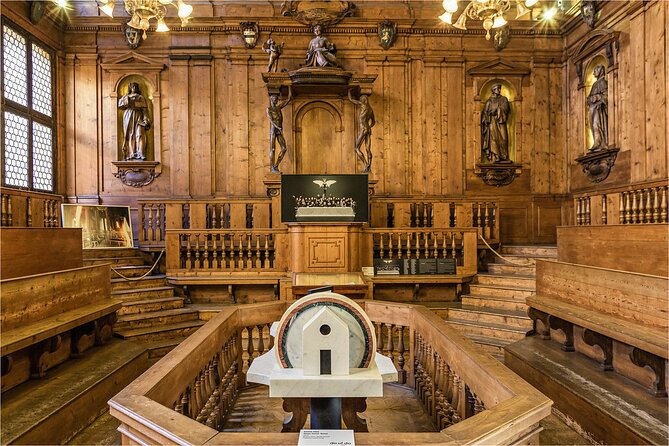
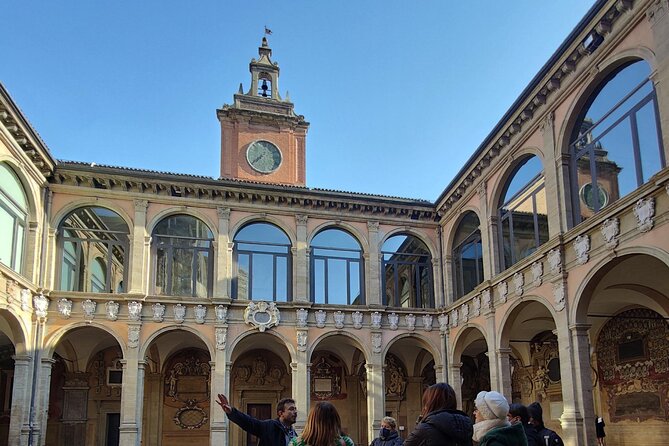
The Archiginnasio is one of the most useful stops for understanding Bologna. This ancient Renaissance and Baroque university palace contains frescoes, books, a historic library, and the wooden anatomical theatre.
The anatomy school is a special highlight. The room connects Bologna’s university tradition with the study of medicine and the human body. Its carved woodwork and theatrical design show how teaching itself became a form of ceremony.
I would give this stop your full attention. The details can pass quickly if you treat it as another old room, but Riccardo’s explanations help tie the architecture to the city’s academic life.
The visit lasts about twenty minutes. That is enough for a sharp introduction, though anyone fascinated by science or medical history may wish the schedule allowed more time.
The Pinacoteca Nazionale’s sweep of Italian painting
The National Art Gallery of Bologna receives forty minutes. Its collection covers major Italian painting from Giotto to Raphael and Titian, as well as Guido Reni, Ercole de Roberti, the Carracci, Guercino, Vitale da Bologna, and Parmigianino.
This is not a museum visit where you can wander aimlessly for half a day. The schedule calls for a selected tour through a large artistic range. That makes the guide especially important. You need help deciding what matters and how the works relate to Bologna and the wider Italian tradition.
I like the contrast with the churches. In a church, art remains tied to ritual and architecture. In the Pinacoteca, you can compare paintings more directly and follow changes in style across centuries.
If you already know Italian art, you’ll appreciate the efficient selection. If you are new to it, Riccardo’s explanations give you a useful framework without requiring you to recognize every painter in advance.
The Quadrilatero, where art gives way to lunch
The Quadrilatero is Bologna’s old market district, filled with historic stalls, taverns, and traditional shops. This is where the tour shifts from formal culture to food culture.
You’ll pass through a part of the city where local eating habits are tied to place and routine. The stop lasts about forty minutes and has no admission charge, but it is not filler. It shows why Bologna’s food reputation is connected to markets, small producers, and regional ingredients rather than only to restaurant menus.
Do not expect a long sit-down meal here based on the schedule. The main tasting takes place later at Bruno e Franco. Still, this market stop helps you understand the setting before you taste the food.
San Giacomo Maggiore and the Oratory of Santa Cecilia
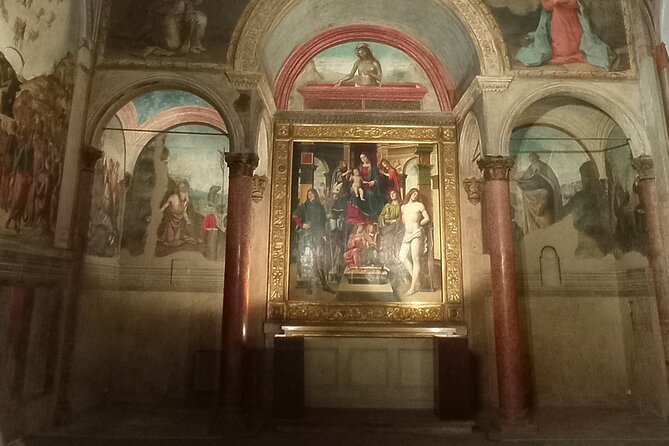
Chiesa di San Giacomo Maggiore is another art-heavy church. The Bentivoglio Chapel is the main draw, a major example of the Emilian Renaissance.
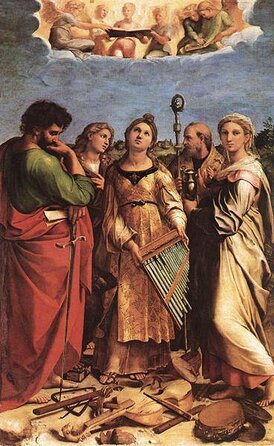
The visit also includes the Oratory of Santa Cecilia, with frescoes and musical associations. This is the kind of place that can be easy to miss if your Bologna visit is limited to the main square and the Two Towers area.
The forty-minute stop should appeal to visitors who like church interiors but want something less predictable than the standard headline monuments. Riccardo’s role is valuable here because the significance is not always obvious from a quick glance.
The Moline canal and Bologna’s quieter corners
The Canale delle Moline receives only five minutes, so think of it as a short pause rather than a full canal walk. You’ll see a small piece of Bologna’s network of waterways, along with medieval houses, towers, arcades, palaces, and unusual architecture.
The stop’s value is mainly visual and connective. It reminds you that Bologna is not only churches and university buildings. Water, trade, workshops, noble homes, and narrow passages all shaped the city.
The short timing also tells you something practical about this tour. The day keeps moving. You’ll stop often, but most stops are tightly planned.
San Domenico, from Nicola Pisano to Michelangelo
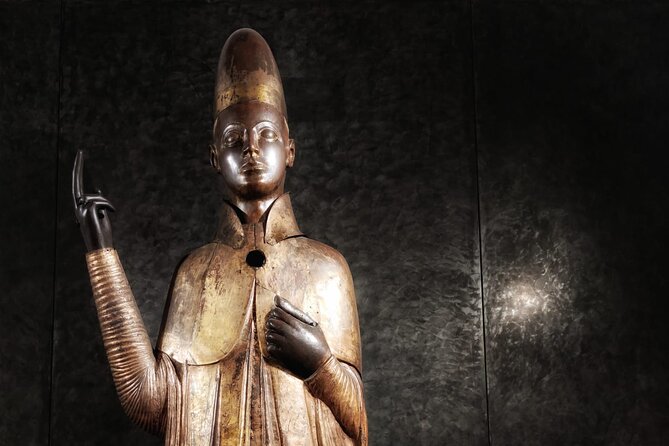
The Basilica of San Domenico is one of the day’s richest art and architecture stops. Its treasures include the Ark of Saint Dominic, with work by Nicola Pisano, Nicolò, and Michelangelo.
You’ll also see the alchemical wooden choir, an organ associated with Mozart, and a Renaissance cloister. Those details cover several different kinds of cultural history in one place: sculpture, woodworking, music, religious practice, and architecture.
This is a good example of why a guide changes the experience. A casual visit could focus on one famous sculpture and miss the way the church works as a complete artistic setting. Riccardo’s broad interests help connect the pieces.
The visit lasts forty minutes. Like the other churches, it rewards close attention to details rather than a quick photograph and an exit.
Bruno e Franco and the taste of Emilia-Romagna
The food portion takes place at Bruno e Franco, La Salumeria. The tasting includes figs with Parma ham, culatello, salami, mortadella, pasta, Bologna-style meatballs with peas, tagliatelle with ragù, Parmigiano Reggiano aged three or four years, traditional green lasagne Bolognesi, and Modena balsamic vinegar aged up to twenty-four years.
That is a substantial list for a one-hour tasting. You get to compare cured meats, fresh pasta, cheese, sauces, and vinegar, rather than sampling only one famous item.
I particularly like the inclusion of aged balsamic vinegar. It gives you a chance to understand how a small ingredient can change a dish. The Parmigiano Reggiano also adds a useful regional comparison to the pasta and meat.
The menu may be too much if you prefer a lighter day, and the schedule does not suggest a long, leisurely restaurant lunch. This is a food education stop with generous samples, not a formal multi-course dining experience.
Making pasta alla Bolognese
The final half hour is a small cooking class focused on pasta alla Bolognese. You’ll work with egg pasta used for tagliatelle, tortellini, lasagne, balanzoni, tortelloni, and passatelli.
This is a smart ending. After seeing food markets and tasting finished dishes, you get a short look at how local pasta begins. The class also makes the regional food tradition feel practical instead of museum-like.
Thirty minutes is enough for an introduction, not a full professional lesson. If you want a long hands-on workshop, book a dedicated cooking class instead. If you want a compact food activity added to a broad city tour, this fits well.
Price, pace, and what you receive for $174.69
At $174.69 per person, this is not a budget walking tour. The value depends on how much you want from your day.
You are paying for a private seven-hour experience, a specialist guide, several included admissions, major churches and museums, a substantial food tasting, and a pasta activity. Buying those pieces separately could take more planning and might cost more, though the exact comparison depends on your group size and ticket arrangements.
The private setup makes the price easier to justify for couples, families, or a small group with shared interests. Group discounts are available, which may improve the per-person cost when more people join your booking.
The weak point is not the amount of content. It is the amount of content packed into one day. You need comfortable shoes, water, and enough energy to keep listening. The schedule includes many short stops, so this is not ideal for someone who wants long museum visits or plenty of unplanned time.
The tour begins and ends at Piazza Maggiore, making the meeting point simple. It is near public transportation, service animals are allowed, and most people can take part. Confirmation arrives when you book, and cancellation is free up to twenty-four hours before the start time. Changes or cancellations inside that window are not accepted for a refund.
Who should book this Bologna experience?
I would choose this tour if you have one full day in Bologna and want a strong introduction to its art, architecture, university culture, and food.
It is especially suited to:
- First-time visitors with limited time
- People who prefer private guiding
- Art and architecture enthusiasts
- Anyone interested in medieval, Renaissance, religious, or medical history
- Visitors who want local food included without booking a separate tasting
- Families or small groups willing to walk at a brisk pace
I would think twice if you dislike long explanations, have limited mobility, or want a slow day with extended meals and free time. The experience is open to most people, but the physical rhythm is demanding and the subject matter is dense.
Should you book it?
Book it if you want Bologna explained, not merely photographed. Riccardo Bacchi gives the day a clear academic backbone, but the route is not limited to lectures. You move from public squares to chapels, from the old university to market stalls, and from major paintings to handmade pasta.
The strongest reason to go is the combination of serious art guidance and regional food. The strongest reason to hesitate is the fast schedule. If you have only one or two days in Bologna and want to see far more than the obvious sights, this is a strong use of a day. If you already know the city well or prefer independent wandering, the price may feel high.
For an art-minded first visit, I would book it, wear trainers, and keep the next day lighter.
FAQ
How long is the tour?
The experience lasts approximately seven hours.
Where does the tour start?
It starts at Bar Vittorio Emanuele, Piazza Maggiore 1, Bologna.
Where does the tour end?
The activity ends back at the meeting point in Piazza Maggiore.
Is this a private tour?
Yes. Only your group participates in the activity.
What language is offered?
The tour is offered in English.
Who leads the experience?
The guide is Riccardo Bacchi.
Does the price include admissions?
Admission tickets are included for Piazza Maggiore, Piazza Santo Stefano, Chiesa di Santa Maria della Vita, the Archiginnasio, and the Pinacoteca Nazionale. Several other stops are listed as free admission.
Is food included?
Yes. The experience includes tastings at Bruno e Franco, including cured meats, pasta, cheeses, lasagne, meatballs, and traditional balsamic vinegar.
Is a cooking activity included?
Yes. A thirty-minute pasta-making class covering pasta alla Bolognese is included.
Can I cancel for a full refund?
Yes, if you cancel at least twenty-four hours before the experience starts. Cancellations or changes made less than twenty-four hours before the start time are not accepted for a refund.
More Day Tours in Italy
- Discover the Ancient Ruins of Pompeii: Day Trip from Rome
★ 3.5 · 2,247 reviews - Ancient Ostia Antica Semi-Private Day Trip from Rome by Train with Guide
★ 4.5 · 579 reviews - Normandy D-Day Sites & Cemetery Day Trip from Paris with Lunch
★ 5.0 · 6,877 reviews - Kyoto: Fushimi Inari, Kinkakuji, Bamboo Grove 1 Day Bus Tour
★ 4.8 · 4,316 reviews
Just added around Italy
- Guided Cultural Tour of the Godfather Film in Messina★ 5.0 · 31 reviews
- Guided tour of the Riace Bronzes and the Archaeological Museum of Reggio Calabria★ 5.0 · 44 reviews
- SU NURAXI BARUMINI Unesco World Heritage Site★ 5.0 · 129 reviews
- Brescia the Unexpected: History, Local Stories & a drink★ 5.0 · 31 reviews
- Bolognese Cooking Class with Margherita in the Historic Center★ 5.0 · 26 reviews
- Tower and Power, Virtual tour in Medieval Bologna★ 4.5 · 54 reviews
- Bologna historical art walking tour with hidden gems and tastings★ 5.0 · 108 reviews
- Private or semi-private tour of the historic center of Bologna★ 5.0 · 34 reviews
Italy History Tours, compared.
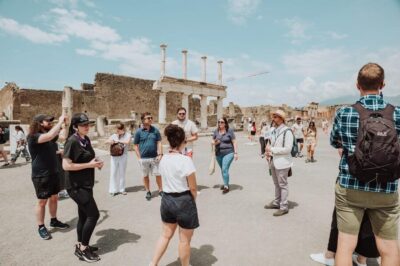
Pompeii: Entry Ticket and Guided Tour with an Archaeologist
Read our review →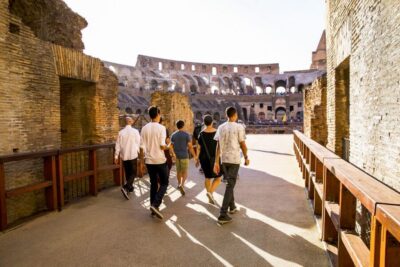
Colosseum: Underground and Ancient Rome Tour
Read our review →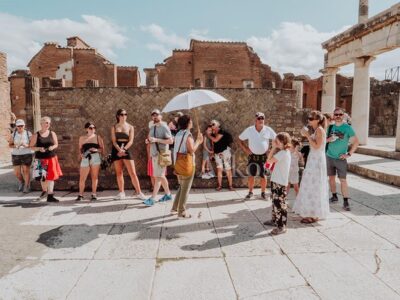
Pompeii: Small Group Tour with an Archaeologist
Read our review →Pompeii Small Group Tour with an Archaeologist
Read our review →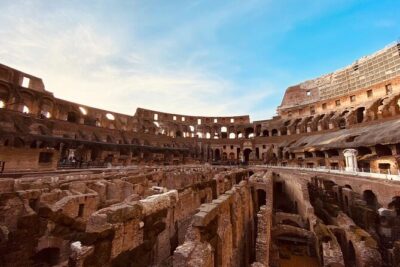
Rome: Colosseum with Arena, Roman Forum and Palatine Guided Tour
Read our review →
Venice: St. Mark’s Basilica Guided Tour & VR History Intro
Read our review →
Colosseum with Arena, Roman Forum and Palatine Hill Guided Tour
Read our review →
Herculaneum: Skip-the-Line Guided Tour with Archaeologist
Read our review →Browse the lists this tour appears in