
Review · BUCHAREST
Bucharest: Communism and History Guided City Walking Tour
Bucharest’s communist past is easiest to understand on foot, where grand boulevards, demolished neighborhoods, surviving churches, and ordinary grocery shops form one connected story. This three-hour tour follows that story from the Patriarchal Cathedral to Revolution Square, with the massive Parliament building as its visual centerpiece.
I like the way the tour links big political decisions to daily life, including food shortages, nationalization, surveillance, and family experiences. I also like the personal approach: guides such as Andreea, Daniela, Mihai, and Octavian use photographs, clear explanations, and lived memories to make recent history feel close. The main drawback is the amount of walking, including the uphill approach to the cathedral, and the tour is not suitable for wheelchair users.
Key points at a glance
- See the Parliament from the outside: Learn how Ceaușescu’s enormous House of the People changed Bucharest and displaced much of the old city.
- Follow the story from religion to revolution: The route begins at the Patriarchal Cathedral and ends at Revolution Square, covering the rise and fall of communism.
- Connect politics with ordinary life: An old Alimentara grocery store, a communist-style snack, and personal stories explain what shortages and state control meant at home.
- Find buildings saved from demolition: Antim Monastery and other moved structures show how Bucharest tried to preserve parts of its past.
- Learn about the secret police: The route includes former sites linked to surveillance, interrogation, and torture.
- Get a useful first-day orientation: The tour passes roughly 15 important places and gives you context for exploring central Bucharest afterward.
Why this Bucharest history walk matters

This is not a sightseeing walk that simply labels buildings. It uses the city as evidence.
At one stop, you look at a church and discuss religion under a communist state. At another, you see the effects of nationalization in a residential neighborhood. Later, the Parliament explains dictatorship on a grand scale, while an old grocery shop brings the subject back to shelves, queues, and household worries.
That mix is the tour’s greatest strength. If you know little about Romania, the guide builds the story in a sensible order. You learn what came before communist rule, how the system took control, how Nicolae Ceaușescu reshaped the capital, and why the regime finally collapsed in 1989.
I would especially recommend taking this tour early in your Bucharest stay. It gives you a framework for the city. Afterward, the broad avenues, apartment blocks, older churches, and surviving prewar buildings make more sense.
More Cold War and Communism Tours in Bucharest:
- Berlin: Third Reich & Cold War Guided Walking Tour
★ 4.9 · 8,378 reviews - Berlin’s Best: 2 Hour Walking Tour Third Reich and the Cold War
★ 5.0 · 5,486 reviews - Prague: Communism History and Nuclear Bunker Guided Tour
★ 4.7 · 2,417 reviews
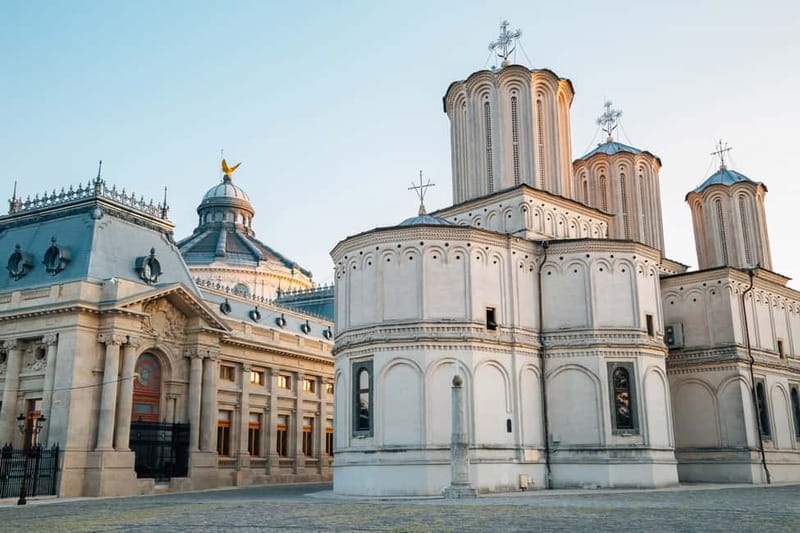
Starting at the Patriarchal Cathedral
The meeting point is in front of the Patriarchal Cathedral, reached from Piata Unirii, or Union Square. You need to walk up the hill from the square, so allow enough time and wear shoes that can handle three hours on foot.
The cathedral is a strong place to begin because it introduces the relationship between Romanian religion and communist power. The guide also explains the events that helped bring communism to Romania, rather than dropping you straight into the Ceaușescu years.
This opening gives the tour useful depth. The subject is not simply one dictator or one decade. You start with the political shift that created the communist regime, then see how the new government affected institutions, property, public life, and personal freedom.
The cathedral stop includes about 20 minutes of guided explanation and sightseeing. It is not just a quick photograph before moving on.
Nationalization in an ordinary neighborhood
From the cathedral, the group continues through a nearby neighborhood. Here the subject becomes nationalization, when private homes, businesses, and property were taken into state control.
A residential street is a better classroom for this topic than a grand monument. You can begin to picture how political change entered daily life, affecting where families lived and what happened to privately owned property.
This section also helps explain why Bucharest can feel like several cities at once. Historic religious buildings, older houses, communist-era construction, and later changes sit close together. The route does not treat these as unrelated sights. It shows how government policy altered the physical city.
The pace is designed for walking and stopping rather than rushing from landmark to landmark. Guides are encouraged to answer questions, and several have used family memories or personal experiences to explain what official terms meant in real life.
Seeing Ceaușescu’s Parliament from outside
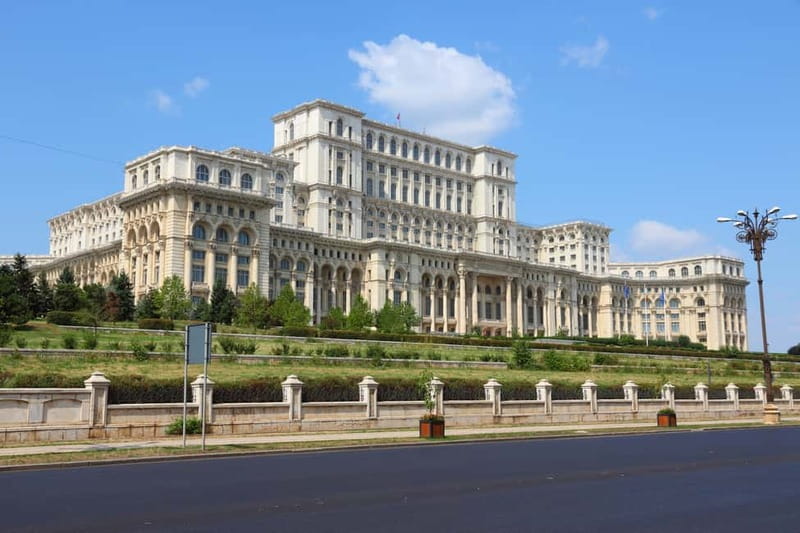
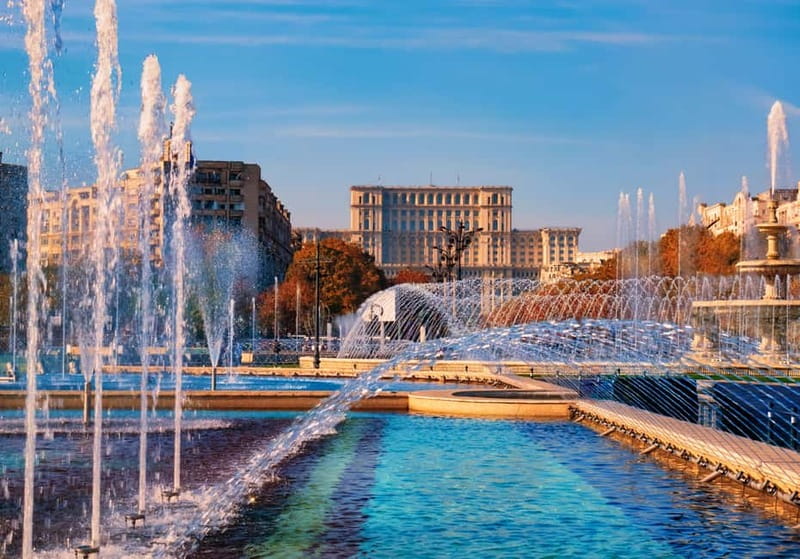
The Palace of the Parliament, still widely called the House of the People, is the tour’s largest visual moment. You stop for photographs and hear how the building was planned as a symbol of communist power and Ceaușescu’s megalomania.
The building is seen from outside only. That point matters if you are expecting an interior visit. The value here is not a tour of grand rooms, but an explanation of what the structure represented and how its construction reshaped Bucharest.
The Parliament connects several themes at once: central control, forced urban change, demolition, labor, expense, and the desire to create a monument to one leader. The guide explains the scale of the project and the damage done to parts of the city in the process.
The tour presents the destruction of Bucharest as one of the largest examples of a European city being drastically altered during peacetime. You will not just hear a number or see a facade. You will learn why whole areas were cleared and how the project fit into the regime’s broader vision.
Because the Parliament is so large, the stop works best when you listen to the context. On its own, it is an oversized government building. With the story, it becomes a record of power and forced change.
More History Walking Tours in Bucharest:
- Guided Walking Tour of Historical Bucharest
★ 5.0 · 84 reviews - Roma Culture, Realities and Slavery History, Walking tour
★ 4.9 · 52 reviews - History and Hauntings of Salem Guided Walking Tour
★ 5.0 · 14,564 reviews - Lisbon: History, Stories and Lifestyle Walking Tour
★ 4.8 · 10,902 reviews
Antim Monastery and buildings that escaped demolition
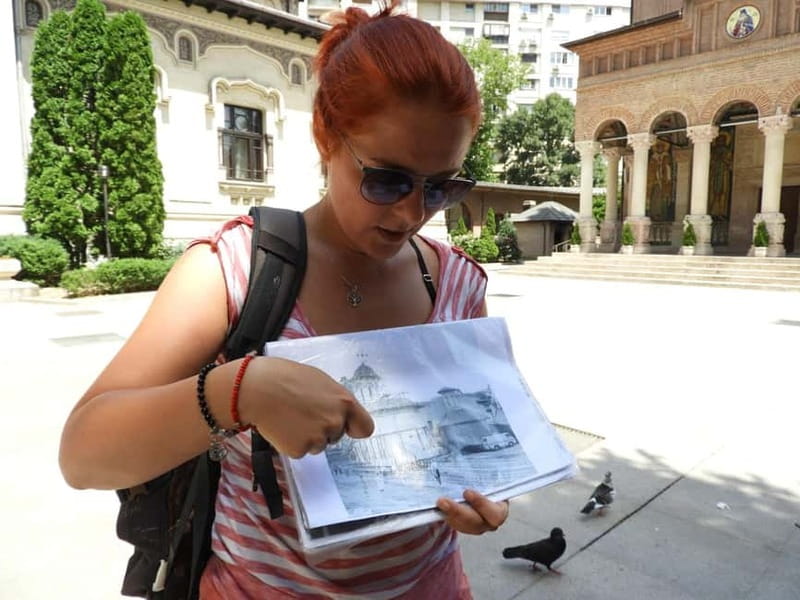
The route then points out buildings that were moved or otherwise saved from destruction. Antim Monastery is the best-known example on this walk.
This is one of the more surprising parts of the experience. Demolition is easy to understand when you see an empty space or a replacement building. It is harder to picture a historic structure being moved to make way for a new plan. The monastery gives you a physical example of the lengths taken to protect important buildings.
The stop also adds balance. Bucharest’s communist story is not only about what disappeared. It is also about what survived, how people tried to protect it, and how old religious and architectural landmarks remain woven into the modern center.
The tour passes additional buildings and less obvious locations, so you see more than the usual postcard sights. Some stops are described as secret or lesser-known locations, with the guide explaining what happened there and why the place matters.
The café break and a taste of rationing
About halfway through, there is a short break at a local café. You pay for anything you order, but the pause gives your feet a rest and creates space for questions.
The experience also includes a communist-style snack. One guide used a rum-flavored biscuit from the period to help explain food shortages and the struggle to feed a family under strict rationing. A small taste cannot recreate that life, but it gives the discussion a concrete and memorable detail.
This part of the tour shifts attention away from buildings and political leaders. You learn about well-being, availability, and the practical problems of shopping. An old Alimentara grocery store provides the setting for this discussion.
The café break is useful for another reason. The subject can be heavy, and the pause prevents the afternoon from becoming one long stream of difficult information. You can ask about Romania beyond the official route, including how different generations view the communist period today.
Calea Victoriei and the hidden machinery of control
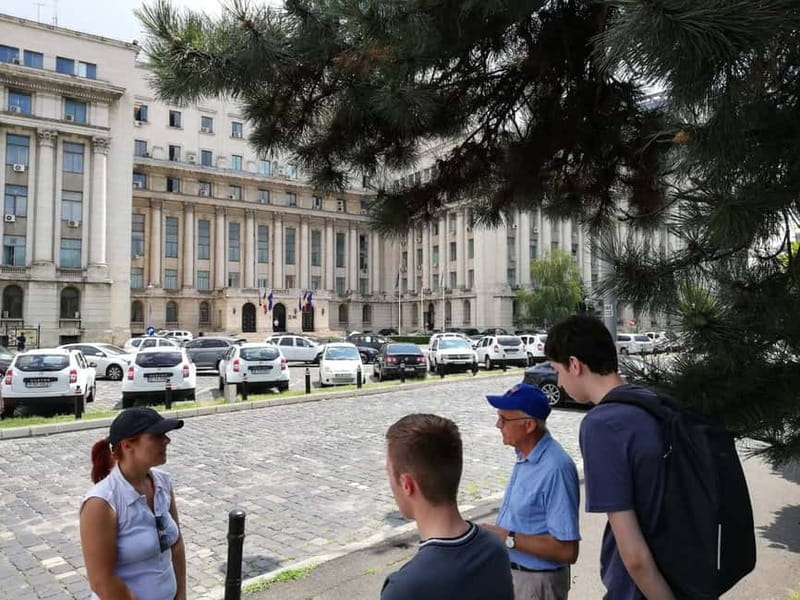
After the break, the walk continues at a normal pace along Calea Victoriei, one of Bucharest’s most attractive streets. The boulevard brings a change of mood, with elegant buildings and major city sights, but the guide continues pointing out communist symbols and locations tied to state control.
One stop concerns a former center associated with the Secret Police and the torture of people. This is an important part of the route because it shows that repression was not an abstract idea. Surveillance and punishment had places, staff, procedures, and victims.
The guide explains the influence of the Secret Police and how fear affected daily behavior. You may find this section more unsettling than the Parliament stop, precisely because it focuses on individual lives rather than monumental architecture.
The route also passes Caru’ cu bere, a well-known Bucharest landmark. Here, as at other points, the stop helps connect the city’s older identity with the communist period and the way public places changed or continued through political upheaval.
Guides such as Daniela and Octavian are praised for giving clear explanations in English and taking time with questions. Andreea is also noted for personal anecdotes and practical suggestions about places to eat and visit after the tour.
Revolution Square and the end of the regime
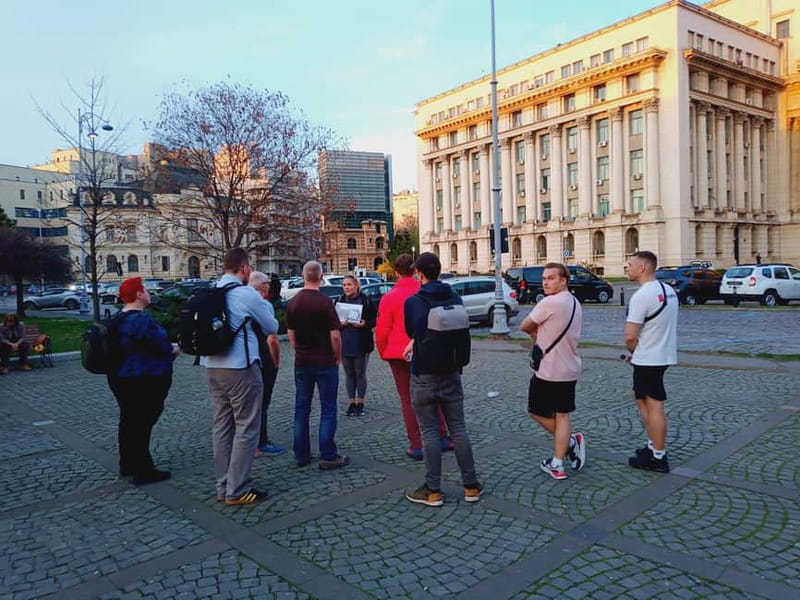
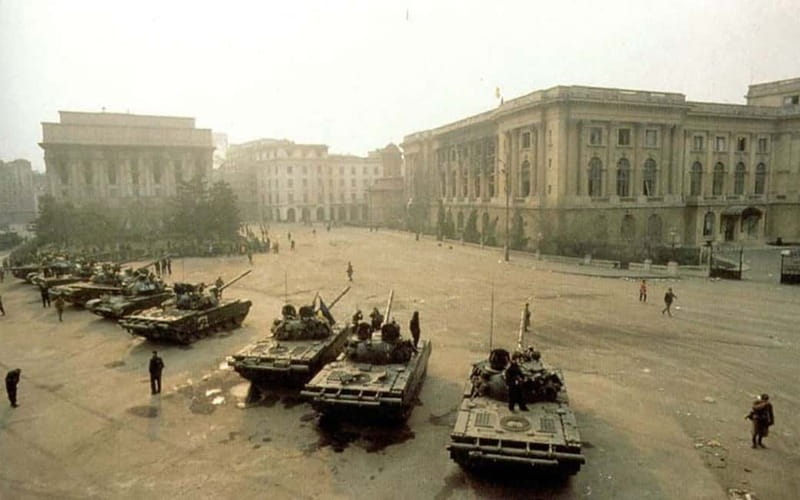
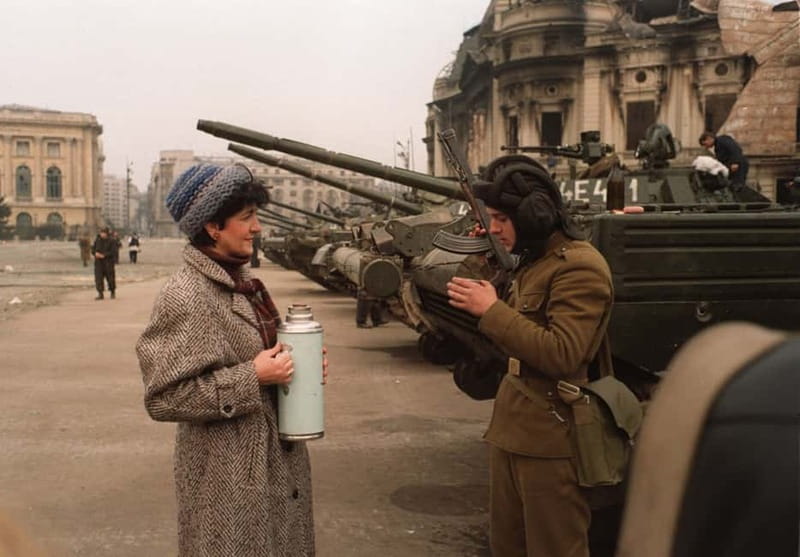
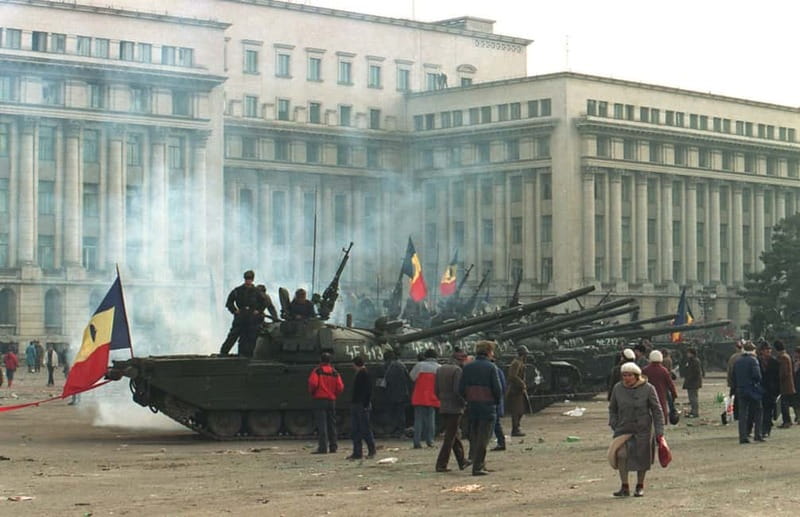
The final stretch leads to Revolution Square, where the tour ends. This is where the guide tells the story of the 1989 Revolution, the fall of communist rule, and the first steps toward democracy.
Ending here gives the walk a clear narrative shape. You begin with the political conditions that allowed communism to take hold, see its effects on property and the city, learn about surveillance and shortages, and finish at the moment the system broke apart.
The Revolution Square discussion is not just a final date in a history lesson. It brings together the ideas introduced earlier: state power, public fear, economic pressure, and the changing relationship between citizens and government.
The guides use personal accounts and visual aids when available. That can be especially helpful with events from 1989, when photographs, speeches, crowds, and changing street scenes can otherwise feel confusing.
You finish in a central location, making it easy to continue exploring Bucharest on your own. The tour does not include hotel transport, so plan your route back separately.
Guide quality and the personal touch
The experience is offered in English, and guide quality is central to its value. Andreea, Daniela, Mihai, Octavian, Ion, and John have all been praised for clear English, strong subject knowledge, patience, and personal storytelling.
The best guides do not turn the walk into a dry lecture. They answer questions, show photographs, add family memories, and explain differences between older and younger Romanians. Mihai, for example, has drawn on childhood memories of the period, while Ion has included family experiences from the Cold War years.
That personal layer is useful, but you should still expect a guided interpretation rather than a formal academic seminar. The tone is accessible and conversational. Political conclusions may arise naturally when discussing dictatorship, democracy, and the risks of concentrated power, but the main job is to explain what happened and how it affected people.
The strongest praise has focused on storytelling, passion, and the ability to make three hours pass quickly. That matters because recent history can become a list of dates. Here, the setting and the human examples keep it connected to the streets around you.
Walking conditions, timing, and value
The tour lasts three hours and covers roughly 15 locations. You will be walking between stops, standing during explanations, and taking a short café break. Comfortable shoes are essential.
The route takes place rain or shine. Guides have helped groups stay comfortable in poor weather, including bringing extra umbrellas, but you should still dress for the forecast. The tour may be canceled or rescheduled if heavy rain, blizzards, extreme wind, or extreme heat make conditions unsafe.
At $31 per person, I consider this good value if you want historical context rather than a quick city overview. You receive three hours with a live English-speaking guide, a structured route through central Bucharest, about 15 sites, the communist-era snack, and a break.
The Parliament is not visited inside, and drinks or food at the café cost extra. If your priority is entering the Parliament, this is not the right product by itself. If your priority is understanding why the building exists and what it did to Bucharest, the outside explanation may be enough.
Free cancellation up to 24 hours before the start and the option to reserve now and pay later also make it easier to fit into a changing schedule.
Who should book this walk?
I would choose this tour if you enjoy modern European history, political history, architecture, or guided walks that explain the ordinary side of a city. It is also a smart choice for a first visit because it gives you useful context before you explore central Bucharest independently.
Families with older teenagers may find the subject especially worthwhile, though the material includes repression, torture, shortages, and political violence. The tour suits curious visitors who want to ask questions rather than simply collect photographs.
It is less suitable if you dislike walking, need a fully accessible route, or want a relaxed introduction with little serious history. The listed meeting point requires an uphill walk, and the activity is not suitable for people with back problems or wheelchair users.
Should you book the Communism and History Walking Tour?
Book it if you want Bucharest’s communist past explained through real streets, surviving buildings, personal memories, and the final events of 1989. The best reason to go is the connection between major monuments and ordinary life.
I would schedule it near the start of your stay, bring water and comfortable shoes, and arrive early enough to find the cathedral meeting point from Union Square. Choose another activity if you mainly want an interior visit to the Parliament or a short, low-effort sightseeing loop.
For most history-minded visitors, $31 buys a useful three-hour introduction to the city’s most difficult and defining recent chapter.
FAQ
How long does the Bucharest communism walking tour last?
The tour lasts three hours.
Where does the tour begin?
It begins in front of the Patriarchal Cathedral. The closest metro station is Piata Unirii, also called Union Square.
Where does the tour finish?
The tour finishes at Revolution Square in Bucharest.
Is the Parliament building visited inside?
No. The Palace of the Parliament, also called the House of the People, is seen from outside, with a guided explanation and a photo stop.
What language is the tour offered in?
The live guided tour is offered in English.
Is food included?
You receive a communist-style snack. Food or drinks you choose to purchase during the café break are not included.
Is hotel pickup included?
No. Hotel pickup and drop-off are not included.
What should I bring?
Bring comfortable shoes. The activity takes place outdoors and continues in rain or shine unless severe weather makes the route unsafe.
Is the tour suitable for wheelchair users?
No. The activity is listed as not suitable for wheelchair users or people with back problems.
Just added around Bucharest
- Private Tour: Transylvanian Castles and Brasov’s Medieval Old Town★ 5.0 · 42 reviews
- Visit Bulgaria – Veliko Tarnovo Medieval Fortress – Private tour from Bucharest★ 5.0 · 51 reviews
- Day Trip to Medieval Bulgaria- Small group tour★ 3.5 · 75 reviews
- Guided Walking Tour of Historical Bucharest★ 5.0 · 84 reviews
- Bucharest Jewish Heritage | Holocaust Memorial | Private Car Tour★ 5.0 · 38 reviews
- 2-Day Medieval Transylvania with Brasov,Sibiu and Sighisoara Tour from Bucharest★ 4.5 · 145 reviews
- Day trip to Dracula’s Castle, Peles Castle and Medieval Brasov★ 4.5 · 41 reviews
- 3-Day Medieval Transylvania Package Tour★ 4.7 · 31 reviews
Bucharest History Tours, compared.
From Bucharest: Small Group Day Trip to Medieval Bulgaria
Read our review →
Bucharest: 3-Hour Dark History Tour with a Local
Read our review →
Peles Castle, Dracula’s Castle and Medieval Town of Brasov in one day
Read our review →
Bucharest: Small Group History, Art & Secrets Tour
Read our review →
2-Day Medieval Transylvania with Brasov,Sibiu and Sighisoara Tour from Bucharest
Read our review →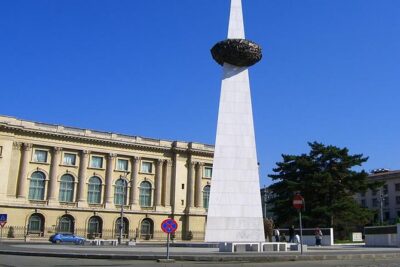
Roma Culture, Realities and Slavery History, Walking tour
Read our review →Browse the lists this tour appears in