
Review · KATHMANDU
UNESCO Seven World Heritage Tour in Kathmandu
Kathmandu’s seven UNESCO heritage properties are scattered across the valley, so seeing them all in one day takes planning, patience, and a good driver. This tour handles the hard part in a private car, linking hilltop shrines, palace squares, Buddhist stupas, and Hindu temples without making you arrange each ride yourself. Guides such as Shanti, Pankaj, Kabita, and Sarita are praised for explaining both Hindu and Buddhist traditions in clear English.
I like the hotel pickup and included entry fees, since you can focus on the sights instead of haggling over transport or carrying cash at every gate. I also like the flexible pace: guides have adjusted schedules for shopping, photographs, and personal interests. The tradeoff is simple: 12 hours is a long day, with plenty of walking, stairs, traffic, and information to absorb.
Key points at a glance
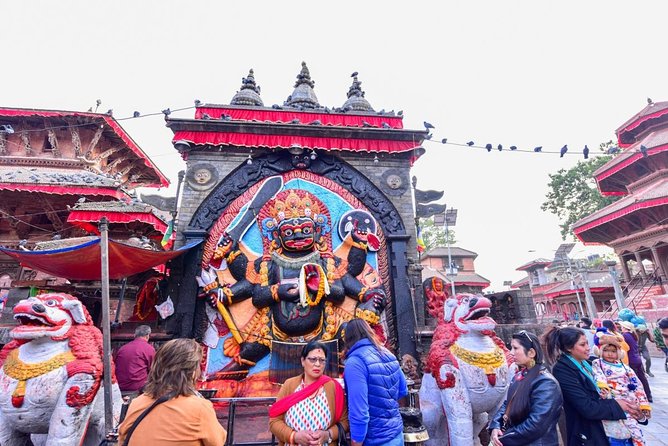
- Seven UNESCO properties in one day: Cover Swayambhunath, Kathmandu Durbar Square, Patan, Bhaktapur, Changu Narayan, Pashupatinath, and Boudhanath.
- Private car and driver: Save time between widely scattered sites and avoid piecing together taxis.
- Strong cultural focus: Expect explanations of Hindu worship, Buddhism, Newar architecture, royal history, and local customs.
- Flexible guiding: Guides can adjust the order or timing for photographs, shopping, lunch, and personal interests.
- Bhaktapur lunch stop: Lunch is not included, but you can choose from several eateries in the old city.
- A full physical day: Wear comfortable shoes, bring water and sun protection, and expect stairs and extended walking.
Why this one-day route works
The clever part is not simply the number of monuments. It is the way the tour joins places that feel very different from one another.
You begin with Buddhist prayer wheels and hilltop views at Swayambhunath. Later, you move through royal courtyards in Kathmandu and Patan, the preserved old streets of Bhaktapur, the remote temple of Changu Narayan, the Hindu pilgrimage center of Pashupatinath, and the huge white dome of Boudhanath.
That range gives you a useful first picture of Kathmandu Valley. You see how Hindu and Buddhist practice overlap, how Newar builders shaped the old cities, and how royal power once expressed itself through palace squares and temples.
The private car matters here. The sites are not arranged in one neat walking circuit. Kathmandu traffic can be slow and confusing, and Changu Narayan sits away from the central city. A careful driver lets you rest between stops while your guide manages the route.
The tour is private, so only your group takes part. That makes it easier to ask questions, linger for photographs, or request a small change. Several guides have helped visitors fit in shopping, traditional dress photographs, or a later start after a morning mountain flight.
More UNESCO World Heritage Tours in the world:
- World Heritage Shirakawa-go and Experience Tours from Kanazawa
★ 5.0 · 4,049 reviews - From Tirana: Berat UNESCO Heritage & Belshi Lake Tour
★ 4.9 · 3,863 reviews - Bali: Tanah Lot UNESCO World Heritage Sites Full-Day Tour
★ 4.7 · 1,947 reviews
Swayambhunath and the three Buddhas
Swayambhunath, often called the Monkey Temple, sits on a hill above Kathmandu. The route includes about 365 steps to the top, so this is an early test of your legs. Once there, you can walk around the stupa, spin prayer wheels, and look across the city.
The site is Buddhist, but Hindu shrines and deities share the hill. That mixture is one of the best introductions to Kathmandu Valley’s religious life. Your guide can explain why both traditions appear together rather than treating them as separate worlds.
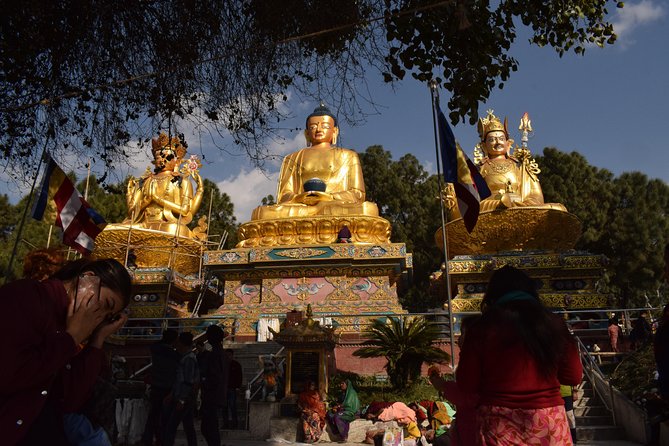
The stop at Amideva Buddha Park comes near the end of the Swayambhunath visit, on the opposite side of the hill. Three large Buddha statues provide a quieter photo stop and are easy to miss if you leave by the same route you entered.
The official stop times are short, but the real pace depends on your group and the guide. If stairs are difficult, tell the guide early. The site is worth seeing, but it is not a flat or effortless start.
Kathmandu Durbar Square and the Kumari courtyard
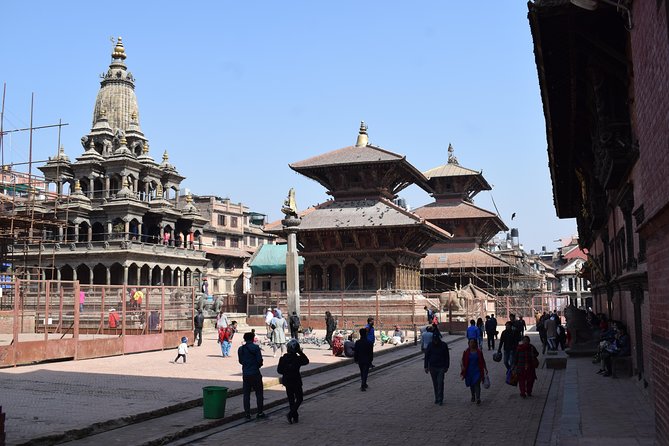
Kathmandu Durbar Square was once the royal center of the city. Earthquake damage means some buildings remain under repair, yet the square still gives you a close look at carved windows, temple roofs, courtyards, and the layered religious life of the old capital.
The Kumari Chowk is one of the most distinctive stops. This red-brick, three-level building contains a courtyard connected with the Kumari, a girl selected to serve as the city’s living goddess until puberty.
The visit is brief, around 10 minutes at the courtyard, so do not expect a long private audience or a full ceremony. The value is in understanding the tradition and seeing the setting. Ask your guide about the custom, but remember that this is an active sacred place, not just a museum display.
Kathmandu Durbar Square can feel visually crowded, with many details competing for your attention. A good guide helps you notice the important carvings instead of letting the square become a blur of roofs and brick.
Patan: stone carving, the Golden Temple, and the museum
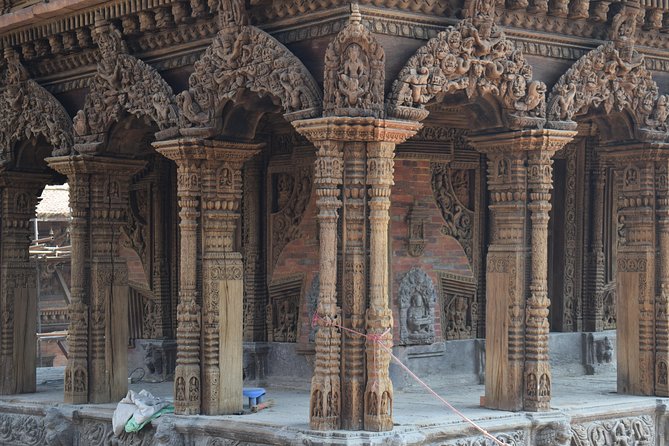
Patan Durbar Square lies in Lalitpur, a separate city within the Kathmandu Valley. Its old palace courtyard is known for Newar architecture, brick construction, metalwork, and finely carved temples.
The main square includes the striking Krishna Temple, built entirely of stone. Its 21 spires and sculpted surfaces reward a slower look, even though the scheduled visit is only about 25 minutes.
The Golden Temple, or Hiranya Varna Mahavihar, is a 12th-century pagoda-style Buddhist temple. Bronze statues, silver details, and the close-packed courtyard give it a different feel from the broad palace square. Ten minutes is enough for an introduction, but not enough for careful study of every carving.
Patan Museum occupies Keshav Narayan Chowk in the old palace complex. This is one of the most useful indoor stops because it helps explain the art, religious objects, and building traditions you have just seen outside. The allotted 15 minutes is short, so focus on the pieces your guide identifies as most important.
Patan is a good place to ask questions about Newar craftsmanship. The tour does not leave much time for unhurried museum browsing, but the combination of square, temple, Buddhist courtyard, and museum creates a strong cultural sequence.
More History Tours in the world:
- Prague: Medieval Dinner with Unlimited Drinks
★ 4.4 · 19,847 reviews - Pompeii: Entry Ticket and Guided Tour with an Archaeologist
★ 4.8 · 19,459 reviews - History and Hauntings of Salem Guided Walking Tour
★ 5.0 · 14,564 reviews - Athens: Acropolis & up to 5 Archaeological Sites Combo Pass
★ 4.2 · 13,904 reviews
Bhaktapur’s preserved old city
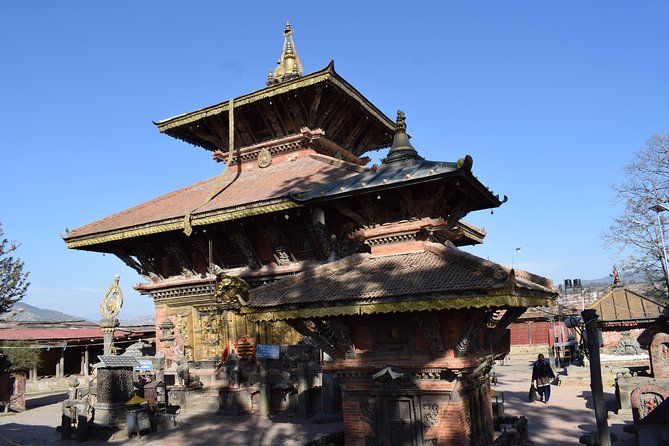
Bhaktapur, known as the City of Devotees, is often the most satisfying extended stop for visitors who want old buildings and traditional urban spaces. Many houses and structures remain intact, and the city feels more coherent than a quick collection of isolated monuments.
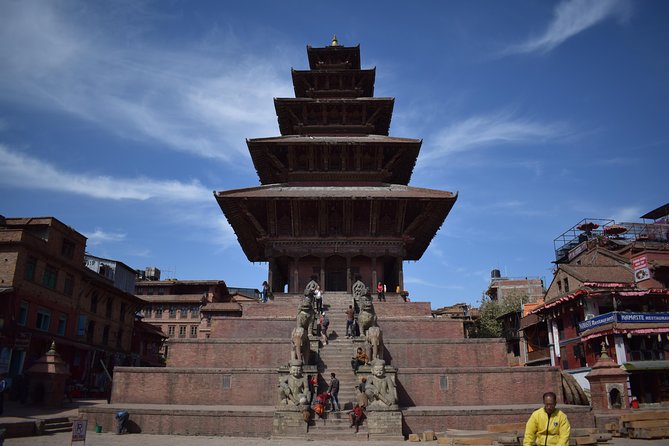
Nyatapola Temple is a five-level pagoda with strong proportions and carved guardian figures along its stairway. The ten-minute stop gives you a clear view of its design, but you may want to use spare time here for photographs.
Dattatreya Temple sits in Dattatreya Square and is traditionally said to have been made from the wood of a single tree. The story is part of the site’s appeal, while the temple itself offers another example of Bhaktapur’s wooden construction and religious continuity.
The Palace of Fifty-Five Windows is one of the square’s signature structures. Its carved windows show the skill of the city’s builders, and the name comes directly from the number of windows in the palace facade.
Siddha Pokhari is a human-made pond near the old city gate. The stop is only about five minutes, so think of it as a brief pause rather than a major sightseeing session.
Lunch in Bhaktapur is not included. That is actually useful if you have food preferences, since you can choose among local eateries rather than accept a fixed meal. Budget time for lunch if you want a relaxed break. A long day feels much better when you do not rush through the only proper meal.
Changu Narayan, the hilltop temple
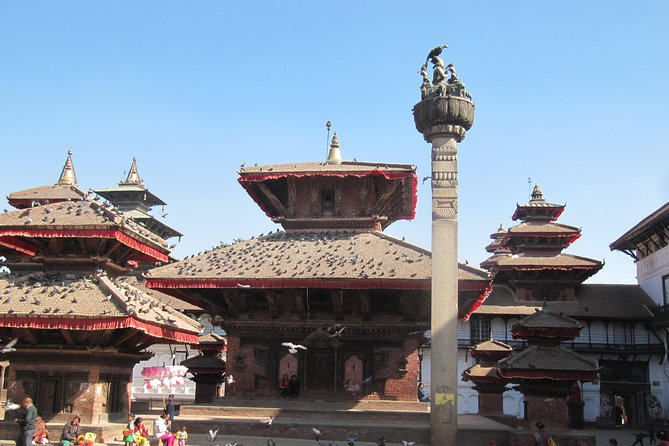
Changu Narayan is the most out-of-the-way stop and one reason private transport is valuable. The temple sits on a hilltop and dates to the Licchavi period, making it one of the oldest temples in the Kathmandu Valley.
The site is known for stone and wood carvings. Compared with the major city squares, it offers a quieter setting and a closer look at early Nepalese temple art.
The planned visit lasts about an hour, which is sensible. You need time to look at the carvings, hear the background, and walk around the temple area. The ride takes effort, but this is not a stop I would cut simply to make the day feel shorter. It gives the itinerary a different rhythm after the dense urban sites.
Pashupatinath and the Bagmati riverbank
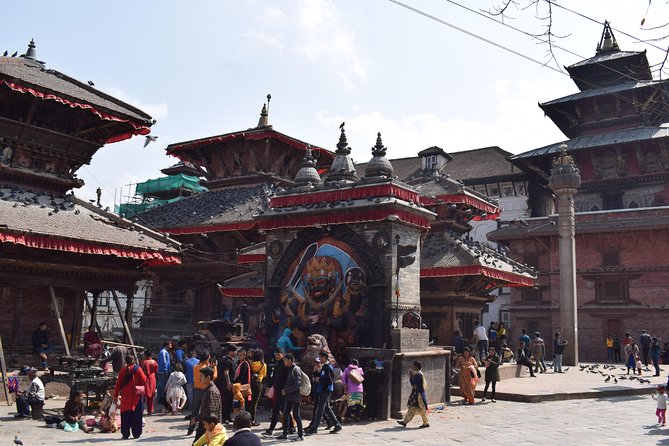
Pashupatinath is one of Nepal’s largest temple complexes, covering about 0.64 hectares and containing more than 500 temples and shrines. It is a major Hindu pilgrimage center, and the complex has a more active religious presence than a standard historic monument.
The main temple is not open to non-Hindu visitors, but the wider complex includes much to see. Your guide can explain the shrines, rituals, and significance of the riverbank while helping you behave respectfully in a sacred setting.
One hour is a reasonable introduction, though the area can feel intense after a full day of sightseeing. Stay close to your guide and follow instructions about photography and where to walk. If cremation activity is visible, treat it as a religious rite, not a tourist performance.
This stop adds emotional weight to the day. It is not polished or arranged for easy viewing, and that is precisely why it offers a more direct sense of living faith in Kathmandu.
Boudhanath and the final stupa
Boudhanath is one of Nepal’s best-known Buddhist pilgrimage sites. The white stupa rises about 36 meters, with more than 50 gompas around it.
The broad circular area around the stupa is easier to walk than Swayambhunath, though you will still be tired by this point. Walk clockwise, as is customary, and watch the prayer wheels, shrine details, and pilgrims moving around the base.
An hour here gives you time to circle the stupa and enter the atmosphere of the surrounding monastic area. It also makes a fitting final stop because the open space and repeated walking pattern feel calmer after the day’s traffic and palace courtyards.
You may remember only a fraction of the details by evening. That is normal. The tour works best as a first survey, helping you decide which places deserve a second visit if you have more time.
The guide and driver make the difference
The strongest part of this experience is the human service. Guides including Shanti, Pankaj, Kabita, Sarita, Som, and others have been praised for clear explanations, polite manners, flexibility, and strong English.
That matters because the sites are not self-explanatory. A carved figure may relate to a Hindu story, a Buddhist practice, a royal custom, or a local building tradition. The guide also gives you context for present-day Nepal, not only dates and architectural labels.
The driver has an equally important job. Kathmandu roads can be hectic, and the route covers a lot of ground. A clean, comfortable car and a safe driver reduce the strain. Hotel pickup and drop-off also remove the need to negotiate transport at the beginning or end of a very long day.
Tell your guide what matters to you. Some people want architecture, others want religion, photography, shopping, or a broad introduction to Nepal. The flexible guides can adjust the emphasis, though they cannot turn a 12-hour circuit into a slow museum tour.
Price, pace, and practical value
At $180 per person, this is not the cheapest way to see Kathmandu. It becomes better value if you are traveling with a small private group, have only one sightseeing day, or would otherwise pay separately for several taxis, guides, and entrance tickets.
The price includes the private vehicle, English-speaking guide, hotel pickup and drop-off, and entry fees at all seven heritage properties. Lunch and tips are extra. The included admissions are useful because the itinerary involves many separate sites.
I would not choose this tour if you have several days in Kathmandu and prefer slow mornings, long museum visits, or spontaneous wandering. You will see many places, but several stops are brief.
I would choose it if you want a well-organized first look at the valley. The private format also suits solo visitors, couples, families, and small groups who want to ask questions without a larger coach group setting the pace.
Wear smart casual clothing that covers you appropriately for religious sites. Bring comfortable walking shoes, water, and sun protection. Expect stairs at Swayambhunath, uneven surfaces in old squares, and substantial walking throughout the day.
Confirmation is provided at booking. Cancellation is free up to 24 hours before the start time, with no refund for cancellations or changes made inside that period.
Should you book the seven-site circuit?
Book it if your Kathmandu schedule is tight and you want to see the valley’s major sacred and royal sites without solving the transport puzzle yourself. The combination of a private car, included entry fees, flexible guides, and hotel service gives you a lot in one day.
Skip it, or split it into two days, if you know you dislike long sightseeing days or want to study each site carefully. The main weakness is not poor organization. It is the unavoidable speed of covering seven UNESCO properties before evening.
For a first visit, I think the tour earns its place. You will finish tired, but you will also know the city better and have a clear idea of where to return for a slower look.
FAQ
How long does the tour last?
The tour lasts approximately 12 hours.
How many UNESCO heritage properties does it visit?
It visits all seven UNESCO-listed heritage properties in the Kathmandu Valley.
Is hotel pickup included?
Yes. Hotel pickup and drop-off are included.
Is transportation private?
Yes. The tour uses a private vehicle, and only your group participates.
Is a guide included?
Yes. An English-speaking guide is included.
Are entrance fees included?
Yes. Entry fees for the seven heritage sites are included.
Is lunch included?
No. Lunch in Bhaktapur is not included. You can choose from several eateries there.
Is the tour suitable for most people?
The tour information says most people can participate, but you should expect extensive walking and stairs, especially at Swayambhunath.
What should I wear?
Smart casual clothing is requested. Comfortable walking shoes are also a practical choice for the long day.
Can I cancel for a full refund?
Yes, if you cancel at least 24 hours before the experience start time. Cancellations within 24 hours are not refunded.
Just added around the world
- Scenic Train ride to historical cities of Morretes and Antonina★ 4.0 · 188 reviews
- 6-Day Cultural Tour to Machu Picchu★ 5.0 · 76 reviews
- Jewish Heritage of Curacao★ 4.5 · 68 reviews
- The Curacao’s Colorful History Walking Tour★ 5.0 · 55 reviews
- Discover Scuba Diving Amathounta’s Ancient Port★ 5.0 · 30 reviews
- Olous – Guided Snorkelling Excursion to Discover Olous Sunken Ancient City★ 4.5 · 31 reviews
- Night Walking Tour of Medieval Cuenca★ 5.0 · 64 reviews
- WWII – The Battle of Crete Day Tour★ 5.0 · 103 reviews
Kathmandu History Tours, compared.
Private Kathmandu Sightseeing Tour | UNESCO World Heritage sites
Read our review →
Nepal Discovery Tour: Heritage Sites & Scenic Hill Easy Hike
Read our review →
Kathmandu Private Sightseeing Tour | UNESCO World Heritage Sites
Read our review →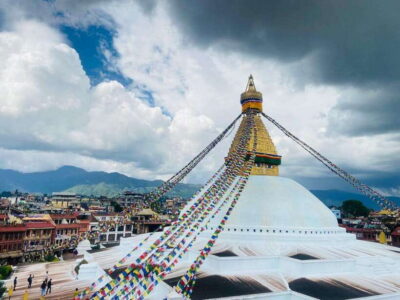
Kathmandu: Private UNESCO World Heritage Site Tour
Read our review →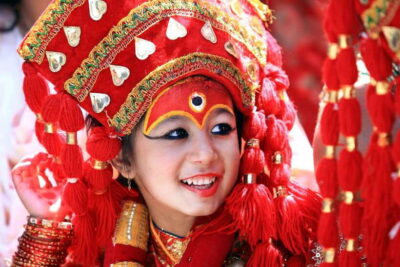
Private Kathmandu UNESCO World Heritage Sites Tour
Read our review →Browse the lists this tour appears in