
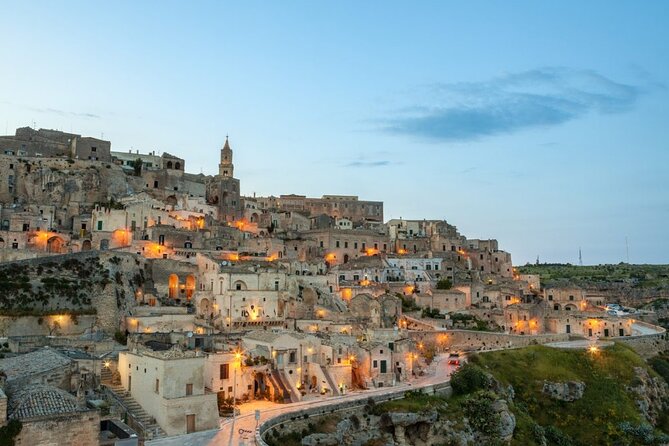
Review · ITALY
Discover Matera, the ancient city – English tour
Matera’s Sassi are easy to admire and surprisingly hard to understand on your own. This walking tour takes you through Sasso Caveoso and part of Sasso Barisano, using quiet lanes, cave homes, old water systems, and valley views to explain how people lived here and why the city was once called the Shame of Italy.
I especially like the people-centered storytelling and the way the tour reaches beyond Matera’s postcard views. I also like the chance to hear personal family memories, including Renato’s connection to a cave home, while guides such as Gaetano bring humor and clear English to a complicated subject.
The main drawback is simple: this is not a church-focused tour. You will not spend the walk ticking off cathedrals and interiors. The route is about Matera’s streets, homes, social history, architecture, and daily life, so you should choose it for context rather than a long list of formal sights.
Key points to know before booking
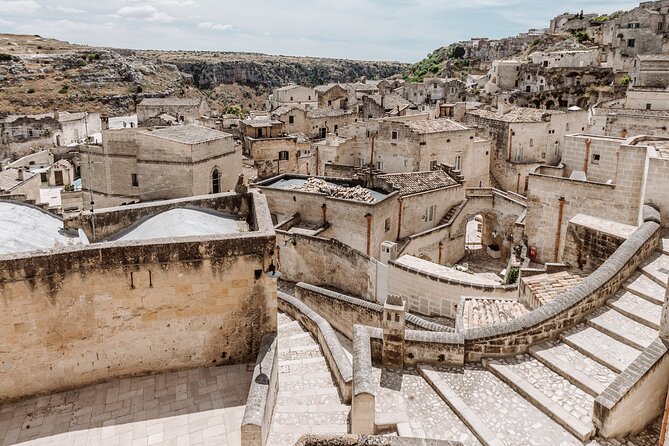
- The route covers Sasso Caveoso and part of Sasso Barisano, with changing views into the ravine and the old city.
- The focus is everyday life in the Sassi, including cave homes, bakeries, public water collection, and family stories.
- Gaetano, Renato, Sara, and Domenico may lead the walk, all presented as guides devoted to Matera and its surrounding area.
- The tour lasts about two to three hours and is designed for a relaxed small-group experience, with no more than 20 people.
- Wear sensible shoes, since the route follows alleys and uneven walking surfaces rather than broad, level streets.
- The $36.28 price is good value if you want the background that makes Matera’s views meaningful, though it may feel less useful if you only want church interiors.
Why Matera needs more than a photo stop
Matera can look self-explanatory. The honey-colored caves, stacked houses, stairways, and ravine views make an immediate impression. But a beautiful view does not tell you why the Sassi were emptied, why the city carried such a harsh reputation, or how Matera later became a UNESCO World Heritage site.
That change is the heart of this walk. You move through the city step by step, following the story of its people rather than simply stopping at a list of monuments. The guide connects art, anthropology, building methods, family life, and public policy, helping you see the Sassi as a living place rather than a dramatic film set.
I like this approach because Matera’s past is not only about age. It is also about poverty, adaptation, displacement, and renewal. Without that human side, the caves can become scenery. With it, every doorway and stairway carries more weight.
The tour also answers a question many visitors have: why did the wider world hear so little about Matera until relatively recently? The explanation unfolds as you walk, with the guide showing how the city’s reputation changed over time.
More Ancient History Tours in Italy
- Pompeii: Entry Ticket and Guided Tour with an Archaeologist
★ 4.8 · 19,459 reviews - Colosseum: Underground and Ancient Rome Tour
★ 4.7 · 12,691 reviews - Pompeii: Small Group Tour with an Archaeologist
★ 4.8 · 12,264 reviews
Starting in Sasso Caveoso
The route begins in the more open, rugged setting of Sasso Caveoso and continues into part of Sasso Barisano. These districts are often treated as one great mass of stone, but walking through them with a guide helps you notice their different shapes, paths, and viewpoints.
You can expect the guide to lead you through lanes that are easy to miss if you are exploring alone. Matera’s layout can be confusing, with stairways, bends, small passages, and routes that seem to end at a wall or cave entrance. A guide saves you from spending your first hours simply trying to work out where you are.
The pace is generally relaxed. There is time for photographs and questions, and the tour takes roughly two to three hours. One guide described the walk as a historical and architectural tour that is not especially strenuous, but sensible shoes remain important. The old surfaces and repeated steps are part of the setting, not a polished city sidewalk.
The views into the valley are a major part of the route. Still, the guide keeps bringing your attention back to the people who used these spaces. That balance is useful. You get the grand view, then the explanation of how a family might have lived beside, above, or within the rock.
Seeing the Sassi as a home
The most worthwhile feature of this experience is its attention to domestic life. The Sassi were not built as a museum. They were homes, workspaces, storage areas, animal shelters, and shared living quarters shaped by necessity.
The route can include cave homes and explanations of how rooms were adapted to the stone. Renato’s own family connection adds an unusually personal layer. His family lived in a cave house, so his account can connect the broad story of Matera with memories passed down through local life.
That does not mean every part of the walk is a private family tour. Renato may lead the experience, but Sara, Domenico, or Gaetano may also be your guide. Each guide is described as having a strong connection to Matera and the Sassi, and the experience can vary slightly in personality and emphasis.
Gaetano is particularly suited to visitors who enjoy an energetic storyteller. He is repeatedly described as funny, clear in English, and able to answer questions in detail without losing the thread of the walk. Renato’s style is more personal in the descriptions of his route, with family stories and less obvious corners of the city.
The subject matter can be heavy. Matera’s story includes hardship and the displacement of residents from the Sassi. A good guide needs to explain that history without turning it into a simple before-and-after tale. This tour appears to make the people central, which gives the walk more meaning than a quick look at abandoned caves.
Water, bread, and the practical side of old Matera
One of the tour’s useful details is its attention to systems that are easy to overlook. You may learn about public and private water collection, an essential part of life in a place where daily needs had to be managed with care.
You may also hear about traditional bakeries and the role of bread in local life. These details make the old city easier to picture. Instead of hearing only about walls and dates, you begin to understand how residents organized food, water, work, and household space.
This is where the tour earns its price. You could walk past a cistern or bakery and admire the stonework without knowing what it meant. A guide gives the object a purpose. At $36.28 per person, the experience costs more than wandering through the lanes with a map, but the extra money buys interpretation, orientation, and access to stories you would likely miss.
The value is strongest early in your stay. Take the tour near the beginning of your time in Matera, and you can use the rest of your visit more intelligently. You may return to a viewpoint, seek out a bakery, inspect a cave district more carefully, or choose a restaurant with some local context behind it.
Guides can also suggest places to eat. Gaetano, in particular, has been described as offering recommendations suited to different dining styles, from casual meals to more formal choices. That advice is not the main product, but it can be useful after a two-hour walk.
Same city, a different century:
- Pompeii Small Group Tour with an Archaeologist
★ 5.0 · 6,593 reviews - Rome: Colosseum with Arena, Roman Forum and Palatine Guided Tour
★ 4.0 · 5,598 reviews - Venice: St. Mark’s Basilica Guided Tour & VR History Intro
★ 3.9 · 4,880 reviews - Colosseum with Arena, Roman Forum and Palatine Hill Guided Tour
★ 4.5 · 3,526 reviews
A tour of streets, not a church checklist
You should understand the format before booking. This is not the classic Matera tour built around entering churches and cathedrals. The route discovers the city through its alleys and meanders, with attention to architecture, anthropology, local history, and the people who lived in the Sassi.
That is a real advantage if you want to understand the city as a whole. It is also a real limitation if your main goal is to see religious interiors. The description mentions rupestrian churches and homes among the area’s sights, but the tour makes clear that it is not organized as a church-by-church visit.
In practical terms, you might pass places where another tour stops for a formal explanation, while this walk continues into the surrounding lanes. You will get a broader sense of how the districts connect and how the city feels underfoot.
I prefer this sort of route for a first orientation. It helps you understand why Matera is more than a collection of caves. But if you have a short list of specific churches, check whether they are open separately and plan another visit. Do not assume this experience will provide extensive interior access.
Film locations and modern recognition
Matera’s recent fame is part of the story, and the route can include a well-known filming location used for the James Bond film No Time to Die. The guide also shares an unusual detail about how a production problem was handled.
That film connection is a pleasant extra, not the main purpose of the walk. The stronger point is the contrast between Matera’s old reputation and its modern visibility. A city once avoided in public discussion now attracts international attention, filmmakers, and visitors.
The guide helps connect those two eras. You see how the city moved from neglect and stigma toward heritage recognition. The result is a more thoughtful understanding of why Matera feels both ancient and newly discovered.
Film fans will enjoy the extra stop, but you do not need to know the movie to appreciate it. The site works best as one small part of the larger story rather than as the reason to book.
How the guides shape the experience
The guide may be Renato, Gaetano, Sara, or Domenico. That matters because the experience depends heavily on presentation. The subject covers many centuries and can become repetitive if delivered as a long lecture.
The strongest guide style here combines facts with humor, personal stories, and time for questions. Gaetano is repeatedly praised for making the material entertaining while still explaining Matera in detail. Renato is associated with personal family memories and off-the-beaten-path corners.
One fair criticism is that the information can occasionally feel too dense or repetitive. If you prefer a quiet walk with only a few key facts, a two-hour history tour may feel like a lot. The guide’s passion is part of the appeal, but it can also mean that more time is spent explaining than simply looking.
That tradeoff is worth knowing. You are booking a speaking, interpretive walking tour, not a silent photo walk. Ask questions when you want the discussion to move toward a subject that interests you. The small-group format, with a maximum of 20 people, gives you a better chance to do that than a large coach tour.
Timing, comfort, and practical value
The tour lasts about two to three hours. That is long enough to give Matera a proper framework without taking the whole day. You should allow extra time before or after the walk for photographs, food, and any churches or cave sites you want to visit separately.
The group size can reach 20 people, so do not expect a private guide. Still, this is much more personal than a large group moving through the Sassi with little chance to stop. The pace is intended to be relaxed, and questions and photographs are part of the experience.
The tour is offered in English. Confirmation arrives when you book, and service animals are allowed. The meeting area is near public transportation, and the activity is listed as suitable for most people, though sensible footwear remains the practical choice.
The tour depends on good weather. If poor weather forces a cancellation, you can receive a different date or a full refund. For your own plans, remember that free cancellation applies only when you cancel at least 24 hours before the start time. Changes or cancellations within 24 hours are not refunded.
The experience is commonly booked well in advance, with an average booking lead time of 33 days. That does not guarantee that every date sells out, but it is a useful warning if your Matera visit is fixed. I would reserve it once your schedule is firm, especially if you want a particular day.
Who will get the most from this Matera walk
I would choose this tour for you if you want to understand why the Sassi matter, not just photograph them. It suits first-time visitors, history fans, architecture lovers, and anyone who wants local stories tied to the streets in front of them.
It is also a good match if you enjoy a guide with personality. Gaetano’s humor and Renato’s personal connection can make a difficult subject easier to follow. You will have room to ask questions, take photos, and get suggestions for the rest of your stay.
I would be more cautious if you want a short, formal monument tour. You may find the explanations too detailed, and the lack of a church-focused itinerary could disappoint you. Likewise, if you want to roam completely alone, the structure may feel restrictive, though the guide’s route is useful precisely because Matera can be confusing.
Should you book this tour?
Book it if you want the Sassi explained through ordinary life, family memory, water systems, cave homes, architecture, and the city’s difficult path toward UNESCO recognition. At $36.28, the price is fair for a two to three-hour English walk with a small group and guides who bring strong local feeling to the subject.
Skip it only if your priority is entering as many churches as possible or taking an unstructured stroll. For nearly everyone else, this is a smart first look at Matera. It gives you the background to see the city with more care, and it leaves time afterward to explore the places that catch your eye.
FAQ
How long does the Matera walking tour last?
The tour lasts approximately two to three hours. The exact duration can vary within that range.
Which parts of Matera does the tour visit?
The route passes through Sasso Caveoso and part of Sasso Barisano, using alleys and viewpoints to explain the old city.
Is the tour focused on churches?
No. This is not a church-by-church tour. It focuses on the city’s lanes, cave homes, architecture, anthropology, local life, and history.
Who might lead the tour?
Your guide may be Renato, Sara, Domenico, or Gaetano. The experience provider is Renato Favilli, a tourist guide in Matera.
How many people can join the tour?
The activity has a maximum group size of 20 people.
What is the cancellation policy?
You can cancel for a full refund up to 24 hours before the experience start time. Cancellations or changes made less than 24 hours before the start time are not refunded. If poor weather causes the tour to be canceled, you will be offered another date or a full refund.
Just added around Italy
- Guided Cultural Tour of the Godfather Film in Messina★ 5.0 · 31 reviews
- Guided tour of the Riace Bronzes and the Archaeological Museum of Reggio Calabria★ 5.0 · 44 reviews
- SU NURAXI BARUMINI Unesco World Heritage Site★ 5.0 · 129 reviews
- Brescia the Unexpected: History, Local Stories & a drink★ 5.0 · 31 reviews
- Bolognese Cooking Class with Margherita in the Historic Center★ 5.0 · 26 reviews
- Tower and Power, Virtual tour in Medieval Bologna★ 4.5 · 54 reviews
- Bologna historical art walking tour with hidden gems and tastings★ 5.0 · 108 reviews
- Best of Bologna in one day : Food, architecture, art and history★ 5.0 · 27 reviews
Italy History Tours, compared.
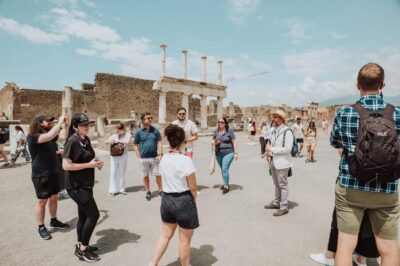
Pompeii: Entry Ticket and Guided Tour with an Archaeologist
Read our review →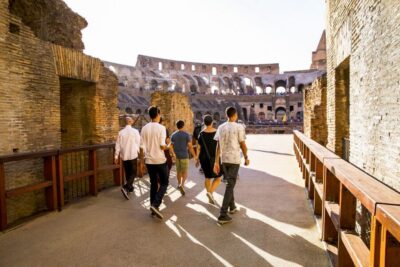
Colosseum: Underground and Ancient Rome Tour
Read our review →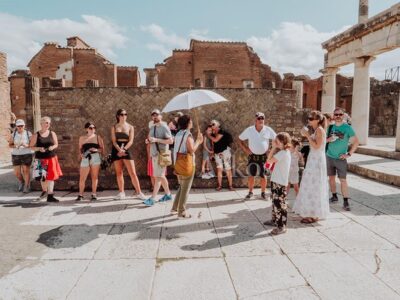
Pompeii: Small Group Tour with an Archaeologist
Read our review →Pompeii Small Group Tour with an Archaeologist
Read our review →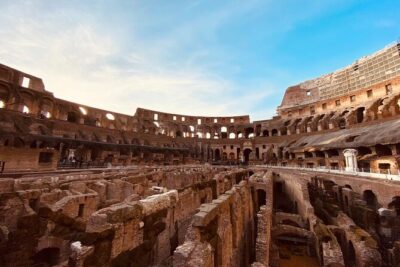
Rome: Colosseum with Arena, Roman Forum and Palatine Guided Tour
Read our review →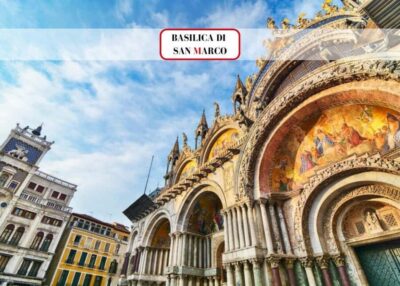
Venice: St. Mark’s Basilica Guided Tour & VR History Intro
Read our review →
Colosseum with Arena, Roman Forum and Palatine Hill Guided Tour
Read our review →
Herculaneum: Skip-the-Line Guided Tour with Archaeologist
Read our review →Browse the lists this tour appears in