
Review · MUMBAI
Best South Mumbai Heritage Walk
South Mumbai’s grand public buildings make the city especially rewarding on foot. This walk links the Gateway of India, Kala Ghoda, Flora Fountain, the Taj Mahal Palace, and Chhatrapati Shivaji Terminus, giving you a close look at Victorian Gothic Revival and Neoclassical design rather than a quick view through a car window.
I like the choice of morning or afternoon departures, and I like the small maximum group of 15. Guides such as Aakash, Gautam, Sandesh, and Sanika have been praised for clear history, friendly conversation, useful photo stops, and even Bollywood connections.
The main consideration is the walking itself. Three hours on busy city streets can feel tiring, and the advertised cancellation terms are firm within 24 hours. Also, the tour views major buildings from the outside, so it is best for street-level context rather than long interior visits.
Key points to know before you book
- Eight major South Mumbai landmarks: The route takes in the Gateway of India, Kala Ghoda, Town Hall, Flora Fountain, Horniman Circle, the High Court, the Taj Palace, and CST.
- A small walking group: The maximum is 15 people, a useful size for asking questions and staying close to the guide.
- Three hours at a gentle city pace: You get time for photographs and explanations instead of rushing between sights by vehicle.
- Architecture is central: Expect Victorian Gothic Revival, Neoclassical design, colonial-era civic buildings, and grand hotel architecture.
- Two departure windows: Morning and afternoon options make it easier to fit the walk around other Mumbai plans.
- A strong overall rating: The experience is rated 4.8 out of 5 from 122 ratings, with 96 percent recommending it.
Why South Mumbai works so well on foot
South Mumbai packs a remarkable range of civic, commercial, religious, and hotel architecture into a walkable area. Within a few hours, you can move from the waterfront Gateway of India to the ornate railway halls of CST, with broad streets, gardens, fountains, and old office buildings in between.
That change of scene is the chief value here. In a taxi, you may notice traffic and facades. Walking lets you stop, look upward, compare styles, and see how these buildings fit into daily city life.
The walk also gives useful context about colonialism and its effect on Mumbai’s street plan and public buildings. You are not only checking off famous sights. You are seeing how government, commerce, transport, law, and luxury hotels helped shape this part of the city.
At $17.89 per person, the price is modest for a three-hour guided outing. You are paying mainly for interpretation and route planning, not admission tickets, since the listed stops are viewed without an entry charge. That makes the tour good value if you want the buildings explained rather than simply photographed.
More History Walking Tours in India
- Fontainhas Heritage Walk by Make It Happen
★ 5.0 · 2,834 reviews - The Great Indian Food Tour: Old Delhi Food and Heritage Walk
★ 5.0 · 1,698 reviews - Old Goa Heritage Walk by Make It Happen
★ 5.0 · 797 reviews
Meeting near CST and walking toward the waterfront
The meeting point is the McDonald’s in Empire Building, opposite CST Station, on Dr Dadabhai Naoroji Road. This is a practical place to begin because CST is one of the city’s major transport landmarks, and the location is near public transportation.
You should allow a little time to find the exact shop and guide. The address is detailed, but South Mumbai streets can feel confusing at first, especially near a large railway station. Keep your mobile ticket ready, since confirmation is provided at booking and the experience uses mobile entry details.
The listed route includes both CST and the Gateway of India area, with the finish at Regal Cinema near Apollo Bandar. The published stop order may not match the walking order on the day, so think of this as a connected South Mumbai circuit rather than a rigid sequence.
Because the walk ends near the Gateway of India, Regal Cinema, and Colaba, you can continue exploring after the tour. The end point is also useful for planning lunch, shopping, or a separate visit to the waterfront.
Gateway of India: Mumbai’s grand opening scene
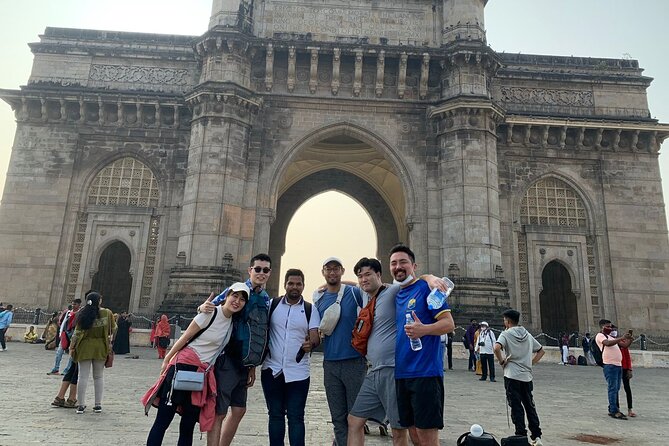
The Gateway of India is the natural headline stop. Built in the early 20th century, this arch-monument faces the waterfront and has become one of Mumbai’s best-known meeting points.
The guide’s explanation is more useful than a quick photograph alone. You can look at the scale, stonework, arches, and relationship between the monument and the harbor while learning how the site fits into the city’s colonial past.
The planned stop lasts about 30 minutes. That gives you time to take photographs and absorb the setting, though the area may feel crowded and active. A walking tour cannot remove the city traffic or waterfront crowds, but it does help you focus on the details instead of wandering without context.
Kala Ghoda and the city’s creative quarter
Kala Ghoda brings a different mood and a different kind of architecture. The area is known for galleries, cultural buildings, and the annual Kala Ghoda Arts Festival held each February.
The festival itself is not included as a guaranteed event, so do not book this walk expecting festival activities unless your date matches it. Even outside February, the stop helps show how South Mumbai’s older buildings now share space with the city’s arts scene.
You get around 30 minutes here. That is enough for a guided look and photographs, but not enough for an extended gallery visit or detailed museum program. Think of Kala Ghoda as a well-placed cultural chapter in a broader walk.
I especially like this stop for first-time visitors who want more than royal-looking buildings. It adds a sense of modern creative life to a tour otherwise focused on civic monuments and colonial-era design.
Same city, a different century:
- Old Delhi Food, Heritage&Cultural Walk with Rickshaw ride to Masterji Kee Haveli
★ 5.0 · 742 reviews - Blue City Heritage Private Walking Tour With Pickup and Drop-Off
★ 5.0 · 441 reviews - Kolkata Heritage Tram Tour
★ 4.0 · 395 reviews - Private Heritage Walking Tour in Jaisalmer Fort and Old Bazaar
★ 5.0 · 306 reviews
Town Hall and Neoclassical South Mumbai
The Asiatic Society Library, usually called Town Hall, is one of the clearest examples of Neoclassical architecture on the route. It sits in the Fort district, an area where old commercial and administrative buildings give South Mumbai much of its visual character.
The building’s formal proportions and grand exterior make it a good contrast with the more elaborate Victorian Gothic style seen elsewhere. Your guide can help you notice the difference between these architectural traditions instead of treating every old building as simply colonial.
The planned visit lasts about 30 minutes, and the stop is free. As with the other locations, the experience is primarily an exterior heritage walk. If you want a long look inside the library or a specific interior visit, you should not assume that is included.
This is also a good point for questions. The tour is strongest when you use the guide to connect architecture with the way South Mumbai developed as a center of administration, trade, and public life.
Flora Fountain and Hutatma Chowk
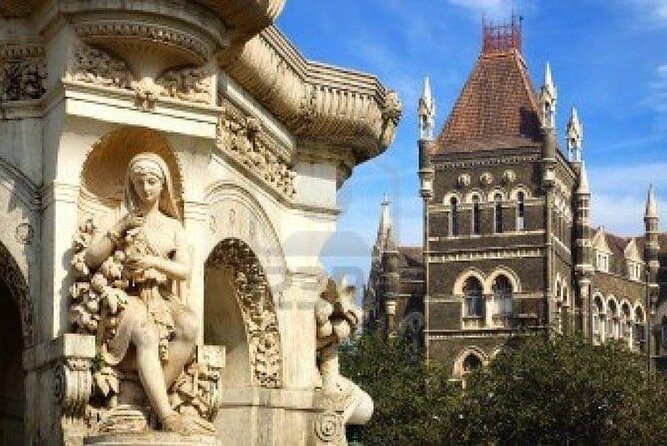
Flora Fountain is an ornamentally sculpted heritage monument at Hutatma Chowk, near the southern end of Dadabhai Naoroji Road. It is a smaller sight than the Gateway or CST, but it rewards close attention.
The fountain gives the walk a pause between larger buildings. You can study its decorative carving, take photographs, and see how a public monument fits into one of South Mumbai’s historic road junctions.
The scheduled 30 minutes may feel generous for the fountain alone, but the surrounding architecture gives the guide room to explain the wider setting. This is one of those stops where the value comes from the conversation and the buildings around it, not just the object in front of you.
For photographers, it is a useful stop because you can frame the monument with the surrounding streets and historic facades. Watch your footing and stay aware of traffic while taking pictures.
Horniman Circle Garden: a short green pause
Horniman Circle Garden covers about 2.5 acres in the Fort district and is surrounded by office complexes. The tour allows roughly 10 minutes here, so this is a brief pause rather than a long garden visit.
The garden helps you read the area as a planned civic district. After several stone facades and busy roads, a public green space gives you a different view of how the Fort area was organized.
Do not expect a long rest stop. Ten minutes passes quickly, especially if the guide is explaining the surrounding buildings. Still, the garden is a useful change of pace and may give you a few calmer photographs.
The High Court and the city’s legal center
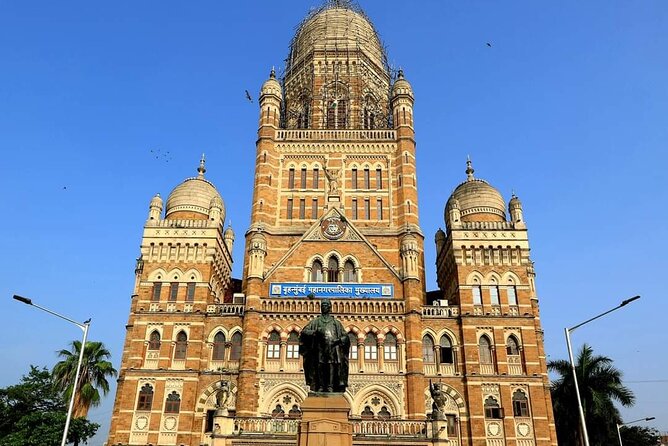
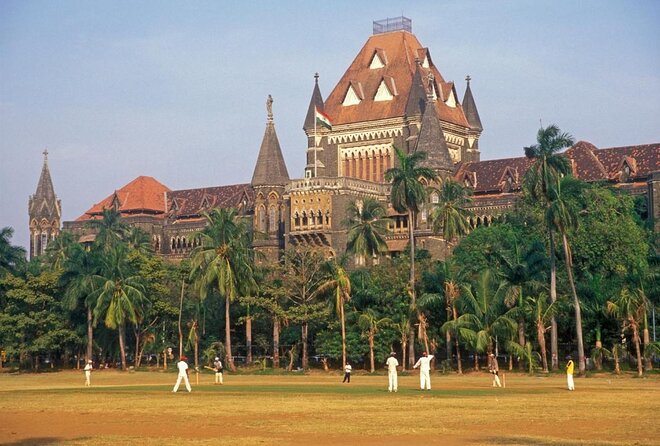
The Principal Bench of the Bombay High Court is another major civic building on the route. It represents the legal side of South Mumbai’s public architecture and helps broaden the tour beyond monuments built for ceremony or transport.
The scheduled visit is about 10 minutes. That is enough to view the exterior and hear the building’s place in Maharashtra and Goa’s judicial system, but not enough for an interior tour.
This short stop works best as part of the larger story. Town Hall, the High Court, Flora Fountain, and nearby office buildings show how concentrated the old administrative center remains. You begin to see South Mumbai as a working district, not an open-air museum.
The Taj Mahal Palace and Colaba’s famous hotel
The Taj Mahal Palace is a heritage luxury hotel in Colaba and one of the most recognizable buildings near the Gateway of India. The tour gives it about 10 minutes.
The short timing is sensible. You can take in the exterior, its relationship to the waterfront, and the contrast between a grand private hotel and the nearby civic monuments. The hotel is not listed as an included interior visit, so plan on seeing it from the outside.
This stop also adds a social layer to the walk. South Mumbai’s story is not only about government offices and railway stations. It includes hotels, tourism, commerce, and the way certain buildings became symbols of the city.
Chhatrapati Shivaji Terminus: the architectural finale
Chhatrapati Shivaji Terminus, commonly called CST, is a historic railway station and a UNESCO World Heritage Site. It is one of the most important stops because it combines transport, engineering, decoration, and everyday city life.
The station is associated with Victorian Gothic Revival architecture, making it an essential counterpoint to the Neoclassical Town Hall. Look for the dramatic forms, ornamental detail, and sense of scale that make the station so different from a simple modern terminal.
The planned stop lasts 30 minutes. That gives you a fair amount of time for exterior photographs and an explanation of the station’s role in Mumbai. Since the meeting point is also opposite CST, the guide can place the building within the start and finish of your day.
CST is still a functioning railway station, not just a preserved monument. Be respectful of commuters and follow any local restrictions about photography or where you may stand. The station’s daily use is part of what makes the stop feel real.
Guides, group size, and the feel of the walk
The guide matters a great deal on a heritage walk. Aakash has been praised for extensive historical knowledge and an easy manner. Gautam has been noted for photo stops, Bollywood insights, and making Mumbai feel easier to explore on foot.
Sandesh has focused on interesting facts about South Mumbai’s historic landmarks. Sanika has been praised for friendly conversation and broad knowledge of the area and India. These are useful clues about the style to expect, but you should not assume a particular guide will be assigned to your departure.
The group maximum is 15 people. That is small enough to hear explanations more easily than on a large coach tour, while still keeping the price low. A smaller group also makes it easier to ask about buildings, photographs, or practical questions about the city.
The walk is suitable for most people according to the provided activity details, but it is still a three-hour outing on foot. Wear comfortable shoes, carry water, and choose clothing suited to Mumbai’s conditions. Morning and afternoon choices let you select the time that fits your energy and wider plans.
How the ratings help you judge the value
The experience holds a 4.8 rating from 122 ratings, with 96 percent recommending it. The strongest pattern is clear: the guides are praised for history, friendliness, useful explanations, and a personal approach.
There is also an important warning. One booking was canceled without prior warning, and the customer had to make several calls before receiving a refund. That appears to be an exception rather than the general pattern, but it is worth taking seriously when planning a tight schedule.
The cancellation policy allows a full refund only when you cancel at least 24 hours before the start time. Cancellations or changes inside that window are not refunded or accepted. If your Mumbai plans may change, book with that cutoff in mind.
Who should book this South Mumbai walk?
I would choose this experience if you want a clear introduction to South Mumbai’s architecture and history without spending a full day inside museums. It is especially useful early in a Mumbai visit, when you want to understand the city’s historic core and find your bearings on foot.
It suits photographers, architecture fans, first-time visitors, and anyone who prefers a slower route to a drive-by sightseeing trip. The stops are also varied enough to keep the walk from becoming a string of similar facades.
You may want something else if you need extensive interior access, dislike walking in city conditions, or have less than three hours available. The tour is about context, street views, and connections between landmarks, not private access or long visits inside each building.
Should you book it?
At $17.89, this is an appealing way to see eight major South Mumbai sights with a guide, especially when you consider the small group size and three-hour duration. I would book it for the architecture, the colonial-era city story, and the chance to move between landmarks at street level.
Choose the morning or afternoon option that gives you enough time and energy for a full walk. Keep your phone ticket ready, arrive at the CST meeting point with a little extra time, and remember that the best value comes from listening closely and asking questions.
FAQ
How long is the South Mumbai Heritage Walk?
The walk lasts approximately three hours.
What landmarks are included?
The route includes the Gateway of India, Kala Ghoda, Town Hall, Flora Fountain, Horniman Circle Garden, the Bombay High Court, the Taj Mahal Palace, and Chhatrapati Shivaji Terminus.
Where does the tour start?
It starts at the McDonald’s in Empire Building on Dr Dadabhai Naoroji Road, opposite CST Station in Fort, Mumbai.
Where does the tour finish?
The tour ends at Regal Cinema in Apollo Bandar, Colaba, near the Gateway of India.
Are morning and afternoon departures available?
Yes. Morning and afternoon tour options are available.
How many people can join the tour?
The activity has a maximum group size of 15 people.
Just added around India
- Exploring Mylapore: A Cultural & Historical Walking Tour★ 5.0 · 42 reviews
- Chennai Heritage & Cultural Walk (2 Hours Guided Walking Tour)★ 3.5 · 32 reviews
- Georgetown heritage walking tour in Chennai about the founding of Chennai★ 5.0 · 144 reviews
- The Hipster Chandigarh Architecture History Tour★ 5.0 · 54 reviews
- See Bangalore through my eyes (Cultural / Historical / Walking Tour)★ 5.0 · 60 reviews
- 2 days Private tour of Hampi world heritage site from Bangalore by car★ 5.0 · 75 reviews
- Discover Bangalore with Me (A Private Historical Walk Tour)★ 5.0 · 24 reviews
- Treasures of Mysuru – day tour★ 5.0 · 27 reviews
Mumbai History Tours, compared.
Heritage Walk: Recommended by Gigi Hadid as a must-do in Mumbai
Read our review →
Mumbai: South Mumbai Heritage Walking Guided Tour
Read our review →
Hill-station & Heritage: Lonavala & Karla Caves Tour from Mumbai
Read our review →
Browse the lists this tour appears in