Review · PARIS
Paris WW2 The German Occupation Small group or Private tour
Paris during the German occupation is not presented here as a tidy list of famous buildings. Guide Chris Pollard uses the streets around the Louvre, Palais-Royal, Place Vendôme, and Place de la Concorde to explain how soldiers, politicians, resistance workers, collaborators, artists, hotel guests, and ordinary Parisians shaped the city’s wartime story.
I like two things in particular: the tour stays small, with no more than 10 people, and Chris brings the subject to life with photographs, books, and carefully connected stories. I also like that you can ask questions and spend more time on subjects that matter to you, rather than being hurried from one landmark to the next.
The main consideration is the pace and depth. This is an outdoor walk of roughly three to three and a half hours, often covering about two miles, and it is designed for people who want serious historical context. If you prefer a short overview with a fixed route and quick photo stops, this may feel too long and detailed.
Key points about the Paris Occupation walk
- Meet at Palais Royal: The correct meeting point is Place Colette, at Palais Royal Metro exit 5, opposite the Comédie-Française.
- Small groups matter: Semi-private tours are limited to 8 to 10 people, with private options available for a tailored route.
- The route is flexible: Chris adjusts the order and amount of time spent at each site according to questions and interests.
- Major wartime locations: Expect the Louvre exterior, Hôtel Meurice, Place Vendôme, the Ritz, Jeu de Paume, Rue Rouget de Lisle, and Place de la Concorde.
- The general tour ends at Concorde: It does not normally continue to the Shoah Memorial or the Marais.
- Plan for outdoor walking: Bring water, wear layers, and expect to stand for extended periods, with breaks possible if arranged with the guide.
Starting at Palais Royal with the correct meeting point
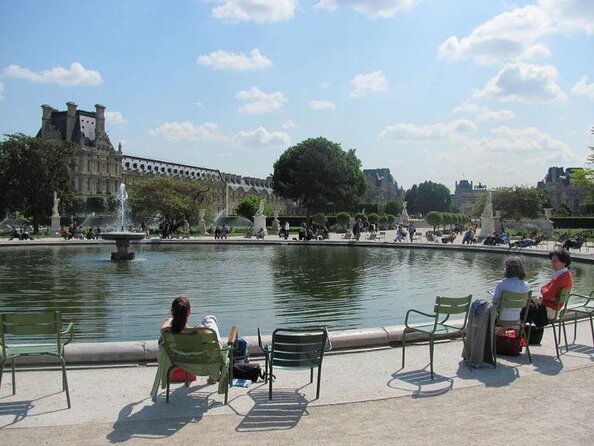
Your tour begins at Place Colette, outside Palais Royal Metro exit 5, opposite the Comédie-Française Theatre. This detail matters because the generic meeting information sometimes associated with the experience incorrectly points to Tuileries Metro station.
From Palais Royal, Chris sets the larger scene. The German occupation lasted from 1940 to 1944, but the explanation reaches back into the political, military, and social tensions that shaped France before the invasion. You will hear about the fall of France, the division between occupied and unoccupied zones, the Vichy government, and the competing French and German interests that affected daily life.
The opening is not simply a list of dates. Chris focuses on why people made the choices they did. That means looking at German policy, French administration, economic pressure, anti-Semitism, collaboration, and the gradual growth of organized resistance.
This approach gives the rest of the walk a useful frame. A hotel is not just a handsome façade. A street is not merely a place to take a photograph. Each location becomes part of a story about power, fear, opportunism, courage, and survival.
More Private History Tours in France
- Paris City of Fashion History Private Guided Walking Tour
★ 5.0 · 221 reviews - History of Paris City Center w/ Notre Dame Semi-Private 12ppl Max
★ 5.0 · 194 reviews - Normandy D-Day Private Tour with Omaha Beach from Paris
★ 5.0 · 87 reviews
Around the Louvre and Palais-Royal
The early part of the route moves through the area between the Louvre and Place de la Concorde. The Louvre is viewed from outside, but it provides an important reference point for understanding German control of central Paris.
Chris may pause at less obvious locations as well as major monuments. This is one of the strengths of the tour, but it also explains why the itinerary is not completely fixed. A small doorway, hotel entrance, or ordinary-looking street can take up as much time as a famous square if it helps explain an important event or person.
You should not expect a museum-style chronological presentation. Instead, the tour builds a picture of a city occupied by a foreign army and managed through a mixture of military authority, French cooperation, bureaucracy, intimidation, and resistance.
That flexible method works best if you arrive with questions. You can ask about the French police, the resistance, the German army, Vichy officials, the persecution of Jewish people, or the way the occupation affected ordinary life. Chris’s promise is to answer questions fully, even when the answer requires some background before returning to the place in front of you.
Rue de Rivoli and the German headquarters
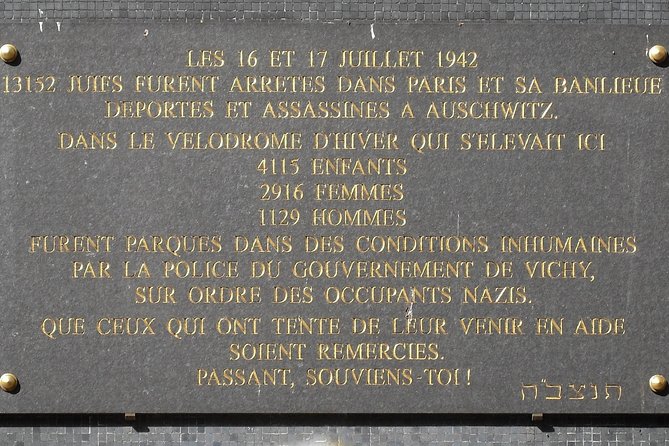
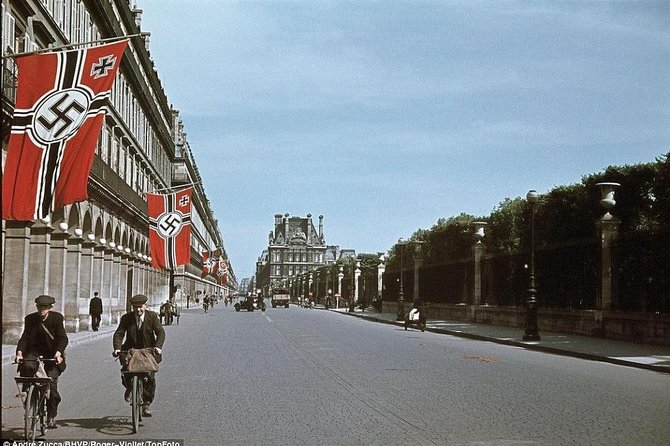
Rue de Rivoli and the surrounding streets contain several of the tour’s strongest sites. The Hôtel Meurice, now associated with luxury Paris, served as the German Army headquarters for Paris during the occupation. Seeing the building in its modern setting creates a striking contrast with its wartime role.
The route also covers the first secret Gestapo headquarters in Paris and the headquarters of the PPF, one of France’s largest collaborationist groups. These stops help separate different kinds of power that are often lumped together under the single label of Nazis or Germans.
The German military, security services, political organizations, and French collaborators did not all have identical aims. Their rivalries and shared interests affected arrests, propaganda, policing, and the treatment of resistance groups. Chris uses specific locations to show how these forces worked together and sometimes against each other.
This is also where the tour can become especially detailed. If you enjoy political and military history, the extra explanation is valuable. If you mainly want the most famous sights of Paris, you may find the discussion more intense than expected.
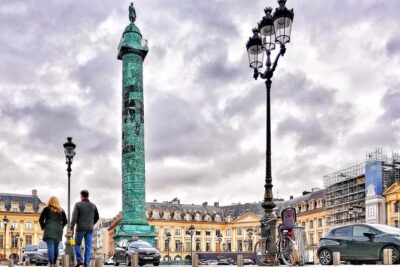
Place Vendôme, the Ritz, and Coco Chanel
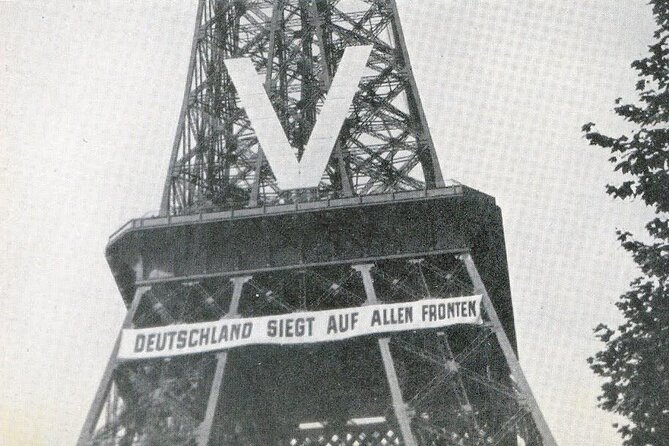
Place Vendôme brings together several different wartime stories. The Ritz hotel was associated with Coco Chanel, who stayed there during the occupation. The hotel also became a meeting place connected with anti-Nazi activity within the German forces.
Chris uses this location to show that occupation history is rarely divided into simple categories. Some people collaborated for political or personal gain. Some resisted openly or secretly. Others tried to protect themselves and their families, adapted to changing conditions, or moved between different relationships as the war developed.
The Ritz story is interesting because it brings the occupation into a world of famous names, luxury, and international connections. It also raises difficult questions about how public figures behaved when Paris was under German control.
The tour does not use celebrity anecdotes as decoration. The point is to place well-known figures inside the same unstable system that affected everyone else. That makes Place Vendôme more than a beautiful square. It becomes a place to discuss influence, compromise, secrecy, and reputation.
More Private History Tours in Paris
- Paris Jewish History 2-Hour Private Guided Walking Tour
★ 4.6 · 32 reviews - From Paris: Private Mont Saint-Michel & Normandy D-Day Tour
★ 4.6 · 32 reviews
Jeu de Paume and the theft of art
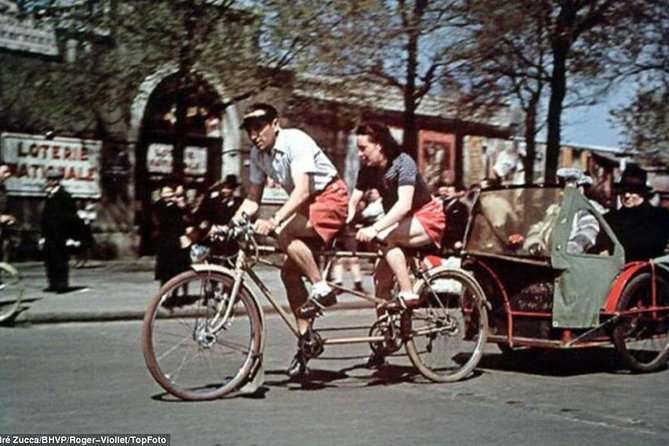
The Jeu de Paume Museum is one of the most important stops for understanding Nazi cultural theft. During the occupation, the Germans used it to store, organize, and process looted artworks before sending them to Germany.
This part of the walk also connects the occupation to the persecution of Jewish families. The theft of art was not a separate wartime curiosity. It formed part of a wider system of confiscation, forced displacement, and persecution.
The building gives Chris a chance to explain how art was gathered, recorded, and moved. You will also hear about the people who tried to track these works and preserve evidence of what had happened.
I find this one of the most effective stops because the building’s purpose is easy to overlook. You are not simply looking at an elegant Parisian institution. You are standing near a place used in the machinery of organized theft.
Rue Rouget de Lisle and early resistance
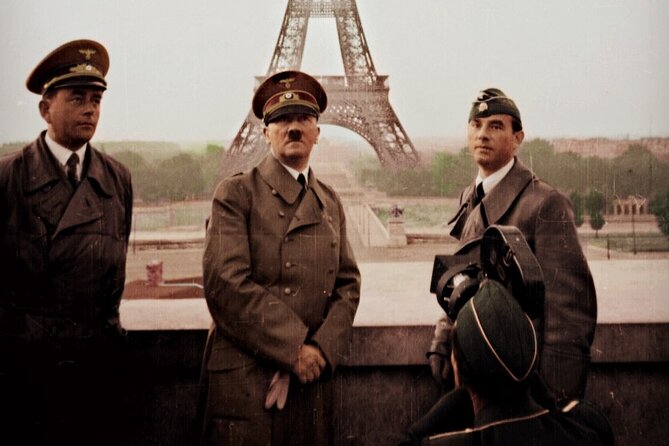
Rue Rouget de Lisle marks an important stage in the growth of the French resistance. Chris discusses how an early resistance newspaper began there in October 1940, when organized opposition was still dangerous and far from unified.
The story helps correct the familiar image of one single French Resistance movement operating under a common command. In reality, different groups had different politics, methods, contacts, and goals. Some gathered intelligence. Some distributed newspapers. Some helped people escape. Others prepared for armed action later in the war.
The route also includes the Société Maurice Duclos, associated with the first Allied spy network in France and secret radio work. This stop shows how information moved before resistance networks became larger and better organized.
These locations are not always visually dramatic. That is part of their value. The history happened in offices, apartments, hotels, back rooms, and unremarkable streets. You need a guide who can explain what you are looking at, since the physical setting alone may reveal very little.
Place de la Concorde and the Liberation of Paris
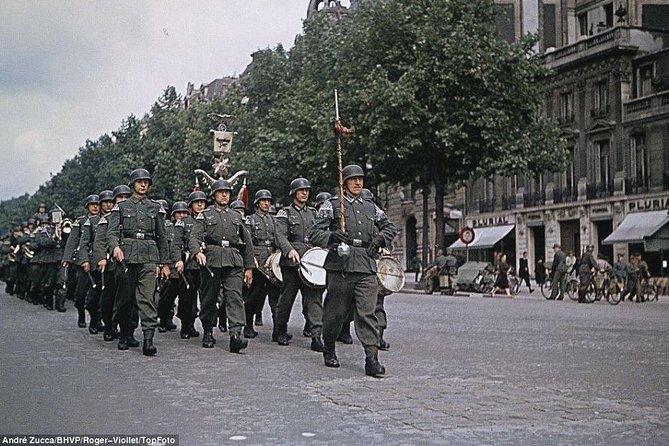
The tour generally ends at Place de la Concorde, where the scale of the square provides a fitting final setting. The area was originally Place Louis XV and later became one of Paris’s defining monumental spaces. It also carries the memory of the French Revolution, including the executions of Louis XVI and Marie Antoinette.
For the occupation story, the square contains several important sites. The Naval Ministry and Hôtel de Crillon were both used as German headquarters. The Grand Palais, one of Paris’s largest freestanding buildings, was the only building in Paris destroyed during the occupation and Liberation, according to the tour’s historical account.
You will also look for bullet holes and less obvious marks connected with the fighting to liberate Paris. The famous Luxor Obelisk remains at the center of the square, a reminder that the city’s long history does not stop at the Second World War.
This final section brings the story from occupation to liberation. It also gives Chris a chance to answer questions and clarify subjects that came up during the walk. Since the route often takes three to three and a half hours, the ending can feel more like a discussion than a quick sign-off.
The Holocaust and what the general tour can cover
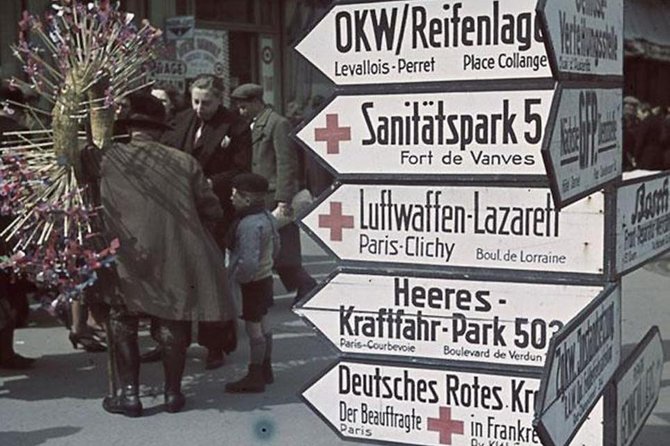
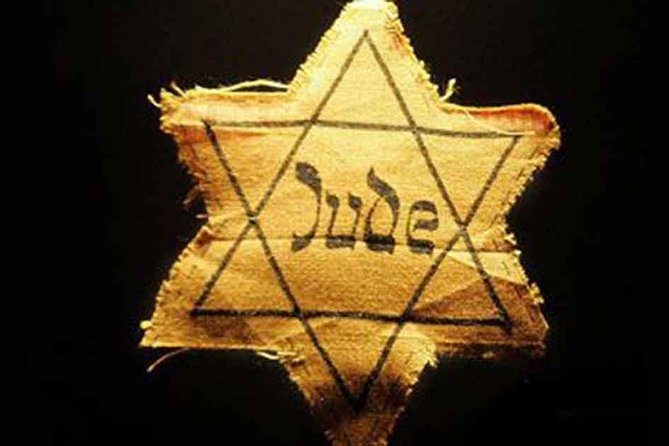
The general occupation tour discusses anti-Semitism, the conditions imposed on Jewish people in Paris and occupied France, the road toward the Final Solution, and the role of some Jewish people in resistance efforts.
It is important to understand the limit here. The general tour does not normally visit the Shoah Memorial or finish in the Marais. A Holocaust-focused route can be arranged as a separate private tour, where the subject receives the time and attention it requires.
That distinction is sensible. The persecution and murder of Europe’s Jewish population cannot be treated properly as one brief stop added to a wide-ranging walk. If this is your main reason for booking, contact Chris about a private Shoah-focused tour rather than assuming the general route will provide a full treatment.
What the small-group format changes
The semi-private format allows up to 8 to 10 people, with no more than four separate booking groups on a tour. Private tours offer a personalized itinerary, flexible starting times, and different meeting points.
A small group makes a clear difference here. The subject involves complex political and moral questions, and a limited number of people makes it easier to ask about sensitive issues. Chris can also adjust the emphasis if your group has a particular interest in resistance networks, German administration, the Vichy government, art theft, the Liberation, Chanel, or the experiences of Jewish families.
The trade-off is that the tour is less predictable than a fixed group itinerary. A stop may last longer because someone asks a good question. Another site may receive less attention. If you need the tour to finish at an exact time, tell Chris at the start.
You should also be prepared to stand and walk. One private-tour account described roughly two miles over about four hours, with extended periods outdoors. Bring water, wear comfortable shoes, and use layers in changeable weather. Breaks can be arranged, but they may reduce the time available for the historical discussion.
Price, timing, and who gets good value
At about $108.84 per person, this is not the cheapest walking tour in Paris. The price makes more sense if you value a specialist guide, a small group, visual material, and the freedom to ask detailed questions.
The tour has a strong educational focus. Chris prepares material around the people and forces involved, and he may bring photographs or books to help identify individuals and places. The value is not in entering a long list of paid attractions. The sites are mainly seen from the street, and the cost pays for interpretation, preparation, and the guide’s subject expertise.
You get the best value if you have already seen the basic Paris monuments and now want to understand what happened behind their façades. History students, serious World War II readers, and families with older teenagers may enjoy the format. One family found that Chris kept a 15-year-old involved, but the tour still requires patience and attention.
The experience may be less suitable for young children, people who want frequent seating, or anyone seeking a quick introduction. The minimum of four people also matters. Small-group tours require at least four participants to run, and bookings made less than two weeks ahead are usually accepted only when that minimum has already been met or is likely to be met.
The tour may be canceled if numbers fall below the minimum, sometimes up to 24 hours before departure. You can cancel for a full refund up to 24 hours before the start time. Poor weather can also lead to a change of date or a full refund.
Is this Paris occupation tour right for you?
Book this tour if you want to understand why people acted as they did, not merely where an event took place. Chris Pollard’s strength is his preparation, passion, use of visual material, and willingness to follow a serious question through the political and social background.
Set aside most of a morning or afternoon. Wear layers, bring water, and tell Chris in advance what interests you. If you need a shorter, more tightly timed walk, or if the Shoah is your central subject, choose a more focused arrangement.
For a small group interested in the difficult, complicated story of Paris under German occupation, the price can be worthwhile. You leave with more than a collection of buildings. You gain a clearer sense of how occupation, collaboration, resistance, persecution, and liberation played out on familiar streets.
FAQ
Where does the tour begin?
It begins at Place Colette, at Palais Royal Metro exit 5, opposite the Comédie-Française Theatre.
Where does the general tour end?
The general tour usually ends around Place de la Concorde.
Does the general tour visit the Shoah Memorial?
No. The general group tour discusses the persecution of Jewish people but does not normally visit the Shoah Memorial or finish in the Marais. A private Holocaust-focused tour can be requested.
How long does the tour last?
The tour usually lasts about three to three and a half hours. The amount of time can vary according to questions, group interests, and the time available.
How many people can join?
The maximum is 10 people. Semi-private bookings are limited to four separate groups, while private tours can be arranged for your own party.
Is there a minimum number of participants?
Yes. All small-group tours require at least four people in total to run.
Is the tour offered in English?
Yes. The tour is offered in English.
Are entrance tickets included?
The listed stops are visited from the outside, and no admission fees are included or required for the walking route described.
What happens if I need to cancel?
You can receive a full refund if you cancel at least 24 hours before the scheduled start time. Changes or cancellations made less than 24 hours before the start are not accepted for a refund.
More WWII and D-Day Tours in Paris
- From Paris: Normandy D-Day Landing Beaches Full-Day Tour
★ 4.8 · 698 reviews - Small-Group Canadian Normandy D-Day Juno Beach from Paris
★ 4.9 · 132 reviews - From Paris: Normandy Landing Beaches D-Day Tour by Minibus
★ 4.3 · 39 reviews - From Paris: Normandy D-Day Beaches Day Trip with Lunch
★ 4.9 · 35 reviews
More WWII and D-Day Tours in France
- Normandy D-Day Sites & Cemetery Day Trip from Paris with Lunch
★ 5.0 · 6,877 reviews - Normandy D-Day Small-Group Day Trip with Omaha Beach, Cemetery & Cider Tasting
★ 5.0 · 2,786 reviews - Normandy D-Day Beaches and American Cemetery Day Trip from Paris
★ 4.5 · 2,673 reviews - Paris: Normandy D-Day Sites Guided Day Trip with Lunch
★ 4.7 · 1,082 reviews
Just added around Paris
- The historic district of Montmartre★ 4.9 · 66 reviews
- Invalides Museum – WWI & WWII – Guided Tour up to 8 guests★ 5.0 · 32 reviews
- Small-Group Canadian Normandy D-Day Juno Beach from Paris★ 4.9 · 132 reviews
- Paris: Khéops VR Experience – Explore Ancient Egypt★ 4.9 · 39 reviews
- Paris Jewish History 2-Hour Private Guided Walking Tour★ 4.6 · 32 reviews
- Paris: French Fashion History Walking Tour★ 4.9 · 37 reviews
- Paris: Le Marais & Montmartre Jewish History Walking Tour★ 4.8 · 170 reviews
- Historic Paris Walking Tour in English★ 4.9 · 78 reviews
Paris History Tours, compared.

Normandy D-Day Sites & Cemetery Day Trip from Paris with Lunch
Read our review →
Normandy D-Day Small-Group Day Trip with Omaha Beach, Cemetery & Cider Tasting
Read our review →
Normandy D-Day Beaches and American Cemetery Day Trip from Paris
Read our review →
Paris: Normandy D-Day Sites Guided Day Trip with Lunch
Read our review →
Paris: Dark History and Ghostly Guided Walking Tour
Read our review →
From Paris: Normandy D-Day Landing Beaches Full-Day Tour
Read our review →
Notre Dame Cathedral: Exterior Guided Tour & Unscheduled Access
Read our review →