
Review · BERLIN
Cold War, Berlin Wall, Spies and the East Side Gallery
Berlin’s Cold War story makes most sense when you move through the city itself. This tour links the Palace of Tears, Alexanderplatz, Karl-Marx-Allee, the former death strip, and the East Side Gallery into one clear route through divided Berlin.
I like the way the tour joins big political events with ordinary lives, from escape attempts and Stasi surveillance to families saying goodbye at a border crossing. I also like the guides’ storytelling. Paul, Xavier, Klaus, Tina, Nikolai, Jim, and Jamie G have all been praised for bringing the period to life with personal stories, photographs, humor, and patient answers.
The main drawback is pace. Three hours covers a lot of ground, and you use public transport between some stops. You will see important places, but this is not a slow museum tour with long indoor visits. Bring comfortable shoes and allow extra money for the required AB day pass.
Key points to know before you book
- The Palace of Tears sets the tone: Begin at the former Friedrichstrasse border crossing, where farewells were often painful and uncertain.
- Karl-Marx-Allee explains socialist spectacle: Walk the huge boulevard and learn how architecture served propaganda and political power.
- The route links history to real escape stories: Hear about tunnels, rooftops, death strips, spies, informants, and Stasi surveillance.
- The East Side Gallery is the colorful finale: See the Berlin Wall transformed from a barrier into an open-air art site.
- Public transport is part of the experience: An AB day pass is required and is not included in the tour price.
- Guide quality is central: The strongest comments focus on vivid storytelling, personal memories, and guides who welcome questions.
A useful route through divided Berlin
At $18 per person, this is priced as an accessible introduction to Cold War Berlin. The price covers a three-hour guided experience, but not the public transport you need to move between sites. You will need an AB day pass, which staff can help you purchase on the day.
That extra cost is worth keeping in mind when comparing this tour with a simple walking tour. The route covers separated parts of the city, so public transport saves time and lets you connect places that would be tiring to reach on foot. The tradeoff is that trains and station changes take a few minutes from your sightseeing time.
The main meeting point is outside Friedrichstrasse train station, on the square beside the Tränenpalast, or Palace of Tears. Look for a guide wearing a yellow name badge and holding a yellow umbrella. Some booking options offer pickup, so check the exact choice you make. The regular route ends with two possible drop-off locations, including Bernauer Straße.
The tour runs in English or German. It may be offered as a private experience or in a small group, depending on the option selected. That matters here. A guide can explain Cold War Berlin well to a small group, but larger groups may make it harder to hear outdoors. One past participant specifically suggested a microphone when numbers were high.
More Cold War and Communism Tours in Berlin:
- Berlin: Third Reich & Cold War Guided Walking Tour
★ 4.9 · 8,378 reviews - Berlin’s Best: 2 Hour Walking Tour Third Reich and the Cold War
★ 5.0 · 5,486 reviews - Cold War, Berlin Wall, Spies and the East Side Gallery
★ 5.0 · 1,024 reviews
The Palace of Tears and the human cost of a border
The Palace of Tears is a smart starting point because it moves the subject away from abstract Cold War politics. This was a border crossing at Friedrichstrasse, and its name comes from the painful goodbyes made there.
You spend about 20 minutes at this first stop. That is enough time for the guide to explain the site and frame the separation of East and West Berlin before the route moves on. I appreciate this approach because the Berlin Wall was not only a concrete barrier. It split families, friendships, workplaces, and daily routines.
Expect stories about people attempting to leave East Germany and the risks involved. The tour focuses on escape attempts through tunnels, over rooftops, and across guarded areas. It also explains how the Stasi, East Germany’s secret police, monitored people and tried to stop those efforts.
This part is especially helpful if you arrive with little background. One of the tour’s strengths is that guides build the story step by step rather than assuming you already understand the difference between East Berlin, West Berlin, East Germany, and the wider Cold War conflict.
Alexanderplatz and the look of East Berlin
After roughly five minutes by train, the group reaches Alexanderplatz. The guided visit lasts about 20 minutes.
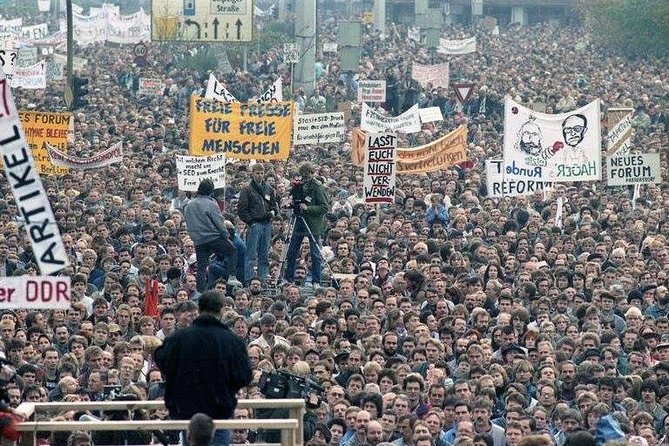
Alexanderplatz gives you a sense of public life in the former East. Its surrounding GDR-era architecture is large, practical, and political. The square was designed to project the strength and order of the socialist state, yet it also became a place where public dissatisfaction could be seen and heard.
The guide uses the square to explain life behind the Iron Curtain, not just the official political story. You may hear about surveillance, restrictions, propaganda, and the experience of ordinary people who had to navigate a system that watched its citizens closely.
This is also one of the busier parts of the route, so stay close to the guide. The group may pause in open public areas rather than entering a museum. That keeps the tour moving, but it means you should expect an outdoor explanation rather than a long indoor display.
I like Alexanderplatz as a stop because it shows that Cold War Berlin was not frozen in time. It was a working city, with shops, transport, offices, homes, and public spaces shaped by a political system. The architecture can look stark, but the guide’s stories help you picture the people who used these places every day.
Karl-Marx-Allee and socialist ambition in concrete
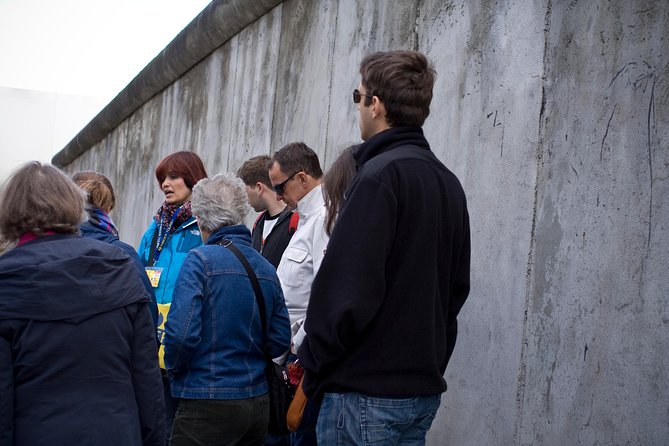
From Alexanderplatz, the route continues along Karl-Marx-Allee, with about 20 minutes devoted to the boulevard.
This is one of the tour’s most distinctive stops. The avenue is immense, formal, and carefully planned. It was meant to display the confidence of East Germany and the promise of a socialist future. Its monumental scale was not accidental. Buildings, spacing, and design all helped present the state as modern, orderly, and powerful.
Your guide explains how architecture carried political messages. Instead of simply admiring the boulevard, you learn to read it as propaganda in built form. That makes the walk more rewarding than a quick look at an impressive street.
Karl-Marx-Allee also connects directly to the workers’ uprising of 1953. The revolt began among construction workers and spread as people protested working conditions and the communist government. The event shook the regime and showed that public obedience was not guaranteed.
This section works best for visitors who want more than wall photographs. It gives you the political setting behind the wall and helps explain why the East German government relied so heavily on control, public messaging, and secret police surveillance.
The stop is outdoors, with no promise of extended indoor shelter. Wear weather-appropriate clothing. The tour goes ahead in poor weather, and you should be ready to walk and listen outside in rain or cold.
More History Tours in Berlin:
- Third Reich Berlin: Hitler and WWII Walking Tour
★ 5.0 · 3,301 reviews - Berlin: Third Reich, Hitler, and WWII Walking Tour
★ 4.9 · 1,757 reviews - Berlin: 3-Hour World Heritage Cruise to Potsdam
★ 4.5 · 1,569 reviews - Berlin: History of the Third Reich Guided Walking Tour
★ 4.7 · 791 reviews
Friedrichshain and the changing border zone
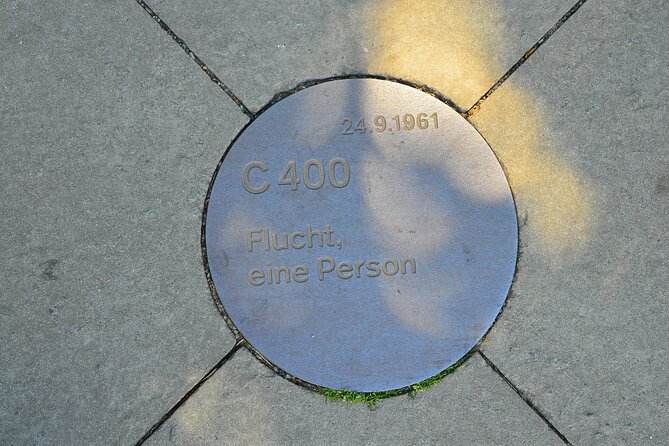
The group then takes another short train ride, listed at about six minutes, to Friedrichshain. The guided visit lasts around 20 minutes.
Friedrichshain helps bridge the gap between the old East Berlin districts and the surviving parts of the wall. Here, the guide continues the story of division, escape, and the ways Berlin changed after reunification.
A useful feature of this tour is its attention to smaller details. Several guides have been praised for pointing out places that are easy to miss without local explanation. The route is not limited to the best-known postcard views. You are encouraged to look at the city as evidence, with architecture, street plans, and remaining wall sections showing how the past still shapes Berlin.
This is also where the route begins to feel more like a walking history lesson than a standard sightseeing circuit. You may hear about informants, surveillance, failed escapes, and the pressure placed on people suspected of disloyalty. The stories give a human scale to a political system that can otherwise seem remote.
Do not expect every stop to look dramatic. Some places are ordinary streets or urban spaces. Their value comes from knowing what happened there and why the location mattered.
The Berlin Wall and the former death strip
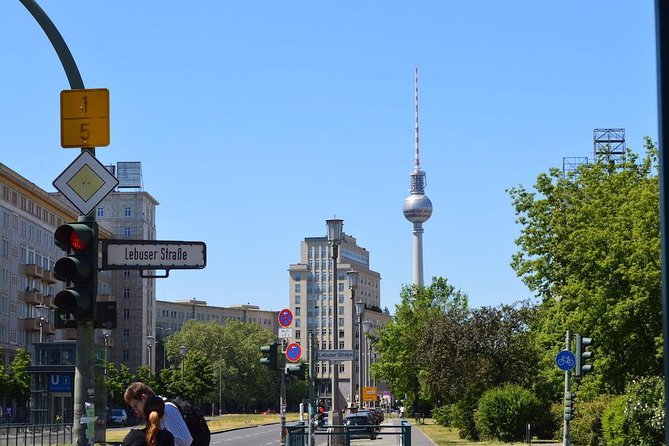
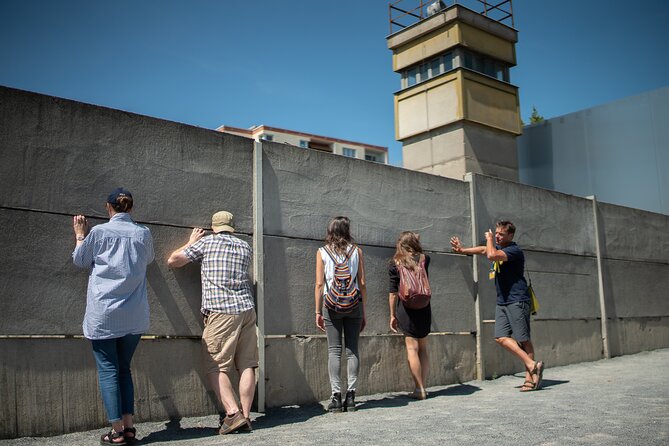
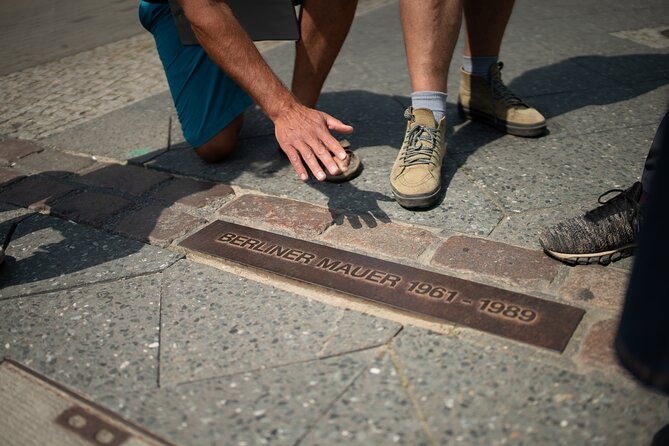
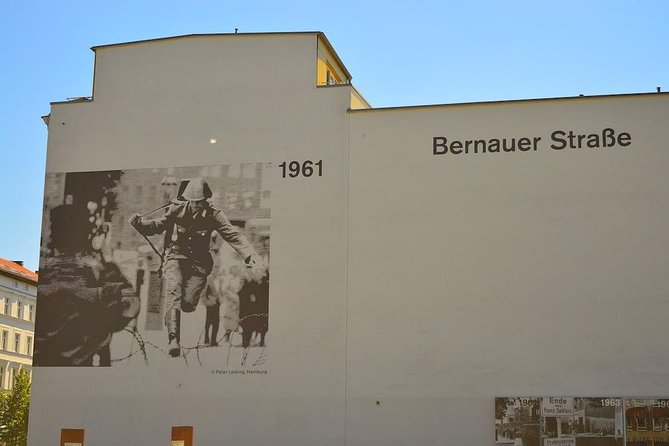
The tour then reaches one of the most important physical reminders of the division: surviving sections of the Berlin Wall and the former death strip area. The guided visit lasts about 16 minutes.
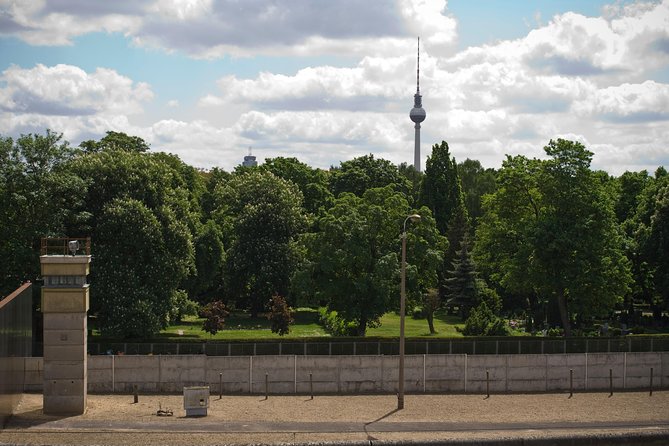
The wall itself was only part of the border system. Between sections of wall were controlled zones with fences, patrol routes, watchtowers, lighting, and other barriers. The death strip was designed to expose anyone attempting to cross. It is difficult to understand the danger from a photograph, but standing in the space makes the system’s purpose more apparent.
The guide explains escape attempts and the methods people used to get out of East Berlin. Tunnels, rooftops, hidden compartments, and carefully timed crossings all feature in the wider story. You also learn how border guards and the Stasi tried to prevent these efforts.
This is a place where a good guide matters enormously. The strongest guides on this experience, including Paul, Xavier, Nikolai, Klaus, Jim, Tina, and others, have been praised for adding personal accounts, photographs, and details that do not appear on a standard sign.
Some past guides have also had a personal connection to the former East Germany or lived near the events being discussed. You should not assume your particular guide will have that background, but the experience places clear value on first-hand memories and personal stories when available.
Give yourself time to look rather than treating the wall as a quick photo stop. The section is not huge, and the scheduled talk is short, but the subject is heavy. You may want to return later to one of Berlin’s larger memorial sites if you want more time with the border system.
East Side Gallery, where the wall became art
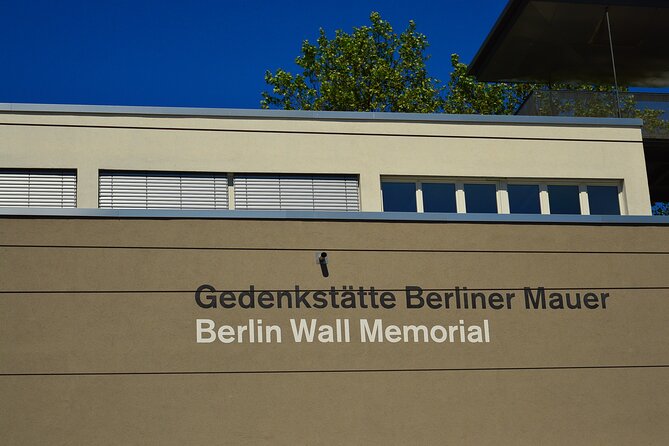
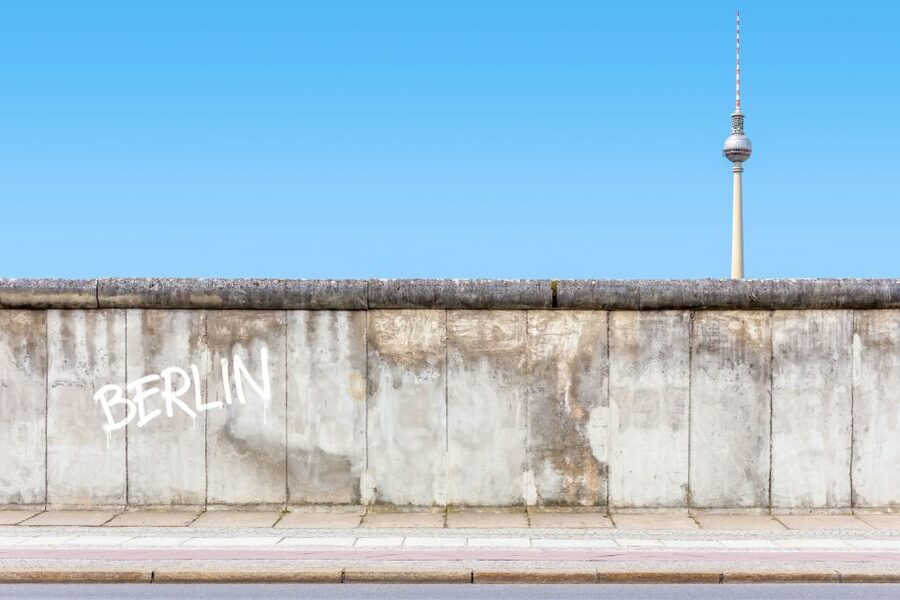
The final major stop is the East Side Gallery, where you walk along a long surviving section of the Berlin Wall covered in murals. The guided walk lasts about 20 minutes.
This is a striking change in mood. Earlier parts of the route deal with fear, surveillance, restricted movement, and escape. Here, the wall has been turned into a public art site. The paintings do not erase what the barrier meant, but they show how Berliners and artists claimed the structure for a different purpose after the wall fell.
The East Side Gallery is often crowded and visually busy. You will want to take photographs, but remember that the guide is still explaining the political meaning of the site and the changes that came after reunification.
I like ending here because the tour moves from oppression to public expression without pretending the past was simple. The wall remains a physical object, but its meaning has changed. That contrast gives the route a strong finish.
The stop also gives you a chance to compare two versions of the wall. At the earlier death strip area, the wall represented control and danger. At the East Side Gallery, the surviving structure carries art, memory, and public discussion. Seeing both in one afternoon helps you understand why Berlin treats wall remnants as more than old construction.
The guides make the difference
This is a guide-led experience, so the person leading your group will shape the day. The most praised qualities are clear storytelling, enthusiasm, patience, and the ability to answer a steady stream of questions.
Paul is noted for explaining the events in a way that works even if you know very little about the subject. Xavier has been praised for combining historical detail with a pleasant manner and checking that the group was coping in hot or rainy conditions. Klaus is remembered for personal and well-researched stories, while Tina has been praised for making a packed historical route engaging.
Nikolai, Jim, Jamie G, Maria, Eran, and other guides have also received strong comments for their energy and ability to make the period feel real. Some guides use photographs or images on an iPad to show how locations looked before, during, or after the division.
Guide assignments can change, so you cannot book a particular person unless the provider confirms that option. Still, the repeated pattern is useful: the experience depends less on elaborate equipment and more on the guide’s ability to connect places with people.
The tour is not designed as a silent walk. Ask questions. The guides have been praised for taking time with them, including very detailed questions from curious groups.
How much walking and public transport should you expect?
The experience lasts three hours and combines walking with two short train journeys. The published route includes approximately five minutes by train after the Palace of Tears and six minutes before the Friedrichshain section.
You will walk through several districts, along Karl-Marx-Allee, through Friedrichshain, beside wall remnants, and along the East Side Gallery. Comfortable shoes are essential. Comfortable clothing and weather protection are also sensible because the tour continues in all weather.
An AB day pass is required and is not included in the $18 price. Staff can help you buy one on the day. The public transport requirement is not a flaw, but it is an extra step you should plan for before meeting the guide.
The experience is listed as wheelchair accessible. Because the route involves public transport, streets, and multiple outdoor stops, it is still wise to confirm the exact conditions for your selected departure and group option if you have specific mobility needs.
Food and drinks are not included. For three hours, that is easy to manage, but plan ahead if you prefer a snack or drink during a walking tour.
Who will get the most from this tour?
I would choose this tour if you want a clear introduction to Cold War Berlin and prefer places connected by a story. It suits first-time visitors, history students, families with older children, and anyone who wants to understand what daily life behind the wall felt like.
It is also a good fit if you know the major dates but lack the human detail. You will hear about the 1953 uprising, the wall’s construction and fall, escape attempts, the Stasi, reunification, and life in the former East.
You may want another type of visit if you prefer long museum sessions, extensive time at each memorial, or a tour focused mainly on military strategy and international politics. One person expected more war and political history and less focus on the wall. That is a fair warning. This route is mainly about divided Berlin, the people caught in it, and the physical places where the story unfolded.
The route can also feel full. If you want to photograph every mural, study every remaining wall section, or stop for long conversations, you may prefer to revisit the East Side Gallery or another memorial afterward.
Should you book it?
Book this tour if you want strong storytelling at a low starting price and are happy to walk, use public transport, and listen outdoors. The best reason to choose it is the combination of major sights with personal stories about escape, surveillance, family separation, and everyday life.
At $18, it offers good value even after adding the AB day pass, especially for visitors who want a useful framework before exploring Berlin on their own. Just remember that the price buys a fast-moving guided overview, not an all-day museum experience.
I would especially recommend it during your first days in Berlin. After three hours, places such as Alexanderplatz, Karl-Marx-Allee, the wall memorials, and the East Side Gallery will have more meaning. Bring good shoes, dress for the weather, and meet by the Palace of Tears with enough time to find the yellow badge and umbrella.
FAQ
How long does the Cold War Berlin tour last?
The tour lasts three hours.
What places does the tour visit?
The route includes the Palace of Tears, Alexanderplatz, Karl-Marx-Allee, Friedrichshain, surviving Berlin Wall areas, and the East Side Gallery.
Is public transportation included?
No. You need an AB public transport day pass, which is not included in the tour price. On-site staff can help you purchase it on the day.
Where does the regular tour meet?
Meet outside Friedrichstrasse train station, on the square beside the Palace of Tears. Look for a guide with a yellow name badge and yellow umbrella.
What languages are available?
The tour is available in English and German.
Is the tour wheelchair accessible?
The activity is listed as wheelchair accessible.
Does the tour operate in bad weather?
Yes. The tour goes ahead regardless of the weather, so bring weather-appropriate clothing.
Can I cancel the booking?
You can cancel up to 24 hours in advance for a full refund. A reserve-now, pay-later option is also available.
Just added around Berlin
- Berlin Food & Cultural Tour: Must-Try German & Berliner Classics★ 5.0 · 51 reviews
- Berlin Half-Day World War II Walking Tour★ 4.5 · 48 reviews
- Small-Group Historical Bike Tour in Berlin★ 4.5 · 103 reviews
- Historic center of Berlin – Tour in Italian★ 5.0 · 143 reviews
- Berlin Cold War & World War II Third Reich Walking Tour★ 4.5 · 30 reviews
- Private Taxi Tour City East & West History and Architecture 3-4h★ 5.0 · 42 reviews
- Berlin Wall and Cold War Bike Tour in Small Groups★ 5.0 · 114 reviews
- Private Tour: Jewish Heritage Walking Tour of Berlin★ 5.0 · 29 reviews
Berlin History Tours, compared.

Berlin: Third Reich & Cold War Guided Walking Tour
Read our review →
Berlin’s Best: 2 Hour Walking Tour Third Reich and the Cold War
Read our review →
Third Reich Berlin: Hitler and WWII Walking Tour
Read our review →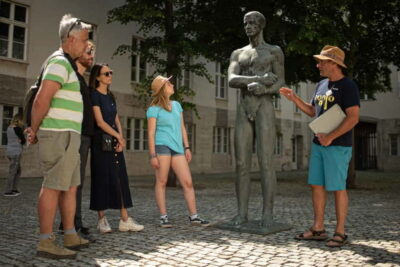
Berlin: Third Reich, Hitler, and WWII Walking Tour
Read our review →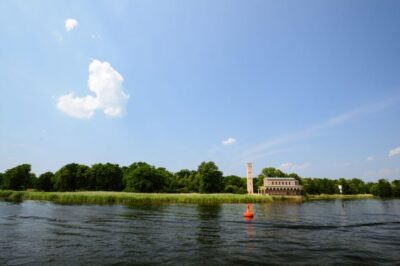
Berlin: 3-Hour World Heritage Cruise to Potsdam
Read our review →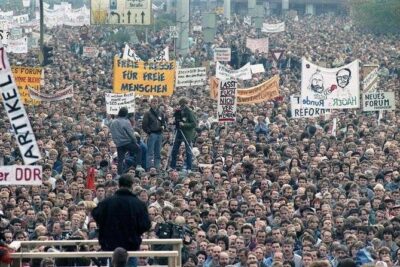
Cold War, Berlin Wall, Spies and the East Side Gallery
Read our review →
Berlin: History of the Third Reich Guided Walking Tour
Read our review →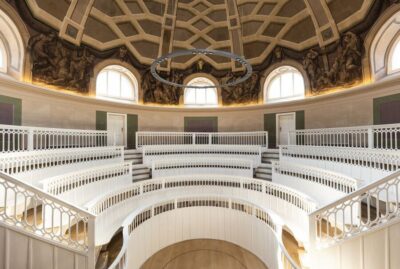
Browse the lists this tour appears in