Review · BERLIN
Berlin: History of the Third Reich Guided Walking Tour
Berlin’s Nazi past is scattered across ordinary-looking streets, office blocks, memorials, and empty spaces. This tour connects those pieces into a clear story, taking you from the Nazi rise to power through propaganda, terror, war, the Battle of Berlin, and the regime’s final days at Hitler’s bunker.
I like the way the route uses surviving buildings and visible ruins rather than relying only on museum displays. I also like the guide-led storytelling. Past guides such as Dani, India, Theo, Lizzie, and Elizabeth earned especially strong praise for making difficult material clear, human, and engaging. The main consideration is the advertised two-hour length: the route covers a lot, and some older descriptions and bookings refer to a longer outing, so confirm the current schedule when you book.
Key points at a glance
- See rare Nazi-era architecture: The former Luftwaffe headquarters survived the Allied bombing and remains one of Berlin’s clearest examples of official Third Reich design.
- Follow the machinery of control: The route links Goebbels’ Propaganda Ministry with the former SS and Gestapo headquarters.
- Visit the bunker site, not the bunker: You stand above the place where Hitler died, but there is no preserved interior to enter.
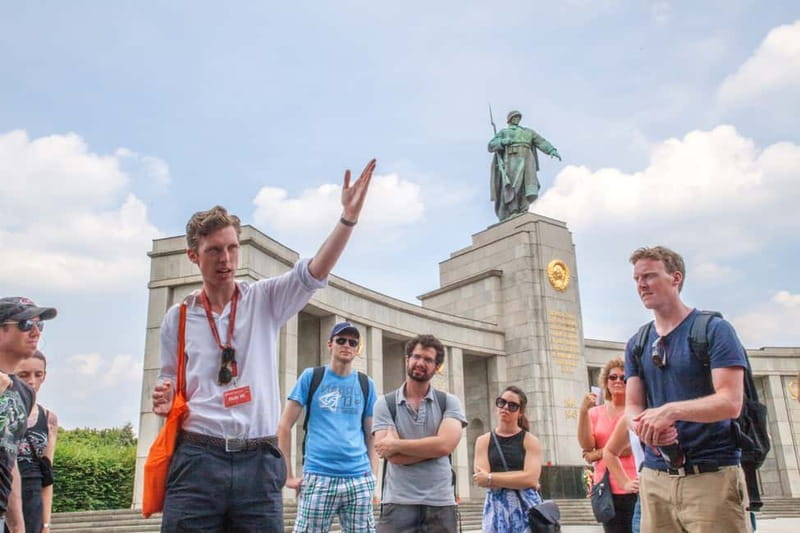
- Understand the Battle of Berlin: A Soviet memorial, with tanks and artillery pieces, recalls the roughly 80,000 Soviet soldiers who died in the fight for the city.
- Expect a serious walking lesson: Comfortable shoes, weather protection, and an AB public transport ticket matter.
- Best for history-minded visitors: The English-speaking guides focus on causes, systems, and human consequences, not just famous names.
Why this Berlin walking tour matters
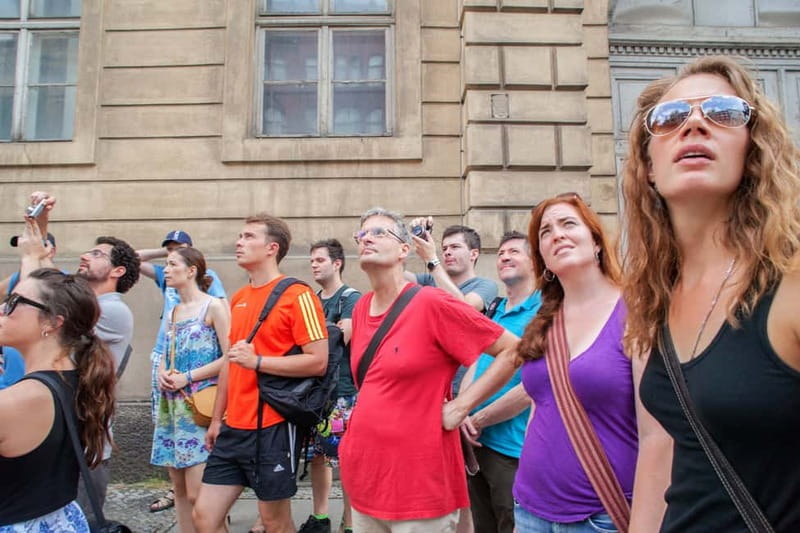
A tour about the Third Reich can easily become a parade of grim locations and dramatic anecdotes. This one is more useful when it explains how a dictatorship gained and held power. You hear about the Nazi takeover of government, the use of propaganda, the role of the SS and Gestapo, and the military collapse that ended in Berlin.
That sequence matters. You are not simply looking at where Hitler once worked or died. You are being shown how political power, public messaging, police terror, and war fit together. Several guides have been praised for explaining how ordinary state structures were converted into tools of dictatorship, and that is the key value of the experience.
The subject is emotionally heavy. You will hear about persecution, mass murder, war, and the destruction of Berlin. Still, the teaching style is not described as gloomy or flat. Guides such as Dani were praised for strong storytelling, while India was noted for explaining complicated material in a clear and approachable way. Theo, Martin, Chris, and Elizabeth were also singled out for energy and command of the subject.
That range of guide names matters because the person leading the walk shapes the experience. The operator uses several English-speaking guides, so you cannot select a particular favorite unless the booking system allows it. The consistent requirement is not a theatrical performance, but someone who can keep the chronology straight and answer questions carefully.
More History Walking Tours in Berlin
- Berlin: Third Reich & Cold War Guided Walking Tour
★ 4.9 · 8,378 reviews - Berlin’s Best: 2 Hour Walking Tour Third Reich and the Cold War
★ 5.0 · 5,486 reviews - Third Reich Berlin: Hitler and WWII Walking Tour
★ 5.0 · 3,301 reviews
Meeting at Brandenburg Gate
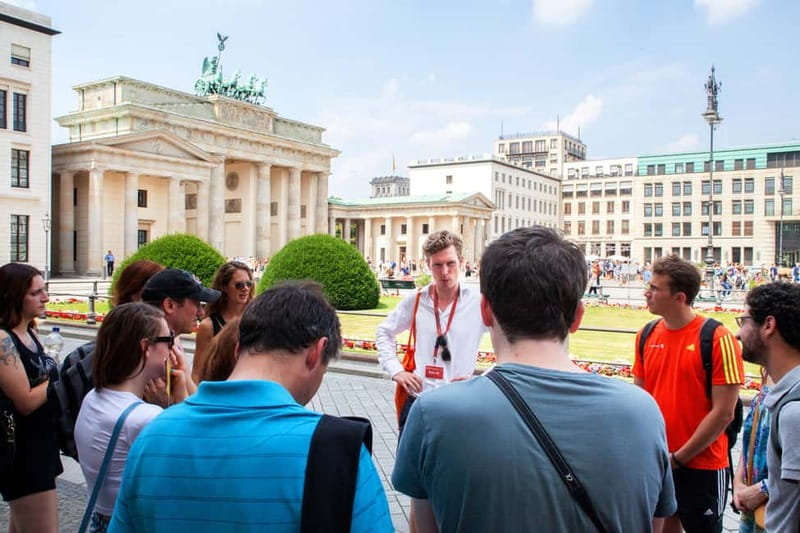
The walk begins in front of the Starbucks Café near Berlin’s Brandenburg Gate. Look for the local operator’s team in red shirts and carrying red umbrellas. This is a practical meeting point in a busy part of central Berlin, so allow a few minutes to locate the group rather than arriving at the exact starting time.
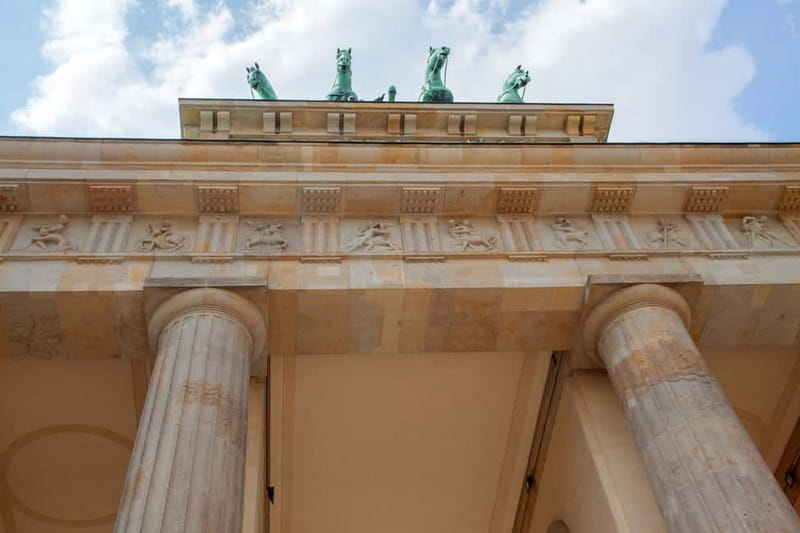
Brandenburg Gate is also a fitting place to begin. It helps you place the Nazi period within a much longer story of Berlin as a capital shaped by monarchy, war, dictatorship, division, and reunification. The tour does not simply treat the Third Reich as an isolated episode.
The outing is listed as a two-hour walking tour, though the route includes public transport and older tour information has referred to a longer half-day format. The safest approach is to check the current starting time and allow extra room in your day. The route may change slightly depending on the guide and the needs of the group.
You will need to buy an AB transport ticket separately. That is easy to overlook because the experience is described as a walking tour, but public transport forms part of the route. Keep the ticket with you and wear comfortable shoes. You will be standing and walking for much of the outing.
Luftwaffe headquarters and the look of power
One of the first major stops is the former Luftwaffe Air Force headquarters, associated with Hermann Göring. The building survived the Allied bombing and is presented as one of the strongest surviving examples of Third Reich architecture.
This stop is valuable because architecture can reveal how a regime wanted power to look. The massive scale, formal design, and institutional purpose tell you something before the guide adds dates and names. You are not looking at a memorial created after the war. You are looking at a surviving administrative building connected to the Nazi military state.
Do not expect a museum interior filled with original wartime displays. The attraction here is the building itself and the explanation around it. The guide helps you see what you might otherwise pass without a second glance: the scale of the headquarters, its role in the regime, and its survival through the destruction of Berlin.
For visitors interested in architecture, this may be one of the route’s most distinctive stops. For those focused only on concentration camps or Holocaust memorials, it may initially feel less emotionally direct. Its importance becomes clearer when you understand how the Nazi state presented authority through offices, ministries, military commands, and public buildings.
Goebbels’ Propaganda Ministry
The route continues to the former Propaganda Ministry of Joseph Goebbels. Before the war, the building had served as the Berlin Press Office. Under the Nazis, it became a central part of the propaganda system.
This stop shifts the focus from military power to information control. The guide explains how the Nazis used propaganda after taking over the government, and how the regime worked to control what people heard, saw, and believed. That makes the building more than another government office. It becomes a way to discuss censorship, political messaging, public persuasion, and the removal of independent voices.
I find this part especially useful because propaganda is often reduced to posters and speeches. The tour places it inside the working structure of government. You learn how a dictatorship can use an office, a press system, and official announcements to make its version of events seem normal.
The building itself is not presented as a fully preserved attraction with a standard visitor route. The guide’s explanation provides much of the meaning. Listen for the link between this stop and the later sites. Propaganda did not operate alone. It helped create the political conditions in which police repression and persecution could expand.
More History Walking Tours in Germany
- Berlin: Third Reich, Hitler, and WWII Walking Tour
★ 4.9 · 1,757 reviews - Berlin Historical Highlights Walking Tour
★ 4.9 · 657 reviews - Berlin Private Complete History All Day Walking Tour
★ 5.0 · 474 reviews - Berlin: Cold War Walking Tour on Berlin Wall Route
★ 4.8 · 437 reviews
The SS and Gestapo headquarters
The route then reaches what was once one of the most feared addresses in Nazi Germany, the former Prinz-Albrecht-Straße headquarters of the SS and Gestapo. The Gestapo was the secret police, while the SS became one of the central instruments of Nazi terror and mass murder.
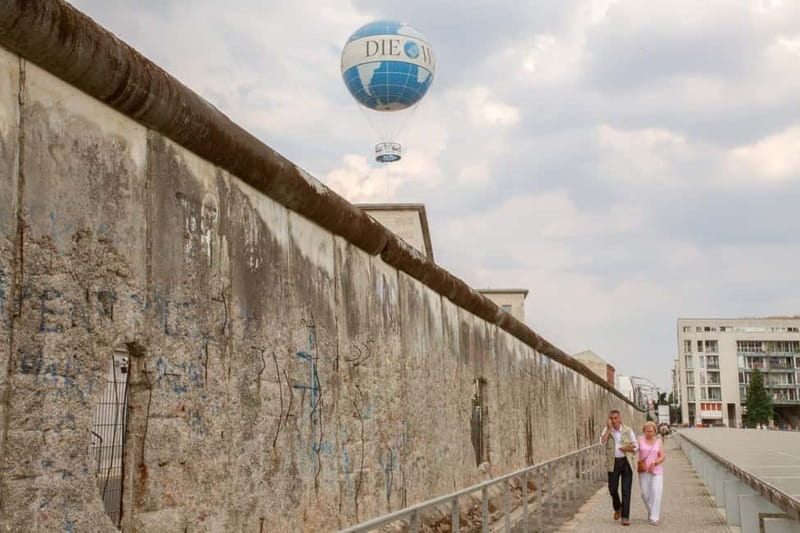
Here, the physical remains are more fragmentary. You will see basement remains of the buildings, now incorporated into an exhibition documenting the Nazi rise to power. The site also includes one of the few remaining stretches of the Berlin Wall.
That combination gives the stop unusual weight. Two different dictatorships left physical traces in the same area: Nazi terror and the later division of Berlin. The tour does not let the remains become abstract ruins. The guide explains how these offices functioned and how the system of repression expanded.
This is one of the places where the route asks for attention rather than spectacle. There may not be a dramatic intact room waiting for you. Instead, you are asked to connect fragments, documents, and explanation. The material can be difficult to hear, especially in a large group or on a noisy day, so stay close to the guide.
The exhibition portion may involve an entrance fee, since entrance fees are not included in the tour price. The supplied information does not specify the current cost or exactly which parts are entered on every departure. Ask the guide or check the booking details if the exhibition is important to you.
A Soviet memorial and the Battle of Berlin
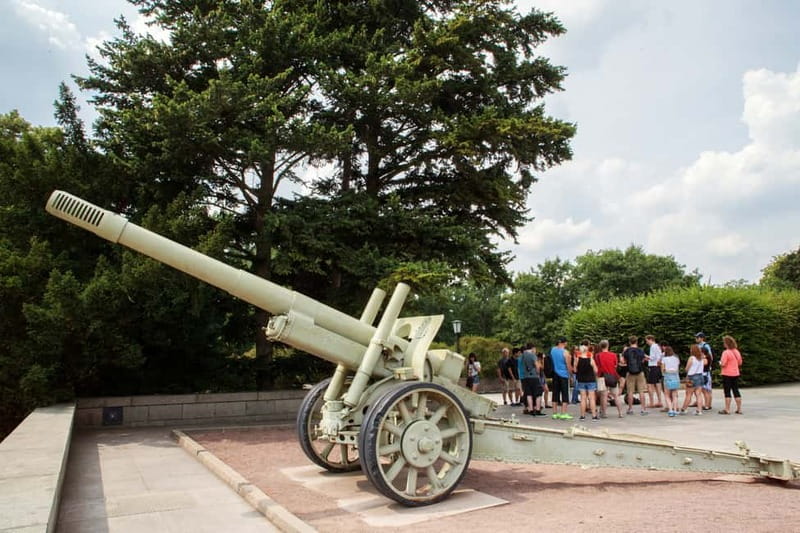
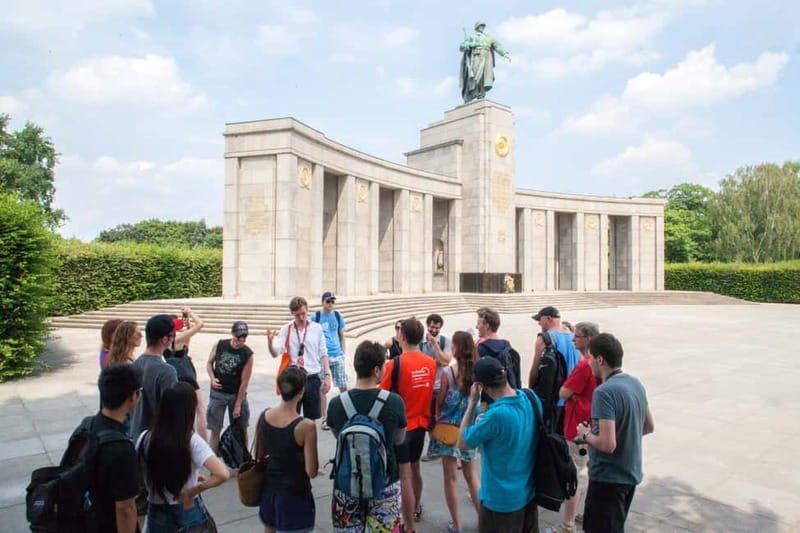
The tour also visits one of Berlin’s Soviet memorials, dedicated to the soldiers who died fighting to liberate the city from Nazism. The stated figure is about 80,000 Soviet soldiers. Two artillery pieces and two tanks stand at the memorial as reminders of the fighting.
This stop broadens the story beyond Nazi leaders and German institutions. By the final weeks of the war, Berlin had become a battlefield. The memorial gives you a physical way to consider the immense cost of the city’s defeat and liberation.
The memorial’s political meaning can be complicated, and that is part of its value. It commemorates Soviet military sacrifice while also belonging to the postwar story of occupation and divided Germany. A good guide can hold those facts together without turning the stop into a simple victory story.
You should expect time for explanation rather than a long independent visit. The exact memorial used may depend on the route and guide. If you want a detailed visit to Berlin’s major Soviet memorials, you would need a separate outing. On this walk, the memorial works as one chapter in the larger account of the Battle of Berlin.
Standing above Hitler’s bunker
The final major stop is the site of Hitler’s former bunker. You stand above the place where he ended his life as Soviet forces closed in. The bunker itself is not presented as an attraction to enter, and there is no grand ruin to photograph.
That absence is important. The site is an ordinary-looking space, and the lack of a visible monument prevents it from becoming a shrine. The guide supplies the context: the collapsing Nazi command structure, the final battle for Berlin, and the end of the regime.
Many visitors arrive expecting something dramatic. Instead, you get a lesson in how places can disappear while their historical meaning remains. The site also closes the route’s timeline. You have moved from the creation of power and its propaganda system to police terror, total war, and defeat.
The stop can feel understated, but that is precisely why the guide matters. Without explanation, you might walk past without knowing what happened there. With a clear account, the unremarkable ground becomes one of the most charged locations in the city.
The guide makes or breaks the experience
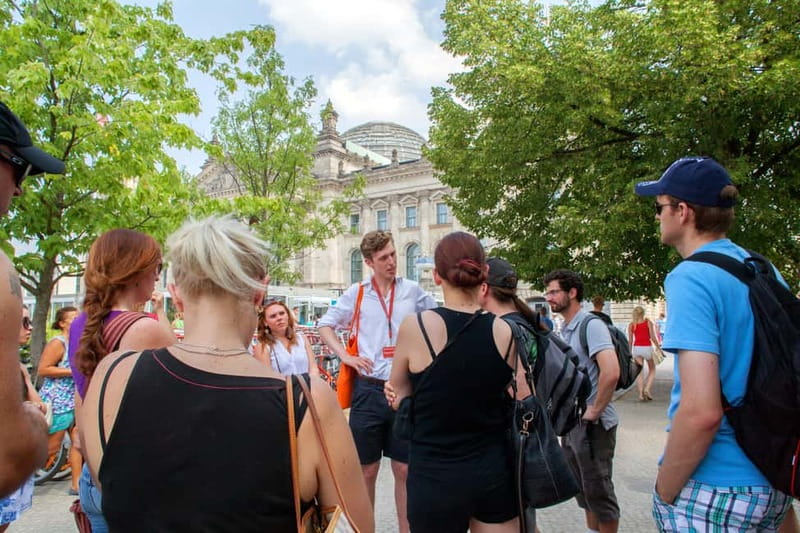
The strongest feature of this tour is the human guide. Past departures have been led by Dani, India, Theo, Lizzie, Elizabeth, Martin, Chris, Max, Amy, Jasper, and others. The names change, but the qualities you want remain the same: clear chronology, firm command of the subject, patience with questions, and a respectful tone.
Dani was praised for handling large groups and explaining how the Third Reich established power. India was noted for making difficult material easy to follow. Theo was described as energetic and willing to answer questions, while Elizabeth was praised for explaining each stop in detail. Those are useful signs because this subject demands more than memorized dates.
Group size can vary. One departure had only three people, while another large group was divided when a guide became ill. Smaller groups make it easier to hear, ask questions, and keep pace. Large groups can still work well if the guide manages them firmly, but you may need to stay alert at crossings and crowded sites.
The tour includes a break partway through. That is welcome, especially if the current route runs longer than the stated two hours. Use the pause to get a drink or regroup, since food and drinks are not included.
Price, pace, and practical value
At $30 per person, the tour offers solid value if you want a structured introduction to Berlin’s Nazi past. You are paying for a live English-speaking guide who links several distant locations and explains the political story between them. Public transport tickets and any entrance fees cost extra, so the final amount will be slightly higher.
The price is less attractive if you prefer to read independently and visit only one or two sites. Berlin has many memorials and exhibitions that you can reach on your own. The advantage here is the order of the route and the interpretation. You do not have to work out how the Luftwaffe headquarters, Propaganda Ministry, SS and Gestapo offices, Soviet memorial, and bunker site fit together.
The listed duration is two hours, but the supplied description also calls the experience a half-day tour, and some older accounts refer to three or four hours. Treat the current booking page as the authority for your departure. Either way, set aside more time than the bare walking period if you need to connect to another appointment.
The tour is wheelchair accessible, according to the activity information. Still, because the route uses public transport, outdoor paths, and basement remains or exhibition areas, confirm the day’s exact route if you have specific mobility needs. The guide may adjust the order or content for the group.
Children up to age 13 can join free, although the local partner may request valid identification. The subject matter is serious, so parents should decide if the material suits their children. The free child policy can make the experience useful for families with older children who are studying the period.
Free cancellation is available up to 24 hours before the tour, and you can reserve now and pay later. Those terms are useful when your Berlin schedule is still shifting.
Who should book this tour
I would choose this walk early in a Berlin visit if you want a framework for the city’s Nazi-era sites. It suits first-time visitors, history students, adults with a strong interest in World War II, and anyone who wants to understand how the Nazi state operated rather than simply photograph famous places.
It is also a good choice if you like learning through questions. The guides have been praised for handling long streams of them, and the subject offers plenty to discuss. You will get more from the route if you are willing to listen closely and accept that some stops are fragments rather than polished attractions.
I would be more cautious if you want a light sightseeing outing. This is not a cheerful overview of Berlin, and the material includes persecution, terror, war, and the Holocaust. It is also not the best fit if you need a slow pace or dislike changing between walking and public transport.
Bring comfortable shoes, dress for the weather, and keep your schedule flexible. A break is included, but you should still expect to be on your feet. Check whether the current departure follows the longer or shorter version of the route.
Should you book it?
Book this tour if you want a serious, well-connected introduction to the Third Reich in Berlin and prefer a strong guide to a self-guided list of locations. The best part is not any single building. It is the way the route shows how propaganda, government, police terror, military power, and defeat joined together.
Skip it if your interest is limited to indoor museums, or if you want to explore the bunker site and memorials at your own slow pace. For most history-minded visitors, though, $30 is a fair price for a clear two-hour foundation, especially when guides such as Dani, India, Theo, and Elizabeth are leading with the care and storytelling skill this subject requires.
FAQ
How long does the tour last?
The activity is listed as two hours. The description also refers to a half-day format, and older tour information has mentioned longer durations, so check the current departure details before booking.
What language is the tour in?
The live tour guide speaks English.
Where does the tour meet?
Meet in front of the Starbucks Café near Berlin’s historic Brandenburg Gate. Look for the operator’s team wearing red shirts and carrying red umbrellas.
Do I need public transportation?
Yes. You need to purchase an AB public transport ticket separately because transportation is used during the tour.
Are entrance fees included?
No. Entrance fees are not included. The tour price covers the live guide and walking tour.
Is food or drink included?
No. Food and drinks are not included. There is a break partway through the tour.
Is the tour wheelchair accessible?
The activity is listed as wheelchair accessible. Since the route uses public transport and includes outdoor locations and exhibition or basement remains, confirm the current route if you have specific access needs.
Can children join?
Children up to 13 years old can join free. The local operator may ask for valid identification for children.
What should I bring?
Bring comfortable shoes. Dress for the weather, since much of the experience takes place outdoors.
More WWII and D-Day Tours in Germany
- Clash of Titans: Battle for Seelow Heights WW2 tour
★ 5.0 · 71 reviews - Berlin Half-Day World War II Walking Tour
★ 4.5 · 48 reviews - Path of Resistance: Berlin’s Hidden Holocaust Stories
★ 4.9 · 43 reviews - Berlin: Nazi History Walking Tour
★ 4.8 · 33 reviews
More WWII and D-Day Tours in Berlin
- Hitler’s Germany: Berlin During the Third Reich & WWII
★ 4.8 · 476 reviews - Private Walking Tour Berlin Third Reich Hitler and World War II
★ 5.0 · 360 reviews - The History of Berlin: WWII PRIVATE Walking Tour With Locals
★ 5.0 · 209 reviews - Berlin: Guided Bike tour of the Berlin Wall and Third Reich
★ 5.0 · 160 reviews
Just added around Berlin
- Berlin Food & Cultural Tour: Must-Try German & Berliner Classics★ 5.0 · 51 reviews
- Berlin Half-Day World War II Walking Tour★ 4.5 · 48 reviews
- Small-Group Historical Bike Tour in Berlin★ 4.5 · 103 reviews
- Historic center of Berlin – Tour in Italian★ 5.0 · 143 reviews
- Berlin Cold War & World War II Third Reich Walking Tour★ 4.5 · 30 reviews
- Private Taxi Tour City East & West History and Architecture 3-4h★ 5.0 · 42 reviews
- Berlin Wall and Cold War Bike Tour in Small Groups★ 5.0 · 114 reviews
- Private Tour: Jewish Heritage Walking Tour of Berlin★ 5.0 · 29 reviews
Berlin History Tours, compared.

Berlin: Third Reich & Cold War Guided Walking Tour
Read our review →
Berlin’s Best: 2 Hour Walking Tour Third Reich and the Cold War
Read our review →
Third Reich Berlin: Hitler and WWII Walking Tour
Read our review →
Berlin: Third Reich, Hitler, and WWII Walking Tour
Read our review →
Berlin: 3-Hour World Heritage Cruise to Potsdam
Read our review →
Cold War, Berlin Wall, Spies and the East Side Gallery
Read our review →