

Review · ITALY
Discover Herculaneum: A guided tour of the ancient Roman city
Herculaneum gives you something Pompeii cannot quite match: a closer look at Roman home life, with wooden partitions, wall paintings, mosaics, and household details still in place. The two-hour guided visit focuses on the city’s finest houses, including the House of the Deer, House of the Bicentennial, House of the Wooden Partition, and the House of Neptune and Amphitrite.
I like the way the guide turns bare walls into daily life, and I like that you can remain inside the ruins after the tour ends. Guides such as Danilo and Célestina have been praised for humor, clarity, and strong storytelling. The main drawback is that transport is not included in the basic option, and the site is not suitable for wheelchair users.
Key points to know before booking
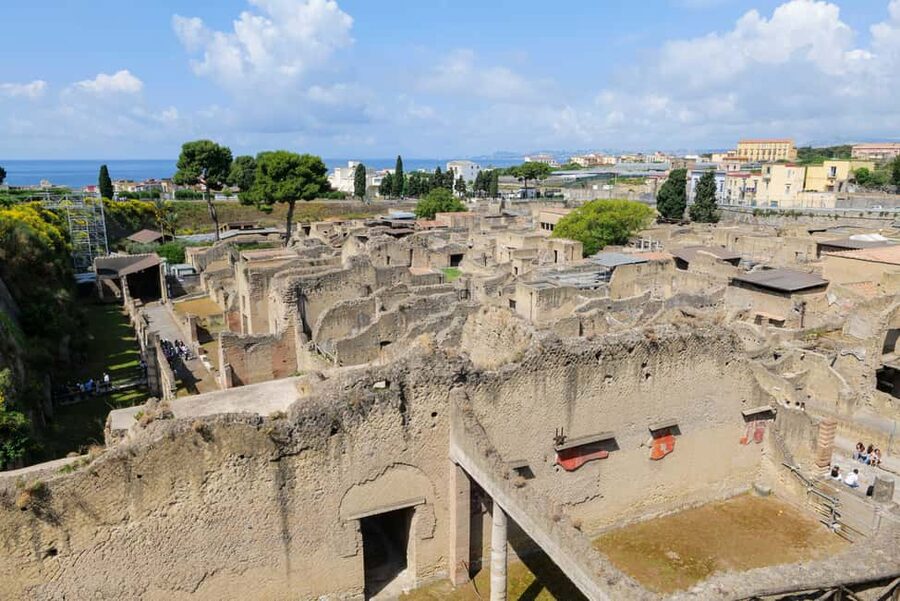
- Herculaneum’s preserved houses reveal Roman interiors, mosaics, frescoes, and wooden features in unusually clear detail.
- The two-hour guided route covers the main highlights without asking you to spend an entire day at the site.
- Danilo and Célestina are among the named guides associated with warm, lively explanations in several languages.
- Skip-the-line entry and ticket assistance remove much of the arrival stress.
- The Vesuvius combination includes bus transport from Naples, the volcano entrance ticket, about two hours at Vesuvius, and the Herculaneum tour.
- You can continue alone afterward, but once you leave the archaeological site, you cannot re-enter.
Why Herculaneum rewards a guided visit
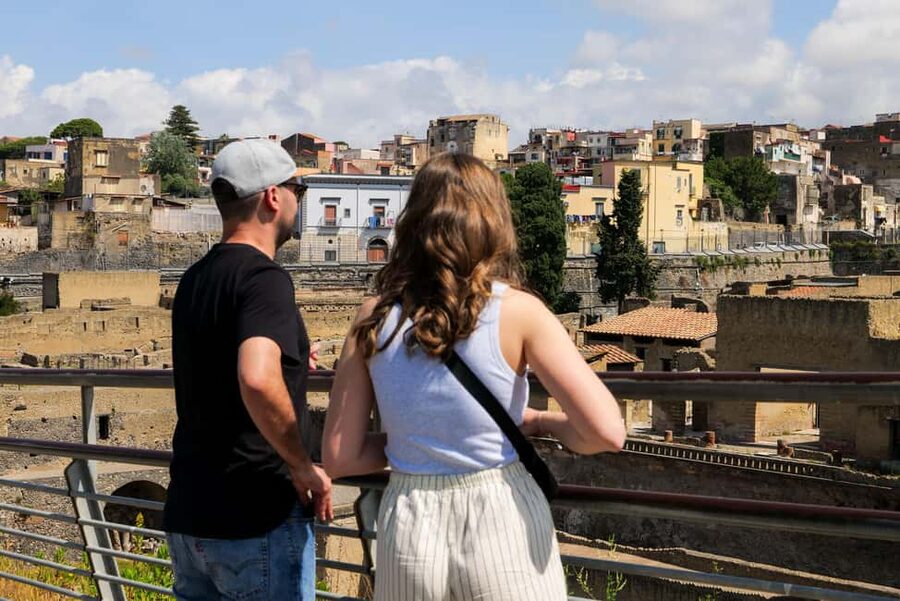
Herculaneum was a Roman town destroyed by the eruption of Vesuvius in AD 79. Like Pompeii, it preserves a snapshot of ancient life, but the experience feels more intimate. The streets and buildings are easier to take in during a short visit, and the surviving interiors make the site feel less like a collection of foundations and more like a neighborhood interrupted in time.
I find the houses especially useful for understanding how people lived. You are not simply looking at columns and broken walls. You are looking at rooms with decorative floors, painted surfaces, wooden elements, and objects caught in the disaster.
That is where a guide earns the fee. Without context, Roman houses can blur together. A good guide can explain how the rooms fit together, what details were decorative, and what they reveal about status and domestic life. The strongest comments about this tour focus on exactly that point: the guides make the past easier to picture and keep the two hours moving.
The tour is conducted in French, with live guiding also available in English and Italian. Some material may be presented in its original language, so you should confirm the language available for your chosen departure when booking.
More Ancient History Tours in Italy
- Pompeii: Entry Ticket and Guided Tour with an Archaeologist
★ 4.8 · 19,459 reviews - Colosseum: Underground and Ancient Rome Tour
★ 4.7 · 12,691 reviews - Pompeii: Small Group Tour with an Archaeologist
★ 4.8 · 12,264 reviews
Meeting your guide and entering the site
Your meeting point depends on the option you book. Look for the inStazione logo and follow the arrival instructions sent before the visit. The organizer provides the ticket and visit information, which is useful if you do not want to deal with the ticket office on arrival.
The skip-the-line benefit matters most on a busy day. It does not change the amount of time you spend inside, but it can make the start of the visit calmer and more predictable. You still need to arrive at the correct meeting point, so read the day-before instructions carefully rather than relying only on the general location shown during booking.
Wear comfortable shoes. The archaeological site requires walking over uneven surfaces, and a sun hat is sensible in warm weather. Food and drinks are not included, so plan around the tour rather than expecting a refreshment stop as part of the route.
The House of the Deer and Roman luxury
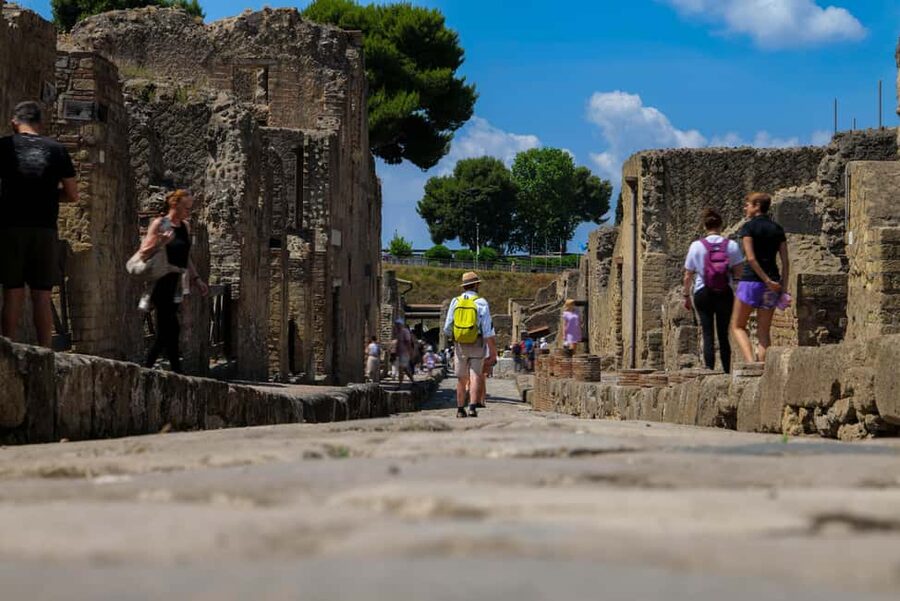
The House of the Deer is one of the tour’s key stops. Its name points to the famous garden sculpture group, and the house helps show how wealthy residents used open space, decoration, and views to shape their homes.
Here, your guide can help you read the difference between a practical Roman dwelling and a high-status residence. The word luxury can sound abstract in an ancient site, but it becomes clearer when you see the scale of the rooms, the decorative work, and the way indoor and outdoor spaces were connected.
You should not expect every room to be open or perfectly intact. Archaeological sites change, and access can vary. Still, the House of the Deer is a useful stop because it gives the tour a strong sense of Roman comfort and display before you move on to more intimate domestic details.
The House of the Bicentennial and the feel of private life
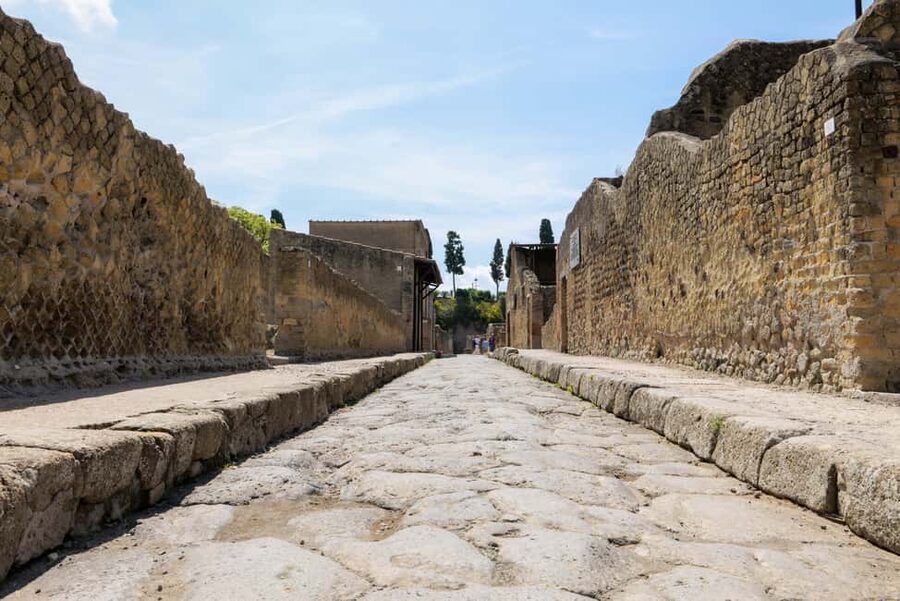
The House of the Bicentennial is another major residence on the route. Its name comes from its discovery during the bicentennial period of the excavations, but the important point for you is what the building contributes to the visit: another view of private life, decoration, and the scale of a well-appointed Roman home.
The guide’s explanation is particularly helpful here because a house can look confusing when you first enter it. Rooms often open into one another, and the original purpose of each space is not always obvious. A clear explanation helps you understand how residents and visitors moved through the home.
This is also one reason I prefer the guided format for a first visit. You can walk through Herculaneum independently, but you may miss the links between architecture and social life. The tour gives you a basic framework, then leaves you free to inspect details once the guided portion is over.
Same city, a different century:
- Pompeii Small Group Tour with an Archaeologist
★ 5.0 · 6,593 reviews - Rome: Colosseum with Arena, Roman Forum and Palatine Guided Tour
★ 4.0 · 5,598 reviews - Venice: St. Mark’s Basilica Guided Tour & VR History Intro
★ 3.9 · 4,880 reviews - Colosseum with Arena, Roman Forum and Palatine Hill Guided Tour
★ 4.5 · 3,526 reviews
The House of the Wooden Partition
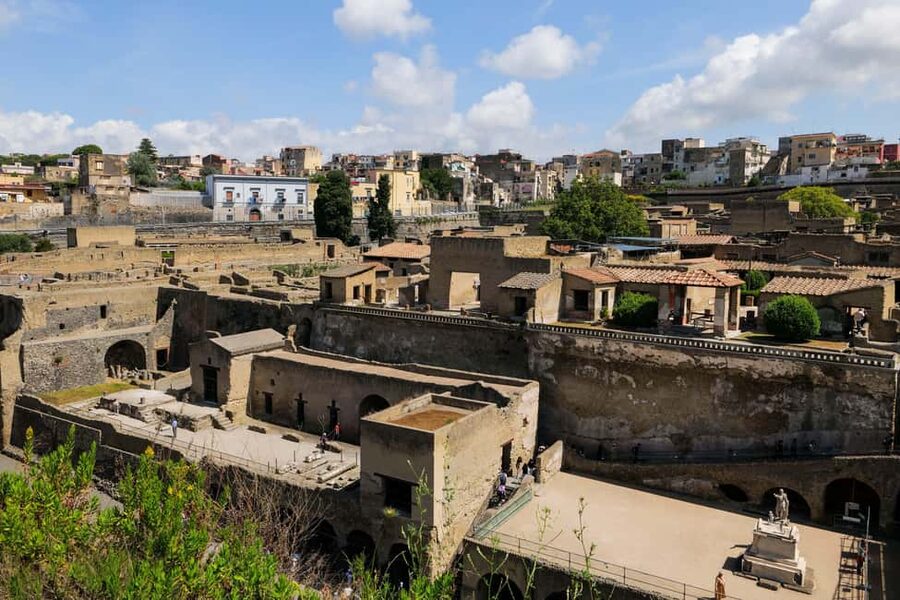
The House of the Wooden Partition provides one of Herculaneum’s most memorable details: a surviving wooden feature preserved by the eruption. At a site that is more than 2,000 years old, charred wood makes the catastrophe feel immediate.
Stone walls can seem permanent and distant. Wood does the opposite. A partition, door, or household fitting suggests a room that was once furnished and used, not a ruin created for display. Your guide can connect that surviving object to the practical design of the house and the lives of its occupants.
This is one of the strongest reasons to choose Herculaneum over a rushed visit to Pompeii. The town offers more than a broad street plan. It gives you small, human details, including materials that usually disappear from ancient sites.
Neptune and Amphitrite’s colorful mosaics
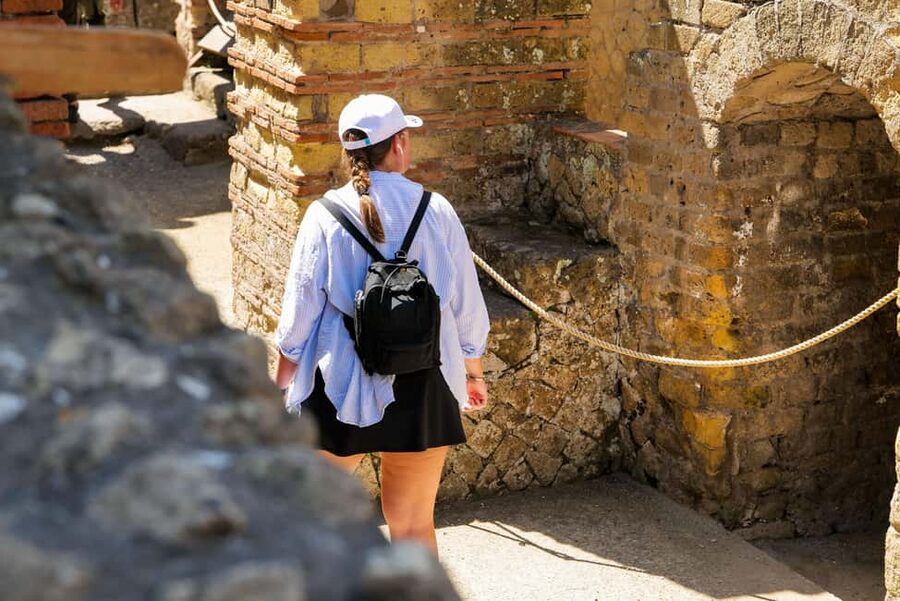
The Houses of Neptune and Amphitrite are known for refined mosaics and wall decoration. The name comes from the Neptune and Amphitrite mosaic, which adds a burst of color and mythological design to the route.
Take your time here, even if the guide needs to keep the group moving. Look at how the mosaic is arranged, how decorative surfaces work with the surrounding architecture, and how much effort went into making a private home visually impressive.
This stop also helps balance the wooden and structural remains elsewhere. Herculaneum is not only about disaster preservation. It is also about taste, money, craft, and the pleasure Roman residents took in decorating their homes.
What the two-hour route can and cannot do
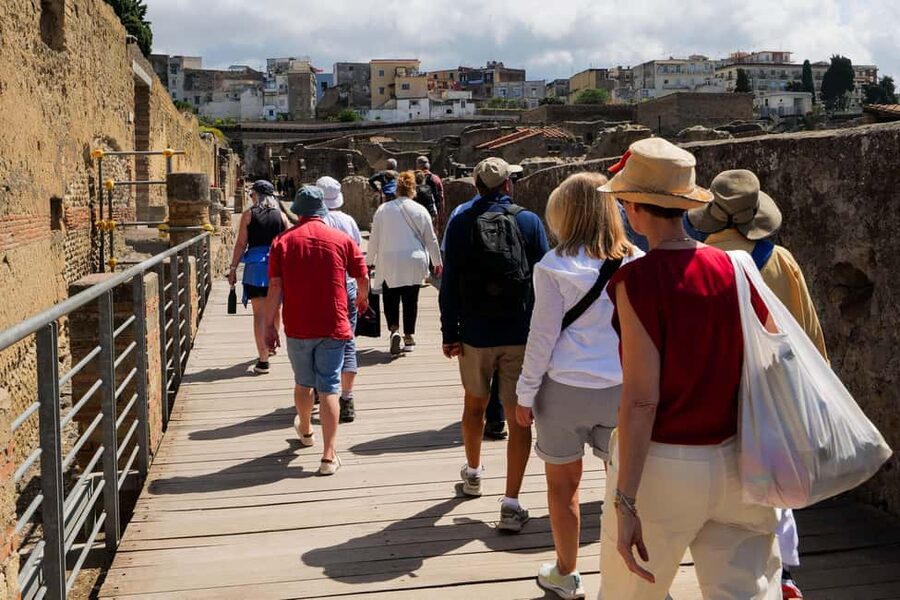
Two hours is a good length for a first guided introduction. You get a clear route through the site and enough time to see the major residences without turning the visit into an all-day commitment.
It is not enough time to study every street, room, and display at a slow pace. If you already have a strong interest in Roman archaeology, you may want to stay after the guide finishes. The ticket allows you to continue inside independently, which adds value to the basic tour.
Use the guided portion to learn the structure of the town and note the places you want to revisit. Then take your own time with the rooms that interest you most. Remember that leaving the ruins ends the visit. You cannot exit for lunch and return on the same ticket.
The tour’s short length also works well if Herculaneum is part of a larger Campania plan. You can pair it with other sights without giving up a full day, although the combined Vesuvius option is a much longer outing.
Adding Mount Vesuvius to the day

The combined option links Herculaneum with the Vesuvius National Park. It includes bus transport from outside Naples Central Station, the entrance ticket to Vesuvius, about two hours at the volcano, the Herculaneum entry ticket, and the guided archaeological visit.
The published schedule gives two possible departures from Naples. One leaves at 9:00 AM, reaches Vesuvius for a visit beginning around 11:40 AM, and continues to Herculaneum before returning to Naples at 4:45 PM. Another schedule lists a 10:15 AM departure and a 1:30 PM departure from Vesuvius, with the same 4:45 PM return from Herculaneum.
Because the timing varies by option, check your selected departure carefully. The schedule is the backbone of the day, and you will not want to assume that every booking follows the earlier timetable.
The Vesuvius addition is useful if you want one organized day with transport handled for you. You get about two hours to explore the volcano at your own pace, followed by the Herculaneum guide. The tradeoff is flexibility. You have less control over how long you spend at either place, and the day becomes a full outing rather than a simple archaeological visit.
The order also matters. Depending on the schedule, you visit Vesuvius first and Herculaneum later. That can work well because the guided town visit gives you a focused activity after the open-air volcano stop. It also means you should carry water, wear suitable shoes, and be ready for a long day.
Guide quality and the human side of the tour
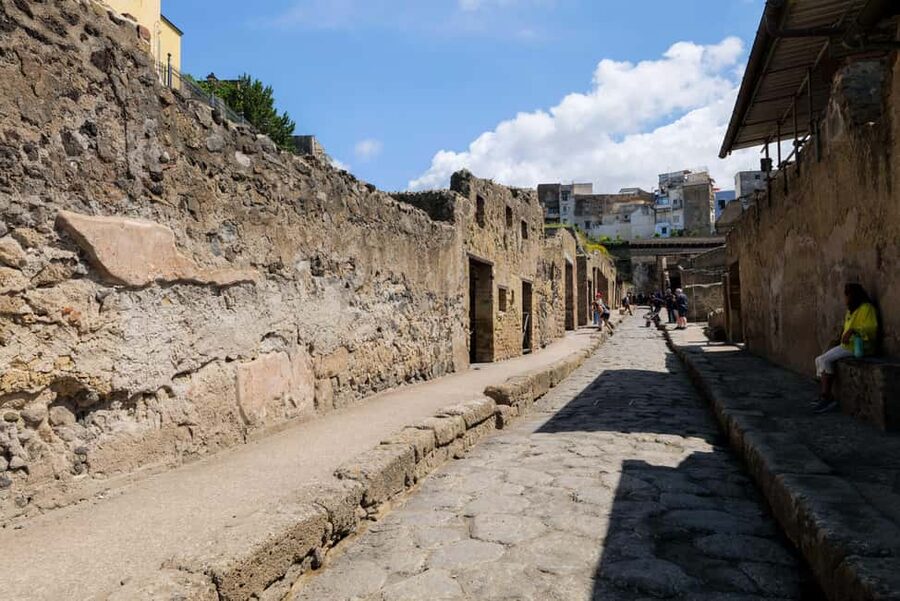
The guide is the main reason to book this experience rather than simply buy entry. Danilo has been described as warm, funny, patient, and able to bring Roman history to life. Célestina has also been singled out for clear, interesting explanations and a good sense of humor.
Those details matter because Herculaneum is a place where a dry lecture would quickly lose you. The best guiding here connects the disaster to ordinary routines: how homes were laid out, what decorations said about their owners, and why a wooden structure or household object matters.
You should still keep your expectations realistic. A two-hour tour cannot answer every question or cover every building. The guide’s job is to give you the essential structure of the site, not to replace a full archaeological course.
The rating of 4.9 from 34 reviews suggests a consistently strong experience, and the praise centers on explanation, engagement, and organization. I would put more weight on those repeated strengths than on the exact personality of any one guide, since guide assignments can change.
Cost and value without a listed price
No price is provided here, so I cannot tell you if this is the cheapest way to enter Herculaneum. I can tell you what you are paying for: admission, ticket assistance, skip-the-line access, a two-hour live guide, and the option to continue exploring after the formal route.
The value is strongest if you are visiting Herculaneum for the first time. The houses are full of details, but not every detail explains itself. A guide can save you from walking through a beautiful room without understanding why it matters.
The basic tour is also a better value for people with limited time. You receive a focused introduction and can leave once you have seen the main highlights. If you prefer to read every label and set your own pace from the start, buying an entry ticket alone may suit you better, though you will need to arrange your own interpretation.
The combined Vesuvius option can offer good practical value if you also need transport from Naples. Compare it with the cost and effort of arranging the volcano and Herculaneum separately. The advantage is not simply the number of inclusions. It is the fact that the bus links the stops and returns you to Naples.
Who should book this Herculaneum tour
I would choose this tour if you want to understand what you are seeing rather than simply walk through ancient streets. It suits first-time visitors, couples, families with older children, and anyone who prefers a clear two-hour structure.
It is also a good choice if Pompeii feels too large for your schedule. Herculaneum is smaller in feel, and its surviving interiors give you plenty to absorb without requiring a full day.
The tour may not suit you if you need a wheelchair-accessible activity. It is specifically listed as unsuitable for wheelchair users. It may also frustrate independent archaeology fans who dislike fixed routes or want to spend the entire visit alone.
For the best experience, arrive in comfortable shoes, protect yourself from the sun, and keep the rest of your schedule realistic. If you take the Vesuvius combination, treat it as a full-day plan rather than a short add-on.
Should you book it?
Book this tour if you want the surviving homes, mosaics, and wooden details explained by a lively guide. The two-hour format gives you the main story without taking over your whole day, and staying inside afterward lets you explore at your own speed.
Choose the Vesuvius combination if you want transport and both major sights arranged in one day. Skip the add-on if you prefer a slower visit or already have transport sorted.
For most first-time visitors, the guided Herculaneum option is the stronger choice. The site is compact enough to visit in two hours, but detailed enough that a guide such as Danilo or Célestina can make the difference between seeing old walls and understanding a lost Roman home.
FAQ
How long is the guided Herculaneum tour?
The guided portion lasts two hours. The overall activity can last from two to eight hours depending on the option and schedule selected.
What is included in the basic Herculaneum tour?
The basic option includes entry tickets, full assistance during the visit, and a two-hour guided tour. Transport, food, and drinks are not included.
Is transport from Naples included?
Transport is not included in the basic option. The combined Herculaneum and Vesuvius option includes bus transportation from outside Naples Central Station.
Can I visit Mount Vesuvius on the same booking?
Yes. A combined option includes the Vesuvius National Park entrance ticket, bus transportation, time to explore Vesuvius, and the guided Herculaneum visit.
How much time do I get at Vesuvius?
The combined option provides about two hours to explore the volcano at your own pace.
What languages are available?
Live guiding is available in French, English, and Italian. The included two-hour guided tour is listed in French, and some content may be presented in its original language.
Can I stay at Herculaneum after the guided tour?
Yes. You can remain inside the archaeological site and continue independently after the tour ends.
Can I leave Herculaneum and come back later?
No. Once you leave the ruins, your exit is final and you cannot re-enter.
What should I bring?
Bring comfortable shoes and a sun hat. Food and drinks are not included.
Is the activity suitable for wheelchair users?
No. The activity is listed as unsuitable for wheelchair users.
Just added around Italy
- Guided Cultural Tour of the Godfather Film in Messina★ 5.0 · 31 reviews
- Guided tour of the Riace Bronzes and the Archaeological Museum of Reggio Calabria★ 5.0 · 44 reviews
- SU NURAXI BARUMINI Unesco World Heritage Site★ 5.0 · 129 reviews
- Brescia the Unexpected: History, Local Stories & a drink★ 5.0 · 31 reviews
- Bolognese Cooking Class with Margherita in the Historic Center★ 5.0 · 26 reviews
- Tower and Power, Virtual tour in Medieval Bologna★ 4.5 · 54 reviews
- Bologna historical art walking tour with hidden gems and tastings★ 5.0 · 108 reviews
- Best of Bologna in one day : Food, architecture, art and history★ 5.0 · 27 reviews
Italy History Tours, compared.
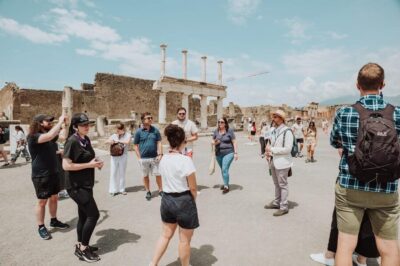
Pompeii: Entry Ticket and Guided Tour with an Archaeologist
Read our review →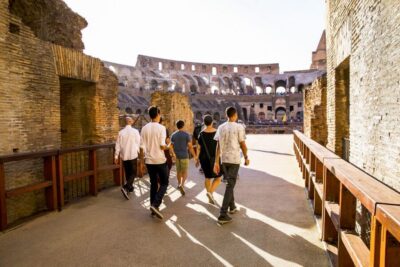
Colosseum: Underground and Ancient Rome Tour
Read our review →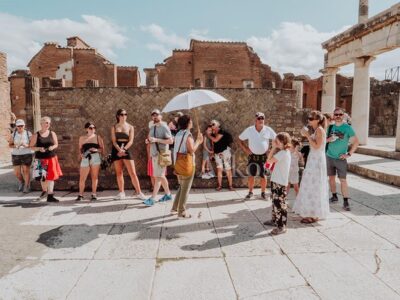
Pompeii: Small Group Tour with an Archaeologist
Read our review →Pompeii Small Group Tour with an Archaeologist
Read our review →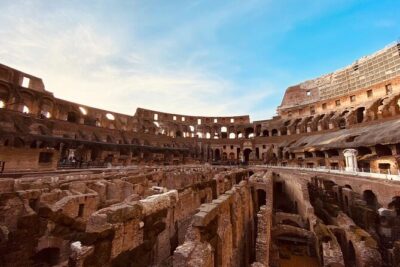
Rome: Colosseum with Arena, Roman Forum and Palatine Guided Tour
Read our review →
Venice: St. Mark’s Basilica Guided Tour & VR History Intro
Read our review →
Colosseum with Arena, Roman Forum and Palatine Hill Guided Tour
Read our review →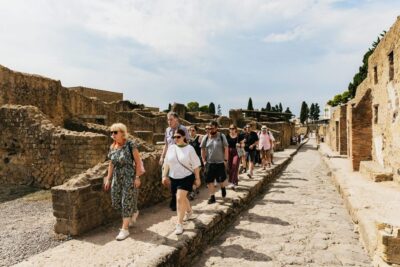
Herculaneum: Skip-the-Line Guided Tour with Archaeologist
Read our review →Browse the lists this tour appears in