
Review · DUBLIN
Dublin: Jeanie Johnston Tall Ship Irish Famine History Tour
The most affecting part of the Jeanie Johnston tour is the move from Dublin’s open waterfront to the ship’s cramped lower deck, where up to 250 passengers once spent most of a long Atlantic crossing. The experience turns a vast national tragedy into a collection of personal stories about families trying to survive.
I like the two-part route, which begins with the masts, timber, and dock views above deck before moving into the tight sleeping quarters below. I also like the short, focused format: at about 50 minutes and $16 per person, it gives you a serious history lesson without taking half a day. The main drawback is practical: ladders, narrow spaces, and the ship’s layout make it unsuitable for wheelchair users and people with limited mobility.
Key points
- A real tall ship setting: Walk the upper deck, look up at the masts, and see Dublin’s Docklands from the water.
- Famine history made personal: Hear about the passengers and crew, how crossings were paid for, what people ate, and what awaited them overseas.
- A striking lower-deck visit: See where up to 250 people lived, with only about 30 minutes of fresh air each day.
- Strong English-speaking guides: Guides including Steve, Claire, Eoin, Katrina, and Owen have been praised for clear explanations, humor, and handling questions from children and adults.
- Good value for a short visit: The $16 price and 50-minute length fit easily into a Dublin sightseeing day.
- Plan for steps and tight spaces: Comfortable shoes are advised, and the tour is not suitable for wheelchair users or people with mobility impairments.
A famine ship beside Dublin’s North Dock
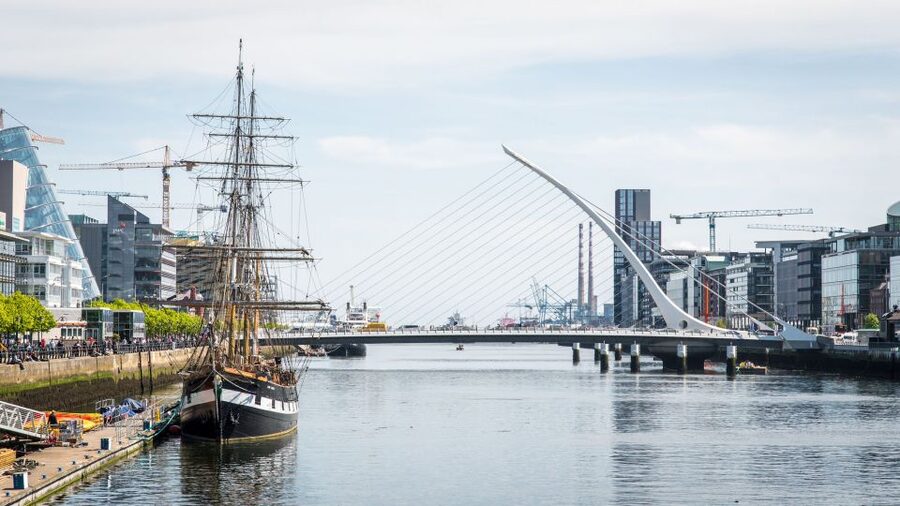
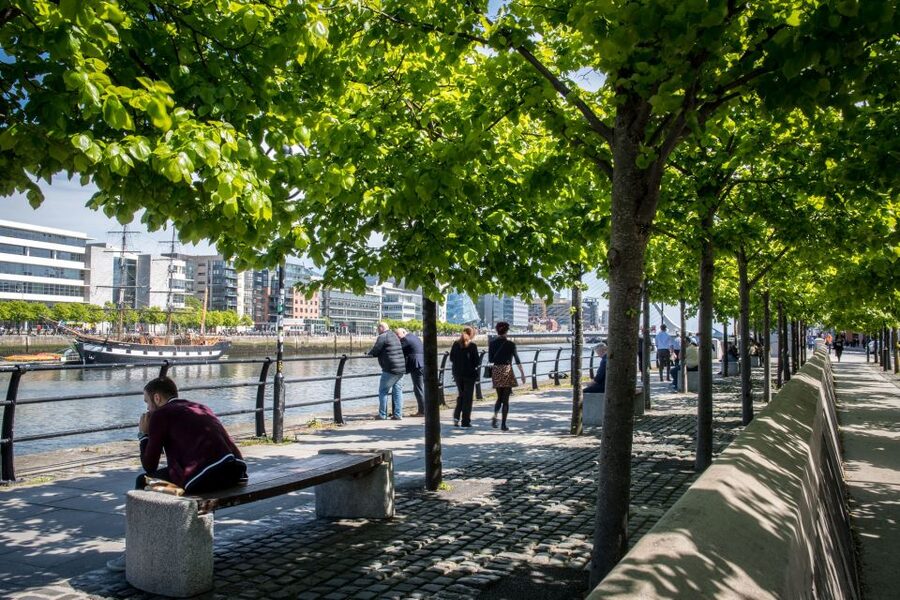
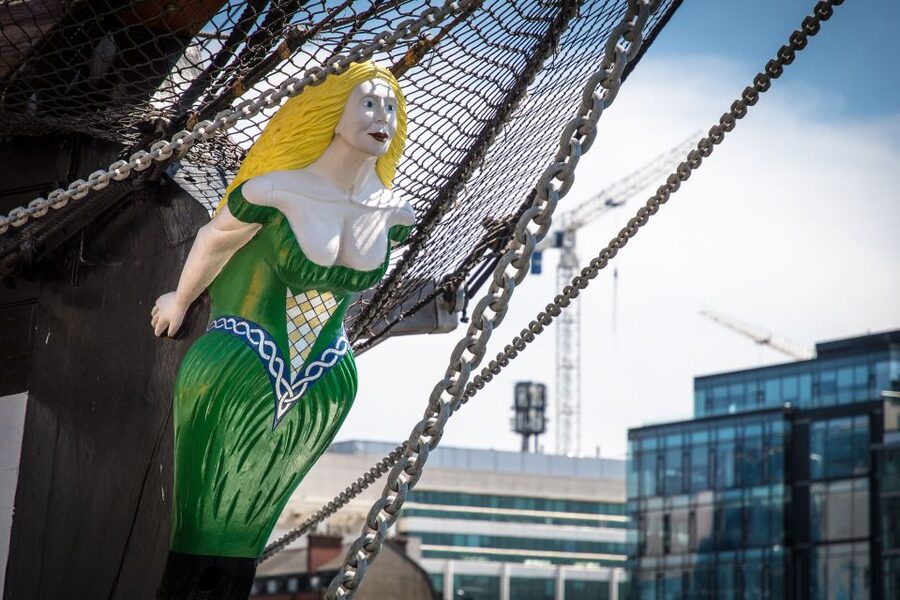
The Jeanie Johnston sits at City Moorings on Custom House Quay, Dublin 1, in the North Dock area. It is easy to spot because the tall masts and wooden hull give the ship a very different look from the modern buildings around it.
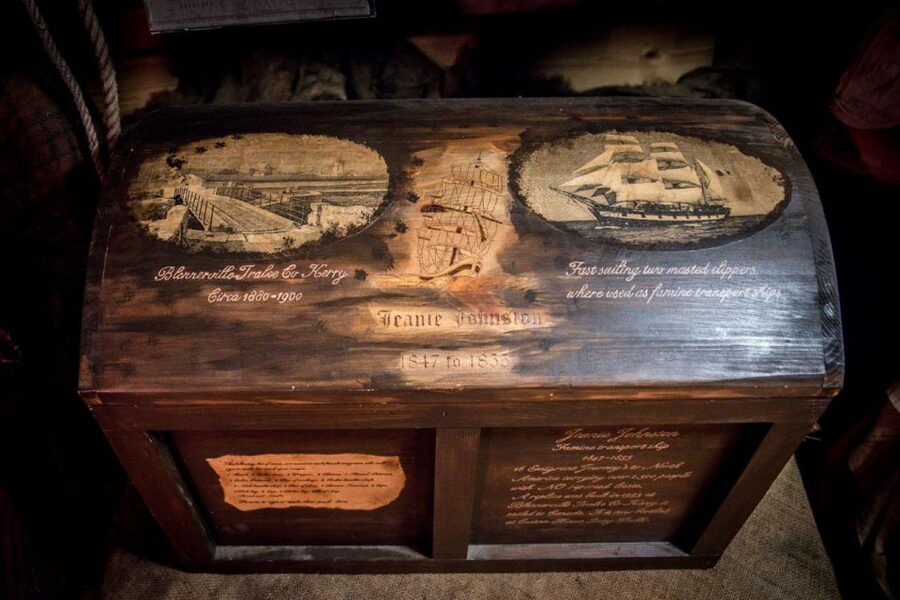
This is not simply a chance to photograph an attractive boat. The ship is used to explain one of the darkest periods in Irish history, when about one million people left Ireland during the famine years. Around 2,500 of them made the Atlantic journey on the Jeanie Johnston.
That number becomes more meaningful once you see the space below deck. You are not looking at a grand passenger liner with private cabins. You are looking at a replica of a ship where large numbers of people were packed into restricted quarters for weeks at sea, facing disease, hunger, and the risk of disaster.
The ship first carried timber before its role changed to carrying people. That shift gives the opening part of the tour a useful practical angle. You learn how a working sailing ship was adapted for human cargo, then hear how the original Jeanie Johnston and the replica came to be.
More History Tours in Dublin:
- Dublin Historical Centre Food Tour with 8 Food Tastings & Drinks
★ 5.0 · 1,718 reviews - 2-Hour Historical Walking Tour from Dublin
★ 5.0 · 875 reviews - Historical 2-Hour Guided Walking Tour of Dublin
★ 4.7 · 865 reviews
Begin with the masts, wind, and working ship
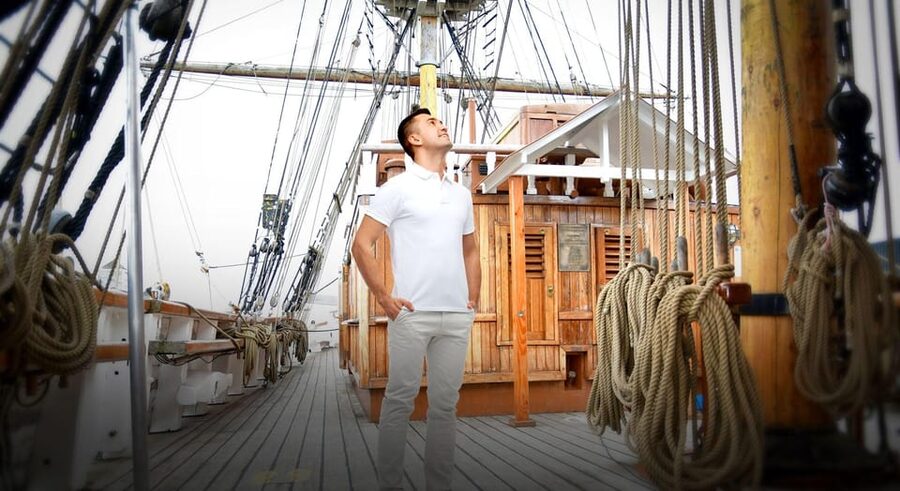
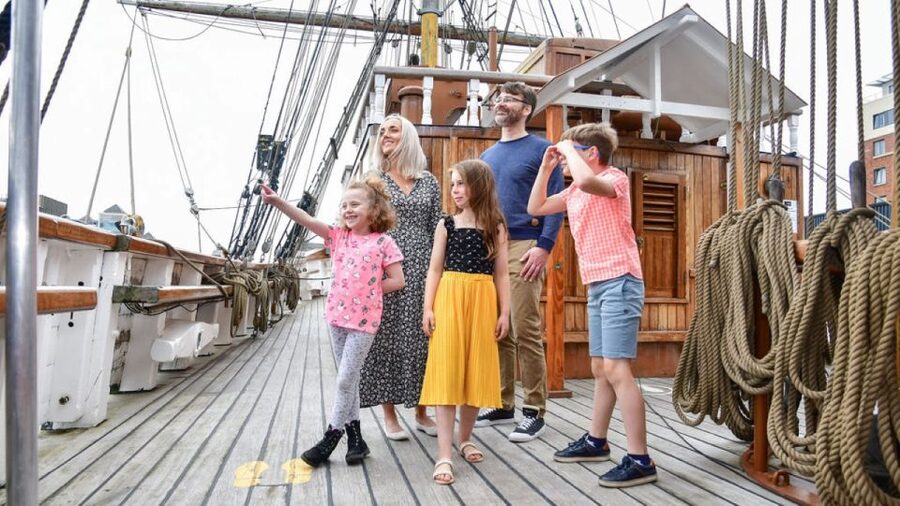
The tour starts on the upper deck. This is the most open and comfortable part of the visit, with room to look around, feel the wind, and take in the sounds of Dublin’s Docklands.
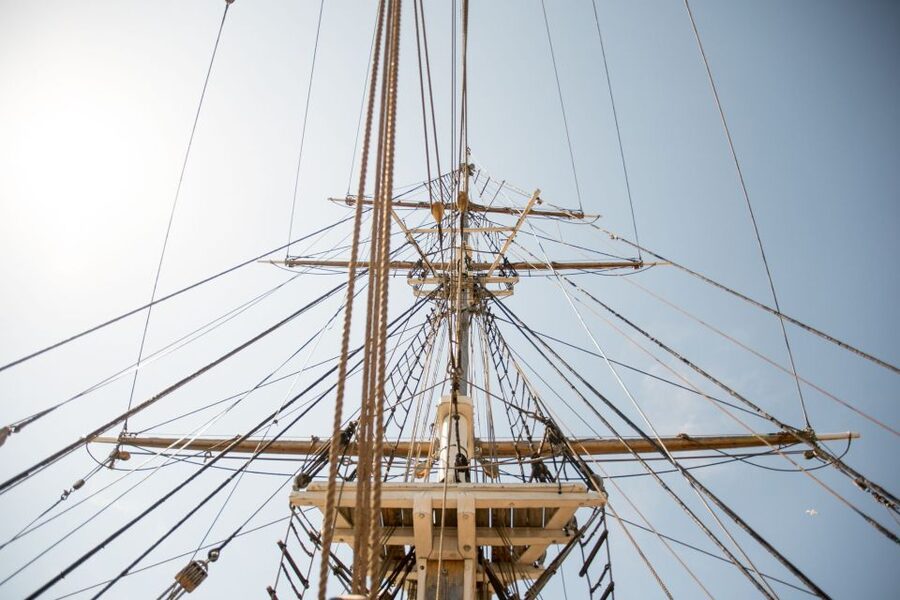
I like beginning here because it gives you time to see the ship as a vessel before the guide explains it as a famine ship. Look at the masts and the timberwork. The craftsmanship is part of the story, especially when you consider the long voyages this type of ship was built to handle.
The guide also discusses the 19th-century tall-ship trade and the ship’s earlier work transporting timber. That context matters. The Jeanie Johnston was not designed as a purpose-built symbol of Irish emigration. Its career changed, and its role in carrying people grew from the economic pressures of the period.
There is also time for photographs. The ship is one of the most recognizable sights in this part of Dublin, and the upper deck gives you a useful perspective for pictures of the vessel, its rigging, and the dockside setting.
This section can feel slightly exposed in poor weather. The tour information advises comfortable shoes, and that is sensible. You are on a ship, not a level museum floor, so wear footwear that feels secure.
Below deck, the story becomes physical
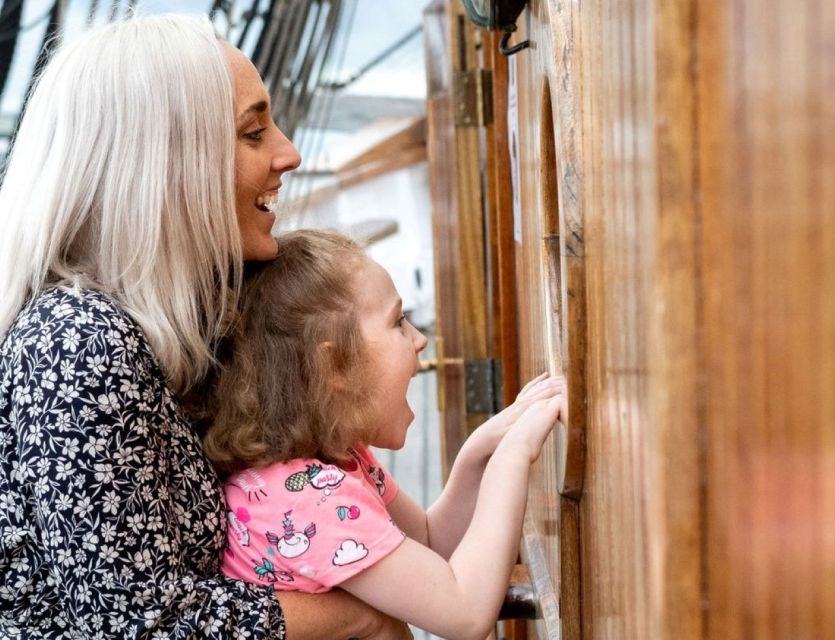
The lower deck is where the tour makes its strongest impression. The guide takes you into the cramped living quarters where as many as 250 passengers spent most of their time.
The important detail is that passengers were allowed only about half an hour of fresh air each day. That one fact helps you understand the voyage better than a list of dates or political events. You can look around the restricted space and picture families trying to sleep, eat, and care for one another with little privacy.
The conditions were grim. The tour explains the danger from illness, starvation, and accidents, as well as the general strain of spending so long in a confined area. You also hear what passengers ate and how they passed the time.
The lower deck is not large, and that is both its strength and its limitation. The close quarters help you understand the pressure of the voyage, but visitors who dislike enclosed spaces may find this part uncomfortable. The route also involves movement through a ship, so it is not a good choice if stairs, narrow passages, or uneven surfaces are difficult for you.
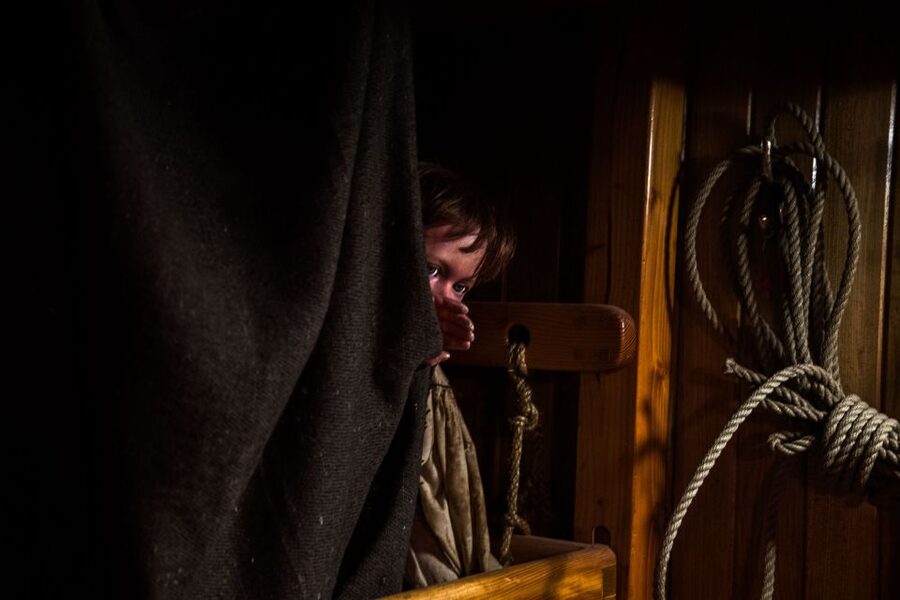
The ship includes figures representing passengers and crew. One family review noted that a guide helped a child feel more at ease around the mannequins, which is useful to know if you are visiting with children. The subject is serious, but guides often use questions, humor, and direct conversation to keep younger visitors involved.
Personal stories give the history its weight
The best part of the guided format is the attention to individual people. You do not simply hear that Irish families emigrated. You learn about the passengers and crew, how people paid for their passage, what they faced on the ocean, and what might await them when they arrived.
That approach makes the tour more than a ship inspection. It connects the famine to choices made by real families. Leaving Ireland was not a simple adventure or a tidy new beginning. People were escaping hunger and hardship, and the crossing itself carried serious risks.
The guide explains how passengers filled their days and how they managed life in conditions that were crowded, dirty, and exhausting. These details are especially useful because they show the ordinary side of a historic crisis: food, sleep, fresh air, family life, money, and time.
You also hear about the remarkable record of the Jeanie Johnston. It completed 16 voyages to America without a death on board. That does not make the journey comfortable or safe in every sense, but it gives the ship a distinctive place in the story of famine emigration.
The final part concerns the fates that awaited people at their destinations. The tour does not leave the story at the moment the ship reaches land. It asks you to think about what came next for people who had endured a hard crossing and arrived in an unfamiliar country.
Same city, a different century:
- Celtic Boyne Valley & Ancient Sites Day Tour From Dublin
★ 4.5 · 865 reviews - From Dublin: Celtic Boyne Valley and Ancient Sites Tour
★ 4.5 · 618 reviews - Dublin to Cork, Blarney Castle & Cóbh Heritage Centre by train
★ 4.5 · 510 reviews - Dublin’s Haunted History Walking Tour
★ 4.3 · 345 reviews
The guides shape the experience
This is a guided tour in English, and the guide matters. Names associated with the experience include Steve, Claire, Eoin, Katrina, Owen, Ronan, Klee, Catriona, Gearoid, and Rolland.
Several guides have been praised for making difficult material clear without making the tour feel heavy from start to finish. Steve, in particular, has been noted for explaining the famine in a way that worked for a family group with children aged seven to fifteen. Claire has also been singled out for mixing humor with solid information.
Eoin and Owen are described as especially good at answering questions, while Katrina has been effective at drawing children into the story. Gearoid has been noted for balancing seriousness with humor, which is a useful skill on a tour about suffering and survival.
Of course, the exact guide depends on the departure time. Still, the format allows room for questions, and that is valuable. If you want a silent, self-directed museum visit, this is not the same thing. You are joining a timed explanation with a live guide, and the quality of the storytelling is a central part of the experience.
The strongest guides make the ship feel inhabited by the people who used it. They explain details in plain language and invite questions rather than simply reciting facts. That helps the tour work for adults, older children, and anyone who has only a basic understanding of the Irish famine.
Why the 50-minute length works
Fifty minutes is enough time to see both the upper and lower decks and hear the main story without exhausting your attention. The subject is demanding, so the compact length is a benefit.
I would place this visit between other Docklands activities rather than treating it as a full morning program. It ends back at the starting point on Custom House Quay, so you can continue exploring Dublin afterward without arranging transport from a distant location.
The short duration also makes the tour useful on a busy city break. You can fit it around other plans, but leave enough breathing room to arrive at the ship on time and avoid rushing across Dublin.
The trade-off is that this is an introduction, not a full academic study of the famine. You will hear the main human and practical details, but the tour cannot cover every political cause, regional difference, or long-term effect in 50 minutes. If you already know the subject well, you may want additional reading or a separate museum visit.
Is $16 good value?
At $16 per person, I consider the Jeanie Johnston a strong-value Dublin attraction. Your ticket includes entrance and the guided tour, and the ship itself provides the setting for the history lesson.
The value comes from the combination of place and explanation. A standard museum display can show objects and written information. Here, you walk through a replica ship and hear how the space was used. The lower deck gives the subject a physical scale that photographs cannot provide.
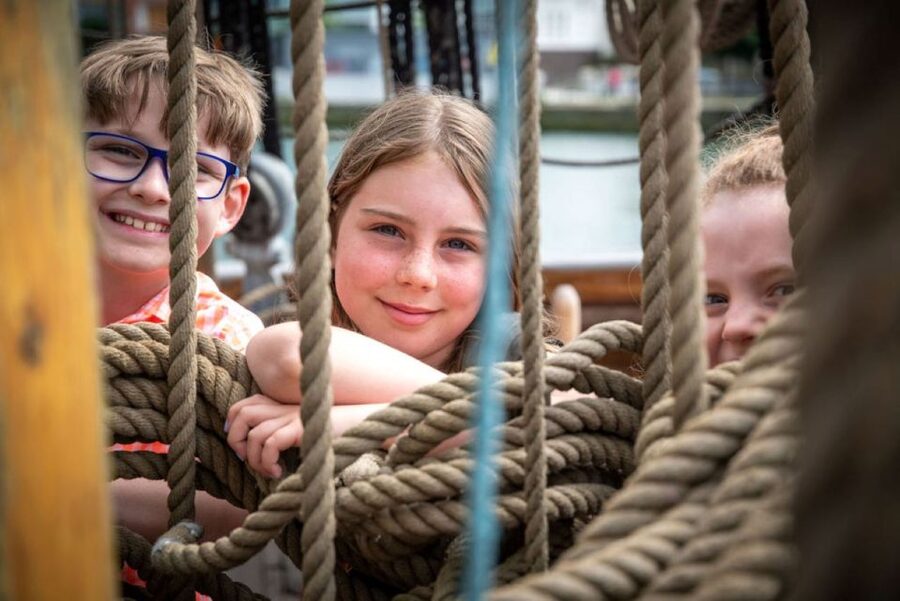
The price also works well for families. A 50-minute visit is less demanding than a long museum session, and the guides’ habit of answering questions can help children stay engaged. The material is serious, so parents should decide if their children are ready to hear about famine, disease, and difficult living conditions.
This is less attractive if you want a broad tour of Dublin or a long sailing trip. The ship remains at its dock, and the focus is history rather than a cruise. You are paying for access to the vessel and its guided interpretation, not for transport around Dublin Bay.
Practical details before you go
The meeting point is the Jeanie Johnston Tallship at City Moorings, Custom House Quay, Dublin 1. The activity ends at the same place.
Bring comfortable shoes. The ship is not recommended for people with limited mobility and is not suitable for wheelchair users. That restriction is important, since the visit includes movement through a ship rather than a fully accessible exhibition space.
The tour is conducted in English. Check the available departure times when booking, since the duration is fixed at about 50 minutes but starting times can vary.
Hotel pickup and drop-off are not included. You will need to make your own way to Custom House Quay.
If your schedule is uncertain, you can reserve now and pay later. Cancellation is free up to 24 hours in advance for a full refund, according to the stated booking terms.
Who should book the Jeanie Johnston?
I would recommend this tour if you want Irish history explained through a real setting rather than through displays alone. It is especially useful for first-time visitors who want a clear introduction to the famine and the mass emigration that followed.
Families can also get a lot from it. The guides have shown they can adjust their explanations for children, encourage questions, and use a little humor without losing sight of the subject.
You should think twice if you have difficulty with steps, narrow spaces, or enclosed areas. You should also choose another activity if you are looking for a boat ride, a long Docklands cruise, or a broad overview of Dublin.
For most visitors who can manage the ship’s layout, the combination of price, location, and human storytelling makes this a worthwhile short stop. The ship photographs well, but the lower deck is what gives the visit its real force.
FAQ
Where does the Jeanie Johnston tour begin?
It begins at the Jeanie Johnston Tallship, City Moorings, Custom House Quay, Dublin 1.
Where does the activity end?
The tour ends back at the meeting point on Custom House Quay.
How long is the Jeanie Johnston tour?
The guided tour lasts about 50 minutes.
What language is the tour conducted in?
The live guided tour is conducted in English.
What is included in the ticket?
The ticket includes entrance and access to the guided tour of the Jeanie Johnston tall ship.
Is hotel pickup included?
No. Hotel pickup and drop-off are not included.
What should I bring?
Comfortable shoes are recommended for the visit.
Is the tour suitable for wheelchair users?
No. The activity is not suitable for wheelchair users.
Is the tour suitable for people with limited mobility?
It is not recommended for people with limited mobility.
Can I cancel for a refund?
Yes. You can cancel up to 24 hours in advance for a full refund.
Just added around Dublin
- Wicklow Historic Gaol: 1-Hour Tour★ 4.4 · 56 reviews
- Dublin: LGBT Pride Walking Tour with Queer History★ 5.0 · 24 reviews
- Dublin: Macabre History Walking Tour★ 4.9 · 95 reviews
- Dublin Private Highlights & History of 1916 Easter Rising Tour★ 5.0 · 154 reviews
- Dublin Private Medieval Walking Tour★ 5.0 · 69 reviews
- Dublin Historical Centre Private Food Tour with 8 Food Tastings★ 5.0 · 152 reviews
- The History of Dublin With Locals: 1916 Easter Rising PRIVATE Tour★ 5.0 · 73 reviews
- Walking Tour of Dublin’s Viking/Medieval Quarter with a Viking★ 5.0 · 171 reviews
Dublin History Tours, compared.
Dublin Historical Centre Food Tour with 8 Food Tastings & Drinks
Read our review →

Historical 2-Hour Guided Walking Tour of Dublin
Read our review →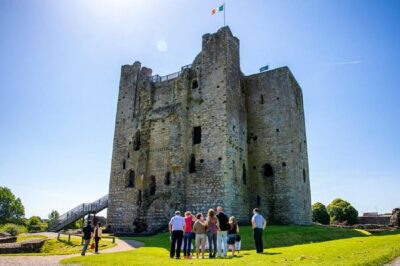
Celtic Boyne Valley & Ancient Sites Day Tour From Dublin
Read our review →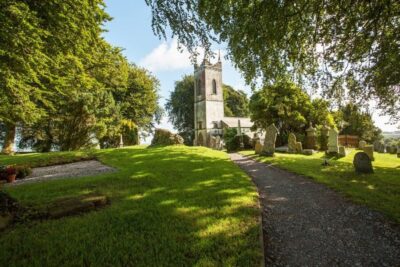
From Dublin: Celtic Boyne Valley and Ancient Sites Tour
Read our review →
Dublin to Cork, Blarney Castle & Cóbh Heritage Centre by train
Read our review →
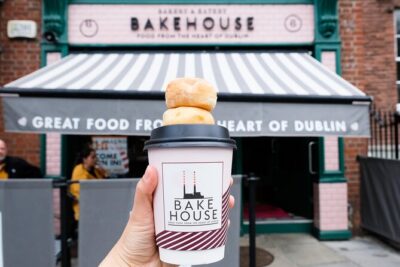
Deliciously Dublin: The Artisan Donut Walking & History Tour
Read our review →Browse the lists this tour appears in