
Review · WARSAW
Private Tour: Warsaw’s Communist History by Retro Fiat
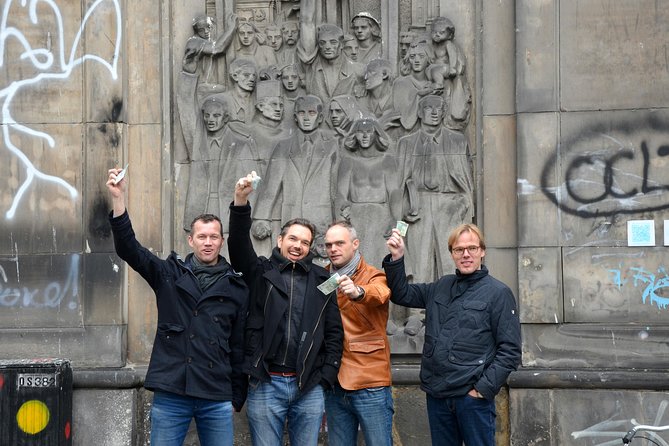
Warsaw’s Communist past becomes much easier to grasp from the back seat of a Polish Fiat 125p. This private four-hour ride links grand Socialist Realist buildings with ordinary housing blocks, censorship memorials, former party offices, and Praga’s old streets. I like the personal scale of the tour, and I like that guides such as Jacob, Karol, Martin, Olga, and Pawel have brought family memories and thoughtful discussion to the subject. The old car also turns every stop into a small public event, with locals often smiling as it passes.
The main caution is that the tour depends heavily on your guide. Most of the route is by car with short walks, and one disappointing experience involved little explanation beyond the main sights. I would tell your guide at the start that you want a focused Communist-history tour, not a general drive around Warsaw.
Key points at a glance
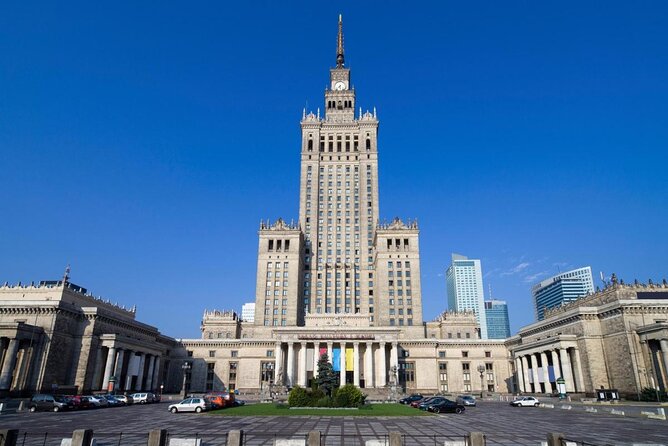
- A private Fiat 125p ride: Your group travels in a Polish-made car closely tied to everyday life during the Communist period.
- Personal stories matter: Guides may add first-hand memories of growing up before Poland’s move to capitalism.
- Seven strong history stops: You visit the Palace of Culture, Constitution Square, the former ministerial district, Praga, Różycki Bazaar, and more.
- Hotel pickup included: The guide collects you from your hotel lobby or meets you in front of the building when it falls outside the usual pickup area.
- Good value for history fans: At $108.24 per person, the price makes the most sense for a private group that values flexible conversation.
- Plan for extras: Food and drinks are not included, and admission to the Palace of Culture and Science costs extra.
Why a vintage Fiat changes the Warsaw story
The car is not just transport. The Fiat 125p was a familiar Polish product during the Communist era, so riding in one gives the subject a physical link to daily life. You are not simply looking at an old building from a modern minivan. You are moving through the city in a vehicle that belongs to the period being discussed.
There is also a playful side to it. The bright old Fiat attracts smiles as it moves through Warsaw, and that makes the ride feel less formal than a standard history tour. You still get serious discussion, but the car keeps the four hours lively.
This is a private tour, so you can ask questions without worrying about holding up a large group. That matters here. Poland’s Communist years cover politics, housing, censorship, work, shortages, public image, and the transition to capitalism. You may want to stop and ask about a building, compare official slogans with real life, or hear how a family experienced the period.
The strongest guides bring personal experience to the subject. Some grew up before 1989 or remember the period as it was fading. Guides including Olga and Martin have been praised for connecting national events with family stories, while Jacob has been noted for adapting the discussion to unusual questions. That personal angle can make the difference between memorizing dates and understanding how the system felt.
More Private History Tours in Poland
- Private Tour: Warsaw’s Jewish Heritage by Retro Fiat
★ 5.0 · 208 reviews - Private Historical Tour of Warsaw by a Retro Fiat with Pickup
★ 5.0 · 190 reviews - Warsaw for WWII Buffs – private tour with hotel pickup
★ 5.0 · 166 reviews
The Palace of Culture and Science: Warsaw’s unavoidable symbol
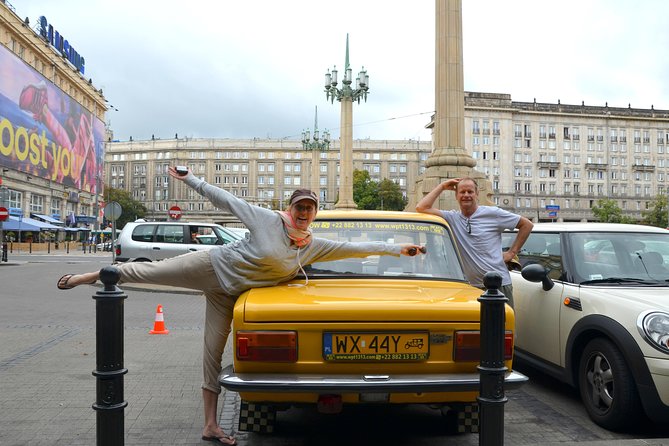
The Palace of Culture and Science is the natural opening stop. It is Warsaw’s most recognizable building and Poland’s tallest. Its Socialist Realist design was meant to project power, order, and modernity, while its enormous scale still shapes the city center.
You spend about 30 minutes here, hearing the building’s story and seeing its current role. The palace now contains theatres, museums, a cinema, pubs, and other public spaces, so it is not frozen in its original political purpose. That contrast is useful: a structure once presented as a symbol of Soviet influence now functions as part of ordinary city life.
Admission is not included. If you want to go inside or visit one of the palace attractions, budget separately. The tour still works if you only view it from outside, but anyone wanting a fuller visit should ask the guide how much time remains and confirm the extra ticket cost.
I like starting here because the palace gives you a visual key for the rest of the tour. After seeing its grand scale, the more modest housing districts and administrative buildings make better sense.
Constitution Square and the Socialist Realist city
At Plac Konstytucji, or Constitution Square, the subject shifts from one monumental building to a whole planned district. The square is lined with Stalin-era architecture and was designed as a representative Communist housing area.
Your guide can point out how the buildings were meant to present an orderly, confident society. The facades are formal and imposing, but the real story is also about the people who lived behind them. This is one of the useful features of a private guide: you can move from architecture to questions about housing, work, and daily routines instead of treating the square as a quick photo stop.
The stop lasts about 30 minutes and is free. Expect to walk a little around the square, so wear shoes suitable for pavement. The tour is not a long walking program, but it is more rewarding when you get out of the Fiat and look up at the details.
The nearby Communist ministerial district adds another layer. These offices were built in the Socialist Realist style for state administration. Together, the square and ministry quarter show how architecture served as political theater. The goal was not only to house people or government workers. Buildings were meant to make the state look solid, permanent, and in control.
Censorship and the former party headquarters
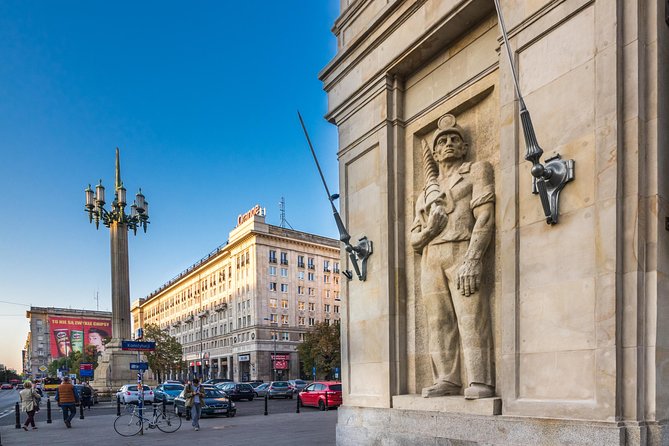
The Monument of the Free Word is a tiny stop, listed at about five minutes, but it deals with a major subject. During Communist rule, censorship shaped newspapers, books, public speech, and the information available to ordinary people.
Do not expect a long museum visit here. The value comes from the explanation. Your guide can place the monument within the wider story of what could be printed, what had to be removed, and how people learned to read between the lines.
The next stop is the statue of Charles de Gaulle, near the former Communist Party House. The building has also been described as Poland’s White House because of its role in national political life. Here you hear about the leaders and institutions that directed Poland during the period.
The two stops work well together. One concerns the control of words, the other the control of power. Since both visits are brief, the quality of the guide’s explanation matters more than the amount of time spent on site.
More Cold War and Communism Tours in Poland:
- Berlin: Third Reich & Cold War Guided Walking Tour
★ 4.9 · 8,378 reviews - Berlin’s Best: 2 Hour Walking Tour Third Reich and the Cold War
★ 5.0 · 5,486 reviews - Prague: Communism History and Nuclear Bunker Guided Tour
★ 4.7 · 2,417 reviews - Prague Communism History and Nuclear Bunker Tour
★ 5.0 · 1,742 reviews
Praga Północ and the old Różycki Bazaar
The tour then crosses to Praga Północ, a district with a different feel from central Warsaw. Praga was not destroyed as heavily during the Second World War, so more of its older street fabric survived. That makes it useful for seeing how the Communist period met an existing neighborhood rather than replacing everything with new construction.
The district also helps you think about contrast. Central Warsaw contains grand state architecture and rebuilt monuments. Praga preserves a more mixed urban story, including buildings and streets that show how people lived outside the official showcase areas.
At Różycki Bazaar, you see the site associated with Warsaw’s most famous black market during the Communist period. This is one of the most revealing stops because it moves away from official buildings and toward the practical ways people found goods when the formal economy could not supply everything.
Your guide can explain why a market like this mattered. A black market was not simply a colorful side note. It reflected shortages, private enterprise, and the gap between state promises and everyday needs. The stop lasts about 15 minutes and is free, so the explanation carries most of the weight.
This part of the tour is especially good for anyone who wants more than architecture. You see how the system shaped shopping, access, and household life.
Mariensztat Square and model housing
Mariensztat Square offers another look at Communist-era housing. The district includes housing blocks built in the postwar period, and the square helps show how new neighborhoods were used to project a carefully managed image of urban life.
You spend about 20 minutes here. It is a shorter stop, but it fits the wider pattern of the tour: monumental buildings tell you what the state wanted to say, while housing districts show how that message reached ordinary residents.
One especially interesting detail from the tour’s wider discussion concerns apartment blocks that were intended as models for future construction but were later judged too luxurious to repeat. That kind of detail is more revealing than a simple statement that Poland had Communist housing. It shows the tension between providing modern homes and keeping construction cheap, controlled, and available on a large scale.
You may also hear about the difference between official presentation and lived experience. A planned district could look impressive from the outside while still reflecting limits on space, choice, and materials. Ask your guide to explain which buildings were intended for ordinary residents and which served a more privileged purpose.
What the four-hour format feels like
The tour lasts about four hours, with a mixture of driving and short walks. That balance works well in Warsaw, a spread-out city where several important Communist-era sites are not close together.
You get enough time to see a broad range of places without spending the whole day on foot. The Fiat is small, so do not expect a roomy coach-style ride. The compact car is part of the appeal, but anyone who values extra space should keep that in mind.
The private format also changes the pace. You can ask for more detail at Constitution Square, spend less time at a stop that does not interest you, or ask for extra context about housing and censorship. The experience is still built around the main route, but guides have shown flexibility when groups have specific interests.
That flexibility has one downside. Because the tour is conversational, the structure may feel loose if you expect a strict, lecture-style schedule. One poor experience involved the guide asking what the group wanted to see and then spending too much time on general sights. I would avoid that by stating your priorities clearly before leaving: Communist architecture, daily life, censorship, the old economy, or political leadership.
Price, pickup, and practical value
The cost is $108.24 per person. For one or two people, that is a meaningful expense. For a private group, the price is easier to justify because you are paying for a dedicated vehicle, an English-speaking local driver-guide, hotel pickup, and a conversation shaped around your group.
I see the strongest value for visitors who already have a basic look at Warsaw’s major sights and want a more focused subject. You are not paying only to be driven past buildings. You are paying for the connections between political power, architecture, housing, censorship, shopping, and personal memory.
Hotel pickup and drop-off simplify the day. The guide collects you in the lobby or meets you in front of the building if that is the agreed arrangement. If your hotel is outside the normal pickup area, contact the operator in advance so a meeting point can be arranged.
The stated starting point is Dworzec Centralny, Warsaw’s Central Railway Station, but pickup is offered. Confirm the exact meeting plan when you book, especially if you are not staying in central Warsaw.
Food and drinks are not included. One past group expected a snack, a Polish vodka shot, and a souvenir photo, but those items were missed. Since they are not part of the included services listed here, treat them as possible extras rather than guaranteed features. If those touches matter to you, ask before the tour begins.
You can cancel for a full refund up to 24 hours before the start time. Changes or cancellations inside that window are not accepted for a refund.
Who will get the most from this tour
I would choose this tour if you want Warsaw’s Communist period explained through places you can see, not just through a museum display. It suits first-time visitors who want a city orientation with a clear theme, as well as history-minded people looking for details about life under the system.
It is also a good choice for couples, families, and small groups who prefer asking their own questions. The private setting gives you room to discuss difficult subjects without worrying about a large group’s pace.
You should think twice if you want a long visit inside museums. The tour is mainly an outdoor and vehicle-based route, and the Palace of Culture admission is extra. You should also reconsider if you prefer a tightly scripted program with the same talk at every stop. The guide can make the experience excellent, but that also means the guide’s preparation and focus matter.
An English-speaking guide is provided. Most people can take part, and the tour is near public transportation, though the actual experience relies on the car and short walks between stops.
Should you book the Fiat Communist-history tour?
Book it if you want a private, approachable way to understand how Communist power shaped Warsaw’s buildings, streets, housing, markets, and public speech. The Fiat 125p is memorable, but the real strength is the chance to talk with a local guide who may connect national history with personal and family experience.
Before you set off, say exactly what you want from the four hours. Ask for the Communist focus to remain central, and ask about any optional food, drink, photo, or museum plans. With the right expectations, this is a strong choice for seeing parts of Warsaw that a standard city tour often skips.
FAQ
How long does the Warsaw Communist history tour last?
The tour lasts approximately four hours.
Is the tour private?
Yes. Only your group takes part, with a private vehicle and a professional local driver-guide.
What vehicle is used?
Transport is provided in a private Polish Fiat 125p, a vintage car closely associated with everyday life during the Communist period.
Is hotel pickup included?
Yes. The guide picks you up from your hotel lobby or meets you in front of the building. If your hotel is outside the usual pickup area, you should contact the operator to arrange another solution.
Is the tour offered in English?
Yes. The tour is offered in English with an English-speaking guide.
Is admission to the Palace of Culture and Science included?
No. Admission to the Palace of Culture and Science is not included. The other listed stops have no admission charge.
Can I cancel for a full refund?
Yes. You can cancel at least 24 hours before the experience start time for a full refund. Cancellations or changes made less than 24 hours before the start time are not accepted for a refund.
Just added around Poland
- Best of Wroclaw 3-Hour History and Culture Walking Tour★ 4.9 · 49 reviews
- Krakow: Vistula River Cruise with Historical Views★ 3.5 · 357 reviews
- Krakow: Kościuszko Mound Ticket – History & Views!★ 4.4 · 303 reviews
- Krakow Old Town Segway Tour — 2H of History, Fun & Discovery★ 4.8 · 91 reviews
- Warsaw: Historic Private Tour in Retro Fiat★ 4.9 · 41 reviews
- Archaeological Museum of Krakow Entrance Ticket★ 3.8 · 31 reviews
- Private Historical Tour of Warsaw by a Retro Fiat with Pickup★ 5.0 · 190 reviews
- Warsaw for WWII Buffs – private tour with hotel pickup★ 5.0 · 166 reviews
Warsaw History Tours, compared.
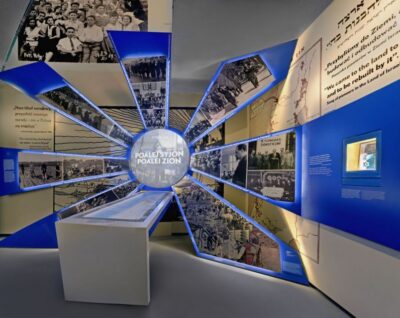
Warsaw: POLIN Museum of the History of Polish Jews Ticket
Read our review →
Warsaw: Chopin Concert at Historical Venue in Old Town
Read our review →
Warsaw: Jewish History Guided Walking Tour in English
Read our review →
Private Tour: Warsaw’s Jewish Heritage by Retro Fiat
Read our review →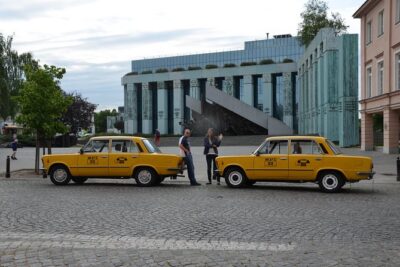
Private Historical Tour of Warsaw by a Retro Fiat with Pickup
Read our review →
Warsaw for WWII Buffs – private tour with hotel pickup
Read our review →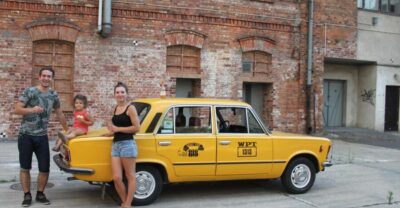
Browse the lists this tour appears in