
Review · WARSAW
Private Tour: Warsaw’s Jewish Heritage by Retro Fiat
Warsaw’s Jewish past is easiest to understand when you see its scattered remains in person. This private tour links the ghetto wall, Chłodna Street, Muranów, the Ghetto Heroes Monument, Nożyk Synagogue, and the Jewish Cemetery while your guide explains what changed and what survived. The retro Fiat 125p adds an unusual, distinctly Warsaw touch.
I like the private format, which lets you ask family-history questions or request places connected with The Pianist. I also like the guides’ reported strength in explaining difficult subjects clearly, with several named guides, including Karol, Marcin, Martin, Alec, and Conrad, praised for their preparation and warmth. The main drawback is timing: a late afternoon departure may exclude the synagogue and cemetery, both of which close for the Sabbath and may not admit visitors after their opening hours.
Key points at a glance
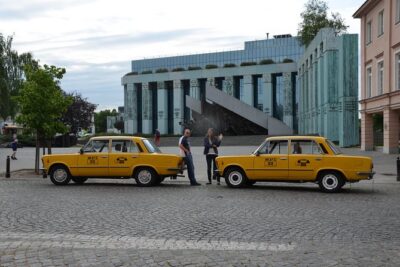
- The Fiat is part of the experience: Ride between sites in a classic Communist-era Fiat 125p, or a vintage minivan for groups of four or more.
- The route covers more than wartime memorials: You see prewar Jewish life, the ghetto, the 1943 uprising, postwar Warsaw, and Jewish life today.
- The cemetery and synagogue require planning: Both are closed from Friday evening through Saturday, and admission is not included.
- Your guide can shape the visit: Ask for film locations from The Pianist, family connections, or extra context at particular memorials.
- Hotel pickup makes the four-hour tour simple: Pickup is available in central Warsaw, with return to your original meeting point.
- The POLIN Museum is optional: The guide can leave you there after the tour, but museum admission costs extra.
Why the Fiat makes this history easier to follow
The subject is serious, but the vehicle gives the tour a human scale. Instead of walking between widely separated sites or trying to piece the story together from plaques, you ride with one guide who connects the locations as you go.
The Fiat 125p is a former Communist-era Polish car, and it attracts attention as it moves through the city. That novelty does not replace the substance of the tour, but it makes the outing feel tied to Warsaw itself rather than like a standard sightseeing circuit.
The private setup matters more than the car. You can pause for questions, ask your guide to explain a family name, or focus on the parts of the story that matter most to you. Several guides have been singled out for strong English, careful driving, and the ability to explain a difficult timeline without rushing.
For groups of four or more, the vehicle changes to a vintage minivan. That is practical, though you should not book this expecting every member of a larger group to ride in the Fiat.
More Private History Tours in Poland
- Private Historical Tour of Warsaw by a Retro Fiat with Pickup
★ 5.0 · 190 reviews - Warsaw for WWII Buffs – private tour with hotel pickup
★ 5.0 · 166 reviews - Private Tour: Warsaw’s Communist History by Retro Fiat
★ 5.0 · 115 reviews
The ghetto wall and Chłodna Street
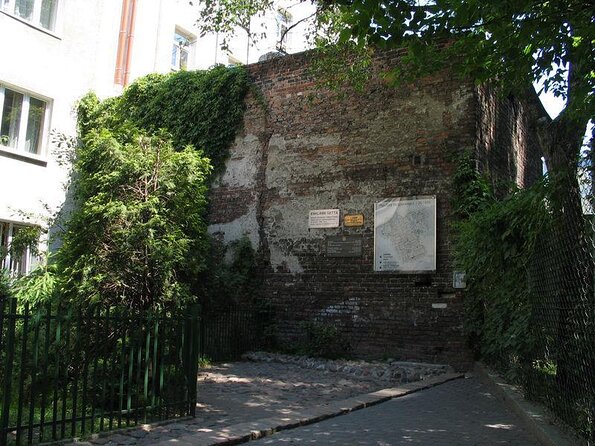
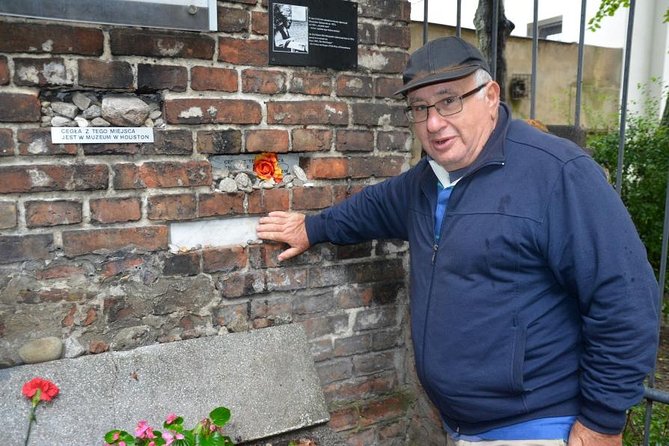
The first stop is a surviving fragment of the Warsaw Ghetto wall, marked by commemorative plaques. It is a small physical remnant, and that is precisely why a guide helps. On its own, the wall fragment can look easy to miss. With context, it becomes a way to understand how the ghetto was sealed and how radically the surrounding city has changed.
Your guide explains the creation of the ghetto in 1940 and the imprisonment of more than 400,000 Jews. The subject is painful, but the tour places it in a clear sequence, moving from the prewar community to Nazi occupation, confinement, resistance, and destruction.
Chłodna Street adds a different kind of evidence. Here you see the location associated with the Footbridge of Memory, which linked sections of the ghetto, as well as the building where Adam Czerniakow, head of the Jewish Council, lived. These details help you picture the ghetto as a functioning, crowded district with streets, offices, homes, and forced systems of administration, not simply as a collection of monuments.
The stop is brief, around 10 minutes, so use your time well. Ask your guide to point out what remains and what has disappeared. Much of Warsaw was rebuilt, and the lack of visible wartime fabric can be confusing without explanation.
Muranów and the former Large Ghetto
The tour then moves into Muranów, the area of the former Large Ghetto. Today it has modern apartment buildings, streets, memorials, and street art. That contrast is central to the experience. You are not touring a preserved old quarter. You are reading a modern district built over a place that was almost destroyed.
The guide brings old photographs to some stops, allowing you to compare wartime scenes with the streets in front of you. This is one of the most useful parts of the tour because the present-day buildings rarely explain their own past.
You also visit lesser-known points connected with the uprising, including the location linked with the departure route to Treblinka, a memorial to people who died by group suicide during the Ghetto Uprising, and a street that survived on both sides through the former ghetto area. These are not quick photo stops. They give the tour a wider reach than a basic visit to the main monument.
The route deals with the Holocaust directly. You should expect difficult information and moments of silence. The best guides keep the tone respectful while still answering questions plainly. Several named guides have been praised for presenting grim material with care, patience, and a sense of proportion.
The Ghetto Heroes Monument and POLIN Museum
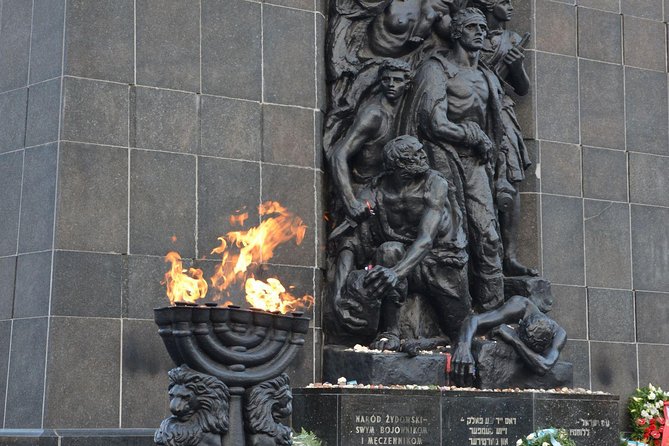
At the Ghetto Heroes Monument, the focus shifts to the Warsaw Ghetto Uprising of 1943. The monument commemorates those who resisted, and its setting makes it one of the most important stops in Warsaw.
Your guide can explain the uprising in relation to the earlier stages of ghetto life, deportations, and resistance. That sequence matters. Without it, the monument can seem like an isolated symbol. With it, you understand why this particular place carries such weight.
The POLIN Museum of the History of Polish Jews is next. The tour includes an exterior visit rather than museum admission. You can ask the guide to leave you there after the drive if you want to spend more time inside, but you will pay the museum entry separately.
I recommend treating POLIN as a possible second activity rather than trying to squeeze it into the four-hour tour. The museum covers 1,000 years of Polish Jewish history, while this drive gives you physical contact with Warsaw’s streets and memorials. They serve different purposes. If your schedule allows only one, choose according to your interest: the tour is better for place-based explanation, while the museum offers a longer indoor presentation.
More Jewish Heritage Tours in Poland:
- Warsaw: Jewish History Guided Walking Tour in English
★ 4.7 · 324 reviews - Budapest Jewish Heritage Memorial Walking Tour & Synagogue Entry
★ 5.0 · 568 reviews - Budapest: Jewish Heritage Guided Tour with Synagogue Ticket
★ 4.8 · 533 reviews - 3-Hour Porto Jewish Heritage Walking Tour with Local Guide
★ 4.5 · 396 reviews
Nożyk Synagogue and the Jewish Cemetery
Nożyk Synagogue is the only surviving prewar Jewish house of prayer in Warsaw. You may be able to look inside, but admission is not included, and the building is closed from Friday evening through Saturday for the Sabbath.
This is one of the most important scheduling details. A 5 p.m. summer departure may still have plenty of daylight, but that does not mean the synagogue and cemetery will be open. If entering these sites matters to you, book a morning or earlier afternoon departure and confirm the timing before you go.
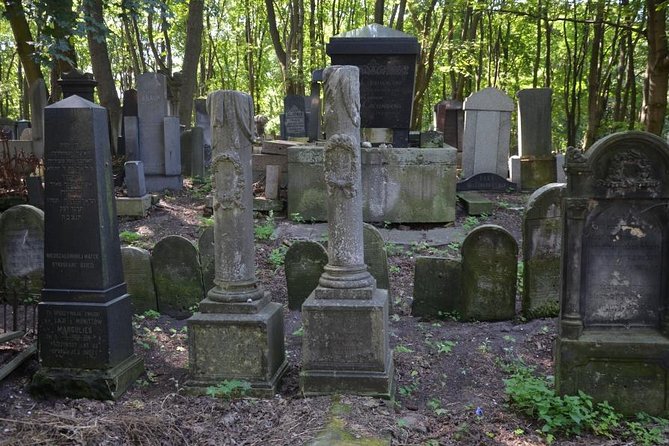
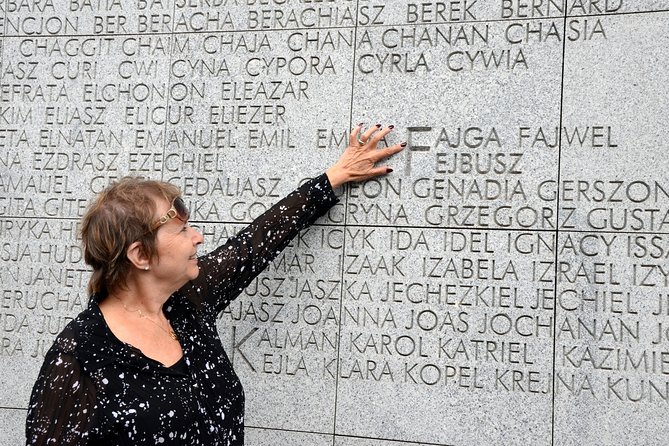
The Jewish Cemetery adds another layer to the story. Its graves recall generations of Jewish Varsovians, including religious and political leaders, cultural figures, and people who died anonymously in the ghetto. You see the remains of more than 200,000 graves, though the condition and setting can make the visit emotionally demanding.
The cemetery is also closed from Friday evening through Saturday. You should cover your head at some Jewish sites, so bring something suitable or be prepared to follow the site’s instructions.
The cemetery costs extra, but it is one of the places where the additional admission feels worthwhile. The guide can help you read the space, identify its role in the city, and explain why it matters beyond the individual monuments.
Guides who turn a difficult subject into a clear story
The guide is the most important variable in this experience. The strongest feedback centers on people rather than on the car. Karol has been praised for his historical training, careful driving, and ability to go beyond the expected stops. Marcin is noted for a personal and well-organized presentation, while Martin has helped visitors place centuries of Jewish and Polish history into a clear timeline.
Alec and Conrad have also been praised for fluent English, patience, and a willingness to answer detailed questions. One guide brought photos that showed how locations looked during the war. Another helped connect the tour with personal family discoveries.
Names and guide assignments can change, so you cannot assume you will receive a particular person. Still, the private format gives the guide room to adjust the pace. Tell the company in advance if you have a family name, a genealogy question, a strong interest in the uprising, or a wish to see locations connected with The Pianist.
The tour is in English. The guide also drives, so the best experience comes when the conversation remains focused and you allow time for traffic between stops.
What the $108.28 price buys you
At $108.28 per person, this is not the cheapest way to see Warsaw. It is also not a simple car ride. The price covers about four hours of private transport, hotel pickup and drop-off in central Warsaw, and a dedicated English-speaking driver-guide.
The value is strongest for two or three people who want personal attention. You avoid organizing several taxi rides between sites, and you get explanations at locations that can be hard to interpret alone. For a larger group, the per-person cost may become more attractive, though the vehicle changes to a vintage minivan for four or more.
You still pay separately for the synagogue and cemetery, where applicable, and for POLIN Museum entry. Build those costs into your budget. The tour itself provides a good outline, but it does not replace a full museum visit.
Pickup is available from central Warsaw hotels. If your hotel is outside the pickup area, contact the provider before booking to arrange a meeting point. The listed meeting point is in front of the Palace of Culture and Science, and the tour returns you to the original departure point.
Timing, comfort, and practical limits
The drive lasts about four hours. That is enough time for the major sites, but not enough for long visits at every location. Expect a mix of driving, short roadside stops, and walking at the cemetery and memorial areas.
The Fiat is part of the charm, not a modern touring vehicle. Space and comfort may be more limited than in a regular minivan, particularly for taller passengers. Ask about the vehicle if comfort is a major concern.
The tour is private, and most people can participate. You should still expect uneven surfaces and walking at some sites, especially around the cemetery. No special accessibility details are provided, so contact the provider if you need specific assistance.
The subject can be emotionally heavy. You will hear about confinement, deportation, mass murder, and resistance. The tour is not designed as light sightseeing, though the car and the friendly manner of several guides keep the day from feeling cold or impersonal.
Free cancellation is available up to 24 hours before the start time. Changes or cancellations made inside that window are not accepted for a refund.
Who should book this Warsaw Jewish heritage tour?
I would choose this tour if you want a focused introduction to Jewish Warsaw and prefer a private conversation over a large group. It suits people with an interest in World War II, Jewish genealogy, Warsaw’s rebuilt city center, or the locations connected with The Pianist.
It is especially useful early in your stay. The guide can give you a framework for later visits to POLIN, the cemetery, or other wartime sites. It also works well after a general city tour, when you already know the basic shape of Warsaw and want a more specific subject.
I would hesitate if you want a full museum experience in four hours, or if you mainly want to ride in a vintage car with only light historical commentary. The Fiat is enjoyable, but the purpose of the tour is serious and educational.
Should you book it?
Book it if you value a private guide who can explain why each place matters, not just point out a monument. The strongest parts are the connected route, the ability to ask personal questions, and the chance to see sites that are spread across Warsaw.
Choose an earlier departure if the Nożyk Synagogue and Jewish Cemetery are priorities. Confirm opening times, remember that entry fees are extra, and tell the provider about any family or film-location interests before pickup. With those details handled, this is a thoughtful, efficient way to encounter Warsaw’s Jewish past without treating it as a checklist.
FAQ
How long does the tour last?
The tour lasts approximately four hours.
What vehicle is used?
You ride in a private retro Fiat 125p. Groups of four or more are driven in a vintage minivan instead.
Is hotel pickup included?
Yes. Hotel pickup and drop-off are included for central Warsaw hotels. The guide collects you from the hotel lobby or meets you in front of the building.
Where does the tour start?
The listed meeting point is the Palace of Culture and Science at pl. Defilad 1 in Warsaw. The tour ends back at the meeting point unless another pickup arrangement is made.
Is the tour private?
Yes. Only your group participates.
Is the tour offered in English?
Yes. The tour is offered in English with a professional driver-guide.
Is entry to POLIN Museum included?
No. The tour visits the museum from the outside. You may choose to visit the museum afterward, but admission is not included.
Are synagogue and cemetery admission fees included?
No. Admission to Nożyk Synagogue and the Jewish Cemetery is not included.
When are Nożyk Synagogue and the Jewish Cemetery closed?
Both are closed from Friday evening through Saturday because of the Sabbath.
Can the guide visit places connected with The Pianist?
Yes. Because the tour is private, you can ask the guide about film locations from The Pianist and other points of interest.
Just added around Poland
- Best of Wroclaw 3-Hour History and Culture Walking Tour★ 4.9 · 49 reviews
- Krakow: Vistula River Cruise with Historical Views★ 3.5 · 357 reviews
- Krakow: Kościuszko Mound Ticket – History & Views!★ 4.4 · 303 reviews
- Krakow Old Town Segway Tour — 2H of History, Fun & Discovery★ 4.8 · 91 reviews
- Warsaw: Historic Private Tour in Retro Fiat★ 4.9 · 41 reviews
- Archaeological Museum of Krakow Entrance Ticket★ 3.8 · 31 reviews
- Private Tour: Warsaw’s Communist History by Retro Fiat★ 5.0 · 115 reviews
- Warsaw for WWII Buffs – private tour with hotel pickup★ 5.0 · 166 reviews
Warsaw History Tours, compared.
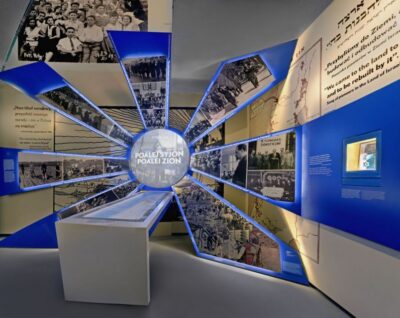
Warsaw: POLIN Museum of the History of Polish Jews Ticket
Read our review →
Warsaw: Chopin Concert at Historical Venue in Old Town
Read our review →
Warsaw: Jewish History Guided Walking Tour in English
Read our review →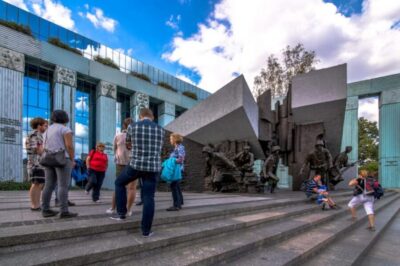
Private Historical Tour of Warsaw by a Retro Fiat with Pickup
Read our review →
Warsaw for WWII Buffs – private tour with hotel pickup
Read our review →
Private Tour: Warsaw’s Communist History by Retro Fiat
Read our review →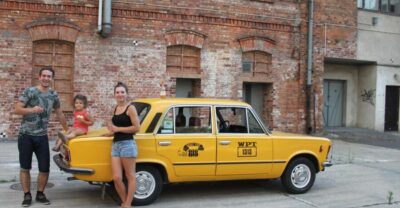
Browse the lists this tour appears in