
Review · GERMANY
Trier: Guided Old Town Highlights and History Walking Tour
Trier’s story begins at the Porta Nigra, the massive Roman gate that still anchors the city center. From there, this 90-minute walk connects Roman Trier with its medieval streets, grand cathedral, lively Main Market, and the former home of Karl Marx. It is a lot of history in a short stretch, but the route keeps moving.
I like the low price of $16 and the way the tour links famous sights instead of treating them as isolated photo stops. I also like the human touch: guides Patrick and Herbert have been praised for clear explanations, humor, patience with questions, and a personal style that works well for families.
The main thing to consider is language. The live tour is offered in German, so you need a strong enough command of German to follow the stories. Also, a 90-minute walk gives you a useful overview, not time for long interior visits or a full study of every monument.
Key points at a glance
- Roman Trier begins at the Porta Nigra: Learn why the city gate matters and what daily life was like under Roman rule.
- Three eras fit into one short walk: The route moves from Roman remains to medieval architecture and modern Trier.
- The cathedral and Main Market add variety: You see religious, civic, and commercial centers within the historic core.
- Karl Marx adds a modern political chapter: The tour includes the house where the philosopher lived.
- Patrick and Herbert bring different personal styles: Expect clear explanations, humor, and room for questions.
- The price is easy to justify: At $16, this is an affordable way to get your bearings before exploring on your own.
Start with Rome at the Porta Nigra
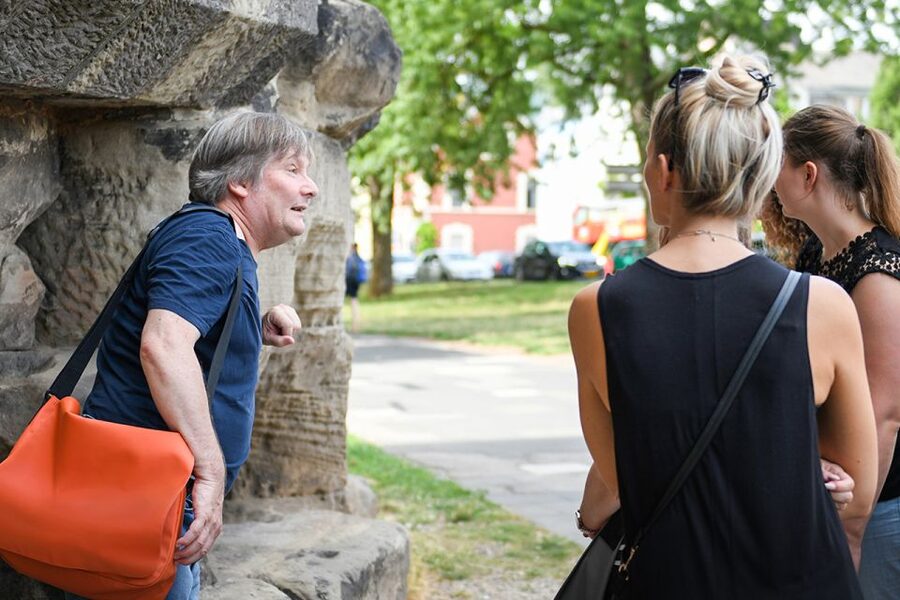
Meet your guide in front of the Mercure Hotel, directly opposite the Porta Nigra. That meeting point is easy to identify because the Roman gate is one of Trier’s clearest landmarks. You are not hunting for a tiny side street or a hard-to-find office.
The Porta Nigra was built by the Romans as early as 170 AD. Its dark stone blocks and huge scale make the city’s ancient past impossible to miss. Beginning here gives the walk a strong sense of place: you are not starting with a general introduction, but with the surviving entrance to the Roman city.
Your guide uses the gate to explain Trier’s origins and the practical side of Roman rule. Expect discussion of how people lived, moved through the city, and used major public structures. That focus on daily life is useful because Roman history can otherwise become a parade of dates and emperors.
The wording of the tour information says you visit the Porta Nigra, but the experience is primarily a guided walking tour. Do not assume that a long interior exploration is included. The real value is the explanation of the monument and its place in Trier’s urban story.
More History Walking Tours in Germany
- Berlin: Third Reich & Cold War Guided Walking Tour
★ 4.9 · 8,378 reviews - Munich: Third Reich & WWII Walking Tour
★ 4.6 · 6,181 reviews - Berlin’s Best: 2 Hour Walking Tour Third Reich and the Cold War
★ 5.0 · 5,486 reviews
Follow Trier from antiquity into the Middle Ages
After the Roman opening, the route turns toward later chapters of the city. You see how Trier changed as Roman power faded and medieval life shaped the streets, buildings, and public spaces.
This is where a guide earns the $16 fee. On your own, you can see old walls, church towers, and handsome facades, but you may not know which details matter. A live guide can connect one period to the next and explain why Trier looks like a mixture of ancient, medieval, and modern Europe rather than a city frozen in one age.
The walk is short enough to stay manageable. You cover the central sights without giving up half a day, which makes this a good first activity after arriving in Trier. I would use it to get a mental map, then return later to the places that caught your attention.
The pace also suits families. Sonja’s January experience specifically notes that the walk held children’s attention, and that matters on a city tour. A guide who mixes facts with humor can keep younger people involved better than a long formal lecture.
See Trier Cathedral from the historic center
Trier Cathedral is one of the major sights included on the route. It brings a different mood from the Porta Nigra. The Roman gate feels defensive and practical, while the cathedral points to the city’s long religious and political importance.
The tour helps you place the cathedral within the wider story of Trier. You are not simply told to admire the building. You hear how the city’s identity developed through different periods and how later architecture sits beside much older remains.
The available information does not promise an extended interior visit or a detailed cathedral tour. Treat this stop as part of the outdoor city walk. If you want extra time inside, plan to return after the tour and check the cathedral’s own opening arrangements.
That is a useful way to think about the itinerary. It introduces several major sights, but it does not replace a full visit to each one. The guide gives you context and helps you decide where your own time is best spent.
Pause at the Main Market
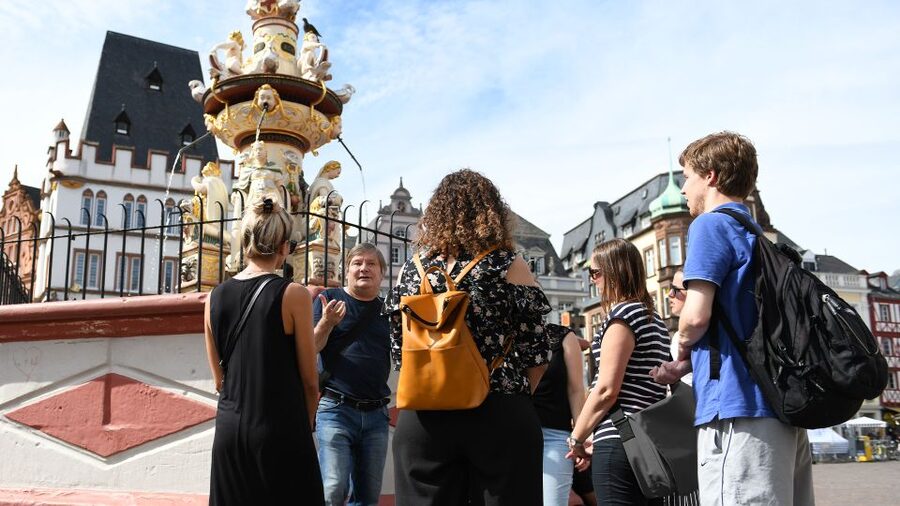
The Main Market adds the civic and commercial side of Trier. It is another key stop on the route and helps show how the city functioned beyond its Roman monuments and religious buildings.
A central market square is often where a city’s layers meet. Here, you can look at the surrounding architecture while your guide explains the changes Trier has seen from the Middle Ages to the present. The point is not just to collect another picture, but to understand how public life shifted over time.
This is also a practical orientation stop. Once you know where the Main Market sits in relation to the cathedral and Porta Nigra, exploring on your own becomes easier. You can return for food, shopping, or another look at the buildings without feeling lost in the old center.
The tour does not include a meal or a food tasting. Still, the guide is invited to offer tips for restaurants and bars afterward. Ask specific questions about the kind of place you want, since local advice can be more useful than a generic list.
More Old Town and Historic Centre Walks in Germany
- The Local Tour of Hamburg Historic Centre
★ 5.0 · 1,058 reviews - Cologne: Old Town Beer History Tour
★ 4.7 · 659 reviews - Heidelberg: Experience our history 1.5-hour walking tour through the old town
★ 4.7 · 306 reviews - Nuremberg: 1.5-Hour Private Tour through Historical Old Town
★ 4.8 · 283 reviews
Add Karl Marx to the city’s Roman story
The tour then brings Trier into the modern age with Karl Marx. You see the residential house where Marx lived, connecting the city’s ancient origins with one of its most influential philosophers and political thinkers.
This is a smart inclusion because it prevents the walk from becoming only a Roman and medieval history lesson. Marx gives the route a modern social and intellectual chapter. His connection to Trier also shows how a place known for ancient monuments can shape, and be shaped by, much later European ideas.
The stop is described as seeing the house where he used to live. It does not promise admission to a museum or a long examination of the interior. If you are particularly interested in Marx, treat this as a starting point and arrange a separate visit if one is available during your stay.
For everyone else, it works as a memorable change of subject. You move from ancient stonework to the life of a nineteenth-century thinker, then finish with a broader sense of how Trier’s identity has continued to change.
What Patrick and Herbert bring to the walk
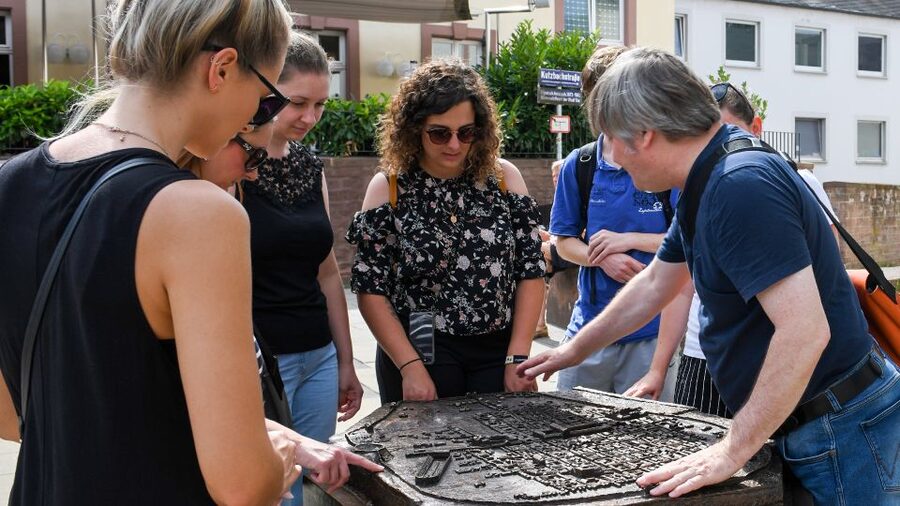
Two guide names appear in the recent feedback: Patrick and Herbert. Patrick is praised for sharing a large body of information in an entertaining way, while Herbert is described as informative, humorous, and personal.
Those details tell you something useful about the style to expect. The tour is not presented as a silent march from monument to monument. You should expect explanation, anecdotes, and opportunities to ask questions.
One participant specifically found that Patrick answered every question and made the 90 minutes pass quickly. That is a good sign for anyone who prefers a conversational guide rather than a memorized speech.
Herbert’s reported style is especially relevant for families. The combination of facts, small laughs, and a personal approach helped children stay interested. Of course, the exact experience depends on who leads your departure, but both names are associated with the qualities most people want in a short city walk.
The overall rating is 4.7 from 687 reviews, with the most strongly praised points being clear historical explanations, humor, and a lively pace. Those strengths matter more than polished sales language because they affect how much you actually take away from the tour.
Is $16 good value for 90 minutes?
At $16 per person, the tour is priced as an affordable introduction rather than a premium private experience. You receive a walking tour and a live guide, with no listed museum admission, food, or transportation included.
I consider that good value if you want orientation and context. The route covers the Porta Nigra, cathedral, Main Market, medieval architecture, and Karl Marx’s former home in 90 minutes. Seeing those places independently costs less in cash, but it also leaves you to research the connections yourself.
The value is lower if you already know Trier well or want long visits inside individual sights. You will not have the time to examine every building in detail. This works best as a first look, especially on a short stay.
Children from 0 to 5 years old can join free, which improves the price for families. Older children pay the listed per-person rate, but the short duration and humorous style may make the cost worthwhile if it keeps the whole group engaged.
The timing and practical details
The tour lasts 1.5 hours. Starting times vary, so check availability when you book. Since the walk begins near the Porta Nigra, allow enough time to reach the Mercure Hotel meeting point and identify your guide before departure.
Wear shoes suitable for city walking. The supplied information does not give a distance, surface type, or accessibility details, so I would not assume the route is designed for every mobility need. If that matters for your booking, ask the provider before paying.
The live guide language is German. No English-language option is listed. This is the single biggest factor in deciding if the tour fits you. If you understand German well, the humor and anecdotes can add a lot. If you do not, the tour may be difficult to follow even though the sights are easy to recognize.
The booking terms are flexible: you can cancel up to 24 hours before the start for a full refund, and the reserve-now, pay-later option lets you hold a place without paying immediately. Those terms help if your Trier plans are still shifting.
Who should book this Trier walk?
I would choose this tour for a first visit, a short city break, or a family that wants a focused introduction without spending an entire morning. It also suits anyone who likes history presented through buildings and people rather than through a long museum lecture.
German-speaking visitors will get the most from the live commentary. The tour may also work for children who enjoy stories and humor, especially with a guide such as Herbert. Ask questions as you go, then request restaurant and bar suggestions before the walk ends.
I would be more cautious if your main goal is an English tour, an in-depth Roman archaeology lesson, or interior access to the cathedral and other monuments. Those needs are not covered by the stated format.
My verdict: a useful first walk through Trier
Book this tour if you want to understand Trier’s shape and story quickly. For $16, you get a direct route through the Porta Nigra, cathedral, Main Market, medieval center, and Karl Marx’s former home, with a guide who can explain why each stop matters.
Skip it if you need English commentary or prefer to spend your time inside individual sights. Otherwise, this is a practical opening move: take the 90-minute walk, note which buildings deserve a second visit, and use your guide’s food and bar advice to plan the rest of the day.
FAQ
Where does the Trier walking tour meet?
Meet your guide in front of the Mercure Hotel, opposite the Porta Nigra.
How long does the tour last?
The tour lasts 1.5 hours.
What language is the live tour in?
The live guide language is German.
What price is listed for the tour?
The listed price is $16 per person.
Which major sights are included?
The walk includes the Porta Nigra, Trier Cathedral, the Main Market, and the residential house where Karl Marx lived.
Does the tour cover Roman history?
Yes. The guide explains Trier’s Roman origins, the construction of the Porta Nigra, and daily life under Roman rule.
Can children join the tour?
Yes. Children aged 0 to 5 years can join for free.
Can I cancel for a refund?
Yes. You can cancel up to 24 hours in advance for a full refund.
Can I reserve now and pay later?
Yes. The reserve-now, pay-later option lets you book your place without paying immediately.
Just added around Germany
- Berlin Food & Cultural Tour: Must-Try German & Berliner Classics★ 5.0 · 51 reviews
- Berlin Half-Day World War II Walking Tour★ 4.5 · 48 reviews
- Small-Group Historical Bike Tour in Berlin★ 4.5 · 103 reviews
- Historic center of Berlin – Tour in Italian★ 5.0 · 143 reviews
- Berlin Cold War & World War II Third Reich Walking Tour★ 4.5 · 30 reviews
- Private Taxi Tour City East & West History and Architecture 3-4h★ 5.0 · 42 reviews
- Berlin Wall and Cold War Bike Tour in Small Groups★ 5.0 · 114 reviews
- Private Tour: Jewish Heritage Walking Tour of Berlin★ 5.0 · 29 reviews
Germany History Tours, compared.

Berlin: Third Reich & Cold War Guided Walking Tour
Read our review →
Leipzig: City History Canal Sightseeing Tour on a Motorboat
Read our review →
Berlin’s Best: 2 Hour Walking Tour Third Reich and the Cold War
Read our review →
Third Reich Berlin: Hitler and WWII Walking Tour
Read our review →
Leipzig: 1.5-Hour Historical Walking Tour in German
Read our review →
Berlin: Third Reich, Hitler, and WWII Walking Tour
Read our review →Browse the lists this tour appears in