
Review · ITALY
Agrigento Valley of the Temples Archaeological Area
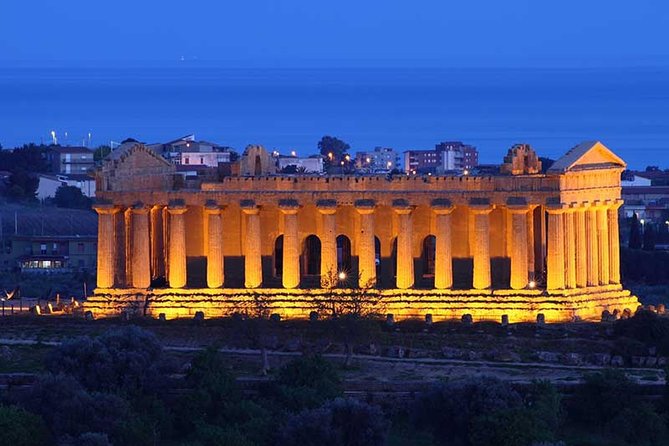
Agrigento’s Valley of the Temples gives you one of Sicily’s finest ancient sights in a single walk: seven Doric temples built when Akragas was a major Greek city in the 6th and 5th centuries BC. The temples are unusually well preserved, and their setting above the Mediterranean makes the visit feel larger than a quick museum stop.
I like the freedom to enter anytime during opening hours and the chance to explore without being tied to a guide or group. I also like that the ticket opens the door to the full archaeological park, a vast site that rewards anyone who wants to linger over Greek architecture and ancient city remains.
The main drawback is the ticket procedure. The Viator confirmation barcode is not the museum entry ticket. You must receive the separate Weekend in Italy voucher, print it, and collect the reserved ticket at the bookshop in the rest area on Piazzale Hardcastle. Miss that step and the time-saving promise can turn into a queue and a second purchase.
Key points to know before you book
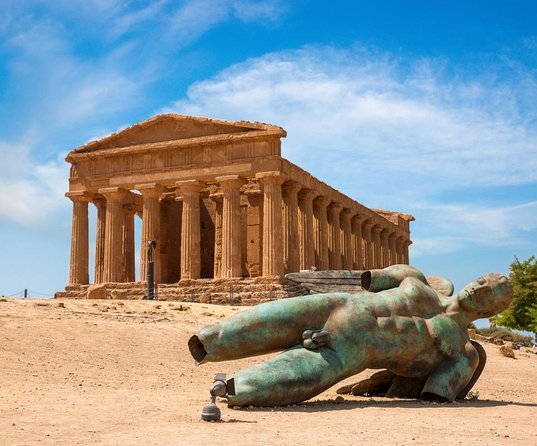
- Seven Doric temples from ancient Akragas: You will see some of the best-preserved Greek temples outside Greece, dating mainly from the 6th and 5th centuries BC.
- Self-guided and flexible: The ticket is valid at any time during opening hours, so you choose your pace rather than following a fixed tour.
- Allow one to two hours at minimum: That is the suggested duration, though the size of the archaeological park means you may want more time.
- Print the correct voucher: The provider’s Weekend in Italy voucher is accepted for entry. The Viator voucher alone is not.
- Pickup is required: Reserved tickets must be collected at the bookshop located at the rest stop on Piazzale Hardcastle.
- Best for independent sightseers: You receive admission, not transportation, hotel pickup, or a guide.
Why the Valley of the Temples is worth your time
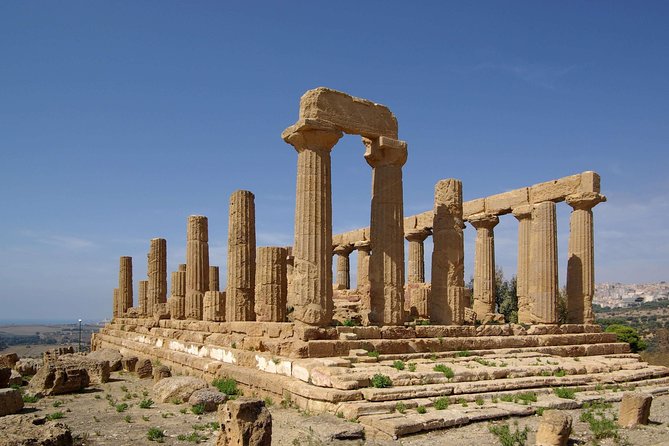
The first thing to understand is that this is not one temple beside a modern town. The Valley of the Temples is an archaeological park filled with monumental remains from ancient Akragas, a Greek colony that became one of the strongest cities in Magna Graecia, the Greek colonies of southern Italy.
The main draw is the line of seven monumental temples in the Doric style. Their columns and stone blocks give you a clear look at Greek building methods without requiring much imagination. You can see the scale of the structures, the care given to their proportions, and the way ancient builders used prominent ground for public and religious buildings.
The site has been protected as a UNESCO World Heritage Site since 1997. That label matters here because the temples are not isolated pieces behind glass. They remain in their original setting, with open views toward the Mediterranean and the surrounding countryside. You get architecture and place together, which is a far stronger experience than seeing a column in a museum.
I especially value the fact that the ticket is self-guided. You can pause when a temple catches your eye, move past sections that interest you less, or spend extra time comparing the surviving columns and foundations. You are not waiting for a group to finish taking photographs, and you do not need to keep up with a guide’s schedule.
The tradeoff is that you must supply the explanation yourself. No guide is included, and the signs can be faded, with English sometimes hard to follow. Bring your own book or reliable background notes if you want more than the basic visual experience.
More Archaeological Site Tours in Italy:
- Pompeii: Entry Ticket and Guided Tour with an Archaeologist
★ 4.8 · 19,459 reviews - Pompeii: Small Group Tour with an Archaeologist
★ 4.8 · 12,264 reviews - Pompeii Small Group Tour with an Archaeologist
★ 5.0 · 6,593 reviews
Seven temples and the story of ancient Akragas
Your attention will center on the seven temples built during Akragas’s most powerful period. They date mainly to the 6th and 5th centuries BC, when Greek influence shaped much of southern Italy.
The Doric order is known for sturdy columns and restrained decoration. At Agrigento, the remaining structures let you study that style at full scale. Even if you are not an architecture student, the repeated columns make the ancient city’s public life easier to picture.
The temples are also valuable because they remain outside Greece. The site is often described as one of the best-preserved collections of ancient Greek temples beyond the Greek mainland. That gives Agrigento a special place in a Sicily itinerary. You are not simply visiting another Roman ruin or medieval church. You are seeing a major Greek colonial center in southern Italy.
The setting adds weight to the visit. The temples sit above the Mediterranean, and that open position helps explain why the ruins feel so grand. One especially useful way to approach the site is to look beyond individual stones and notice the relationship between the temples, the high ground, and the broad views.
You should still keep expectations in check. Preservation does not mean every temple is complete. Some are more recognizable than others, and the park includes foundations, fragments, and partial structures as well as imposing columns. The pleasure comes from reading the remains as a group, not expecting seven perfect buildings.
What the one to two hour visit feels like
The stated visit time is about one to two hours. That gives you enough time to see the main temple area and get a strong sense of the site, especially if you keep moving.
I would treat two hours as a sensible minimum for a first visit rather than a strict limit. The archaeological park is described as the largest in the world, and the scale changes how you should plan. You are visiting an open archaeological area, not a compact indoor collection where every object is a few steps from the next.
Your physical condition matters. A moderate level of fitness is recommended, so expect walking through a large outdoor site rather than a short stroll from a gate to one monument. Wear practical shoes and leave room in your schedule for pauses. Those pauses are useful here, since the temples make the most sense when you stop to look at their height, spacing, and position.
The flexible entry time is a real advantage. You can choose a visit that fits your day instead of arriving for a timed guided departure. The ticket does not restrict you to a particular tour group, and the group limit of 15 people applies to the activity arrangement rather than forcing you into a large guided crowd.
Still, flexibility is only useful if the admission paperwork is ready. Give yourself time to handle the voucher pickup before heading into the archaeological area.
The important voucher and pickup procedure
This is the part I would take most seriously. The confirmation process can take up to 48 hours and is subject to availability, so do not assume that payment alone gives you an entry document you can use immediately.
The provider, Weekend in Italy, sends the voucher accepted by the museum. You need to receive that email and print the voucher before going to the site. The barcode or confirmation document sent through Viator is not sufficient for museum entry.
You must take the accepted confirmation voucher to the bookshop at the rest stop on Piazzale Hardcastle. That is where reserved tickets are collected. Only the full ticket is available online, so this option is not designed around a reduced online ticket category.
The warning is plain: do not use the Viator voucher to try to enter the museum. Bring the Weekend in Italy voucher instead. If the correct email is buried in your inbox, or you arrive with only the wrong barcode, you may have to buy new tickets at the site. That can erase the benefit of booking ahead and create a frustrating delay.
I would print the document even if you normally rely on your phone. The instructions specifically ask you to print it, and a paper copy gives you a simpler backup if mobile service or email access becomes a problem.
There is also a practical value question here. The listed price is $30.07 per person. That may be reasonable for admission to such a large and important archaeological park, but advance booking does not automatically mean a lower price or a shorter line. One account of the visit found no advantage over buying at the ticket booth and paid more than the walk-up price.
So you are paying mainly for advance arrangement and a flexible entry option, not for a guaranteed skip-the-line experience. If you book, follow the voucher instructions exactly.
More History Tours in Italy:
- Colosseum: Underground and Ancient Rome Tour
★ 4.7 · 12,691 reviews - Rome: Colosseum with Arena, Roman Forum and Palatine Guided Tour
★ 4.0 · 5,598 reviews - Venice: St. Mark’s Basilica Guided Tour & VR History Intro
★ 3.9 · 4,880 reviews - Colosseum with Arena, Roman Forum and Palatine Hill Guided Tour
★ 4.5 · 3,526 reviews
What this ticket includes, and what it does not
The ticket includes admission to the Agrigento archaeological park. That is the core experience, and it gives you access to the Valley of the Temples and its monumental remains.
It does not include transportation to or from the attractions. It also does not include hotel pickup or drop-off. You are responsible for reaching Agrigento, finding the relevant pickup point for the reserved ticket, and making your way through the park.
No guide is included. That can be a plus if you like setting your own pace, but it leaves the historical framework to you. The site’s English signs may be difficult to read in places, so your own guidebook is a wise addition.
This arrangement suits you if you already know how you want to spend your time. It is less suitable if you want someone to explain the temples, manage every transfer, and solve ticket issues on the spot.
The views and the sense of place
The most praised part of this experience is the site itself. Seeing the temples in person is different from studying photographs or floor plans. The surviving stonework becomes more impressive once you understand that it remains where ancient builders placed it.
The Mediterranean setting is a major part of the appeal. The temples are not presented as detached monuments. They sit above an open stretch of land, and the view helps you sense the scale and importance of Akragas.
That setting also rewards a slower visit. Take time to compare the temples rather than treating the park as a checklist of seven names. Look at how much remains, how much has been lost, and how the ruins work together across the site.
The site can be hard to explain quickly, which is why a little preparation pays off. Read about Akragas before you arrive, then use the ruins to make that background concrete. Even a short visit becomes more meaningful when you know the temples belong to the period when the city was a leading Greek power in Sicily.
Who should book this experience
I would recommend this ticket to an independent visitor who wants a flexible visit and feels comfortable managing transportation and admission details alone. It is especially good for someone who already has a guidebook or enjoys learning on the spot.
It also works well for travelers with a tight schedule who want to reserve entry without committing to a guided departure time. The one to two hour estimate can fit neatly into a larger day in Agrigento, though the park’s size means you should avoid cutting the timing too close.
Families and groups can benefit from the self-guided format because everyone can move at a comfortable pace. The physical demand should still be considered, since the site requires walking and is best suited to people with moderate fitness.
I would be cautious about booking this if you need a fully managed experience. There is no included guide, no transport, no hotel pickup, and no promise that the advance ticket will save time at the entrance. The voucher process requires attention, and the non-refundable policy means you should be certain of your plans before paying.
Should you book the Agrigento Valley of the Temples ticket?
Book it if your priority is independent access to an extraordinary ancient site and you are willing to handle the paperwork carefully. The temples are the real reason to go, and their preservation, Greek design, and Mediterranean setting make the Valley of the Temples one of Sicily’s strongest archaeological visits.
Before paying, compare the $30.07 price with the current ticket booth cost and decide how much the flexible advance arrangement is worth to you. If you proceed, wait for the Weekend in Italy voucher, print it, and collect the reserved ticket at Piazzale Hardcastle. Do not rely on the Viator barcode.
My verdict is positive for the archaeological site, but guarded for the booking setup. The Valley of the Temples deserves your time. This particular ticket is worthwhile only if you understand that it is admission with a self-guided visit, not a guided tour or a guaranteed shortcut through the entrance.
FAQ
How long does the visit take?
The estimated duration is one to two hours. The archaeological park is very large, so you may need more time if you want a slower visit.
Is this a guided tour?
No. This is a self-guided admission ticket. A guide is not included.
Can I enter at any time?
The ticket is valid anytime during the site’s opening hours.
What does the ticket include?
It includes admission to the Agrigento archaeological park and the Valley of the Temples.
Is transportation included?
No. Transportation to and from the attraction is not included, and hotel pickup and drop-off are not provided.
Where do I collect the reserved ticket?
You must show the accepted confirmation voucher at the bookshop located at the rest stop on Piazzale Hardcastle.
Can I use the Viator voucher to enter the museum?
No. The Viator voucher is not accepted for entry. You must receive the separate Weekend in Italy voucher by email and print it before your visit.
Just added around Italy
- Guided Cultural Tour of the Godfather Film in Messina★ 5.0 · 31 reviews
- Guided tour of the Riace Bronzes and the Archaeological Museum of Reggio Calabria★ 5.0 · 44 reviews
- SU NURAXI BARUMINI Unesco World Heritage Site★ 5.0 · 129 reviews
- Brescia the Unexpected: History, Local Stories & a drink★ 5.0 · 31 reviews
- Bolognese Cooking Class with Margherita in the Historic Center★ 5.0 · 26 reviews
- Tower and Power, Virtual tour in Medieval Bologna★ 4.5 · 54 reviews
- Bologna historical art walking tour with hidden gems and tastings★ 5.0 · 108 reviews
- Best of Bologna in one day : Food, architecture, art and history★ 5.0 · 27 reviews
Italy History Tours, compared.
Pompeii: Entry Ticket and Guided Tour with an Archaeologist
Read our review →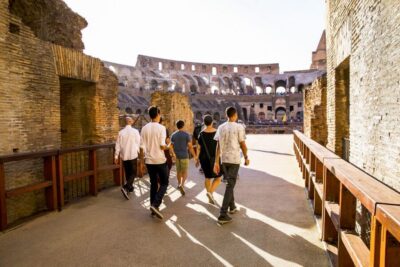
Colosseum: Underground and Ancient Rome Tour
Read our review →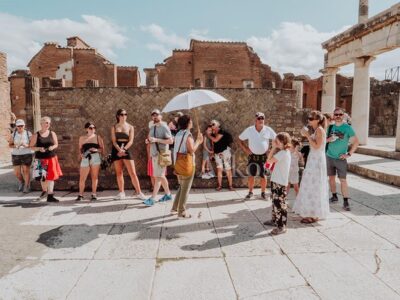
Pompeii: Small Group Tour with an Archaeologist
Read our review →Pompeii Small Group Tour with an Archaeologist
Read our review →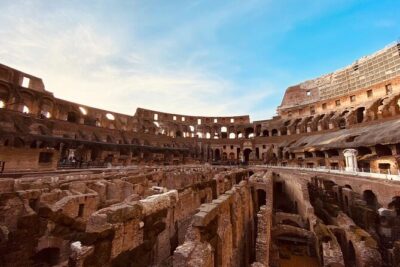
Rome: Colosseum with Arena, Roman Forum and Palatine Guided Tour
Read our review →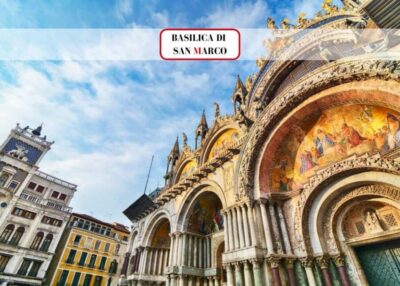
Venice: St. Mark’s Basilica Guided Tour & VR History Intro
Read our review →
Colosseum with Arena, Roman Forum and Palatine Hill Guided Tour
Read our review →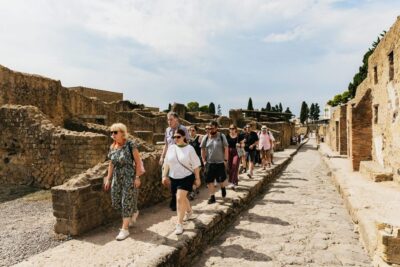
Herculaneum: Skip-the-Line Guided Tour with Archaeologist
Read our review →Browse the lists this tour appears in