
Review · TOKYO
Asakusa: 3.5-hour Big-picture History Walk
Asakusa is one of the few parts of Tokyo where a temple gate, a centuries-old shopping street, a Shinto shrine, and old drinking lanes fit into one walk. This 3.5-hour history tour uses that compact setting to explain how Japan moved from feudal isolation to modern global power.
I like the clear two-part focus: first, you get the big picture of Japan’s opening to the world, including its unusual Dutch connection and the influence of Japanese art on French Impressionists. Then you see how Buddhism and Shinto share the same neighborhood and the same worshippers. The small group, capped at eight, also gives guides such as Yasu, Yoko, Taka, and Ai room to answer questions and adjust the pace.
The main drawback is the amount of walking and standing. You move through crowded shopping streets and temple grounds in all weather, and the historical explanations are aimed more at adults than at very young children. Still, the route includes pauses, snacks, toilets pointed out along the way, and headsets for groups of three or more.
Key points to know before you book
- Japan’s opening explained at street level: See how isolation, Dutch trade, and the 19th-century shift toward foreign contact connect to the Asakusa of today.
- Two religions, one daily life: Compare Buddhism at Sensō-ji with Shinto at Asakusa Shrine and learn why the traditions developed side by side.
- A rooftop view with a useful orientation: The Asakusa Culture Tourist Information Center offers a high viewpoint and a chance to place the district against Tokyo’s wider skyline.
- From temple gates to old drinking lanes: The route moves from sacred spaces to Hoppy Street, showing Asakusa’s long link with entertainment and working-class life.
- Small-group guiding matters here: A maximum of eight makes it easier to hear explanations, ask questions, and pause for photographs.
- Traditional snacks are included: Freshly made Japanese sweets and snacks add a pleasant break during the walk.
Why this Asakusa walk offers more than temple photos
Many Asakusa visits follow the obvious path: Kaminarimon, Nakamise, Sensō-ji, a few photographs, then lunch. This experience follows much of that same physical route, but the purpose is different. You are not simply collecting famous sights. You are using them as clues.
A gate becomes an explanation of Japanese religious practice. A shopping street becomes a way to discuss Edo-period urban life. A view from a modern building becomes a reminder of how much Tokyo changed after Japan reopened to the world.
That approach suits you if you want context without signing up for a full-day lecture. The guide spends time at each stop, with the longest portion at Sensō-ji, where 45 minutes allows room for architecture, worship customs, and historical background.
The group size is one of the strongest practical features. With no more than eight people, you should be able to hear the guide in busy areas and ask about details that interest you. Guides including Yasu, Yoko, Taka, Jun, Akiko, Satchi, and Ai have led this walk, and the experience depends partly on the individual guide’s style. The most useful guides do more than recite dates. They connect the area to your questions about architecture, gardens, religion, food, or daily life.
More History Walking Tours in Japan
- Tokyo: Imperial Palace and Shogun Historical Walking Tour
★ 5.0 · 2,251 reviews - Tokyo Castle & Imperial PalaceーShogun Walking Tour
★ 4.7 · 1,068 reviews - Tokyo: Imperial Palace Japanese History Walking Tour
★ 4.9 · 987 reviews
Starting beside Asakusa Station and the Sumida River
You meet in front of the Burger King beside Exit 4 of Asakusa subway station on the Ginza Line. That detail matters because Asakusa has several train and subway entrances, and using the wrong one can leave you searching among busy streets. Step outside Exit 4 and look for the meeting point at 2-chōme-20-6 Kaminarimon.
The walk begins with the Tokyo Cruise Asakusa Pier, where the guide spends about 15 minutes. This is a useful first stop because it places Asakusa beside the Sumida River rather than treating the district as an isolated temple quarter. You get an early sense of the area’s connection to movement, trade, and Tokyo’s changing city center.
The river stop is also a good chance to settle into the pace. This is not a rush from one photo stop to the next. The tour is built around short explanations, questions, and regular movement between major sights.
A modern viewpoint at the Asakusa Culture Tourist Information Center
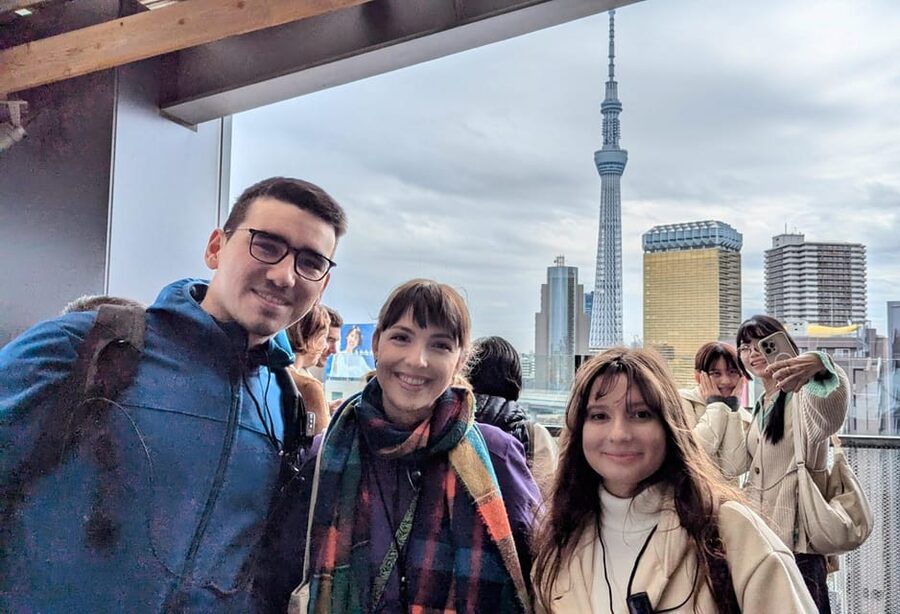
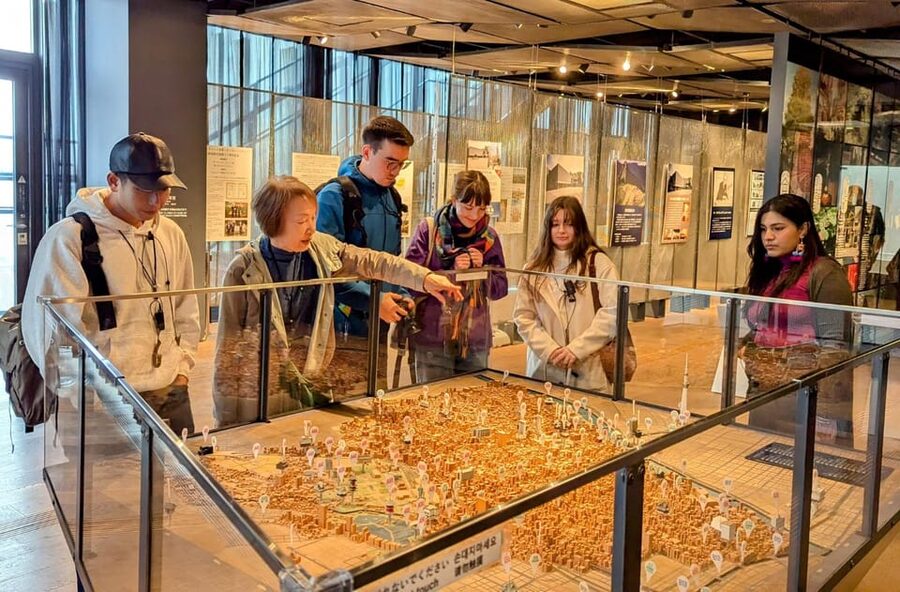
The Asakusa Culture Tourist Information Center is a sharp contrast to the older streets below. You spend about 30 minutes here, including time for the upper-level view. From the rooftop area, you can look across Asakusa and better understand how the traditional district fits into modern Tokyo.
The building itself is part of the lesson. Its contemporary design gives the guide a natural way to explain the meeting of old and new in Japan. You can also use the view to pick out Tokyo Skytree, a detail several guides have used to make Japanese number pronunciation memorable. Its 634-meter height can be read through the Japanese sounds roku, san, yon, meaning six, three, four.
I especially like this stop early in the tour. It gives you an aerial sense of the route before you enter the crowds, and it helps you notice how close the religious quarter is to shops, entertainment streets, and the river.
Kaminarimon and the route into Nakamise
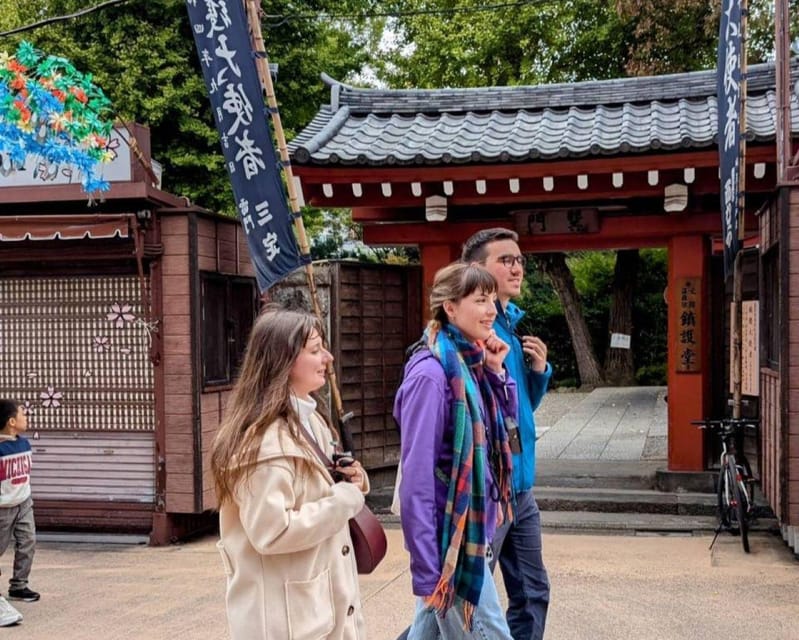
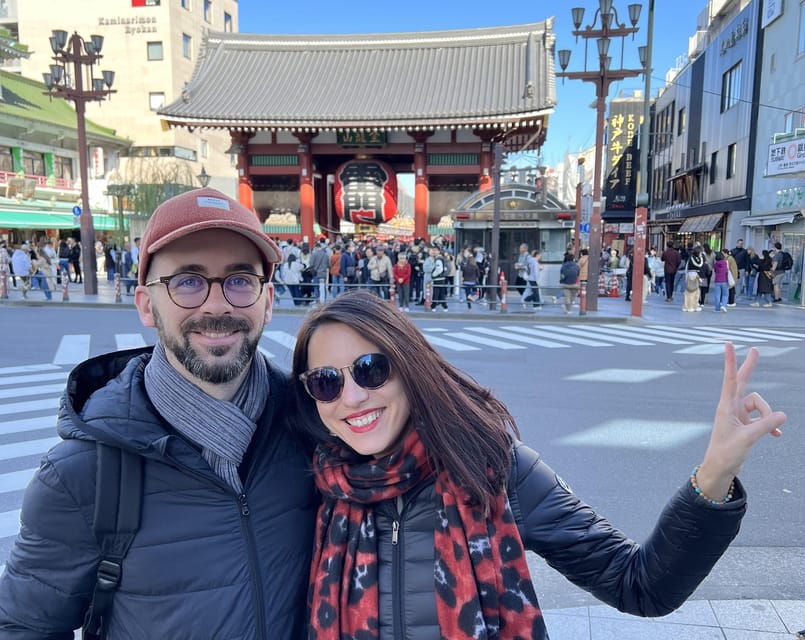
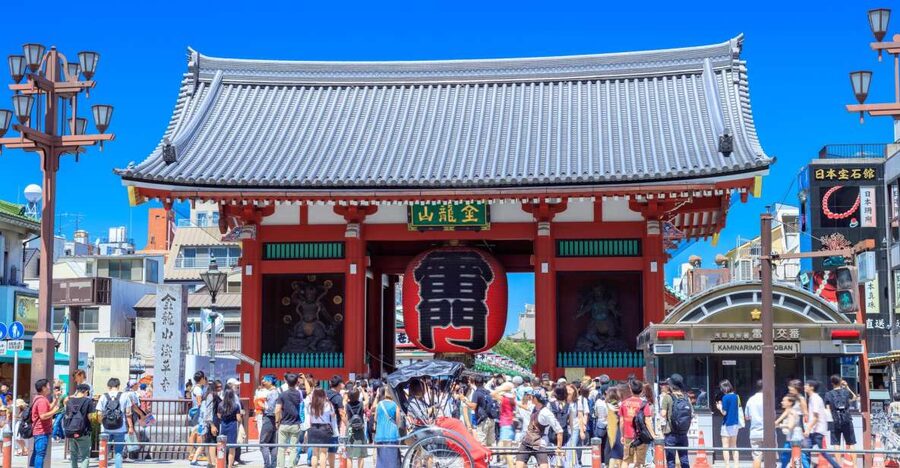
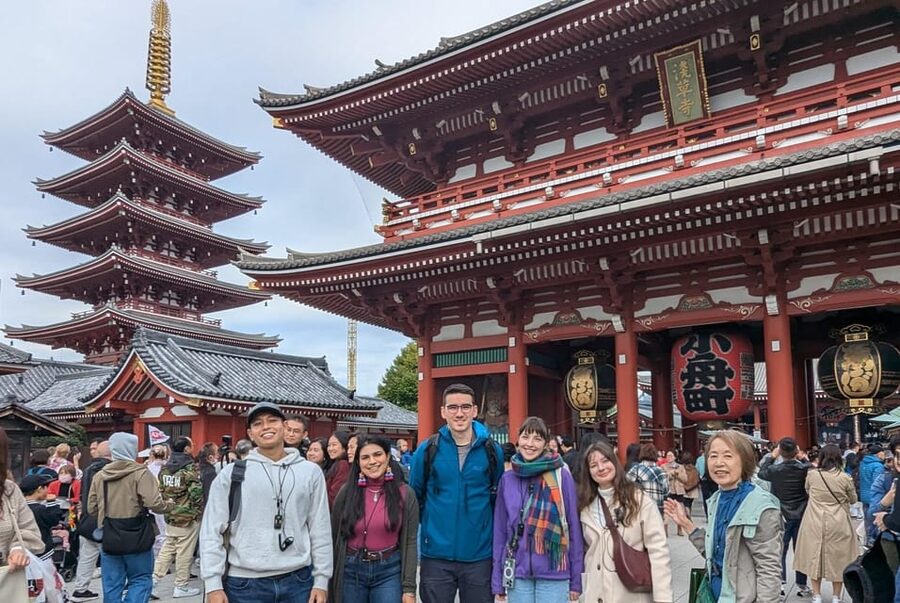
Kaminarimon, or the Thunder Gate, gets about 15 minutes. This is one of Asakusa’s most photographed points, so expect people stopping for pictures beneath the large lantern. The value here is not simply the photo. The guide explains the gate’s role as the dramatic entrance to Sensō-ji and helps you read the symbols rather than treating them as decoration.
From there, you enter Nakamise Shopping Street for around 30 minutes. The street leads toward the temple and is lined with small shops selling souvenirs, sweets, snacks, and traditional items. It is easy to get distracted here, especially if you are visiting Japan for the first time.
The guide’s role is useful because you can keep moving while learning how commercial activity and temple visits have long shared the same space. If you are not interested in shopping, you are not expected to buy anything. A good guide can move you through the retail area without pressure, then pause for the parts that suit your interests.
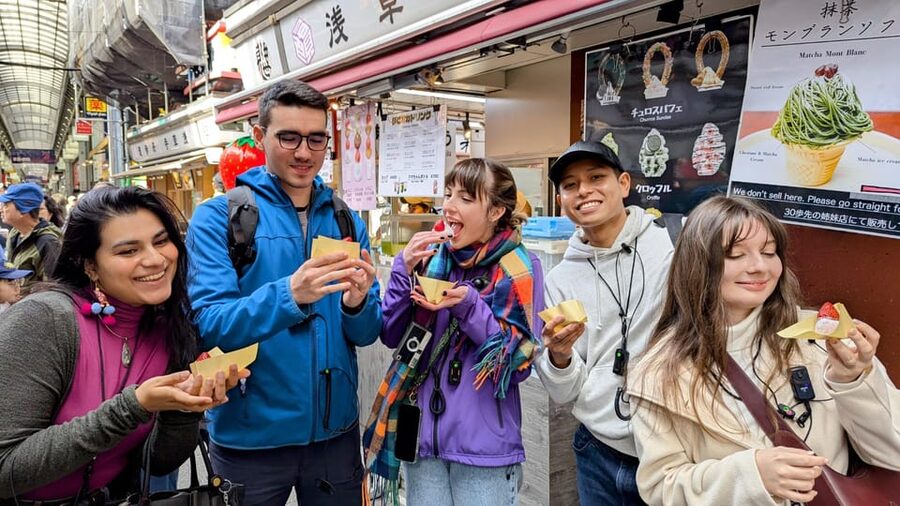
The tour includes a selection of freshly made Japanese traditional snacks and sweets. This is a modest feature, but it makes sense on this route. You get a taste of local food while learning how streets around religious sites also serve everyday needs.
More History Walking Tours in Tokyo:
- Tokyo Castle & Imperial PalaceーShogun Walking Tour
★ 5.0 · 724 reviews - Tokyo: Shinjuku Historical Walking Tour & Secret Backstreets
★ 5.0 · 530 reviews - Imperial Palace East Garden and Edo Castle Walking Tour in Tokyo
★ 5.0 · 510 reviews - Asakusa: A Big-picture History Walk to Know Japan
★ 4.6 · 77 reviews
Hōzōmon Gate and 45 minutes inside Sensō-ji
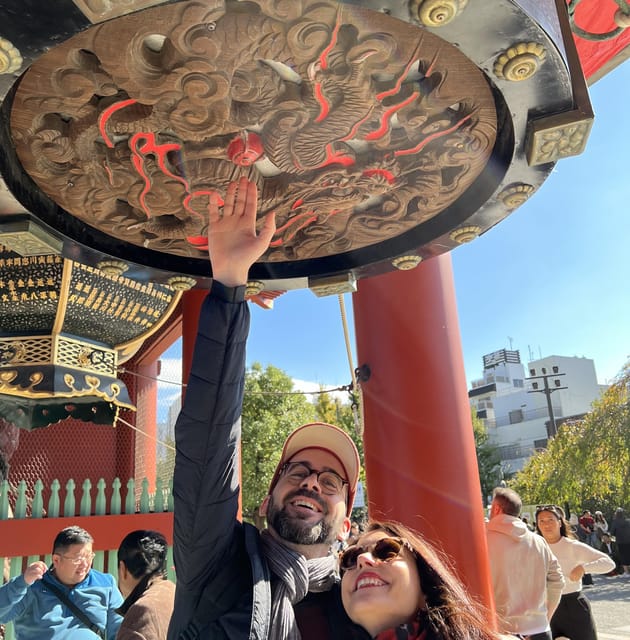
Hōzōmon Gate receives about 15 minutes. It is another strong visual marker on the approach to Sensō-ji, but the slower pace lets you look at the gate as part of a larger religious complex. Your guide can explain how the sequence of gates, the approach, and the main hall shape the visitor’s movement.
Sensō-ji is the center of the tour, with roughly 45 minutes devoted to the temple. This is where the broad historical themes come together. You learn about Buddhist worship, the age of the temple tradition, and the ways Japanese religious practice differs from a simple choice between one faith and another.
The tour’s central religious lesson is that Buddhism and Shinto have coexisted in Japan for centuries, often serving different needs in the lives of the same people. The guide explains how the two traditions complement each other, rather than presenting them as competing systems with separate populations.
That explanation is especially helpful if you have noticed people praying at a Buddhist temple and later visiting a Shinto shrine but were unsure how to understand the difference. You leave with a practical framework for recognizing the setting, the worship style, and the role each tradition can play in daily life.
Sensō-ji can be crowded, and 45 minutes may feel short if you want to study every feature or make a long personal visit. The advantage is that the guide keeps the stop focused. You get the essential story without spending half the day in one complex.
Asakusa Shrine and the neighboring Yōgō-dō Pavilion
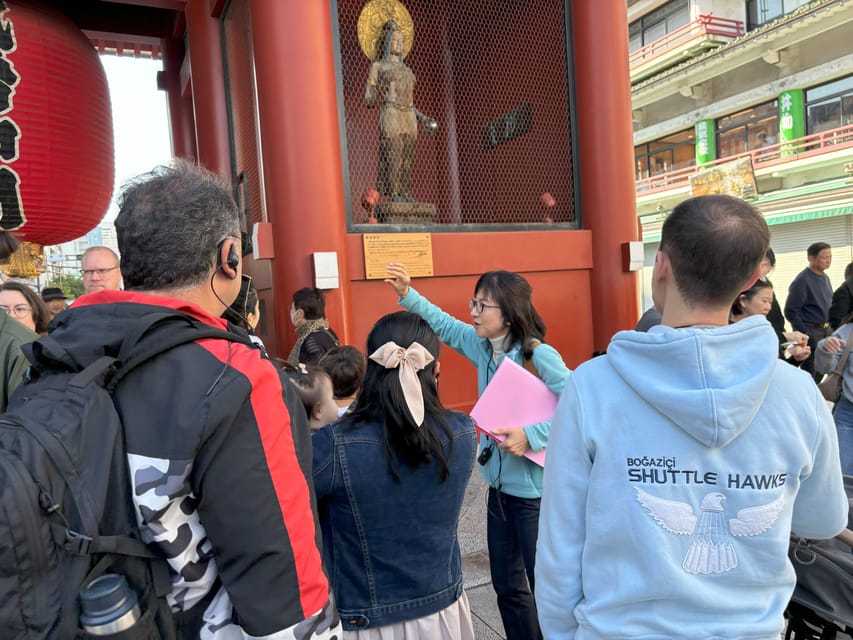
Asakusa Shrine gets about 15 minutes. Its presence beside Sensō-ji makes the relationship between Shinto and Buddhism especially easy to see. You do not need to travel across Tokyo to compare the traditions. The contrast is right next door.
The guide uses the shrine to explain the shared religious habits that have shaped Japanese life for more than a millennium. You can ask practical questions about worship, symbols, and why the two traditions have remained part of the same cultural setting.
The Yōgō-dō Pavilion follows, with another 15-minute visit and guided explanation. This smaller stop breaks up the major sights and gives the walk a more local rhythm. It is also a reminder that Asakusa is not only a famous temple entrance. Religious life continues through a collection of smaller buildings and spaces.
Because the route includes several brief stops, comfortable shoes matter more than stylish ones. You should also carry water. Vending machines are available, but having your own bottle keeps the walk easier.
Nishi-sandō and the return of Edo-style atmosphere
Asakusa Nishi-sandō Shopping Street receives about 15 minutes. This is one of the quieter, more nostalgic parts of the route, and it helps you move away from the most photographed temple approach.
The point is atmosphere rather than a major landmark. The street offers a chance to picture an older form of urban Japan, one built around small shops, familiar neighbors, and a slower rhythm. The tour’s Edo-period theme becomes easier to feel here than it is under the giant lantern at Kaminarimon.
You may find this stop more rewarding if you enjoy ordinary streets and historic mood more than grand architecture. It is also a good place for photographs that show texture and scale, not just famous symbols.
Asakusa Mokubakan and the district’s entertainment past
The Asakusa Mokubakan is another 15-minute stop. The guide uses the area to discuss Asakusa’s entertainment history before Shinjuku and Shibuya became Tokyo’s best-known nightlife centers.
You learn about the district as an early 20th-century hub of cinemas, vaudeville theaters, and performance halls. That history adds an important layer to the temple story. Asakusa was not only sacred. It was also a place where people came to be entertained, meet friends, eat, drink, and take part in the city’s popular culture.
This is one of the tour’s strongest ideas: human life shifts between the sacred and the secular. A short walk can take you from ritual space to entertainment space without crossing a major boundary. The neighborhood’s identity grew from both sides.
The exact experience here can depend on the day and the guide’s presentation. You should expect a guided look at the area and its role, not a performance or a long indoor visit.
Hoppy Street and old-style working-class Tokyo
The final stop is Hoppy Street, with about 15 minutes of guided sightseeing and walking. The narrow lane is associated with old-style Japanese pubs and the postwar energy of working-class Tokyo.
This is a fitting end because it brings the tour back to ordinary life. After learning about temples, shrines, Edo customs, and Japan’s international turning point, you see the social world of food, drink, and conversation. The street helps explain why Asakusa remains more than a collection of historic buildings.
You should not expect a dedicated food tour or a pub crawl. Hoppy Street is used as a cultural stop, and the schedule ends after the guided walk. If you like the atmosphere, you can choose to remain in Asakusa afterward for dinner, as the route leaves you in a district with plenty more to see.
Japan’s isolation, the Netherlands, and the world beyond Asakusa
The tour’s historical story reaches beyond the immediate neighborhood. One major theme is Japan’s period of isolation and the reasons the country eventually reopened.
You learn why Japan restricted foreign contact, why the Netherlands remained its main European trading partner during that period, and how the shift toward international exchange affected the country. The guide also connects Japanese art from the 19th century with French Impressionist painters, giving you a useful link between a Tokyo neighborhood and European art history.
This subject works best when you want a broad framework rather than a specialist seminar. The tour cannot explain every political event in 210 minutes, but it can help you understand the main direction of change: a feudal society turned inward, then faced pressure and opportunity from a wider world.
The East and West comparisons add another unusual layer. You may discuss the different roles of dragons in Japanese and Western traditions, along with similarities in how people centuries ago understood symbols and human behavior. These comparisons make the walk less predictable than a standard temple tour.
Is $88 a fair price for 210 minutes?
At $88 per person, this is not the cheapest way to see Sensō-ji. You can walk through the temple district on your own for little or no admission cost. If you only want photographs and a few famous gates, you should save your money.
The price makes more sense if you want a guide to connect the sights into one story. You receive 210 minutes of English instruction, a small group limited to eight, traditional snacks and sweets, and headsets for groups of three or more. You also get a planned route through places you might otherwise pass without understanding.
The value depends on how much context you want. I would consider it worthwhile early in a Tokyo visit because the explanations can improve later visits to other shrines, temples, museums, and historic districts. If you already have strong knowledge of Japanese history and religion, some sections may feel introductory.
The free cancellation up to 24 hours ahead and reserve-now, pay-later option also reduce the risk of fitting it into a changing Tokyo schedule.
Who should book this walk?
I would choose this tour if you want a clear introduction to Japan, prefer walking to sitting in a classroom, and have an interest in religion, architecture, or social history. It is also a good match for first-time visitors who want to spend extra time in Asakusa rather than treating the district as a quick photo stop.
Families are welcome, but the historical focus is aimed at adults. Children younger than six may join without charge, though the moderate walking and long explanations may test very young children.
You should contact the provider in advance if you have mobility concerns. The walk operates in all weather, and the route is not suitable for people with mobility impairments. Wear comfortable shoes, bring water, and dress for rain or heat.
Should you book the Asakusa Big-picture History Walk?
Book it if you want Asakusa to make sense, not just look impressive. The best parts are the clear explanation of Buddhism and Shinto, the link between Japan’s isolation and its global art influence, and the shift from temple grounds to entertainment streets.
Skip it if you prefer exploring independently, dislike guided historical discussion, or only have time for a quick visit to Sensō-ji. For everyone else, the small group and well-paced route make $88 reasonable, especially near the beginning of a Japan trip.
FAQ
How long does the Asakusa history walk last?
The tour lasts 210 minutes, or 3.5 hours.
What language is the tour conducted in?
The live tour guide speaks English, and an English audio guide is included.
How large is the group?
The maximum group size is eight participants.
Where does the tour meet?
You meet in front of the Burger King next to Exit 4 of Asakusa subway station on the Ginza Line, at 2-chōme-20-6 Kaminarimon.
Are food or snacks included?
Yes. The tour includes a selection of freshly made Japanese traditional snacks and sweets.
Is hotel pickup included?
No. Hotel pickup and drop-off are not included.
What should I bring?
Wear comfortable shoes and bring water. Vending machines are available, but carrying your own bottle is recommended.
Can children join the tour?
Children younger than six may join without charge. Families are welcome, though the historical content is recommended mainly for adults.
Just added around Tokyo
- Tokyo: Imperial Palace, the history of Japan (ENGLISH GUIDE)★ 5.0 · 77 reviews
- Tokyo: Customized Private Historical Guided Photoshoot Tour★ 5.0 · 25 reviews
- Tokyo: Edo Castle & East Garden of the Imperial Palace Tour★ 4.7 · 112 reviews
- Kyoto: Nijo Castle World Heritage Guided Tour with Admission★ 4.9 · 37 reviews
- Historic Kanda Sake Tasting at Tokyo’s Oldest Shop (1596)★ 4.9 · 33 reviews
- From Tokyo: Private Nikko World Heritage Sights One Day Trip★ 4.7 · 52 reviews
- From Tokyo: Guided Day Trip to Nikko World Heritage Sites★ 4.8 · 51 reviews
- Asakusa: A Big-picture History Walk to Know Japan★ 4.6 · 77 reviews
Tokyo History Tours, compared.
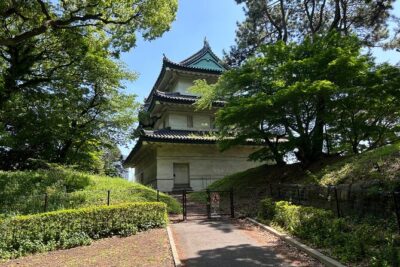
Tokyo: Imperial Palace and Shogun Historical Walking Tour
Read our review →
Tokyo Castle & Imperial PalaceーShogun Walking Tour
Read our review →
Tokyo: Imperial Palace Japanese History Walking Tour
Read our review →Tokyo Castle & Imperial PalaceーShogun Walking Tour
Read our review →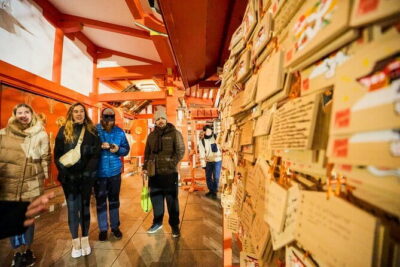
Tokyo: Shinjuku Historical Walking Tour & Secret Backstreets
Read our review →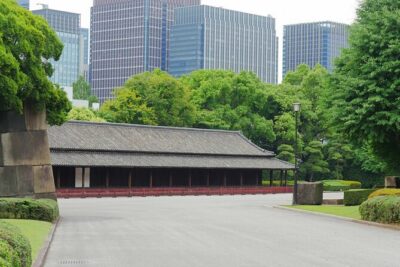
Imperial Palace East Garden and Edo Castle Walking Tour in Tokyo
Read our review →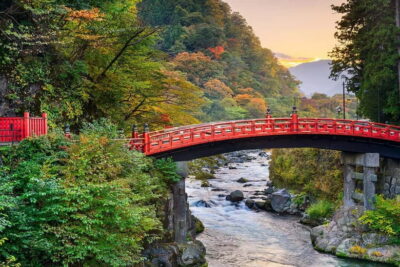
From Tokyo: Nikko World Heritage Site Private Full-Day Trip
Read our review →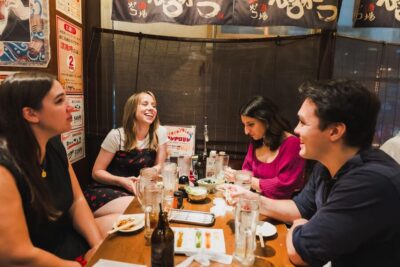
Tokyo: The Best of Izakaya in Shinjuku Food & Cultural Tour
Read our review →Browse the lists this tour appears in