
Review · TOKYO
Tokyo: Imperial Palace, the history of Japan (ENGLISH GUIDE)
The most interesting part of this Tokyo Imperial Palace tour is that it takes you through the former Edo Castle grounds, not just around a polished modern palace. As you pass through Otemon, the old main gate, your guide connects stone walls, gardens, barracks, and palace ruins to the story of how Japan changed from a feudal society into the country you see today.
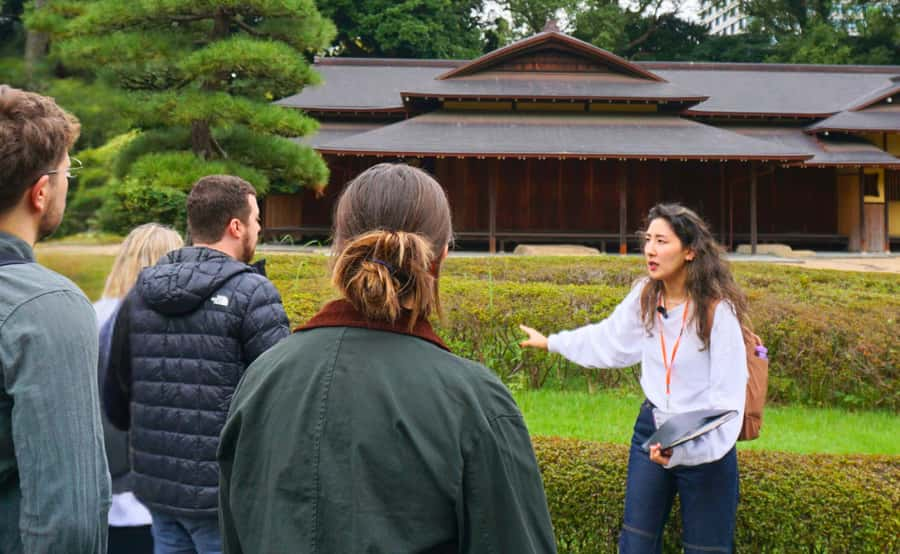
I like the focus on history you can see under your feet, and I like the chance to ask questions in a small group. Guide Nicolas, described as Franco-Japanese, has covered Japanese mythology, language, the Imperial family, and everyday culture with visitors. The main consideration is language: the experience title says English, but the detailed information lists a French guide. Confirm this before paying if English is essential.
Key details to know before you book
- Walk through Edo Castle’s former base: See the grounds connected with more than 350 years of Japanese history.
- Enter through Otemon: Meet at Wadakuramon Fountain Park, then walk to the large main gate together.
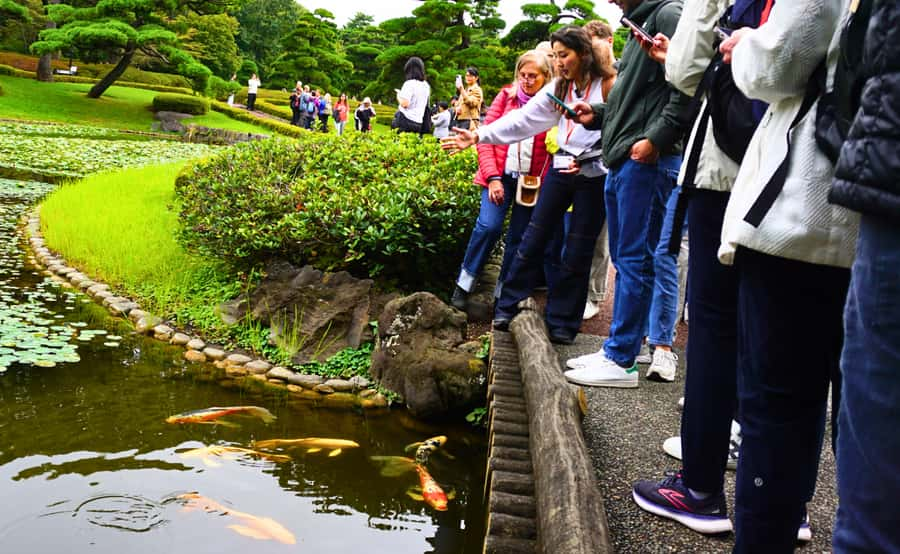
- Look for special koi: The gardens are home to a distinctive breed of koi found only here.
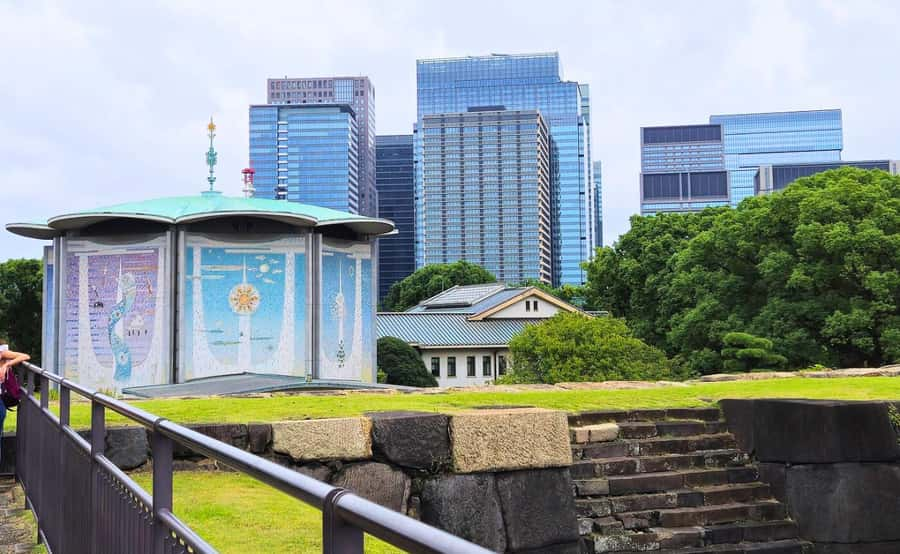
- See more than flowers: The route includes old soldiers’ barracks, palace ruins, regional trees, and a miniature palace structure.
- Expect an outdoor tour in any weather: Wear clothing suited to the forecast, since the walk goes ahead in good or bad weather.
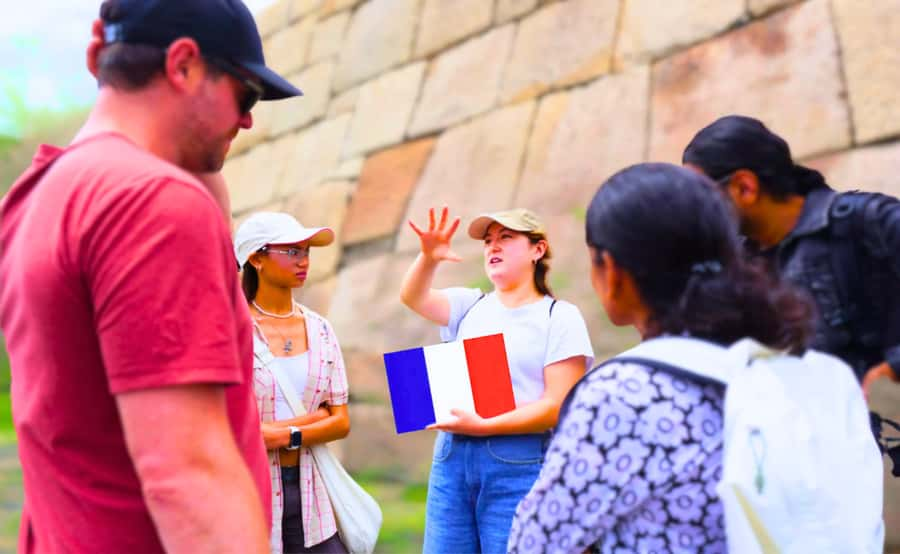
- Check the guide language: The title refers to an English guide, while the detailed tour information says French.
Why the former Edo Palace matters
Tokyo’s Imperial Palace can seem like a closed, formal place from the outside. The inner palace is not part of this activity, and much of the present-day imperial complex is not open for casual touring. The eastern gardens give you a different way in, through the former Edo Palace grounds and the remains of Edo Castle.
That distinction matters. You are not simply walking through a decorative park. You are seeing a place that once served as the center of political power under the shoguns. The castle itself is gone, but the grounds, walls, gates, gardens, and surviving traces help explain how the old city worked.
Your guide fills in the missing pieces. The main castle no longer exists, and the tour explains why. You also get to see a miniature structure of the former palace, a useful aid when the original buildings are no longer standing.
I find this approach more useful than a tour that simply names dates and rulers. The setting gives the story a physical shape. A gate becomes part of a defensive system. A former barracks area points to the military role of the castle. A quiet garden becomes part of a much larger story about authority, ceremony, and change.
More Guided Tours in Tokyo:
- From Tokyo: Guided Day Trip to Nikko World Heritage Sites
★ 4.8 · 51 reviews - Kyoto: Nijo Castle World Heritage Guided Tour with Admission
★ 4.9 · 37 reviews - Tokyo: Customized Private Historical Guided Photoshoot Tour
★ 5.0 · 25 reviews
Meeting at Wadakuramon Fountain Park
The tour begins near Tokyo Station or Otemachi Station, both practical arrival points. From either station, you walk about five to ten minutes to Wadakuramon Fountain Park.
Look for the Starbucks near the fountain. Your guide will wait there with a Sunrise Adventure sign and logo. This is a simple meeting point, but Tokyo’s station areas can be confusing, especially if you are carrying luggage or trying to read several layers of signs. Give yourself enough time to find the park rather than aiming to arrive exactly at the meeting time.
The guide waits only 10 minutes after the scheduled start before beginning the walk. That rule is especially important around Tokyo Station, where underground exits can put you farther from the park than expected. I would aim to reach the station area early, then use the extra time to locate the fountain and Starbucks.
The tour ends back at the same meeting point. That makes it easier to continue sightseeing, return to your hotel, or connect with the nearby Marunouchi and Otemachi areas.
Through Otemon, the castle’s great entrance
From the fountain park, you head toward Otemon, the large main gate of the Imperial Palace’s eastern grounds. Entering through a major historic gate gives the tour a clear sense of arrival. You are moving from the modern city into the former castle area.
The gate is also a useful reminder that Edo Castle was not just a residence. It was a controlled and defended center of government. Passing through it with a guide helps you notice the relationship between the gate, the surrounding walls, and the spaces beyond.
This is where the tour’s historical focus begins in earnest. Instead of rushing directly toward a photo stop, your guide sets up the story of the site. You learn how the grounds were used and how the palace area fits into Japan’s wider development.
The route is a walking tour, so you should expect time outdoors and regular movement between points of interest. Comfortable shoes and weather-appropriate clothing make sense. Smoking, drones, alcohol, drugs, littering, and skateboards are not allowed.
Gardens, ruins, and the missing main castle
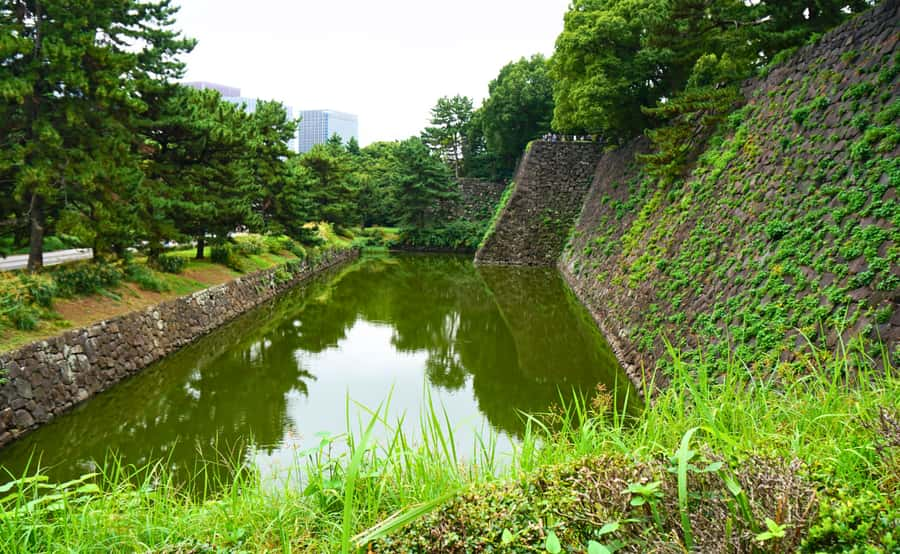
The eastern gardens are the calmest part of the experience. You stroll through landscaped grounds while learning about the palace and castle that once occupied them. The gardens offer the visual appeal many people expect from a Japanese historic site, but the guide keeps the focus on what the setting means.
The main castle is no longer standing. That may sound like a disappointment if you arrive expecting a complete castle complex, but it is also the reason a guide adds real value. Without explanation, you see walls, open spaces, gardens, and fragments. With context, you can picture the former palace and understand why the present site looks as it does.
A miniature structure of the former palace helps bridge that gap. It is not a replacement for the original building, but it gives you a visual reference for the architecture and scale of what once stood here.
You also visit areas connected to former soldiers’ barracks. This detail broadens the tour beyond imperial ceremony. The site included people, routines, security, and military organization, not only grand buildings and formal gardens.
More History Tours in Tokyo:
- Tokyo: Imperial Palace and Shogun Historical Walking Tour
★ 5.0 · 2,251 reviews - Tokyo: Imperial Palace Japanese History Walking Tour
★ 4.9 · 987 reviews - Tokyo: Shinjuku Historical Walking Tour & Secret Backstreets
★ 5.0 · 530 reviews - From Tokyo: Nikko World Heritage Site Private Full-Day Trip
★ 4.9 · 243 reviews
Koi, trees, and the quieter details
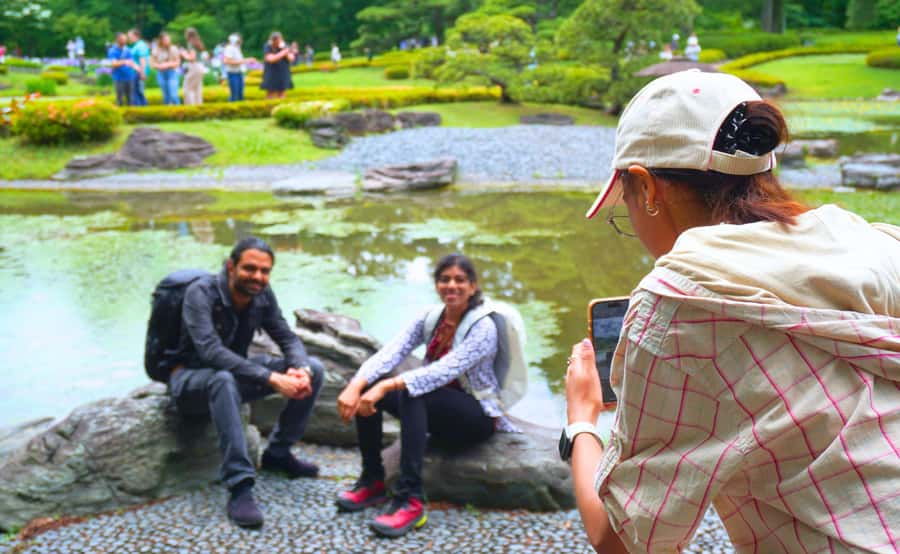
One of the tour’s more unusual stops is the koi pond. The fish here belong to a special breed said to be found only at the palace grounds. That gives the visit a small but memorable detail, especially for anyone who enjoys gardens, Japanese cultural traditions, or photography.
You will also see trees from different prefectures of Japan. These plantings provide a simple way to think about the country’s regional variety. The gardens are not only designed for beauty. They also bring different parts of Japan into the imperial setting.
Your guide points out the best spots for photographs. That is useful because the most obvious view is not always the most informative one. A good photo may include a gate, stonework, garden planting, or a palace-related structure rather than a single landmark.
I would keep your camera ready, but not let photography take over. The site’s appeal comes from the combination of scenery and explanation. If you spend the whole walk looking through a screen, you may miss the small features that make the story clearer.
A history tour that reaches beyond the palace
The stated goal is to explain how Japan became the country it is today. That is a large subject for one walking tour, but the palace grounds provide a sensible starting point.
The former Edo Castle was tied to the political order that shaped Japan for centuries. The tour uses the site to discuss change over time, including the shift from the world of the shoguns toward modern Japan. You are not only hearing about a building that disappeared. You are using that building’s former home to understand a turning point in national history.
The guide can also discuss Japanese mythology, the Japanese language, and the Imperial family. These subjects are not separate from the site. They help explain the beliefs, symbols, institutions, and cultural ideas that have shaped Japan.
This is where a small group can make a difference. One account describes a group of five, which allowed plenty of questions and easy conversation. That kind of setting suits people who want to stop and ask why a custom exists, how a word is used, or what a particular feature means.
Guide Nicolas is described as Franco-Japanese, and his range of topics appears to be one of the tour’s strongest points. If you enjoy conversation rather than a fixed speech, you may appreciate this format. Still, check the language before booking. The supplied details identify the guide language as French, despite the English wording in the experience title.
What the $40 price gets you

At $40 per person, you are paying for a guided historical walk rather than admission to a major indoor attraction. The value depends on how much help you want turning the palace grounds into a readable historic site.
If you already know Japanese history well and prefer to walk alone, you may find the price less compelling. The gardens can be visited without this guided format, and the inner palace is not included.
If you want a clear introduction to Edo Castle, the Imperial family, and Japan’s historical development, the price is more reasonable. You get a guide, a planned route, interpretation of the ruins and gardens, and the chance to ask questions. You also avoid spending your visit wondering what remains of the original castle and why.
The strongest value comes from the explanation. The koi, gardens, and photo stops are pleasant, but the tour earns its price by linking them to the site’s past. I would choose it early in a Tokyo visit if you want historical context for later stops around the city.
Who will get the most from this walk

This experience suits you if you:
- Want a practical introduction to Japanese history
- Enjoy historic gardens and old stonework
- Prefer a guide who can answer questions
- Want to understand the Imperial Palace beyond its exterior image
- Like small-group conversation
- Care about photography but also want the story behind the view
It is also a good choice for anyone who finds history easier to remember when it is tied to a real place. The former barracks, gates, ruins, trees, and koi give you concrete reference points.
You may want to choose another activity if your main goal is entering the inner palace. That access is not included. You should also think twice if you dislike outdoor walks in uncertain weather, since the tour operates in both good and bad weather.
Families and first-time visitors may appreciate the mix of open gardens, animals, ruins, and short historical explanations, though the available information does not specify an age range or accessibility details. For anyone with mobility concerns, ask the provider before booking rather than assuming the route will suit you.
Practical advice for a smoother visit
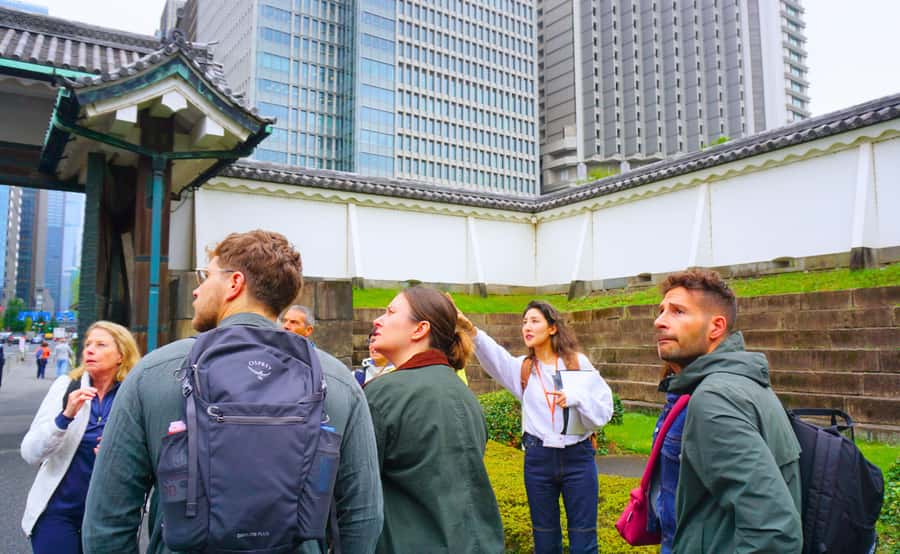
Wear clothing that matches the weather, and choose shoes suitable for walking. There is no promise of shelter or indoor touring, so rain protection can be useful when the forecast is uncertain.
Arrive early at Wadakuramon Fountain Park. Tokyo Station and Otemachi Station are both close, but finding the correct exit and walking to the fountain can take longer than expected. The guide uses a Sunrise Adventure sign, so watch for that rather than waiting inside the station.
Do not bring a drone, skateboard, alcohol, or anything that would conflict with the site rules. Smoking and littering are also prohibited.
The tour can be canceled up to 24 hours in advance for a full refund, and the reserve-now, pay-later option keeps your plans flexible. Those terms are helpful if your Tokyo schedule is still changing, but the 10-minute late-arrival rule remains important.
Should you book the Imperial Palace history tour?
Book it if you want the Imperial Palace’s eastern gardens to make historical sense, not just look attractive. The combination of Otemon, Edo Castle remains, soldiers’ barracks, special koi, regional trees, and the miniature palace gives you plenty to notice, while the guide connects those details to Japan’s larger story.
The strongest reason to choose it is the chance for direct conversation. A guide such as Nicolas can move beyond prepared facts and discuss mythology, language, the Imperial family, and modern Japan. The small-group format can make that exchange much easier.
Before booking, settle the language question. The title says English guide, while the detailed information says French guide. If that point is clear and the inner palace is not your goal, this $40 walk offers a thoughtful way to understand one of Tokyo’s most important historic sites.
FAQ
Where does the tour start?
Meet near the Starbucks at Wadakuramon Fountain Park, close to Tokyo Station and Otemachi Station. The guide will be near the fountain with a Sunrise Adventure sign.
How far is the meeting point from the stations?
The meeting point is about a five to ten minute walk from Tokyo Station or Otemachi Station.
Does the tour enter the inner palace?
No. Access to the inner palace is not included.
What language is the guide?
The detailed information lists a French guide, while the experience title refers to an English guide. Confirm the language with Sunrise Adventure before booking.
What can I see during the walk?
You can see Otemon, the eastern gardens, former palace and castle areas, palace ruins, a miniature former palace structure, old soldiers’ barracks, special koi, and trees from different prefectures of Japan.
What happens if I arrive late?
If you do not arrive within 10 minutes of the scheduled meeting time, the guide will begin the tour without you.
Can I cancel for a refund?
Yes. You can cancel up to 24 hours in advance for a full refund.
Just added around Tokyo
- Tokyo: Edo Castle & East Garden of the Imperial Palace Tour★ 4.7 · 112 reviews
- Tokyo: Customized Private Historical Guided Photoshoot Tour★ 5.0 · 25 reviews
- Kyoto: Nijo Castle World Heritage Guided Tour with Admission★ 4.9 · 37 reviews
- Historic Kanda Sake Tasting at Tokyo’s Oldest Shop (1596)★ 4.9 · 33 reviews
- From Tokyo: Private Nikko World Heritage Sights One Day Trip★ 4.7 · 52 reviews
- From Tokyo: Guided Day Trip to Nikko World Heritage Sites★ 4.8 · 51 reviews
- Asakusa: A Big-picture History Walk to Know Japan★ 4.6 · 77 reviews
- Asakusa: 3.5-hour Big-picture History Walk★ 4.7 · 39 reviews
Tokyo History Tours, compared.
Tokyo: Imperial Palace and Shogun Historical Walking Tour
Read our review →
Tokyo Castle & Imperial PalaceーShogun Walking Tour
Read our review →
Tokyo: Imperial Palace Japanese History Walking Tour
Read our review →Tokyo Castle & Imperial PalaceーShogun Walking Tour
Read our review →
Tokyo: Shinjuku Historical Walking Tour & Secret Backstreets
Read our review →
Imperial Palace East Garden and Edo Castle Walking Tour in Tokyo
Read our review →
From Tokyo: Nikko World Heritage Site Private Full-Day Trip
Read our review →
Tokyo: The Best of Izakaya in Shinjuku Food & Cultural Tour
Read our review →Browse the lists this tour appears in