
Review · BERLIN
Berlin: Cold War History and Berlin Wall Guided Walking Tour
Berlin’s Cold War story is easiest to grasp when you walk through the places where the division happened. This three-hour tour links Checkpoint Charlie, a former DDR watchtower, the Wall Memorial, and a surviving 200-meter section of wall, turning scattered sights into one clear story.
I like the strong focus on personal escape stories and the way the tour connects the postwar split to the Wall’s construction and fall. I also like the generous 75 minutes at the Berlin Wall Memorial, rather than treating it as a quick photo stop. The main drawback is simple: you are outside for three hours, and traffic noise can make some explanations harder to hear. Wear good shoes, face the guide when possible, and dress for the weather.
Key points to know before you go
- A three-hour Cold War route: You cover Brandenburg Gate, Potsdamer Platz, Checkpoint Charlie, Topography of Terror, and the Berlin Wall Memorial.
- The longest stop is the Wall Memorial: The 75-minute visit gives the tour room for personal stories, political context, and the human cost of division.
- Guides bring different strengths: Guides have included Eugen, Cieran, and Paul. Eugen has been praised for linking dates, causes, and personal accounts, while Cieran has used family photos connected to the Wall.
- The tour starts beside Brandenburg Gate: Meet outside Hopfingerbräu at Ebertstraße 24, then return to the same place.
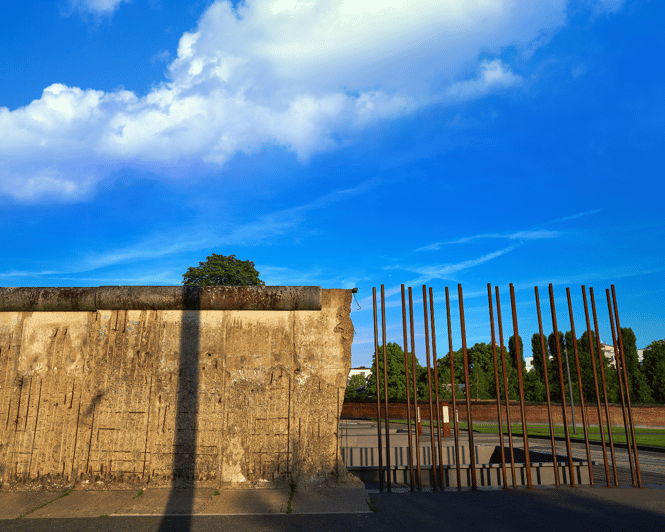
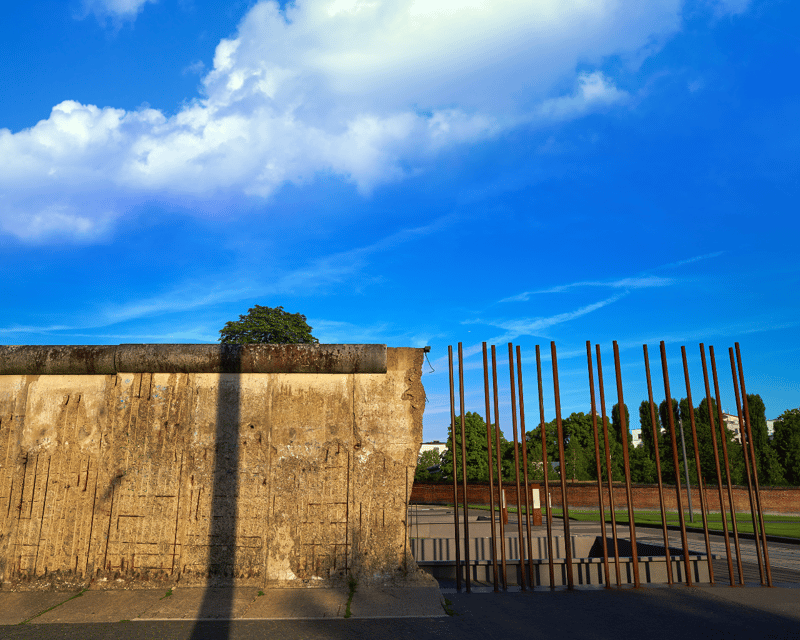
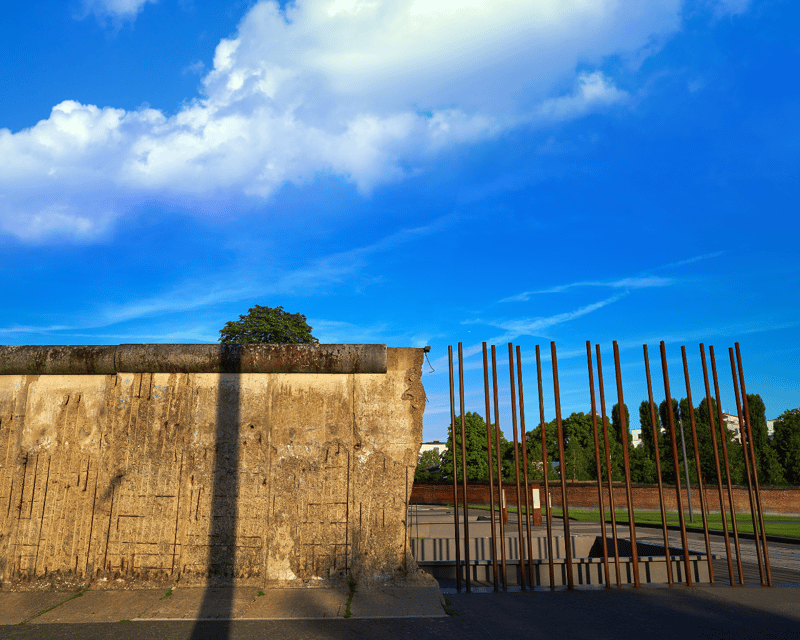
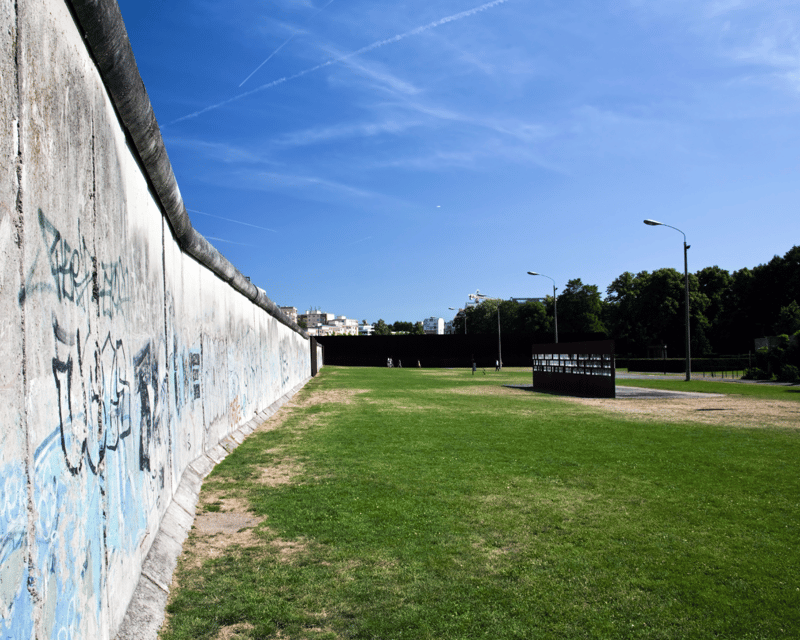
- You see both original remains and reconstructed displays: The route includes a 200-meter stretch of former wall along Niederkirchnerstrasse and memorial sites that explain what disappeared.
- The price is fair for a focused history walk: At $31 per person, you are paying for three hours with a live German or English-speaking guide, not transport or museum entry.
Why this walk makes Berlin’s division easier to understand
Berlin’s Cold War story can feel like a pile of dates and famous names. This tour gives those facts a physical route. You begin at the Brandenburg Gate, move through former border areas, and end at the Berlin Wall Memorial, where the division becomes personal and visible.
That order matters. The tour first sets up the political split after the Second World War, then shows how the uneasy relationship between the Soviet Union and the Western Allies broke down. From there, you see how Berlin became a city divided by policy, concrete, fences, armed guards, and fear.
I particularly value the focus on cause and effect. You are not simply shown a wall and told when it fell. The guide explains why the wall was built, what daily life looked like on both sides, and how people tried to escape. This gives the landmarks a human scale.
The guides have different backgrounds and styles. Eugen, also referred to as Eugene in one account, has been praised for explaining not only what happened, but when and why. Cieran has brought family photos connected to the Berlin Wall, giving some parts of the talk a personal angle. Paul has also led the walk, with a strong focus on the Cold War and the Wall.
You should not assume a particular guide will lead your departure, but the recurring strength is clear: the experience depends heavily on storytelling. If your guide is Eugen, Cieran, or Paul, you can expect a guide-led walk rather than a silent tour from one landmark to another.
More History Walking Tours in Berlin
- Berlin: Third Reich & Cold War Guided Walking Tour
★ 4.9 · 8,378 reviews - Berlin’s Best: 2 Hour Walking Tour Third Reich and the Cold War
★ 5.0 · 5,486 reviews - Third Reich Berlin: Hitler and WWII Walking Tour
★ 5.0 · 3,301 reviews
Starting at Brandenburg Gate and the uneasy postwar split
The meeting point is outside Hopfingerbräu at Ebertstraße 24, next to the Brandenburg Gate. This is a handy starting point because the gate is one of Berlin’s most recognizable sights and an easy place to find.
The Brandenburg Gate also gives the guide a useful opening scene. It is not just an attractive neoclassical monument. In a divided Berlin, its position near the Wall made it a powerful symbol of a city cut in two. From here, the guide can frame the period between the end of the Second World War and the construction of the Wall in 1961.
The scheduled visit lasts about 15 minutes. That is enough for an introduction and orientation, but not enough for a long architectural talk. The focus stays on Berlin’s political division and the forces that turned an allied occupation into the Cold War.
If you are new to the subject, pay close attention here. The rest of the tour makes more sense once you understand that Berlin was divided among the victorious powers after the war, while the political relationship between the Soviet Union and the Western Allies steadily worsened.
Seeing the Wall along Niederkirchnerstrasse
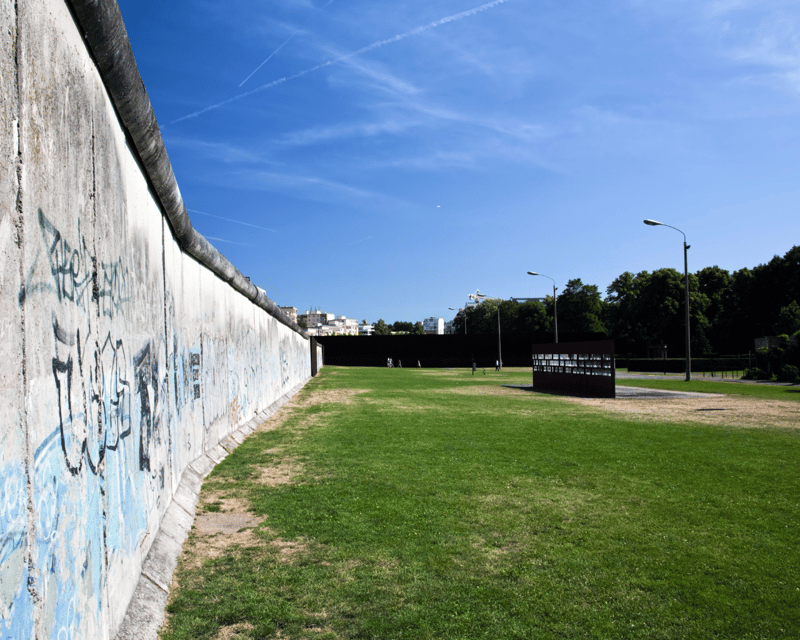
The next Wall-related stop lasts about 25 minutes. Along Niederkirchnerstrasse, you see a surviving 200-meter section of the former Berlin Wall.
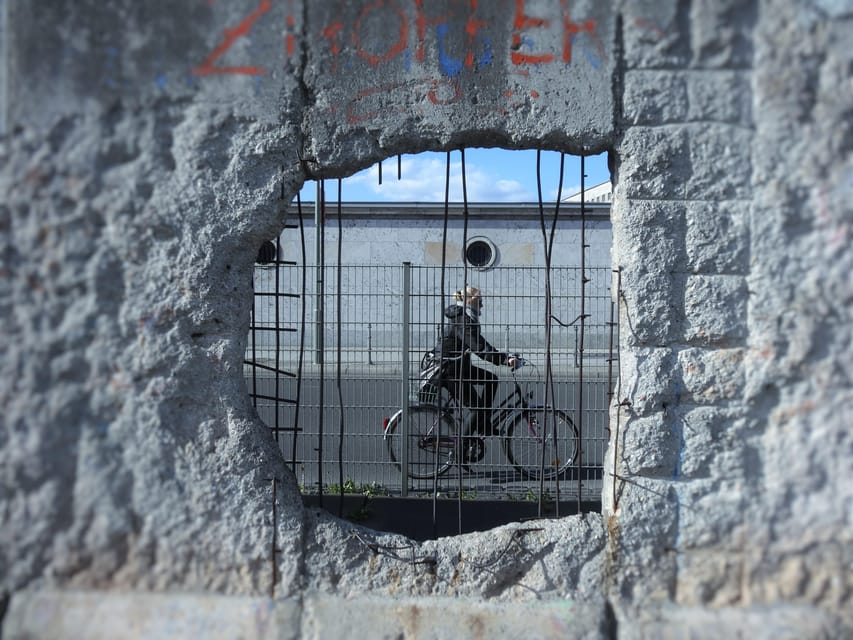
This is one of the most useful parts of the route because it gives you a piece of actual physical evidence. Much of the Wall disappeared after 1989, so it is easy to leave Berlin with only photographs, painted fragments, or reconstructed sections in mind. Here, the remaining stretch helps you understand the scale and force of the barrier.
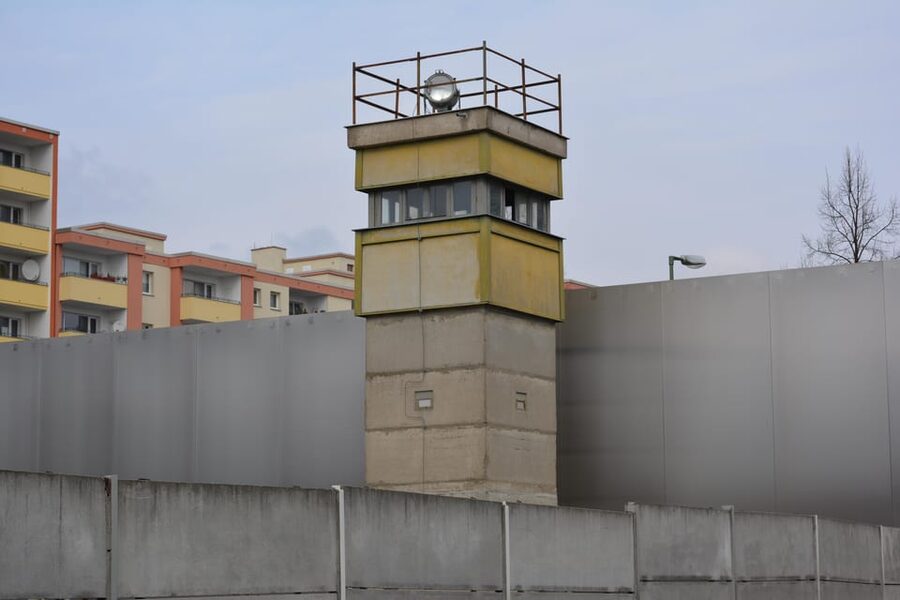
The guide can use this stop to explain the difference between the wall people remember from photographs and the full border system that divided East and West Berlin. The tour description also points to a former DDR watchtower, another reminder that this was not simply a single slab of concrete. The border involved surveillance and control as well as the wall itself.
Expect an outdoor explanation, not a long indoor museum visit. That makes the stop immediate, but weather and noise matter. One Swedish-speaking participant specifically noted that traffic could interfere with the guide’s voice and suggested facing the group while the guide speaks. That is practical advice for everyone: stand close enough to hear, keep your attention on the guide, and do not rely on reading every detail from a distance.
Topography of Terror and Potsdamer Platz
Topography of Terror is scheduled for 15 minutes. The site concerns the Nazi period, not the Cold War alone, but its place on this tour helps you understand the wider destruction and political rupture that shaped postwar Berlin.
The stop is brief, so you should expect a connecting explanation rather than a full visit to every display. The guide uses the location to place the later division of Berlin within the city’s wider twentieth-century story. The Wall did not appear in isolation. It followed war, occupation, competing political systems, and a rapidly hardening border between East and West.
Potsdamer Platz receives another 15-minute visit. Before the war, it had been a major urban center. After the war and during Berlin’s division, the area became associated with emptiness and the nearby border. Its later redevelopment gives the guide a chance to explain how dramatically the city changed after reunification.
These short stops are useful for orientation, but they may feel quick if you want a full treatment of either site. I would treat them as links in the main Cold War story, not as replacements for dedicated visits to the Topography of Terror or Potsdamer Platz.
More History Walking Tours in Germany
- Berlin: Third Reich, Hitler, and WWII Walking Tour
★ 4.9 · 1,757 reviews - Berlin: History of the Third Reich Guided Walking Tour
★ 4.7 · 791 reviews - Berlin Historical Highlights Walking Tour
★ 4.9 · 657 reviews - Berlin Private Complete History All Day Walking Tour
★ 5.0 · 474 reviews
Checkpoint Charlie, famous but easy to misunderstand
Checkpoint Charlie receives about 25 minutes of guided attention. This was the best-known crossing point between East and West Berlin, and its fame makes it an obvious stop. It also makes it a place where context matters.
On your own, you might see the guardhouse replica and the famous name, take a photograph, and move on. With a guide, the site becomes part of the story of controlled movement, confrontation, and the daily tension of crossing between two political worlds.
The guide explains what life was like on either side of the divide and places the crossing within the larger Cold War. That is more useful than treating Checkpoint Charlie as a stand-alone symbol. You learn why this location became so famous and how border crossings shaped ordinary life.
The limitation is that Checkpoint Charlie is now a busy city sight with plenty of commercial activity around it. It does not offer the same quiet, reflective feel as the Wall Memorial. I like seeing it as part of a guided route, where its meaning is supplied by the story rather than by the modern setting alone.
The Berlin Wall Memorial gets the time it deserves
The Berlin Wall Memorial is the heart of the tour, with about 75 minutes of guided time. That long stop is a major strength.
Here, the division of Berlin is presented not just as a political dispute, but as a system that affected homes, streets, families, work, travel, and personal safety. The memorial commemorates the division and the people who died because of it. It also gives the guide room to discuss escape attempts and the risks people took to get from East to West.
This is where personal stories can make the strongest impression. Eugen has been praised for explaining the stories behind photographs and showing how individual lives fit into the larger story of Germany. Cieran has used photos from his own family’s experiences with the Wall. Those details can make the subject more immediate than a list of dates.
You will also hear about daring escapes, but the tour does not present them as simple adventure tales. The important point is the danger and pressure behind them. An escape attempt could involve planning, secrecy, physical risk, and severe consequences if it failed.
The memorial is also where the guide can explain why the Wall eventually fell. The tour aims to leave you with a clearer grasp of both construction and collapse, not just the familiar date of 1989.
What the three-hour pace feels like
The tour lasts three hours and returns to the starting point at Ebertstraße 24. You walk between several central Berlin locations, with short visits at most stops and the longest period at the Wall Memorial.
That structure works well if you want a focused history lesson without giving up an entire day. You see a wide stretch of central Berlin, but the stops are connected by one subject. You are not constantly switching from art to architecture to food to politics.
The pace will suit you if you are comfortable walking and listening outdoors. Comfortable shoes are essential, and weather-appropriate clothing is not optional in Berlin. The tour runs in cold conditions too. One account described Cieran maintaining his energy through heavy snow and cold, but that does not mean the weather will feel easy for you.
The activity is listed as wheelchair accessible. Since the route is a walking tour through city streets and memorial areas, you should still consider your own mobility needs and the amount of time you are comfortable spending outdoors. The supplied information does not specify the exact surface conditions at every stop.
Because the tour is live, you can ask questions. That is especially useful for a subject with complicated political terms and competing viewpoints. If you are unsure how East and West Berlin functioned, ask early. The guide can then shape later explanations around what you need to understand.
Is $31 a good price?
At $31 per person, I consider this a reasonable price for a three-hour, guide-led walk with a strong historical focus. The value comes from the connections between the sites, not from admission to a major indoor attraction or private transport.
You pay for a local guide who can explain the political background, identify what remains, and bring in stories of escape and loss. A self-guided walk could take you to Checkpoint Charlie and the Wall Memorial, but it would be harder to connect the places in the same order and with the same detail.
The price is especially fair if you are visiting Berlin for a short break. Three hours gives you a firm introduction to the Cold War, and you can return later to places that interest you most.
It is less useful if you already have strong specialist knowledge of Berlin’s postwar history and prefer to explore alone. In that case, the route may cover familiar ground. You may also prefer a museum-based experience if cold weather, traffic noise, or outdoor walking will reduce your enjoyment.
German and English tours are available. The activity is also listed with free cancellation up to 24 hours in advance and a reserve-now, pay-later option, which helps if your schedule is still changing.
Who should book this Berlin history walk?
I would recommend it to first-time Berlin visitors who want the Cold War explained in plain language. It also suits anyone who finds political history easier to understand when it is tied to streets, buildings, crossings, and surviving structures.
Families with older children may find the escape stories a strong way into the subject, though the topic includes death, fear, and political repression. History students and visitors with a personal connection to divided Europe may appreciate the time given to individual stories.
I would think twice if you dislike long outdoor walks or need a very quiet setting for every explanation. Traffic noise is a real possibility, and some stops are short. This is not a leisurely stroll with long café breaks. It is a steady history walk.
Should you book it?
Book this tour if you want Berlin’s Cold War past explained as one connected story, with enough time at the Wall Memorial to consider the human cost. The strongest elements are the guide-led context, the escape stories, and the mix of surviving Wall remains with major symbolic sites.
Choose it early in your Berlin stay if possible. The route gives you useful background for later visits to museums and memorials. Just wear comfortable shoes, prepare for the weather, and stay close enough to hear the guide when city traffic rises.
FAQ
Where does the tour start?
The tour starts outside Hopfingerbräu at Ebertstraße 24, next to the Brandenburg Gate.
Where does the tour finish?
The tour returns to Ebertstraße 24, the same location where it begins.
How long does the walking tour last?
The tour lasts three hours.
Which languages are available?
The live tour guide is available in German and English.
What places does the tour visit?
The route includes the Brandenburg Gate, a section of the Berlin Wall, Topography of Terror, Potsdamer Platz, Checkpoint Charlie, and the Berlin Wall Memorial.
How much time is spent at the Berlin Wall Memorial?
The guided visit to the Berlin Wall Memorial lasts about 75 minutes.
Is the tour wheelchair accessible?
Yes, the activity is listed as wheelchair accessible.
What should I bring?
Bring comfortable shoes and clothing suited to the weather.
Can I cancel the booking?
Yes. You can cancel up to 24 hours in advance for a full refund. You can also reserve now and pay later.
More Cold War and Communism Tours in Berlin
- Cold War, Berlin Wall, Spies and the East Side Gallery
★ 5.0 · 1,024 reviews - Berlin: Cold War Walking Tour on Berlin Wall Route
★ 4.8 · 437 reviews - Berlin: Cold War & Berlin Wall History Guided Bike Tour
★ 4.8 · 422 reviews - Cold War, Berlin Wall, Spies and the East Side Gallery
★ 4.8 · 254 reviews
Just added around Berlin
- Berlin Food & Cultural Tour: Must-Try German & Berliner Classics★ 5.0 · 51 reviews
- Berlin Half-Day World War II Walking Tour★ 4.5 · 48 reviews
- Small-Group Historical Bike Tour in Berlin★ 4.5 · 103 reviews
- Historic center of Berlin – Tour in Italian★ 5.0 · 143 reviews
- Berlin Cold War & World War II Third Reich Walking Tour★ 4.5 · 30 reviews
- Private Taxi Tour City East & West History and Architecture 3-4h★ 5.0 · 42 reviews
- Berlin Wall and Cold War Bike Tour in Small Groups★ 5.0 · 114 reviews
- Private Tour: Jewish Heritage Walking Tour of Berlin★ 5.0 · 29 reviews
Berlin History Tours, compared.

Berlin: Third Reich & Cold War Guided Walking Tour
Read our review →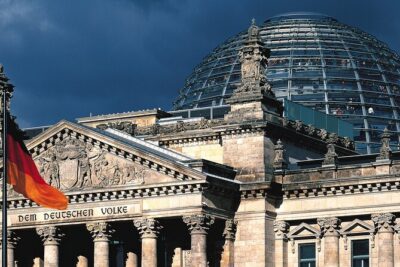
Berlin’s Best: 2 Hour Walking Tour Third Reich and the Cold War
Read our review →
Third Reich Berlin: Hitler and WWII Walking Tour
Read our review →
Berlin: Third Reich, Hitler, and WWII Walking Tour
Read our review →
Berlin: 3-Hour World Heritage Cruise to Potsdam
Read our review →
Cold War, Berlin Wall, Spies and the East Side Gallery
Read our review →
Berlin: History of the Third Reich Guided Walking Tour
Read our review →
Browse the lists this tour appears in