
Review · BERLIN
Berlin Uncensored: A History of Sex & Freedom
Berlin’s sexual past is not a side note to its history. It is a window into the city’s science, politics, nightlife, persecution, and modern identity. On this three-and-a-half-hour walk, you trace that story from nudism and early sexology to queer clubs, Nazi repression, the divided city, and today’s club culture.
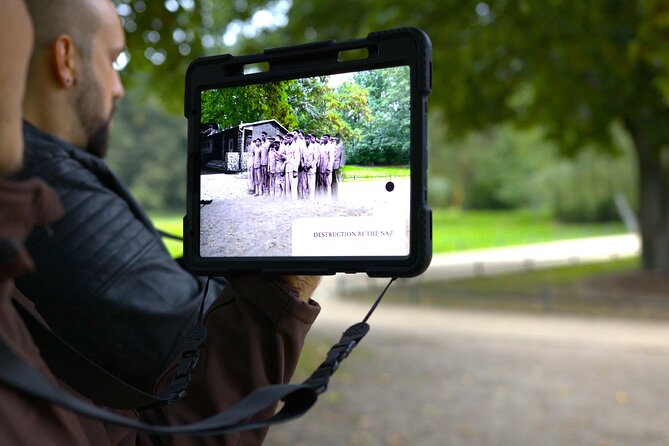
I like the small group of no more than 10, which gives you room to ask direct questions. I also like the mix of 200-plus historical images, videos, and augmented reality, especially when an ordinary street corner needs help revealing what once stood there. The main consideration is the subject matter: this is an adult tour about sex, prostitution, gender identity, pornography, fetish culture, and persecution, not a light sightseeing stroll.
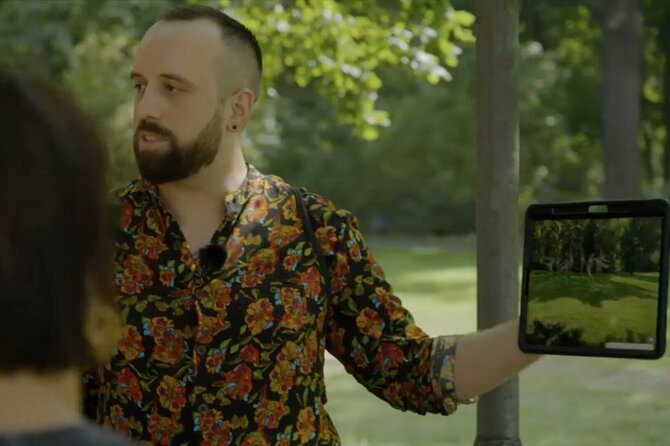
The guide, Jeff, is a sociologist and certified sex educator. His clear English, open manner, and trauma-informed approach are central to the experience. The tour is strongest when you want context and conversation, not just a list of famous places.
Key points to know before booking
- A three-hour-30-minute walk through changing Berlin: The route connects Nollendorfplatz, Tiergarten, Schöneberg, former nightlife sites, and memorials.
- Jeff leads with academic context and an easy manner: You can ask questions throughout rather than waiting for a short question period at the end.
- The Institute for Sexual Science is a major focus: You’ll learn about Magnus Hirschfeld, early sexology, contraception, gender identity, and the destruction of the institute in 1933.
- The group is capped at 10 people: That matters on a personal subject where you may want to ask something specific.
- Archival material adds visual context: More than 200 images, videos, and AR elements help show people and places that are no longer visible.
- The tour is for adults: The minimum age is 18, and the content includes queer history, sex work, kink, Nazi persecution, and sexual health.
Why Berlin’s sexual history matters
Berlin is often reduced to nightlife and permissive clubs. This tour gives you the longer story behind that reputation. You’ll see how sexual freedom has never been a straight line. It has expanded, been crushed, moved underground, and taken new forms under different governments.
The route begins near Nollendorfplatz, one of the best areas for discussing Berlin’s long connection with body freedom and queer life. From there, the tour moves through scientific, political, and social history. You are not simply looking at buildings. You are asking who was allowed to live openly, who was studied, who was punished, and who had to hide.
That approach gives the tour real value. Berlin’s present-day club scene makes more sense after you understand the experiments, debates, and conflicts that came before it.
More History Tours in Berlin:
- Berlin: Third Reich & Cold War Guided Walking Tour
★ 4.9 · 8,378 reviews - Berlin’s Best: 2 Hour Walking Tour Third Reich and the Cold War
★ 5.0 · 5,486 reviews - Third Reich Berlin: Hitler and WWII Walking Tour
★ 5.0 · 3,301 reviews
Starting at Nollendorfplatz and the story of FKK
The meeting point is outside Alnatura Super Natur Markt at Else-Lasker-Schüler-Straße 18. The tour starts at 2:00 pm and returns to the same general meeting point at the end.
The first stop introduces FKK, the German tradition of Freikörperkultur, or naturism. Jeff explains how body freedom developed from the 19th century into modern Berlin life. You’ll also hear why nudism remains connected with the city’s lakes and parks.
This is a useful opening because it broadens the meaning of sexual freedom. The subject is not only erotic nightlife. It also includes attitudes toward the body, public space, health, and social rules.
The opening stop lasts about 10 minutes. It is brief, but it sets up one of the tour’s recurring ideas: Berlin’s sexual culture has included both public openness and private rebellion.
Magnus Hirschfeld and the lost Institute for Sexual Science
The stop at Magnus-Apotheke covers one of the most important chapters in the tour. Berlin was home to Magnus Hirschfeld’s Institute for Sexual Science, an early center for research into desire, relationships, contraception, and gender identity.
You’ll hear about the institute’s work, including early sexual health research, the rubber condom, studies connected with erectile medication, and gender affirmation procedures. The discussion includes people such as Dora Richter, Lili Elbe, and Karl M. Baer.
The most painful part of this story is the institute’s destruction by the Nazis in 1933. Its research, library, and records were attacked because the work challenged Nazi ideas about sexuality, gender, and social order.
This stop gives the tour its intellectual center. You begin to see that Berlin’s sexual history was not only about clubs and cabaret. It also included serious scientific work that was far ahead of its time.
The stop lasts around 20 minutes. Because the subject is complex, this is one place where the small group helps. You can ask Jeff to clarify medical, social, or historical points without feeling as if you are interrupting a large lecture.
Nazi persecution at the LGBTQ memorial
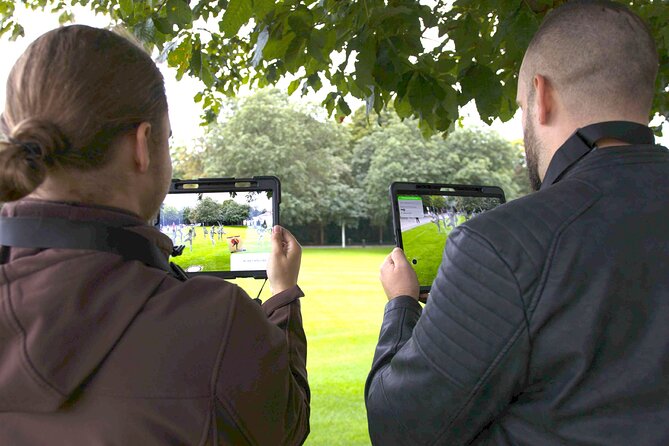
At the Memorial to Homosexuals Persecuted Under National Socialism, the focus turns from freedom to state violence. Jeff explains how the Nazi regime shut down erotic clubs, censored sexual material, and attacked people it considered sexually or socially unacceptable.
The discussion includes LGBTQIA+ people, sex workers, and others labeled degenerate. Many were arrested and sent to concentration camps, where gay men were often marked with pink triangles. That symbol was later reclaimed by LGBTQIA+ rights movements.
The tour also covers Ernst Röhm and the Night of the Long Knives. Röhm was a senior Nazi official who was known to be homosexual, yet his position did not protect him when Nazi power politics turned against him.
This stop is short, about 10 minutes, but it carries considerable weight. You should expect a sober shift in tone. The tour does not treat Berlin’s past as one long celebration of freedom. It makes clear how quickly personal rights can disappear when a government defines certain people as a threat.
Same city, a different century:
- Berlin: Third Reich, Hitler, and WWII Walking Tour
★ 4.9 · 1,757 reviews - Berlin: 3-Hour World Heritage Cruise to Potsdam
★ 4.5 · 1,569 reviews - Cold War, Berlin Wall, Spies and the East Side Gallery
★ 5.0 · 1,024 reviews - Berlin: History of the Third Reich Guided Walking Tour
★ 4.7 · 791 reviews
Kurfürstenstraße and Berlin’s early sex trade
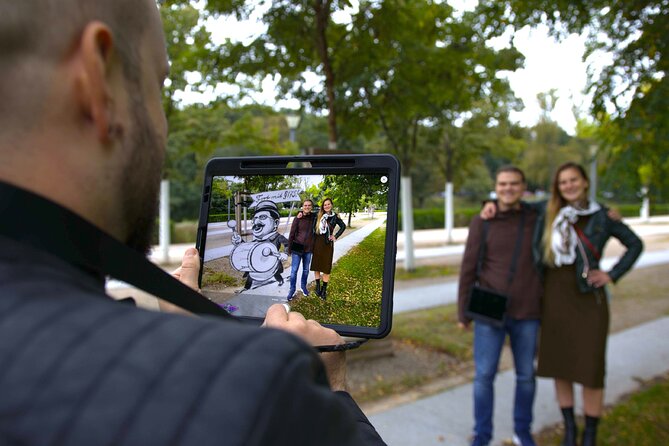
At Kurfürstenstraße, Jeff discusses the city’s pre-Nazi sex industry and the open sexual culture that made Berlin famous in the early 20th century.
You’ll hear about prostitution, exclusive brothels, and fetish culture that existed long before kink became more visible in popular culture. The point is not simply that Berlin had sex workers or nightlife. It is that the city developed a broad range of commercial and social spaces for different forms of desire.
This is an outdoor stop, so the experience depends partly on the street around you. You are looking at present-day Berlin while hearing about places and practices that may no longer be visible. The AR material and historical images are useful here, since they help bridge the gap between an ordinary modern street and its earlier role.
Lesbian Berlin at Schwerinstraße 9
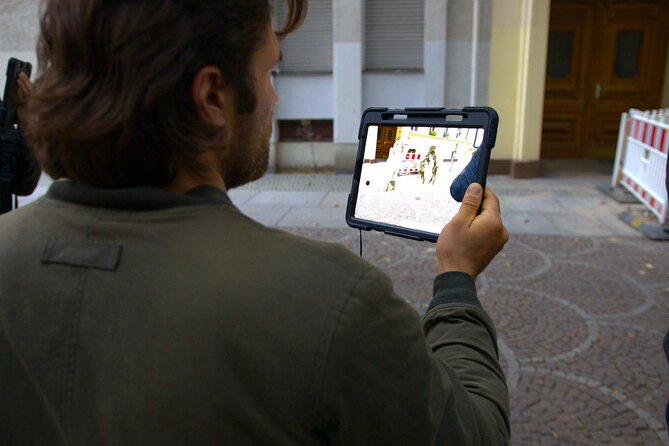
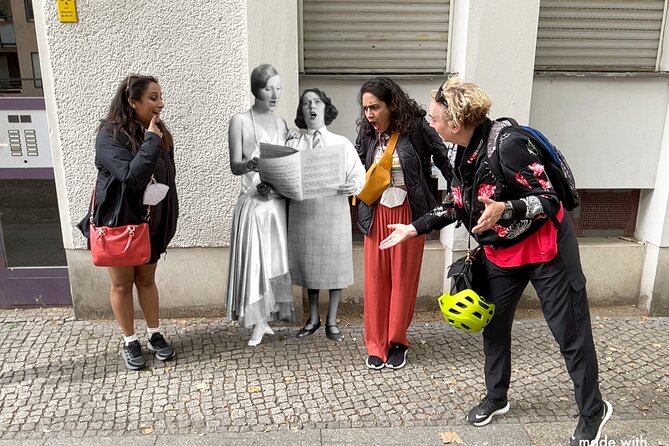
The stop at Schwerinstraße 9 shifts attention to lesbian life. In the early 20th century, Berlin had a large and active lesbian subculture, with meeting places, performers, music, and social networks that challenged conventional expectations.
You’ll hear about the Toppkeller, a gathering place for women, and Claire Waldoff, a cabaret singer known for her lesbian identity. The Lavender Song adds a musical link to the story.
Josephine Baker also enters the discussion. Her fame in Berlin brought admiration, but her experience was shaped by racism as well as celebrity. Including her makes the story more honest. Sexual freedom did not erase racial discrimination, and Berlin’s openness was never shared equally by everyone.
This stop lasts around 10 minutes. I like the way it widens the tour beyond the better-known story of gay male nightlife. If you are especially interested in women’s history, cabaret, or the role of performance in queer communities, this will be one of the most useful sections.
Christopher Isherwood’s Berlin and the world behind Cabaret
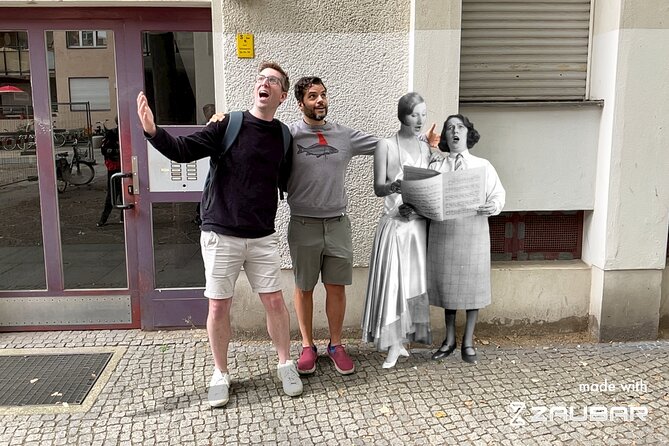
Near the former residence of Christopher Isherwood, you’ll explore the city that attracted gay men from across Europe during the 1920s and early 1930s.
Isherwood’s writing captured the bars, clubs, friendships, and sexual freedom of the era. His work later helped inspire Cabaret, but the tour places that familiar story in a broader setting. You’ll consider the real people and social spaces behind the stage and screen versions of Berlin.
This stop is less about one author than about how personal writing can preserve a vanished city. Isherwood recorded a world that seemed open and exciting, but it was also unstable. The Nazi takeover would destroy much of that social life.
The stop is about 10 minutes. You won’t visit a literary museum or enter a preserved interior. Instead, you stand in the neighborhood and use Jeff’s explanations and visual material to reconstruct the atmosphere.
Eldorado and the contradictions of 1920s nightlife
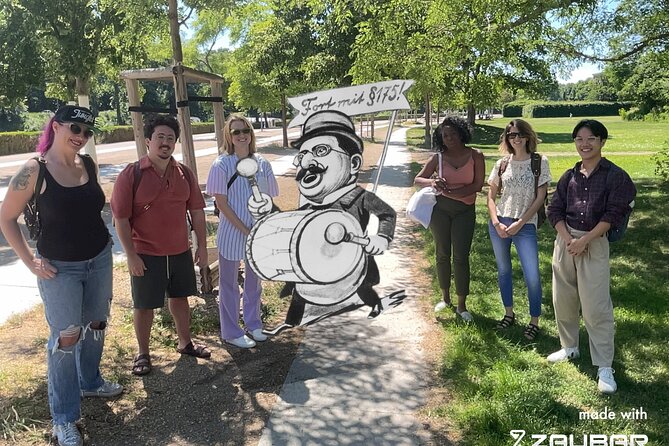
At the location associated with the Eldorado Club, the tour returns to nightlife. Eldorado was known for drag performers, sexually open patrons, and a social mix that could include people from very different parts of Berlin’s political world.
The club’s story is full of contradictions. Ernst Röhm was known to visit, even though the Nazi movement later attacked the culture that places like Eldorado represented. A journalist from Vogue also visited and praised a drag performer as the most beautiful woman in Berlin.
The club was eventually shut down by the Nazis. That change shows how the same city that once allowed public experimentation could become a place of censorship and fear.
The current location is marked by a Denns BioMarkt, so do not expect a surviving club interior. That is typical of this tour. Many stops are modern streets, shops, or buildings. The value comes from the connection between the present location and the archival material.
East and West Berlin after the Second World War
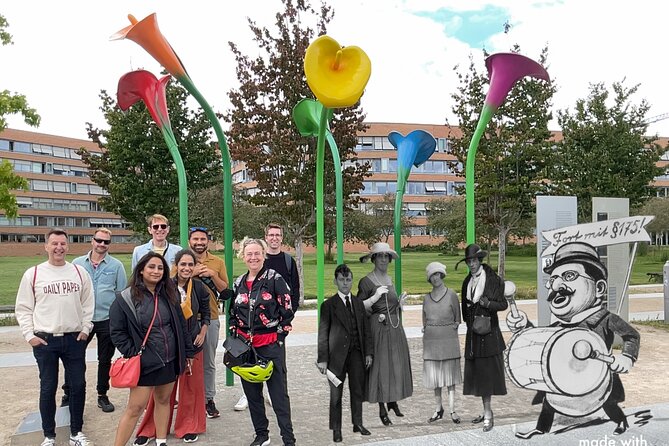
At the international memorial stele against forgetting, the tour moves into the postwar period. Berlin’s division created two different systems, and each shaped sexual life in its own way.
In West Berlin, the sexual revolution encouraged more open attitudes toward relationships, pornography, and alternative lifestyles. In East Berlin, the state restricted freedom in many areas, yet public nudism became especially popular through FKK.
You’ll hear the colorful phrase used for the Berlin Wall as the condom of the GDR, along with the story of a conservative politician who helped save thousands of lives during the AIDS crisis. These details show how sexuality was shaped by public health, ideology, censorship, and political choices, not just by personal behavior.
This section is valuable if you already know something about the Wall and want to see the city through a different lens. It also prevents the tour from treating West Berlin as simply free and East Berlin as simply repressed. The reality was more complicated.
Modern Berlin: Berghain, KitKat, and Folsom Europe
The final section returns to Nollendorfplatz and today’s sexual culture. Jeff discusses Berghain, KitKat Club, Insomnia, and Lab.Oratory, along with the role of electronic music in Berlin’s club and fetish scenes.
You’ll also learn about Folsom Europe, described as the world’s largest fetish festival. These places and events are presented as part of a longer tradition rather than as isolated curiosities.
The insider tips can help if you want to understand Berlin’s current sex-positive nightlife. Keep in mind that the tour provides context and suggestions, not guaranteed entry or a club pass. Berlin nightlife can change quickly, and the tour cannot replace checking current event details yourself.
This final portion is also where the AR elements can be most entertaining. Digital images and interactive photo features called Mixies give you a way to connect the historic material with the present city. One useful caution: the visual effects may not be essential at every moment. Their best use is showing lost people, vanished clubs, and historical scenes.
How the format works on foot
You’ll be outside for much of the three-and-a-half-hour experience, moving between neighborhoods and street locations. Wear comfortable shoes and be ready for a steady city walk, though the exact pace and route can vary.
The group limit of 10 is one of the strongest practical features. On a large tour, personal questions about gender, sexual health, or queer history can feel awkward. Here, the format is better suited to discussion.
The tour is offered in English and is intended for people aged 18 or older. Service animals are allowed, and the route is near public transportation. The activity says most people can participate, but it does not provide detailed information about step-free access, seating, or restroom breaks. If those details matter to you, ask BerlinGuide.de before booking.
Extreme rain or storms can cancel the walk. In that case, you can choose another date or receive a full refund.
Is the $82.90 price fair?
At $82.90 per person, this is not a cheap city walk. The price makes more sense if you want a specialist subject, a small group, a qualified guide, and visual material that helps explain lost places.
You are paying for Jeff’s sociological and sex-education background, not simply for transport between attractions. You also get a focused look at several centuries of changing attitudes, from FKK and Hirschfeld’s research to Nazi persecution, divided Berlin, AIDS, and current club culture.
For a standard sightseeing visitor, the cost may feel high because most stops are free outdoor locations. For someone specifically interested in queer history, sexual science, gender identity, nightlife, or Berlin’s social history, the focused content can make the price worthwhile.
Group discounts are available. A café break may be included in the flow of the tour, but coffee or tea is not included in the price.
Who will get the most from this tour?
I would choose this tour if you want:
- A serious but approachable look at Berlin’s sexual and queer history
- A guide who welcomes questions and explains difficult subjects clearly
- A small group rather than a large scripted walk
- Historical context for Berlin’s nightlife and club culture
- A tour that includes lesbian history, gender identity, sex work, and Nazi persecution
- A way to connect famous names such as Magnus Hirschfeld and Christopher Isherwood with actual Berlin neighborhoods
I would skip it if you want a conventional sightseeing tour, dislike adult subject matter, or prefer to spend three hours indoors. The subject can also be emotionally heavy, especially during the Nazi persecution and AIDS sections.
Should you book Berlin Uncensored?
Book it if Berlin’s sexual culture is one of the reasons you came, or if you want to understand the city beyond museums, palaces, and the Wall. Jeff’s mix of sociology, personal openness, archival material, and AR gives the walk a clear purpose.
The best reason to choose it is the chance to ask questions in a group of 10 or fewer. The main caution is that the tour’s most important sites are often ordinary streets or marked locations rather than preserved interiors.
If you are comfortable with mature subject matter and want a thoughtful, unusual history walk, I would put this high on your Berlin list. Cancel at least 24 hours before the 2:00 pm start for a full refund. Book earlier than a last-minute outing, since it is commonly reserved well ahead of time.
FAQ
Where does Berlin Uncensored start?
The tour starts at Alnatura Super Natur Markt, Else-Lasker-Schüler-Straße 18, 10783 Berlin, Germany.
What time does the tour begin?
The tour starts at 2:00 pm.
How long does the tour last?
The experience lasts approximately three hours and 30 minutes.
Where does the tour end?
The activity ends back at the meeting point.
Is the tour offered in English?
Yes. The tour is offered in English.
What is the maximum group size?
The group has a maximum of 10 travelers.
What age must participants be?
The minimum age is 18.
Are drinks included?
Coffee and tea are not included. The tour may visit a café for a break.
What happens if bad weather cancels the tour?
If extreme weather such as heavy rain or a storm cancels the experience, you will be offered another date or a full refund. You can also cancel up to 24 hours before the start time for a full refund.
Just added around Berlin
- Berlin Food & Cultural Tour: Must-Try German & Berliner Classics★ 5.0 · 51 reviews
- Berlin Half-Day World War II Walking Tour★ 4.5 · 48 reviews
- Small-Group Historical Bike Tour in Berlin★ 4.5 · 103 reviews
- Historic center of Berlin – Tour in Italian★ 5.0 · 143 reviews
- Berlin Cold War & World War II Third Reich Walking Tour★ 4.5 · 30 reviews
- Private Taxi Tour City East & West History and Architecture 3-4h★ 5.0 · 42 reviews
- Berlin Wall and Cold War Bike Tour in Small Groups★ 5.0 · 114 reviews
- Private Tour: Jewish Heritage Walking Tour of Berlin★ 5.0 · 29 reviews
Berlin History Tours, compared.
Berlin: Third Reich & Cold War Guided Walking Tour
Read our review →
Berlin’s Best: 2 Hour Walking Tour Third Reich and the Cold War
Read our review →
Third Reich Berlin: Hitler and WWII Walking Tour
Read our review →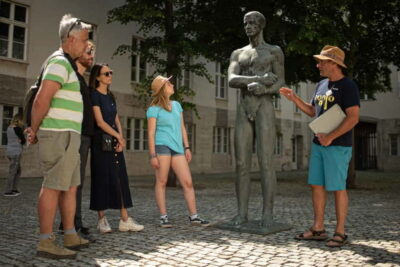
Berlin: Third Reich, Hitler, and WWII Walking Tour
Read our review →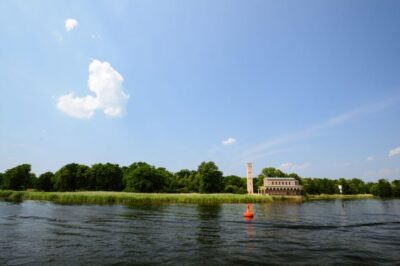
Berlin: 3-Hour World Heritage Cruise to Potsdam
Read our review →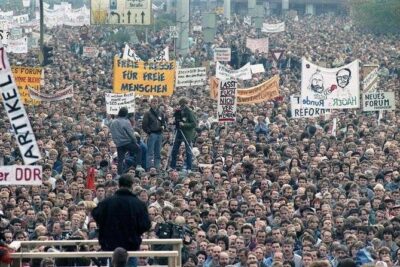
Cold War, Berlin Wall, Spies and the East Side Gallery
Read our review →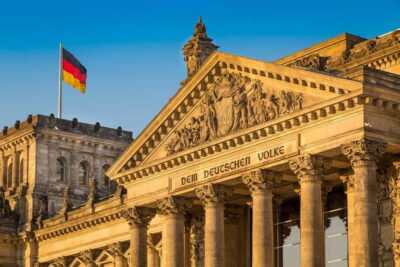
Berlin: History of the Third Reich Guided Walking Tour
Read our review →
Browse the lists this tour appears in